Edge AI Facial Recognition Access Control for Low Light Sites
Publication Date
author
For enterprise decision-makers securing dim warehouses, remote substations, and night-shift facilities, edge ai facial recognition access control offers a practical path to stronger identity verification without relying on unstable cloud links. This article examines how low-light performance, on-device inference, and measurable engineering benchmarks help reduce false accepts, speed access, and improve site resilience where visibility and response time directly affect operational risk.
Understanding Edge AI Facial Recognition Access Control in Low-Light Environments
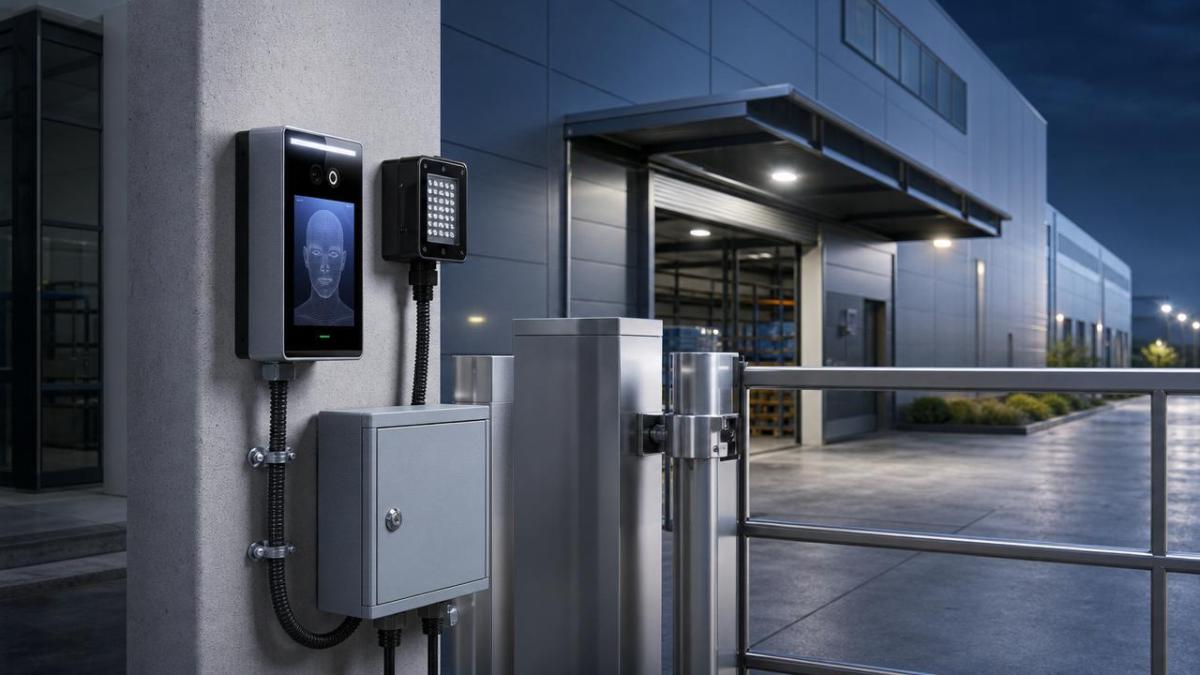
Edge ai facial recognition access control refers to an identity verification system that captures a face at the door, analyzes it locally on an embedded processor, and makes the access decision on-site instead of sending every frame to the cloud. In low-light sites, this architecture matters because the system must recognize authorized personnel under uneven illumination, headlamp glare, backlighting, dust, or nighttime infrared conditions while still opening gates, doors, cages, or control rooms quickly.
The core stack usually combines a visible or near-infrared camera, fill light, liveness detection, an edge AI accelerator, encrypted template storage, and a door controller. What separates a robust deployment from a weak one is not branding language but measurable performance: recognition distance, lux range, inference latency, false acceptance rate, false rejection rate, anti-spoof capability, and uptime under temperature or network stress.
For comprehensive industrial and commercial operations, edge ai facial recognition access control is increasingly evaluated as a security and continuity tool rather than a convenience feature. The reason is straightforward: poor lighting and unreliable connectivity often occur at the same sites where physical intrusion, delayed response, and manual badge dependency create the highest operational exposure.
Industry Context and Current Evaluation Signals
Across logistics yards, utility assets, mixed-use campuses, workshops, and transport infrastructure, access control requirements have shifted from simple credential presentation to higher-confidence identity proofing. Standard card systems remain common, but low-light risk conditions expose their limits: cards can be shared, PINs can be observed, and guards may struggle to verify identity visually during night operations.
As a result, interest in edge ai facial recognition access control is being driven by several engineering-focused signals rather than general technology hype:
- Growing use of unmanned or lightly staffed entrances in remote or hazardous areas
- Demand for access decisions that continue during WAN outages
- Stricter audit expectations for time, identity, and entry-point traceability
- Need to reduce false alarms and manual rechecks during shift changes
- Expansion of edge computing hardware with lower power draw and faster local inference
Operational Value Beyond Basic Door Entry
The practical value of edge ai facial recognition access control is strongest when access events are linked to operational continuity. In a dim site, faster and more reliable identity verification helps reduce queues at shift turnover, supports safer entry to restricted zones, and creates a stronger audit trail when an incident must be reconstructed later.
Local processing also improves resilience. If the network drops, a cloud-first platform may delay or block entry until connectivity returns. By contrast, edge AI access control can continue verifying enrolled users with locally stored templates and policy rules. This is especially relevant for substations, perimeter cabins, utility compounds, cold-storage facilities, and detached buildings where bandwidth may be intermittent.
There is also a measurable labor effect. When the system performs well in low light, fewer people need manual override, fewer identity disputes reach the security desk, and fewer badge exceptions must be handled after hours. In multi-site environments, these gains often matter more than headline accuracy claims because they directly affect throughput, incident review time, and service continuity.
For organizations guided by data-first engineering principles similar to the TSV approach, the right question is not whether facial recognition is modern, but whether the installed system can maintain a verified decision threshold under the actual lighting, angle, and environmental variability of the site. That is where edge ai facial recognition access control becomes a benchmarked infrastructure component rather than a generic security device.
Typical Site Categories and Deployment Priorities
Not every entrance requires the same optical setup, inference speed, or anti-spoof level. Site conditions should drive the system design.
These scenarios show why edge ai facial recognition access control should be specified by environment, not by brochure claims alone. The same algorithm may perform very differently when challenged by reflective helmets, rain, gate vibration, or side-entry walking patterns.
Implementation Guidance and Risk Controls
A successful deployment begins with a site survey focused on engineering variables. Before selecting hardware, document actual nighttime lux levels, light direction, face approach distance, mounting height, user flow rate, PPE usage, and available network redundancy. This avoids the common mistake of choosing a device tested only in controlled indoor conditions.
For low-light performance, several practical controls matter:
- Use dedicated IR or adaptive fill lighting rather than relying on ambient illumination.
- Validate face capture at real walking speeds, not only at static standing positions.
- Tune thresholds separately for high-security doors and high-throughput entrances.
- Test with PPE combinations that reflect actual site rules, including caps, safety glasses, or masks where applicable.
- Confirm that offline mode preserves full logging and synchronizes correctly after connectivity recovery.
Data governance should be treated as part of the technical design. Facial templates, event records, retention windows, and permission controls need clear policy alignment. A strong edge ai facial recognition access control deployment balances local autonomy with centralized oversight, ensuring that templates are encrypted, administrative actions are traceable, and exception handling remains controlled.
Pilot testing should produce hard evidence, not general impressions. Useful acceptance criteria include average unlock time, false reject rate at night, percentage of successful entries during simulated WAN loss, and liveness performance against printed-photo or screen replay attempts. If these values are not measured during trial, the final installation carries unnecessary uncertainty.
A Practical Next Step for Specification and Validation
When evaluating edge ai facial recognition access control for low-light sites, the most effective next step is to convert operational concerns into a testable specification sheet. Define the target lux range, access decision time, acceptable false acceptance and false rejection limits, environmental rating, offline duration, and integration points with existing controllers or VMS platforms. This turns procurement and implementation into an engineering exercise grounded in evidence.
For organizations following a data-driven methodology, a short pilot across one indoor and one outdoor entrance often reveals more than a large-scale rollout plan. Measure actual nighttime recognition consistency, compare edge inference behavior during network interruption, and verify that logs, alerts, and override workflows match site risk priorities. Done correctly, edge ai facial recognition access control can strengthen security, improve throughput, and deliver resilient access verification precisely where low visibility and delayed decisions create the highest exposure.
Search News
Hot Articles
- Carbon Fiber StructuresHow to Specify Aerospace Carbon Fiber Assemblies for Lightweight, Load-Bearing PartsJul 11, 2026
- Machine VisionXiaomi, Alibaba DAMO Academy Drive Open-Source Robotics Model Ecosystem, Lowering Algorithm Development Barriers for Overseas SMEs Adopting Chinese Robotics SolutionsMar 30, 2026
- Cobots & ArmsShanxi 'AI+' Conference Showcases Embodied Intelligence with Multinational Buyer Engagement: Key Industry ImplicationsMar 30, 2026
Popular Tags
Recommended News
 Jul 11, 2026How to Specify Aerospace Carbon Fiber Assemblies for Lightweight, Load-Bearing PartsAerospace carbon fiber assemblies: learn how to specify laminate design, load data, joining methods, and inspection controls for lighter, reliable load-bearing aerospace parts.Elena Rostova (UAV Systems Researcher)
 Mar 30, 2026Xiaomi, Alibaba DAMO Academy Drive Open-Source Robotics Model Ecosystem, Lowering Algorithm Development Barriers for Overseas SMEs Adopting Chinese Robotics SolutionsXiaomi & Alibaba DAMO Academy's open-source robotics models lower algorithm barriers for global SMEs. Boost efficiency in manufacturing, logistics & smart retail with ROS 2 compatible solutions.TSV Data Lab
 Mar 30, 2026Shanxi 'AI+' Conference Showcases Embodied Intelligence with Multinational Buyer Engagement: Key Industry ImplicationsShanxi 'AI+' Conference highlights embodied intelligence with Tesla, Ubtech & Jiantao showcasing multimodal robotics. 40+ global buyers validated tech on-site, creating new B2B channels for industrial automation & AI solutions.Chen Wei (Automation Lead Engineer)
 Mar 30, 2026Zhongguancun Unveils 6G Integrated Sensing-Computing-Intelligence Platform to Empower Embodied Robots for Global Industrial ApplicationsZhongguancun's new 6G platform revolutionizes industrial robotics with <10ms latency, empowering global automotive, logistics & port automation. Discover how this tech boosts China's smart manufacturing exports.TSV Data Lab
 Mar 30, 2026Mech-Mind Tianjin Embodied Intelligence R&D and Production Base Goes Live, Cutting Delivery Time by 20%–30% for Global Customized AMR+Vision SolutionsMech-Mind's Tianjin AMR+Vision production base cuts delivery time by 20%-30% for欧美 & Latin American markets. Discover how this PLd-certified facility accelerates customized robotics solutions for smart manufacturing and logistics.Chen Wei (Automation Lead Engineer)
 Mar 30, 2026Boao Forum Reveals 'Co-evolution of Big and Small Brains' Trend in Humanoid Robots, China's Embodied Intelligence Accelerates Adaptation to Overseas Manufacturing Service ScenariosDiscover how China's humanoid robots, featuring 'Co-evolution of Big and Small Brains,' are revolutionizing global manufacturing. Learn about Embodied Tian Gong 3.0's ISO compliance and overseas deployment at Boao Forum 2026.Chen Wei (Automation Lead Engineer)
 Mar 30, 2026China Railway Industrial Secures Patent for Embodied Robotics in Material Handling, Boosting High-Precision Delivery Capabilities for Overseas Infrastructure and Manufacturing ProjectsChina Railway Industrial's new patent for embodied robotics in material handling boosts high-precision delivery for global infrastructure & manufacturing. Discover how this innovation enhances logistics accuracy in automotive, rail transit & EPC projects.Chen Wei (Automation Lead Engineer)
 Sep 29, 2026ISO 9283 Repeatability: How to Evaluate Cobot Positioning PerformanceISO 9283 cobot repeatability explained: learn how payload, reach, approach direction, and test conditions affect positioning performance and cell capability.Chen Wei (Automation Lead Engineer)
 Sep 28, 2026Spindle Runout Measurement in Germany: DIN Standards, Methods, and Acceptance LimitsSpindle runout measurement Germany: explore DIN standards, proven methods, acceptance limits, and audit-ready practices for reliable machining quality.Dr. Marcus Vance
 Sep 27, 2026How to Select Wall-Mount Edge Devices for Space-Constrained Factory NetworksWall mount edge devices for space-constrained factories: evaluate workload, thermal design, power resilience, cable access, and network reliability for smarter deployments.TSV Data Lab
 Sep 26, 2026Machining Tolerance Analysis: How to Set Limits That Meet Function and Cost TargetsMachining tolerance analysis: learn how to set functional limits, control tolerance stacks, reduce inspection risk, and balance precision with production cost.Dr. Marcus Vance
 Sep 25, 2026How to Evaluate an Industrial Infrastructure Data Platform for Multi-Site OperationsIndustrial infrastructure data platform evaluation guide for multi-site operations: compare data quality, edge resilience, interoperability, governance, and scalable proof-of-value criteria.Victor Lin (Chief Software Architect)
 Sep 24, 2026How to Select Machine Vision Optics for Accurate Inspection at Different Working DistancesMachine vision optics selection guide for accurate inspection at every working distance. Compare FOV, pixel scale, DOF, distortion, lighting, and telecentric options.TSV Data Lab
 Sep 23, 2026How to Evaluate a Machine Vision System Integrator for High-Speed Inspection LinesChoose a machine vision system integrator with proven expertise in high-speed inspection, reliable reject timing, robust optics, and measurable acceptance criteria.TSV Data Lab
 Sep 28, 2026When is a SCADA API the right choice for connecting plant systems?SCADA API guide: learn when governed plant data integration improves traceability, security, and scalability—without compromising real-time control.Victor Lin (Chief Software Architect)
 Sep 27, 2026How SCADA data integration improves traceability across production linesSCADA data integration connects production-line data to improve traceability, accelerate quality investigations, and strengthen safety decisions.Victor Lin (Chief Software Architect)
 Sep 26, 2026What to define before starting SCADA integration planningSCADA integration planning starts with clear scope, control boundaries, data models, cybersecurity, and testing. Discover the definitions that reduce risk and costly rework.Victor Lin (Chief Software Architect)
 Sep 25, 2026How a smart factory with Industrial IoT reduces production blind spotsDiscover how a smart factory with Industrial IoT turns real-time machine, quality, and workflow data into actionable insights that reduce production blind spots and delivery risks.Victor Lin (Chief Software Architect)
 Sep 24, 2026When does Industrial IoT make smart manufacturing easier to scale?Smart manufacturing Industrial IoT scales when trusted data, interoperable systems, and secure workflows turn connected assets into measurable gains.TSV Data Lab
 Sep 23, 2026What drives ultra-precision machining cost at 1-micron tolerance?Ultra precision machining cost per part at 1 micron tolerance depends on process, material, metrology, and yield. Learn how to compare quotes confidently.Dr. Marcus Vance
 Sep 22, 2026Drone Engine-T550CC Applications: Build the UAV Power System Around the MissionAn application guide for Drone Engine-T550CC integration, covering payload planning, airframe matching, cooling, fuel, vibration, test procedures, documentation, and service preparation.Elena Rostova (UAV Systems Researcher)
 Sep 22, 2026How to Evaluate Industrial Edge Computing Vendors for Factory DeploymentIndustrial edge computing vendor evaluation guide for factories: compare latency, protocol fit, reliability, security, and lifecycle support before deployment.TSV Data Lab
 Sep 21, 2026Drone Payload Integration: Matching Power, Data, and Center of Gravity for Reliable FlightsDrone payload integration made practical: balance power, data, center of gravity, and endurance to build safer, more reliable mission-ready flights.Elena Rostova (UAV Systems Researcher)
 Sep 20, 2026Autonomous Navigation Pricing: Cost Drivers and Budget Benchmarks for AMR ProjectsAutonomous navigation price explained: compare AMR cost drivers, software, sensors, integration, safety, and lifecycle budgets to build a scalable project plan.Chen Wei (Automation Lead Engineer)