
Can a wind turbine digital twin catch faults before sensors drift?
Publication Date
author
Can a digital twin for wind turbine detect incipient faults before sensor drift corrupts the signal? For engineers, operators, buyers, and executives, that question directly impacts uptime, maintenance cost, and risk control. This article examines how physics-based models, industrial iot dashboard visualization, and predictive maintenance logic can work together to separate real anomalies from measurement error.
Why does sensor drift make early fault detection so difficult?
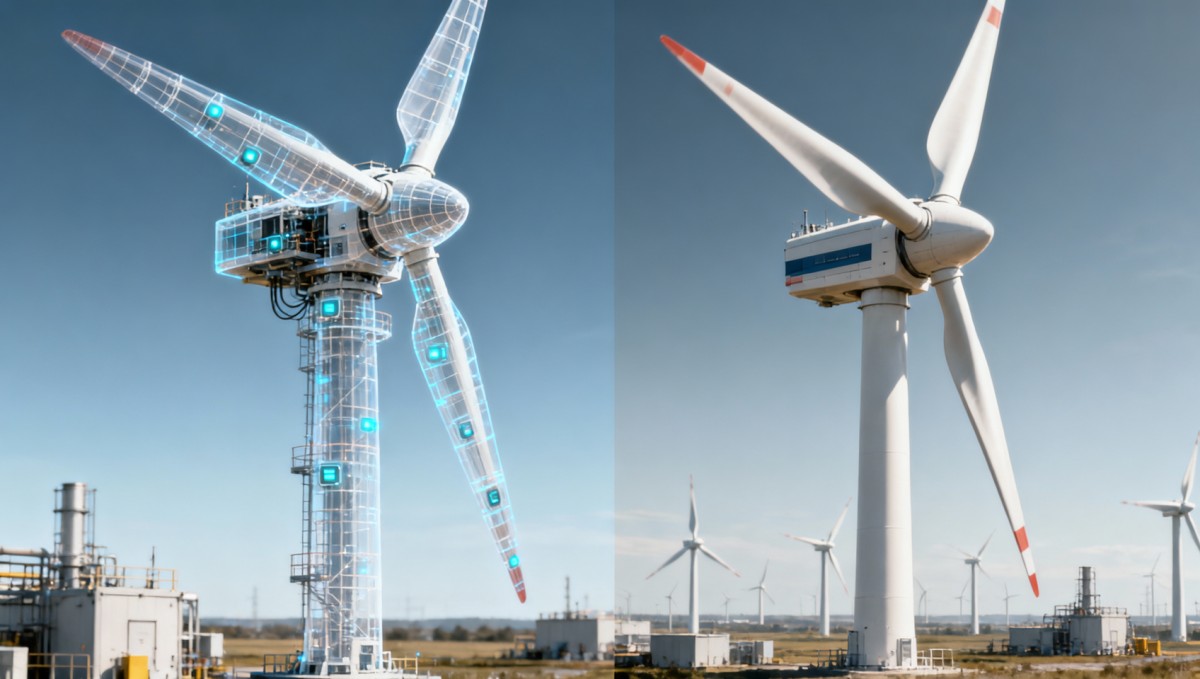
In wind assets, fault detection rarely fails because teams lack data. It fails because the wrong data is trusted for too long. A nacelle vibration trend may rise slowly over 3–6 weeks, but the same pattern can also come from thermal bias, calibration loss, wiring degradation, or edge gateway timestamp mismatch. Without a wind turbine digital twin, operations teams often cannot tell whether the machine is degrading or the measurement chain is drifting.
This matters across the full B2B decision chain. Operators need fewer false alarms during continuous operation. Reliability engineers need a way to verify if a 2%–5% signal shift is a real precursor or only instrument deviation. Procurement teams need to know whether they are buying another layer of dashboards or a diagnostic framework that reduces truck rolls, spare part waste, and unscheduled stops.
A digital twin becomes valuable when it is not treated as a marketing visual. In practical terms, it is a dynamic reference model that compares expected turbine behavior against measured behavior under known boundary conditions such as wind speed, rotor speed, blade pitch, ambient temperature, power output, and operating mode. That comparison is what helps isolate fault signatures from sensor drift.
For information researchers and enterprise decision-makers, the core question is not whether a digital twin sounds advanced. The real question is whether the model tracks enough physical relationships to identify deviations before failure escalation. In many industrial settings, useful warning horizons are not months in advance, but 7–30 days ahead of functional degradation. Even that window can materially improve maintenance planning.
Where drift enters the signal chain
Sensor drift can appear in multiple layers, not just inside the transducer. A healthy monitoring program checks the full chain:
- Primary sensing layer: accelerometers, temperature probes, strain sensors, power meters, and yaw position encoders can shift gradually after long duty cycles.
- Installation layer: loose mounting torque, cable shielding issues, moisture ingress, or connector oxidation can create apparent trend changes.
- Acquisition layer: sampling frequency mismatch, clock drift, and edge computing preprocessing rules can distort event timing and severity.
- Visualization layer: poorly configured industrial iot dashboard thresholds can amplify noise or hide slow-burning anomalies.
When teams evaluate condition monitoring suppliers, they should ask which of these four layers are included in the diagnostic logic. A platform that only plots signals is not equivalent to a wind turbine digital twin with residual analysis and sensor health validation.
How does a wind turbine digital twin separate true faults from bad measurements?
The operational value of a wind turbine digital twin comes from residuals, cross-correlation, and model consistency checks. A residual is the gap between measured behavior and predicted behavior. If generator bearing temperature rises while shaft speed, ambient conditions, and expected thermal response remain aligned, the twin flags a likely local anomaly. If several related variables all diverge in a physically inconsistent way, the twin may indicate sensor drift instead of component damage.
This is why physics-based and hybrid models are usually more useful than simple threshold alarms. A threshold says a temperature above one value is bad. A digital twin asks a better question: given load, wind regime, cooling conditions, and operating state over the last 15–60 minutes, should the temperature be where it is? That contextual reasoning can reduce nuisance alarms and support predictive maintenance.
For operators, the advantage is earlier intervention without over-maintenance. For procurement teams, the advantage is measurable system scope. A serious platform should document its model inputs, update cadence, edge-to-cloud latency expectations, and retraining requirements. In industrial deployments, dashboard refresh intervals of 1–10 seconds may be adequate for operations, but fault analytics often rely on trend windows spanning hours, shifts, or several days.
For executive teams, the commercial question is whether diagnostic confidence improves enough to change maintenance timing. If the twin only confirms what vibration analysis already found during manual review, return on investment may be limited. If it can distinguish measurement error from gearbox, blade pitch, or generator anomalies before work orders are triggered, the business case becomes stronger.
Three technical mechanisms that matter most
1. Model-based residual analysis
Residual analysis compares expected and actual values across multiple operating states. In a mature setup, the system does not rely on a single channel. It examines coupled variables such as torque, vibration, power output, yaw angle, and thermal behavior over repeated duty cycles. Persistent residual growth across 2–3 linked variables is often more informative than one drifting channel.
2. Virtual sensing and plausibility checks
A digital twin can estimate an expected variable from neighboring signals. If the measured nacelle temperature differs sharply from the model-derived estimate for several hours while other subsystems remain stable, the issue may be instrumentation rather than a thermal event. This kind of virtual sensing is especially useful when field calibration windows are limited to monthly or quarterly service visits.
3. Fleet-level anomaly ranking
Single-turbine analysis can miss context. Fleet benchmarking lets teams compare one asset against turbines of similar rating, site class, and operating conditions. If one unit shows a 4°C thermal deviation or an unusual vibration residual while peers remain within expected bands, confidence in a real anomaly increases. TechStat Vanguard favors this parameter-first approach because it filters out generic claims and focuses on comparable engineering evidence.
What should buyers ask vendors to prove?
Before procurement, teams should request explicit answers on model governance, not just screenshots. The table below helps structure a practical review of wind turbine digital twin capability versus simple condition monitoring.
The key takeaway is simple: a digital twin should demonstrate how it reasons, not just how it displays. If a vendor cannot explain residual logic, retraining triggers, and sensor validation workflow, the offering may be a monitoring interface rather than a decision-support system.
Which operating scenarios benefit most from early fault detection before drift dominates?
Not every wind asset gains equal value from the same digital twin architecture. The strongest use cases are sites where access is costly, weather windows are narrow, and maintenance delays can cascade into larger outages. Offshore projects, remote onshore clusters, and mixed-age fleets usually have the highest need for early discrimination between incipient faults and sensor quality problems.
For operators, the most practical targets are subsystems with slow degradation and costly secondary damage. These often include bearings, gearboxes, generator cooling paths, pitch systems, and yaw drives. In such cases, an extra 1–3 weeks of diagnostic confidence can improve crew scheduling, spare part allocation, and crane planning.
For enterprise buyers, the question becomes one of deployment priority. Should the digital twin start on a full turbine model, or on selected subsystems with the highest maintenance spend? In many programs, phased deployment is more realistic: begin with 2–4 critical subsystems, validate alert accuracy over one season, then scale across the fleet.
TSV’s engineering-first perspective is especially relevant here. In hard-tech procurement, claims about smart analytics are less useful than traceable definitions of input variables, update frequency, threshold governance, and failure mode coverage. Buyers should prioritize transparent scope over broad but vague promises.
Scenario-based deployment priorities
The following table helps decision-makers align digital twin investment with operating conditions and risk profile.
A scenario-based rollout prevents overbuying. If the current pain point is false alarms on a handful of costly assets, the right answer may be a focused diagnostic deployment rather than a fleet-wide platform replacement. Procurement should tie scope to failure modes, not to software branding.
Typical workflow from anomaly to maintenance action
- Collect synchronized operational data over a stable baseline period, often 30–90 days for initial model tuning.
- Build subsystem relationships for thermal, vibration, load, and control-state behavior.
- Generate residuals and rank alerts by persistence, cross-signal consistency, and severity.
- Review alerts in the industrial iot dashboard, separating likely sensor issues from machine anomalies.
- Trigger inspection, calibration, or maintenance planning depending on diagnostic confidence and operating risk.
This workflow matters because predictive maintenance is only useful when it changes field execution. A better alert with no maintenance decision path does not create operational value.
What should procurement and technical teams evaluate before buying?
A common procurement mistake is treating all digital twin offers as software licenses with similar value. In reality, cost and usefulness depend on model depth, data readiness, integration effort, and support for sensor governance. A lower-priced platform can become expensive if it requires heavy custom engineering or produces frequent false positives that burden operations.
Buyers should begin with five checks. First, define the priority failure modes. Second, audit sensor quality and historian access. Third, confirm edge and cloud architecture. Fourth, review whether the industrial iot dashboard is operator-friendly. Fifth, clarify implementation responsibility across the vendor, site team, and system integrator. These five checks usually reveal whether the project is diagnostic-led or presentation-led.
Implementation timelines vary by site complexity, but many industrial deployments follow a 3-stage path over 6–16 weeks: data mapping and asset review, model tuning and dashboard setup, then validation and operational handover. For larger fleets or mixed OEM environments, the timeline can be longer because naming conventions, signal quality, and operating states require cleanup before the digital twin performs reliably.
Standards also matter, even when no single certification defines digital twin quality. Buyers should request traceability for data handling, cybersecurity responsibilities, calibration procedures, alarm management logic, and interfaces with existing SCADA or condition monitoring systems. In regulated or high-risk sectors, documentation discipline matters almost as much as analytic capability.
Procurement checklist for a wind turbine digital twin project
- Define 3–5 target failure modes, such as bearing wear, gearbox thermal deviation, pitch actuator issues, or sensor drift in temperature and vibration channels.
- Verify data granularity, retention period, and synchronization quality across SCADA, CMS, and edge devices.
- Ask how the model handles missing data, maintenance events, curtailment periods, and extreme weather transitions.
- Check whether alert workflows distinguish calibration need, inspection need, and urgent mechanical intervention.
- Request a pilot scope with acceptance criteria, such as alert precision, review time reduction, or dispatch avoidance over one operating cycle.
These criteria align with TSV’s broader position in hard-tech evaluation. Parameters, tolerances, and measurable workflows should govern buying decisions. If a supplier cannot map claims to engineering checkpoints, the offer is difficult to validate at procurement or board level.
Cost and alternative approaches
Not every organization needs a full digital twin on day one. In some cases, upgraded condition monitoring with better calibration routines, improved sensor placement, and clearer dashboard logic can solve 60%–70% of the pain. In other cases, especially where sensor drift repeatedly masks emerging faults, a model-based system is the more economical path because it reduces misdiagnosis and unnecessary site visits.
A sensible selection process compares three options: maintain current monitoring and improve instrumentation discipline, deploy a limited subsystem digital twin, or implement a fleet-scale predictive maintenance program. The right choice depends on outage cost, asset criticality, service access, and internal analytics capability.
FAQ: what do engineers, operators, and decision-makers ask most often?
The questions below reflect common search intent around wind turbine digital twin deployment, predictive maintenance, and industrial iot dashboard value in real operating environments.
Can a digital twin detect faults before physical sensors show a hard alarm?
Yes, that is often the main goal, but only when the twin models expected behavior under changing operating states. It does not replace sensors. It interprets them better. In practice, earlier warning may mean identifying abnormal divergence over several hours, several load cycles, or 7–30 days before a conventional threshold alarm becomes obvious.
How is sensor drift different from a real turbine fault?
Sensor drift usually produces a gradual measurement bias that lacks physical consistency across related variables. A real fault tends to create coherent changes in multiple signals, such as temperature, vibration, power efficiency, or control response. A wind turbine digital twin tests this consistency rather than trusting one channel in isolation.
What data is usually required to start?
Most projects begin with SCADA data, condition monitoring feeds where available, maintenance history, and asset metadata. A stable baseline of 30–90 days is often useful for initial tuning, though the exact period depends on seasonality, operating modes, and data quality. Better synchronization generally matters more than simply having more tags.
Is an industrial iot dashboard enough on its own?
No. A dashboard is necessary for visibility, but it does not automatically deliver diagnostic judgment. Without model logic, drift validation, and maintenance workflows, the dashboard may only present cleaner charts. The strongest systems combine visualization, residual analytics, and action rules that tell teams what to inspect, recalibrate, or repair.
When should a company pilot instead of scaling immediately?
Pilot first when data quality is uncertain, when the fleet has mixed OEM or mixed-age assets, or when internal teams need proof of value before broader rollout. A 6–12 week pilot on selected turbines or high-cost subsystems often provides a more reliable basis for scaling than an enterprise-wide purchase driven by generic software claims.
Why work with a data-driven technical benchmark partner?
Wind turbine digital twin decisions are rarely only about software. They sit at the intersection of sensors, edge architecture, physical modeling, maintenance economics, and procurement risk. That is exactly where information noise becomes expensive. Teams need parameter-based judgment, not broad claims about intelligence or automation.
TechStat Vanguard approaches this challenge from an engineering benchmark perspective. We focus on the measurable questions behind supplier evaluation: which variables are modeled, how drift is identified, what warning window is realistic, how dashboards support operators, and what implementation constraints affect time to value. This helps research teams, buyers, and executives compare options on technical substance.
If you are assessing a predictive maintenance program, refining a wind turbine digital twin specification, or comparing industrial iot dashboard vendors, you can consult TSV on practical topics such as parameter confirmation, model scope definition, integration checkpoints, delivery timeline expectations, and supplier comparison criteria. We can also help structure pilot acceptance standards for mixed-fleet or high-access-cost sites.
For your next discussion, bring the details that matter: target failure modes, current sensor list, data interval, alert pain points, maintenance workflow, desired pilot duration, and reporting needs for procurement or executive review. That creates a faster path to meaningful technical evaluation, clearer quotation alignment, and a decision grounded in engineering truth rather than presentation language.
Search News
Hot Articles
- Carbon Fiber StructuresHow to Specify Aerospace Carbon Fiber Assemblies for Lightweight, Load-Bearing PartsJul 11, 2026
- Machine VisionXiaomi, Alibaba DAMO Academy Drive Open-Source Robotics Model Ecosystem, Lowering Algorithm Development Barriers for Overseas SMEs Adopting Chinese Robotics SolutionsMar 30, 2026
- Cobots & ArmsShanxi 'AI+' Conference Showcases Embodied Intelligence with Multinational Buyer Engagement: Key Industry ImplicationsMar 30, 2026
Popular Tags
Recommended News
 Jul 11, 2026How to Specify Aerospace Carbon Fiber Assemblies for Lightweight, Load-Bearing PartsAerospace carbon fiber assemblies: learn how to specify laminate design, load data, joining methods, and inspection controls for lighter, reliable load-bearing aerospace parts.Elena Rostova (UAV Systems Researcher)
 Mar 30, 2026Xiaomi, Alibaba DAMO Academy Drive Open-Source Robotics Model Ecosystem, Lowering Algorithm Development Barriers for Overseas SMEs Adopting Chinese Robotics SolutionsXiaomi & Alibaba DAMO Academy's open-source robotics models lower algorithm barriers for global SMEs. Boost efficiency in manufacturing, logistics & smart retail with ROS 2 compatible solutions.TSV Data Lab
 Mar 30, 2026Shanxi 'AI+' Conference Showcases Embodied Intelligence with Multinational Buyer Engagement: Key Industry ImplicationsShanxi 'AI+' Conference highlights embodied intelligence with Tesla, Ubtech & Jiantao showcasing multimodal robotics. 40+ global buyers validated tech on-site, creating new B2B channels for industrial automation & AI solutions.Chen Wei (Automation Lead Engineer)
 Mar 30, 2026Zhongguancun Unveils 6G Integrated Sensing-Computing-Intelligence Platform to Empower Embodied Robots for Global Industrial ApplicationsZhongguancun's new 6G platform revolutionizes industrial robotics with <10ms latency, empowering global automotive, logistics & port automation. Discover how this tech boosts China's smart manufacturing exports.TSV Data Lab
 Mar 30, 2026Mech-Mind Tianjin Embodied Intelligence R&D and Production Base Goes Live, Cutting Delivery Time by 20%–30% for Global Customized AMR+Vision SolutionsMech-Mind's Tianjin AMR+Vision production base cuts delivery time by 20%-30% for欧美 & Latin American markets. Discover how this PLd-certified facility accelerates customized robotics solutions for smart manufacturing and logistics.Chen Wei (Automation Lead Engineer)
 Mar 30, 2026Boao Forum Reveals 'Co-evolution of Big and Small Brains' Trend in Humanoid Robots, China's Embodied Intelligence Accelerates Adaptation to Overseas Manufacturing Service ScenariosDiscover how China's humanoid robots, featuring 'Co-evolution of Big and Small Brains,' are revolutionizing global manufacturing. Learn about Embodied Tian Gong 3.0's ISO compliance and overseas deployment at Boao Forum 2026.Chen Wei (Automation Lead Engineer)
 Mar 30, 2026China Railway Industrial Secures Patent for Embodied Robotics in Material Handling, Boosting High-Precision Delivery Capabilities for Overseas Infrastructure and Manufacturing ProjectsChina Railway Industrial's new patent for embodied robotics in material handling boosts high-precision delivery for global infrastructure & manufacturing. Discover how this innovation enhances logistics accuracy in automotive, rail transit & EPC projects.Chen Wei (Automation Lead Engineer)
 Oct 14, 2026Drone Frame Composites: Carbon Fiber vs. Fiberglass for Weight and StiffnessExplore drone structural materials composites: compare carbon fiber and fiberglass for weight, stiffness, cost, and antenna compatibility. Find the right material for your drone frame.Elena Rostova (UAV Systems Researcher)
 Oct 13, 2026Smart Cameras vs. PC-Based Machine Vision: Which Fits High-Speed Inspection?This industrial product comparison for machine vision weighs smart cameras vs. PC-based systems on latency, throughput, and cost. Discover your best fit for high-speed inspection.TSV Data Lab
 Oct 12, 2026How to Verify RoHS Compliance in Industrial Sensing Systems Before DeploymentRoHS compliant sensing systems: learn how to verify materials, supplier declarations, testing, and configuration controls before industrial deployment.TSV Data Lab
 Oct 11, 2026How Procurement-Oriented Content Taxonomy Improves B2B Buying JourneysProcurement-oriented content taxonomy streamlines B2B buying journeys with clearer evidence, supplier comparisons, risk visibility, and faster approvals.TSV Data Lab
 Oct 10, 2026How to Select a Machine Performance Monitoring Platform for OEE and Downtime ReductionMachine performance monitoring platform selection guide: validate machine states, OEE data, downtime reasons, integrations, and scalability to reduce losses with confidence.TSV Data Lab
 Oct 08, 2026How to Machine Inconel 625 Blades Without Heat Cracks or Edge ChippingInconel 625 blade machining guide: prevent heat cracks, edge chipping, chatter, and work hardening with proven tooling, cooling, fixturing, and inspection strategies.Dr. Marcus Vance
 Oct 07, 2026How to Evaluate an HMI Panel Distributor for Industrial Automation ProjectsHMI panel distributor evaluation guide: verify technical compatibility, traceability, supply reliability, lifecycle support, and total cost for automation projects.Victor Lin (Chief Software Architect)
 Oct 06, 2026Navigation Fault Tolerance Standards for AMRs: What Safety Teams Must VerifyNavigation fault tolerance standards: learn what AMR safety teams must verify, from localization loss and sensor faults to stopping distance, safe restart, and site-specific validation.Chen Wei (Automation Lead Engineer)
 Oct 05, 2026Calculating Edge Computing Total Cost of Ownership Across Distributed SitesEdge computing ownership cost explained: calculate deployment, energy, connectivity, security, remote support, and refresh costs across distributed sites.TSV Data Lab
 Oct 04, 2026CAD/CAM Benchmarking in the GCC: What Manufacturers Should Ask a ConsultantCAD CAM benchmark consultant GCC guide: learn the key questions manufacturers should ask to validate post-processors, workflows, machine performance, and production risk.Victor Lin (Chief Software Architect)
 Oct 03, 2026Selecting Automotive Radar Sensor Modules for ADAS Range, Resolution, and IntegrationAutomotive radar sensor module selection guide for ADAS: compare range, resolution, field of view, latency, and integration to build safer, reliable vehicle systems.TSV Data Lab
 Oct 02, 2026How to Qualify Machined Parts Suppliers for Hard Tech ProgramsHard tech supply chain machined parts demand rigorous supplier qualification. Learn how to assess capability, traceability, quality controls, and delivery resilience.Dr. Marcus Vance
 Oct 01, 2026How to Select an Outdoor Security Radar Sensor for Perimeter Detection?Outdoor security radar sensor selection guide: compare range, accuracy, false-alarm control, integration, and field testing for reliable perimeter detection.TSV Data Lab
 Sep 30, 2026How to Evaluate Solid-State LiDAR Hardware for Outdoor Autonomous VehiclesSolid state LiDAR hardware evaluation guide for outdoor autonomous vehicles—compare range, point-cloud quality, environmental resilience, integration, and safety.TSV Data Lab
 Sep 29, 2026ISO 9283 Repeatability: How to Evaluate Cobot Positioning PerformanceISO 9283 cobot repeatability explained: learn how payload, reach, approach direction, and test conditions affect positioning performance and cell capability.Chen Wei (Automation Lead Engineer)
 Oct 14, 2026How tight can micro machining aerospace tolerances be in production?Micro machining aerospace tolerances can reach low-micron levels in production. Learn what controls repeatability, inspection confidence, and flight-critical quality.Dr. Marcus Vance
 Oct 13, 2026How to keep an industrial robotic integration project on scheduleIndustrial robotic integration project management: keep automation on schedule with proven controls for interfaces, suppliers, FAT, commissioning, and change risk.Victor Lin (Chief Software Architect)























