
VTOL drone for pipeline inspection adds range but also complexity
Publication Date
author
A VTOL drone for pipeline inspection can dramatically extend mission range across remote corridors, but added airframe, powertrain, and control complexity raises new engineering, maintenance, and procurement questions. For teams comparing custom drone for power line inspection platforms, uav fleet management system compatibility, and drone photogrammetry software integration, the real decision lies in measurable performance, risk, and lifecycle efficiency.
In practice, pipeline operators are not buying endurance alone. They are buying inspection coverage per day, acceptable fault tolerance in transition flight, recoverable maintenance hours per 100 missions, and clean data outputs that feed existing asset systems. That is why the VTOL question matters to R&D engineers, field operators, procurement managers, and executive decision-makers at the same time.
For long linear infrastructure, especially corridors stretching 50 km to 200 km through remote, windy, or poorly accessible terrain, fixed-wing efficiency is attractive. Yet once vertical takeoff and landing is added, the aircraft becomes a more complex system with more failure points, more software dependencies, and stricter integration requirements across sensors, batteries, autopilot logic, and fleet control workflows.
A data-driven evaluation is therefore more useful than marketing language. The best platform is not the one with the longest advertised flight time, but the one that balances range, launch flexibility, image quality, spare-part availability, software interoperability, and predictable operating cost across a 12- to 36-month ownership horizon.
Why VTOL changes the economics of pipeline inspection
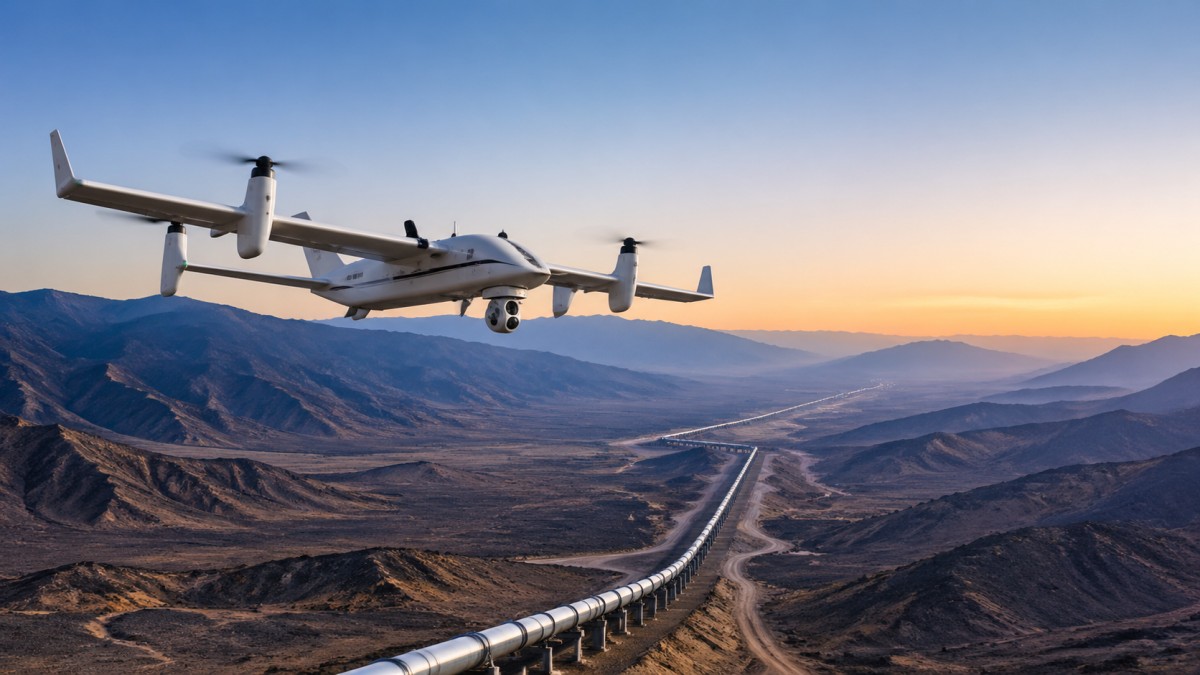
Pipeline inspection has always been shaped by geography. Conventional multirotor aircraft are easier to deploy close to compressor stations, pumping sites, and small access roads, but their practical range often limits corridor coverage. A VTOL drone for pipeline inspection addresses that gap by combining vertical launch convenience with forward-flight efficiency, often extending practical mission distances into the 40 km to 120 km class, depending on payload, reserve policy, and wind.
That range increase can materially reduce field logistics. Instead of moving crews every 5 km to 10 km, a VTOL team may cover several segments in one sortie. For operators managing corrosion patrol, encroachment detection, thermal leak checks, or right-of-way mapping, fewer launch points can translate into lower vehicle mileage, lower crew fatigue, and shorter daily mobilization windows.
However, the efficiency gain only matters if the aircraft maintains stable data capture. A platform that claims 150 minutes in ideal conditions but loses image overlap in 8 m/s crosswinds or struggles during transition at high density altitude may produce incomplete inspections. In asset-intensive industries, reflight costs can quickly erase the headline range advantage.
There is also a procurement reality. Buyers often compare custom drone for power line inspection solutions and assume pipeline applications are similar. They overlap, but not completely. Pipeline corridors place stronger emphasis on long-range communication, terrain following, geofenced emergency behavior, and efficient handoff into maintenance planning systems. A successful VTOL evaluation must therefore go beyond airframe brochures.
Where the operational value usually appears
- Remote corridors with sparse roads, where launch-site relocation consumes 20% to 35% of the daily schedule.
- Mixed inspection missions requiring RGB, thermal, and mapping passes within the same 60- to 120-minute operational window.
- Programs scaling beyond 3 aircraft, where centralized uav fleet management system visibility becomes critical for maintenance and compliance.
- Survey workflows that depend on drone photogrammetry software integration for measurable overlap, geotagging accuracy, and repeatable reporting.
The table below outlines how VTOL platforms differ from multirotor and conventional fixed-wing systems in common pipeline use cases. The goal is not to declare one architecture superior in all cases, but to clarify where each one fits operationally and financially.
The key conclusion is that VTOL often occupies the most attractive middle ground for long linear inspection without runway access. But that value exists only when teams also budget for spare propulsion components, transition testing, software integration work, and operator training beyond basic line-of-sight familiarity.
The hidden complexity: airframe, powertrain, control logic, and data chain
The most common procurement mistake is to treat a VTOL drone for pipeline inspection as a fixed-wing platform with extra motors. In reality, the system architecture is more demanding. It must manage vertical lift, transition sequencing, forward-flight efficiency, battery health, payload power draw, navigation precision, and fail-safe behavior under changing terrain and wind. Each of those layers can affect mission reliability.
Transition flight is one of the most critical stages. A platform may behave well in hover and cruise but still show instability during the 5- to 20-second changeover between flight modes. If the aircraft carries a thermal payload, mapping camera, or LiDAR module, center-of-gravity shifts and power draw patterns can change enough to alter controllability. This is why payload-qualified testing matters more than empty-airframe claims.
Maintenance complexity also rises quickly. A multirotor fleet may center service intervals around propellers, motors, batteries, and arms. A hybrid VTOL adds transition actuators, control-surface linkages, fixed-wing structures, and more nuanced firmware validation after parts replacement. For operators running 10 to 30 missions per week, this can increase maintenance planning from a simple battery log into a structured reliability program.
Then comes the data chain. The aircraft is only one layer of the inspection stack. If captured imagery, thermal frames, and geospatial outputs do not pass cleanly into drone photogrammetry software integration workflows and enterprise asset systems, the range benefit becomes operational noise rather than actionable insight. For decision-makers, this means software compatibility deserves nearly the same weight as flight performance.
Four engineering checkpoints before procurement
1. Transition robustness
Ask for evidence of stable transition with the actual sensor class you intend to fly. A useful acceptance threshold might include repeatable transition behavior across at least 20 consecutive flights, with no abnormal attitude excursions and no control resets.
2. Battery and power reserve policy
Practical endurance should be quoted with reserve. For corridor inspection, many teams prefer a minimum landing reserve of 20% to 30%, especially in locations with unpredictable wind return legs. Endurance claims without reserve policy are not procurement-grade numbers.
3. Payload-to-range stability
A 1.2 kg payload and a 2.5 kg payload can produce very different mission economics. Request a payload derating curve or at least a performance table covering cruise speed, endurance, and takeoff weight at 2 to 3 payload points.
4. Software and fleet interoperability
Integration with a uav fleet management system should include mission logs, component life tracking, battery records, firmware version control, and export readiness for GIS or maintenance platforms. Otherwise, scaling from 1 aircraft to 6 aircraft becomes an administrative bottleneck.
Common technical risk signals
- Flight time quoted without payload, wind condition, or reserve assumption.
- No clear maintenance interval for transition hardware after 50 to 100 cycles.
- No documented workflow for post-flight log review and component traceability.
- Photogrammetry compatibility described generally, but without export formats, overlap planning support, or georeferencing details.
The practical lesson is simple: added range is real, but so is added systems engineering burden. Teams that evaluate only endurance and camera resolution often underestimate total ownership effort during the first 6 to 12 months of deployment.
How to compare VTOL platforms using measurable procurement criteria
For procurement teams, the most effective way to compare a VTOL drone for pipeline inspection is to convert technical claims into scoring categories. This prevents decisions from being driven by one headline figure such as maximum range. In most serious evaluations, at least 5 dimensions should be scored: mission performance, sensor suitability, maintainability, software interoperability, and supplier support responsiveness.
Those categories should also reflect the actual inspection mission. A leak-detection program using thermal imagery may care more about stable low-altitude passes and sensor calibration handling. A right-of-way mapping program may prioritize repeatable overlap, georeferencing consistency, and cleaner drone photogrammetry software integration. Procurement discipline begins by tying platform claims to mission outcomes.
Custom drone for power line inspection offerings are often evaluated on obstacle visibility and conductor corridor behavior. Pipeline inspections usually emphasize different priorities: long corridor efficiency, topographic continuity, thermal repeatability, and easier launch in constrained field conditions. Similar terminology can hide different operational needs, so evaluation forms must be application-specific.
A structured scoring matrix also helps executive stakeholders understand tradeoffs. One platform may reduce daily launch relocations by 30%, but require 15% more maintenance hours and a steeper training curve. Another may have shorter range but better parts access and faster repair turnaround. The right choice depends on the organization’s operating model, not just the aircraft brochure.
Suggested procurement comparison matrix
The following table can be adapted into an RFI or technical evaluation sheet. It is especially useful when comparing multiple VTOL options, a custom drone for power line inspection platform repurposed for pipelines, or a conventional multirotor alternative.
A matrix like this exposes whether a vendor is ready for enterprise deployment or only optimized for demonstrations. It also helps procurement teams compare lifecycle practicality instead of overvaluing advertised endurance or cruise speed.
A 5-step shortlisting method
- Define the primary mission: patrol, leak detection, mapping, encroachment, or mixed use.
- Set numeric minimums for range, reserve, payload, and data format requirements.
- Request payload-specific test evidence rather than generic specification sheets.
- Verify uav fleet management system and software export compatibility before pilot purchase.
- Score maintenance burden and support lead time alongside mission performance.
This approach is especially helpful for companies balancing engineering rigor with commercial timelines. It creates a defensible path from technical review to supplier qualification.
Implementation, maintenance, and software integration in real operations
Even a well-selected aircraft can underperform if rollout is rushed. A serious VTOL deployment should be treated as a systems implementation project, not just a hardware purchase. That means defining pilot-phase mission criteria, setting battery and component traceability rules, assigning maintenance ownership, and validating software handoffs before full-scale adoption.
For many operators, the first 30 to 90 days are the most important. During this phase, teams learn actual field endurance, maintenance frequency, firmware behavior, and data handling efficiency. It is also when friction surfaces between flight crews, GIS analysts, maintenance planners, and procurement staff. A structured onboarding plan reduces the chance that one bad field week gets misread as a platform failure.
Software is central here. A uav fleet management system should not simply show aircraft locations. It should track component lifecycles, battery health, firmware versions, mission anomalies, and service actions. In larger fleets, this can reduce administrative overhead and improve readiness because teams no longer rely on disconnected spreadsheets or informal technician memory.
The same is true for drone photogrammetry software integration. Pipeline inspections generate more value when orthomosaics, thermal layers, and inspection findings can be exported consistently into GIS, digital twins, or maintenance workflows. If data needs to be manually reformatted after every sortie, the labor burden can offset the aircraft’s range advantage.
Recommended rollout sequence
- Phase 1, weeks 1 to 2: acceptance flights, payload validation, emergency procedure checks, and battery baseline logging.
- Phase 2, weeks 3 to 6: limited corridor missions under varied wind and terrain conditions, plus software export tests.
- Phase 3, weeks 7 to 12: routine operations with maintenance interval review, spare-parts consumption tracking, and operator proficiency assessment.
Maintenance metrics worth monitoring
A mature operation should monitor at least 6 maintenance indicators: flights per battery set, unscheduled repairs per 100 sorties, actuator or motor replacement frequency, firmware-related incidents, sensor recalibration intervals, and average downtime per event. These numbers create a factual basis for fleet expansion, supplier negotiation, and replacement planning.
The table below summarizes practical implementation checkpoints for enterprise teams moving from pilot testing to routine pipeline inspection.
The implementation takeaway is that lifecycle efficiency depends on discipline more than on brochure specifications. Strong deployment planning turns a complex hybrid platform into a predictable inspection asset rather than a technically impressive but operationally inconsistent tool.
FAQ for researchers, operators, procurement teams, and decision-makers
How do I know when a VTOL drone for pipeline inspection is justified over a multirotor?
It is usually justified when corridor length, launch-point scarcity, or daily coverage requirements make multirotor relocation inefficient. As a rule of thumb, if crews spend more than 25% of field time repositioning vehicles or if typical mission segments exceed 10 km to 15 km, VTOL economics become more attractive. The final decision should still account for data quality, maintenance capability, and software fit.
Can a custom drone for power line inspection be used for pipeline work?
Sometimes yes, but only after checking mission profile differences. Power line platforms may be optimized for obstacle awareness, conductor alignment, or shorter targeted inspections. Pipeline work often requires broader corridor mapping, more continuous flight lines, and stronger integration with thermal or geospatial reporting. Reuse is possible, but only if payload, endurance, and workflow match the pipeline task.
What should buyers ask about uav fleet management system compatibility?
Ask whether the platform supports mission log export, component life tracking, battery cycle records, maintenance reminders, firmware control, and integration or export into enterprise systems. For fleets above 3 to 5 aircraft, this is not optional. Without it, maintenance visibility weakens and the administrative cost of scaling rises quickly.
Why is drone photogrammetry software integration a procurement issue rather than just an IT issue?
Because data usability determines return on investment. If imagery or thermal outputs require repeated manual corrections, the real cost per inspected kilometer increases. Procurement should therefore verify file formats, geotag consistency, overlap planning support, and export compatibility during vendor evaluation, not after aircraft delivery.
What is the most common mistake in VTOL adoption?
The most common mistake is buying on endurance alone. A platform with impressive advertised range but weak transition reliability, uncertain spare-part support, or poor software interoperability can create more downtime and rework than a shorter-range but better-supported alternative. For enterprise teams, lifecycle predictability is often more valuable than the last 15% of headline endurance.
For pipeline operators and hard-tech buyers, the value of a VTOL drone lies in measurable corridor productivity, controlled engineering risk, and clean integration into maintenance and data systems. Range can absolutely improve inspection economics, but only when supported by reliable transition behavior, disciplined maintenance, and software compatibility that scales beyond pilot programs.
TechStat Vanguard’s perspective is straightforward: strip away broad claims and compare what matters—payload-qualified endurance, reserve policy, wind performance, service intervals, spare-part readiness, fleet management visibility, and downstream data usability. That is how teams reduce trial-and-error cost and make procurement decisions grounded in engineering truth.
If your organization is evaluating a VTOL drone for pipeline inspection, comparing a custom drone for power line inspection platform, or validating uav fleet management system and drone photogrammetry software integration requirements, now is the right time to define the metrics before purchase. Contact us to discuss your application profile, request a structured evaluation framework, or explore a more data-driven selection process.
Search News
Hot Articles
- Carbon Fiber StructuresHow to Specify Aerospace Carbon Fiber Assemblies for Lightweight, Load-Bearing PartsJul 11, 2026
- Machine VisionXiaomi, Alibaba DAMO Academy Drive Open-Source Robotics Model Ecosystem, Lowering Algorithm Development Barriers for Overseas SMEs Adopting Chinese Robotics SolutionsMar 30, 2026
- Cobots & ArmsShanxi 'AI+' Conference Showcases Embodied Intelligence with Multinational Buyer Engagement: Key Industry ImplicationsMar 30, 2026
Popular Tags
Recommended News
 Jul 11, 2026How to Specify Aerospace Carbon Fiber Assemblies for Lightweight, Load-Bearing PartsAerospace carbon fiber assemblies: learn how to specify laminate design, load data, joining methods, and inspection controls for lighter, reliable load-bearing aerospace parts.Elena Rostova (UAV Systems Researcher)
 Mar 30, 2026Xiaomi, Alibaba DAMO Academy Drive Open-Source Robotics Model Ecosystem, Lowering Algorithm Development Barriers for Overseas SMEs Adopting Chinese Robotics SolutionsXiaomi & Alibaba DAMO Academy's open-source robotics models lower algorithm barriers for global SMEs. Boost efficiency in manufacturing, logistics & smart retail with ROS 2 compatible solutions.TSV Data Lab
 Mar 30, 2026Shanxi 'AI+' Conference Showcases Embodied Intelligence with Multinational Buyer Engagement: Key Industry ImplicationsShanxi 'AI+' Conference highlights embodied intelligence with Tesla, Ubtech & Jiantao showcasing multimodal robotics. 40+ global buyers validated tech on-site, creating new B2B channels for industrial automation & AI solutions.Chen Wei (Automation Lead Engineer)
 Mar 30, 2026Zhongguancun Unveils 6G Integrated Sensing-Computing-Intelligence Platform to Empower Embodied Robots for Global Industrial ApplicationsZhongguancun's new 6G platform revolutionizes industrial robotics with <10ms latency, empowering global automotive, logistics & port automation. Discover how this tech boosts China's smart manufacturing exports.TSV Data Lab
 Mar 30, 2026Mech-Mind Tianjin Embodied Intelligence R&D and Production Base Goes Live, Cutting Delivery Time by 20%–30% for Global Customized AMR+Vision SolutionsMech-Mind's Tianjin AMR+Vision production base cuts delivery time by 20%-30% for欧美 & Latin American markets. Discover how this PLd-certified facility accelerates customized robotics solutions for smart manufacturing and logistics.Chen Wei (Automation Lead Engineer)
 Mar 30, 2026Boao Forum Reveals 'Co-evolution of Big and Small Brains' Trend in Humanoid Robots, China's Embodied Intelligence Accelerates Adaptation to Overseas Manufacturing Service ScenariosDiscover how China's humanoid robots, featuring 'Co-evolution of Big and Small Brains,' are revolutionizing global manufacturing. Learn about Embodied Tian Gong 3.0's ISO compliance and overseas deployment at Boao Forum 2026.Chen Wei (Automation Lead Engineer)
 Mar 30, 2026China Railway Industrial Secures Patent for Embodied Robotics in Material Handling, Boosting High-Precision Delivery Capabilities for Overseas Infrastructure and Manufacturing ProjectsChina Railway Industrial's new patent for embodied robotics in material handling boosts high-precision delivery for global infrastructure & manufacturing. Discover how this innovation enhances logistics accuracy in automotive, rail transit & EPC projects.Chen Wei (Automation Lead Engineer)
 Oct 26, 2026Choosing a SCADA System Integrator Company: PLC Compatibility and Long-Term SupportChoose a scada system integrator company with proven PLC compatibility and reliable long-term support. Discover what to test, compare, and require before investing.Victor Lin (Chief Software Architect)
 Oct 25, 2026Hesai Leads Global ADAS Main Lidar Shipments in Yole’s 2026 ReportHesai led global ADAS main lidar shipments with a 43% share in 2025, according to Yole’s 2026 report. Explore what this ranking reveals about its automotive market position.TSV Data Lab
 Oct 25, 2026Choosing an Aerospace Materials Manufacturer: Quality and Traceability ChecksChoosing an aerospace materials manufacturer? Learn how to verify certifications, test reports, and lot traceability to qualify suppliers confidently and reduce costly sourcing risks.Dr. Marcus Vance
 Oct 24, 2026Guotai Haitong: Global Entry-Level 3D Printer Shipments Rose 39% in Q1 2026Entry-level 3D printer shipments rose 39% in Q1 2026, Guotai Haitong reports. Explore how AI, multicolor printing and print farms are shaping market growth.Dr. Marcus Vance
 Oct 24, 2026Choosing an Industrial Vision Inspection Supplier: Acceptance Tests That MatterChoose an industrial vision inspection supplier with confidence. Discover acceptance tests for defect detection, false rejects, production speed, and reliable part rejection before you buy.TSV Data Lab
 Oct 23, 2026US Navy Raises Gecko Robotics Contract Ceiling to $300M for Robotic Fleet MaintenanceUS Navy raises Gecko Robotics’ contract ceiling to $300M for Pacific Fleet robotic inspections. Explore potential opportunities for maintenance suppliers and key procurement considerations.Chen Wei (Automation Lead Engineer)
 Oct 23, 2026Choosing Industrial Sensing Systems for Global Plants: Protocol CompatibilityCompare industrial sensing systems international buyers can trust. Explore protocol compatibility, reduce integration risks, and select proven configurations for reliable global plant deployments.TSV Data Lab
 Oct 22, 2026KUKA Showcases Physical AI and iiQKA.AI Vision at NVIDIA GTC BerlinExplore KUKA’s Physical AI showcase at NVIDIA GTC Berlin and discover how iiQKA.AI Vision aims to simplify robotic vision integration and improve 2D and 3D scene recognition.TSV Data Lab
 Oct 22, 2026Robotic Machining of Advanced Composites: What Tolerances Are Achievable?Explore advanced materials machining robotics: discover what drives achievable composite tolerances and how to validate accuracy before investing in your next machining system.Dr. Marcus Vance
 Oct 21, 2026China’s Industrial Robot Exports Near RMB 10 Billion in First Nine Months of 2026China’s industrial robot exports neared RMB 10 billion in January–September 2026, with value rising faster than volume. Explore the data and what it could mean for suppliers.Chen Wei (Automation Lead Engineer)
 Oct 21, 2026Low-Latency Industrial Data Processing: Pricing and Key Cost DriversExplore industrial data latency price drivers, from edge hardware to integration and support. Learn how to compare quotes, verify performance, and avoid unnecessary costs.TSV Data Lab
 Oct 20, 2026KUKA Launches iiQKA.AI Vision to Simplify Industrial Image ProcessingKUKA iiQKA.AI Vision simplifies industrial image processing with controller-based 2D and 3D vision. Explore drag-and-drop setup for vision-guided automation.TSV Data Lab
 Oct 20, 2026Smart Industrial Edge Devices: Key Criteria for Legacy PLC IntegrationChoose smart industrial edge devices for legacy PLC integration. Discover key criteria for compatibility, data quality, security, and reliable collection without disrupting control.TSV Data Lab
 Oct 19, 2026Choosing a Radar Sensor by Application: Range, Resolution, and Field of ViewSimplify radar sensor application based product selection. Compare range, resolution, and field of view to avoid blind spots and choose with confidence. Explore the guide.TSV Data Lab
 Oct 18, 2026Comparing Material Options for Procurement: Specs, Costs, and Supply RisksExplore procurement oriented technical content on material options, specs, costs, and supply risks. Compare alternatives to cut hidden expenses and make confident sourcing decisions.Dr. Marcus Vance
 Oct 17, 20265-Axis CNC Positioning Accuracy: How to Interpret ISO 230-2 Test ResultsAssess 5 axis CNC machining positioning accuracy with ISO 230-2. Learn to interpret repeatability, reversal error, and test conditions to compare suppliers and make confident acceptance decisions.Dr. Marcus Vance
 Oct 16, 2026Choosing a Rugged Edge AI Box Supplier: Thermal Tests and Lifecycle SupportChoose a rugged edge AI box supplier with proven thermal performance and reliable lifecycle support. Discover the tests and commitments to verify before you buy.TSV Data Lab























