Trampoline Park Construction Costs Explained: Space, Structure, Safety, and ROI Factors
Publication Date
author
Why does trampoline park construction cost vary so much from one project to another?
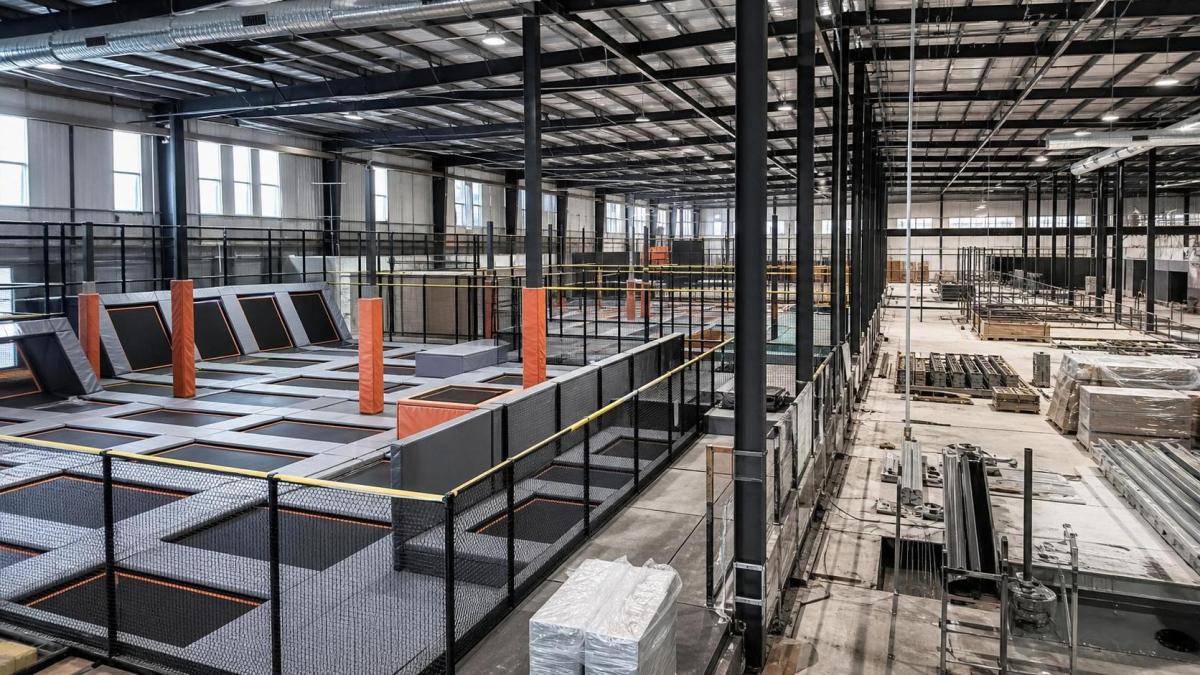
Trampoline park construction rarely follows a single price formula. Two venues with similar floor areas can produce very different budgets.
The main reason is that cost is shaped by engineering depth, not only by square footage. That point is often missed in early feasibility reviews.
A rough estimate may start with lease area, yet the real cost drivers sit deeper. Structural loading, ceiling height, fire systems, code upgrades, and traffic flow matter more.
In practical terms, trampoline park construction combines elements of entertainment fit-out, light industrial installation, and safety-critical public infrastructure.
That is why disciplined evaluators look beyond sales brochures. They compare measurable parameters, supplier scope boundaries, and lifecycle obligations before treating any quote as reliable.
This data-first mindset aligns with how TechStat Vanguard approaches technical decisions. Marketing claims may sound similar, but verified specifications usually reveal meaningful cost differences.
For trampoline park construction, the early questions are straightforward. What space is truly usable, what structure is required, and what safety standard will govern operations?
How much of the budget is really driven by space and building conditions?
More than many expect. Lease rate is only one layer, while the building shell often determines whether a concept remains efficient or becomes expensive.
Ceiling height is a good example. A lower rent may look attractive, but insufficient vertical clearance can force redesign, reduce attraction mix, or trigger relocation.
Column spacing also matters. Dense columns interrupt court layout, shrink usable trampoline zones, and increase custom framing work.
Then comes floor capacity. Not every site can accept concentrated loads from steel frames, spectators, party rooms, food zones, and mechanical equipment without reinforcement.
A practical site review usually checks these points before design proceeds:
- Clear height for trampoline beds, foam pits, and overhead protection systems
- Column grid impact on attraction placement and circulation
- Existing slab strength and need for local reinforcement
- Power, HVAC, drainage, and fire service upgrade requirements
- Entry visibility, parking, and queue management capacity
When these variables are ignored, trampoline park construction costs usually rise late in the process. Late changes are expensive because they affect drawings, permits, procurement, and schedule.
A larger site is not automatically better either. Oversized footprints increase rent, utilities, staffing, and cleaning costs if revenue density does not keep pace.
What structural and equipment choices push trampoline park construction costs up or down?
This is where many headline budgets become misleading. The frame system, pad specification, netting quality, and attraction mix can shift capital cost significantly.
Standard open jump courts are usually simpler to price. Costs climb when the project adds ninja courses, climbing walls, air bags, interactive systems, or mezzanine spectator areas.
Steel is another major variable. Some suppliers quote a basic frame package, while others include fabrication detail, coating grade, anchoring hardware, and fatigue-oriented design review.
That difference matters because trampoline park construction is not just about assembly. Repeated dynamic loading places continuous stress on joints, springs, and support geometry.
A cheaper material package may reduce upfront cost, yet increase maintenance intervals, pad replacement frequency, or downtime exposure.
A simple comparison table helps separate budget noise from usable evaluation criteria.
The better approach is not choosing the cheapest option. It is matching capital cost to operating model, expected throughput, and replacement horizon.
Is safety and code compliance just a line item, or a major cost driver?
It is a major cost driver, and often the one with the highest downside risk if underestimated.
Trampoline park construction must account for public occupancy rules, emergency egress, fire protection, impact attenuation, guard systems, and local inspection requirements.
Some sites already have partial compliance infrastructure. Others need major upgrades to sprinklers, alarms, exits, accessibility routes, or restroom capacity.
This is where quotes can become difficult to compare. One vendor may include safety netting and pad systems only, while another may include testing documents and code coordination support.
A useful rule is to separate product safety from whole-site compliance. The first covers equipment integrity. The second covers whether the entire venue can legally and safely operate.
In real projects, overlooked compliance items commonly include:
- Fire separation between activity zones and support spaces
- Exit count and travel distance under peak occupancy
- Slip resistance in socks-only circulation paths
- Inspection documentation for anchors, welds, and protective materials
- Maintenance logging needed for insurance review
A data-oriented review helps here. Instead of accepting broad claims about safety, ask for test standards, material data, service life assumptions, and responsibility boundaries.
That style of verification reflects TSV’s broader principle: parameters matter more than adjectives. In trampoline park construction, that discipline reduces costly surprises.
How should ROI be judged when initial construction cost looks high?
A higher initial budget is not automatically a weak investment. It depends on how the design converts capacity into stable revenue and manageable operating cost.
The better question is whether trampoline park construction supports sustainable utilization. A lower-cost build that limits throughput may underperform a more expensive but better-planned venue.
ROI analysis usually becomes clearer when broken into a few operational signals:
- Revenue per usable activity area, not total leased area
- Peak-hour circulation efficiency and queue friction
- Maintenance downtime risk by attraction type
- Replacement cycle for pads, springs, nets, and soft goods
- Energy, HVAC, staffing, and cleaning burden over time
More mature evaluations also test downside scenarios. For example, what happens if attendance reaches only seventy percent of the forecast for the first year?
Another useful measure is payback resilience. If one attraction fails or needs replacement, can the site still operate at an acceptable margin?
This is where trampoline park construction should be assessed like any engineered asset. Capital efficiency comes from measurable performance, not from optimistic assumptions alone.
What mistakes make trampoline park construction budgets look good on paper but weak in reality?
The most common mistake is comparing incomplete quotations as if they cover the same scope. They often do not.
Another mistake is treating construction cost and operating cost separately. A cheaper installation may create faster wear, more service calls, or insurance friction later.
Schedule optimism is also risky. Delays in permitting, landlord approvals, imported components, or local inspections can affect launch timing and cash planning.
A concise decision table can help flag weak assumptions before commitment.
If trampoline park construction proposals cannot answer these questions clearly, the issue is not only price. It is decision quality.
So what should be confirmed before moving from concept to supplier comparison?
Start with a disciplined scope sheet. It should define target area, attraction mix, ceiling constraints, structural assumptions, code obligations, and expected maintenance standards.
Then request quotations that follow the same structure. Without aligned scope, trampoline park construction bids are difficult to compare fairly.
It also helps to separate one-time build cost from recurring technical obligations. Replacement cycles, inspection routines, spare parts access, and downtime response should be visible early.
In other words, judge the project as an operating system, not just a fit-out package. That perspective usually leads to stronger capital discipline.
The most reliable next step is simple. Verify the site, normalize supplier scope, test compliance assumptions, and model ROI using measurable operating inputs.
When trampoline park construction is reviewed through that lens, cost becomes easier to interpret, risk becomes easier to rank, and the final decision becomes far more defensible.
Search News
Hot Articles
- Carbon Fiber StructuresHow to Specify Aerospace Carbon Fiber Assemblies for Lightweight, Load-Bearing PartsJul 11, 2026
- Machine VisionXiaomi, Alibaba DAMO Academy Drive Open-Source Robotics Model Ecosystem, Lowering Algorithm Development Barriers for Overseas SMEs Adopting Chinese Robotics SolutionsMar 30, 2026
- Cobots & ArmsShanxi 'AI+' Conference Showcases Embodied Intelligence with Multinational Buyer Engagement: Key Industry ImplicationsMar 30, 2026
Popular Tags
Recommended News
 Jul 11, 2026How to Specify Aerospace Carbon Fiber Assemblies for Lightweight, Load-Bearing PartsAerospace carbon fiber assemblies: learn how to specify laminate design, load data, joining methods, and inspection controls for lighter, reliable load-bearing aerospace parts.Elena Rostova (UAV Systems Researcher)
 Mar 30, 2026Xiaomi, Alibaba DAMO Academy Drive Open-Source Robotics Model Ecosystem, Lowering Algorithm Development Barriers for Overseas SMEs Adopting Chinese Robotics SolutionsXiaomi & Alibaba DAMO Academy's open-source robotics models lower algorithm barriers for global SMEs. Boost efficiency in manufacturing, logistics & smart retail with ROS 2 compatible solutions.TSV Data Lab
 Mar 30, 2026Shanxi 'AI+' Conference Showcases Embodied Intelligence with Multinational Buyer Engagement: Key Industry ImplicationsShanxi 'AI+' Conference highlights embodied intelligence with Tesla, Ubtech & Jiantao showcasing multimodal robotics. 40+ global buyers validated tech on-site, creating new B2B channels for industrial automation & AI solutions.Chen Wei (Automation Lead Engineer)
 Mar 30, 2026Zhongguancun Unveils 6G Integrated Sensing-Computing-Intelligence Platform to Empower Embodied Robots for Global Industrial ApplicationsZhongguancun's new 6G platform revolutionizes industrial robotics with <10ms latency, empowering global automotive, logistics & port automation. Discover how this tech boosts China's smart manufacturing exports.TSV Data Lab
 Mar 30, 2026Mech-Mind Tianjin Embodied Intelligence R&D and Production Base Goes Live, Cutting Delivery Time by 20%–30% for Global Customized AMR+Vision SolutionsMech-Mind's Tianjin AMR+Vision production base cuts delivery time by 20%-30% for欧美 & Latin American markets. Discover how this PLd-certified facility accelerates customized robotics solutions for smart manufacturing and logistics.Chen Wei (Automation Lead Engineer)
 Mar 30, 2026Boao Forum Reveals 'Co-evolution of Big and Small Brains' Trend in Humanoid Robots, China's Embodied Intelligence Accelerates Adaptation to Overseas Manufacturing Service ScenariosDiscover how China's humanoid robots, featuring 'Co-evolution of Big and Small Brains,' are revolutionizing global manufacturing. Learn about Embodied Tian Gong 3.0's ISO compliance and overseas deployment at Boao Forum 2026.Chen Wei (Automation Lead Engineer)
 Mar 30, 2026China Railway Industrial Secures Patent for Embodied Robotics in Material Handling, Boosting High-Precision Delivery Capabilities for Overseas Infrastructure and Manufacturing ProjectsChina Railway Industrial's new patent for embodied robotics in material handling boosts high-precision delivery for global infrastructure & manufacturing. Discover how this innovation enhances logistics accuracy in automotive, rail transit & EPC projects.Chen Wei (Automation Lead Engineer)
 Sep 19, 2026How to Scope Automation Integration Services for Multi-System Factory ProjectsAutomation integration services: learn how to scope multi-system factory projects with clear workflows, interface contracts, safety boundaries, and acceptance criteria.Victor Lin (Chief Software Architect)
 Sep 18, 2026Selecting UAV Aerospace Structural Parts for Strength, Weight, and Fatigue LifeUAV aerospace structural parts guide: compare strength, weight, stiffness, fatigue life, joints, and traceability to select reliable flight-ready components.Elena Rostova (UAV Systems Researcher)
 Sep 17, 2026Selecting Commercial Drone Payloads for European Inspection ProjectsCommercial drone payloads Europe: learn how to select RGB, thermal and LiDAR systems for compliant, reliable inspection data and better project outcomes.Elena Rostova (UAV Systems Researcher)
 Sep 16, 2026Machining Tolerance Validation: How to Verify Critical Dimensions Before Production ReleaseMachining tolerance analysis validation: verify critical dimensions, measurement systems, process capability, and tolerance stacks before production release.Dr. Marcus Vance
 Sep 15, 2026AGV Tape Guidance vs Laser Navigation: Which Fits Your Warehouse Layout?AGV tape guidance comparison: discover how tape and laser navigation fit changing warehouse layouts, docking needs, floor conditions, maintenance, and route flexibility.Chen Wei (Automation Lead Engineer)
 Sep 14, 2026How Point Cloud Analytics Improves Asset Inspection Workflows Across GCC ProjectsPoint cloud analytics GCC helps project leaders improve asset inspections with accurate change detection, safer workflows, and faster maintenance decisions.TSV Data Lab
 Sep 13, 2026How Aerospace Manufacturers Can Build a Digital Thread From Design to Certified ProductionDigital manufacturing for aerospace: learn how to build a traceable digital thread from design through certified production, supplier control, and audit-ready compliance.Victor Lin (Chief Software Architect)
 Sep 12, 2026How to Select a Thermal Sensor for Mapping Drones in Surveying ProjectsMapping drone thermal sensor selection made simple: compare GSD, radiometric data, NETD, calibration, and workflow fit for accurate, survey-ready thermal maps.Elena Rostova (UAV Systems Researcher)
 Sep 11, 2026Integrating Photogrammetry Workflows into Digital Twin Projects Without Data BottlenecksPhotogrammetry workflow integration for digital twins: learn how to streamline capture, validation, versioning, and delivery to prevent data bottlenecks.Victor Lin (Chief Software Architect)
 Sep 10, 2026Hard-Tech Supply Chain Procurement: Qualifying Suppliers to Cut Lead-Time RiskHard-tech supply chain procurement guide: qualify suppliers with proven process, traceability, capacity, and change control to reduce lead-time risk.Chen Wei (Automation Lead Engineer)
 Sep 09, 2026Industrial Application Notes: Cost Factors That Shape Automation Project BudgetsIndustrial application notes cost factors explained: uncover the engineering, safety, integration, and commissioning variables that shape accurate automation budgets.Victor Lin (Chief Software Architect)
 Sep 08, 2026Supplier Discovery for Sourcing: How Buyers Can Verify Capability and Supply RiskSupplier discovery for sourcing: learn how to verify supplier capability, traceability, quote assumptions, and supply risk before placing production orders.TSV Data Lab
 Sep 07, 2026What Determines Process Control Systems Pricing? A Buyer’s Cost GuideProcess control systems pricing explained: compare hardware, engineering, integration, cybersecurity, validation, and lifecycle costs to choose the right-value solution.Victor Lin (Chief Software Architect)
 Sep 07, 2026AMR Robots in ASEAN: Which Industries Are Adopting Them—and Why?AMR robots ASEAN adoption is accelerating in electronics, automotive, warehousing, healthcare, and cold chain. Explore use cases, risks, and deployment insights.Chen Wei (Automation Lead Engineer)
 Sep 05, 2026How to Evaluate Supplier Qualification Support Tools for Industrial Procurement TeamsSupplier qualification support tools help industrial procurement teams verify technical evidence, manage risk, and make defensible supplier approvals. Learn what to evaluate.Victor Lin (Chief Software Architect)
 Sep 04, 2026Grinding Tolerance Analysis: How to Set Realistic Limits for Precision PartsGrinding tolerance analysis explains how to set realistic limits for precision parts, balance fit, geometry, process capability, and inspection for reliable performance.Dr. Marcus Vance
 Sep 03, 2026Warehouse Automation Strategies to Increase Storage Capacity Without ExpansionWarehouse automation space saving strategies help unlock vertical capacity, optimize slotting, and improve storage density without costly building expansion.Victor Lin (Chief Software Architect)