Choosing a Procurement Content Provider: Data Quality and Coverage
Publication Date
author
Choose a procurement content provider by testing whether its data can support the decisions you actually make: finding viable suppliers, comparing specifications, and preparing qualification work. Database size matters less than whether relevant records are current, traceable, sufficiently detailed, and available for the markets and categories you need.
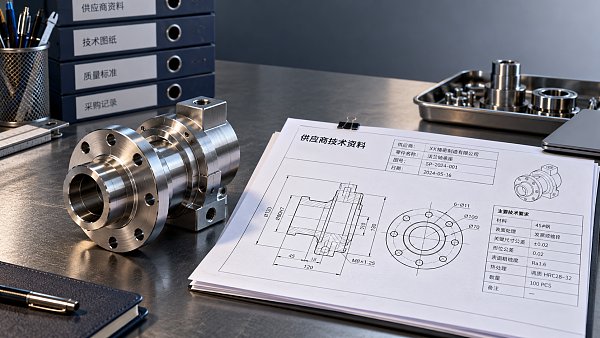
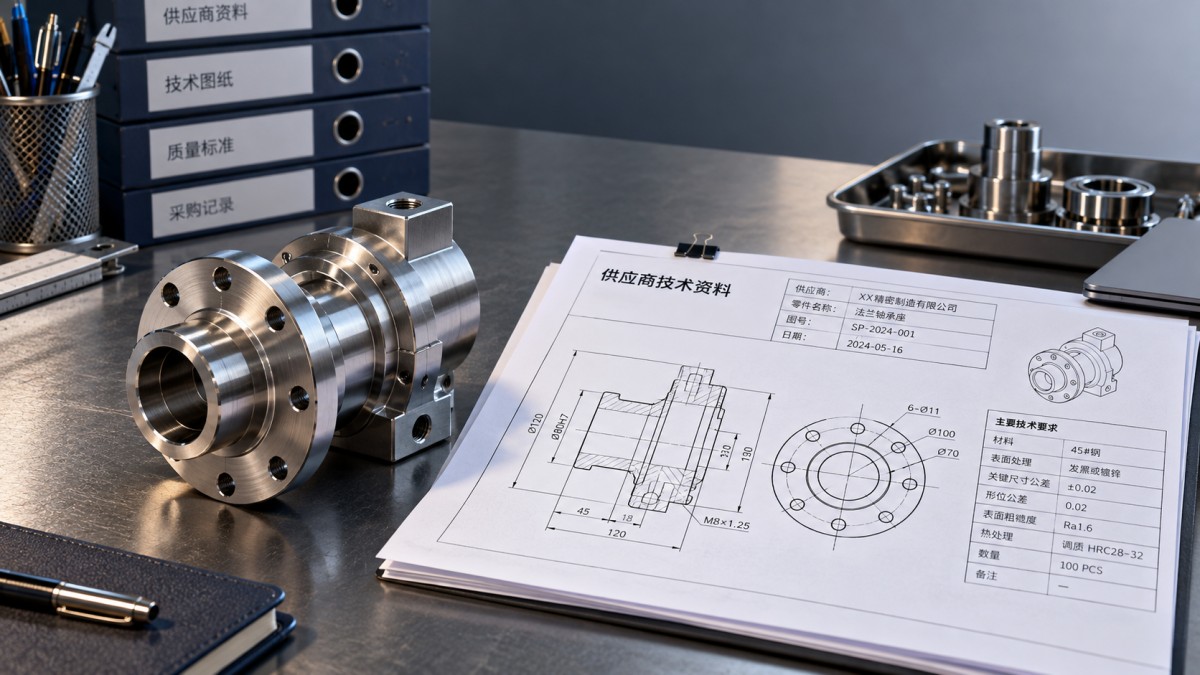
Consider a sourcing search for a precision-machined component. A directory may return numerous suppliers, yet omit material grades, achievable tolerances, or the facility responsible for production. Another source may contain fewer records but provide dated evidence and links to original documents. Without those details, a shortlist can look complete while important qualification work remains undone.
Define the decision before comparing databases
Procurement content can include supplier profiles, product catalogs, technical specifications, certification information, ownership records, and risk signals. Providers differ in which of these they collect, how they verify them, and whether they deliver them through a searchable interface, an export, or a system integration. Start by deciding which decisions the content must support rather than asking for a general demonstration.
For supplier discovery, the essential questions may be whether a company serves a region, accepts the required production volumes, and has relevant manufacturing capabilities. For technical screening, the team may also need material compatibility, measurement conditions, drawings, or test results. A source suitable for building a long list may not be sufficient for approving a supplier or comparing equipment performance.
Write down a small set of representative searches before contacting providers. Include a routine category, a technically demanding requirement, and a market where your existing visibility is weak. Specify the fields needed to assess each result. This gives competing providers the same practical task and makes gaps easier to see.
Assess data quality at the field level
A polished supplier profile is not evidence that every attribute has been checked. Ask providers to show where individual fields came from, when they were obtained, and whether the source supports the claim displayed. A product specification, for example, may come from a manufacturer’s datasheet, a distributor listing, a supplier questionnaire, or a provider’s own interpretation. Those sources do not have the same authority or scope.
Traceability: can you get back to the evidence?
Inspect several records in detail. A useful record should identify the original source or make the supporting document accessible, distinguish a supplier-submitted statement from an independently checked fact, and preserve enough context to interpret the claim. Ask whether evidence is attached to the specific production site and product, or only to the parent company.
Certification data illustrates the distinction. A profile stating that a supplier holds an aerospace or medical-device quality certification is a lead, not proof that the relevant facility and activity fall within the certificate’s scope. Check the certificate, issuing body, validity dates, legal entity, site, and applicable scope before relying on it for qualification. The provider should make clear whether it verifies those elements or merely records a supplier’s declaration.
Freshness: which date describes what?
Look beyond a single “last updated” label. A record may have been edited recently while its capability statement or contact information is much older. Ask for separate dates where possible: when the source was published, when the provider collected it, when the field was last verified, and when a time-limited document expires.
Updates should match the risk of the field. A facility address, a contact, a product model, and a certificate may change on different schedules. Ask what triggers a review, whether suppliers can update their own profiles, and how corrections are checked. A recent timestamp is useful only when the provider can explain what was actually revalidated.
Completeness and comparability
Measure completeness against fields that matter to your purchase, not against the number of fields displayed. A machining profile with an empty tolerance field may be less useful than one with a stated range and measurement conditions. Equally, “high precision” is not a substitute for a numerical specification.
Check whether values can be compared without losing context. Units, operating conditions, test methods, and product configurations should be visible or recoverable. Robot repeatability, for example, is not the same as positioning accuracy; a result stated under one load or operating condition should not automatically be compared with a result from another. If the provider normalizes data, ask to see both the original value and the normalized value, including any conversion or interpretation applied.
Missing data should remain visibly missing. A blank field, an unknown value, and a negative finding are different: “not verified as certified” does not mean “not certified.” Ask how the provider handles estimates, conflicting sources, and fields that cannot be confirmed.
Test coverage against your actual sourcing footprint
Coverage claims are meaningful only when their boundaries are clear. A global count of supplier profiles does not show whether the provider covers the countries, manufacturing processes, product classes, or facility types relevant to a sourcing plan. Request a breakdown that matches your categories and regions, and ask what counts as an active, usable record.
Run searches using requirements that buyers and engineers would actually apply. For precision components, that might mean a process, material family, geographic area, and documented quality-system scope. For sensors or automation equipment, it might include the product type, environmental conditions, interface, and available technical documentation. Review not just the number of results but also how many contain enough evidence to justify the next step.
Do not assume that zero results prove a market has no suitable supplier. The provider may lack coverage, use a different category label, or have records without the required field populated. Test alternative terms and ask whether search results include synonyms, translated names, subsidiaries, and product-level records. Conversely, a large result set can include duplicates, distributors presented as manufacturers, or companies whose capabilities are only loosely related to the query.
Company coverage is not facility coverage
A multinational supplier may have multiple sites with different processes, certifications, and capacity. A corporate profile alone cannot establish which location will manufacture a part or whether that location has the required controls. Check whether the content distinguishes legal entities, parent companies, sales offices, distributors, and production sites. For site-dependent requirements, confirm that evidence is linked to the relevant location.
Geographic coverage also needs a language check. Ask how local-language sources are collected and translated, whether original documents remain accessible, and how the provider resolves inconsistencies between names or addresses. A broad map of countries is less useful than demonstrable depth in the locations where you intend to source.
Run a controlled evaluation with real requirements
Use the same sample queries, field definitions, and review period for each candidate. Include known suppliers as well as open discovery searches: the former can reveal incorrect or incomplete records, while the latter shows whether the provider can find options your current process misses. A sample should reflect the categories and regions you buy from, not only the provider’s strongest area.
- Set minimum evidence requirements. Define which fields must be present for a record to enter a shortlist and which claims require an original document or direct confirmation.
- Inspect a sample of results. Check the source, field dates, site identity, duplicates, and technical context. Record both absent information and information that appears misleading.
- Verify selected claims independently. Compare records with accessible supplier documents or direct supplier responses. Resolve discrepancies with the provider rather than assuming either source is correct.
- Repeat a search after changing criteria. Remove a filter or use alternative terminology to see whether relevant records were excluded because of missing fields or classification choices.
- Document the review effort. Note which results are ready for outreach and which require substantial manual research. Include the time needed to correct or reconcile data, not just the time needed to search.
A simple scorecard can help, provided it does not conceal disqualifying weaknesses. Separate coverage, source traceability, field accuracy, freshness, and usability. Set pass conditions for critical fields before assigning weights to less consequential features. A provider with an attractive interface should not compensate for an inability to identify the source of a required specification.
Match the provider’s content model to the workflow
A supplier-discovery database can be useful when the immediate task is to expand a long list, especially if the team will contact suppliers and perform qualification separately. Its limitation is that broad profiles may not support a technical comparison. Treat those records as leads and budget for verification.
Product catalogs and specification-focused sources can be more useful when comparing equipment or components, but check whether they cover the exact models and configurations under consideration. A specification copied from a product family page may not apply to every variant. Historical documents can still be relevant, yet the team needs to know whether the model is current and whether a newer revision supersedes the source.
Technical benchmarking content serves a different purpose: it can help interpret performance claims when test methods and conditions are disclosed. It should not be treated as proof that a supplier meets every purchasing requirement. Request the underlying methodology and check whether the tested item, configuration, and conditions match the intended application.
Some procurement teams need more than one source. A directory may identify candidates, while original supplier documentation and technical evidence support subsequent screening. The important purchasing question is whether the additional source fills a defined gap or simply repeats records already available elsewhere.
Set expectations before signing
Ask for the commercial terms governing access and use as well as the data itself. Confirm which fields and documents are included, whether exports or integrations are available, and whether the agreement permits retention or internal redistribution of downloaded records. Clarify what happens to saved records, annotations, and evidence links when access ends.
Agree on a correction process: who can report an error, what information is needed, how the provider communicates a correction, and whether previous versions remain visible. Ask how discontinued products, closed facilities, expired documents, and disputed claims are marked. These details affect whether downstream teams can distinguish a current record from one that should no longer drive a decision.
Finally, define the boundary between content and qualification. Even strong supplier data may be based on public documents or declarations rather than a site audit or a test against your drawing. Before issuing an order or approving a critical supplier, confirm the requirements that the provider cannot substantiate, including the applicable site, current documentation, and performance under the intended conditions.
Search News
Hot Articles
- Carbon Fiber StructuresHow to Specify Aerospace Carbon Fiber Assemblies for Lightweight, Load-Bearing PartsJul 11, 2026
- Machine VisionXiaomi, Alibaba DAMO Academy Drive Open-Source Robotics Model Ecosystem, Lowering Algorithm Development Barriers for Overseas SMEs Adopting Chinese Robotics SolutionsMar 30, 2026
- Cobots & ArmsShanxi 'AI+' Conference Showcases Embodied Intelligence with Multinational Buyer Engagement: Key Industry ImplicationsMar 30, 2026
Popular Tags
Recommended News
 Jul 11, 2026How to Specify Aerospace Carbon Fiber Assemblies for Lightweight, Load-Bearing PartsAerospace carbon fiber assemblies: learn how to specify laminate design, load data, joining methods, and inspection controls for lighter, reliable load-bearing aerospace parts.Elena Rostova (UAV Systems Researcher)
 Mar 30, 2026Xiaomi, Alibaba DAMO Academy Drive Open-Source Robotics Model Ecosystem, Lowering Algorithm Development Barriers for Overseas SMEs Adopting Chinese Robotics SolutionsXiaomi & Alibaba DAMO Academy's open-source robotics models lower algorithm barriers for global SMEs. Boost efficiency in manufacturing, logistics & smart retail with ROS 2 compatible solutions.TSV Data Lab
 Mar 30, 2026Shanxi 'AI+' Conference Showcases Embodied Intelligence with Multinational Buyer Engagement: Key Industry ImplicationsShanxi 'AI+' Conference highlights embodied intelligence with Tesla, Ubtech & Jiantao showcasing multimodal robotics. 40+ global buyers validated tech on-site, creating new B2B channels for industrial automation & AI solutions.Chen Wei (Automation Lead Engineer)
 Mar 30, 2026Zhongguancun Unveils 6G Integrated Sensing-Computing-Intelligence Platform to Empower Embodied Robots for Global Industrial ApplicationsZhongguancun's new 6G platform revolutionizes industrial robotics with <10ms latency, empowering global automotive, logistics & port automation. Discover how this tech boosts China's smart manufacturing exports.TSV Data Lab
 Mar 30, 2026Mech-Mind Tianjin Embodied Intelligence R&D and Production Base Goes Live, Cutting Delivery Time by 20%–30% for Global Customized AMR+Vision SolutionsMech-Mind's Tianjin AMR+Vision production base cuts delivery time by 20%-30% for欧美 & Latin American markets. Discover how this PLd-certified facility accelerates customized robotics solutions for smart manufacturing and logistics.Chen Wei (Automation Lead Engineer)
 Mar 30, 2026Boao Forum Reveals 'Co-evolution of Big and Small Brains' Trend in Humanoid Robots, China's Embodied Intelligence Accelerates Adaptation to Overseas Manufacturing Service ScenariosDiscover how China's humanoid robots, featuring 'Co-evolution of Big and Small Brains,' are revolutionizing global manufacturing. Learn about Embodied Tian Gong 3.0's ISO compliance and overseas deployment at Boao Forum 2026.Chen Wei (Automation Lead Engineer)
 Mar 30, 2026China Railway Industrial Secures Patent for Embodied Robotics in Material Handling, Boosting High-Precision Delivery Capabilities for Overseas Infrastructure and Manufacturing ProjectsChina Railway Industrial's new patent for embodied robotics in material handling boosts high-precision delivery for global infrastructure & manufacturing. Discover how this innovation enhances logistics accuracy in automotive, rail transit & EPC projects.Chen Wei (Automation Lead Engineer)
 Oct 30, 2026Choosing a Procurement Content Provider: Data Quality and CoverageChoose a procurement content provider with confidence. Learn how to assess data quality, supplier coverage, traceability, and verification before you buy.Chen Wei (Automation Lead Engineer)
 Oct 29, 2026Shanghai Plan Targets 8,000 Humanoid Robots in Factories by 2028Shanghai's humanoid robot plan targets 8,000 factory deployments by 2028. Explore what it means for smart manufacturing and robot suppliers.Chen Wei (Automation Lead Engineer)
 Oct 29, 2026Aerospace Aluminum Alloy Strength: 2024-T3 vs. 7075-T6 ComparedCompare aerospace aluminum alloy strength in 2024-T3 vs. 7075-T6. Explore fatigue, corrosion, and weight trade-offs to choose the right alloy for your design.Dr. Marcus Vance
 Oct 28, 2026IDC: Global Quadruped Robot Shipments Rise 92.5% in H1 2026 as Volume and Value DivergeGlobal quadruped robot shipments rose 92.5% in H1 2026, according to IDC. Explore what diverging volume and value trends mean for industrial buyers and manufacturers.Chen Wei (Automation Lead Engineer)
 Oct 28, 2026Interpreting Industrial IoT Latency Data for Monitoring and Real-Time ControlInterpret industrial category latency data to assess jitter, deadline misses, and real-time readiness. Learn how to benchmark IIoT systems and choose monitoring and control solutions.TSV Data Lab
 Oct 27, 2026GXO and Agility Robotics Expand Partnership to Accelerate US Humanoid Robot DeploymentGXO and Agility Robotics plan to expand US humanoid robot deployment with Digit 4 in early 2027. Explore warehouse automation plans, service terms and future Digit 5 upgrades.Chen Wei (Automation Lead Engineer)
 Oct 27, 2026Robotic Automation Costs: Budgeting for Equipment, Integration, and MaintenancePlan your robotics automation cost with confidence. Explore equipment, integration, and maintenance expenses, compare quotes, and build a realistic budget for better ROI.Chen Wei (Automation Lead Engineer)
 Oct 26, 2026AMAXiMAL Releases Open-Source TopMod 3D v3 With Claude AIExplore AMAXiMAL’s free, open-source TopMod 3D v3 with Claude AI assistance, topology-based modeling and plywood fabrication tools that connect complex designs to physical builds.Dr. Marcus Vance
 Oct 26, 2026Choosing a SCADA System Integrator Company: PLC Compatibility and Long-Term SupportChoose a scada system integrator company with proven PLC compatibility and reliable long-term support. Discover what to test, compare, and require before investing.Victor Lin (Chief Software Architect)
 Oct 25, 2026Hesai Leads Global ADAS Main Lidar Shipments in Yole’s 2026 ReportHesai led global ADAS main lidar shipments with a 43% share in 2025, according to Yole’s 2026 report. Explore what this ranking reveals about its automotive market position.TSV Data Lab
 Oct 25, 2026Choosing an Aerospace Materials Manufacturer: Quality and Traceability ChecksChoosing an aerospace materials manufacturer? Learn how to verify certifications, test reports, and lot traceability to qualify suppliers confidently and reduce costly sourcing risks.Dr. Marcus Vance
 Oct 24, 2026Guotai Haitong: Global Entry-Level 3D Printer Shipments Rose 39% in Q1 2026Entry-level 3D printer shipments rose 39% in Q1 2026, Guotai Haitong reports. Explore how AI, multicolor printing and print farms are shaping market growth.Dr. Marcus Vance
 Oct 24, 2026Choosing an Industrial Vision Inspection Supplier: Acceptance Tests That MatterChoose an industrial vision inspection supplier with confidence. Discover acceptance tests for defect detection, false rejects, production speed, and reliable part rejection before you buy.TSV Data Lab
 Oct 23, 2026US Navy Raises Gecko Robotics Contract Ceiling to $300M for Robotic Fleet MaintenanceUS Navy raises Gecko Robotics’ contract ceiling to $300M for Pacific Fleet robotic inspections. Explore potential opportunities for maintenance suppliers and key procurement considerations.Chen Wei (Automation Lead Engineer)
 Oct 23, 2026Choosing Industrial Sensing Systems for Global Plants: Protocol CompatibilityCompare industrial sensing systems international buyers can trust. Explore protocol compatibility, reduce integration risks, and select proven configurations for reliable global plant deployments.TSV Data Lab
 Oct 22, 2026KUKA Showcases Physical AI and iiQKA.AI Vision at NVIDIA GTC BerlinExplore KUKA’s Physical AI showcase at NVIDIA GTC Berlin and discover how iiQKA.AI Vision aims to simplify robotic vision integration and improve 2D and 3D scene recognition.TSV Data Lab
 Oct 22, 2026Robotic Machining of Advanced Composites: What Tolerances Are Achievable?Explore advanced materials machining robotics: discover what drives achievable composite tolerances and how to validate accuracy before investing in your next machining system.Dr. Marcus Vance