Choosing a Technical Due Diligence Consultant: What to Look For
Publication Date
author
The right technical due diligence consultant is the one who can test the assumptions that could change your decision, then explain the consequences in commercial terms. A respected name or an impressive list of engineering disciplines is not enough. For an acquisition, investment, or critical supplier partnership, look for relevant technical depth, access to the evidence needed to form a view, and a clear approach to uncertainty and conflicts of interest.
The best fit also depends on the decision in front of you. An investor assessing a robotics company may need to know whether a prototype can be manufactured reliably at scale. A procurement director qualifying a precision machining supplier may care more about process capability, inspection records, and continuity of supply. Both need technical judgment, but they should not necessarily hire the same team or commission the same scope.
Start with the decision, then define the investigation
Before comparing firms, write down what the review must help you decide. Are you considering a transaction, setting a valuation, approving a supplier, or planning integration after an acquisition? Identify the assumptions that would materially affect that decision and the date by which you need answers.
For an investment in an industrial sensor business, the central question might be whether claimed detection performance holds in the intended operating environment. For an aerospace component supplier, it might be whether production and inspection processes can consistently meet the drawing requirements, and whether the evidence can be traced to the material and process used. A consultant who proposes the same review for both situations has probably not yet understood the assignment.
Ask shortlisted teams to describe how they would turn your decision into a short set of testable questions. A useful proposal should distinguish between issues that could stop the deal, issues that may affect price or contract terms, and issues that can be managed after signing. It should also explain what the team will do if access to people, facilities, source code, test data, or production records is restricted.
Scope needs to match the decision window. A short desktop review can identify inconsistencies and questions for management, but it cannot establish the same level of confidence as a site visit, a detailed records review, or independent testing. Conversely, a broad testing program may be unnecessary when a deal is still at an early screening stage. A staged engagement can help: commission an initial risk assessment, then expand the work around findings that could materially alter the decision.
Check whether the team understands your specific technical risk
Relevant expertise is narrower than a sector label. “Aerospace experience” does not by itself establish competence in flight-control software, composite structures, or the qualification of a machined part. Similarly, experience evaluating enterprise software does not automatically equip a team to assess an industrial robot operating alongside production equipment.
Ask who will do the work, what each person will assess, and which specialists will be available when the review reaches a difficult question. A partner’s credentials matter less if the day-to-day investigation is delegated to people without the necessary technical background. Where a project spans disciplines, the proposal should show how engineering, software, manufacturing, quality, and supply-chain findings will be brought together.
Specific questions expose the difference between familiarity and depth:
- Robotics and automation: How would the team assess repeatability under the intended payload, motion profile, and operating conditions? What evidence would it seek on failure modes, maintenance, and recovery from faults?
- UAV and aerospace systems: Can the team evaluate the interaction between airframe, payload, power, and control systems? Does it understand which claims require evidence from the relevant operating and qualification conditions?
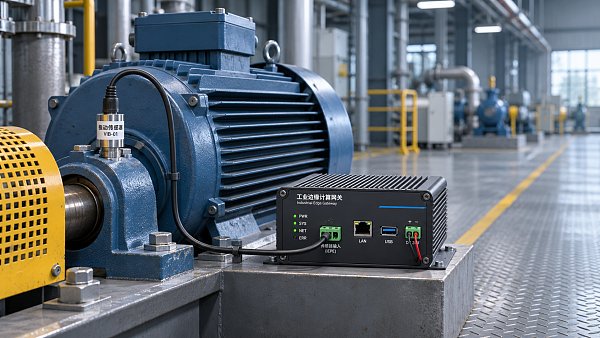
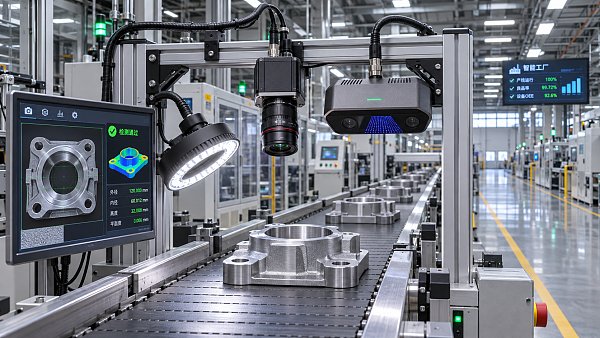
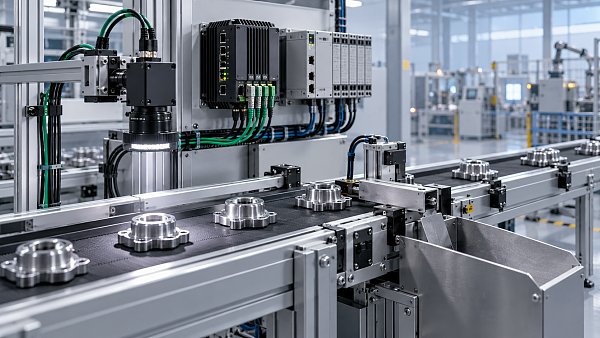
- Sensors and edge systems: How would it examine detection or recognition performance when lighting, interference, target characteristics, or latency constraints differ from a demonstration?
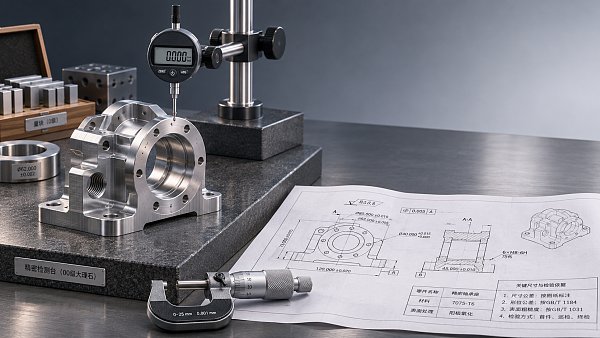
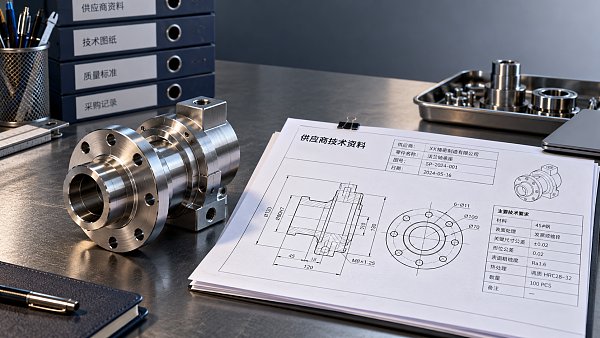
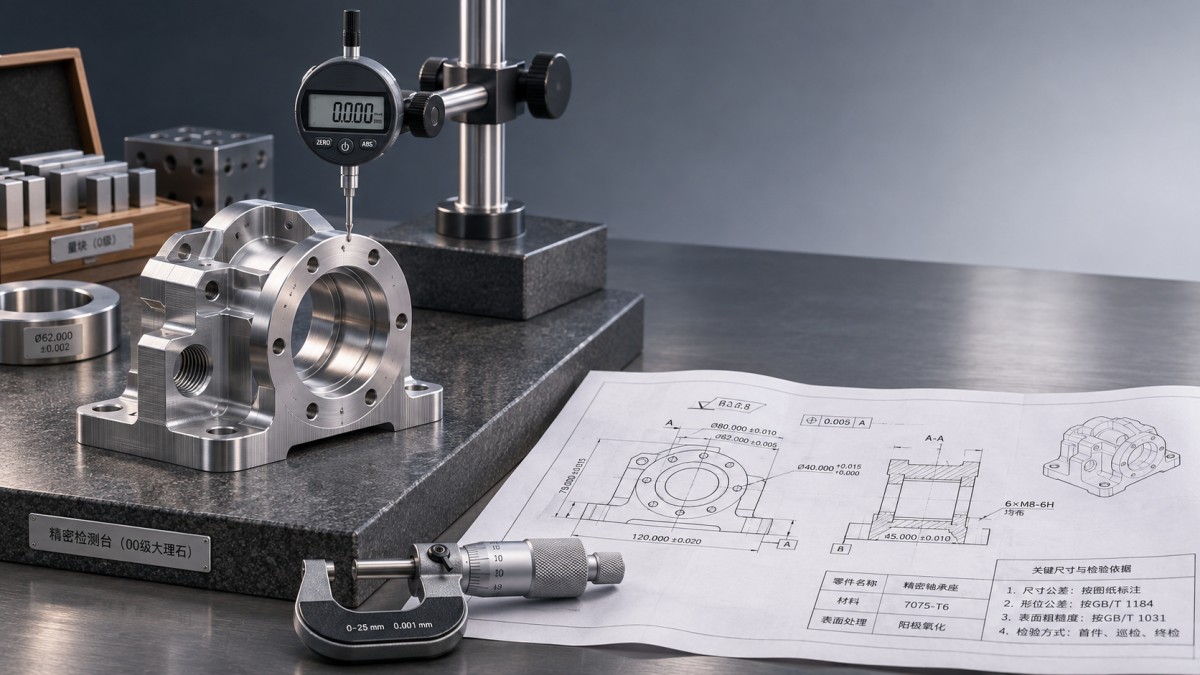
- Precision manufacturing: Can it interpret engineering drawings, inspection methods, process controls, and traceability records in relation to the part and production volume being evaluated?
Listen for the conditions attached to an answer. A consultant who asks about sample selection, operating environment, measurement uncertainty, and acceptance criteria is approaching performance as an engineering claim that can be examined. One who simply repeats a vendor’s headline specification has not shown how the claim will be tested.
Also ask where the team’s expertise ends. An independent laboratory, a specialist in a particular manufacturing process, or legal counsel may be needed for part of the assignment. A consultant who identifies those boundaries early gives you a better basis for managing cost and coverage than one who promises to resolve every issue internally.
Examine the evidence plan, not just the credentials
A technical due diligence report is only as useful as the evidence behind its conclusions. Before appointing a consultant, ask for a sample deliverable with confidential information removed, or a sample outline showing how findings are supported. Look for a clear distinction between management statements, documents reviewed, direct observations, independently verified results, and the consultant’s own assessment.
That distinction matters when performance is expressed as a single number. A robot’s repeatability claim, for example, is difficult to interpret without knowing the test setup and whether it reflects the payload and motion required in your application. A machining tolerance on a drawing does not, on its own, demonstrate that a supplier can produce conforming parts consistently. The evidence plan should connect each important claim to the conditions under which it was measured and the business use you are evaluating.
For high-consequence claims, ask the consultant to specify:
- The documents, records, interviews, observations, or tests needed to assess the claim.
- How samples, production batches, operating conditions, and measurement methods will be selected or reviewed.
- Whether test equipment, inspection procedures, and measurement uncertainty are relevant to the conclusion.
- What would count as sufficient evidence, and what result would raise a material concern.
- How gaps in access or inconsistent records will affect confidence in the finding.
Independent testing can be valuable, but it is not automatically decisive. A test on a single unit may reveal a problem without establishing how frequently it occurs; a favorable result may not represent production variation or long-term operation. The consultant should explain what a proposed test can and cannot demonstrate, and whether existing records provide a better starting point.
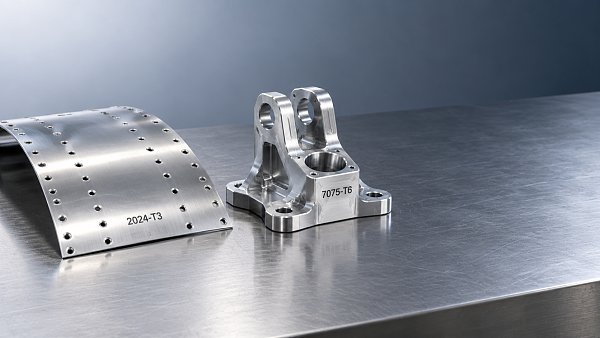
Traceability deserves the same scrutiny. For a critical component, the question may be whether the reviewed inspection record can be connected to the actual part, material, process, and revision under consideration. A certificate or quality-system document can be relevant evidence, but it does not replace examination of the specific requirements and records that matter to the purchase.
Protect independence and access before work begins
Technical competence has limited value if the consultant cannot reach an independent conclusion. Ask each candidate to disclose relationships with the target company, its competitors, laboratories, equipment vendors, and other parties that could benefit from the outcome. Prior work does not automatically disqualify a firm, but it should be disclosed and assessed in relation to the proposed assignment.
Consider how the consultant is paid and whether any success fee, referral arrangement, or follow-on implementation work could create pressure to favor a particular result. If remediation or implementation services may be offered later, establish how that possibility will be disclosed and how the due diligence team’s judgment will remain separate.
Access is equally important. Confirm who will arrange interviews and site visits, which records can be reviewed, whether engineers can speak directly with the team responsible for the technology, and whether any restrictions apply to independent testing. Where the target controls the data room or demonstrations, ask how the consultant will identify selective evidence and what alternatives are available.
Commercial constraints may make full access impossible before signing. In that case, the report should state which conclusions depend on untested information and what additional work would be needed to resolve the uncertainty. The decision may still proceed, but the gap can then be addressed through price, conditions, contractual protections, or a post-closing investigation rather than being mistaken for a clean finding.
Compare proposals on decision value
Fees and turnaround times matter, but proposals are hard to compare until their scopes and assumptions are aligned. A lower quote may exclude a site visit, specialist review, or analysis of production records. A more expensive proposal may include work that has little bearing on the decision. Ask candidates to price the same core questions and show optional work separately.
The following comparison can help make differences visible:
Ask how the team will communicate a serious issue discovered before the final report. Decision-makers may need an early warning to adjust negotiations or request further evidence. Agree on a reporting cadence, an escalation contact, and a way to distinguish a confirmed finding from an initial concern that still needs investigation.
The final deliverable should make it possible to act. For each material issue, look for the underlying evidence, the consequence if the concern proves significant, the level of confidence, and an appropriate next step. That next step might be targeted testing, a change to the purchase specification, an adjustment to the investment case, or acceptance of a defined residual risk.
Before signing the engagement, ask the preferred consultant to walk through one of your most consequential questions: what evidence they would request, what they could conclude within the available time, and what would remain unresolved. The quality of that discussion often reveals more about the likely value of the work than the length of the proposal.
Search News
Hot Articles
- Carbon Fiber StructuresHow to Specify Aerospace Carbon Fiber Assemblies for Lightweight, Load-Bearing PartsJul 11, 2026
- Machine VisionXiaomi, Alibaba DAMO Academy Drive Open-Source Robotics Model Ecosystem, Lowering Algorithm Development Barriers for Overseas SMEs Adopting Chinese Robotics SolutionsMar 30, 2026
- Cobots & ArmsShanxi 'AI+' Conference Showcases Embodied Intelligence with Multinational Buyer Engagement: Key Industry ImplicationsMar 30, 2026
Popular Tags
Recommended News
 Jul 11, 2026How to Specify Aerospace Carbon Fiber Assemblies for Lightweight, Load-Bearing PartsAerospace carbon fiber assemblies: learn how to specify laminate design, load data, joining methods, and inspection controls for lighter, reliable load-bearing aerospace parts.Elena Rostova (UAV Systems Researcher)
 Mar 30, 2026Xiaomi, Alibaba DAMO Academy Drive Open-Source Robotics Model Ecosystem, Lowering Algorithm Development Barriers for Overseas SMEs Adopting Chinese Robotics SolutionsXiaomi & Alibaba DAMO Academy's open-source robotics models lower algorithm barriers for global SMEs. Boost efficiency in manufacturing, logistics & smart retail with ROS 2 compatible solutions.TSV Data Lab
 Mar 30, 2026Shanxi 'AI+' Conference Showcases Embodied Intelligence with Multinational Buyer Engagement: Key Industry ImplicationsShanxi 'AI+' Conference highlights embodied intelligence with Tesla, Ubtech & Jiantao showcasing multimodal robotics. 40+ global buyers validated tech on-site, creating new B2B channels for industrial automation & AI solutions.Chen Wei (Automation Lead Engineer)
 Mar 30, 2026Zhongguancun Unveils 6G Integrated Sensing-Computing-Intelligence Platform to Empower Embodied Robots for Global Industrial ApplicationsZhongguancun's new 6G platform revolutionizes industrial robotics with <10ms latency, empowering global automotive, logistics & port automation. Discover how this tech boosts China's smart manufacturing exports.TSV Data Lab
 Mar 30, 2026Mech-Mind Tianjin Embodied Intelligence R&D and Production Base Goes Live, Cutting Delivery Time by 20%–30% for Global Customized AMR+Vision SolutionsMech-Mind's Tianjin AMR+Vision production base cuts delivery time by 20%-30% for欧美 & Latin American markets. Discover how this PLd-certified facility accelerates customized robotics solutions for smart manufacturing and logistics.Chen Wei (Automation Lead Engineer)
 Mar 30, 2026Boao Forum Reveals 'Co-evolution of Big and Small Brains' Trend in Humanoid Robots, China's Embodied Intelligence Accelerates Adaptation to Overseas Manufacturing Service ScenariosDiscover how China's humanoid robots, featuring 'Co-evolution of Big and Small Brains,' are revolutionizing global manufacturing. Learn about Embodied Tian Gong 3.0's ISO compliance and overseas deployment at Boao Forum 2026.Chen Wei (Automation Lead Engineer)
 Mar 30, 2026China Railway Industrial Secures Patent for Embodied Robotics in Material Handling, Boosting High-Precision Delivery Capabilities for Overseas Infrastructure and Manufacturing ProjectsChina Railway Industrial's new patent for embodied robotics in material handling boosts high-precision delivery for global infrastructure & manufacturing. Discover how this innovation enhances logistics accuracy in automotive, rail transit & EPC projects.Chen Wei (Automation Lead Engineer)
 Nov 04, 2026Choosing Sensors and Edge AI Devices for Industrial MonitoringChoose sensors and edge AI devices with confidence. Explore sensor selection, real-world performance testing, security, and lifecycle factors for industrial monitoring.TSV Data Lab
 Nov 03, 2026Research and Markets Forecasts $29.5 Billion AI Machine Vision Market by 2036AI machine vision could reach $29.5 billion by 2036. Explore how 3D vision, deep learning and smart factory investment are driving the market forecast.TSV Data Lab
 Nov 03, 2026Choosing a Technical Due Diligence Consultant: What to Look ForChoose a technical due diligence consultant with confidence. Learn how to assess expertise, evidence, independence, and proposals before you commit.Chen Wei (Automation Lead Engineer)
 Nov 02, 2026Two Additive Manufacturing National Standards Take Effect November 1Additive manufacturing national standards take effect November 1, 2026. Discover what they mean for harmful substance testing and data exchange.Dr. Marcus Vance
 Nov 02, 2026Robotic Automation for Flexible Production: Managing Product ChangeoversExplore robotics automation flexible production strategies to streamline product changeovers, reduce downtime, and improve safety and quality.Victor Lin (Chief Software Architect)
 Nov 01, 2026Industrial Pressure Transmitter Bulk Pricing: Quantity Discounts and Cost FactorsCompare industrial pressure transmitter bulk price options, quantity discounts, specifications, and landed costs to source compliant devices with confidence.Victor Lin (Chief Software Architect)
 Oct 31, 2026A3: North American Robot Orders Rose 24.8% Year on Year in Q3 2026North American robot orders rose 24.8% year on year in Q3 2026, according to A3. Explore the demand trends and what buyers should check before ordering.Chen Wei (Automation Lead Engineer)
 Oct 31, 2026Servo Motor MTBF for Robotics: How to Interpret Reliability RatingsServo motor MTBF for robotics: learn how to interpret reliability ratings, compare supplier evidence, and choose motors suited to your robot’s duty cycle.Chen Wei (Automation Lead Engineer)
 Oct 30, 2026Choosing a Procurement Content Provider: Data Quality and CoverageChoose a procurement content provider with confidence. Learn how to assess data quality, supplier coverage, traceability, and verification before you buy.Chen Wei (Automation Lead Engineer)
 Oct 29, 2026Shanghai Plan Targets 8,000 Humanoid Robots in Factories by 2028Shanghai's humanoid robot plan targets 8,000 factory deployments by 2028. Explore what it means for smart manufacturing and robot suppliers.Chen Wei (Automation Lead Engineer)
 Oct 29, 2026Aerospace Aluminum Alloy Strength: 2024-T3 vs. 7075-T6 ComparedCompare aerospace aluminum alloy strength in 2024-T3 vs. 7075-T6. Explore fatigue, corrosion, and weight trade-offs to choose the right alloy for your design.Dr. Marcus Vance
 Oct 28, 2026IDC: Global Quadruped Robot Shipments Rise 92.5% in H1 2026 as Volume and Value DivergeGlobal quadruped robot shipments rose 92.5% in H1 2026, according to IDC. Explore what diverging volume and value trends mean for industrial buyers and manufacturers.Chen Wei (Automation Lead Engineer)
 Oct 28, 2026Interpreting Industrial IoT Latency Data for Monitoring and Real-Time ControlInterpret industrial category latency data to assess jitter, deadline misses, and real-time readiness. Learn how to benchmark IIoT systems and choose monitoring and control solutions.TSV Data Lab
 Oct 27, 2026GXO and Agility Robotics Expand Partnership to Accelerate US Humanoid Robot DeploymentGXO and Agility Robotics plan to expand US humanoid robot deployment with Digit 4 in early 2027. Explore warehouse automation plans, service terms and future Digit 5 upgrades.Chen Wei (Automation Lead Engineer)
 Oct 27, 2026Robotic Automation Costs: Budgeting for Equipment, Integration, and MaintenancePlan your robotics automation cost with confidence. Explore equipment, integration, and maintenance expenses, compare quotes, and build a realistic budget for better ROI.Chen Wei (Automation Lead Engineer)
 Oct 26, 2026AMAXiMAL Releases Open-Source TopMod 3D v3 With Claude AIExplore AMAXiMAL’s free, open-source TopMod 3D v3 with Claude AI assistance, topology-based modeling and plywood fabrication tools that connect complex designs to physical builds.Dr. Marcus Vance
 Oct 26, 2026Choosing a SCADA System Integrator Company: PLC Compatibility and Long-Term SupportChoose a scada system integrator company with proven PLC compatibility and reliable long-term support. Discover what to test, compare, and require before investing.Victor Lin (Chief Software Architect)