Choosing Sensors and Edge AI Devices for Industrial Monitoring
Publication Date
author
Choose sensors and edge AI devices by working backward from the condition you need to detect, the consequences of missing it, and the time available to respond. A sensor must capture a meaningful signal under actual operating conditions; the edge device must process that signal reliably within the available power, network, and maintenance constraints.
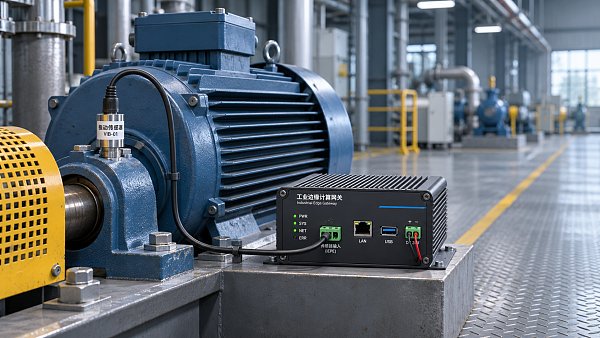
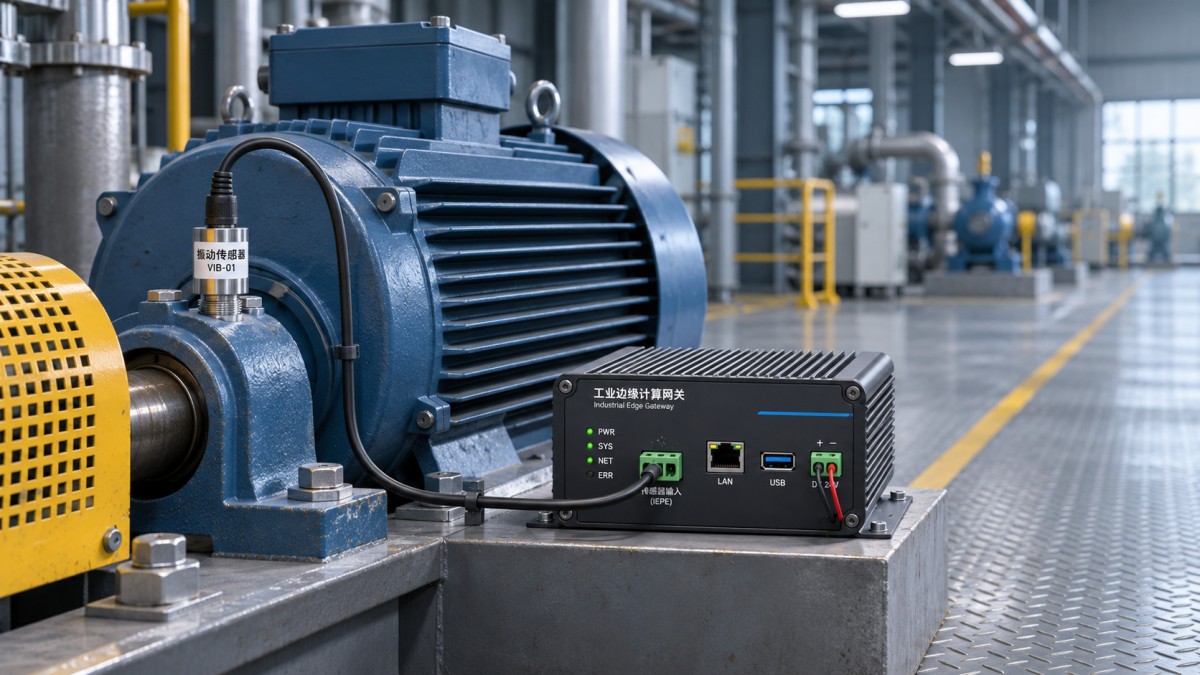
For example, a motor-monitoring system may produce stable readings while the machine is idle yet miss short-lived vibration events during production. The cause could be sensor placement, insufficient sampling, filtering, or an overloaded inference pipeline—not necessarily a defective model. Evaluate the measurement chain as a whole before comparing individual specification sheets.
Define the monitoring task before comparing devices
Start with the physical change that indicates a condition of interest. Bearing monitoring may require vibration measured at a suitable location and frequency range; thermal monitoring may need surface temperature or a calibrated thermal image; visual inspection may depend on contrast, lighting, and part positioning. A device that detects an abnormal pattern is not automatically able to identify its root cause.
Write down the expected operating states, including startup, shutdown, normal load changes, and maintenance conditions. These states influence both sensor range and the examples needed to evaluate an AI model. A monitoring system trained only on steady operation may flag legitimate transitions as faults or overlook failures that develop under a different load.
Turn the task into testable acceptance criteria. Specify the smallest relevant change or defect, the maximum acceptable delay before an alert, the conditions under which it must be detected, and the tolerable rate of false alarms or missed events. Where the consequences differ, distinguish an advisory alert from a command that affects equipment operation.
Select the sensor around the signal, not the headline resolution
Range, accuracy, and resolution answer different questions. Range describes the measurable span; accuracy describes closeness to a reference under stated conditions; resolution describes the smallest reported increment. More displayed digits do not compensate for drift, poor mounting, or measurement uncertainty. Request accuracy across the intended temperature range and calibration interval, not just a value measured at a reference temperature.
Consider the complete uncertainty budget: sensor error, reference accuracy, installation effects, conversion electronics, and environmental influences. The combined uncertainty should be small enough to distinguish the relevant condition from normal variation. Ask suppliers whether specified errors are typical or guaranteed limits, and whether they include temperature drift, nonlinearity, and repeatability.
Match measurement bandwidth to the event
A slow temperature trend and a brief mechanical impact place different demands on the sensor and acquisition path. For dynamic signals, check sensor bandwidth, sampling rate, analog filtering, and any processing performed before data reaches the edge device. Sampling must support the frequency content of interest; the theoretical Nyquist limit alone does not establish that amplitude, timing, or transient shape will be preserved adequately.
For machine vision, evaluate field of view, working distance, lens distortion, illumination, shutter behavior, and motion blur alongside image resolution. A higher-resolution camera may not improve detection if the defect has poor contrast or the lens cannot resolve it. Test using representative surfaces and production speeds rather than a stationary, well-lit sample alone.
Check installation and environmental limits
The measurement point can be as consequential as the sensor model. A vibration sensor mounted away from a bearing, for example, may receive a signal altered by the structure between them. Mounting method, cable strain, orientation, and repeatable positioning should be part of the evaluation procedure.
Compare enclosure and component ratings with the actual exposure to dust, moisture, cleaning chemicals, temperature cycling, shock, and vibration. An enclosure rating does not by itself establish chemical resistance or performance during washdown. For electrically noisy installations, examine shielding, grounding, cable routing, isolation, and susceptibility at the system level; a robust sensor can still deliver unreliable data through an unsuitable cable or interface.
Compare edge devices using the full data path
Edge compute specifications are useful for screening, but advertised operations per second rarely predict application performance on their own. Determine whether the device supports the model architecture, numerical precision, input dimensions, preprocessing operations, and software runtime you intend to use. Accelerator throughput may exclude image decoding, filtering, data transfer, and postprocessing.
Measure latency from the physical event or sensor timestamp to the usable output. Depending on the application, the path can include acquisition, buffering, network transport, preprocessing, inference, decision logic, and alert delivery. Record the distribution of latency and the worst observed behavior under the defined test conditions, rather than relying only on an average. Also document timestamp synchronization and clock accuracy when correlating multiple sensors.
Check whether the device throttles when hot, drops frames under load, or buffers data during network interruptions. A system can meet a short benchmark and still fail during continuous operation. Local storage may be useful during an outage, but retention capacity, write endurance, and the behavior when storage is full need explicit limits.
Choose an architecture that fits the decision
Not every monitoring task needs AI at the sensor. A threshold on a calibrated measurement may be easier to validate and maintain when the failure signature is well understood. Local inference becomes more attractive when raw data volumes are high, response must continue without a network, or sending all data elsewhere is impractical. A central model may be sufficient when latency is less restrictive and maintaining many distributed devices would add unnecessary complexity.
A sensor with integrated processing can reduce cabling and upstream traffic, but confirm access to raw or intermediate data. Without it, diagnosing drift, retraining a model, or investigating a disputed alert can become difficult. Conversely, a separate sensor and gateway offer more flexibility but introduce additional interfaces, synchronization requirements, and potential failure points.
For gateways handling multiple sources, calculate the aggregate data rate using the actual sample format, channel count, metadata, and protocol overhead. Include peak conditions and retries, not just nominal payload throughput. Verify that the device can ingest and process all channels simultaneously; individual port ratings do not prove the whole system can sustain their combined load.
Test detection performance with representative data
Evaluate the model against the intended decision, not only a supplier’s accuracy figure. Ask how performance was calculated, which operating conditions were included, and whether test data came from equipment or production runs separate from those used for training. Similar-looking frames or neighboring time windows split across training and test sets can make performance appear better than it will be on new equipment.
Build an evaluation set that reflects normal variation and the events of interest. Include relevant changes in load, lighting, background, sensor position, and environmental conditions. Where genuine failures are scarce, document that limitation; simulated defects or induced conditions can help exercise the pipeline but should not be treated as proof that every real failure will be detected.
Review false positives and false negatives separately. A high overall accuracy can conceal poor detection of rare faults if normal samples dominate the dataset. Set an operating threshold using the cost of unnecessary intervention against the cost of a missed event, then report the confusion matrix and the number of examples behind each result. An unsupported claim about rare-event performance is a reason to extend testing, not to assume success.
Run a staged evaluation before committing
- Screen the specifications. Eliminate devices that cannot meet the required range, environmental limits, interface, or response time. Identify any figures that lack test conditions or guaranteed limits.
- Verify the measurement chain. Compare readings with a suitable reference across relevant operating points. Check mounting repeatability, calibration status, signal quality, and the effect of noise or cable length.
- Exercise the complete workload. Connect the intended sensors, run acquisition and inference together, and measure latency, dropped data, power consumption, and resource use under sustained load.
- Introduce realistic disturbances. Test expected network loss, power interruption, equipment vibration, temperature changes, and peak data rates where safe and practicable. Record recovery time and whether alerts or data are lost.
- Review operational ownership. Confirm who calibrates sensors, updates software, monitors model performance, investigates alerts, and replaces failed hardware. Include spare parts and access requirements in the decision.
Use the same input conditions and acceptance criteria when comparing candidates. Record software versions, model versions, mounting arrangements, and configuration settings so that a later retest is meaningful. Where a requirement cannot be tested before purchase, identify it as an unresolved qualification risk and agree on the evidence or acceptance test needed to close it.
Account for security and lifecycle constraints
An edge device connected to operational equipment needs an update and access strategy. Check support for authenticated access, protected credentials, secure software updates, logging, and recovery from a failed update. Establish whether the device can operate on a segmented network and whether remote access is required for routine maintenance. Security features should be verified in the intended configuration, not inferred from a marketing statement.
Finally, ask how long hardware, firmware, operating-system components, and model runtimes will remain supported. Confirm whether configuration files, training artifacts, and recorded data can be exported in usable formats. For monitoring that influences a protective or safety function, establish the applicable engineering and safety requirements separately; an AI alert or an ordinary monitoring gateway should not be assumed to provide a validated protective function.
Search News
Hot Articles
- Carbon Fiber StructuresHow to Specify Aerospace Carbon Fiber Assemblies for Lightweight, Load-Bearing PartsJul 11, 2026
- Machine VisionXiaomi, Alibaba DAMO Academy Drive Open-Source Robotics Model Ecosystem, Lowering Algorithm Development Barriers for Overseas SMEs Adopting Chinese Robotics SolutionsMar 30, 2026
- Cobots & ArmsShanxi 'AI+' Conference Showcases Embodied Intelligence with Multinational Buyer Engagement: Key Industry ImplicationsMar 30, 2026
Popular Tags
Recommended News
 Jul 11, 2026How to Specify Aerospace Carbon Fiber Assemblies for Lightweight, Load-Bearing PartsAerospace carbon fiber assemblies: learn how to specify laminate design, load data, joining methods, and inspection controls for lighter, reliable load-bearing aerospace parts.Elena Rostova (UAV Systems Researcher)
 Mar 30, 2026Xiaomi, Alibaba DAMO Academy Drive Open-Source Robotics Model Ecosystem, Lowering Algorithm Development Barriers for Overseas SMEs Adopting Chinese Robotics SolutionsXiaomi & Alibaba DAMO Academy's open-source robotics models lower algorithm barriers for global SMEs. Boost efficiency in manufacturing, logistics & smart retail with ROS 2 compatible solutions.TSV Data Lab
 Mar 30, 2026Shanxi 'AI+' Conference Showcases Embodied Intelligence with Multinational Buyer Engagement: Key Industry ImplicationsShanxi 'AI+' Conference highlights embodied intelligence with Tesla, Ubtech & Jiantao showcasing multimodal robotics. 40+ global buyers validated tech on-site, creating new B2B channels for industrial automation & AI solutions.Chen Wei (Automation Lead Engineer)
 Mar 30, 2026Zhongguancun Unveils 6G Integrated Sensing-Computing-Intelligence Platform to Empower Embodied Robots for Global Industrial ApplicationsZhongguancun's new 6G platform revolutionizes industrial robotics with <10ms latency, empowering global automotive, logistics & port automation. Discover how this tech boosts China's smart manufacturing exports.TSV Data Lab
 Mar 30, 2026Mech-Mind Tianjin Embodied Intelligence R&D and Production Base Goes Live, Cutting Delivery Time by 20%–30% for Global Customized AMR+Vision SolutionsMech-Mind's Tianjin AMR+Vision production base cuts delivery time by 20%-30% for欧美 & Latin American markets. Discover how this PLd-certified facility accelerates customized robotics solutions for smart manufacturing and logistics.Chen Wei (Automation Lead Engineer)
 Mar 30, 2026Boao Forum Reveals 'Co-evolution of Big and Small Brains' Trend in Humanoid Robots, China's Embodied Intelligence Accelerates Adaptation to Overseas Manufacturing Service ScenariosDiscover how China's humanoid robots, featuring 'Co-evolution of Big and Small Brains,' are revolutionizing global manufacturing. Learn about Embodied Tian Gong 3.0's ISO compliance and overseas deployment at Boao Forum 2026.Chen Wei (Automation Lead Engineer)
 Mar 30, 2026China Railway Industrial Secures Patent for Embodied Robotics in Material Handling, Boosting High-Precision Delivery Capabilities for Overseas Infrastructure and Manufacturing ProjectsChina Railway Industrial's new patent for embodied robotics in material handling boosts high-precision delivery for global infrastructure & manufacturing. Discover how this innovation enhances logistics accuracy in automotive, rail transit & EPC projects.Chen Wei (Automation Lead Engineer)
 Nov 04, 2026Choosing Sensors and Edge AI Devices for Industrial MonitoringChoose sensors and edge AI devices with confidence. Explore sensor selection, real-world performance testing, security, and lifecycle factors for industrial monitoring.TSV Data Lab
 Nov 03, 2026Research and Markets Forecasts $29.5 Billion AI Machine Vision Market by 2036AI machine vision could reach $29.5 billion by 2036. Explore how 3D vision, deep learning and smart factory investment are driving the market forecast.TSV Data Lab
 Nov 03, 2026Choosing a Technical Due Diligence Consultant: What to Look ForChoose a technical due diligence consultant with confidence. Learn how to assess expertise, evidence, independence, and proposals before you commit.Chen Wei (Automation Lead Engineer)
 Nov 02, 2026Two Additive Manufacturing National Standards Take Effect November 1Additive manufacturing national standards take effect November 1, 2026. Discover what they mean for harmful substance testing and data exchange.Dr. Marcus Vance
 Nov 02, 2026Robotic Automation for Flexible Production: Managing Product ChangeoversExplore robotics automation flexible production strategies to streamline product changeovers, reduce downtime, and improve safety and quality.Victor Lin (Chief Software Architect)
 Nov 01, 2026Industrial Pressure Transmitter Bulk Pricing: Quantity Discounts and Cost FactorsCompare industrial pressure transmitter bulk price options, quantity discounts, specifications, and landed costs to source compliant devices with confidence.Victor Lin (Chief Software Architect)
 Oct 31, 2026A3: North American Robot Orders Rose 24.8% Year on Year in Q3 2026North American robot orders rose 24.8% year on year in Q3 2026, according to A3. Explore the demand trends and what buyers should check before ordering.Chen Wei (Automation Lead Engineer)
 Oct 31, 2026Servo Motor MTBF for Robotics: How to Interpret Reliability RatingsServo motor MTBF for robotics: learn how to interpret reliability ratings, compare supplier evidence, and choose motors suited to your robot’s duty cycle.Chen Wei (Automation Lead Engineer)
 Oct 30, 2026Choosing a Procurement Content Provider: Data Quality and CoverageChoose a procurement content provider with confidence. Learn how to assess data quality, supplier coverage, traceability, and verification before you buy.Chen Wei (Automation Lead Engineer)
 Oct 29, 2026Shanghai Plan Targets 8,000 Humanoid Robots in Factories by 2028Shanghai's humanoid robot plan targets 8,000 factory deployments by 2028. Explore what it means for smart manufacturing and robot suppliers.Chen Wei (Automation Lead Engineer)
 Oct 29, 2026Aerospace Aluminum Alloy Strength: 2024-T3 vs. 7075-T6 ComparedCompare aerospace aluminum alloy strength in 2024-T3 vs. 7075-T6. Explore fatigue, corrosion, and weight trade-offs to choose the right alloy for your design.Dr. Marcus Vance
 Oct 28, 2026IDC: Global Quadruped Robot Shipments Rise 92.5% in H1 2026 as Volume and Value DivergeGlobal quadruped robot shipments rose 92.5% in H1 2026, according to IDC. Explore what diverging volume and value trends mean for industrial buyers and manufacturers.Chen Wei (Automation Lead Engineer)
 Oct 28, 2026Interpreting Industrial IoT Latency Data for Monitoring and Real-Time ControlInterpret industrial category latency data to assess jitter, deadline misses, and real-time readiness. Learn how to benchmark IIoT systems and choose monitoring and control solutions.TSV Data Lab
 Oct 27, 2026GXO and Agility Robotics Expand Partnership to Accelerate US Humanoid Robot DeploymentGXO and Agility Robotics plan to expand US humanoid robot deployment with Digit 4 in early 2027. Explore warehouse automation plans, service terms and future Digit 5 upgrades.Chen Wei (Automation Lead Engineer)
 Oct 27, 2026Robotic Automation Costs: Budgeting for Equipment, Integration, and MaintenancePlan your robotics automation cost with confidence. Explore equipment, integration, and maintenance expenses, compare quotes, and build a realistic budget for better ROI.Chen Wei (Automation Lead Engineer)
 Oct 26, 2026AMAXiMAL Releases Open-Source TopMod 3D v3 With Claude AIExplore AMAXiMAL’s free, open-source TopMod 3D v3 with Claude AI assistance, topology-based modeling and plywood fabrication tools that connect complex designs to physical builds.Dr. Marcus Vance
 Oct 26, 2026Choosing a SCADA System Integrator Company: PLC Compatibility and Long-Term SupportChoose a scada system integrator company with proven PLC compatibility and reliable long-term support. Discover what to test, compare, and require before investing.Victor Lin (Chief Software Architect)