
Is a Higher Agricultural Spraying Drone Price Worth It
Publication Date
author
Is a higher agricultural spraying drone price really justified, or are buyers paying for specs they do not need? For researchers, operators, procurement teams, and decision-makers, the answer lies in measurable engineering value—from industrial drone motors wholesale and drone lipo battery manufacturer quality to payload stability, service life, and supplier credibility. This guide helps you compare cost against real performance before choosing a mapping drone supplier, fixed wing uav supplier, or commercial drone manufacturer china.
What does a higher agricultural spraying drone price actually include?
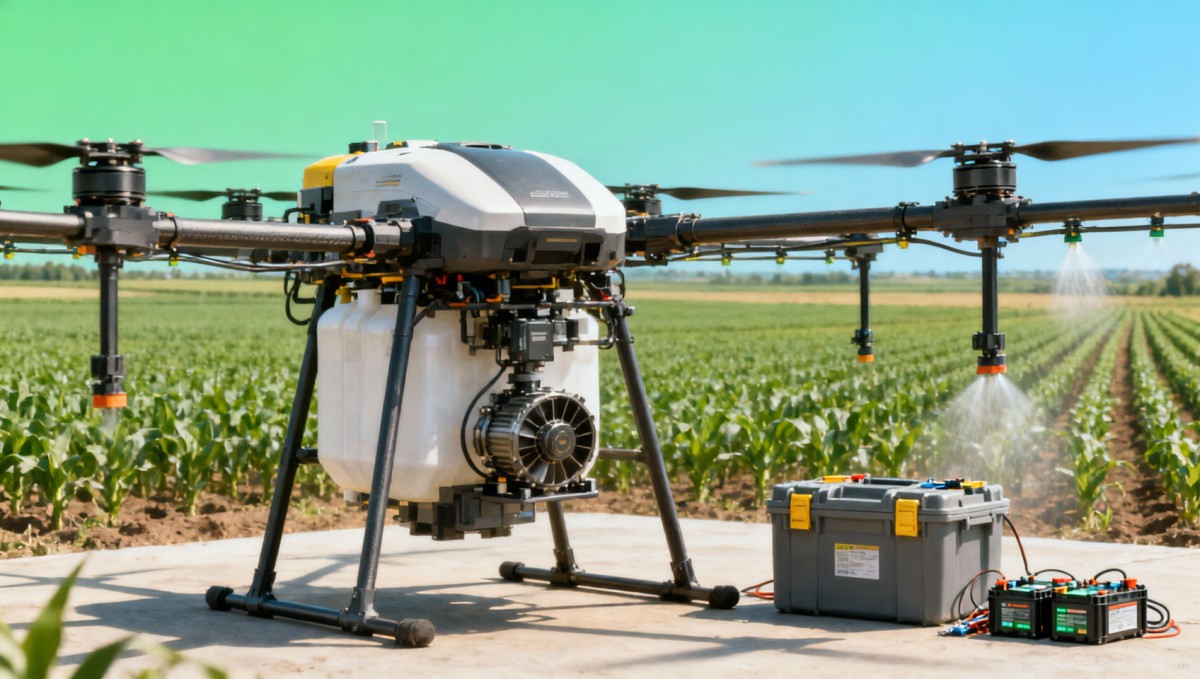
A higher agricultural spraying drone price is not automatically a sign of better value, but it often reflects a different engineering baseline. In the agricultural UAV market, pricing usually moves with payload class, powertrain durability, atomization stability, flight controller robustness, and battery cycle performance. For buyers comparing offers across a 10 L, 20 L, 30 L, or 40 L platform, the key question is not the list price alone. The real question is how much usable output, maintenance predictability, and operating consistency the drone can deliver over 1–3 growing seasons.
This matters because many suppliers present similar headline specifications while hiding performance variation under load. A drone that lifts a nominal 30 kg tank on a calm day may behave very differently when wind rises, liquid level changes, or the route requires repeated acceleration and deceleration. TechStat Vanguard approaches this issue with an engineering-first lens: parameters do not lie, and tolerances define whether a machine is economical in real field conditions.
For operators, a higher price may buy smoother spraying, fewer mid-season failures, and shorter downtime per service event. For procurement teams, it may buy traceable components from a stable drone lipo battery manufacturer or better documentation from a commercial drone manufacturer china. For executives, it may reduce hidden costs tied to training, spare stock, warranty disputes, and seasonal delivery risk during a narrow 2–6 week spraying window.
In practical sourcing work, price should be decomposed into hardware cost, lifecycle cost, and risk cost. A cheaper platform with weak motors, inconsistent ESC calibration, or low battery cycle retention can quickly become more expensive after 6–12 months of field use. That is why a disciplined buyer evaluates not only what the drone costs today, but also what it will cost to keep operational across hundreds of hectares.
The four cost layers behind the sticker price
- Airframe and structure: carbon fiber quality, arm folding mechanism durability, landing gear impact tolerance, and corrosion resistance against fertilizers and pesticides.
- Power system: industrial drone motors wholesale quality grade, ESC current margin, wiring harness reliability, and thermal behavior during repeated full-load climbs.
- Energy system: battery pack chemistry stability, charger management, cycle life range, and consistency across multiple packs from the same drone lipo battery manufacturer.
- Control and support: radar or obstacle sensing, terrain following, mission planning software, spare availability, technician response time, and documentation depth.
When one or two of these layers are weak, the total cost of ownership usually rises. Buyers therefore need to connect price with operating output, not with brochure language.
Which technical parameters justify paying more?
Not every premium specification matters equally. For agricultural spraying drones, the most important parameters are those that affect deposition consistency, route completion, and service intervals. A machine that can maintain stable spray width, pump pressure, and altitude within normal field variation often delivers more value than one that advertises a larger top payload but loses accuracy once the tank level drops or wind changes. Buyers should focus on measurable field-relevant indicators rather than marketing superlatives.
At minimum, compare six core categories: payload range, spray system stability, battery cycle behavior, propulsion thermal margin, navigation precision, and maintainability. For many mid-to-large operations, a useful review cycle is every 200–300 flight hours or at each seasonal change. If a supplier cannot clearly explain inspection intervals, consumable life, or replacement logic, a lower price may simply mean future uncertainty.
A common procurement mistake is to compare only tank size and flight time. In reality, battery aging, nozzle wear, pump consistency, and frame vibration can affect output quality long before the headline payload limit is reached. This is where independent benchmarking becomes important. TSV’s method is to ask whether the drone sustains stable operation inside realistic thresholds, not only whether it peaks well in a controlled demo.
The table below summarizes the technical areas that most often separate a justified premium from an inflated quote. These are not fixed brand claims. They are practical dimensions that researchers, operators, and sourcing teams can use in supplier comparison.
A higher agricultural spraying drone price becomes more defensible when these parameters are documented, testable, and aligned with the intended field workload. If they are vague, the premium is harder to justify.
Why motors, batteries, and control systems deserve extra scrutiny
In many sourcing projects, the largest hidden variable is not the frame but the quality consistency of subsystems. Industrial drone motors wholesale sourcing can vary widely in winding quality, bearing life, sealing design, and heat dissipation. Two drones with similar payload ratings can therefore have very different maintenance intervals after 100, 200, or 500 field sorties.
Battery supply is equally important. A reliable drone lipo battery manufacturer should provide clear information on pack balancing, temperature management, storage guidance, and charging protocols. A premium battery system may cost more upfront, yet if it preserves more predictable discharge behavior during peak spraying months, it reduces route interruption and protects flight safety.
Flight control and navigation are often underestimated by non-technical buyers. Terrain following, route repeatability, and sensor resilience can strongly influence actual work output per day. When crops, topography, and weather vary, the more expensive drone may generate its return not through peak speed, but through fewer errors across 6–10 hours of daily operation.
Three questions to ask every supplier
- What component traceability is available for motors, batteries, pumps, and flight controllers?
- What are the recommended inspection intervals, spare part lead times, and seasonal maintenance requirements?
- How does the system perform under partial tank load, uneven terrain, and repeated battery swaps over a full workday?
How should procurement teams compare low-price and high-price options?
Procurement teams should avoid binary thinking. The issue is not simply cheap versus expensive. The issue is matching a drone’s engineering capacity to operating intensity. A lower-cost drone may be perfectly acceptable for smaller plots, lighter spraying schedules, and operators with time for frequent maintenance. A higher-priced platform often makes more sense when work is compressed into short seasonal windows, service interruption is costly, or enterprise buyers need standardized fleet management.
In B2B purchasing, the better comparison model is lifecycle economics. Estimate acquisition cost, battery replacement timing, scheduled maintenance, unscheduled failures, training time, and lost productivity during downtime. Even a 5%–10% difference in spray consistency or route completion can materially affect chemical use, labor scheduling, and acreage covered over a season. The apparent discount on paper may disappear after one intensive cycle of use.
This is also where supplier type matters. A mapping drone supplier may be strong in imaging payloads but weaker in liquid system support. A fixed wing uav supplier may understand endurance platforms but not low-altitude spraying dynamics. A commercial drone manufacturer china may offer cost advantages and broad production capacity, but buyers still need to verify documentation quality, after-sales responsiveness, and component standardization.
The table below can help cross-functional teams compare options with a common decision language. It is designed for information researchers, operators, procurement managers, and executives reviewing the same sourcing file from different angles.
A higher agricultural spraying drone price is worth considering when uptime, standardization, and support structure matter more than the shortest-term capex saving. If operations are limited or experimental, a lower-cost route may still be rational.
A practical 5-point procurement checklist
- Confirm actual payload under field conditions, not only nominal lab or demo figures.
- Review battery replenishment strategy, including pack count, charger throughput, and storage handling.
- Ask for parts list transparency covering motors, pumps, nozzles, ESCs, and critical sensors.
- Check training scope for operators, including calibration, maintenance, and route planning steps.
- Assess spare part lead time, especially during peak seasons when delays of 7–15 days can disrupt schedules.
Using a checklist like this helps teams compare suppliers on operational facts rather than presentation style.
Which operating scenarios make the premium worthwhile?
The answer depends heavily on the field scenario. A premium agricultural spraying drone usually makes more sense when operators cover larger acreage, work under tighter weather constraints, or need repeatable application quality across multiple sites. In such settings, component stability and service planning often matter more than saving on initial purchase price. A fleet used every week during a concentrated crop protection season faces a very different stress profile than a drone used only occasionally.
Enterprise decision-makers should also consider organizational complexity. If a business manages multiple operators, several battery sets, and frequent transport between sites, standard operating procedures become critical. Higher-priced systems can justify themselves when they reduce training variance, simplify preventive maintenance, and make spare stocking more predictable. For larger deployments, the value of consistency often grows faster than the value of raw specification increases.
There is also a strategic angle. Some buyers are not only choosing a spraying tool. They are also selecting a long-term UAV ecosystem partner. If the same vendor can support spraying platforms, mapping workflows, and adjacent UAV needs, it may create process advantages. However, buyers should still verify capability domain by domain rather than assume that a mapping drone supplier or fixed wing uav supplier automatically excels in agricultural spraying support.
The scenarios below show when a higher agricultural spraying drone price is more likely to generate tangible returns instead of becoming unnecessary overhead.
Scenario-based decision guide
- Small farms or trial use: price sensitivity is high, and a simpler platform may be enough if service support is accessible.
- Contract spraying teams: premium systems often pay off when daily workload is intensive and downtime directly cuts revenue.
- Enterprise agriculture groups: standardized fleets, training control, and maintenance planning often justify stronger hardware and support systems.
- Multi-function UAV sourcing: if the buyer also needs mapping or inspection capability, supplier integration strategy becomes part of the value equation.
Common mistakes that inflate cost without adding value
One common mistake is buying the largest payload class without matching field logistics. If refill, battery swap, and transport workflow are not optimized, a bigger drone may sit idle or force more complex handling. Another mistake is paying extra for advanced features that operators will not use in the next 12 months. A premium is justified only when the organization can actually convert specifications into productive work.
A third mistake is ignoring supplier depth. Some buyers focus narrowly on airframe cost and then discover that spare parts, software updates, or battery replacements are slow or inconsistently documented. In hard-tech procurement, the cheapest quote can become the most expensive path if the support chain is fragile.
TSV’s research approach is built around this exact problem. We separate sales language from engineering evidence, helping teams identify when a price premium reflects testable value and when it simply reflects packaging.
FAQ and next-step guidance for buyers evaluating drone suppliers
Before issuing RFQs or supplier shortlists, buyers should align internal teams on what must be measured. The right answer will differ for a field operator, a procurement manager, and a CTO, but all three need the same disciplined framework. Clear parameter review shortens supplier qualification cycles and avoids costly mid-season surprises.
The following questions reflect common search intent and practical sourcing discussions in agricultural UAV procurement. They also help bridge the gap between first-stage information research and final supplier negotiation.
How do I know if the agricultural spraying drone price is too high?
It is too high when the supplier cannot connect price to measurable value. Ask for component origin, maintenance intervals, expected consumables, battery management logic, and service workflow. If the quote rises but documentation remains vague, the premium is likely weak. If the price increase corresponds to better subsystem traceability, longer service intervals, or improved operational consistency, it may be justified.
Should I buy from a commercial drone manufacturer china?
That can be a strong option if the manufacturer offers clear technical documentation, stable production capability, spare availability, and responsive after-sales support. The decision should not be based on geography alone. Instead, review supplier process maturity, engineering communication quality, and whether the vendor can support your required delivery window, often within 2–8 weeks depending on configuration and seasonality.
What if I am also evaluating a mapping drone supplier or fixed wing uav supplier?
Treat each UAV category separately. Mapping drones, fixed wing UAVs, and agricultural spraying drones serve different mission profiles, payload systems, and maintenance needs. A supplier with broad UAV coverage can be valuable, but only if it demonstrates competence in each application. Cross-category sourcing should improve procurement efficiency, not blur technical requirements.
Why do batteries and motors matter so much in price comparison?
Because they directly affect uptime, safety margin, and replacement cost. Industrial drone motors wholesale quality influences heat tolerance, vibration behavior, and long-term reliability. A dependable drone lipo battery manufacturer influences discharge consistency, pack life, and charging workflow. In daily operation, these subsystems often determine whether a drone completes planned acreage or falls behind schedule.
Why choose TechStat Vanguard for supplier evaluation support?
TechStat Vanguard was built for teams that need engineering truth rather than generic product promotion. We focus on hard-tech benchmarking, parameter interpretation, and supply chain signal clarity across UAV and advanced manufacturing ecosystems. If you are comparing agricultural spraying drone price levels, reviewing offers from a commercial drone manufacturer china, or trying to qualify a mapping drone supplier or fixed wing uav supplier, we help translate broad claims into technical decision criteria.
You can contact TSV for support with parameter confirmation, supplier comparison logic, payload-class selection, battery and motor evaluation priorities, expected delivery cycle review, and certification-related discussion. We also help teams structure RFQ questions, shortlist evaluation dimensions, and identify which specifications are essential for your real operating scenario rather than simply expensive on paper.
If your team is balancing budget pressure with reliability demands, the next step is not to chase the lowest quote or the most expensive configuration. The next step is to define the correct technical baseline. Share your target acreage, spray frequency, payload expectation, service model, and procurement timeline, and TSV can help you build a clearer comparison path before you commit budget.
Search News
Hot Articles
- Carbon Fiber StructuresHow to Specify Aerospace Carbon Fiber Assemblies for Lightweight, Load-Bearing PartsJul 11, 2026
- Machine VisionXiaomi, Alibaba DAMO Academy Drive Open-Source Robotics Model Ecosystem, Lowering Algorithm Development Barriers for Overseas SMEs Adopting Chinese Robotics SolutionsMar 30, 2026
- Cobots & ArmsShanxi 'AI+' Conference Showcases Embodied Intelligence with Multinational Buyer Engagement: Key Industry ImplicationsMar 30, 2026
Popular Tags
Recommended News
 Jul 11, 2026How to Specify Aerospace Carbon Fiber Assemblies for Lightweight, Load-Bearing PartsAerospace carbon fiber assemblies: learn how to specify laminate design, load data, joining methods, and inspection controls for lighter, reliable load-bearing aerospace parts.Elena Rostova (UAV Systems Researcher)
 Mar 30, 2026Xiaomi, Alibaba DAMO Academy Drive Open-Source Robotics Model Ecosystem, Lowering Algorithm Development Barriers for Overseas SMEs Adopting Chinese Robotics SolutionsXiaomi & Alibaba DAMO Academy's open-source robotics models lower algorithm barriers for global SMEs. Boost efficiency in manufacturing, logistics & smart retail with ROS 2 compatible solutions.TSV Data Lab
 Mar 30, 2026Shanxi 'AI+' Conference Showcases Embodied Intelligence with Multinational Buyer Engagement: Key Industry ImplicationsShanxi 'AI+' Conference highlights embodied intelligence with Tesla, Ubtech & Jiantao showcasing multimodal robotics. 40+ global buyers validated tech on-site, creating new B2B channels for industrial automation & AI solutions.Chen Wei (Automation Lead Engineer)
 Mar 30, 2026Zhongguancun Unveils 6G Integrated Sensing-Computing-Intelligence Platform to Empower Embodied Robots for Global Industrial ApplicationsZhongguancun's new 6G platform revolutionizes industrial robotics with <10ms latency, empowering global automotive, logistics & port automation. Discover how this tech boosts China's smart manufacturing exports.TSV Data Lab
 Mar 30, 2026Mech-Mind Tianjin Embodied Intelligence R&D and Production Base Goes Live, Cutting Delivery Time by 20%–30% for Global Customized AMR+Vision SolutionsMech-Mind's Tianjin AMR+Vision production base cuts delivery time by 20%-30% for欧美 & Latin American markets. Discover how this PLd-certified facility accelerates customized robotics solutions for smart manufacturing and logistics.Chen Wei (Automation Lead Engineer)
 Mar 30, 2026Boao Forum Reveals 'Co-evolution of Big and Small Brains' Trend in Humanoid Robots, China's Embodied Intelligence Accelerates Adaptation to Overseas Manufacturing Service ScenariosDiscover how China's humanoid robots, featuring 'Co-evolution of Big and Small Brains,' are revolutionizing global manufacturing. Learn about Embodied Tian Gong 3.0's ISO compliance and overseas deployment at Boao Forum 2026.Chen Wei (Automation Lead Engineer)
 Mar 30, 2026China Railway Industrial Secures Patent for Embodied Robotics in Material Handling, Boosting High-Precision Delivery Capabilities for Overseas Infrastructure and Manufacturing ProjectsChina Railway Industrial's new patent for embodied robotics in material handling boosts high-precision delivery for global infrastructure & manufacturing. Discover how this innovation enhances logistics accuracy in automotive, rail transit & EPC projects.Chen Wei (Automation Lead Engineer)
 Oct 17, 20265-Axis CNC Positioning Accuracy: How to Interpret ISO 230-2 Test ResultsAssess 5 axis CNC machining positioning accuracy with ISO 230-2. Learn to interpret repeatability, reversal error, and test conditions to compare suppliers and make confident acceptance decisions.Dr. Marcus Vance
 Oct 16, 2026Choosing a Rugged Edge AI Box Supplier: Thermal Tests and Lifecycle SupportChoose a rugged edge AI box supplier with proven thermal performance and reliable lifecycle support. Discover the tests and commitments to verify before you buy.TSV Data Lab
 Oct 15, 2026R&D Cost Reduction Services: How to Evaluate Fees, Savings, and ROIEvaluate R&D cost reduction services with confidence. Compare fees, verify savings, and calculate ROI without compromising performance. Discover how to choose a provider that delivers real value.Chen Wei (Automation Lead Engineer)
 Oct 16, 2026How Can You Fairly Compare MTBF Across Industrial Servo Motors?Make a fair industrial servo motor MTBF comparison with matched operating profiles, failure criteria, and confidence bounds. Discover how to assess reliability beyond advertised numbers.Chen Wei (Automation Lead Engineer)
 Oct 15, 2026How Should You Compare TechStat Vanguard 5-Axis CNC Tolerances?TechStat Vanguard 5-axis CNC tolerance comparison: learn how to verify part accuracy, assess inspection evidence, and choose suppliers that reliably meet your drawing requirements.Dr. Marcus Vance
 Oct 14, 2026Drone Frame Composites: Carbon Fiber vs. Fiberglass for Weight and StiffnessExplore drone structural materials composites: compare carbon fiber and fiberglass for weight, stiffness, cost, and antenna compatibility. Find the right material for your drone frame.Elena Rostova (UAV Systems Researcher)
 Oct 13, 2026Smart Cameras vs. PC-Based Machine Vision: Which Fits High-Speed Inspection?This industrial product comparison for machine vision weighs smart cameras vs. PC-based systems on latency, throughput, and cost. Discover your best fit for high-speed inspection.TSV Data Lab
 Oct 12, 2026How to Verify RoHS Compliance in Industrial Sensing Systems Before DeploymentRoHS compliant sensing systems: learn how to verify materials, supplier declarations, testing, and configuration controls before industrial deployment.TSV Data Lab
 Oct 11, 2026How Procurement-Oriented Content Taxonomy Improves B2B Buying JourneysProcurement-oriented content taxonomy streamlines B2B buying journeys with clearer evidence, supplier comparisons, risk visibility, and faster approvals.TSV Data Lab
 Oct 10, 2026How to Select a Machine Performance Monitoring Platform for OEE and Downtime ReductionMachine performance monitoring platform selection guide: validate machine states, OEE data, downtime reasons, integrations, and scalability to reduce losses with confidence.TSV Data Lab
 Oct 08, 2026How to Machine Inconel 625 Blades Without Heat Cracks or Edge ChippingInconel 625 blade machining guide: prevent heat cracks, edge chipping, chatter, and work hardening with proven tooling, cooling, fixturing, and inspection strategies.Dr. Marcus Vance
 Oct 07, 2026How to Evaluate an HMI Panel Distributor for Industrial Automation ProjectsHMI panel distributor evaluation guide: verify technical compatibility, traceability, supply reliability, lifecycle support, and total cost for automation projects.Victor Lin (Chief Software Architect)
 Oct 06, 2026Navigation Fault Tolerance Standards for AMRs: What Safety Teams Must VerifyNavigation fault tolerance standards: learn what AMR safety teams must verify, from localization loss and sensor faults to stopping distance, safe restart, and site-specific validation.Chen Wei (Automation Lead Engineer)
 Oct 05, 2026Calculating Edge Computing Total Cost of Ownership Across Distributed SitesEdge computing ownership cost explained: calculate deployment, energy, connectivity, security, remote support, and refresh costs across distributed sites.TSV Data Lab
 Oct 04, 2026CAD/CAM Benchmarking in the GCC: What Manufacturers Should Ask a ConsultantCAD CAM benchmark consultant GCC guide: learn the key questions manufacturers should ask to validate post-processors, workflows, machine performance, and production risk.Victor Lin (Chief Software Architect)
 Oct 03, 2026Selecting Automotive Radar Sensor Modules for ADAS Range, Resolution, and IntegrationAutomotive radar sensor module selection guide for ADAS: compare range, resolution, field of view, latency, and integration to build safer, reliable vehicle systems.TSV Data Lab
 Oct 02, 2026How to Qualify Machined Parts Suppliers for Hard Tech ProgramsHard tech supply chain machined parts demand rigorous supplier qualification. Learn how to assess capability, traceability, quality controls, and delivery resilience.Dr. Marcus Vance























