
Agricultural Spraying Drone Price: What Affects It
Publication Date
author
Agricultural spraying drone price depends on far more than size alone. For researchers, operators, buyers, and decision-makers, the real cost is shaped by payload, battery system, flight controller, spray precision, and supplier credibility. This guide explains how agricultural spraying drone price compares across platforms from a commercial drone manufacturer china, and why components such as industrial drone motors wholesale options, drone lipo battery manufacturer quality, and a pixhawk flight controller supplier can directly influence long-term value.
Why agricultural spraying drone price varies so much in real procurement
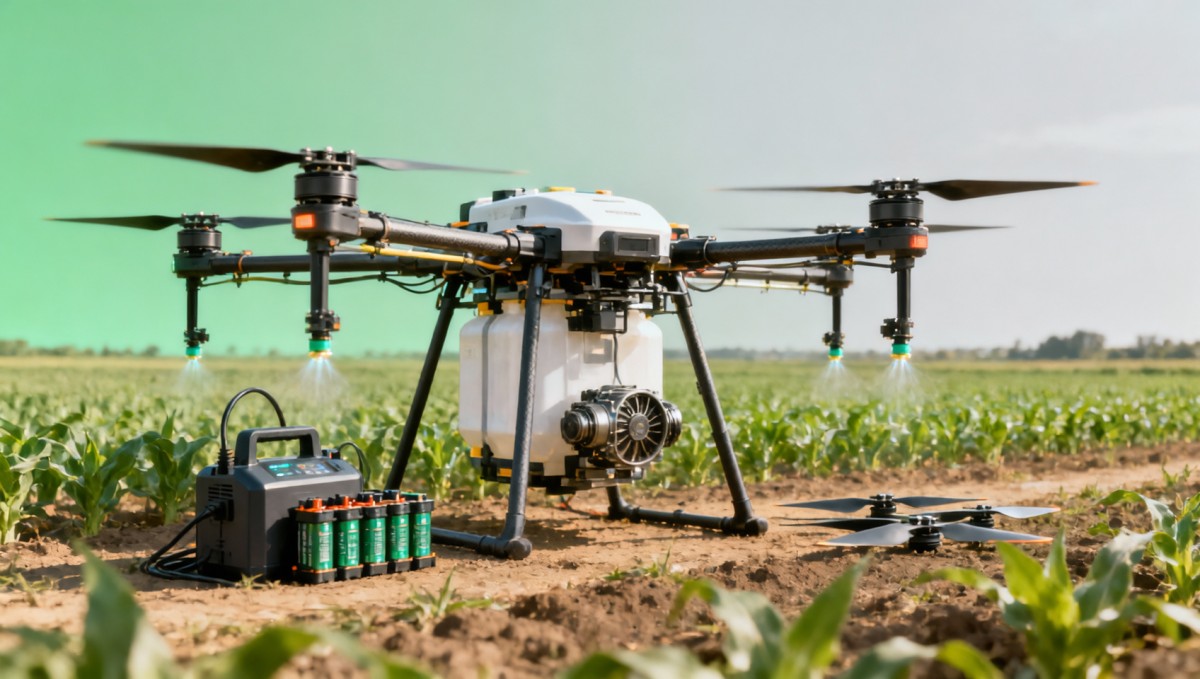
In B2B sourcing, agricultural spraying drone price is rarely a simple sticker number. A platform that looks similar on paper can differ sharply in total cost once you review payload class, nozzle system, pump type, battery chemistry, controller architecture, and after-sales support. For many teams, the first price quote only covers the airframe, while the usable operational package may require batteries, chargers, spare propellers, RTK modules, and training.
This is where information noise creates procurement risk. One supplier may highlight a 20 L or 30 L tank, while another focuses on flight time, yet neither explains spray consistency at low altitude, motor thermal margin under continuous load, or battery cycle stability over 300 to 600 charging cycles. TechStat Vanguard approaches this category from an engineering-first perspective: parameters matter more than adjectives, and lifecycle value matters more than a low opening quote.
For operators, the key question is not only “How much does a spraying drone cost?” but also “What output can it deliver per day under actual field conditions?” Wind, crop density, refill time, battery swap cadence, and route planning all influence the real return. For procurement teams, 3 cost layers should always be separated: upfront hardware cost, operating cost over 12 to 24 months, and downtime risk linked to parts support.
In general market practice, agricultural spraying drone price often scales with 4 practical thresholds: entry-level spraying systems for trial use, mid-range commercial units for regular farm work, higher-payload systems for contractor fleets, and integrated enterprise packages that include software, training, spare kits, and service response commitments. The airframe is only one part of the financial picture.
The most common cost drivers behind the quote
- Payload capacity and tank volume, which affect frame strength, motor size, ESC rating, and structural material requirements.
- Battery system design, especially whether the package includes 2 to 4 batteries, fast chargers, battery management logic, and replacement availability.
- Spray precision hardware, including pump consistency, droplet size control, nozzle layout, flow meter integration, and terrain-follow capability.
- Navigation and control stack, such as RTK, obstacle sensing, mission planning software, and whether the unit uses a configurable ecosystem from a pixhawk flight controller supplier.
- Support depth, including spare lead time, firmware updates, operator training, and response speed for mission-critical failures during the spraying season.
When buyers compare agricultural spraying drone price without mapping these factors line by line, they often underestimate the gap between a basic drone and a production-ready spraying system. That is why TSV recommends evaluating system architecture first, then quote structure, then supplier reliability.
Which technical components affect cost the most?
If you need a precise explanation of agricultural spraying drone price, start with the core technical stack. In most commercial platforms, 5 components account for a large share of cost sensitivity: frame and arms, propulsion system, battery pack, flight control system, and spray assembly. Each one influences not only purchase price but also durability, maintenance interval, and field reliability.
The propulsion system is a major example. Buyers looking at industrial drone motors wholesale options often focus on unit cost, but the more important issues are thermal endurance, bearing quality, sealing, torque stability under payload fluctuation, and compatibility with ESC tuning. Lower-cost motors may work in short demonstrations yet show faster wear under repeated heavy-load starts, high humidity, or dusty field environments.
Battery quality has an equally strong effect on agricultural spraying drone price and ownership cost. A reputable drone lipo battery manufacturer can provide clearer information on cell consistency, discharge behavior, storage recommendations, and charging safety. In practical operations, the difference between unstable and stable battery packs can show up in voltage sag, reduced mission time, slower turnaround, and shortened replacement cycles after one spraying season.
Flight control architecture also matters. A configurable system sourced through a pixhawk flight controller supplier may appeal to engineering teams that need customization, sensor integration, or software control. A closed proprietary controller may reduce setup complexity for some operators, but it can also limit integration flexibility. Neither route is universally better; the right choice depends on whether your organization prioritizes standardized deployment or engineering control over the stack.
Component-level impact on cost and long-term value
The table below helps procurement teams connect technical parts to budget behavior. It is especially useful when comparing a complete drone package from a commercial drone manufacturer china against a semi-custom build using sourced subsystems.
The main takeaway is simple: a low drone body price can hide high downstream cost if the propulsion set runs hot, the battery pack ages quickly, or the controller cannot support stable route execution. For research teams and technical buyers, the smarter comparison is system value per operating season, not airframe price alone.
Why supplier type changes the final number
A commercial drone manufacturer china may offer stronger scale advantages on frame production, integrated assembly, and bundled procurement. This can reduce per-unit cost for fleet orders, especially in quantities of 5, 10, or 20 units. However, buyers should still ask whether batteries, chargers, training, software licensing, and spare kits are itemized or bundled.
By contrast, sourcing motors, batteries, and controllers separately can improve technical control and supplier diversification. That route suits engineering-led organizations that need customization, but it usually increases integration workload, qualification time, and field validation effort over 2 to 6 weeks. The price advantage only holds if your team can manage testing efficiently.
How to compare platform price ranges without being misled
Many buyers ask for a simple agricultural spraying drone price range, but any useful answer must be tied to configuration tiers. An entry configuration may support basic spraying tasks with fewer automation features. A mid-tier commercial setup usually adds better route planning, stronger motors, more battery capacity, and more consistent spray performance. Enterprise systems often include fleet management, stronger redundancy logic, and broader service support.
A practical comparison method is to evaluate 4 dimensions together: payload class, mission continuity, control accuracy, and support package. This avoids the common error of comparing a bare drone against a fully deployable kit. In procurement reviews, TSV often sees quote gaps caused not by overpricing, but by unequal package scope.
For example, one offer may include only 1 battery and a standard charger, while another includes 3 batteries, a rapid charger, spare nozzles, extra propellers, and remote support during setup. For a seasonal agricultural operation, that difference can decide whether the drone works continuously across 6 to 8 hours of field activity or sits idle waiting for recharge.
The next table provides a decision-oriented view rather than a promotional one. It is designed for procurement personnel, farm operation managers, and enterprise buyers who need to compare value, not just the opening quote.
This comparison shows why agricultural spraying drone price must be matched to operating context. A lower-cost unit may be sufficient for seasonal testing, but repeated production tasks usually justify stronger battery rotation, more stable propulsion, and a better support framework. Cheap downtime during peak spraying windows is rarely cheap in reality.
A 5-point quote comparison checklist
- Separate airframe price from deployable package price, including batteries, charger, remote controller, and spare wear parts.
- Confirm whether the battery system supports your intended duty cycle over a full day, not just a single demonstration flight.
- Verify software scope, especially route planning, terrain-follow functions, firmware policy, and multilingual support if required.
- Ask for maintenance items with replacement frequency, such as nozzles, seals, pumps, or propellers over 6 to 12 months.
- Review supplier responsiveness for technical faults during the spraying season, because repair delay can outweigh initial savings.
These 5 checks help turn price comparison into operational decision-making. They are especially relevant when evaluating quotes from a commercial drone manufacturer china alongside component sourcing alternatives.
What should operators, buyers, and decision-makers prioritize?
Different stakeholders read agricultural spraying drone price through different lenses. Operators care about ease of use, battery swaps, route stability, and spray consistency in the field. Procurement teams focus on quote transparency, spare parts, and supply continuity. Enterprise decision-makers usually care most about risk control, standardization, and payback over one or more operating cycles.
Because these priorities differ, the best selection process is cross-functional. A 3-stage review works well in many organizations: first define the target operating scenario, then validate technical fit, then negotiate package scope and delivery timeline. This avoids a common mismatch where finance selects the lowest quote but operations later faces weak runtime continuity and maintenance pressure.
In agriculture, deployment conditions are often variable. Temperature, humidity, crop height, field layout, and refill logistics can all affect drone performance. That means platform selection should not rely only on catalog data. When possible, ask for configuration details, maintenance schedules, and a breakdown of what the quoted system can sustain per workday under realistic operating assumptions.
TSV’s engineering-led view is that supplier credibility should be judged through documentation discipline. Can the supplier define battery charging limits, recommended spare quantities, motor replacement guidance, and firmware update procedures? If the answer is vague, the agricultural spraying drone price may be hiding downstream uncertainty.
Priority framework by buyer type
For information researchers
Focus on architecture logic. Learn how payload, battery count, control system, and spray assembly interact. Compare at least 3 supplier structures: integrated platform vendors, component-led integrators, and customizable controller-based builds. This gives better context than collecting isolated price points.
For operators and field users
Prioritize reliability and workflow continuity. Ask how many battery sets are needed for a standard day, what maintenance is required every week or every 50 to 100 flights, and how quickly wearable parts can be replaced. Ease of operation can reduce training and error costs more than a small discount can.
For procurement professionals
Request a structured bill of supply. Separate standard items from optional modules. Clarify Incoterms, replacement part lead times, and whether the supplier can support batch procurement across 5 to 20 units. If using industrial drone motors wholesale or batteries from separate sources, check integration responsibility in writing.
For enterprise decision-makers
Evaluate the system as an operational asset, not just a purchase. Review downtime exposure, scaling path, training burden, and ability to standardize across regions or teams. A higher upfront agricultural spraying drone price may still deliver lower total operational friction over 12 to 24 months.
Common misconceptions, compliance points, and practical FAQ
Price confusion often comes from assumptions that do not hold up in the field. A bigger tank does not automatically mean better productivity. A lower battery cost does not guarantee acceptable cycle life. A more open controller is not always easier to deploy. In UAV procurement, details such as firmware stability, electrical matching, and replacement planning often decide whether a system is truly cost-effective.
Buyers should also keep basic compliance and operational governance in view. Depending on the market, agricultural drone use may involve local aviation rules, operator competency requirements, battery transport considerations, and pesticide application regulations. These do not always change the drone price directly, but they can affect deployment time, training scope, and project readiness over 1 to 4 weeks.
If your sourcing path includes a commercial drone manufacturer china, a drone lipo battery manufacturer, or a pixhawk flight controller supplier, ask for technical documentation that supports internal review. Procurement quality improves when teams compare declared parameters, maintenance guidance, and integration scope rather than marketing language.
The questions below reflect common search and procurement concerns around agricultural spraying drone price. They are also useful as an internal pre-purchase checklist.
Is the lowest agricultural spraying drone price usually the best value?
Usually no. The lowest quote can become more expensive if battery turnover is slow, spare parts are hard to source, or the spray system requires frequent calibration. Value should be measured through 3 layers: purchase cost, seasonal operating cost, and downtime risk. This is especially important in intensive crop windows where delays can disrupt coverage plans.
How many batteries should a practical package include?
There is no universal rule, but many operational teams review packages around 2 to 4 batteries depending on charging speed, field logistics, and work intensity. One battery may be enough for demonstration, but not for sustained spraying. Ask the supplier to explain expected rotation under your actual workflow, not under ideal bench conditions.
Should buyers choose a closed system or a Pixhawk-based control route?
A closed system can simplify deployment and reduce setup burden for standard operations. A system aligned with a pixhawk flight controller supplier may offer more configuration flexibility, useful for engineering teams, research projects, or special sensor integration. The right answer depends on whether your priority is deployment speed or customization depth.
Do component suppliers matter as much as the drone assembler?
Yes. Agricultural spraying drone price is influenced by the complete chain. Industrial drone motors wholesale sourcing affects propulsion stability and serviceability. A reliable drone lipo battery manufacturer affects runtime and replacement cost. The assembler matters, but weak subsystem sourcing can still compromise field performance.
Why choose a data-driven evaluation partner before requesting quotes
For technical procurement, the most expensive mistake is not paying more for the right drone. It is paying less for a platform that cannot meet field demands, documentation standards, or support expectations. TechStat Vanguard helps teams cut through supplier noise by translating product claims into engineering checkpoints: payload logic, motor suitability, battery credibility, controller architecture, and support readiness.
Our approach fits researchers, operators, procurement teams, and enterprise leaders who need harder evidence before supplier engagement. We focus on the metrics that influence long-term value, including technical compatibility, maintenance burden, deployment timeline, and sourcing transparency. That reduces trial-and-error cost and helps shorten supplier qualification cycles from the start.
If you are reviewing agricultural spraying drone price, we can help you structure the decision around 6 practical topics: parameter confirmation, product tier selection, battery and motor evaluation, controller route comparison, delivery lead-time review, and quote-scope clarification. This is especially useful when comparing integrated offers from a commercial drone manufacturer china with subsystem-led procurement strategies.
Contact TSV if you need support on specification drafting, supplier comparison, custom configuration review, certification-related document planning, sample evaluation logic, or quotation discussions. Instead of relying on generic claims, you can move forward with a clearer technical framework and a procurement path built on data, tolerances, and operational reality.
Search News
Hot Articles
- Carbon Fiber StructuresHow to Specify Aerospace Carbon Fiber Assemblies for Lightweight, Load-Bearing PartsJul 11, 2026
- Machine VisionXiaomi, Alibaba DAMO Academy Drive Open-Source Robotics Model Ecosystem, Lowering Algorithm Development Barriers for Overseas SMEs Adopting Chinese Robotics SolutionsMar 30, 2026
- Cobots & ArmsShanxi 'AI+' Conference Showcases Embodied Intelligence with Multinational Buyer Engagement: Key Industry ImplicationsMar 30, 2026
Popular Tags
Recommended News
 Jul 11, 2026How to Specify Aerospace Carbon Fiber Assemblies for Lightweight, Load-Bearing PartsAerospace carbon fiber assemblies: learn how to specify laminate design, load data, joining methods, and inspection controls for lighter, reliable load-bearing aerospace parts.Elena Rostova (UAV Systems Researcher)
 Mar 30, 2026Xiaomi, Alibaba DAMO Academy Drive Open-Source Robotics Model Ecosystem, Lowering Algorithm Development Barriers for Overseas SMEs Adopting Chinese Robotics SolutionsXiaomi & Alibaba DAMO Academy's open-source robotics models lower algorithm barriers for global SMEs. Boost efficiency in manufacturing, logistics & smart retail with ROS 2 compatible solutions.TSV Data Lab
 Mar 30, 2026Shanxi 'AI+' Conference Showcases Embodied Intelligence with Multinational Buyer Engagement: Key Industry ImplicationsShanxi 'AI+' Conference highlights embodied intelligence with Tesla, Ubtech & Jiantao showcasing multimodal robotics. 40+ global buyers validated tech on-site, creating new B2B channels for industrial automation & AI solutions.Chen Wei (Automation Lead Engineer)
 Mar 30, 2026Zhongguancun Unveils 6G Integrated Sensing-Computing-Intelligence Platform to Empower Embodied Robots for Global Industrial ApplicationsZhongguancun's new 6G platform revolutionizes industrial robotics with <10ms latency, empowering global automotive, logistics & port automation. Discover how this tech boosts China's smart manufacturing exports.TSV Data Lab
 Mar 30, 2026Mech-Mind Tianjin Embodied Intelligence R&D and Production Base Goes Live, Cutting Delivery Time by 20%–30% for Global Customized AMR+Vision SolutionsMech-Mind's Tianjin AMR+Vision production base cuts delivery time by 20%-30% for欧美 & Latin American markets. Discover how this PLd-certified facility accelerates customized robotics solutions for smart manufacturing and logistics.Chen Wei (Automation Lead Engineer)
 Mar 30, 2026Boao Forum Reveals 'Co-evolution of Big and Small Brains' Trend in Humanoid Robots, China's Embodied Intelligence Accelerates Adaptation to Overseas Manufacturing Service ScenariosDiscover how China's humanoid robots, featuring 'Co-evolution of Big and Small Brains,' are revolutionizing global manufacturing. Learn about Embodied Tian Gong 3.0's ISO compliance and overseas deployment at Boao Forum 2026.Chen Wei (Automation Lead Engineer)
 Mar 30, 2026China Railway Industrial Secures Patent for Embodied Robotics in Material Handling, Boosting High-Precision Delivery Capabilities for Overseas Infrastructure and Manufacturing ProjectsChina Railway Industrial's new patent for embodied robotics in material handling boosts high-precision delivery for global infrastructure & manufacturing. Discover how this innovation enhances logistics accuracy in automotive, rail transit & EPC projects.Chen Wei (Automation Lead Engineer)
 Oct 17, 20265-Axis CNC Positioning Accuracy: How to Interpret ISO 230-2 Test ResultsAssess 5 axis CNC machining positioning accuracy with ISO 230-2. Learn to interpret repeatability, reversal error, and test conditions to compare suppliers and make confident acceptance decisions.Dr. Marcus Vance
 Oct 16, 2026Choosing a Rugged Edge AI Box Supplier: Thermal Tests and Lifecycle SupportChoose a rugged edge AI box supplier with proven thermal performance and reliable lifecycle support. Discover the tests and commitments to verify before you buy.TSV Data Lab
 Oct 15, 2026R&D Cost Reduction Services: How to Evaluate Fees, Savings, and ROIEvaluate R&D cost reduction services with confidence. Compare fees, verify savings, and calculate ROI without compromising performance. Discover how to choose a provider that delivers real value.Chen Wei (Automation Lead Engineer)
 Oct 16, 2026How Can You Fairly Compare MTBF Across Industrial Servo Motors?Make a fair industrial servo motor MTBF comparison with matched operating profiles, failure criteria, and confidence bounds. Discover how to assess reliability beyond advertised numbers.Chen Wei (Automation Lead Engineer)
 Oct 15, 2026How Should You Compare TechStat Vanguard 5-Axis CNC Tolerances?TechStat Vanguard 5-axis CNC tolerance comparison: learn how to verify part accuracy, assess inspection evidence, and choose suppliers that reliably meet your drawing requirements.Dr. Marcus Vance
 Oct 14, 2026Drone Frame Composites: Carbon Fiber vs. Fiberglass for Weight and StiffnessExplore drone structural materials composites: compare carbon fiber and fiberglass for weight, stiffness, cost, and antenna compatibility. Find the right material for your drone frame.Elena Rostova (UAV Systems Researcher)
 Oct 13, 2026Smart Cameras vs. PC-Based Machine Vision: Which Fits High-Speed Inspection?This industrial product comparison for machine vision weighs smart cameras vs. PC-based systems on latency, throughput, and cost. Discover your best fit for high-speed inspection.TSV Data Lab
 Oct 12, 2026How to Verify RoHS Compliance in Industrial Sensing Systems Before DeploymentRoHS compliant sensing systems: learn how to verify materials, supplier declarations, testing, and configuration controls before industrial deployment.TSV Data Lab
 Oct 11, 2026How Procurement-Oriented Content Taxonomy Improves B2B Buying JourneysProcurement-oriented content taxonomy streamlines B2B buying journeys with clearer evidence, supplier comparisons, risk visibility, and faster approvals.TSV Data Lab
 Oct 10, 2026How to Select a Machine Performance Monitoring Platform for OEE and Downtime ReductionMachine performance monitoring platform selection guide: validate machine states, OEE data, downtime reasons, integrations, and scalability to reduce losses with confidence.TSV Data Lab
 Oct 08, 2026How to Machine Inconel 625 Blades Without Heat Cracks or Edge ChippingInconel 625 blade machining guide: prevent heat cracks, edge chipping, chatter, and work hardening with proven tooling, cooling, fixturing, and inspection strategies.Dr. Marcus Vance
 Oct 07, 2026How to Evaluate an HMI Panel Distributor for Industrial Automation ProjectsHMI panel distributor evaluation guide: verify technical compatibility, traceability, supply reliability, lifecycle support, and total cost for automation projects.Victor Lin (Chief Software Architect)
 Oct 06, 2026Navigation Fault Tolerance Standards for AMRs: What Safety Teams Must VerifyNavigation fault tolerance standards: learn what AMR safety teams must verify, from localization loss and sensor faults to stopping distance, safe restart, and site-specific validation.Chen Wei (Automation Lead Engineer)
 Oct 05, 2026Calculating Edge Computing Total Cost of Ownership Across Distributed SitesEdge computing ownership cost explained: calculate deployment, energy, connectivity, security, remote support, and refresh costs across distributed sites.TSV Data Lab
 Oct 04, 2026CAD/CAM Benchmarking in the GCC: What Manufacturers Should Ask a ConsultantCAD CAM benchmark consultant GCC guide: learn the key questions manufacturers should ask to validate post-processors, workflows, machine performance, and production risk.Victor Lin (Chief Software Architect)
 Oct 03, 2026Selecting Automotive Radar Sensor Modules for ADAS Range, Resolution, and IntegrationAutomotive radar sensor module selection guide for ADAS: compare range, resolution, field of view, latency, and integration to build safer, reliable vehicle systems.TSV Data Lab
 Oct 02, 2026How to Qualify Machined Parts Suppliers for Hard Tech ProgramsHard tech supply chain machined parts demand rigorous supplier qualification. Learn how to assess capability, traceability, quality controls, and delivery resilience.Dr. Marcus Vance























