
How to Choose a Drone Parachute Recovery System
Publication Date
author
Choosing the right drone parachute recovery system is not just about compliance—it directly affects mission safety, asset protection, and procurement confidence. For teams evaluating UAV platforms, from a fixed wing uav supplier to a custom vtol uav factory, the right decision depends on payload, flight controller integration, structural design, and operating risk. This guide helps engineers, operators, and buyers compare technical criteria with clarity instead of marketing noise.
Why drone parachute recovery systems matter more than many buyers expect
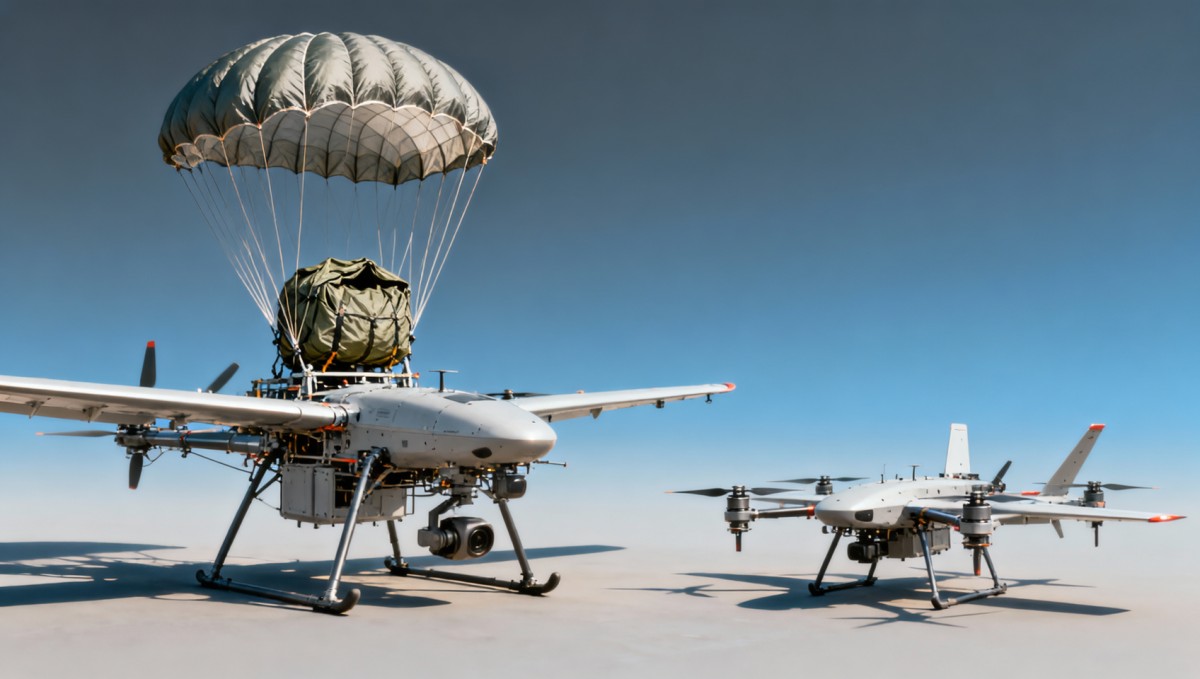
A drone parachute recovery system is a safety mechanism designed to slow descent after a critical failure or emergency event. In practical procurement terms, it is not a decorative add-on. It is a risk control component that can reduce airframe damage, lower third-party ground risk, and support safer operations in urban, industrial, mapping, and infrastructure environments.
For information researchers and enterprise decision-makers, the first mistake is treating all recovery systems as equivalent. They are not. Deployment logic, total system mass, activation speed, canopy sizing, controller compatibility, and maintenance intervals can vary significantly across platforms in the 2 kg, 10 kg, and 25 kg class. Those differences shape real operational outcomes.
For operators, the question is simple: will the parachute deploy reliably when propulsion, power, GNSS, or flight control stability fails? For procurement teams, the question is broader: does the selected system fit the aircraft architecture, the operating area, and the compliance path without creating new integration risk or excess payload penalty?
This is where a data-driven review matters. TechStat Vanguard focuses on engineering truth rather than vague claims. In UAV and aerospace evaluation, the useful comparison is not “best in class.” It is whether the system meets a defined descent envelope, whether the trigger logic is testable, and whether the integration burden can be validated within a 2–6 week engineering cycle.
- Safety function: controlled descent after propulsion failure, power loss, structural event, or flight termination command.
- Operational value: reduced crash energy, lower mission interruption cost, and better asset survivability.
- Procurement value: clearer risk allocation for airframe suppliers, system integrators, and end users.
How to match parachute design to UAV platform type and mission profile
The right drone parachute recovery system starts with the aircraft type. A multirotor, a fixed-wing platform, and a hybrid VTOL each fail differently, descend differently, and present different deployment challenges. Buyers comparing a fixed wing uav supplier with a custom vtol uav factory should avoid using one checklist for every airframe. Mission physics must drive the selection process.
In multirotor operations, a parachute often supports urban inspection, public safety, industrial survey, and operations over people or property-sensitive zones. The system typically needs fast recognition of abnormal attitude or power failure. Integration with the autopilot and independent trigger logic becomes especially important because the failure cascade may develop within seconds rather than minutes.
In fixed-wing operations, airspeed, glide behavior, and deployment envelope become central. A parachute recovery system that works on a hovering aircraft may not be suitable for a winged platform moving at higher forward speed. The buyer should check minimum and maximum deployment speed, mounting location, line clearance, and post-deployment stability, especially for mapping and long-range corridor missions.
In hybrid VTOL systems, transition phase risk deserves special attention. Failure during hover, forward flight, or transition can create very different dynamics. A supplier should be able to explain whether the parachute logic is linked to flight mode, whether there is a lockout window, and how canopy extraction is protected from propellers, booms, or wing surfaces.
Which mission variables should be checked first?
Teams can simplify the selection process by reviewing 4 core variables before discussing brands or quotations. This saves time and prevents the common mistake of evaluating only listed payload compatibility while ignoring real deployment conditions. In most B2B UAV projects, this first-pass review can be completed in 3–5 working days.
- Aircraft all-up weight, including battery, sensor payload, and any mission-specific accessories.
- Typical flight altitude and operating area, such as industrial park, farmland, utility corridor, or built-up urban zone.
- Failure scenarios that must trigger recovery, including motor loss, power interruption, flyaway logic, or geofence breach.
- Integration boundary, meaning whether the system is autonomous, autopilot-linked, or part of a wider safety stack.
The table below helps compare parachute recovery priorities across common UAV categories. It is not a substitute for engineering validation, but it gives procurement teams a practical framework for shortlisting options before moving into system-level review.
The main takeaway is straightforward: aircraft type changes the correct buying criteria. That is why TSV emphasizes platform-specific benchmarking. A parachute system that looks adequate on a sales sheet may still create unacceptable integration risk when installed on a high-speed fixed-wing aircraft or a transition-heavy VTOL platform.
What technical parameters should engineers and buyers compare before purchase?
A reliable drone parachute recovery system should be evaluated as an engineering subsystem, not only as an accessory. Buyers should ask for measurable parameters and clearly defined operating conditions. If the supplier cannot explain the deployment mechanism, mass impact, controller interface, and service interval in technical language, the evaluation is incomplete.
The first parameter is supported aircraft mass range. A system designed for one weight bracket may perform poorly outside that envelope. The second is descent behavior, often discussed through descent rate or impact energy objective. The third is deployment architecture: spring launch, pyrotechnic ejection where legally applicable, or other extraction methods. Each has implications for maintenance, transport, and field handling.
The fourth parameter is trigger logic. Some systems rely on manual remote activation only. Others combine manual and autonomous triggering through onboard sensors, power monitoring, or flight controller data. For procurement and operations teams, this distinction matters because the difference between a 1-layer trigger path and a 2-layer or 3-layer safety logic can influence both integration effort and fault tolerance.
The fifth parameter is installation impact. Added mass, aerodynamic drag, center-of-gravity shift, and mounting stiffness all affect flight performance. On platforms carrying LiDAR, EO/IR, multispectral, or logistics payloads, even a moderate weight increase can reduce endurance or alter control tuning. This must be reviewed during airframe-level assessment, not after purchase approval.
A practical parameter checklist for B2B selection
The checklist below is useful for engineering teams, procurement managers, and CTO-level reviewers. It converts a broad safety discussion into concrete questions that can be answered during RFQ, technical review, and acceptance preparation. In most projects, 6 key checks will filter out weak options quickly.
This comparison framework also improves internal communication. Operators can map real mission constraints, engineers can assess integration complexity, and procurement teams can align quotations against the same technical baseline. That reduces supplier ambiguity and shortens the qualification cycle, often from several unstructured review rounds to a more disciplined 2–3 stage process.
Technical points many teams overlook
Many buyers focus on deployment and ignore post-deployment behavior. Yet oscillation, line entanglement, and suspended payload stability can matter just as much. A parachute that opens correctly but induces uncontrolled swing may still damage a high-value sensor payload or create additional ground risk during descent.
Another overlooked point is environmental range. Operations in coastal wind, cold mornings, hot industrial roofs, or dusty agricultural fields may affect packing quality, electronics, and release mechanisms. Even without citing exact universal thresholds, buyers should ask for the typical operating temperature band, storage guidance, and field inspection steps before each flight day.
How should procurement teams compare cost, integration effort, and long-term value?
Cost evaluation should move beyond the purchase price of the parachute unit. In UAV procurement, total ownership impact includes integration engineering time, test flights, operator training, maintenance supplies, repacking or cartridge replacement, and any downtime created by service cycles. A lower unit price can become a higher project cost if the system is difficult to install or validate.
A practical cost review usually includes 3 layers. First is hardware cost. Second is integration cost, often measured in engineering hours and test campaign needs. Third is operating cost over 12–24 months, including inspections, consumables, and field support. For enterprise buyers managing fleets rather than single aircraft, the third layer is often underestimated.
Alternative strategies should also be compared honestly. Some teams assume improved redundancy alone makes a parachute unnecessary. Others rely on geofencing, return-to-home logic, or propeller redundancy. These tools are valuable, but they do not solve the same failure scenarios. A drone parachute recovery system is typically a last-resort mitigation layer, not a replacement for disciplined airworthiness design.
For decision-makers, the key question is not whether parachute hardware adds cost. It does. The relevant question is whether the added cost is justified by reduced crash severity, improved mission approval confidence, and better protection for airframes and payloads that may cost far more than the recovery unit itself.
A simple value comparison model
The table below is useful when discussing budget approval across technical and non-technical stakeholders. It frames parachute recovery as a value decision rather than a narrow component purchase.
This kind of structured comparison is especially useful when procurement teams must justify spend to finance, operations, and leadership at the same time. TSV’s approach is to convert claims into engineering review points so that budget approval follows measurable risk logic, not generic marketing language.
What compliance, testing, and implementation steps should not be skipped?
Compliance requirements vary by jurisdiction, aircraft category, operating environment, and mission type. Because regulations can change, buyers should verify local operational rules directly. Still, the general procurement principle is stable: a parachute recovery system should be assessed as part of the total UAV safety case, not as an isolated box added at the end of the project.
Implementation usually works best in 4 stages. Stage 1 is requirement definition. Stage 2 is integration design, including mounting, trigger logic, and failure analysis. Stage 3 is ground and flight validation. Stage 4 is operator training and maintenance release. Depending on platform complexity, this process may take 2–8 weeks, with longer schedules for custom VTOL systems or heavily modified airframes.
Testing should include more than a single demonstration drop. Teams should define acceptance criteria in advance. These often include activation method confirmation, electrical interface verification, structural attachment review, repacking procedure, and post-deployment inspection workflow. For professional operations, the test campaign should document who approves each step and what constitutes pass, rework, or hold.
From a procurement perspective, documentation quality is a major signal. Clear installation manuals, maintenance instructions, system limitations, and test procedures reduce implementation uncertainty. Weak documentation usually shifts burden onto the buyer, increasing engineering hours and delaying deployment readiness.
Implementation checklist for operators and buyers
- Confirm aircraft mass, center of gravity, and payload combinations in the intended mission configuration.
- Review trigger logic, including manual override, autonomous conditions, and any lockout state during takeoff or transition.
- Inspect mounting points, structural reinforcement needs, and canopy extraction path clearance.
- Define 5–6 acceptance items for ground test, flight test, repacking, and maintenance release.
- Train operators on arming status, emergency procedure, and post-activation handling before commercial use.
Common mistakes during rollout
One common mistake is assuming compatibility because the parachute supplier has worked with “similar” airframes. Similar is not enough. Arm length, fuselage shape, top-mount clearance, propulsion layout, and battery placement all affect deployment behavior. A proper fit review should be aircraft-specific.
Another mistake is separating procurement from field operations. Operators often discover practical issues such as arming workflow confusion, difficult repacking, or maintenance burden only after delivery. Involving pilots, maintenance personnel, and system engineers during evaluation usually produces a more robust decision within the first review cycle.
FAQ: how buyers, operators, and decision-makers usually narrow the right option
How do I choose a drone parachute recovery system for a fixed-wing UAV?
Start with the aircraft’s all-up weight, cruise speed, and emergency deployment envelope. For a fixed-wing platform, deployment speed and extraction stability are often more important than compact packaging alone. Ask the fixed wing uav supplier how the parachute integrates with airframe structure, whether the deployment path avoids wing or tail interference, and what flight test steps are required before release.
Are parachute systems equally suitable for custom VTOL UAV platforms?
Not always. A custom vtol uav factory should explain how the recovery system behaves in hover, transition, and forward flight. VTOL platforms introduce more geometric and mode-control complexity, so buyers should review trigger logic, canopy clearance from propellers, and structural mounting in each flight phase. A custom system may require more integration time, often in the 3–8 week range depending on platform maturity.
What are the most common procurement mistakes?
The top mistakes are comparing only price, ignoring integration burden, accepting vague trigger descriptions, and skipping maintenance review. Another frequent issue is asking for compliance support too late in the project. Procurement should align engineering, operations, and regulatory review early so the chosen drone parachute recovery system fits both the aircraft and the mission approval path.
How often should a parachute system be inspected or maintained?
The exact schedule depends on system design and operating conditions, so buyers should follow the supplier’s service instructions. In practice, professional operators usually define pre-flight checks each operating day, packing or mechanism inspection at scheduled intervals, and immediate inspection after any activation, hard landing, or environmental contamination. Maintenance clarity is an important buying factor because unclear service rules increase field risk.
Why work with a data-driven evaluation partner before finalizing your UAV safety stack?
Selecting a drone parachute recovery system is rarely just a component decision. It is a systems decision involving airframe design, payload economics, operating environment, and risk tolerance. That is why many teams benefit from a benchmarking approach that filters sales language and focuses on measurable parameters, integration logic, and procurement consequences.
TechStat Vanguard supports this process with an engineering-first perspective. Our work is built around hard-tech benchmarking, UAV and aerospace metrics, and supply-side technical transparency. Instead of repeating vague claims, we help teams structure what should be verified: payload impact, interface assumptions, deployment constraints, documentation quality, and qualification risk across the full sourcing process.
If you are comparing options from a fixed wing uav supplier, a custom vtol uav factory, or multiple subsystem vendors, you can contact TSV for practical support on parameter confirmation, selection logic, delivery cycle assessment, custom integration questions, and compliance-oriented documentation review. This is especially valuable when your team must align engineering, procurement, and executive approval within one decision window.
Reach out when you need help with 5 specific issues: defining the correct parachute weight bracket, checking flight controller integration boundaries, evaluating installation impact on payload and endurance, preparing a supplier comparison sheet, or clarifying certification and acceptance requirements before RFQ or sample validation. In hard-tech procurement, clearer parameters lead to better decisions, faster qualification, and lower avoidable risk.
Search News
Hot Articles
- Carbon Fiber StructuresHow to Specify Aerospace Carbon Fiber Assemblies for Lightweight, Load-Bearing PartsJul 11, 2026
- Machine VisionXiaomi, Alibaba DAMO Academy Drive Open-Source Robotics Model Ecosystem, Lowering Algorithm Development Barriers for Overseas SMEs Adopting Chinese Robotics SolutionsMar 30, 2026
- Cobots & ArmsShanxi 'AI+' Conference Showcases Embodied Intelligence with Multinational Buyer Engagement: Key Industry ImplicationsMar 30, 2026
Popular Tags
Recommended News
 Jul 11, 2026How to Specify Aerospace Carbon Fiber Assemblies for Lightweight, Load-Bearing PartsAerospace carbon fiber assemblies: learn how to specify laminate design, load data, joining methods, and inspection controls for lighter, reliable load-bearing aerospace parts.Elena Rostova (UAV Systems Researcher)
 Mar 30, 2026Xiaomi, Alibaba DAMO Academy Drive Open-Source Robotics Model Ecosystem, Lowering Algorithm Development Barriers for Overseas SMEs Adopting Chinese Robotics SolutionsXiaomi & Alibaba DAMO Academy's open-source robotics models lower algorithm barriers for global SMEs. Boost efficiency in manufacturing, logistics & smart retail with ROS 2 compatible solutions.TSV Data Lab
 Mar 30, 2026Shanxi 'AI+' Conference Showcases Embodied Intelligence with Multinational Buyer Engagement: Key Industry ImplicationsShanxi 'AI+' Conference highlights embodied intelligence with Tesla, Ubtech & Jiantao showcasing multimodal robotics. 40+ global buyers validated tech on-site, creating new B2B channels for industrial automation & AI solutions.Chen Wei (Automation Lead Engineer)
 Mar 30, 2026Zhongguancun Unveils 6G Integrated Sensing-Computing-Intelligence Platform to Empower Embodied Robots for Global Industrial ApplicationsZhongguancun's new 6G platform revolutionizes industrial robotics with <10ms latency, empowering global automotive, logistics & port automation. Discover how this tech boosts China's smart manufacturing exports.TSV Data Lab
 Mar 30, 2026Mech-Mind Tianjin Embodied Intelligence R&D and Production Base Goes Live, Cutting Delivery Time by 20%–30% for Global Customized AMR+Vision SolutionsMech-Mind's Tianjin AMR+Vision production base cuts delivery time by 20%-30% for欧美 & Latin American markets. Discover how this PLd-certified facility accelerates customized robotics solutions for smart manufacturing and logistics.Chen Wei (Automation Lead Engineer)
 Mar 30, 2026Boao Forum Reveals 'Co-evolution of Big and Small Brains' Trend in Humanoid Robots, China's Embodied Intelligence Accelerates Adaptation to Overseas Manufacturing Service ScenariosDiscover how China's humanoid robots, featuring 'Co-evolution of Big and Small Brains,' are revolutionizing global manufacturing. Learn about Embodied Tian Gong 3.0's ISO compliance and overseas deployment at Boao Forum 2026.Chen Wei (Automation Lead Engineer)
 Mar 30, 2026China Railway Industrial Secures Patent for Embodied Robotics in Material Handling, Boosting High-Precision Delivery Capabilities for Overseas Infrastructure and Manufacturing ProjectsChina Railway Industrial's new patent for embodied robotics in material handling boosts high-precision delivery for global infrastructure & manufacturing. Discover how this innovation enhances logistics accuracy in automotive, rail transit & EPC projects.Chen Wei (Automation Lead Engineer)
 Oct 17, 20265-Axis CNC Positioning Accuracy: How to Interpret ISO 230-2 Test ResultsAssess 5 axis CNC machining positioning accuracy with ISO 230-2. Learn to interpret repeatability, reversal error, and test conditions to compare suppliers and make confident acceptance decisions.Dr. Marcus Vance
 Oct 16, 2026Choosing a Rugged Edge AI Box Supplier: Thermal Tests and Lifecycle SupportChoose a rugged edge AI box supplier with proven thermal performance and reliable lifecycle support. Discover the tests and commitments to verify before you buy.TSV Data Lab
 Oct 15, 2026R&D Cost Reduction Services: How to Evaluate Fees, Savings, and ROIEvaluate R&D cost reduction services with confidence. Compare fees, verify savings, and calculate ROI without compromising performance. Discover how to choose a provider that delivers real value.Chen Wei (Automation Lead Engineer)
 Oct 16, 2026How Can You Fairly Compare MTBF Across Industrial Servo Motors?Make a fair industrial servo motor MTBF comparison with matched operating profiles, failure criteria, and confidence bounds. Discover how to assess reliability beyond advertised numbers.Chen Wei (Automation Lead Engineer)
 Oct 15, 2026How Should You Compare TechStat Vanguard 5-Axis CNC Tolerances?TechStat Vanguard 5-axis CNC tolerance comparison: learn how to verify part accuracy, assess inspection evidence, and choose suppliers that reliably meet your drawing requirements.Dr. Marcus Vance
 Oct 14, 2026Drone Frame Composites: Carbon Fiber vs. Fiberglass for Weight and StiffnessExplore drone structural materials composites: compare carbon fiber and fiberglass for weight, stiffness, cost, and antenna compatibility. Find the right material for your drone frame.Elena Rostova (UAV Systems Researcher)
 Oct 13, 2026Smart Cameras vs. PC-Based Machine Vision: Which Fits High-Speed Inspection?This industrial product comparison for machine vision weighs smart cameras vs. PC-based systems on latency, throughput, and cost. Discover your best fit for high-speed inspection.TSV Data Lab
 Oct 12, 2026How to Verify RoHS Compliance in Industrial Sensing Systems Before DeploymentRoHS compliant sensing systems: learn how to verify materials, supplier declarations, testing, and configuration controls before industrial deployment.TSV Data Lab
 Oct 11, 2026How Procurement-Oriented Content Taxonomy Improves B2B Buying JourneysProcurement-oriented content taxonomy streamlines B2B buying journeys with clearer evidence, supplier comparisons, risk visibility, and faster approvals.TSV Data Lab
 Oct 10, 2026How to Select a Machine Performance Monitoring Platform for OEE and Downtime ReductionMachine performance monitoring platform selection guide: validate machine states, OEE data, downtime reasons, integrations, and scalability to reduce losses with confidence.TSV Data Lab
 Oct 08, 2026How to Machine Inconel 625 Blades Without Heat Cracks or Edge ChippingInconel 625 blade machining guide: prevent heat cracks, edge chipping, chatter, and work hardening with proven tooling, cooling, fixturing, and inspection strategies.Dr. Marcus Vance
 Oct 07, 2026How to Evaluate an HMI Panel Distributor for Industrial Automation ProjectsHMI panel distributor evaluation guide: verify technical compatibility, traceability, supply reliability, lifecycle support, and total cost for automation projects.Victor Lin (Chief Software Architect)
 Oct 06, 2026Navigation Fault Tolerance Standards for AMRs: What Safety Teams Must VerifyNavigation fault tolerance standards: learn what AMR safety teams must verify, from localization loss and sensor faults to stopping distance, safe restart, and site-specific validation.Chen Wei (Automation Lead Engineer)
 Oct 05, 2026Calculating Edge Computing Total Cost of Ownership Across Distributed SitesEdge computing ownership cost explained: calculate deployment, energy, connectivity, security, remote support, and refresh costs across distributed sites.TSV Data Lab
 Oct 04, 2026CAD/CAM Benchmarking in the GCC: What Manufacturers Should Ask a ConsultantCAD CAM benchmark consultant GCC guide: learn the key questions manufacturers should ask to validate post-processors, workflows, machine performance, and production risk.Victor Lin (Chief Software Architect)
 Oct 03, 2026Selecting Automotive Radar Sensor Modules for ADAS Range, Resolution, and IntegrationAutomotive radar sensor module selection guide for ADAS: compare range, resolution, field of view, latency, and integration to build safer, reliable vehicle systems.TSV Data Lab
 Oct 02, 2026How to Qualify Machined Parts Suppliers for Hard Tech ProgramsHard tech supply chain machined parts demand rigorous supplier qualification. Learn how to assess capability, traceability, quality controls, and delivery resilience.Dr. Marcus Vance























