Drone delivery system logistics beyond the pilot phase
Publication Date
author
As drone delivery system logistics moves beyond pilots and proof-of-concept trials, project leaders face a tougher question: how do you scale reliably under real operational constraints? From airspace compliance and payload limits to edge data, maintenance cycles, and supplier qualification, success depends on engineering discipline—not marketing claims. This article examines what it takes to turn UAV delivery into a measurable, deployable logistics capability.
What drone delivery system logistics really means at scale
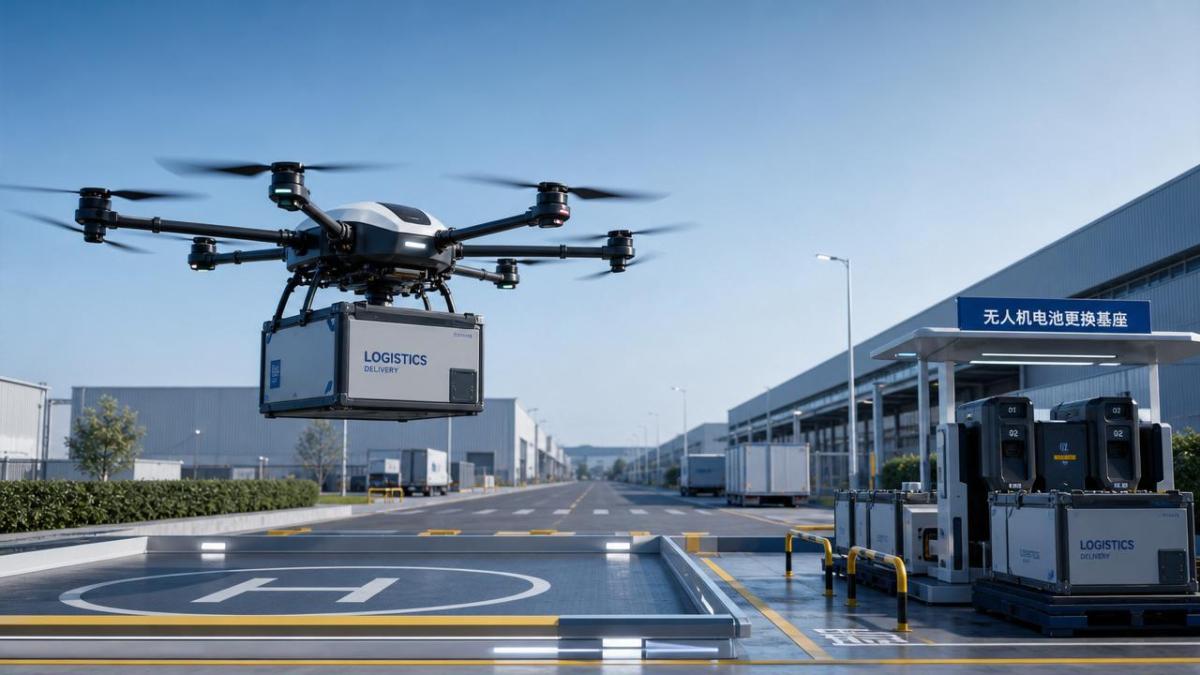
In simple terms, drone delivery system logistics is the coordinated use of unmanned aircraft, ground support assets, software platforms, charging or battery swap infrastructure, maintenance procedures, and regulatory controls to move goods from one point to another. That definition sounds straightforward, but the operational reality is far more demanding once the program moves beyond a demonstration route.
For project managers and engineering leads, the topic is no longer about whether a drone can carry a parcel for ten or twenty minutes. The real issue is whether an organization can sustain thousands of flights, variable weather, mixed payloads, changing demand windows, and documented compliance without creating cost instability or safety exposure. In other words, drone delivery system logistics becomes a systems engineering problem rather than a flight test problem.
This is why serious stakeholders increasingly reject vague claims about “smart autonomy” or “revolutionary aerial fulfillment.” They need route completion rates, turnaround times, fault recovery logic, battery degradation curves, landing accuracy under wind load, communication latency, and maintenance intervals. In the spirit of TSV’s data-first philosophy, scalable logistics depends on measurable parameters, not promotional language.
Why the industry is paying closer attention now
Several factors have pushed drone delivery system logistics from a futuristic concept into an active planning category. First, supply chains are under pressure to improve speed in areas where road access is congested, costly, or inconsistent. Second, edge computing, lightweight sensors, and flight control systems have improved enough to support more stable low-altitude operations. Third, organizations in healthcare, industrial services, retail replenishment, and remote infrastructure management now see clear business cases for point-to-point aerial transport.
At the same time, the barrier to scale has become more visible. Regulators expect traceable operational data. Customers expect predictable service windows. Finance teams expect utilization rates that justify capital and maintenance expense. Engineering teams must prove that aircraft, software, and ground workflows can work together under real variability. This is exactly where many pilot programs stall: the aircraft performs, but the logistics architecture does not.
For a broad industrial audience, the significance is practical. Drone delivery is not only about last-mile e-commerce. It affects spare parts movement to field assets, urgent medical transport between facilities, site-to-site transfer inside industrial parks, and time-sensitive delivery in difficult terrain. The wider the use case, the greater the need for disciplined planning and vendor qualification.
A practical industry overview for project leaders
Before committing budget or timeline, project leaders should understand the main operational dimensions that determine whether drone delivery system logistics can move from trial mode to repeatable deployment.
This overview shows why the conversation must go beyond aircraft performance alone. The most mature drone delivery system logistics programs are designed as integrated networks in which data, process, hardware, and operational governance are all validated together.
Business value across common use cases
The value of drone delivery system logistics changes by sector, but several patterns are consistent. The first is time compression. Drones can reduce travel time where roads are indirect, gated, congested, or seasonally disrupted. The second is service continuity. In remote or semi-remote locations, drones can maintain movement of critical items when traditional options are delayed. The third is process visibility, especially when fleet software produces flight-level operational records that support planning and auditing.
For project owners, the most useful approach is to classify expected value by operational objective rather than by technology novelty. A medical network may care most about rapid specimen transport and chain-of-custody integrity. An industrial operator may prioritize urgent spare parts delivery to reduce equipment downtime. A campus or industrial park may focus on internal transport efficiency and lower vehicle dependency for short-haul routes.
The engineering constraints that decide success
Every scaled drone delivery system logistics program is constrained by physics, regulation, and maintenance. Payload capability is rarely a simple maximum number. It varies with temperature, flight distance, wind, reserve energy policy, and takeoff profile. A platform that advertises a nominal payload may not sustain that payload across the route map an operator actually needs.
Airspace compliance is another major factor. Flights that work in a controlled trial may become difficult in a mixed environment involving urban edges, industrial interference, or evolving low-altitude regulations. Project teams should evaluate not only permission pathways but also the operational burden of logging, remote identification, incident reporting, and mission traceability.
Data infrastructure is equally critical. Drone delivery system logistics generates telemetry, battery history, route deviations, environmental readings, and exception records. If this information stays trapped in a vendor dashboard, the organization cannot optimize fleet performance or connect aerial transport to broader planning tools. Mature teams therefore require open integration paths to transport management systems, warehouse tools, maintenance databases, and reporting environments.
Maintenance discipline often separates scalable programs from stalled ones. Batteries age, motors drift, sensors degrade, and landing components absorb repeated stress. Without preventive inspection and component traceability, on-time performance falls quickly. This is where TSV’s broader principle applies: tolerances dictate success. Small deviations accumulate into failed missions if they are not measured early.
How project managers should assess deployment readiness
For project managers, deployment readiness should be assessed through a staged framework. Start with route suitability. Confirm not just distance, but elevation profile, obstacle density, weather exposure, handoff requirements, and recovery options. Then test operational throughput. A route may be technically flyable while still failing the business case because loading, charging, or dispatch coordination takes too long.
Next, review supplier maturity. In drone delivery system logistics, supplier qualification must include engineering transparency. Ask for endurance data under payload bands, not only best-case numbers. Ask for maintenance task intervals, software update governance, spare parts lead times, and evidence of field performance. Marketing labels such as “enterprise-grade” are not useful unless backed by measurable service records and technical documentation.
A strong evaluation also includes exception management. What happens if communication drops, weather changes abruptly, the landing zone is blocked, or the payload cannot be released? These situations are not edge cases in scaled operations; they are routine events that must be anticipated in procedures, software logic, and training.
Implementation recommendations for moving beyond the pilot phase
Organizations that want drone delivery system logistics to become a durable capability should avoid trying to scale too many variables at once. A disciplined rollout usually starts with one route family, one payload class, one operating model, and one reporting structure. This creates a clean baseline for measuring reliability, cost per mission, turnaround time, and intervention rate.
It is also wise to define performance gates before expansion. Examples include minimum mission completion rate, maximum manual intervention frequency, battery health thresholds, and acceptable variance in delivery window performance. Expansion should happen only when those metrics remain stable over meaningful operating periods.
Cross-functional ownership is another essential practice. Drone logistics cannot be left only to innovation teams. Operations, compliance, IT, maintenance, procurement, and site management all shape outcomes. If one function is excluded, the program may look successful in testing but fail under real workload conditions.
Finally, build the data model early. Define which metrics matter, how they are captured, who validates them, and how they feed decision-making. This turns drone delivery system logistics from a technology experiment into a governed operational asset.
Frequently overlooked questions
Is the aircraft the main risk? Often no. In many programs, the larger risks are fragmented workflows, weak maintenance planning, and poor integration with ground logistics.
Can one platform support every route? Usually not. Different payloads, distances, and operating environments may require segmented fleet strategy.
Does automation remove the need for engineering oversight? Absolutely not. More automation increases the need for rigorous validation, parameter tracking, and documented exception handling.
A grounded path forward
Drone delivery system logistics deserves attention because it can solve real movement problems across healthcare, industrial service, campus transport, and distributed operations. But beyond the pilot phase, value comes only when organizations treat it as a full logistics system with measurable technical limits, verified supplier capability, and disciplined performance governance.
For engineering-led organizations, the next step is not to chase bigger claims. It is to define routes, metrics, tolerances, and integration requirements with precision. That is the difference between a visually impressive demonstration and a logistics capability that can survive real operational pressure. In that sense, the future of drone delivery belongs to teams that engineer truth through data.
Search News
Hot Articles
- Carbon Fiber StructuresHow to Specify Aerospace Carbon Fiber Assemblies for Lightweight, Load-Bearing PartsJul 11, 2026
- Machine VisionXiaomi, Alibaba DAMO Academy Drive Open-Source Robotics Model Ecosystem, Lowering Algorithm Development Barriers for Overseas SMEs Adopting Chinese Robotics SolutionsMar 30, 2026
- Cobots & ArmsShanxi 'AI+' Conference Showcases Embodied Intelligence with Multinational Buyer Engagement: Key Industry ImplicationsMar 30, 2026
Popular Tags
Recommended News
 Jul 11, 2026How to Specify Aerospace Carbon Fiber Assemblies for Lightweight, Load-Bearing PartsAerospace carbon fiber assemblies: learn how to specify laminate design, load data, joining methods, and inspection controls for lighter, reliable load-bearing aerospace parts.Elena Rostova (UAV Systems Researcher)
 Mar 30, 2026Xiaomi, Alibaba DAMO Academy Drive Open-Source Robotics Model Ecosystem, Lowering Algorithm Development Barriers for Overseas SMEs Adopting Chinese Robotics SolutionsXiaomi & Alibaba DAMO Academy's open-source robotics models lower algorithm barriers for global SMEs. Boost efficiency in manufacturing, logistics & smart retail with ROS 2 compatible solutions.TSV Data Lab
 Mar 30, 2026Shanxi 'AI+' Conference Showcases Embodied Intelligence with Multinational Buyer Engagement: Key Industry ImplicationsShanxi 'AI+' Conference highlights embodied intelligence with Tesla, Ubtech & Jiantao showcasing multimodal robotics. 40+ global buyers validated tech on-site, creating new B2B channels for industrial automation & AI solutions.Chen Wei (Automation Lead Engineer)
 Mar 30, 2026Zhongguancun Unveils 6G Integrated Sensing-Computing-Intelligence Platform to Empower Embodied Robots for Global Industrial ApplicationsZhongguancun's new 6G platform revolutionizes industrial robotics with <10ms latency, empowering global automotive, logistics & port automation. Discover how this tech boosts China's smart manufacturing exports.TSV Data Lab
 Mar 30, 2026Mech-Mind Tianjin Embodied Intelligence R&D and Production Base Goes Live, Cutting Delivery Time by 20%–30% for Global Customized AMR+Vision SolutionsMech-Mind's Tianjin AMR+Vision production base cuts delivery time by 20%-30% for欧美 & Latin American markets. Discover how this PLd-certified facility accelerates customized robotics solutions for smart manufacturing and logistics.Chen Wei (Automation Lead Engineer)
 Mar 30, 2026Boao Forum Reveals 'Co-evolution of Big and Small Brains' Trend in Humanoid Robots, China's Embodied Intelligence Accelerates Adaptation to Overseas Manufacturing Service ScenariosDiscover how China's humanoid robots, featuring 'Co-evolution of Big and Small Brains,' are revolutionizing global manufacturing. Learn about Embodied Tian Gong 3.0's ISO compliance and overseas deployment at Boao Forum 2026.Chen Wei (Automation Lead Engineer)
 Mar 30, 2026China Railway Industrial Secures Patent for Embodied Robotics in Material Handling, Boosting High-Precision Delivery Capabilities for Overseas Infrastructure and Manufacturing ProjectsChina Railway Industrial's new patent for embodied robotics in material handling boosts high-precision delivery for global infrastructure & manufacturing. Discover how this innovation enhances logistics accuracy in automotive, rail transit & EPC projects.Chen Wei (Automation Lead Engineer)
 Sep 29, 2026ISO 9283 Repeatability: How to Evaluate Cobot Positioning PerformanceISO 9283 cobot repeatability explained: learn how payload, reach, approach direction, and test conditions affect positioning performance and cell capability.Chen Wei (Automation Lead Engineer)
 Sep 28, 2026Spindle Runout Measurement in Germany: DIN Standards, Methods, and Acceptance LimitsSpindle runout measurement Germany: explore DIN standards, proven methods, acceptance limits, and audit-ready practices for reliable machining quality.Dr. Marcus Vance
 Sep 27, 2026How to Select Wall-Mount Edge Devices for Space-Constrained Factory NetworksWall mount edge devices for space-constrained factories: evaluate workload, thermal design, power resilience, cable access, and network reliability for smarter deployments.TSV Data Lab
 Sep 26, 2026Machining Tolerance Analysis: How to Set Limits That Meet Function and Cost TargetsMachining tolerance analysis: learn how to set functional limits, control tolerance stacks, reduce inspection risk, and balance precision with production cost.Dr. Marcus Vance
 Sep 25, 2026How to Evaluate an Industrial Infrastructure Data Platform for Multi-Site OperationsIndustrial infrastructure data platform evaluation guide for multi-site operations: compare data quality, edge resilience, interoperability, governance, and scalable proof-of-value criteria.Victor Lin (Chief Software Architect)
 Sep 24, 2026How to Select Machine Vision Optics for Accurate Inspection at Different Working DistancesMachine vision optics selection guide for accurate inspection at every working distance. Compare FOV, pixel scale, DOF, distortion, lighting, and telecentric options.TSV Data Lab
 Sep 23, 2026How to Evaluate a Machine Vision System Integrator for High-Speed Inspection LinesChoose a machine vision system integrator with proven expertise in high-speed inspection, reliable reject timing, robust optics, and measurable acceptance criteria.TSV Data Lab
 Sep 28, 2026When is a SCADA API the right choice for connecting plant systems?SCADA API guide: learn when governed plant data integration improves traceability, security, and scalability—without compromising real-time control.Victor Lin (Chief Software Architect)
 Sep 27, 2026How SCADA data integration improves traceability across production linesSCADA data integration connects production-line data to improve traceability, accelerate quality investigations, and strengthen safety decisions.Victor Lin (Chief Software Architect)
 Sep 26, 2026What to define before starting SCADA integration planningSCADA integration planning starts with clear scope, control boundaries, data models, cybersecurity, and testing. Discover the definitions that reduce risk and costly rework.Victor Lin (Chief Software Architect)
 Sep 25, 2026How a smart factory with Industrial IoT reduces production blind spotsDiscover how a smart factory with Industrial IoT turns real-time machine, quality, and workflow data into actionable insights that reduce production blind spots and delivery risks.Victor Lin (Chief Software Architect)
 Sep 24, 2026When does Industrial IoT make smart manufacturing easier to scale?Smart manufacturing Industrial IoT scales when trusted data, interoperable systems, and secure workflows turn connected assets into measurable gains.TSV Data Lab
 Sep 23, 2026What drives ultra-precision machining cost at 1-micron tolerance?Ultra precision machining cost per part at 1 micron tolerance depends on process, material, metrology, and yield. Learn how to compare quotes confidently.Dr. Marcus Vance
 Sep 22, 2026Drone Engine-T550CC Applications: Build the UAV Power System Around the MissionAn application guide for Drone Engine-T550CC integration, covering payload planning, airframe matching, cooling, fuel, vibration, test procedures, documentation, and service preparation.Elena Rostova (UAV Systems Researcher)
 Sep 22, 2026How to Evaluate Industrial Edge Computing Vendors for Factory DeploymentIndustrial edge computing vendor evaluation guide for factories: compare latency, protocol fit, reliability, security, and lifecycle support before deployment.TSV Data Lab
 Sep 21, 2026Drone Payload Integration: Matching Power, Data, and Center of Gravity for Reliable FlightsDrone payload integration made practical: balance power, data, center of gravity, and endurance to build safer, more reliable mission-ready flights.Elena Rostova (UAV Systems Researcher)
 Sep 20, 2026Autonomous Navigation Pricing: Cost Drivers and Budget Benchmarks for AMR ProjectsAutonomous navigation price explained: compare AMR cost drivers, software, sensors, integration, safety, and lifecycle budgets to build a scalable project plan.Chen Wei (Automation Lead Engineer)