
Commercial Drone Manufacturer China: How to Choose
Publication Date
author
Choosing the right commercial drone manufacturer in China is no longer a branding exercise. For most buyers, the real question is simpler and more practical: can this supplier deliver the required flight performance, payload integration, reliability, documentation, and after-sales support for your exact use case? If you are comparing a mapping drone supplier, a fixed wing UAV supplier, a heavy payload UAV supplier, or upstream component partners such as a drone propeller manufacturer or Pixhawk flight controller supplier, the best choice is the one that can prove engineering capability with data, not marketing language.
For R&D teams, operators, procurement managers, and business decision-makers, the selection process should focus on mission fit, verifiable specifications, manufacturing consistency, software and component ecosystem compatibility, compliance readiness, and total lifecycle cost. This guide breaks down how to evaluate a commercial drone manufacturer China based on the factors that actually affect deployment success.
What should you check first when choosing a commercial drone manufacturer in China?
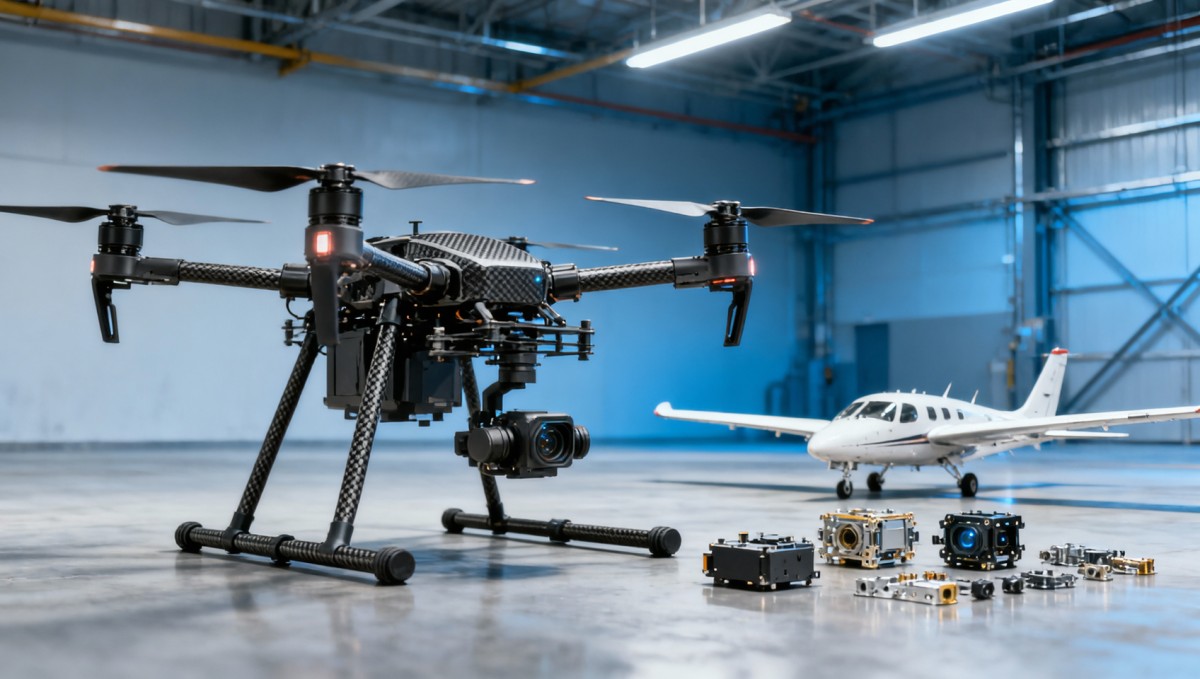
Start with one principle: do not choose a manufacturer first; choose your mission profile first. Many sourcing mistakes happen because buyers compare companies before defining the operating requirement. A supplier that looks impressive on paper may still be the wrong fit if its platform is optimized for a different task.
Before contacting suppliers, define the following:
- Application: mapping, surveying, inspection, agriculture, logistics, public safety, industrial monitoring, or custom research use.
- Airframe type: multirotor, VTOL, or fixed wing. A fixed wing UAV supplier may be ideal for long-range corridor mapping, while a multirotor may be better for precision hovering and close inspection.
- Payload requirement: RGB camera, LiDAR, multispectral sensor, thermal imaging, delivery box, spraying system, or custom module.
- Flight endurance: required usable flight time under real payload and wind conditions, not empty-aircraft lab values.
- Operating environment: altitude, temperature, humidity, electromagnetic interference, dust, salt fog, and wind tolerance.
- Data workflow: onboard processing, edge AI, cloud upload, ground control software, and API integration.
- Compliance and documentation: export support, battery transport documentation, maintenance manuals, and test reports.
Once these are clear, you can quickly eliminate suppliers who cannot support your actual mission. This saves procurement time and reduces technical rework later.
How do you compare manufacturers beyond brochures and sales claims?
When evaluating any commercial drone manufacturer in China, ask for evidence in six areas: airframe engineering, flight control stability, payload integration, production quality control, support capability, and supply chain transparency.
1. Airframe engineering quality
The airframe determines structural integrity, weight efficiency, maintainability, and long-term reliability. Ask suppliers for:
- Frame material details, such as carbon fiber grade, aluminum alloy type, and protective coatings
- Maximum takeoff weight and recommended continuous operating weight
- Structural fatigue test data or vibration resistance testing
- Ingress protection rating if the drone will operate outdoors in harsh conditions
- Arm, landing gear, and quick-release mechanism durability data
A serious heavy payload UAV supplier should be able to explain how payload affects center of gravity, vibration isolation, thermal load, and actual endurance. If they only provide theoretical maximum payload but no stable mission envelope, treat that as a risk signal.
2. Flight controller and control stack maturity
Flight stability is not only about the airframe. It also depends on the control architecture, sensor fusion, firmware maturity, and tuning quality. If the manufacturer uses open architecture systems, understanding their relationship with a Pixhawk flight controller supplier becomes important.
Ask questions such as:
- Which autopilot stack is used: Pixhawk-based, proprietary, or hybrid?
- How is EMI resistance validated in industrial environments?
- Can parameters be tuned for different payloads and environments?
- Is there log access for troubleshooting and post-flight analysis?
- What redundancy exists for GNSS, IMU, compass, power, and communication links?
For enterprise applications, transparent system architecture is usually better than black-box claims. Buyers need to know whether the platform can be maintained, upgraded, and integrated into existing workflows over time.
3. Payload compatibility and integration depth
Many sourcing failures come from payload mismatch rather than drone failure. A mapping drone supplier should not just say the drone “supports mapping.” It should specify:
- Compatible sensor brands and mounting options
- Payload power interface and voltage output
- Data transmission bandwidth and latency
- Gimbal stability under motion and wind
- Triggering accuracy and geotagging performance
- SDK or API support for custom payloads
If your business depends on LiDAR mapping, corridor inspection, or agricultural spraying, payload integration quality is often more important than headline flight time.
4. Production consistency and quality control
Prototype performance is not the same as batch consistency. Procurement teams should ask how the factory controls quality across multiple units. Key checkpoints include:
- Incoming inspection for motors, ESCs, batteries, and propellers
- Calibration process for IMU, compass, GNSS, and payload systems
- Final assembly test procedures
- Flight test protocol before shipment
- Serial number traceability for key components
- Failure analysis and corrective action process
This is particularly important if you are sourcing fleets, not single units. A capable drone propeller manufacturer or motor partner also matters here, because propulsion inconsistency can directly affect vibration, efficiency, and control stability.
5. Spare parts and after-sales support
A good purchase can still become a bad deployment if spare parts are slow, technical support is weak, or firmware updates are unmanaged. Evaluate:
- Lead time for spare arms, motors, ESCs, landing gear, propellers, and batteries
- Availability of maintenance manuals and exploded part diagrams
- Remote troubleshooting process and response time
- Training support for operators and technicians
- Firmware version control and update policy
For operators, downtime is often more expensive than initial purchase price. For executives, this directly affects utilization and ROI.
Which type of Chinese drone supplier is right for your use case?
Not every supplier category serves the same buyer need. Defining the supplier type helps narrow the market faster.
Mapping drone supplier
Best for surveying, orthophoto generation, 3D reconstruction, and corridor mapping. Prioritize route planning software, camera triggering accuracy, PPK/RTK capability, payload compatibility, and repeatable flight performance.
Fixed wing UAV supplier
Best for large-area missions and long-range coverage. Prioritize endurance under operational payload, launch and recovery requirements, wind resistance, and cruise efficiency. Ask for real mission profiles, not only ideal-condition flight time.
Heavy payload UAV supplier
Best for logistics, industrial lifting, spraying, and specialized sensor carriage. Prioritize thrust reserve, thermal performance, flight stability at high load, battery safety, and redundancy design.
Component ecosystem suppliers
If your team develops custom platforms, evaluating a drone propeller manufacturer, propulsion partner, or Pixhawk flight controller supplier may be just as important as choosing the final airframe assembler. In these cases, engineering support, documentation, lot consistency, and integration compatibility become major decision factors.
What technical questions should buyers ask before requesting a quotation?
A quotation is only meaningful if it is tied to a defined configuration and validation scope. Before asking for price, ask for technical clarity.
- What is the tested endurance with my target payload at the expected operating altitude?
- What is the recommended payload, not just the maximum payload?
- How does performance change in 5 m/s, 8 m/s, or higher wind conditions?
- What communication range is achievable in my regulatory and environmental context?
- What batteries are used, what cycle life is expected, and what certifications are available?
- Which components are proprietary and which are replaceable through standard channels?
- Can the supplier provide flight logs, test videos, and acceptance criteria?
- What software dependencies exist for mission planning, maintenance, and data export?
- What warranty terms apply to consumables versus core systems?
These questions help expose the difference between a trading company, an assembler, and a true engineering manufacturer.
How do procurement teams reduce risk when sourcing from China?
China remains one of the most important global centers for UAV manufacturing, with strong advantages in electronics supply chains, rapid prototyping, component availability, and cost efficiency. But good sourcing still requires process discipline.
To reduce risk, follow this approach:
- Shortlist based on application fit, not popularity.
- Request detailed specification sheets and test evidence.
- Verify factory role: OEM, ODM, integrator, or trading company.
- Assess component sourcing stability: motors, controllers, batteries, GPS modules, radios, and propellers.
- Run a sample evaluation or pilot deployment.
- Use acceptance criteria: endurance, payload behavior, vibration, navigation accuracy, and maintenance access.
- Audit support capability: documentation, training, firmware support, and spare part lead times.
For larger purchases, a structured supplier audit is recommended. This can include quality documentation review, video or in-person factory inspection, and engineering interviews with the technical team rather than only the sales team.
What are the most common mistakes when choosing a commercial drone manufacturer in China?
The biggest mistakes are usually not technical complexity but decision shortcuts. Common examples include:
- Choosing based on the lowest quoted price without lifecycle cost analysis
- Comparing maximum payload numbers without checking stable operating payload
- Using empty-aircraft endurance data to estimate real mission time
- Ignoring software, API, and payload integration requirements
- Assuming all Pixhawk-based or open-source-compatible systems perform equally
- Not checking spare parts availability and maintenance workflow
- Relying on generic marketing terms instead of test evidence
For decision-makers, these mistakes often lead to delayed deployment, low fleet utilization, unexpected training burden, and higher total operating cost.
Final decision framework: how to select the best supplier for long-term value
The best commercial drone manufacturer China is not the one with the most aggressive claims. It is the one that can consistently support your mission with verified technical performance, stable production quality, compatible payload integration, transparent support, and manageable lifecycle cost.
If you are sourcing a mapping drone supplier, focus on data accuracy, route automation, and sensor integration. If you need a fixed wing UAV supplier, prioritize usable endurance, range, and recovery practicality. If you need a heavy payload UAV supplier, demand evidence on safe operating envelope, thrust reserve, and thermal reliability. If your project depends on deeper customization, also evaluate upstream partners such as the drone propeller manufacturer and Pixhawk flight controller supplier behind the final platform.
In short, good supplier selection comes from engineering evidence, not adjectives. Define the mission, verify the data, test the system, and evaluate support before scale purchase. That is the most reliable path to choosing a Chinese commercial drone partner that creates operational value instead of procurement risk.
Search News
Hot Articles
- Carbon Fiber StructuresHow to Specify Aerospace Carbon Fiber Assemblies for Lightweight, Load-Bearing PartsJul 11, 2026
- Machine VisionXiaomi, Alibaba DAMO Academy Drive Open-Source Robotics Model Ecosystem, Lowering Algorithm Development Barriers for Overseas SMEs Adopting Chinese Robotics SolutionsMar 30, 2026
- Cobots & ArmsShanxi 'AI+' Conference Showcases Embodied Intelligence with Multinational Buyer Engagement: Key Industry ImplicationsMar 30, 2026
Popular Tags
Recommended News
 Jul 11, 2026How to Specify Aerospace Carbon Fiber Assemblies for Lightweight, Load-Bearing PartsAerospace carbon fiber assemblies: learn how to specify laminate design, load data, joining methods, and inspection controls for lighter, reliable load-bearing aerospace parts.Elena Rostova (UAV Systems Researcher)
 Mar 30, 2026Xiaomi, Alibaba DAMO Academy Drive Open-Source Robotics Model Ecosystem, Lowering Algorithm Development Barriers for Overseas SMEs Adopting Chinese Robotics SolutionsXiaomi & Alibaba DAMO Academy's open-source robotics models lower algorithm barriers for global SMEs. Boost efficiency in manufacturing, logistics & smart retail with ROS 2 compatible solutions.TSV Data Lab
 Mar 30, 2026Shanxi 'AI+' Conference Showcases Embodied Intelligence with Multinational Buyer Engagement: Key Industry ImplicationsShanxi 'AI+' Conference highlights embodied intelligence with Tesla, Ubtech & Jiantao showcasing multimodal robotics. 40+ global buyers validated tech on-site, creating new B2B channels for industrial automation & AI solutions.Chen Wei (Automation Lead Engineer)
 Mar 30, 2026Zhongguancun Unveils 6G Integrated Sensing-Computing-Intelligence Platform to Empower Embodied Robots for Global Industrial ApplicationsZhongguancun's new 6G platform revolutionizes industrial robotics with <10ms latency, empowering global automotive, logistics & port automation. Discover how this tech boosts China's smart manufacturing exports.TSV Data Lab
 Mar 30, 2026Mech-Mind Tianjin Embodied Intelligence R&D and Production Base Goes Live, Cutting Delivery Time by 20%–30% for Global Customized AMR+Vision SolutionsMech-Mind's Tianjin AMR+Vision production base cuts delivery time by 20%-30% for欧美 & Latin American markets. Discover how this PLd-certified facility accelerates customized robotics solutions for smart manufacturing and logistics.Chen Wei (Automation Lead Engineer)
 Mar 30, 2026Boao Forum Reveals 'Co-evolution of Big and Small Brains' Trend in Humanoid Robots, China's Embodied Intelligence Accelerates Adaptation to Overseas Manufacturing Service ScenariosDiscover how China's humanoid robots, featuring 'Co-evolution of Big and Small Brains,' are revolutionizing global manufacturing. Learn about Embodied Tian Gong 3.0's ISO compliance and overseas deployment at Boao Forum 2026.Chen Wei (Automation Lead Engineer)
 Mar 30, 2026China Railway Industrial Secures Patent for Embodied Robotics in Material Handling, Boosting High-Precision Delivery Capabilities for Overseas Infrastructure and Manufacturing ProjectsChina Railway Industrial's new patent for embodied robotics in material handling boosts high-precision delivery for global infrastructure & manufacturing. Discover how this innovation enhances logistics accuracy in automotive, rail transit & EPC projects.Chen Wei (Automation Lead Engineer)
 Oct 17, 20265-Axis CNC Positioning Accuracy: How to Interpret ISO 230-2 Test ResultsAssess 5 axis CNC machining positioning accuracy with ISO 230-2. Learn to interpret repeatability, reversal error, and test conditions to compare suppliers and make confident acceptance decisions.Dr. Marcus Vance
 Oct 16, 2026Choosing a Rugged Edge AI Box Supplier: Thermal Tests and Lifecycle SupportChoose a rugged edge AI box supplier with proven thermal performance and reliable lifecycle support. Discover the tests and commitments to verify before you buy.TSV Data Lab
 Oct 15, 2026R&D Cost Reduction Services: How to Evaluate Fees, Savings, and ROIEvaluate R&D cost reduction services with confidence. Compare fees, verify savings, and calculate ROI without compromising performance. Discover how to choose a provider that delivers real value.Chen Wei (Automation Lead Engineer)
 Oct 17, 2026How Should You Interpret Industrial Robot Repeatability Specs?Decode industrial robot repeatability specifications, understand ISO 9283 test conditions, and avoid costly selection mistakes. Learn how to verify performance for your process.Chen Wei (Automation Lead Engineer)
 Oct 16, 2026How Can You Fairly Compare MTBF Across Industrial Servo Motors?Make a fair industrial servo motor MTBF comparison with matched operating profiles, failure criteria, and confidence bounds. Discover how to assess reliability beyond advertised numbers.Chen Wei (Automation Lead Engineer)
 Oct 15, 2026How Should You Compare TechStat Vanguard 5-Axis CNC Tolerances?TechStat Vanguard 5-axis CNC tolerance comparison: learn how to verify part accuracy, assess inspection evidence, and choose suppliers that reliably meet your drawing requirements.Dr. Marcus Vance
 Oct 14, 2026Drone Frame Composites: Carbon Fiber vs. Fiberglass for Weight and StiffnessExplore drone structural materials composites: compare carbon fiber and fiberglass for weight, stiffness, cost, and antenna compatibility. Find the right material for your drone frame.Elena Rostova (UAV Systems Researcher)
 Oct 13, 2026Smart Cameras vs. PC-Based Machine Vision: Which Fits High-Speed Inspection?This industrial product comparison for machine vision weighs smart cameras vs. PC-based systems on latency, throughput, and cost. Discover your best fit for high-speed inspection.TSV Data Lab
 Oct 12, 2026How to Verify RoHS Compliance in Industrial Sensing Systems Before DeploymentRoHS compliant sensing systems: learn how to verify materials, supplier declarations, testing, and configuration controls before industrial deployment.TSV Data Lab
 Oct 11, 2026How Procurement-Oriented Content Taxonomy Improves B2B Buying JourneysProcurement-oriented content taxonomy streamlines B2B buying journeys with clearer evidence, supplier comparisons, risk visibility, and faster approvals.TSV Data Lab
 Oct 10, 2026How to Select a Machine Performance Monitoring Platform for OEE and Downtime ReductionMachine performance monitoring platform selection guide: validate machine states, OEE data, downtime reasons, integrations, and scalability to reduce losses with confidence.TSV Data Lab
 Oct 08, 2026How to Machine Inconel 625 Blades Without Heat Cracks or Edge ChippingInconel 625 blade machining guide: prevent heat cracks, edge chipping, chatter, and work hardening with proven tooling, cooling, fixturing, and inspection strategies.Dr. Marcus Vance
 Oct 07, 2026How to Evaluate an HMI Panel Distributor for Industrial Automation ProjectsHMI panel distributor evaluation guide: verify technical compatibility, traceability, supply reliability, lifecycle support, and total cost for automation projects.Victor Lin (Chief Software Architect)
 Oct 06, 2026Navigation Fault Tolerance Standards for AMRs: What Safety Teams Must VerifyNavigation fault tolerance standards: learn what AMR safety teams must verify, from localization loss and sensor faults to stopping distance, safe restart, and site-specific validation.Chen Wei (Automation Lead Engineer)
 Oct 05, 2026Calculating Edge Computing Total Cost of Ownership Across Distributed SitesEdge computing ownership cost explained: calculate deployment, energy, connectivity, security, remote support, and refresh costs across distributed sites.TSV Data Lab
 Oct 04, 2026CAD/CAM Benchmarking in the GCC: What Manufacturers Should Ask a ConsultantCAD CAM benchmark consultant GCC guide: learn the key questions manufacturers should ask to validate post-processors, workflows, machine performance, and production risk.Victor Lin (Chief Software Architect)
 Oct 03, 2026Selecting Automotive Radar Sensor Modules for ADAS Range, Resolution, and IntegrationAutomotive radar sensor module selection guide for ADAS: compare range, resolution, field of view, latency, and integration to build safer, reliable vehicle systems.TSV Data Lab























