
AMR Maximum Payload Capacity Is Not the Same as Usable Load
Publication Date
author
In AMR selection, AMR maximum payload capacity is often mistaken for real-world usable load, leading to costly mismatches in smart factory automation solutions and AMR for warehouse logistics. For researchers, operators, buyers, and decision-makers, the real question is how payload changes with speed, turning radius, floor conditions, battery state, and safety margins. This article cuts through specification noise and explains what truly matters in engineering-based evaluation.
Why maximum payload capacity often misleads AMR buyers
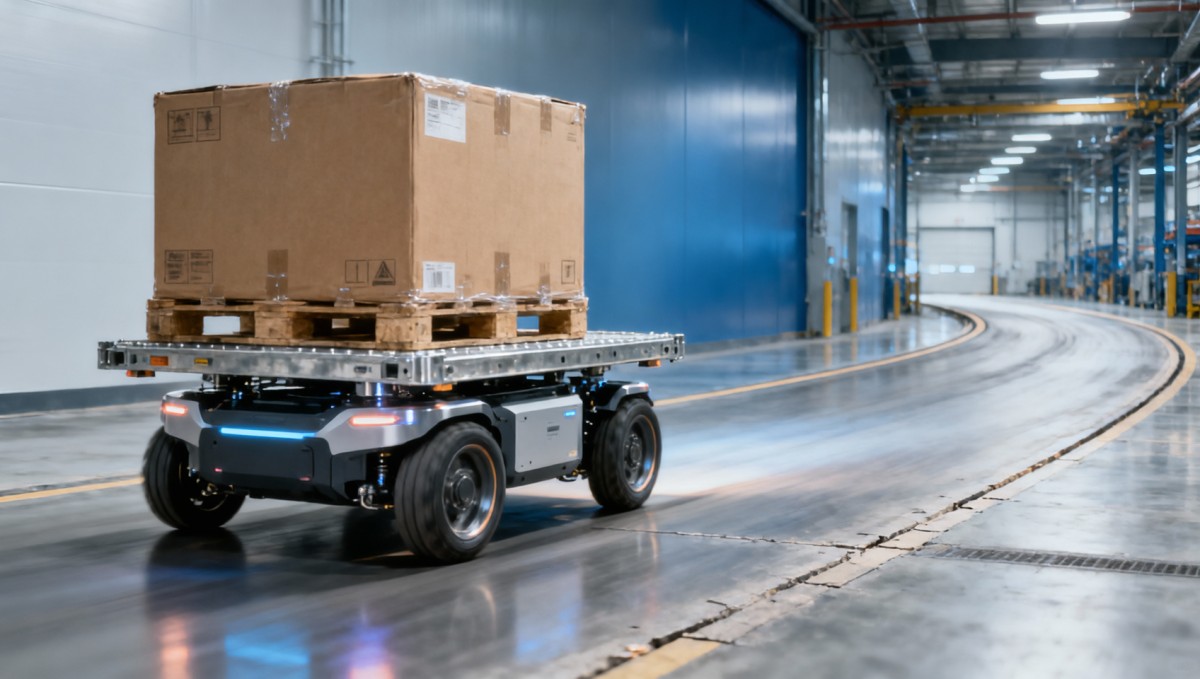
The short answer is simple: maximum payload capacity is a limit value, not a guaranteed working value. In many AMR data sheets, the published payload figure reflects the highest load the platform can carry under controlled conditions. It does not automatically mean the robot can move that load at your target speed, on your floor, through your route layout, across a full shift, while maintaining safe stopping distance and stable navigation.
For procurement teams and engineering leaders, this distinction matters because AMR selection errors usually do not show up in a brochure review. They appear later as reduced throughput, unstable braking, unexpected battery drain, higher maintenance, or failure to meet takt time. In warehouse and factory deployments, the more useful question is not “What is the maximum payload?” but rather “What load can this AMR handle consistently in my real operating envelope?”
That usable load is shaped by multiple constraints working together:
- Travel speed under load
- Acceleration and deceleration limits
- Turning radius and center-of-gravity shift
- Floor flatness, joints, ramps, and friction conditions
- Battery discharge state over the shift
- Safety settings and obstacle detection behavior
- Top module weight, fixture weight, and load distribution
In other words, an AMR rated for 1000 kg may not be the right choice if your application requires frequent turns, mixed floor conditions, high utilization, or strict cycle-time targets.
What target readers actually need to evaluate: usable load, not brochure load
Different stakeholders look at payload differently, but they all need the same engineering truth.
Information researchers want to know which specification is decision-relevant and which one is marketing shorthand.
Operators and users want to know whether the AMR will remain stable, responsive, and safe in daily work.
Procurement teams want to avoid under-specifying or overpaying for payload they cannot truly use.
Business decision-makers want confidence that the selected system will deliver throughput, uptime, and ROI without hidden integration risk.
For all four groups, the most important questions are usually these:
- What payload can the AMR carry continuously, not just theoretically?
- At what speed can it carry that load safely?
- How do route complexity and turning frequency affect performance?
- Does payload reduce battery endurance enough to affect fleet size?
- How much safety margin is needed for stable long-term operation?
- What happens when payload is off-center, elevated, or dynamically shifting?
This is why useful AMR evaluation should move beyond a single payload number and toward an application-specific payload envelope.
Maximum payload vs usable load: the engineering difference
A practical way to understand the issue is to separate three related but different concepts:
- Maximum payload capacity: the highest load the AMR can physically support under specified test conditions.
- Rated operating payload: the load at which the AMR is expected to operate within defined performance parameters.
- Usable load: the load your application can run in the real environment while still meeting safety, speed, uptime, and productivity requirements.
Usable load is almost always lower than maximum payload capacity. The gap can be small in simple, low-speed, smooth-floor applications. It can be very large in dynamic manufacturing or warehouse environments.
Here is a typical example. A vendor may state an AMR payload of 1500 kg. But if your process requires:
- 1.5 m/s travel speed
- Frequent 90-degree turns
- Floor expansion joints
- 10-hour shift endurance
- Strict stopping-distance safety settings
then the realistic usable load may be far below 1500 kg. In some deployments, the real planning number may end up closer to 1000 to 1200 kg, depending on route and risk tolerance.
This is not a flaw in the AMR. It is a flaw in oversimplified specification reading.
Which real-world factors reduce AMR usable load
If you want to assess AMR maximum payload capacity correctly, focus on the factors that consume payload margin in daily operation.
1. Speed requirement
The faster the AMR needs to move, the more demanding the braking, motor torque, traction, and stability requirements become. A high maximum payload may only be achievable at reduced speed. If your throughput model assumes faster travel, your practical load ceiling drops.
2. Turning and route geometry
Straight-line transport is rarely the real challenge. Turning under load introduces lateral forces, especially when the load is tall, offset, or has a high center of gravity. Narrow aisles, docking maneuvers, and repeated curves can all reduce safe usable load.
3. Floor condition
Factory and warehouse floors are not ideal test benches. Cracks, joints, coatings, minor slopes, and uneven friction all affect traction and stability. An AMR carrying heavy loads on perfect epoxy flooring may perform very differently on worn concrete or mixed-surface routes.
4. Load distribution and center of gravity
Payload is not only about weight. Where that weight sits matters just as much. A centered, low, rigid load is easier to transport than an off-center, elevated, or shifting load. Two applications with the same mass can create very different risk profiles.
5. Battery state and duty cycle
Heavy loads increase current draw, thermal stress, and battery consumption. As battery state declines through a shift, available performance may change. This affects not only runtime, but also the AMR’s ability to maintain speed and acceleration consistently.
6. Safety configuration
In real deployments, AMRs rarely operate under the most aggressive motion settings. Safety zones, obstacle detection parameters, and braking limits are often tuned conservatively. That directly affects how much load can be moved at the required speed while staying compliant and predictable.
7. Attachments and top modules
Fixtures, lift decks, conveyors, robotic arms, and custom frames consume part of the payload budget. Buyers sometimes overlook that the AMR’s published payload may include total carried mass, not just the workpiece or cart content.
How to evaluate AMR payload correctly before purchase
For serious AMR for warehouse logistics or smart factory automation projects, a payload check should be part of an application validation process, not a catalog comparison exercise.
Use this framework:
Define the total moving mass
- Product load
- Pallet, cart, or container weight
- Top module and fixture weight
- Any dynamic load variation during operation
Map the real route
- Total travel distance
- Number of turns
- Ramp or slope presence
- Floor transitions and joints
- Docking precision requirements
Define performance expectations
- Required travel speed
- Cycle time target
- Shift length and charge strategy
- Traffic density and interaction with people or forklifts
Request vendor data that goes beyond headline specs
- Payload-speed curves
- Stopping distance at different loads
- Gradeability under load
- Battery endurance by payload band
- Center-of-gravity restrictions
- Recommended safety factor for continuous use
Insist on scenario-based testing
Whenever possible, require a proof-of-concept or acceptance test using your actual load profile and route conditions. A real test is often the fastest way to discover whether the nominal maximum payload translates into usable performance.
What safety margin should buyers and engineers use?
There is no universal number, but in engineering practice, planning with margin is essential. Running continuously at a platform’s published maximum payload is rarely the best choice if uptime, safety, and component life matter.
A reasonable approach is to build margin for:
- Load variation
- Battery degradation over time
- Floor condition changes
- Future speed or throughput increases
- Uncertainty in center-of-gravity behavior
For many industrial deployments, teams prefer to treat the published maximum as an upper boundary, then validate a lower continuous-use operating range for production planning. The exact margin depends on how harsh the route, shift pattern, and safety setting are.
For buyers, this margin is not wasted capacity. It is a buffer against operational instability, missed throughput, and premature wear.
Common procurement mistakes when comparing AMR payload specifications
Many costly AMR selection errors come from comparing only one line in a data sheet.
- Assuming all vendors define payload the same way. Some include top module limits differently or provide test-condition-specific values.
- Ignoring center-of-gravity limits. A load within weight limit can still be unstable if its geometry is wrong.
- Overlooking battery impact. High-load operation may require more charging events or a larger fleet.
- Not checking speed under load. Throughput failures often come from this single oversight.
- Using ideal-floor assumptions. Actual floor conditions can erase brochure performance margin.
- Buying to peak load instead of typical load profile. This can result in unnecessary capex if the heavy-load case is rare and better handled differently.
For enterprise decision-makers, the key is to compare vendors using the same operational scenario. Without that normalization, payload comparisons are often misleading.
How this affects ROI in warehouse and factory automation
The difference between maximum payload capacity and usable load has direct business consequences.
If usable load is overestimated, operations may face:
- Lower-than-expected throughput
- More AMRs needed than originally planned
- Longer charging downtime
- Higher maintenance and wheel wear
- Safety reconfiguration after deployment
- Process redesign costs
If usable load is understood correctly from the start, teams can make better decisions about:
- Fleet sizing
- Route design
- Charging infrastructure
- Load carrier design
- Whether to choose AMR, AGV, tugger, or conveyor alternative
This is especially important in hard-tech procurement, where the cost of selecting the wrong automation platform extends far beyond the vehicle price. It affects labor modeling, floor layout, commissioning time, and long-term scalability.
Conclusion: the payload number that matters is the one your application can truly use
AMR maximum payload capacity is not the same as usable load. That is the central point every researcher, operator, procurement specialist, and executive should keep in mind.
The headline payload on a spec sheet is only a starting point. The number that matters in practice is the load the AMR can move safely, repeatedly, and efficiently in your real environment, at your required speed, over your real route, with your battery, safety, and uptime constraints.
When evaluating AMRs for warehouse logistics or factory automation, treat payload as a performance envelope, not a single static figure. Ask for payload-speed data, center-of-gravity limits, battery endurance under load, and scenario-based validation. That is how you turn a brochure claim into an engineering decision.
In high-value automation procurement, better questions produce better outcomes. And in AMR selection, the best question is never just “What is the maximum payload?” but “What is the usable load I can trust in production?”
Search News
Hot Articles
- Carbon Fiber StructuresHow to Specify Aerospace Carbon Fiber Assemblies for Lightweight, Load-Bearing PartsJul 11, 2026
- Machine VisionXiaomi, Alibaba DAMO Academy Drive Open-Source Robotics Model Ecosystem, Lowering Algorithm Development Barriers for Overseas SMEs Adopting Chinese Robotics SolutionsMar 30, 2026
- Cobots & ArmsShanxi 'AI+' Conference Showcases Embodied Intelligence with Multinational Buyer Engagement: Key Industry ImplicationsMar 30, 2026
Popular Tags
Recommended News
 Jul 11, 2026How to Specify Aerospace Carbon Fiber Assemblies for Lightweight, Load-Bearing PartsAerospace carbon fiber assemblies: learn how to specify laminate design, load data, joining methods, and inspection controls for lighter, reliable load-bearing aerospace parts.Elena Rostova (UAV Systems Researcher)
 Mar 30, 2026Xiaomi, Alibaba DAMO Academy Drive Open-Source Robotics Model Ecosystem, Lowering Algorithm Development Barriers for Overseas SMEs Adopting Chinese Robotics SolutionsXiaomi & Alibaba DAMO Academy's open-source robotics models lower algorithm barriers for global SMEs. Boost efficiency in manufacturing, logistics & smart retail with ROS 2 compatible solutions.TSV Data Lab
 Mar 30, 2026Shanxi 'AI+' Conference Showcases Embodied Intelligence with Multinational Buyer Engagement: Key Industry ImplicationsShanxi 'AI+' Conference highlights embodied intelligence with Tesla, Ubtech & Jiantao showcasing multimodal robotics. 40+ global buyers validated tech on-site, creating new B2B channels for industrial automation & AI solutions.Chen Wei (Automation Lead Engineer)
 Mar 30, 2026Zhongguancun Unveils 6G Integrated Sensing-Computing-Intelligence Platform to Empower Embodied Robots for Global Industrial ApplicationsZhongguancun's new 6G platform revolutionizes industrial robotics with <10ms latency, empowering global automotive, logistics & port automation. Discover how this tech boosts China's smart manufacturing exports.TSV Data Lab
 Mar 30, 2026Mech-Mind Tianjin Embodied Intelligence R&D and Production Base Goes Live, Cutting Delivery Time by 20%–30% for Global Customized AMR+Vision SolutionsMech-Mind's Tianjin AMR+Vision production base cuts delivery time by 20%-30% for欧美 & Latin American markets. Discover how this PLd-certified facility accelerates customized robotics solutions for smart manufacturing and logistics.Chen Wei (Automation Lead Engineer)
 Mar 30, 2026Boao Forum Reveals 'Co-evolution of Big and Small Brains' Trend in Humanoid Robots, China's Embodied Intelligence Accelerates Adaptation to Overseas Manufacturing Service ScenariosDiscover how China's humanoid robots, featuring 'Co-evolution of Big and Small Brains,' are revolutionizing global manufacturing. Learn about Embodied Tian Gong 3.0's ISO compliance and overseas deployment at Boao Forum 2026.Chen Wei (Automation Lead Engineer)
 Mar 30, 2026China Railway Industrial Secures Patent for Embodied Robotics in Material Handling, Boosting High-Precision Delivery Capabilities for Overseas Infrastructure and Manufacturing ProjectsChina Railway Industrial's new patent for embodied robotics in material handling boosts high-precision delivery for global infrastructure & manufacturing. Discover how this innovation enhances logistics accuracy in automotive, rail transit & EPC projects.Chen Wei (Automation Lead Engineer)
 Oct 15, 2026R&D Cost Reduction Services: How to Evaluate Fees, Savings, and ROIEvaluate R&D cost reduction services with confidence. Compare fees, verify savings, and calculate ROI without compromising performance. Discover how to choose a provider that delivers real value.Chen Wei (Automation Lead Engineer)
 Oct 15, 2026How Should You Compare TechStat Vanguard 5-Axis CNC Tolerances?TechStat Vanguard 5-axis CNC tolerance comparison: learn how to verify part accuracy, assess inspection evidence, and choose suppliers that reliably meet your drawing requirements.Dr. Marcus Vance
 Oct 14, 2026Drone Frame Composites: Carbon Fiber vs. Fiberglass for Weight and StiffnessExplore drone structural materials composites: compare carbon fiber and fiberglass for weight, stiffness, cost, and antenna compatibility. Find the right material for your drone frame.Elena Rostova (UAV Systems Researcher)
 Oct 13, 2026Smart Cameras vs. PC-Based Machine Vision: Which Fits High-Speed Inspection?This industrial product comparison for machine vision weighs smart cameras vs. PC-based systems on latency, throughput, and cost. Discover your best fit for high-speed inspection.TSV Data Lab
 Oct 12, 2026How to Verify RoHS Compliance in Industrial Sensing Systems Before DeploymentRoHS compliant sensing systems: learn how to verify materials, supplier declarations, testing, and configuration controls before industrial deployment.TSV Data Lab
 Oct 11, 2026How Procurement-Oriented Content Taxonomy Improves B2B Buying JourneysProcurement-oriented content taxonomy streamlines B2B buying journeys with clearer evidence, supplier comparisons, risk visibility, and faster approvals.TSV Data Lab
 Oct 10, 2026How to Select a Machine Performance Monitoring Platform for OEE and Downtime ReductionMachine performance monitoring platform selection guide: validate machine states, OEE data, downtime reasons, integrations, and scalability to reduce losses with confidence.TSV Data Lab
 Oct 08, 2026How to Machine Inconel 625 Blades Without Heat Cracks or Edge ChippingInconel 625 blade machining guide: prevent heat cracks, edge chipping, chatter, and work hardening with proven tooling, cooling, fixturing, and inspection strategies.Dr. Marcus Vance
 Oct 07, 2026How to Evaluate an HMI Panel Distributor for Industrial Automation ProjectsHMI panel distributor evaluation guide: verify technical compatibility, traceability, supply reliability, lifecycle support, and total cost for automation projects.Victor Lin (Chief Software Architect)
 Oct 06, 2026Navigation Fault Tolerance Standards for AMRs: What Safety Teams Must VerifyNavigation fault tolerance standards: learn what AMR safety teams must verify, from localization loss and sensor faults to stopping distance, safe restart, and site-specific validation.Chen Wei (Automation Lead Engineer)
 Oct 05, 2026Calculating Edge Computing Total Cost of Ownership Across Distributed SitesEdge computing ownership cost explained: calculate deployment, energy, connectivity, security, remote support, and refresh costs across distributed sites.TSV Data Lab
 Oct 04, 2026CAD/CAM Benchmarking in the GCC: What Manufacturers Should Ask a ConsultantCAD CAM benchmark consultant GCC guide: learn the key questions manufacturers should ask to validate post-processors, workflows, machine performance, and production risk.Victor Lin (Chief Software Architect)
 Oct 03, 2026Selecting Automotive Radar Sensor Modules for ADAS Range, Resolution, and IntegrationAutomotive radar sensor module selection guide for ADAS: compare range, resolution, field of view, latency, and integration to build safer, reliable vehicle systems.TSV Data Lab
 Oct 02, 2026How to Qualify Machined Parts Suppliers for Hard Tech ProgramsHard tech supply chain machined parts demand rigorous supplier qualification. Learn how to assess capability, traceability, quality controls, and delivery resilience.Dr. Marcus Vance
 Oct 01, 2026How to Select an Outdoor Security Radar Sensor for Perimeter Detection?Outdoor security radar sensor selection guide: compare range, accuracy, false-alarm control, integration, and field testing for reliable perimeter detection.TSV Data Lab
 Sep 30, 2026How to Evaluate Solid-State LiDAR Hardware for Outdoor Autonomous VehiclesSolid state LiDAR hardware evaluation guide for outdoor autonomous vehicles—compare range, point-cloud quality, environmental resilience, integration, and safety.TSV Data Lab
 Sep 29, 2026ISO 9283 Repeatability: How to Evaluate Cobot Positioning PerformanceISO 9283 cobot repeatability explained: learn how payload, reach, approach direction, and test conditions affect positioning performance and cell capability.Chen Wei (Automation Lead Engineer)























