JIS B 8432-2026 Enforces Stricter Bending Stiffness Testing for Carbon Fiber Drone Arms
Publication Date
author
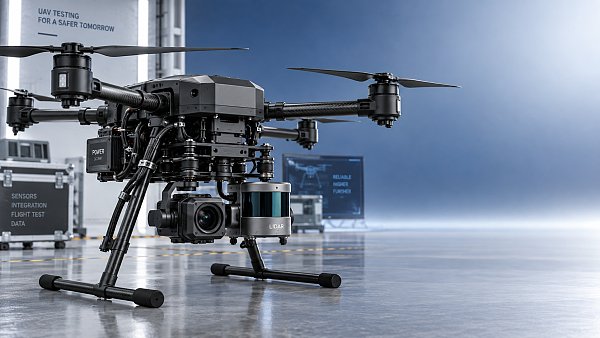
Japan’s revised industrial standard JIS B 8432-2026 took effect on May 1, 2026, raising bending stiffness requirements by 20% for commercial-grade carbon fiber structural components—including drone arms and inspection pod brackets—and introducing mandatory dynamic load cycling validation. Exporters of such components from China, and other non-Japanese manufacturers targeting the Japanese market, must now submit updated third-party fatigue test reports to retain JIS mark certification—directly affecting distribution channel access in Japan.
Event Overview
JIS B 8432-2026, published by the Japanese Industrial Standards Committee (JISC), officially entered into force on May 1, 2026. The revision increases the minimum required bending stiffness threshold by 20% for carbon fiber structural parts used in commercial applications—specifically naming drone arms and inspection吊舱 (pod) support brackets as covered items. It also adds a new requirement for dynamic load cycling verification under specified amplitude and cycle count conditions. Certification bodies in Japan now require newly submitted or renewed JIS mark applications to include third-party fatigue test reports compliant with the updated standard.
Industries Affected
Direct Exporters (e.g., Chinese Carbon Fiber Component Manufacturers)
These firms supply finished carbon fiber structural parts directly to Japanese distributors or OEMs. They are affected because JIS mark certification is a prerequisite for listing on major Japanese B2B platforms and entry into authorized dealer networks. Failure to resubmit compliant fatigue test reports means existing JIS certifications become invalid upon renewal, blocking continued sales through formal Japanese distribution channels.
Contract Manufacturers & Tier-2 Suppliers
Companies producing drone arms or bracket subassemblies for OEMs face upstream pressure to revalidate designs and materials. Since the revised standard applies to the final structural component—not just raw material—their manufacturing processes, layup schedules, and post-cure handling may require requalification to meet the higher stiffness and new dynamic loading criteria.
Testing & Certification Service Providers
Laboratories offering mechanical testing services—especially those accredited for JIS-compliant fatigue evaluation—face increased demand for dynamic bending tests under the new protocol. However, only labs with JIS-accredited scope covering the updated clause 7.3 (dynamic load cycling) can issue valid reports accepted by Japanese certification authorities.
Drone System Integrators Sourcing from Overseas
Japanese integrators assembling commercial UAV systems (e.g., for power line inspection or agricultural monitoring) must verify JIS compliance of all carbon fiber structural subcomponents. Under the revised standard, previously approved arms or brackets may no longer qualify unless retested—even if unchanged in design—because the pass/fail thresholds and test methodology have shifted.
What Relevant Enterprises or Practitioners Should Focus On
Confirm current JIS certification status and renewal timelines
Manufacturers should immediately audit which product SKUs hold active JIS marks, their expiry dates, and whether pending renewals fall after May 1, 2026. Any renewal application submitted on or after that date must comply with JIS B 8432-2026—not the prior 2016 edition.
Verify test lab accreditation scope before commissioning fatigue validation
Not all JIS-accredited labs currently cover the new dynamic load cycling requirement. Before initiating testing, confirm that the selected laboratory’s JIS accreditation certificate explicitly includes clause 7.3 of JIS B 8432-2026. Reports from labs lacking this scope will be rejected by Japanese certifiers.
Review design margins and material specifications against the +20% stiffness threshold
The 20% increase applies to the minimum allowable bending stiffness value—not a tolerance allowance. Firms should cross-check existing product test data against the revised numerical thresholds in Annex A of JIS B 8432-2026. Components previously meeting the 2016 version by narrow margin may require redesign, resin system adjustment, or fiber orientation optimization.
Update technical documentation and customer-facing compliance statements
Marketing materials, datasheets, and export declarations referencing JIS compliance must reflect the 2026 edition. Using outdated references (e.g., “complies with JIS B 8432”) without specifying the year may trigger scrutiny during customs clearance or distributor audits in Japan.
Editorial Perspective / Industry Observation
Observably, JIS B 8432-2026 functions less as a technical update and more as a de facto market gatekeeper: its enforcement mechanism ties certification directly to verifiable test outcomes—not self-declaration—making compliance operationally binding. Analysis shows the 20% stiffness uplift likely targets real-world field failures observed in long-duration inspection missions, where accumulated micro-deformation in arms affects gimbal stability and sensor accuracy. From an industry perspective, this revision signals a broader shift toward performance-based, lifecycle-aware standards for composite airframes—not just static strength. It is not yet a global benchmark, but its adoption pattern may influence similar updates in South Korea’s KS standards or ASEAN harmonized frameworks in the medium term. Current attention should focus on implementation fidelity, not speculation about future revisions.
This development underscores how national standards—especially in high-precision, safety-adjacent applications like industrial drones—increasingly govern market access at the component level. For exporters, it reinforces that certification is not a one-time checkbox but a live requirement tied to evolving test protocols. The immediate implication is procedural: revalidation is mandatory, not optional; the broader meaning is strategic: supply chain resilience now depends on traceable, up-to-date test infrastructure—not just production capacity.
Information Source: Japanese Industrial Standards Committee (JISC) official gazette, JIS B 8432-2026 full text (published March 2026); Japan Quality Assurance Organization (JQA) public guidance notice No. JQA-GD-2026-04 (issued April 15, 2026). Note: Ongoing observation is recommended regarding potential transitional provisions for legacy stock—no such provisions were included in the initial release and remain unconfirmed.
Search News
Hot Articles
- Carbon Fiber StructuresHow to Specify Aerospace Carbon Fiber Assemblies for Lightweight, Load-Bearing PartsJul 11, 2026
- Machine VisionXiaomi, Alibaba DAMO Academy Drive Open-Source Robotics Model Ecosystem, Lowering Algorithm Development Barriers for Overseas SMEs Adopting Chinese Robotics SolutionsMar 30, 2026
- Cobots & ArmsShanxi 'AI+' Conference Showcases Embodied Intelligence with Multinational Buyer Engagement: Key Industry ImplicationsMar 30, 2026
Popular Tags
Recommended News
 Jul 11, 2026How to Specify Aerospace Carbon Fiber Assemblies for Lightweight, Load-Bearing PartsAerospace carbon fiber assemblies: learn how to specify laminate design, load data, joining methods, and inspection controls for lighter, reliable load-bearing aerospace parts.Elena Rostova (UAV Systems Researcher)
 Mar 30, 2026Xiaomi, Alibaba DAMO Academy Drive Open-Source Robotics Model Ecosystem, Lowering Algorithm Development Barriers for Overseas SMEs Adopting Chinese Robotics SolutionsXiaomi & Alibaba DAMO Academy's open-source robotics models lower algorithm barriers for global SMEs. Boost efficiency in manufacturing, logistics & smart retail with ROS 2 compatible solutions.TSV Data Lab
 Mar 30, 2026Shanxi 'AI+' Conference Showcases Embodied Intelligence with Multinational Buyer Engagement: Key Industry ImplicationsShanxi 'AI+' Conference highlights embodied intelligence with Tesla, Ubtech & Jiantao showcasing multimodal robotics. 40+ global buyers validated tech on-site, creating new B2B channels for industrial automation & AI solutions.Chen Wei (Automation Lead Engineer)
 Mar 30, 2026Zhongguancun Unveils 6G Integrated Sensing-Computing-Intelligence Platform to Empower Embodied Robots for Global Industrial ApplicationsZhongguancun's new 6G platform revolutionizes industrial robotics with <10ms latency, empowering global automotive, logistics & port automation. Discover how this tech boosts China's smart manufacturing exports.TSV Data Lab
 Mar 30, 2026Mech-Mind Tianjin Embodied Intelligence R&D and Production Base Goes Live, Cutting Delivery Time by 20%–30% for Global Customized AMR+Vision SolutionsMech-Mind's Tianjin AMR+Vision production base cuts delivery time by 20%-30% for欧美 & Latin American markets. Discover how this PLd-certified facility accelerates customized robotics solutions for smart manufacturing and logistics.Chen Wei (Automation Lead Engineer)
 Mar 30, 2026Boao Forum Reveals 'Co-evolution of Big and Small Brains' Trend in Humanoid Robots, China's Embodied Intelligence Accelerates Adaptation to Overseas Manufacturing Service ScenariosDiscover how China's humanoid robots, featuring 'Co-evolution of Big and Small Brains,' are revolutionizing global manufacturing. Learn about Embodied Tian Gong 3.0's ISO compliance and overseas deployment at Boao Forum 2026.Chen Wei (Automation Lead Engineer)
 Mar 30, 2026China Railway Industrial Secures Patent for Embodied Robotics in Material Handling, Boosting High-Precision Delivery Capabilities for Overseas Infrastructure and Manufacturing ProjectsChina Railway Industrial's new patent for embodied robotics in material handling boosts high-precision delivery for global infrastructure & manufacturing. Discover how this innovation enhances logistics accuracy in automotive, rail transit & EPC projects.Chen Wei (Automation Lead Engineer)
 Sep 29, 2026ISO 9283 Repeatability: How to Evaluate Cobot Positioning PerformanceISO 9283 cobot repeatability explained: learn how payload, reach, approach direction, and test conditions affect positioning performance and cell capability.Chen Wei (Automation Lead Engineer)
 Sep 28, 2026Spindle Runout Measurement in Germany: DIN Standards, Methods, and Acceptance LimitsSpindle runout measurement Germany: explore DIN standards, proven methods, acceptance limits, and audit-ready practices for reliable machining quality.Dr. Marcus Vance
 Sep 27, 2026How to Select Wall-Mount Edge Devices for Space-Constrained Factory NetworksWall mount edge devices for space-constrained factories: evaluate workload, thermal design, power resilience, cable access, and network reliability for smarter deployments.TSV Data Lab
 Sep 26, 2026Machining Tolerance Analysis: How to Set Limits That Meet Function and Cost TargetsMachining tolerance analysis: learn how to set functional limits, control tolerance stacks, reduce inspection risk, and balance precision with production cost.Dr. Marcus Vance
 Sep 25, 2026How to Evaluate an Industrial Infrastructure Data Platform for Multi-Site OperationsIndustrial infrastructure data platform evaluation guide for multi-site operations: compare data quality, edge resilience, interoperability, governance, and scalable proof-of-value criteria.Victor Lin (Chief Software Architect)
 Sep 24, 2026How to Select Machine Vision Optics for Accurate Inspection at Different Working DistancesMachine vision optics selection guide for accurate inspection at every working distance. Compare FOV, pixel scale, DOF, distortion, lighting, and telecentric options.TSV Data Lab
 Sep 23, 2026How to Evaluate a Machine Vision System Integrator for High-Speed Inspection LinesChoose a machine vision system integrator with proven expertise in high-speed inspection, reliable reject timing, robust optics, and measurable acceptance criteria.TSV Data Lab
 Sep 28, 2026When is a SCADA API the right choice for connecting plant systems?SCADA API guide: learn when governed plant data integration improves traceability, security, and scalability—without compromising real-time control.Victor Lin (Chief Software Architect)
 Sep 27, 2026How SCADA data integration improves traceability across production linesSCADA data integration connects production-line data to improve traceability, accelerate quality investigations, and strengthen safety decisions.Victor Lin (Chief Software Architect)
 Sep 26, 2026What to define before starting SCADA integration planningSCADA integration planning starts with clear scope, control boundaries, data models, cybersecurity, and testing. Discover the definitions that reduce risk and costly rework.Victor Lin (Chief Software Architect)
 Sep 25, 2026How a smart factory with Industrial IoT reduces production blind spotsDiscover how a smart factory with Industrial IoT turns real-time machine, quality, and workflow data into actionable insights that reduce production blind spots and delivery risks.Victor Lin (Chief Software Architect)
 Sep 24, 2026When does Industrial IoT make smart manufacturing easier to scale?Smart manufacturing Industrial IoT scales when trusted data, interoperable systems, and secure workflows turn connected assets into measurable gains.TSV Data Lab
 Sep 23, 2026What drives ultra-precision machining cost at 1-micron tolerance?Ultra precision machining cost per part at 1 micron tolerance depends on process, material, metrology, and yield. Learn how to compare quotes confidently.Dr. Marcus Vance
 Sep 22, 2026Drone Engine-T550CC Applications: Build the UAV Power System Around the MissionAn application guide for Drone Engine-T550CC integration, covering payload planning, airframe matching, cooling, fuel, vibration, test procedures, documentation, and service preparation.Elena Rostova (UAV Systems Researcher)
 Sep 22, 2026How to Evaluate Industrial Edge Computing Vendors for Factory DeploymentIndustrial edge computing vendor evaluation guide for factories: compare latency, protocol fit, reliability, security, and lifecycle support before deployment.TSV Data Lab
 Sep 21, 2026Drone Payload Integration: Matching Power, Data, and Center of Gravity for Reliable FlightsDrone payload integration made practical: balance power, data, center of gravity, and endurance to build safer, more reliable mission-ready flights.Elena Rostova (UAV Systems Researcher)
 Sep 20, 2026Autonomous Navigation Pricing: Cost Drivers and Budget Benchmarks for AMR ProjectsAutonomous navigation price explained: compare AMR cost drivers, software, sensors, integration, safety, and lifecycle budgets to build a scalable project plan.Chen Wei (Automation Lead Engineer)