How carbon fiber tensile strength affects aerospace safety
Publication Date
author
In aerospace safety, carbon fiber tensile strength aerospace data is not a marketing detail—it is a decision-critical parameter that affects structural integrity, fatigue resistance, and failure margins under extreme loads. For quality control and safety managers, understanding how verified tensile performance translates into real-world airframe reliability is essential to reducing risk, validating suppliers, and protecting mission-critical systems.
Why does carbon fiber tensile strength aerospace data matter so much in safety reviews?
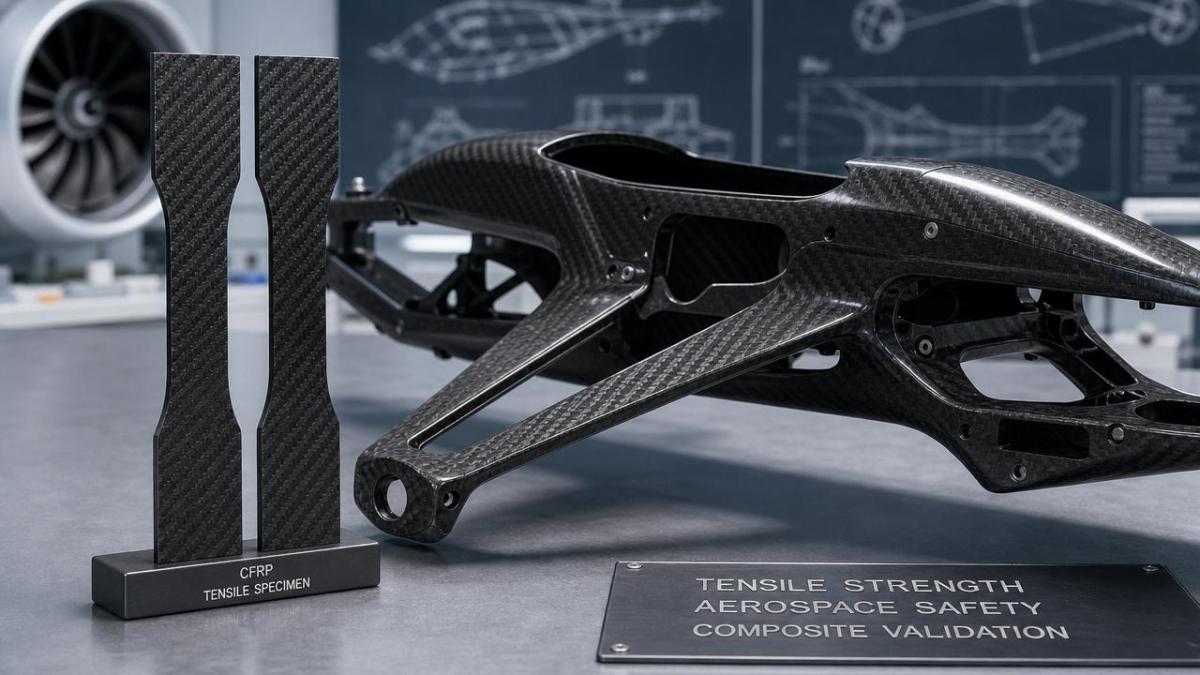
In aircraft, UAV platforms, radomes, structural brackets, fairings, pressure-adjacent parts, and control surfaces, weight reduction is only half the story. The other half is whether the composite can maintain load-bearing capability when exposed to vibration, thermal cycling, moisture ingress, impact events, and repeated stress.
That is where carbon fiber tensile strength aerospace evaluation becomes a frontline safety issue. A high published number on a datasheet does not automatically mean a safer component. What matters is the verified relationship between fiber strength, laminate architecture, resin behavior, process consistency, and actual failure mode under service conditions.
For quality control personnel, the challenge is often not lack of data, but excess noise. Suppliers may highlight nominal strength while underreporting variability, test orientation, coupon preparation differences, or environmental conditioning. Safety managers then inherit the risk when those gaps show up as premature cracking, delamination, or unexpected stiffness loss.
- Ultimate tensile strength influences the load ceiling before catastrophic fracture begins.
- Tensile modulus affects deformation control, aeroelastic behavior, and alignment stability.
- Strain-to-failure and laminate design influence damage tolerance and warning margins.
- Batch-to-batch consistency determines whether qualification data remains valid at production scale.
TechStat Vanguard approaches this problem from an engineering benchmarking perspective. Instead of repeating supplier superlatives, TSV focuses on traceable parameters, test interpretation, and supplier qualification logic that helps procurement, QC, and safety teams make defensible decisions.
What exactly should QC and safety teams evaluate beyond a headline tensile number?
The difference between fiber data and part-level performance
A common mistake is to equate single-fiber or unidirectional coupon data with the real performance of an assembled aerospace component. In practice, holes, joints, ply drops, corners, impact zones, adhesive interfaces, and cure variation all reduce the relevance of an isolated maximum value.
For carbon fiber tensile strength aerospace validation, teams should separate three layers of evidence: raw material properties, laminate coupon results, and subcomponent or full-part structural verification. Safety decisions should not rely on only one layer.
Key technical parameters that affect interpretation
The table below summarizes the parameters that most often change the meaning of carbon fiber tensile strength aerospace claims during supplier review, incoming inspection, and failure prevention planning.
The main lesson is simple: carbon fiber tensile strength aerospace performance only becomes safety-relevant when the number is connected to orientation, manufacturing quality, and repeatable validation. A single peak result without context should not drive release decisions.
Which aerospace scenarios are most sensitive to tensile strength variation?
Airframe and UAV structures
In lightweight airframes and long-endurance UAVs, structural members often operate close to mass-optimized limits. Here, even modest underperformance in carbon fiber tensile strength aerospace applications can lower reserve factors, shorten fatigue life, or require late-stage reinforcement that increases mass and cost.
Secondary but safety-relevant composite parts
Not every composite part is a primary wing spar, but many “secondary” parts still influence safety. Access panels, antenna supports, payload frames, sensor housings, and aerodynamic covers can become flight hazards if fracture, detachment, or stiffness loss occurs under dynamic loading.
Harsh operating environments
Aerospace structures face thermal swing, UV exposure, humidity, runway debris, and cyclic vibration. When the base tensile number is not supported by environmental retention data, QC teams may approve a material that performs well in the lab but degrades faster in service.
The following scenario table helps safety managers connect carbon fiber tensile strength aerospace requirements to operational risk instead of reviewing materials in isolation.
This mapping is useful during design review and supplier onboarding because it ties material data to actual failure consequences. That is the level where safety management becomes practical rather than theoretical.
How should procurement teams compare suppliers for carbon fiber tensile strength aerospace parts?
Procurement teams are often pressured by lead time, budget, and dual-source strategy. Yet buying composite aerospace parts based on price or brochure claims alone can increase total risk. The right comparison framework should combine engineering data, process control, and qualification transparency.
A practical supplier screening checklist
- Ask whether reported tensile values come from raw fiber, laminate coupons, or finished-part validation.
- Review process control records for layup sequence, cure parameters, environmental storage, and traceable lot identification.
- Check whether the supplier can provide NDT evidence, defect criteria, and rework controls.
- Confirm how statistical variation is handled, including sample size, acceptance criteria, and outlier treatment.
- Verify whether strength retention under humidity, temperature, and fatigue has been considered for the target application.
The table below can be used as a procurement evaluation template when comparing carbon fiber tensile strength aerospace suppliers or contract manufacturers.
Using this framework helps teams reduce hidden qualification costs. A lower unit price may become more expensive if it triggers extra audits, retesting, scrap, or delayed airworthiness approval.
Which standards and compliance checks should not be skipped?
For aerospace and high-reliability UAV supply chains, material strength claims should be considered alongside process and quality system evidence. While exact requirements vary by program, several common references shape how carbon fiber tensile strength aerospace data is interpreted.
- ASTM composite test methods are commonly used to define how tensile properties are generated and compared.
- AS9100 quality management expectations support traceability, change control, and documented process discipline in aerospace manufacturing.
- First article inspection practices help verify that the approved design intent matches actual production output.
- Non-destructive testing workflows help identify voids, delamination, and hidden discontinuities that may weaken tensile performance.
Safety managers should also review whether internal acceptance criteria match the service environment. If the component will experience humidity, elevated temperature, or cyclic loading, room-temperature dry data should not be the only basis for approval.
What are the most common mistakes in carbon fiber tensile strength aerospace decisions?
Mistake 1: treating strength as a standalone metric
A higher tensile number may still fail to improve safety if the laminate is vulnerable to impact, poor hole-bearing performance, or environmental degradation. Strength must be assessed with stiffness, fatigue, and defect tolerance.
Mistake 2: assuming all carbon fiber grades behave similarly
Different fiber types, resin systems, and layup strategies create very different outcomes. Two suppliers can both say “carbon fiber aerospace component” while delivering different margins in tensile retention, fracture behavior, and consistency.
Mistake 3: underestimating process sensitivity
Composites are highly process-dependent. Storage condition, layup accuracy, autoclave or out-of-autoclave control, trimming quality, and drilling practice all influence real-world strength. Poor process discipline can erase the advantage of premium raw materials.
Mistake 4: qualifying once and monitoring too little
Programs with tight schedules sometimes accept early qualification data and then reduce surveillance. For safety-critical applications, periodic review of incoming lots, supplier changes, and field feedback is essential. Carbon fiber tensile strength aerospace assurance is not a one-time event.
FAQ for quality control and safety managers
How should we compare two suppliers if both claim similar tensile strength?
Look beyond the top-line value. Compare test orientation, environmental conditioning, sample quantity, statistical spread, void control, and change management discipline. In aerospace procurement, the better-documented supplier is often the lower-risk choice even if the published tensile number is slightly lower.
Is higher carbon fiber tensile strength aerospace performance always worth the added cost?
Not always. If the application is stiffness-driven, impact-sensitive, or joint-limited, paying for a higher nominal tensile rating may not improve system safety. The material should match the actual load case, certification path, and manufacturing capability.
What incoming inspection evidence is most useful for composites?
Useful evidence includes lot traceability, certificate review, dimensional verification, cure records when applicable, NDT summaries, visual defect criteria, and confirmation that released material matches the approved configuration. For critical parts, periodic witness testing may also be justified.
When should safety managers escalate a supplier review?
Escalation is appropriate when data lacks test context, when changes occur in resin or fiber source, when repeated cosmetic defects suggest process drift, or when field performance does not align with qualification assumptions. Early escalation prevents downstream certification and operational issues.
Why work with a data-driven technical benchmarking partner?
For teams managing aerospace quality and safety, the real bottleneck is often decision confidence. Marketing-heavy supplier language makes it difficult to translate composite claims into measurable risk. That is where a data-driven framework becomes valuable.
TechStat Vanguard supports engineering-led decision making by focusing on the metrics that matter: tensile strength-to-weight interpretation, process traceability, benchmarking logic, standards alignment, and realistic qualification questions. This approach helps reduce trial-and-error cost, shorten supplier filtering cycles, and improve technical clarity across procurement, QC, and safety functions.
- Clarify whether carbon fiber tensile strength aerospace claims are material-level, laminate-level, or part-level.
- Review parameter relevance for UAV structures, aerospace brackets, housings, and mission-critical composite assemblies.
- Support supplier comparison using traceable technical criteria instead of generic quality claims.
- Discuss qualification scope, certification expectations, sample review, and practical risk controls before sourcing decisions are finalized.
If your team needs support with parameter confirmation, supplier screening, application-specific material selection, delivery risk review, certification expectations, sample evaluation, or quotation-stage technical comparison, TSV provides a structured path for deeper analysis. The goal is not to add noise, but to help your organization buy and qualify with engineering truth in view.
Search News
Hot Articles
- Carbon Fiber StructuresHow to Specify Aerospace Carbon Fiber Assemblies for Lightweight, Load-Bearing PartsJul 11, 2026
- Machine VisionXiaomi, Alibaba DAMO Academy Drive Open-Source Robotics Model Ecosystem, Lowering Algorithm Development Barriers for Overseas SMEs Adopting Chinese Robotics SolutionsMar 30, 2026
- Cobots & ArmsShanxi 'AI+' Conference Showcases Embodied Intelligence with Multinational Buyer Engagement: Key Industry ImplicationsMar 30, 2026
Popular Tags
Recommended News
 Jul 11, 2026How to Specify Aerospace Carbon Fiber Assemblies for Lightweight, Load-Bearing PartsAerospace carbon fiber assemblies: learn how to specify laminate design, load data, joining methods, and inspection controls for lighter, reliable load-bearing aerospace parts.Elena Rostova (UAV Systems Researcher)
 Mar 30, 2026Xiaomi, Alibaba DAMO Academy Drive Open-Source Robotics Model Ecosystem, Lowering Algorithm Development Barriers for Overseas SMEs Adopting Chinese Robotics SolutionsXiaomi & Alibaba DAMO Academy's open-source robotics models lower algorithm barriers for global SMEs. Boost efficiency in manufacturing, logistics & smart retail with ROS 2 compatible solutions.TSV Data Lab
 Mar 30, 2026Shanxi 'AI+' Conference Showcases Embodied Intelligence with Multinational Buyer Engagement: Key Industry ImplicationsShanxi 'AI+' Conference highlights embodied intelligence with Tesla, Ubtech & Jiantao showcasing multimodal robotics. 40+ global buyers validated tech on-site, creating new B2B channels for industrial automation & AI solutions.Chen Wei (Automation Lead Engineer)
 Mar 30, 2026Zhongguancun Unveils 6G Integrated Sensing-Computing-Intelligence Platform to Empower Embodied Robots for Global Industrial ApplicationsZhongguancun's new 6G platform revolutionizes industrial robotics with <10ms latency, empowering global automotive, logistics & port automation. Discover how this tech boosts China's smart manufacturing exports.TSV Data Lab
 Mar 30, 2026Mech-Mind Tianjin Embodied Intelligence R&D and Production Base Goes Live, Cutting Delivery Time by 20%–30% for Global Customized AMR+Vision SolutionsMech-Mind's Tianjin AMR+Vision production base cuts delivery time by 20%-30% for欧美 & Latin American markets. Discover how this PLd-certified facility accelerates customized robotics solutions for smart manufacturing and logistics.Chen Wei (Automation Lead Engineer)
 Mar 30, 2026Boao Forum Reveals 'Co-evolution of Big and Small Brains' Trend in Humanoid Robots, China's Embodied Intelligence Accelerates Adaptation to Overseas Manufacturing Service ScenariosDiscover how China's humanoid robots, featuring 'Co-evolution of Big and Small Brains,' are revolutionizing global manufacturing. Learn about Embodied Tian Gong 3.0's ISO compliance and overseas deployment at Boao Forum 2026.Chen Wei (Automation Lead Engineer)
 Mar 30, 2026China Railway Industrial Secures Patent for Embodied Robotics in Material Handling, Boosting High-Precision Delivery Capabilities for Overseas Infrastructure and Manufacturing ProjectsChina Railway Industrial's new patent for embodied robotics in material handling boosts high-precision delivery for global infrastructure & manufacturing. Discover how this innovation enhances logistics accuracy in automotive, rail transit & EPC projects.Chen Wei (Automation Lead Engineer)
 Oct 04, 2026CAD/CAM Benchmarking in the GCC: What Manufacturers Should Ask a ConsultantCAD CAM benchmark consultant GCC guide: learn the key questions manufacturers should ask to validate post-processors, workflows, machine performance, and production risk.Victor Lin (Chief Software Architect)
 Oct 03, 2026Selecting Automotive Radar Sensor Modules for ADAS Range, Resolution, and IntegrationAutomotive radar sensor module selection guide for ADAS: compare range, resolution, field of view, latency, and integration to build safer, reliable vehicle systems.TSV Data Lab
 Oct 02, 2026How to Qualify Machined Parts Suppliers for Hard Tech ProgramsHard tech supply chain machined parts demand rigorous supplier qualification. Learn how to assess capability, traceability, quality controls, and delivery resilience.Dr. Marcus Vance
 Oct 01, 2026How to Select an Outdoor Security Radar Sensor for Perimeter Detection?Outdoor security radar sensor selection guide: compare range, accuracy, false-alarm control, integration, and field testing for reliable perimeter detection.TSV Data Lab
 Sep 30, 2026How to Evaluate Solid-State LiDAR Hardware for Outdoor Autonomous VehiclesSolid state LiDAR hardware evaluation guide for outdoor autonomous vehicles—compare range, point-cloud quality, environmental resilience, integration, and safety.TSV Data Lab
 Sep 29, 2026ISO 9283 Repeatability: How to Evaluate Cobot Positioning PerformanceISO 9283 cobot repeatability explained: learn how payload, reach, approach direction, and test conditions affect positioning performance and cell capability.Chen Wei (Automation Lead Engineer)
 Oct 04, 2026How Should You Compare 5-Axis CNC Machine Accuracy Claims?How do I compare 5-axis CNC machine accuracy claims? Learn how to assess standards, thermal stability, TCP accuracy, and real-world test evidence.Dr. Marcus Vance
 Oct 03, 2026Is Edge Computing Necessary for Real-Time Quality Inspection?Is industrial edge computing necessary for real-time quality inspection? Explore how latency, data volume, reliability, and control integration shape the right architecture.TSV Data Lab
 Oct 02, 2026What Documents Prove a Precision Machining Supplier Can Hold Tolerance?What documents prove a precision machining supplier can hold tolerance? Explore certificates, FAI reports, calibration, SPC, and traceability evidence to qualify suppliers with confidence.Dr. Marcus Vance
 Oct 01, 2026Can a Machining Supplier Meet Aerospace Fatigue Testing Requirements?Can a machining supplier meet aerospace fatigue testing requirements? Learn the traceability, process control, and test evidence needed for reliable aerospace parts.Dr. Marcus Vance
 Sep 30, 2026Which Industrial Robot Specifications Matter for High-Precision Assembly?Which industrial robot specifications matter most for high-precision assembly? Explore repeatability, accuracy, stiffness, vibration, calibration, and force control for reliable yields.Chen Wei (Automation Lead Engineer)
 Sep 29, 2026How Do You Verify Servo Motor Torque Under Continuous Load?How do I verify servo motor torque under continuous load? Learn RMS torque checks, torque-speed limits, thermal derating, and real-machine testing.Chen Wei (Automation Lead Engineer)
 Oct 02, 2026ZD330 Software Configuration: Verifying Cut-List Import Before PurchaseZD330 software and machine configuration: verify cut-list imports, data mapping, labels, and workflow before purchase to reduce errors and choose with confidence.Victor Lin (Chief Software Architect)
 Sep 28, 2026Spindle Runout Measurement in Germany: DIN Standards, Methods, and Acceptance LimitsSpindle runout measurement Germany: explore DIN standards, proven methods, acceptance limits, and audit-ready practices for reliable machining quality.Dr. Marcus Vance
 Sep 27, 2026How to Select Wall-Mount Edge Devices for Space-Constrained Factory NetworksWall mount edge devices for space-constrained factories: evaluate workload, thermal design, power resilience, cable access, and network reliability for smarter deployments.TSV Data Lab
 Sep 26, 2026Machining Tolerance Analysis: How to Set Limits That Meet Function and Cost TargetsMachining tolerance analysis: learn how to set functional limits, control tolerance stacks, reduce inspection risk, and balance precision with production cost.Dr. Marcus Vance
 Sep 25, 2026How to Evaluate an Industrial Infrastructure Data Platform for Multi-Site OperationsIndustrial infrastructure data platform evaluation guide for multi-site operations: compare data quality, edge resilience, interoperability, governance, and scalable proof-of-value criteria.Victor Lin (Chief Software Architect)