
Aerospace carbon fiber molding process defects start earlier than expected
Publication Date
author
In aerospace carbon fiber molding process control, defects often begin long before final curing—during material handling, layup, tooling preparation, and process parameter drift. For engineers, operators, procurement teams, and decision-makers, understanding these early failure triggers is critical to reducing scrap, qualifying suppliers faster, and improving structural reliability in high-performance aerospace and UAV applications.
Why do aerospace carbon fiber molding process defects start so early?
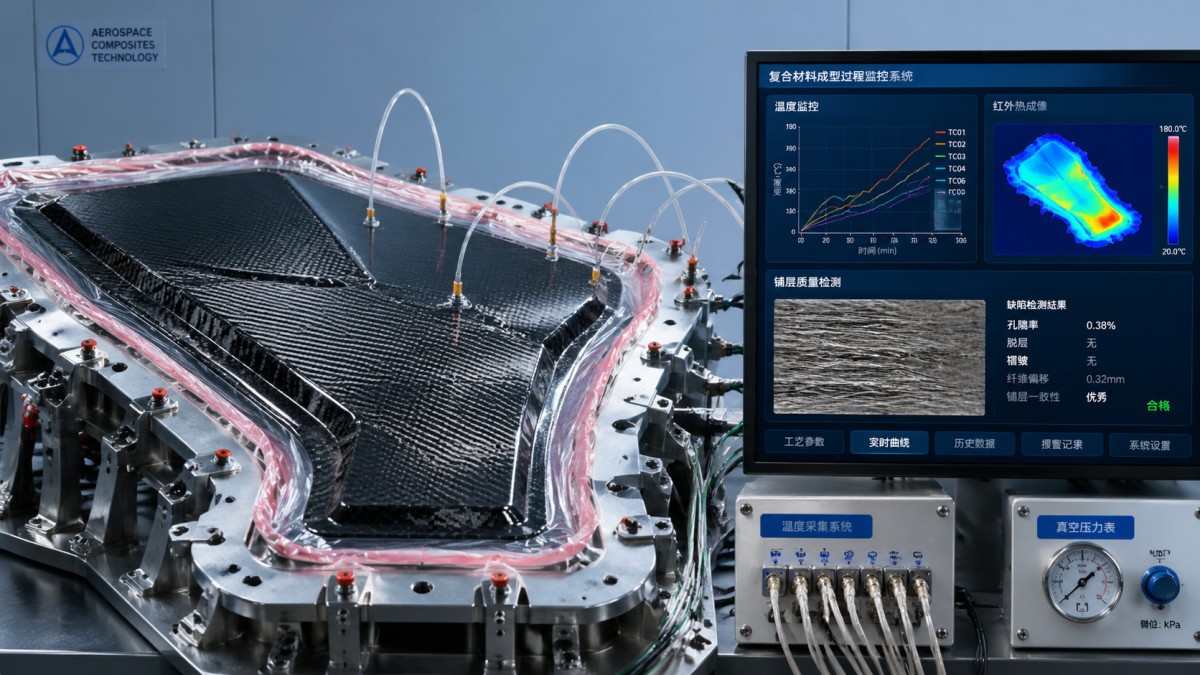
In aerospace composite manufacturing, the visible defect often appears at demolding, trimming, ultrasonic inspection, or mechanical testing. The actual root cause, however, is frequently introduced 1–3 stages earlier. A wrinkle seen after cure may come from poor ply tension during layup. A porosity issue may begin with out-time mismanagement. A thickness deviation may trace back to tool surface wear or inconsistent debulk intervals.
This matters because aerospace carbon fiber molding process defects do not only increase scrap. They distort supplier evaluation, delay first article approval, extend qualification cycles by 2–6 weeks, and create uncertainty for procurement and program managers. In commercial aerospace, UAV structures, and precision industrial composites, early-stage process discipline is often a stronger predictor of final quality than marketing claims about materials or equipment.
For operators, the challenge is repeatability under real production conditions. For sourcing teams, the challenge is verifying whether a supplier can control humidity exposure, freezer-to-room handling, vacuum integrity, and cure documentation. For decision-makers, the real question is simple: can this process remain stable across low-volume prototypes, mid-volume batches, and production ramps without hidden defect accumulation?
At TechStat Vanguard, we approach aerospace carbon fiber molding process control through engineering evidence rather than slogans. Parameters do not lie. When a carbon fiber part fails inspection, the most useful investigation starts with prepreg handling windows, layup sequence, tool readiness, vacuum checks, and process traceability—not with broad claims about “advanced craftsmanship.”
- Material handling errors can begin within minutes if prepreg out-time, thawing control, or protective film removal is not documented.
- Layup-induced defects often accumulate over 5–20 plies before they become visible as bridging, wrinkles, resin-rich zones, or fiber angle deviation.
- Tooling and bagging issues can create leaks or local compaction variation that remain unnoticed until cure is complete.
The earliest failure chain is usually process-based, not event-based
Many teams still investigate defects as isolated incidents. In practice, aerospace carbon fiber molding process defects form a chain. One small deviation rarely acts alone. A prepreg roll exposed too long, followed by rushed layup, followed by insufficient debulk every 4–8 plies, can produce internal voids or geometric instability even if the autoclave cycle itself stays within the approved recipe.
That is why robust process control must start before the first ply is placed. The more demanding the structure—load-bearing brackets, UAV arms, radomes, fairings, wing skins, or stiffened panels—the less room there is for undocumented variation.
What teams should verify first
The first verification layer should cover environmental and handling discipline. Typical checkpoints include freezer storage, thaw time, room exposure, layup room temperature, relative humidity, and traceable batch identification. In many facilities, the difference between stable production and recurrent defects is not a new machine; it is a disciplined 6-point control sheet used every shift.
Which early-stage process variables create the highest defect risk?
The highest-risk variables in aerospace carbon fiber molding process control are usually distributed across four areas: material condition, layup execution, tooling readiness, and cure preparation. These categories are useful for both engineering diagnosis and procurement audits because they reveal whether a supplier is managing causes rather than reacting to symptoms.
In practical terms, material condition includes prepreg storage, thawing discipline, and expiration tracking. Layup execution covers ply orientation, splicing control, bridging prevention, edge alignment, and debulk timing. Tooling readiness includes mold release condition, surface cleanliness, tool wear, and thermal uniformity. Cure preparation includes vacuum leak rate, bagging stack order, thermocouple placement, and recipe locking.
The table below helps cross-reference common early-stage variables with likely downstream defect outcomes. It is especially useful for quality managers, line leaders, and buyers building supplier qualification questionnaires for aerospace carbon fiber components.
The key insight is that these variables are measurable and auditable. A capable supplier should not answer with vague assurances. They should be able to show control logs, work instructions, hold points, and deviation records. For procurement, this reduces the chance of selecting a vendor whose sample parts pass but whose production consistency collapses under schedule pressure.
Three checkpoints that deserve extra attention
Three checkpoints are often underestimated. First, debulk frequency: many laminated structures benefit from debulk after every 4–8 plies, though the exact interval depends on geometry and material system. Second, vacuum leak stability: a short leak check is not enough if the bag must remain stable through staging and transfer. Third, tool reuse condition: repeated cycles can gradually alter surface behavior and local dimensional control.
These are not minor shop-floor details. They are leading indicators of whether aerospace carbon fiber molding process defects will emerge later in C-scan, sectioning, or structural testing.
How should engineers and procurement teams evaluate suppliers before defects scale up?
Supplier evaluation for aerospace composite molding should move beyond certificates alone. Standards such as AS9100 are important, but they do not automatically prove stable control over every carbon fiber molding process variable. A strong evaluation combines documentation review, process observation, sample assessment, and traceability verification across at least 3 layers: material, process, and inspection.
For information researchers, the first task is building a disciplined comparison framework. For operators visiting a supplier site, the focus should be work instruction clarity and shop-floor behavior. For buyers, the concern is not only quote price but also hidden cost from scrap, schedule slip, and requalification. For executives, the question is whether the supplier can support scale without process drift.
The table below summarizes practical evaluation dimensions for supplier screening in aerospace carbon fiber molding. These criteria work well during RFQ review, trial-order qualification, or second-source development.
When these dimensions are reviewed together, buyers can better distinguish between a supplier with genuine process maturity and one that performs well only during pilot builds. This is where data-driven benchmarking helps. It compresses qualification time and reduces the risk of discovering systemic aerospace carbon fiber molding process defects after production commitments are already locked.
A practical 4-step screening approach
- Review process documentation before sample ordering, including out-time control, layup routing, debulk logic, and cure records.
- Request one representative part family rather than a single showcase sample, especially if ply count or geometry complexity varies.
- Audit in-process controls, not just final inspection, because early-stage drift creates most hidden carbon fiber molding process defects.
- Tie technical review to commercial terms such as lead time, remake policy, sample support, and change notification discipline.
This 4-step method is especially useful when lead times are tight, such as 2–4 weeks for prototype parts or 4–8 weeks for low-volume aerospace composite assemblies.
What standards, controls, and inspection points reduce hidden defect risk?
While no single standard eliminates aerospace carbon fiber molding process defects, structured compliance and inspection reduce the chance that weak controls remain invisible. In aerospace and related precision sectors, teams commonly reference AS9100 for quality management, material handling procedures tied to approved specifications, traveler-based traceability, and inspection planning that includes both in-process and post-cure verification.
The most effective approach is layered. Layer one is preventive control: storage, thawing, layup discipline, debulk, bagging, and cure setup. Layer two is verification: dimensional checks, vacuum validation, thermocouple monitoring, and process record review. Layer three is defect detection: visual inspection, ultrasonic testing where applicable, and destructive verification during qualification or process change review.
For complex geometries and safety-relevant structures, the gap between “process completed” and “process controlled” is significant. A cure cycle logged within range does not guarantee the laminate entered cure in acceptable condition. That is why leading teams define at least 5 key checkpoints before the autoclave or oven cycle starts.
Five pre-cure controls worth formalizing
- Confirm prepreg identification, storage condition, and remaining out-time before release to layup.
- Verify ply orientation, sequence, splice location, and debulk completion against the controlled work instruction.
- Inspect tool surface, release application, edge condition, and cleanliness before the first ply is placed.
- Check vacuum bag stack-up, seal continuity, and leak stability before cure authorization.
- Review thermocouple placement and recipe lock to ensure the approved cycle is not altered informally.
These controls are valuable not only for quality assurance but also for cost prevention. One missed pre-cure verification step can trigger rework, NDI backlog, or total scrap. In aerospace programs, that cost is rarely limited to material alone; it also affects schedule, documentation, and engineering review workload.
Common misconception to avoid
A common misconception is that advanced equipment automatically neutralizes early-stage variation. It does not. Even in highly equipped facilities, hidden carbon fiber molding process defects can originate from manual layup practices, incomplete lot segregation, rushed bagging, or undocumented deviations during shift changes.
FAQ: what do buyers, engineers, and operators ask most often?
How early should defect prevention begin in the carbon fiber molding process?
Defect prevention should begin before layup starts. In many aerospace carbon fiber molding process flows, the first meaningful control point is material release from storage. If batch identification, thaw timing, room exposure, and work-order matching are weak, the process may already be compromised before the first ply reaches the tool.
What should procurement prioritize when comparing composite suppliers?
Procurement should prioritize traceability, in-process control, inspection route, and deviation handling. Unit price matters, but it is only one part of total cost. A cheaper quote can become expensive if the supplier lacks stable control over aerospace carbon fiber molding process defects, causing scrap, repeated sampling, or delayed delivery.
Are early defects more common in prototypes or production batches?
They can occur in both, but the pattern differs. Prototypes often reveal documentation gaps and unstable manual practices. Production batches expose repeatability limits, tool wear, staffing variation, and schedule-driven shortcuts. In both cases, early-stage process control is the deciding factor.
How long does supplier qualification usually take for aerospace composite parts?
The timeline varies by complexity, inspection requirements, and documentation depth. For simple prototype parts, initial technical review and sampling may take 2–4 weeks. For structural parts requiring broader validation, qualification can extend to 4–8 weeks or longer if process capability, NDI review, or corrective actions are involved.
Why choose TechStat Vanguard for data-driven evaluation and next-step support?
TechStat Vanguard supports hard-tech sourcing and engineering teams that need evidence, not noise. In aerospace carbon fiber molding process review, we focus on measurable controls: tolerance logic, process traceability, defect risk mapping, inspection structure, and supplier benchmarking. This is especially valuable when internal teams need to reduce trial-and-error cost or shorten supplier qualification cycles.
If you are comparing suppliers for aerospace or UAV composite components, we can help structure the evaluation around the variables that actually influence defect formation. That includes material handling checkpoints, layup control questions, tooling readiness review, cure preparation logic, inspection route comparison, and practical sourcing risk flags. The goal is not more paperwork. The goal is faster technical clarity.
You can contact TSV for support on parameter confirmation, supplier screening criteria, process risk review, sample evaluation logic, lead-time assessment, documentation expectations, and certification-related discussion tied to your application. For teams moving from prototype to low-volume production, or from one supplier to a qualified second source, that clarity can prevent costly requalification loops.
When aerospace carbon fiber molding process defects start earlier than expected, procurement and engineering decisions must also start earlier and become more disciplined. TSV helps teams make that shift with benchmark-driven insight, structured comparison, and engineering-first analysis built for real manufacturing decisions.
Search News
Hot Articles
- Carbon Fiber StructuresHow to Specify Aerospace Carbon Fiber Assemblies for Lightweight, Load-Bearing PartsJul 11, 2026
- Machine VisionXiaomi, Alibaba DAMO Academy Drive Open-Source Robotics Model Ecosystem, Lowering Algorithm Development Barriers for Overseas SMEs Adopting Chinese Robotics SolutionsMar 30, 2026
- Cobots & ArmsShanxi 'AI+' Conference Showcases Embodied Intelligence with Multinational Buyer Engagement: Key Industry ImplicationsMar 30, 2026
Popular Tags
Recommended News
 Jul 11, 2026How to Specify Aerospace Carbon Fiber Assemblies for Lightweight, Load-Bearing PartsAerospace carbon fiber assemblies: learn how to specify laminate design, load data, joining methods, and inspection controls for lighter, reliable load-bearing aerospace parts.Elena Rostova (UAV Systems Researcher)
 Mar 30, 2026Xiaomi, Alibaba DAMO Academy Drive Open-Source Robotics Model Ecosystem, Lowering Algorithm Development Barriers for Overseas SMEs Adopting Chinese Robotics SolutionsXiaomi & Alibaba DAMO Academy's open-source robotics models lower algorithm barriers for global SMEs. Boost efficiency in manufacturing, logistics & smart retail with ROS 2 compatible solutions.TSV Data Lab
 Mar 30, 2026Shanxi 'AI+' Conference Showcases Embodied Intelligence with Multinational Buyer Engagement: Key Industry ImplicationsShanxi 'AI+' Conference highlights embodied intelligence with Tesla, Ubtech & Jiantao showcasing multimodal robotics. 40+ global buyers validated tech on-site, creating new B2B channels for industrial automation & AI solutions.Chen Wei (Automation Lead Engineer)
 Mar 30, 2026Zhongguancun Unveils 6G Integrated Sensing-Computing-Intelligence Platform to Empower Embodied Robots for Global Industrial ApplicationsZhongguancun's new 6G platform revolutionizes industrial robotics with <10ms latency, empowering global automotive, logistics & port automation. Discover how this tech boosts China's smart manufacturing exports.TSV Data Lab
 Mar 30, 2026Mech-Mind Tianjin Embodied Intelligence R&D and Production Base Goes Live, Cutting Delivery Time by 20%–30% for Global Customized AMR+Vision SolutionsMech-Mind's Tianjin AMR+Vision production base cuts delivery time by 20%-30% for欧美 & Latin American markets. Discover how this PLd-certified facility accelerates customized robotics solutions for smart manufacturing and logistics.Chen Wei (Automation Lead Engineer)
 Mar 30, 2026Boao Forum Reveals 'Co-evolution of Big and Small Brains' Trend in Humanoid Robots, China's Embodied Intelligence Accelerates Adaptation to Overseas Manufacturing Service ScenariosDiscover how China's humanoid robots, featuring 'Co-evolution of Big and Small Brains,' are revolutionizing global manufacturing. Learn about Embodied Tian Gong 3.0's ISO compliance and overseas deployment at Boao Forum 2026.Chen Wei (Automation Lead Engineer)
 Mar 30, 2026China Railway Industrial Secures Patent for Embodied Robotics in Material Handling, Boosting High-Precision Delivery Capabilities for Overseas Infrastructure and Manufacturing ProjectsChina Railway Industrial's new patent for embodied robotics in material handling boosts high-precision delivery for global infrastructure & manufacturing. Discover how this innovation enhances logistics accuracy in automotive, rail transit & EPC projects.Chen Wei (Automation Lead Engineer)
 Oct 25, 2026Hesai Leads Global ADAS Main Lidar Shipments in Yole’s 2026 ReportHesai led global ADAS main lidar shipments with a 43% share in 2025, according to Yole’s 2026 report. Explore what this ranking reveals about its automotive market position.TSV Data Lab
 Oct 25, 2026Choosing an Aerospace Materials Manufacturer: Quality and Traceability ChecksChoosing an aerospace materials manufacturer? Learn how to verify certifications, test reports, and lot traceability to qualify suppliers confidently and reduce costly sourcing risks.Dr. Marcus Vance
 Oct 24, 2026Guotai Haitong: Global Entry-Level 3D Printer Shipments Rose 39% in Q1 2026Entry-level 3D printer shipments rose 39% in Q1 2026, Guotai Haitong reports. Explore how AI, multicolor printing and print farms are shaping market growth.Dr. Marcus Vance
 Oct 24, 2026Choosing an Industrial Vision Inspection Supplier: Acceptance Tests That MatterChoose an industrial vision inspection supplier with confidence. Discover acceptance tests for defect detection, false rejects, production speed, and reliable part rejection before you buy.TSV Data Lab
 Oct 23, 2026US Navy Raises Gecko Robotics Contract Ceiling to $300M for Robotic Fleet MaintenanceUS Navy raises Gecko Robotics’ contract ceiling to $300M for Pacific Fleet robotic inspections. Explore potential opportunities for maintenance suppliers and key procurement considerations.Chen Wei (Automation Lead Engineer)
 Oct 23, 2026Choosing Industrial Sensing Systems for Global Plants: Protocol CompatibilityCompare industrial sensing systems international buyers can trust. Explore protocol compatibility, reduce integration risks, and select proven configurations for reliable global plant deployments.TSV Data Lab
 Oct 22, 2026KUKA Showcases Physical AI and iiQKA.AI Vision at NVIDIA GTC BerlinExplore KUKA’s Physical AI showcase at NVIDIA GTC Berlin and discover how iiQKA.AI Vision aims to simplify robotic vision integration and improve 2D and 3D scene recognition.TSV Data Lab
 Oct 22, 2026Robotic Machining of Advanced Composites: What Tolerances Are Achievable?Explore advanced materials machining robotics: discover what drives achievable composite tolerances and how to validate accuracy before investing in your next machining system.Dr. Marcus Vance
 Oct 21, 2026China’s Industrial Robot Exports Near RMB 10 Billion in First Nine Months of 2026China’s industrial robot exports neared RMB 10 billion in January–September 2026, with value rising faster than volume. Explore the data and what it could mean for suppliers.Chen Wei (Automation Lead Engineer)
 Oct 21, 2026Low-Latency Industrial Data Processing: Pricing and Key Cost DriversExplore industrial data latency price drivers, from edge hardware to integration and support. Learn how to compare quotes, verify performance, and avoid unnecessary costs.TSV Data Lab
 Oct 20, 2026KUKA Launches iiQKA.AI Vision to Simplify Industrial Image ProcessingKUKA iiQKA.AI Vision simplifies industrial image processing with controller-based 2D and 3D vision. Explore drag-and-drop setup for vision-guided automation.TSV Data Lab
 Oct 20, 2026Smart Industrial Edge Devices: Key Criteria for Legacy PLC IntegrationChoose smart industrial edge devices for legacy PLC integration. Discover key criteria for compatibility, data quality, security, and reliable collection without disrupting control.TSV Data Lab
 Oct 19, 2026Choosing a Radar Sensor by Application: Range, Resolution, and Field of ViewSimplify radar sensor application based product selection. Compare range, resolution, and field of view to avoid blind spots and choose with confidence. Explore the guide.TSV Data Lab
 Oct 18, 2026Comparing Material Options for Procurement: Specs, Costs, and Supply RisksExplore procurement oriented technical content on material options, specs, costs, and supply risks. Compare alternatives to cut hidden expenses and make confident sourcing decisions.Dr. Marcus Vance
 Oct 17, 20265-Axis CNC Positioning Accuracy: How to Interpret ISO 230-2 Test ResultsAssess 5 axis CNC machining positioning accuracy with ISO 230-2. Learn to interpret repeatability, reversal error, and test conditions to compare suppliers and make confident acceptance decisions.Dr. Marcus Vance
 Oct 16, 2026Choosing a Rugged Edge AI Box Supplier: Thermal Tests and Lifecycle SupportChoose a rugged edge AI box supplier with proven thermal performance and reliable lifecycle support. Discover the tests and commitments to verify before you buy.TSV Data Lab
 Oct 15, 2026R&D Cost Reduction Services: How to Evaluate Fees, Savings, and ROIEvaluate R&D cost reduction services with confidence. Compare fees, verify savings, and calculate ROI without compromising performance. Discover how to choose a provider that delivers real value.Chen Wei (Automation Lead Engineer)























