ToF Depth Camera Wholesale and Specs That Mislead
Publication Date
author
In tof depth camera wholesale, polished spec sheets often hide the details that matter most to procurement teams: range accuracy, ambient light resistance, latency stability, and integration risk. For buyers comparing suppliers, misleading parameters can inflate costs and delay deployment. This article cuts through marketing claims and examines which ToF depth camera specifications truly impact sourcing decisions, system performance, and long-term supply chain reliability.
Why tof depth camera wholesale requires a stricter evaluation method
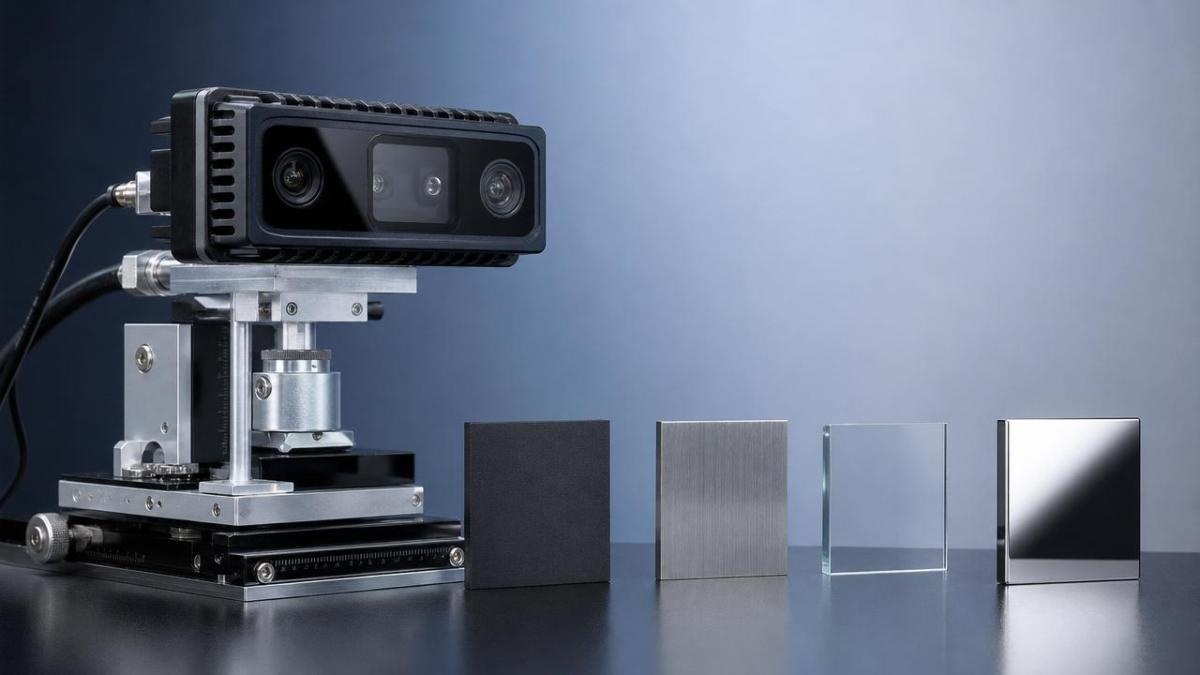
The problem in tof depth camera wholesale is not a lack of data. It is the wrong kind of data. Many listings highlight resolution, nominal range, or “industrial grade” positioning, yet omit test conditions, failure thresholds, and calibration limits. A depth camera that looks competitive on paper may lose accuracy under sunlight, drift after thermal cycling, or create middleware issues that expand total deployment cost.
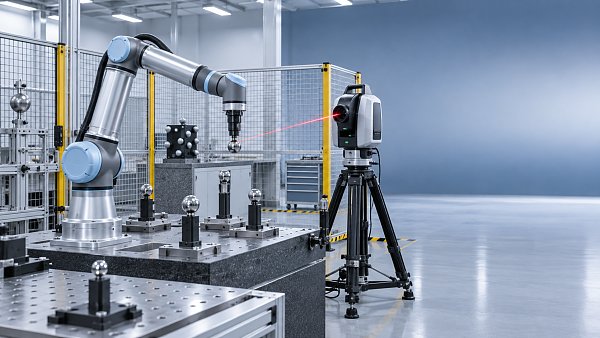
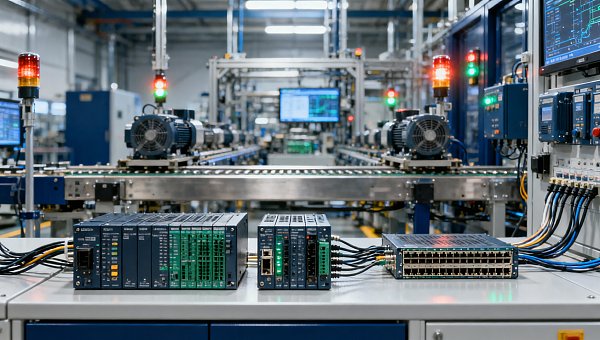
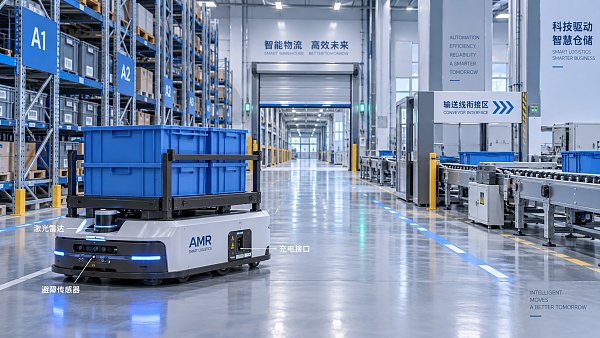
This matters across the broader industrial ecosystem, from robotics and warehouse automation to UAV payload sensing, smart kiosks, and access control. In each use case, depth performance is only one part of the purchasing equation. Interface stability, supply continuity, firmware support, and verification data often determine whether a module scales smoothly or becomes an engineering bottleneck.
A structured review process helps separate useful ToF depth camera specs from misleading headline numbers. It also aligns sourcing decisions with engineering reality, which is essential when evaluating tof depth camera wholesale offers from multiple regions, OEM channels, and private-label suppliers.
The key specification checks before comparing suppliers
Before shortlisting any tof depth camera wholesale source, review the following points in sequence. Each one addresses a common gap between brochure claims and field performance.
- Verify whether stated depth range is measured indoors, on a high-reflectivity target, or in darkness, because nominal maximum distance rarely matches operational distance in real installations.
- Ask for depth accuracy at multiple distances, not a single best-case figure, and request error curves showing how precision degrades across near, mid, and far zones.
- Check ambient light tolerance in lux and test method details, since many ToF modules perform well in labs but fail under direct sunlight or reflective factory lighting.
- Review frame rate together with resolution and processing mode, because advertised FPS may only apply to cropped output, reduced depth quality, or compressed data pipelines.
- Confirm latency from exposure to host output rather than sensor-only timing, as system-level latency affects obstacle avoidance, gesture tracking, and closed-loop control accuracy.
- Inspect field of view carefully in both horizontal and vertical axes, because a wide-angle lens can increase coverage while reducing effective depth density at target distance.
- Request multipath interference behavior and anti-reflection handling data, especially for metal surfaces, glass, polished floors, and narrow enclosures common in industrial deployments.
- Check operating temperature, thermal drift, and warm-up time, since some depth modules need stabilization before output becomes consistent across full work shifts.
- Review interface maturity, including USB, MIPI, Ethernet, SDK support, ROS compatibility, and driver maintenance history, because integration friction often exceeds hardware cost differences.
- Validate eye safety classification, emitter wavelength, and regional compliance documents to avoid procurement delays when shipping ToF camera systems into regulated markets.
- Ask about calibration storage, recalibration procedures, and unit-to-unit consistency, because scale production suffers when every module needs custom tuning after delivery.
- Examine supply chain continuity, component origin, and revision control, since silent BOM changes can break previous validation results in long-cycle programs.
Which ToF depth camera specs are most often misleading
Several ToF depth camera specs are repeatedly presented in ways that make comparison difficult in tof depth camera wholesale. The first is maximum range. A claim such as “10 meters” sounds useful, but it means little without target reflectivity, ambient light level, confidence threshold, and acceptable error margin. In practice, the operational range for low-reflectivity objects may be far shorter.
Another commonly stretched metric is depth resolution versus image resolution. A sensor may output a high-resolution map, yet much of that detail can come from interpolation, filtering, or reconstruction. What matters is native depth fidelity, edge stability, hole rate, and confidence map quality. For machine interaction, these are often more important than the raw pixel count printed in a catalog.
“Industrial grade” is also overused. In a serious review, this label should be backed by vibration resistance, ingress protection, EMC test records, connector durability, thermal design data, and MTBF evidence. Without those details, the term has almost no technical value.
Low power consumption can be similarly misleading. A quoted sensor-level figure may exclude active illumination, onboard processing, or external compute load. For embedded systems, total system power and thermal output are the relevant numbers, not isolated component consumption.
How application context changes the buying decision
Robotics and automation
For mobile robots, collaborative cells, and bin-picking systems, tof depth camera wholesale decisions should prioritize latency consistency, interference resistance, and calibration repeatability. A camera with slightly lower headline resolution but more stable frame-to-frame output often delivers better navigation and object handling results.
Also check synchronization options if multiple sensors operate in one area. Cross-talk between emitters can degrade performance, especially in dense automation layouts where several ToF devices run simultaneously.
Smart retail, access control, and people counting
In indoor commercial systems, stable operation under mixed lighting and accurate near-field depth matter more than extreme range. Mounting height, field of view, privacy requirements, and enclosure temperature all affect camera selection. Here, a clean SDK and reliable firmware updates can outweigh small differences in sensor specs.
For these programs, ask whether the supplier provides occupancy, gesture, or presence reference algorithms, or only raw depth output. Integration time can vary sharply depending on software maturity.
UAV, mapping, and outdoor sensing
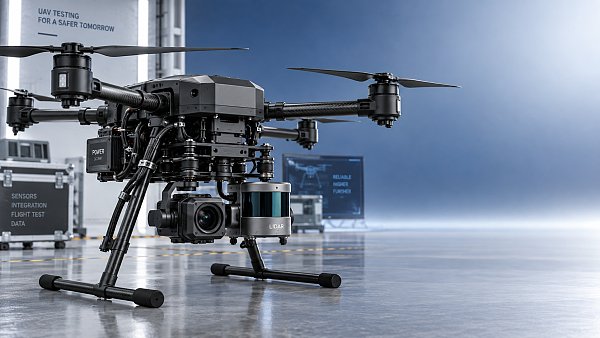
Outdoor use places strong pressure on sunlight tolerance, weight, power draw, and vibration behavior. In this case, tof depth camera wholesale should include a review of airframe integration, lens contamination risk, and accuracy degradation on vegetation, water, and low-texture terrain.
If the depth module is used for landing assist or obstacle detection, worst-case latency and confidence thresholds should be documented, not just average values. Safety-relevant functions demand more than typical performance numbers.
Often ignored risks that increase total cost
One frequent mistake in tof depth camera wholesale is focusing only on unit price. A lower-cost module may require extra shielding, custom calibration fixtures, host-side optimization, or a larger thermal solution. Those hidden costs can exceed the original hardware savings within one prototype cycle.
Another ignored issue is firmware revision discipline. Some suppliers improve performance through software changes but do not maintain transparent version logs or backward compatibility notes. That creates validation risk, especially for regulated products or long-lifecycle industrial platforms.
Documentation quality is also a serious filter. Sparse API references, incomplete command sets, and missing error-state definitions slow integration and make troubleshooting expensive. In hard-tech procurement, documentation is part of the product, not a side asset.
Finally, do not ignore traceability. If a tof depth camera wholesale supplier cannot clearly identify sensor source, emitter vendor, and assembly revision, future field failures become harder to isolate and correct.
A practical process for evaluating tof depth camera wholesale offers
- Build a test matrix with required range, target materials, ambient light levels, motion conditions, and temperature limits before requesting quotes.
- Ask every supplier to fill the same parameter sheet, including test conditions, tolerances, and firmware version used for reported performance.
- Run sample validation on the actual host platform, not only on a vendor demo kit, to expose interface and processing bottlenecks early.
- Score suppliers across four areas: optical performance, integration maturity, compliance readiness, and supply chain continuity.
- Request change-control policy, lead time stability, and end-of-life notification terms before moving from prototype purchase to volume planning.
This method turns tof depth camera wholesale comparison into a controlled engineering exercise instead of a marketing-driven price negotiation. It also creates a reusable sourcing framework for future sensor programs.
FAQ on tof depth camera wholesale and spec verification
Is higher resolution always better in a ToF depth camera?
No. In tof depth camera wholesale, higher resolution may increase bandwidth, processing load, and latency without improving usable depth quality. Native precision, edge performance, and confidence consistency are often more valuable.
What is the most important missing detail in many spec sheets?
Test conditions. Range, accuracy, and frame rate figures are not comparable unless target reflectivity, ambient light, temperature, and processing mode are disclosed alongside them.
How can supply risk be checked early?
Ask for BOM stability policy, component origin, lifecycle commitment, and revision history. In tof depth camera wholesale, stable supply is as important as optical performance for long-term deployment success.
Final takeaways and next actions
The main challenge in tof depth camera wholesale is not finding suppliers. It is identifying which specifications reflect repeatable engineering performance and which ones mainly support sales positioning. Maximum range, image resolution, and generic durability claims should never be accepted without conditions, tolerance bands, and validation data.
A stronger sourcing outcome comes from comparing ToF depth camera options with a fixed checklist: operational range by target type, ambient light resistance, end-to-end latency, thermal drift, interface maturity, compliance evidence, and revision control. That approach reduces qualification risk, protects integration schedules, and improves total lifecycle value.
For the next step, create a supplier comparison sheet using the criteria above, request raw test conditions for every quoted parameter, and validate samples under the exact environment where the camera will operate. In hard-tech procurement, trustworthy data is not an extra benefit. It is the baseline for a sound decision.
Search News
Hot Articles
- Carbon Fiber StructuresHow to Specify Aerospace Carbon Fiber Assemblies for Lightweight, Load-Bearing PartsJul 11, 2026
- Machine VisionXiaomi, Alibaba DAMO Academy Drive Open-Source Robotics Model Ecosystem, Lowering Algorithm Development Barriers for Overseas SMEs Adopting Chinese Robotics SolutionsMar 30, 2026
- Cobots & ArmsShanxi 'AI+' Conference Showcases Embodied Intelligence with Multinational Buyer Engagement: Key Industry ImplicationsMar 30, 2026
Popular Tags
Recommended News
 Jul 11, 2026How to Specify Aerospace Carbon Fiber Assemblies for Lightweight, Load-Bearing PartsAerospace carbon fiber assemblies: learn how to specify laminate design, load data, joining methods, and inspection controls for lighter, reliable load-bearing aerospace parts.Elena Rostova (UAV Systems Researcher)
 Mar 30, 2026Xiaomi, Alibaba DAMO Academy Drive Open-Source Robotics Model Ecosystem, Lowering Algorithm Development Barriers for Overseas SMEs Adopting Chinese Robotics SolutionsXiaomi & Alibaba DAMO Academy's open-source robotics models lower algorithm barriers for global SMEs. Boost efficiency in manufacturing, logistics & smart retail with ROS 2 compatible solutions.TSV Data Lab
 Mar 30, 2026Shanxi 'AI+' Conference Showcases Embodied Intelligence with Multinational Buyer Engagement: Key Industry ImplicationsShanxi 'AI+' Conference highlights embodied intelligence with Tesla, Ubtech & Jiantao showcasing multimodal robotics. 40+ global buyers validated tech on-site, creating new B2B channels for industrial automation & AI solutions.Chen Wei (Automation Lead Engineer)
 Mar 30, 2026Zhongguancun Unveils 6G Integrated Sensing-Computing-Intelligence Platform to Empower Embodied Robots for Global Industrial ApplicationsZhongguancun's new 6G platform revolutionizes industrial robotics with <10ms latency, empowering global automotive, logistics & port automation. Discover how this tech boosts China's smart manufacturing exports.TSV Data Lab
 Mar 30, 2026Mech-Mind Tianjin Embodied Intelligence R&D and Production Base Goes Live, Cutting Delivery Time by 20%–30% for Global Customized AMR+Vision SolutionsMech-Mind's Tianjin AMR+Vision production base cuts delivery time by 20%-30% for欧美 & Latin American markets. Discover how this PLd-certified facility accelerates customized robotics solutions for smart manufacturing and logistics.Chen Wei (Automation Lead Engineer)
 Mar 30, 2026Boao Forum Reveals 'Co-evolution of Big and Small Brains' Trend in Humanoid Robots, China's Embodied Intelligence Accelerates Adaptation to Overseas Manufacturing Service ScenariosDiscover how China's humanoid robots, featuring 'Co-evolution of Big and Small Brains,' are revolutionizing global manufacturing. Learn about Embodied Tian Gong 3.0's ISO compliance and overseas deployment at Boao Forum 2026.Chen Wei (Automation Lead Engineer)
 Mar 30, 2026China Railway Industrial Secures Patent for Embodied Robotics in Material Handling, Boosting High-Precision Delivery Capabilities for Overseas Infrastructure and Manufacturing ProjectsChina Railway Industrial's new patent for embodied robotics in material handling boosts high-precision delivery for global infrastructure & manufacturing. Discover how this innovation enhances logistics accuracy in automotive, rail transit & EPC projects.Chen Wei (Automation Lead Engineer)
 Sep 29, 2026ISO 9283 Repeatability: How to Evaluate Cobot Positioning PerformanceISO 9283 cobot repeatability explained: learn how payload, reach, approach direction, and test conditions affect positioning performance and cell capability.Chen Wei (Automation Lead Engineer)
 Sep 28, 2026Spindle Runout Measurement in Germany: DIN Standards, Methods, and Acceptance LimitsSpindle runout measurement Germany: explore DIN standards, proven methods, acceptance limits, and audit-ready practices for reliable machining quality.Dr. Marcus Vance
 Sep 27, 2026How to Select Wall-Mount Edge Devices for Space-Constrained Factory NetworksWall mount edge devices for space-constrained factories: evaluate workload, thermal design, power resilience, cable access, and network reliability for smarter deployments.TSV Data Lab
 Sep 26, 2026Machining Tolerance Analysis: How to Set Limits That Meet Function and Cost TargetsMachining tolerance analysis: learn how to set functional limits, control tolerance stacks, reduce inspection risk, and balance precision with production cost.Dr. Marcus Vance
 Sep 25, 2026How to Evaluate an Industrial Infrastructure Data Platform for Multi-Site OperationsIndustrial infrastructure data platform evaluation guide for multi-site operations: compare data quality, edge resilience, interoperability, governance, and scalable proof-of-value criteria.Victor Lin (Chief Software Architect)
 Sep 24, 2026How to Select Machine Vision Optics for Accurate Inspection at Different Working DistancesMachine vision optics selection guide for accurate inspection at every working distance. Compare FOV, pixel scale, DOF, distortion, lighting, and telecentric options.TSV Data Lab
 Sep 23, 2026How to Evaluate a Machine Vision System Integrator for High-Speed Inspection LinesChoose a machine vision system integrator with proven expertise in high-speed inspection, reliable reject timing, robust optics, and measurable acceptance criteria.TSV Data Lab
 Sep 28, 2026When is a SCADA API the right choice for connecting plant systems?SCADA API guide: learn when governed plant data integration improves traceability, security, and scalability—without compromising real-time control.Victor Lin (Chief Software Architect)
 Sep 27, 2026How SCADA data integration improves traceability across production linesSCADA data integration connects production-line data to improve traceability, accelerate quality investigations, and strengthen safety decisions.Victor Lin (Chief Software Architect)
 Sep 26, 2026What to define before starting SCADA integration planningSCADA integration planning starts with clear scope, control boundaries, data models, cybersecurity, and testing. Discover the definitions that reduce risk and costly rework.Victor Lin (Chief Software Architect)
 Sep 25, 2026How a smart factory with Industrial IoT reduces production blind spotsDiscover how a smart factory with Industrial IoT turns real-time machine, quality, and workflow data into actionable insights that reduce production blind spots and delivery risks.Victor Lin (Chief Software Architect)
 Sep 24, 2026When does Industrial IoT make smart manufacturing easier to scale?Smart manufacturing Industrial IoT scales when trusted data, interoperable systems, and secure workflows turn connected assets into measurable gains.TSV Data Lab
 Sep 23, 2026What drives ultra-precision machining cost at 1-micron tolerance?Ultra precision machining cost per part at 1 micron tolerance depends on process, material, metrology, and yield. Learn how to compare quotes confidently.Dr. Marcus Vance
 Sep 22, 2026Drone Engine-T550CC Applications: Build the UAV Power System Around the MissionAn application guide for Drone Engine-T550CC integration, covering payload planning, airframe matching, cooling, fuel, vibration, test procedures, documentation, and service preparation.Elena Rostova (UAV Systems Researcher)
 Sep 22, 2026How to Evaluate Industrial Edge Computing Vendors for Factory DeploymentIndustrial edge computing vendor evaluation guide for factories: compare latency, protocol fit, reliability, security, and lifecycle support before deployment.TSV Data Lab
 Sep 21, 2026Drone Payload Integration: Matching Power, Data, and Center of Gravity for Reliable FlightsDrone payload integration made practical: balance power, data, center of gravity, and endurance to build safer, more reliable mission-ready flights.Elena Rostova (UAV Systems Researcher)
 Sep 20, 2026Autonomous Navigation Pricing: Cost Drivers and Budget Benchmarks for AMR ProjectsAutonomous navigation price explained: compare AMR cost drivers, software, sensors, integration, safety, and lifecycle budgets to build a scalable project plan.Chen Wei (Automation Lead Engineer)