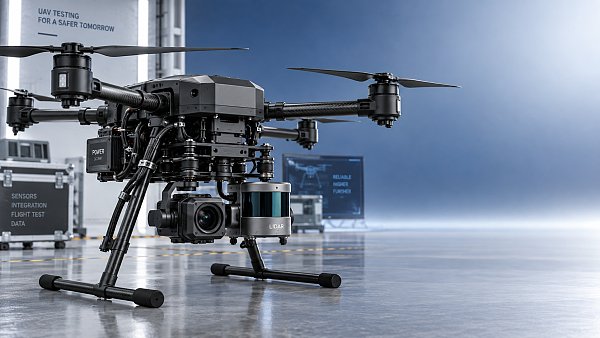
Can UAV thermal inspection spot weak solar panels early?
Publication Date
author
Can uav thermal inspection solar panels workflows reveal underperforming modules before output losses spread across an entire site? For project managers and engineering leads, early fault detection is not just a maintenance advantage—it directly affects uptime, warranty claims, and ROI. This article examines how thermal UAV surveys help identify hotspots, mismatch, and hidden degradation earlier, with a data-driven focus on accuracy, inspection efficiency, and decision-ready engineering value.
A checklist-based approach matters because solar asset decisions are rarely blocked by a single image or a single hotspot. They are blocked by uncertainty: Was the anomaly real, repeatable, severe enough to act on, and financially worth dispatching a field team? For project managers, the value of uav thermal inspection solar panels programs comes from turning thermal imagery into prioritized maintenance actions. That means checking the right variables in the right order: environmental suitability, flight planning, thermal calibration, anomaly classification, and work-order integration.
Start Here: What UAV Thermal Inspection Can Detect Early
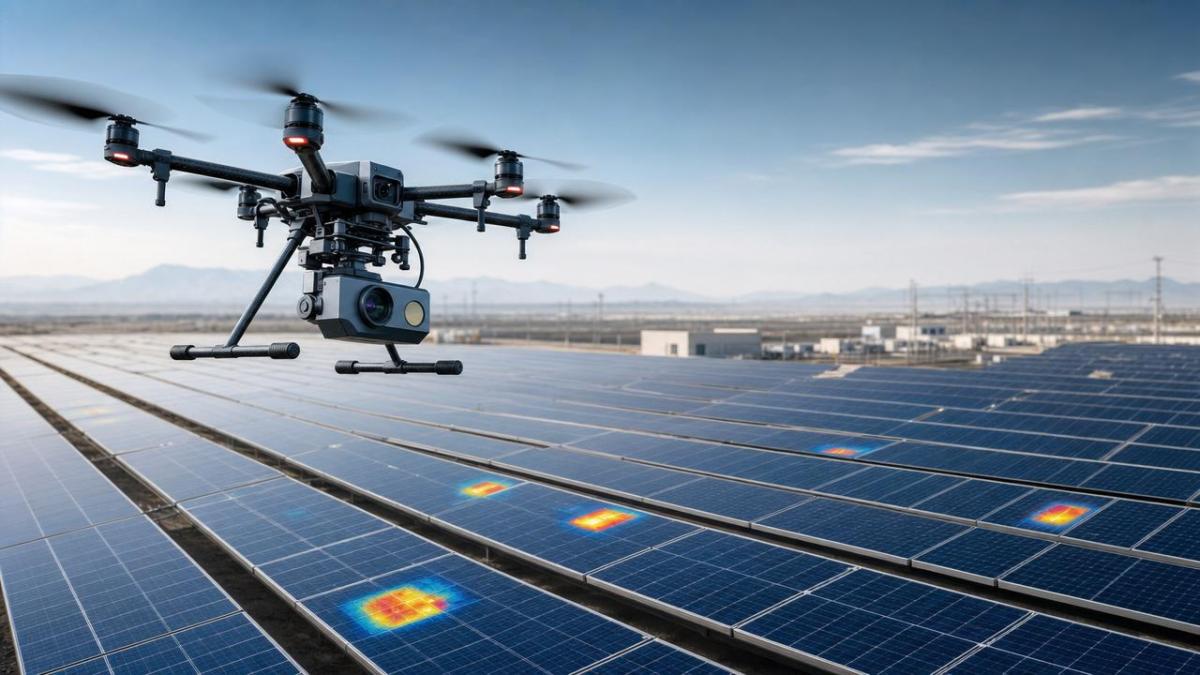
Yes, UAV thermal surveys can often spot weak solar panels early, but only when inspection conditions and interpretation methods are controlled. In practical terms, thermal drones help identify cell hotspots, bypass diode issues, soiling patterns, connector heating, string imbalance, shading-related underperformance, and broader module mismatch before these problems become visible in production dashboards. For engineering teams, the key advantage is speed: a large site can be screened far faster than manual thermography, making early-stage anomaly mapping feasible at portfolio scale.
However, thermal signatures are indicators, not final root-cause verdicts. A hotspot may indicate cracked cells, failed interconnects, manufacturing defects, or localized dirt. This is why the best uav thermal inspection solar panels workflow is a two-step process: aerial detection first, targeted electrical or visual confirmation second. The earlier this sequence is embedded into maintenance planning, the lower the risk of energy loss compounding across months.
Core Checklist: What to Confirm Before Trusting the Results
Before approving a drone thermal campaign or acting on its output, project leaders should validate the following inspection criteria. These are the minimum decision gates that determine whether findings are useful for operations, warranty, or supplier discussions.
- Irradiance conditions: Thermal contrast is usually stronger when solar irradiance is sufficiently stable and high. Low or rapidly changing irradiance can hide weak modules or create misleading patterns.
- Module loading state: Panels should be operating under load. Thermal anomalies on inactive strings may not reflect real underperformance behavior.
- Wind and ambient temperature: High wind can cool surfaces unevenly and reduce apparent hotspot intensity, while extreme ambient conditions affect interpretation thresholds.
- Sensor resolution and calibration: Not every thermal camera is suitable for utility-scale PV inspection. Pixel density, thermal sensitivity, and radiometric accuracy directly affect anomaly confidence.
- Flight altitude and overlap: If altitude is too high, small defects blur into background temperature variation. If overlap is poor, stitching and geolocation errors increase.
- Visible-light correlation: Thermal findings should be paired with RGB imagery to distinguish heat caused by dirt, cracks, frame damage, vegetation, or installation defects.
- Geotagging quality: Every anomaly should be traceable to row, string, and module position. Without precise coordinates, maintenance crews lose time and data value drops.
- Severity logic: Teams need predefined temperature delta thresholds and action categories, otherwise reports become descriptive rather than actionable.
For project managers, this checklist prevents a common failure mode: ordering a thermal survey, receiving a large report, and still being unable to prioritize repairs. Good inspection data is not just about image quality; it is about decision quality.
How to Judge Whether a Weak Panel Is Truly “Early-Stage”
One of the most useful questions in uav thermal inspection solar panels projects is not simply “Is there a hotspot?” but “How early was it found?” Early-stage detection typically shows up as localized thermal deviation before significant string-level energy loss appears in SCADA trends. In other words, the drone may detect a weak panel before operators see a major production alarm.
Use these judgment standards:
- Localized temperature rise with normal surrounding modules: This often suggests an isolated fault that has not yet spread into broader mismatch.
- Repeated anomaly in multiple inspections: If the same module shows consistent abnormal heating across separate flights, confidence rises significantly.
- No corresponding cleaning event or temporary shade event: If thermal deviation remains after operational variables are excluded, degradation becomes more likely.
- Weak electrical impact but clear thermal contrast: This is often where drones add the most value, because the issue is visible before it becomes a major yield problem.
This is why thermal UAV inspection is especially valuable for preventive maintenance programs. It helps teams intervene at the “watch and verify” stage instead of waiting for expensive replacement cycles or broader underperformance clusters.
Key Fault Types a Solar Inspection Checklist Should Prioritize
Not every anomaly deserves the same response time. A practical uav thermal inspection solar panels strategy should rank findings by operational and financial impact.
Priority 1: Immediate Attention
These findings can affect safety, accelerate damage, or cause rapid output loss. Examples include severe cell hotspots, overheating connectors, junction box abnormalities, and string sections showing concentrated thermal stress. These should trigger targeted field verification quickly.
Priority 2: Short-Term Maintenance Planning
This group includes moderate module mismatch, repeating bypass diode signatures, localized soiling patterns, and edge-heating behavior that may indicate emerging defects. These issues may not require emergency intervention, but they should be linked to scheduled maintenance or warranty review.
Priority 3: Trend Monitoring
Mild thermal irregularities with uncertain cause belong here. Project leads should not ignore them, but should compare with future flights, string data, and weather history before mobilizing crews. This reduces false positives and protects O&M budgets.
Site Scenario Checklist: What Changes by Project Type
The right inspection criteria change depending on the site. A rooftop system, a utility-scale array, and a mixed-terrain industrial site do not produce the same thermal interpretation challenges.
For engineering leads, this means inspection specifications should not be copied from one project type to another. A useful procurement or service brief should define module type, mounting geometry, expected defect classes, coordinate precision needs, and required output format before the first flight occurs.
Commonly Overlooked Factors That Reduce Accuracy
Many teams overestimate what thermal imagery alone can prove. The following overlooked factors often reduce the reliability of uav thermal inspection solar panels results:
- Dirty optics or poor emissivity assumptions: Small calibration issues can distort temperature comparisons.
- Midday glare and reflection artifacts: Reflective surfaces can create false thermal contrast if flight angles are poorly planned.
- Single-pass interpretation: One thermal pass without RGB cross-checking or repeat validation increases misclassification risk.
- No link to inverter or string data: Without system context, findings stay visual rather than operational.
- Unclear action thresholds: Teams may detect dozens of anomalies but still have no rule for repair, monitor, or claim.
These issues matter because the business case for drone inspection depends on trust. If the report creates more uncertainty than clarity, field teams revert to reactive maintenance and the data advantage is lost.
Execution Guide: How Project Managers Should Use the Findings
To convert thermal survey results into measurable value, project managers should treat the inspection as part of a maintenance decision chain rather than a standalone imaging service.
- Define the objective before flight: Is the goal warranty evidence, annual screening, post-storm validation, commissioning acceptance, or troubleshooting of unexplained underperformance?
- Set action categories in advance: Create repair-now, inspect-next, monitor, and no-action classes tied to thermal and electrical criteria.
- Require decision-ready reporting: Reports should include module location, anomaly image pair, severity, probable cause, and recommended next step.
- Link with CMMS or work-order flow: Findings should enter maintenance systems directly, not remain in isolated PDF archives.
- Schedule reinspection logic: Moderate anomalies need follow-up timing, especially before high-yield seasons or warranty deadlines.
This execution discipline is what turns uav thermal inspection solar panels programs from attractive diagnostics into operational infrastructure. The real gain is not just seeing faults early, but resolving the right faults at the right cost and time.
FAQ for Engineering and Project Decision-Makers
Can thermal drones replace manual electrical testing?
No. They are best used for rapid detection and prioritization. Electrical testing and targeted visual inspection are still needed for confirmation and root-cause verification.
How often should a solar site run UAV thermal inspections?
It depends on asset criticality, age, climate, and warranty stage. Many teams use annual or seasonal inspections, with extra flights after storms, commissioning, or unexplained production deviations.
Are all hotspots equally serious?
No. Severity depends on temperature delta, fault pattern, repeatability, and impact on system output or safety. Classification rules are essential.
Final Decision Checklist Before You Move Forward
If you are evaluating whether to adopt or scale a uav thermal inspection solar panels workflow, prioritize these final questions: What defect classes matter most to your site? What accuracy and geolocation standard do field teams need? How will anomalies be ranked and verified? Which findings justify immediate dispatch? How will results feed warranty, O&M, and ROI reporting?
For teams that need deeper technical validation, the next step is not a generic vendor conversation. It is a structured engineering discussion covering thermal sensor parameters, flight conditions, radiometric output, anomaly thresholds, reporting format, reinspection cycle, integration with site data, expected turnaround time, and budget per inspected megawatt. When those inputs are defined clearly, UAV thermal inspection becomes a practical early-warning tool for weak solar panels—not just a visual audit, but a measurable asset management advantage.
Search News
Hot Articles
- Carbon Fiber StructuresHow to Specify Aerospace Carbon Fiber Assemblies for Lightweight, Load-Bearing PartsJul 11, 2026
- Machine VisionXiaomi, Alibaba DAMO Academy Drive Open-Source Robotics Model Ecosystem, Lowering Algorithm Development Barriers for Overseas SMEs Adopting Chinese Robotics SolutionsMar 30, 2026
- Cobots & ArmsShanxi 'AI+' Conference Showcases Embodied Intelligence with Multinational Buyer Engagement: Key Industry ImplicationsMar 30, 2026
Popular Tags
Recommended News
 Jul 11, 2026How to Specify Aerospace Carbon Fiber Assemblies for Lightweight, Load-Bearing PartsAerospace carbon fiber assemblies: learn how to specify laminate design, load data, joining methods, and inspection controls for lighter, reliable load-bearing aerospace parts.Elena Rostova (UAV Systems Researcher)
 Mar 30, 2026Xiaomi, Alibaba DAMO Academy Drive Open-Source Robotics Model Ecosystem, Lowering Algorithm Development Barriers for Overseas SMEs Adopting Chinese Robotics SolutionsXiaomi & Alibaba DAMO Academy's open-source robotics models lower algorithm barriers for global SMEs. Boost efficiency in manufacturing, logistics & smart retail with ROS 2 compatible solutions.TSV Data Lab
 Mar 30, 2026Shanxi 'AI+' Conference Showcases Embodied Intelligence with Multinational Buyer Engagement: Key Industry ImplicationsShanxi 'AI+' Conference highlights embodied intelligence with Tesla, Ubtech & Jiantao showcasing multimodal robotics. 40+ global buyers validated tech on-site, creating new B2B channels for industrial automation & AI solutions.Chen Wei (Automation Lead Engineer)
 Mar 30, 2026Zhongguancun Unveils 6G Integrated Sensing-Computing-Intelligence Platform to Empower Embodied Robots for Global Industrial ApplicationsZhongguancun's new 6G platform revolutionizes industrial robotics with <10ms latency, empowering global automotive, logistics & port automation. Discover how this tech boosts China's smart manufacturing exports.TSV Data Lab
 Mar 30, 2026Mech-Mind Tianjin Embodied Intelligence R&D and Production Base Goes Live, Cutting Delivery Time by 20%–30% for Global Customized AMR+Vision SolutionsMech-Mind's Tianjin AMR+Vision production base cuts delivery time by 20%-30% for欧美 & Latin American markets. Discover how this PLd-certified facility accelerates customized robotics solutions for smart manufacturing and logistics.Chen Wei (Automation Lead Engineer)
 Mar 30, 2026Boao Forum Reveals 'Co-evolution of Big and Small Brains' Trend in Humanoid Robots, China's Embodied Intelligence Accelerates Adaptation to Overseas Manufacturing Service ScenariosDiscover how China's humanoid robots, featuring 'Co-evolution of Big and Small Brains,' are revolutionizing global manufacturing. Learn about Embodied Tian Gong 3.0's ISO compliance and overseas deployment at Boao Forum 2026.Chen Wei (Automation Lead Engineer)
 Mar 30, 2026China Railway Industrial Secures Patent for Embodied Robotics in Material Handling, Boosting High-Precision Delivery Capabilities for Overseas Infrastructure and Manufacturing ProjectsChina Railway Industrial's new patent for embodied robotics in material handling boosts high-precision delivery for global infrastructure & manufacturing. Discover how this innovation enhances logistics accuracy in automotive, rail transit & EPC projects.Chen Wei (Automation Lead Engineer)
 Sep 28, 2026Spindle Runout Measurement in Germany: DIN Standards, Methods, and Acceptance LimitsSpindle runout measurement Germany: explore DIN standards, proven methods, acceptance limits, and audit-ready practices for reliable machining quality.Dr. Marcus Vance
 Sep 27, 2026How to Select Wall-Mount Edge Devices for Space-Constrained Factory NetworksWall mount edge devices for space-constrained factories: evaluate workload, thermal design, power resilience, cable access, and network reliability for smarter deployments.TSV Data Lab
 Sep 26, 2026Machining Tolerance Analysis: How to Set Limits That Meet Function and Cost TargetsMachining tolerance analysis: learn how to set functional limits, control tolerance stacks, reduce inspection risk, and balance precision with production cost.Dr. Marcus Vance
 Sep 25, 2026How to Evaluate an Industrial Infrastructure Data Platform for Multi-Site OperationsIndustrial infrastructure data platform evaluation guide for multi-site operations: compare data quality, edge resilience, interoperability, governance, and scalable proof-of-value criteria.Victor Lin (Chief Software Architect)
 Sep 24, 2026How to Select Machine Vision Optics for Accurate Inspection at Different Working DistancesMachine vision optics selection guide for accurate inspection at every working distance. Compare FOV, pixel scale, DOF, distortion, lighting, and telecentric options.TSV Data Lab
 Sep 23, 2026How to Evaluate a Machine Vision System Integrator for High-Speed Inspection LinesChoose a machine vision system integrator with proven expertise in high-speed inspection, reliable reject timing, robust optics, and measurable acceptance criteria.TSV Data Lab
 Sep 28, 2026When is a SCADA API the right choice for connecting plant systems?SCADA API guide: learn when governed plant data integration improves traceability, security, and scalability—without compromising real-time control.Victor Lin (Chief Software Architect)
 Sep 27, 2026How SCADA data integration improves traceability across production linesSCADA data integration connects production-line data to improve traceability, accelerate quality investigations, and strengthen safety decisions.Victor Lin (Chief Software Architect)
 Sep 26, 2026What to define before starting SCADA integration planningSCADA integration planning starts with clear scope, control boundaries, data models, cybersecurity, and testing. Discover the definitions that reduce risk and costly rework.Victor Lin (Chief Software Architect)
 Sep 25, 2026How a smart factory with Industrial IoT reduces production blind spotsDiscover how a smart factory with Industrial IoT turns real-time machine, quality, and workflow data into actionable insights that reduce production blind spots and delivery risks.Victor Lin (Chief Software Architect)
 Sep 24, 2026When does Industrial IoT make smart manufacturing easier to scale?Smart manufacturing Industrial IoT scales when trusted data, interoperable systems, and secure workflows turn connected assets into measurable gains.TSV Data Lab
 Sep 23, 2026What drives ultra-precision machining cost at 1-micron tolerance?Ultra precision machining cost per part at 1 micron tolerance depends on process, material, metrology, and yield. Learn how to compare quotes confidently.Dr. Marcus Vance
 Sep 22, 2026Drone Engine-T550CC Applications: Build the UAV Power System Around the MissionAn application guide for Drone Engine-T550CC integration, covering payload planning, airframe matching, cooling, fuel, vibration, test procedures, documentation, and service preparation.Elena Rostova (UAV Systems Researcher)
 Sep 22, 2026How to Evaluate Industrial Edge Computing Vendors for Factory DeploymentIndustrial edge computing vendor evaluation guide for factories: compare latency, protocol fit, reliability, security, and lifecycle support before deployment.TSV Data Lab
 Sep 21, 2026Drone Payload Integration: Matching Power, Data, and Center of Gravity for Reliable FlightsDrone payload integration made practical: balance power, data, center of gravity, and endurance to build safer, more reliable mission-ready flights.Elena Rostova (UAV Systems Researcher)
 Sep 20, 2026Autonomous Navigation Pricing: Cost Drivers and Budget Benchmarks for AMR ProjectsAutonomous navigation price explained: compare AMR cost drivers, software, sensors, integration, safety, and lifecycle budgets to build a scalable project plan.Chen Wei (Automation Lead Engineer)
 Sep 19, 2026How to Scope Automation Integration Services for Multi-System Factory ProjectsAutomation integration services: learn how to scope multi-system factory projects with clear workflows, interface contracts, safety boundaries, and acceptance criteria.Victor Lin (Chief Software Architect)