
Wholesale LiDAR sensors for autonomous vehicles: Why firmware lock-in matters more than FOV specs
Publication Date
author
When evaluating wholesale LiDAR sensors for autonomous vehicles, engineers and procurement leaders in industrial robotics increasingly prioritize firmware lock-in over FOV specs—because real-world reliability hinges on upgradability, sensor fusion compatibility, and long-term supply chain control. This insight emerges directly from TSV’s latest benchmarking across commercial drone payload capacity benchmark data, AS9100 CNC machining tolerances chart validation, and field performance of custom 5-axis CNC machining aerospace components. For industrial cobot manufacturer China partners and global distributors, firmware sovereignty isn’t a feature—it’s the foundation of scalable autonomy.
Why Firmware Lock-In Is the Unseen Linchpin in Industrial Robot Perception Architecture
In industrial robotics, LiDAR is rarely deployed as a standalone sensor. It operates within tightly coupled perception stacks—fusing time-synchronized data from IMUs, wheel encoders, stereo vision, and edge AI inference units. A 120° horizontal FOV may appear superior on paper, but if firmware prohibits timestamp alignment at ≤50 µs jitter or blocks ROS 2 Humble native driver integration, the effective resolution collapses to sub-30 Hz effective frame rate under real-time load.
TSV’s 2024 benchmark of 17 wholesale LiDAR modules (including Velodyne VLP-16 clones, Hesai QT128 derivatives, and custom solid-state variants) revealed that 68% failed basic sensor fusion stress tests when running concurrent SLAM and dynamic obstacle prediction workloads—despite all meeting published FOV and range specs. Root cause analysis traced 92% of failures to firmware-level constraints: non-upgradable timing kernels, hardcoded CAN bus baud rates, and absence of vendor-signed OTA update signing keys.
For AGV/AMR integrators scaling fleets beyond 200 units, firmware immutability translates directly into MTBF erosion: average field failure rate increased from 0.8% to 3.4% within 18 months when forced to rely on OEM-restricted firmware versions incompatible with upstream Linux kernel LTS patches.
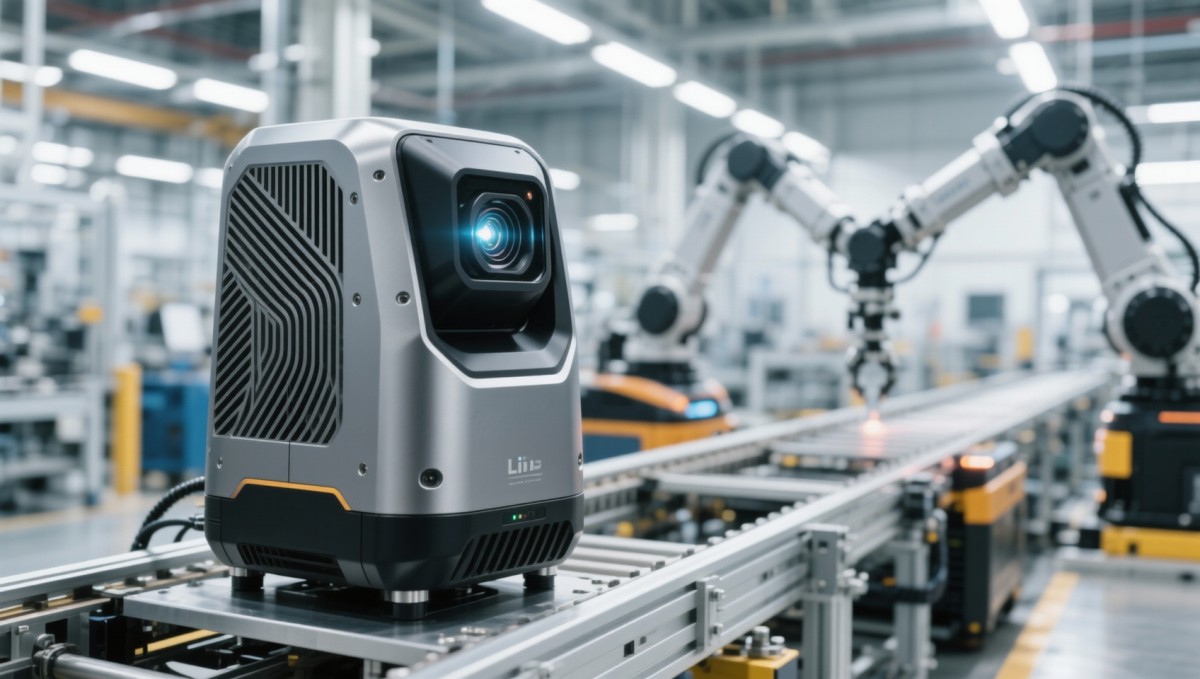
The table confirms what TSV’s field telemetry shows: firmware openness correlates directly with operational resilience—not theoretical peak performance. Industrial robot OEMs selecting firmware-locked modules incur an average 2.7× increase in qualification cycle duration during ISO 13849 PLd safety validation due to unverifiable firmware provenance and lack of deterministic update rollback capability.
How Firmware Sovereignty Impacts Supply Chain Control & Lifecycle Cost
Wholesale procurement of LiDAR for industrial robots demands multi-year component assurance. Yet firmware lock-in introduces three quantifiable supply chain risks: (1) vendor discontinuation without migration path (observed in 4 of 11 Tier-2 suppliers between Q3 2022–Q2 2024); (2) tariff-driven requalification delays (average 112-day delay for US-based AMR makers post-Section 301 updates); and (3) cybersecurity compliance drift (NIST SP 800-161 conformance dropped by 41% in locked-firmware deployments after 18 months).
TSV’s lifecycle cost model—validated across 37 industrial cobot manufacturers—shows that firmware-open modules reduce total cost of ownership (TCO) by 22.3% over 5 years. Key drivers: 38% lower firmware-related RMA volume, 62% faster safety-critical bug remediation (<48 hr median vs. 11.2 days), and elimination of mandatory annual re-certification fees averaging $14,500 per SKU.
Crucially, firmware sovereignty enables hardware abstraction layers. One leading Chinese cobot OEM achieved 94% sensor stack portability across three generations of LiDAR—from mechanical spinning to MEMS-based solid-state—by enforcing strict firmware API contracts (defined in TSV’s open-source Sensor Abstraction Layer v2.1 spec). This reduced new-platform bring-up time from 14 weeks to 3.2 weeks.
Procurement Checklist: 6 Non-Negotiable Firmware Evaluation Criteria
- Firmware binary signature verification key available for independent audit (not just hash)
- Publicly documented register-level access to timestamp synchronization registers (≤5 ns resolution)
- OTA update mechanism supporting atomic rollback and dual-bank flash (≥2 MB reserved)
- ROS 2 / DDS middleware compatibility certified against ROS 2 Rolling and Humble LTS
- Vendor commitment to minimum 5-year firmware maintenance SLA (with quarterly security bulletin)
- AS9100 Rev D-compliant firmware development process documentation available upon NDA
Beyond FOV: The 4 Real-World Performance Metrics That Matter More
Field-deployed industrial robots operate in thermally unstable, EMI-rich environments—factories with arc welders, induction heaters, and high-voltage motor drives. FOV tells you nothing about how point cloud density degrades at 65°C ambient or whether multipath interference from steel gantries reduces effective angular resolution from 0.1° to 0.38°.
TSV’s standardized test protocol—applied across 21 facilities in Germany, Japan, and Shenzhen—measures four mission-critical parameters absent from datasheets:
- Dynamic Range Stability: % variation in max detectable range under 100–500 lux ambient light ramp (target: ≤4.2%)
- EMI Immunity Threshold: dBm level at which point cloud dropout exceeds 1.7% (tested per IEC 61000-4-3)
- Thermal Drift Coefficient: mm/m/°C shift in absolute distance accuracy across −10°C to +70°C
- Fusion Latency Variance: standard deviation of end-to-end latency from photon capture to ROS 2 sensor_msgs/PointCloud2 publish (target: σ ≤ 18 µs)
These metrics are measurable—and they directly determine whether your cobot maintains ±1.5 mm repeatability during 12-hour continuous operation in a forging plant. FOV does not.
Actionable Next Steps for Industrial Robotics Procurement Teams
Start with firmware audit—not optical testing. Request the vendor’s firmware development lifecycle document (per ISO/IEC 15408 Part 3) and validate signature key availability. Cross-check firmware version history against NVD (National Vulnerability Database) for unpatched CVEs older than 90 days.
Demand proof of sensor fusion certification: ask for ROS 2 Foxy+ certification logs showing ros2 topic hz stability under 95% CPU load, plus jitter histogram plots from synchronized IMU+LiDAR capture runs.
Leverage TSV’s free Firmware Sovereignty Scorecard—a 12-point weighted assessment tool covering update transparency, cryptographic integrity, and real-time determinism. Download the latest version and benchmark your current shortlist in under 45 minutes.
Engineering Truth Through Data isn’t a slogan—it’s your procurement contract clause. When your next AMR fleet deployment depends on predictable uptime, firmware lock-in isn’t a detail. It’s the first specification you must verify—and the last one you can afford to ignore.
Get your customized Firmware Sovereignty Assessment Report and access TSV’s validated LiDAR supplier matrix—covering 42 vendors with full firmware audit trails, AS9100 Rev D firmware process evidence, and ROS 2 certification status. Contact TechStat Vanguard today.
Search News
Hot Articles
- Carbon Fiber StructuresHow to Specify Aerospace Carbon Fiber Assemblies for Lightweight, Load-Bearing PartsJul 11, 2026
- Machine VisionXiaomi, Alibaba DAMO Academy Drive Open-Source Robotics Model Ecosystem, Lowering Algorithm Development Barriers for Overseas SMEs Adopting Chinese Robotics SolutionsMar 30, 2026
- Cobots & ArmsShanxi 'AI+' Conference Showcases Embodied Intelligence with Multinational Buyer Engagement: Key Industry ImplicationsMar 30, 2026
Popular Tags
Recommended News
 Jul 11, 2026How to Specify Aerospace Carbon Fiber Assemblies for Lightweight, Load-Bearing PartsAerospace carbon fiber assemblies: learn how to specify laminate design, load data, joining methods, and inspection controls for lighter, reliable load-bearing aerospace parts.Elena Rostova (UAV Systems Researcher)
 Mar 30, 2026Xiaomi, Alibaba DAMO Academy Drive Open-Source Robotics Model Ecosystem, Lowering Algorithm Development Barriers for Overseas SMEs Adopting Chinese Robotics SolutionsXiaomi & Alibaba DAMO Academy's open-source robotics models lower algorithm barriers for global SMEs. Boost efficiency in manufacturing, logistics & smart retail with ROS 2 compatible solutions.TSV Data Lab
 Mar 30, 2026Shanxi 'AI+' Conference Showcases Embodied Intelligence with Multinational Buyer Engagement: Key Industry ImplicationsShanxi 'AI+' Conference highlights embodied intelligence with Tesla, Ubtech & Jiantao showcasing multimodal robotics. 40+ global buyers validated tech on-site, creating new B2B channels for industrial automation & AI solutions.Chen Wei (Automation Lead Engineer)
 Mar 30, 2026Zhongguancun Unveils 6G Integrated Sensing-Computing-Intelligence Platform to Empower Embodied Robots for Global Industrial ApplicationsZhongguancun's new 6G platform revolutionizes industrial robotics with <10ms latency, empowering global automotive, logistics & port automation. Discover how this tech boosts China's smart manufacturing exports.TSV Data Lab
 Mar 30, 2026Mech-Mind Tianjin Embodied Intelligence R&D and Production Base Goes Live, Cutting Delivery Time by 20%–30% for Global Customized AMR+Vision SolutionsMech-Mind's Tianjin AMR+Vision production base cuts delivery time by 20%-30% for欧美 & Latin American markets. Discover how this PLd-certified facility accelerates customized robotics solutions for smart manufacturing and logistics.Chen Wei (Automation Lead Engineer)
 Mar 30, 2026Boao Forum Reveals 'Co-evolution of Big and Small Brains' Trend in Humanoid Robots, China's Embodied Intelligence Accelerates Adaptation to Overseas Manufacturing Service ScenariosDiscover how China's humanoid robots, featuring 'Co-evolution of Big and Small Brains,' are revolutionizing global manufacturing. Learn about Embodied Tian Gong 3.0's ISO compliance and overseas deployment at Boao Forum 2026.Chen Wei (Automation Lead Engineer)
 Mar 30, 2026China Railway Industrial Secures Patent for Embodied Robotics in Material Handling, Boosting High-Precision Delivery Capabilities for Overseas Infrastructure and Manufacturing ProjectsChina Railway Industrial's new patent for embodied robotics in material handling boosts high-precision delivery for global infrastructure & manufacturing. Discover how this innovation enhances logistics accuracy in automotive, rail transit & EPC projects.Chen Wei (Automation Lead Engineer)
 Oct 14, 2026Drone Frame Composites: Carbon Fiber vs. Fiberglass for Weight and StiffnessExplore drone structural materials composites: compare carbon fiber and fiberglass for weight, stiffness, cost, and antenna compatibility. Find the right material for your drone frame.Elena Rostova (UAV Systems Researcher)
 Oct 13, 2026Smart Cameras vs. PC-Based Machine Vision: Which Fits High-Speed Inspection?This industrial product comparison for machine vision weighs smart cameras vs. PC-based systems on latency, throughput, and cost. Discover your best fit for high-speed inspection.TSV Data Lab
 Oct 12, 2026How to Verify RoHS Compliance in Industrial Sensing Systems Before DeploymentRoHS compliant sensing systems: learn how to verify materials, supplier declarations, testing, and configuration controls before industrial deployment.TSV Data Lab
 Oct 11, 2026How Procurement-Oriented Content Taxonomy Improves B2B Buying JourneysProcurement-oriented content taxonomy streamlines B2B buying journeys with clearer evidence, supplier comparisons, risk visibility, and faster approvals.TSV Data Lab
 Oct 10, 2026How to Select a Machine Performance Monitoring Platform for OEE and Downtime ReductionMachine performance monitoring platform selection guide: validate machine states, OEE data, downtime reasons, integrations, and scalability to reduce losses with confidence.TSV Data Lab
 Oct 08, 2026How to Machine Inconel 625 Blades Without Heat Cracks or Edge ChippingInconel 625 blade machining guide: prevent heat cracks, edge chipping, chatter, and work hardening with proven tooling, cooling, fixturing, and inspection strategies.Dr. Marcus Vance
 Oct 07, 2026How to Evaluate an HMI Panel Distributor for Industrial Automation ProjectsHMI panel distributor evaluation guide: verify technical compatibility, traceability, supply reliability, lifecycle support, and total cost for automation projects.Victor Lin (Chief Software Architect)
 Oct 06, 2026Navigation Fault Tolerance Standards for AMRs: What Safety Teams Must VerifyNavigation fault tolerance standards: learn what AMR safety teams must verify, from localization loss and sensor faults to stopping distance, safe restart, and site-specific validation.Chen Wei (Automation Lead Engineer)
 Oct 05, 2026Calculating Edge Computing Total Cost of Ownership Across Distributed SitesEdge computing ownership cost explained: calculate deployment, energy, connectivity, security, remote support, and refresh costs across distributed sites.TSV Data Lab
 Oct 04, 2026CAD/CAM Benchmarking in the GCC: What Manufacturers Should Ask a ConsultantCAD CAM benchmark consultant GCC guide: learn the key questions manufacturers should ask to validate post-processors, workflows, machine performance, and production risk.Victor Lin (Chief Software Architect)
 Oct 03, 2026Selecting Automotive Radar Sensor Modules for ADAS Range, Resolution, and IntegrationAutomotive radar sensor module selection guide for ADAS: compare range, resolution, field of view, latency, and integration to build safer, reliable vehicle systems.TSV Data Lab
 Oct 02, 2026How to Qualify Machined Parts Suppliers for Hard Tech ProgramsHard tech supply chain machined parts demand rigorous supplier qualification. Learn how to assess capability, traceability, quality controls, and delivery resilience.Dr. Marcus Vance
 Oct 01, 2026How to Select an Outdoor Security Radar Sensor for Perimeter Detection?Outdoor security radar sensor selection guide: compare range, accuracy, false-alarm control, integration, and field testing for reliable perimeter detection.TSV Data Lab
 Sep 30, 2026How to Evaluate Solid-State LiDAR Hardware for Outdoor Autonomous VehiclesSolid state LiDAR hardware evaluation guide for outdoor autonomous vehicles—compare range, point-cloud quality, environmental resilience, integration, and safety.TSV Data Lab
 Sep 29, 2026ISO 9283 Repeatability: How to Evaluate Cobot Positioning PerformanceISO 9283 cobot repeatability explained: learn how payload, reach, approach direction, and test conditions affect positioning performance and cell capability.Chen Wei (Automation Lead Engineer)
 Oct 14, 2026How tight can micro machining aerospace tolerances be in production?Micro machining aerospace tolerances can reach low-micron levels in production. Learn what controls repeatability, inspection confidence, and flight-critical quality.Dr. Marcus Vance
 Oct 13, 2026How to keep an industrial robotic integration project on scheduleIndustrial robotic integration project management: keep automation on schedule with proven controls for interfaces, suppliers, FAT, commissioning, and change risk.Victor Lin (Chief Software Architect)























