
Solid state LiDAR manufacturer China options are no longer alike
Publication Date
author
Solid state LiDAR manufacturer China choices now vary far beyond price and branding. For engineers, buyers, and decision-makers comparing suppliers, the real differences lie in point cloud density, interference resistance, integration with edge AI, and long-term reliability. This article examines how solid state lidar manufacturer china options compare alongside trends in mmwave radar manufacturer capabilities, industrial iot gateway factory support, and broader sensor sourcing decisions.
For B2B sourcing teams, the practical question is no longer who can ship a sensor module at the lowest unit price. The better question is which supplier can support a stable system over 12 to 36 months of deployment, provide traceable engineering data, and reduce integration risk across vehicles, robots, perimeter security, and smart infrastructure programs.
That shift matters because the sensing stack is becoming more interconnected. A LiDAR unit does not work in isolation. In most projects, it must communicate with a controller, coexist with cameras, synchronize with radar, and pass data through an industrial gateway with predictable latency. Small specification gaps can turn into major field failures when temperature, vibration, dust, or electromagnetic interference increase.
From a procurement perspective, the market in China now includes a wide range of suppliers: component-focused manufacturers, full-stack solution providers, module integrators, and export-oriented OEM/ODM partners. Their differences are measurable. Buyers should compare not only cost and lead time, but also optical architecture, firmware maturity, interface support, test coverage, and after-sales response windows.
Why solid-state LiDAR sourcing in China now requires a deeper benchmark
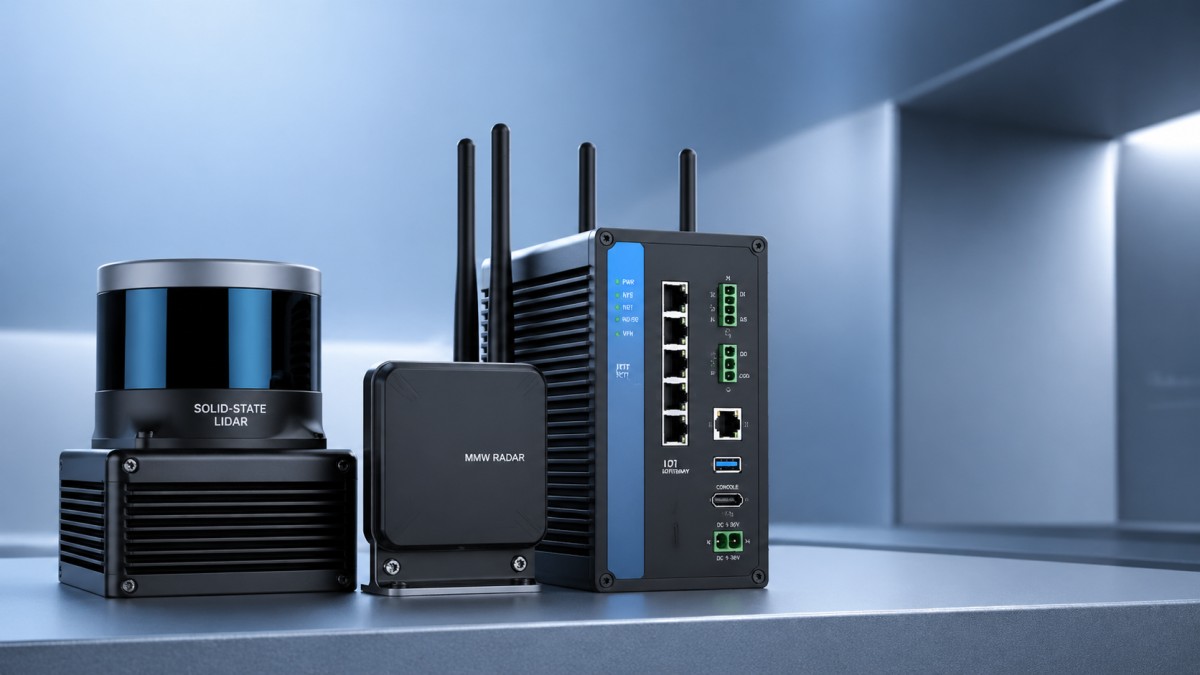
A decade ago, many buyers treated LiDAR vendors as largely interchangeable if range and nominal resolution looked similar on a datasheet. That is no longer realistic. Today, a solid state lidar manufacturer China supplier may specialize in short-range navigation, high-density mapping, roadside perception, or UAV payload optimization. The engineering priorities differ sharply across those use cases.
For example, an AMR project operating at 1.2 to 2.0 m/s indoors may prioritize a stable refresh rate, compact size, and low-power operation below 15 W. A roadside traffic system may instead require better sunlight tolerance, stronger weather sealing, and multi-target tracking at 100 m or more. If the buyer only compares range claims, the sourcing decision will be incomplete.
Another key change is manufacturing maturity. Some suppliers excel in optics and emitter design but rely on outsourced calibration. Others own more of the process chain, including board design, firmware adaptation, burn-in testing, and interface validation. That difference can affect delivery consistency, field replacement rates, and debugging speed during the first 90 days after installation.
TSV’s data-oriented approach is especially relevant here: buyers need traceable parameters, not marketing adjectives. In practice, engineers should ask how point cloud density changes at 10 m, 30 m, and 50 m, what the false-positive rate looks like in rain or reflective environments, and how the sensor behaves when multiple LiDAR units operate within the same zone.
The most meaningful differentiation factors
When comparing suppliers, four dimensions usually separate a capable manufacturer from a catalog trader. First is sensing performance under real-world conditions, not just lab conditions. Second is integration depth, including SDK support, Ethernet/CAN/UART options, and timestamp synchronization. Third is manufacturing consistency, reflected in calibration repeatability and incoming quality control. Fourth is support responsiveness during validation and deployment.
- Performance stability across temperature bands such as -20°C to 60°C or wider industrial ranges.
- Interference resistance when 2 to 10 sensors operate in overlapping fields of view.
- Data interface readiness for ROS, edge compute modules, and industrial PLC environments.
- Service discipline, including sample lead time, firmware revision control, and failure analysis turnaround.
The table below shows how typical supplier profiles differ in a practical sourcing process. It is not a ranking, but a decision framework for separating business models and engineering capability levels.
The main conclusion is simple: if your project includes algorithm tuning, functional safety review, or multi-sensor fusion, a supplier with direct engineering ownership usually reduces risk. If your project is a lower-complexity rollout with clear reference designs, an integrator or exporter may still be suitable, but only after interface and reliability checks are verified.
Key parameters engineers and procurement teams should compare
The most common sourcing mistake is overvaluing a single headline metric, usually maximum detection range. In most commercial deployments, range is only one variable. Detection consistency, angular resolution, frame rate, blind zone performance, and anti-interference behavior often matter more than a range claim measured on an ideal target with favorable reflectivity.
A practical review should include at least 8 to 10 measurable items. For navigation robots, dense near-field data from 0.2 m to 20 m may be more useful than sparse long-range returns. For low-speed autonomous vehicles, the balance between horizontal field of view and refresh rate is often critical. For infrastructure scanning, signal stability in bright daylight and dust exposure becomes more important.
Procurement teams should also ask how values are tested. Was the target reflectivity 10%, 30%, or 80%? Was the ambient temperature stable, or did it vary across a -10°C to 50°C cycle? Was the ingress rating independently validated, or only claimed at enclosure level? This testing context can materially change interpretation of the same nominal parameter.
Core LiDAR metrics worth checking
The following table can be used as a baseline checklist during technical review meetings, RFQ preparation, or sample evaluation. It focuses on practical metrics rather than brochure language.
This comparison highlights a broader point: two sensors that appear similar in a quotation can behave very differently once exposed to reflective floors, metal shelving, road spray, or strong sunlight. That is why engineering teams should request sample logs, test conditions, and protocol documents before committing to a large-volume order.
A 5-point technical review process
- Define the target scene: indoor, outdoor, mixed weather, moving platform, or static infrastructure.
- Set mandatory thresholds: detection zone, update rate, interface, power budget, and operating temperature.
- Request sample data at 2 to 3 distances and at least 2 reflectivity conditions.
- Run coexistence tests with camera, radar, and gateway hardware.
- Review failure handling, firmware update method, and replacement SLA before PO approval.
For many buyers, this process shortens downstream debugging time by several weeks. It also prevents the common issue where an attractive unit price is offset by hidden integration costs, additional middleware work, or repeated field recalibration.
How LiDAR compares with mmWave radar and industrial IoT gateway support
A strong solid state lidar manufacturer China supplier should not be evaluated in isolation. In serious projects, LiDAR sits inside a larger perception and data architecture. That is why buyers increasingly compare LiDAR options alongside mmwave radar manufacturer capabilities and industrial iot gateway factory support. The goal is not to replace one with another, but to confirm the system can work as a coordinated stack.
LiDAR is highly valuable for geometric detail and object contour extraction. mmWave radar performs well in fog, dust, rain, and low-visibility conditions where optical sensing may degrade. Industrial IoT gateways then move, preprocess, timestamp, or route sensor data to edge computers, cloud dashboards, or plant networks. Weakness in any one layer can undermine the total solution.
For example, a yard logistics deployment may use LiDAR for docking precision within 0.1 to 0.3 m, radar for target tracking in rain, and a gateway for protocol conversion between Ethernet sensors and MQTT or Modbus systems. If the gateway introduces unstable latency above a few milliseconds in a time-sensitive workflow, sensor fusion quality can deteriorate even when the sensors themselves perform well.
This is where sourcing discipline matters. Some suppliers understand only their module. Others can support clock synchronization, data packet formatting, and edge-side filtering. For engineering teams deploying 50, 200, or 500 endpoints, the second type of partner usually brings lower lifecycle cost and fewer interoperability issues.
Functional comparison across the sensing stack
The table below outlines where each technology adds value and what buyers should verify before system integration begins.
The key takeaway is that procurement teams should plan for stack compatibility, not just component availability. A lower-cost LiDAR unit can still be the wrong choice if it forces gateway replacement, custom middleware development, or repeated radar alignment work during commissioning.
When multi-sensor sourcing makes more sense
- Outdoor mobile platforms that face rain, dust, or glare for more than 20% of operating time.
- Industrial yards where metal surfaces and long aisles create optical reflection challenges.
- Edge AI deployments that need local filtering before sending data over bandwidth-limited links.
- Infrastructure projects with 24/7 duty cycles and low tolerance for false alarms.
In these scenarios, the best supplier is often the one willing to discuss interface maps, packet structures, and validation plans rather than only unit pricing. That is the difference between buying a component and building a usable sensing system.
Practical sourcing workflow, risk control, and supplier qualification
A disciplined sourcing workflow can prevent costly mistakes, especially when overseas buyers are evaluating multiple China-based manufacturers remotely. In most hard-tech programs, qualification should progress through 4 stages: requirement definition, sample verification, pilot deployment, and volume release. Skipping any stage raises the chance of mismatch between datasheet expectations and field behavior.
The requirement definition stage should translate the use case into measurable thresholds. Instead of requesting a “high-performance sensor,” buyers should specify detection distance bands, acceptable false alarm tolerance, operating temperature, enclosure demands, and target interface protocols. Even a 6-item specification sheet is better than a broad and ambiguous RFQ.
Sample verification should ideally last 2 to 6 weeks depending on system complexity. During this phase, teams should collect packet logs, thermal data, installation notes, and firmware behavior under stress. A pilot deployment may then cover 5 to 20 units before volume release. This helps identify connector fatigue, power instability, or software revision issues that a single bench test may miss.
Supplier qualification also needs a service lens. Ask who handles root-cause analysis, what the response time is for critical failures, whether replacement stock exists, and how firmware changes are documented. A technically acceptable product with weak support can still damage commissioning schedules and downstream customer confidence.
A procurement checklist for risk reduction
- Request test conditions behind every key metric, not just the metric value itself.
- Confirm standard sample lead time, which is often 2 to 4 weeks for configured industrial modules.
- Review protocol documents, SDK versions, and supported operating systems before integration starts.
- Check whether packaging, labeling, and export documentation fit your destination market requirements.
- Ask about change notification procedures so silent component substitution does not disrupt validation results.
Common mistakes in supplier selection
One frequent mistake is treating prototype performance as proof of production stability. A supplier may deliver 2 excellent samples, yet struggle to maintain calibration consistency across the next 200 units. Another mistake is ignoring integration cost. Saving 8% on hardware can be meaningless if software adaptation extends the project by 6 weeks.
Buyers also underestimate the importance of documentation. Clear wiring diagrams, protocol references, diagnostic messages, and firmware logs can reduce commissioning friction dramatically. For global engineering teams, documentation quality is often a stronger predictor of successful rollout than polished sales material.
Finally, qualification should consider long-term maintainability. If the product roadmap is unclear, if firmware ownership is fragmented, or if spare units cannot be guaranteed for 12 to 24 months, the sourcing decision may create hidden replacement risk later in the asset lifecycle.
FAQ for buyers evaluating China sensor manufacturers
How should I shortlist a solid state lidar manufacturer China supplier?
Start with 4 filters: application fit, interface compatibility, environmental reliability, and support responsiveness. Then request sample data and test logs, not just a datasheet. If your project depends on perception accuracy, ask for evidence at multiple distances and at least 2 real-world scene conditions.
What lead time is typical for samples and pilot orders?
For standard configurations, sample lead time is often around 2 to 4 weeks. Pilot orders may take 4 to 8 weeks depending on calibration, connector options, enclosure customization, and export packing requirements. Custom firmware or protocol adaptation can extend this timeline, so it should be discussed early.
Is LiDAR enough without radar or gateway planning?
In limited indoor settings, LiDAR alone may be enough. In outdoor, mixed-weather, or edge-connected deployments, it is often safer to evaluate LiDAR alongside a mmwave radar manufacturer and an industrial iot gateway factory. This approach improves sensing redundancy, data routing reliability, and deployment resilience.
Which metrics matter most for operators and maintenance teams?
Operators usually care about false alarms, downtime, and replacement simplicity more than headline range. Maintenance teams should pay attention to connector durability, housing sealing, temperature behavior, firmware update method, and diagnostic accessibility. These factors influence service intervals and total cost over the first 12 to 24 months.
The China supply landscape for sensing hardware is no longer uniform. Different suppliers now represent different engineering models, integration depth, and lifecycle risk profiles. For that reason, the right sourcing decision depends on measured performance, stack compatibility, documentation quality, and service discipline rather than price alone.
For R&D engineers, procurement leaders, and business decision-makers, the smartest path is to benchmark LiDAR, radar, and gateway options together and translate application needs into clear technical thresholds. If you are building a more reliable sensor sourcing framework or need support comparing manufacturers against real deployment criteria, contact us to discuss your application, request a tailored evaluation checklist, or explore a more data-driven supplier screening process.
Search News
Hot Articles
- Carbon Fiber StructuresHow to Specify Aerospace Carbon Fiber Assemblies for Lightweight, Load-Bearing PartsJul 11, 2026
- Machine VisionXiaomi, Alibaba DAMO Academy Drive Open-Source Robotics Model Ecosystem, Lowering Algorithm Development Barriers for Overseas SMEs Adopting Chinese Robotics SolutionsMar 30, 2026
- Cobots & ArmsShanxi 'AI+' Conference Showcases Embodied Intelligence with Multinational Buyer Engagement: Key Industry ImplicationsMar 30, 2026
Popular Tags
Recommended News
 Jul 11, 2026How to Specify Aerospace Carbon Fiber Assemblies for Lightweight, Load-Bearing PartsAerospace carbon fiber assemblies: learn how to specify laminate design, load data, joining methods, and inspection controls for lighter, reliable load-bearing aerospace parts.Elena Rostova (UAV Systems Researcher)
 Mar 30, 2026Xiaomi, Alibaba DAMO Academy Drive Open-Source Robotics Model Ecosystem, Lowering Algorithm Development Barriers for Overseas SMEs Adopting Chinese Robotics SolutionsXiaomi & Alibaba DAMO Academy's open-source robotics models lower algorithm barriers for global SMEs. Boost efficiency in manufacturing, logistics & smart retail with ROS 2 compatible solutions.TSV Data Lab
 Mar 30, 2026Shanxi 'AI+' Conference Showcases Embodied Intelligence with Multinational Buyer Engagement: Key Industry ImplicationsShanxi 'AI+' Conference highlights embodied intelligence with Tesla, Ubtech & Jiantao showcasing multimodal robotics. 40+ global buyers validated tech on-site, creating new B2B channels for industrial automation & AI solutions.Chen Wei (Automation Lead Engineer)
 Mar 30, 2026Zhongguancun Unveils 6G Integrated Sensing-Computing-Intelligence Platform to Empower Embodied Robots for Global Industrial ApplicationsZhongguancun's new 6G platform revolutionizes industrial robotics with <10ms latency, empowering global automotive, logistics & port automation. Discover how this tech boosts China's smart manufacturing exports.TSV Data Lab
 Mar 30, 2026Mech-Mind Tianjin Embodied Intelligence R&D and Production Base Goes Live, Cutting Delivery Time by 20%–30% for Global Customized AMR+Vision SolutionsMech-Mind's Tianjin AMR+Vision production base cuts delivery time by 20%-30% for欧美 & Latin American markets. Discover how this PLd-certified facility accelerates customized robotics solutions for smart manufacturing and logistics.Chen Wei (Automation Lead Engineer)
 Mar 30, 2026Boao Forum Reveals 'Co-evolution of Big and Small Brains' Trend in Humanoid Robots, China's Embodied Intelligence Accelerates Adaptation to Overseas Manufacturing Service ScenariosDiscover how China's humanoid robots, featuring 'Co-evolution of Big and Small Brains,' are revolutionizing global manufacturing. Learn about Embodied Tian Gong 3.0's ISO compliance and overseas deployment at Boao Forum 2026.Chen Wei (Automation Lead Engineer)
 Mar 30, 2026China Railway Industrial Secures Patent for Embodied Robotics in Material Handling, Boosting High-Precision Delivery Capabilities for Overseas Infrastructure and Manufacturing ProjectsChina Railway Industrial's new patent for embodied robotics in material handling boosts high-precision delivery for global infrastructure & manufacturing. Discover how this innovation enhances logistics accuracy in automotive, rail transit & EPC projects.Chen Wei (Automation Lead Engineer)
 Oct 25, 2026Hesai Leads Global ADAS Main Lidar Shipments in Yole’s 2026 ReportHesai led global ADAS main lidar shipments with a 43% share in 2025, according to Yole’s 2026 report. Explore what this ranking reveals about its automotive market position.TSV Data Lab
 Oct 25, 2026Choosing an Aerospace Materials Manufacturer: Quality and Traceability ChecksChoosing an aerospace materials manufacturer? Learn how to verify certifications, test reports, and lot traceability to qualify suppliers confidently and reduce costly sourcing risks.Dr. Marcus Vance
 Oct 24, 2026Guotai Haitong: Global Entry-Level 3D Printer Shipments Rose 39% in Q1 2026Entry-level 3D printer shipments rose 39% in Q1 2026, Guotai Haitong reports. Explore how AI, multicolor printing and print farms are shaping market growth.Dr. Marcus Vance
 Oct 24, 2026Choosing an Industrial Vision Inspection Supplier: Acceptance Tests That MatterChoose an industrial vision inspection supplier with confidence. Discover acceptance tests for defect detection, false rejects, production speed, and reliable part rejection before you buy.TSV Data Lab
 Oct 23, 2026US Navy Raises Gecko Robotics Contract Ceiling to $300M for Robotic Fleet MaintenanceUS Navy raises Gecko Robotics’ contract ceiling to $300M for Pacific Fleet robotic inspections. Explore potential opportunities for maintenance suppliers and key procurement considerations.Chen Wei (Automation Lead Engineer)
 Oct 23, 2026Choosing Industrial Sensing Systems for Global Plants: Protocol CompatibilityCompare industrial sensing systems international buyers can trust. Explore protocol compatibility, reduce integration risks, and select proven configurations for reliable global plant deployments.TSV Data Lab
 Oct 22, 2026KUKA Showcases Physical AI and iiQKA.AI Vision at NVIDIA GTC BerlinExplore KUKA’s Physical AI showcase at NVIDIA GTC Berlin and discover how iiQKA.AI Vision aims to simplify robotic vision integration and improve 2D and 3D scene recognition.TSV Data Lab
 Oct 22, 2026Robotic Machining of Advanced Composites: What Tolerances Are Achievable?Explore advanced materials machining robotics: discover what drives achievable composite tolerances and how to validate accuracy before investing in your next machining system.Dr. Marcus Vance
 Oct 21, 2026China’s Industrial Robot Exports Near RMB 10 Billion in First Nine Months of 2026China’s industrial robot exports neared RMB 10 billion in January–September 2026, with value rising faster than volume. Explore the data and what it could mean for suppliers.Chen Wei (Automation Lead Engineer)
 Oct 21, 2026Low-Latency Industrial Data Processing: Pricing and Key Cost DriversExplore industrial data latency price drivers, from edge hardware to integration and support. Learn how to compare quotes, verify performance, and avoid unnecessary costs.TSV Data Lab
 Oct 20, 2026KUKA Launches iiQKA.AI Vision to Simplify Industrial Image ProcessingKUKA iiQKA.AI Vision simplifies industrial image processing with controller-based 2D and 3D vision. Explore drag-and-drop setup for vision-guided automation.TSV Data Lab
 Oct 20, 2026Smart Industrial Edge Devices: Key Criteria for Legacy PLC IntegrationChoose smart industrial edge devices for legacy PLC integration. Discover key criteria for compatibility, data quality, security, and reliable collection without disrupting control.TSV Data Lab
 Oct 19, 2026Choosing a Radar Sensor by Application: Range, Resolution, and Field of ViewSimplify radar sensor application based product selection. Compare range, resolution, and field of view to avoid blind spots and choose with confidence. Explore the guide.TSV Data Lab
 Oct 18, 2026Comparing Material Options for Procurement: Specs, Costs, and Supply RisksExplore procurement oriented technical content on material options, specs, costs, and supply risks. Compare alternatives to cut hidden expenses and make confident sourcing decisions.Dr. Marcus Vance
 Oct 17, 20265-Axis CNC Positioning Accuracy: How to Interpret ISO 230-2 Test ResultsAssess 5 axis CNC machining positioning accuracy with ISO 230-2. Learn to interpret repeatability, reversal error, and test conditions to compare suppliers and make confident acceptance decisions.Dr. Marcus Vance
 Oct 16, 2026Choosing a Rugged Edge AI Box Supplier: Thermal Tests and Lifecycle SupportChoose a rugged edge AI box supplier with proven thermal performance and reliable lifecycle support. Discover the tests and commitments to verify before you buy.TSV Data Lab
 Oct 15, 2026R&D Cost Reduction Services: How to Evaluate Fees, Savings, and ROIEvaluate R&D cost reduction services with confidence. Compare fees, verify savings, and calculate ROI without compromising performance. Discover how to choose a provider that delivers real value.Chen Wei (Automation Lead Engineer)























