Radar sensor for traffic monitoring: accuracy drops faster than expected
Publication Date
author
Radar sensors are widely used in traffic monitoring because they can detect motion in low light and operate through conditions that challenge optical systems. But in real deployments, accuracy often degrades faster than teams expect. The main reason is not that radar is inherently unreliable. It is that field conditions such as rain clutter, roadside multipath reflection, lane occlusion, mixed vehicle types, and poorly tuned edge processing can push performance away from lab benchmarks very quickly. For engineers, operators, procurement teams, and smart city decision-makers, the practical question is not whether radar works. It is how fast accuracy drops, why it happens, how to measure it correctly, and when radar should be paired with lidar, cameras, or edge AI to maintain dependable traffic monitoring performance.
Why does radar traffic monitoring accuracy drop so quickly in the real world?
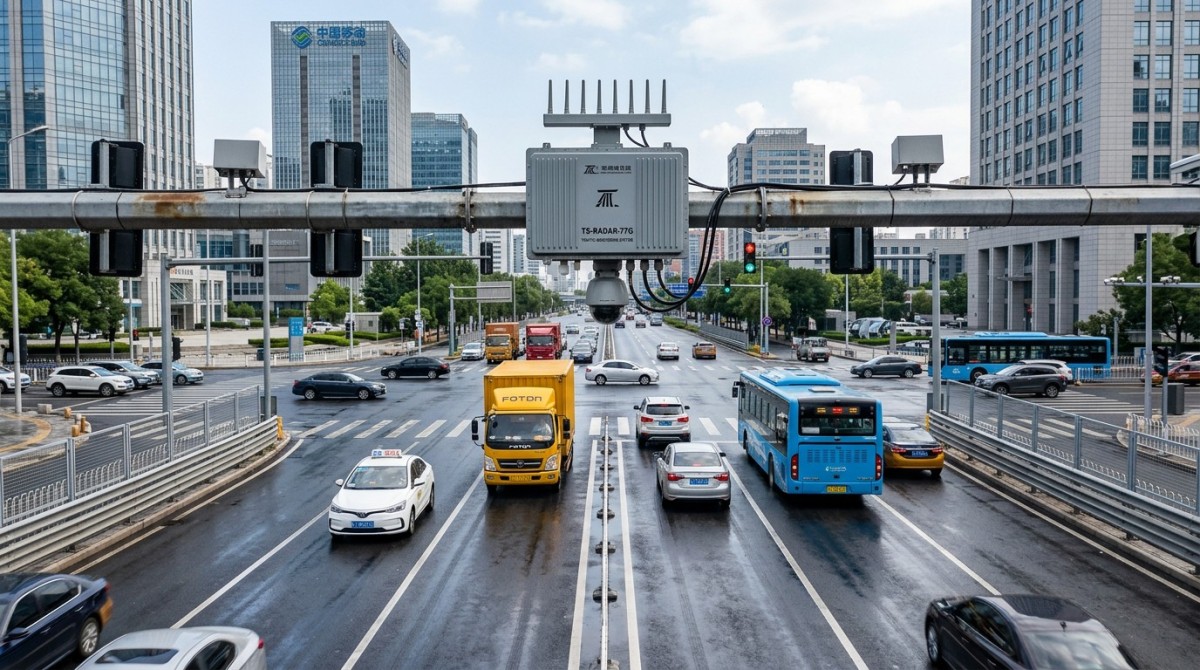
The short answer is that traffic radar performance is highly environment-dependent, while many buyers first see performance claims generated under controlled conditions. A radar sensor may perform well in a clean validation setup, yet lose accuracy after deployment because the operational environment is far more complex than the test environment.
Several failure drivers appear repeatedly in field projects:
- Multipath reflection: Signals bounce off guardrails, trucks, overhead signs, tunnel walls, wet pavement, and nearby buildings. This can create ghost targets or distort range and speed readings.
- Weather noise: Heavy rain, spray, snow, and fog may not blind radar in the same way they affect cameras, but they still introduce clutter and reduce target separation quality.
- Dense urban traffic: Close vehicle spacing, lane changes, motorcycles between cars, buses near reflective surfaces, and stop-and-go flow increase target association errors.
- Installation angle and height issues: Small mounting deviations can materially affect coverage overlap, blind zones, and classification performance.
- Edge processing limitations: If object tracking, filtering, and classification models are not tuned for the site, false positives and missed detections rise quickly.
- Long-term drift: Mechanical vibration, thermal cycling, dirt accumulation on housing, firmware changes, and gradual scene changes can reduce consistency over time.
This is why a radar sensor for traffic monitoring should never be evaluated by headline detection range alone. Real value comes from stable performance across months of operation, not a short pilot under favorable conditions.
What do engineers and operators need to measure instead of relying on headline accuracy claims?
If your goal is dependable traffic monitoring, you need a field-oriented measurement framework. A single “accuracy” percentage is too broad to support engineering or procurement decisions. Teams should break performance into operational metrics that reflect actual traffic management outcomes.
The most useful evaluation dimensions include:
- False positive rate: How often does the sensor report a vehicle, object, or event that is not actually present?
- False negative rate: How often does it miss real vehicles, especially motorcycles, stopped vehicles, or partially occluded targets?
- Tracking persistence: Can the radar maintain a stable track ID through congestion, lane merging, or intersections?
- Classification reliability: How well does it separate cars, trucks, buses, bicycles, and pedestrians if that function is required?
- Lane-level assignment accuracy: Can it correctly place vehicles in the correct lane under dense traffic?
- Time-to-degradation: After installation, how long does performance remain inside acceptable thresholds without retuning?
- Performance by weather and time band: Day, night, rain, peak traffic, and low-speed congestion should be measured separately.
For advanced users, radar false positive rate analysis is especially important. In live traffic systems, false alarms can trigger unnecessary operator review, distort traffic counts, corrupt adaptive signal control logic, and reduce trust in the monitoring platform. A radar system with slightly lower nominal detection range but far better false positive control may deliver higher operational value.
Where do radar systems fail most often in traffic monitoring deployments?
Failure usually does not happen evenly across all scenarios. It clusters around difficult scenes. Understanding those scenes helps both system designers and buyers avoid expensive mistakes.
Common high-risk deployment conditions include:
- Urban canyons: Tall buildings create strong reflection paths that confuse target localization.
- Intersections with mixed road users: Pedestrians, bicycles, scooters, turning vehicles, and buses create target overlap and changing radar cross-sections.
- Highway ramps and merges: Fast relative movement and rapid target crossing can challenge tracking logic.
- Wet road surfaces: Reflections from water films can worsen clutter conditions.
- Bridges, tunnels, and steel-rich infrastructure: Metallic surroundings elevate multipath effects.
- Roadside installations with vibration: Pole sway or structural vibration can degrade calibration quality.
These scenarios matter because many procurement reviews still compare products using simplified benchmark tables. That approach can miss the operational truth. A sensor that looks strong in broad technical specifications may perform poorly in a reflective city corridor or under heavy congestion if the tracking stack is not robust enough.
Is radar alone enough, or is sensor fusion with lidar and camera the better strategy?
In many smart traffic projects, radar alone is not the best long-term answer. Radar is strong at measuring speed, motion, and detection in low-visibility conditions. But it has limits in fine classification, object contour detail, and scene interpretation. That is why sensor fusion lidar and camera strategies increasingly matter in modern ITS and smart city architecture.
Each modality contributes different strengths:
- Radar: Strong in velocity measurement, all-weather resilience, and motion detection.
- Camera: Strong in semantic understanding, lane context, plate recognition, and visual verification.
- Lidar: Strong in 3D geometry, spatial separation, and high-resolution object contouring.
Fusion can improve traffic monitoring in several ways:
- Reduce false positives by cross-validating radar tracks with visual or 3D data.
- Improve stopped-vehicle and vulnerable road user detection.
- Support better classification in dense or mixed traffic.
- Increase confidence scoring for automated event detection.
- Make edge computing decisions more reliable by combining complementary data streams.
That said, fusion is not automatically better if system architecture is weak. It increases hardware cost, calibration complexity, bandwidth planning, and maintenance burden. For some use cases such as speed enforcement zones, presence detection, or highway flow counting, a well-tuned radar deployment may still be sufficient. The right question is not “single sensor or fusion” in the abstract. It is “what sensing stack matches the failure cost of this traffic scenario?”
How should buyers and decision-makers evaluate radar sensor performance before scaling deployment?
For procurement teams and enterprise decision-makers, the biggest risk is buying based on brochure specifications rather than validated field behavior. A practical evaluation process should focus on operational fit, lifecycle stability, and integration cost.
Before scaling a deployment, ask vendors for evidence in these areas:
- Site-matched validation data: Performance data from environments similar to your roads, weather, and traffic density.
- Confusion matrix and event-level metrics: Not just “detection accuracy,” but detailed missed detections, false positives, and class-level errors.
- Long-duration field results: At least several weeks or months of continuous data, not short demos.
- Edge computing requirements: CPU, memory, latency, and model update demands at the roadside or cabinet level.
- Maintenance assumptions: Recalibration frequency, firmware support, remote diagnostics, and housing durability.
- Integration readiness: Compatibility with traffic controllers, VMS, signal systems, cloud platforms, and existing ITS infrastructure.
- Failure recovery behavior: How the system flags degraded sensing, low confidence, or partial outages.
Decision-makers should also quantify the business impact of bad sensing. In traffic monitoring, errors can affect congestion analytics, incident response time, adaptive signal efficiency, enforcement quality, and citizen trust. The cheapest sensor is often not the lowest-cost system once false alarms, manual review, retuning, and underperformance are included.
What does a practical field test plan look like for radar traffic monitoring?
A useful field test should mimic real deployment complexity instead of proving ideal-case capability. This is where many pilots fail. They are too short, too clean, or too manually supervised.
A strong test plan typically includes:
- Baseline definition: Identify required use cases such as vehicle counting, speed measurement, lane occupancy, queue length, stopped vehicle detection, or wrong-way event detection.
- Ground truth method: Use trusted reference systems such as annotated video, lidar reference, loop detectors, or manually audited datasets.
- Scenario segmentation: Measure performance across day, night, rain, congestion, free flow, mixed vehicle classes, and difficult geometry.
- Degradation tracking: Compare week 1, week 4, and later periods to expose drift.
- Threshold definition: Set acceptable error margins for each KPI before the pilot starts.
- Edge latency measurement: Validate whether local processing supports timely event output.
- Maintenance logging: Record all recalibration, cleaning, retuning, and intervention events.
This approach gives both technical teams and management a clearer view of whether a radar traffic monitoring system is genuinely scalable.
When is radar still the right choice despite faster-than-expected accuracy decline?
Radar remains highly valuable when the application emphasizes motion sensing, speed capture, and operation across lighting variability. It can be an excellent choice for:
- Vehicle presence detection in challenging light conditions
- Speed measurement on highways and arterial roads
- Traffic flow monitoring where exact visual classification is less critical
- Harsh outdoor sites where camera-only systems are unreliable
- Cost-sensitive deployments that need basic detection with manageable infrastructure load
However, the system should be selected with realistic expectations. If the project demands lane-level precision in dense urban corridors, fine vehicle classification, vulnerable road user awareness, or legal-grade evidence support, radar may need help from camera or lidar.
Conclusion: the real question is not whether radar works, but how quickly it degrades in your scene
Radar sensor for traffic monitoring remains a powerful tool, but field accuracy can drop faster than expected when deployment teams underestimate weather clutter, multipath reflection, dense traffic complexity, and long-term maintenance realities. The best evaluation method is not to trust generic accuracy claims, but to inspect false positive rate analysis, scenario-specific performance, edge processing limits, and long-duration field data.
For engineers and operators, the priority is measurable stability under real traffic conditions. For procurement teams, it is proof of lifecycle performance rather than brochure metrics. For enterprise decision-makers, it is understanding whether radar alone is sufficient or whether sensor fusion lidar and camera architecture is needed to control risk. In short, radar can deliver real value in smart traffic systems, but only when its limitations are measured honestly and its deployment context is engineered with precision.
Search News
Hot Articles
- Carbon Fiber StructuresHow to Specify Aerospace Carbon Fiber Assemblies for Lightweight, Load-Bearing PartsJul 11, 2026
- Machine VisionXiaomi, Alibaba DAMO Academy Drive Open-Source Robotics Model Ecosystem, Lowering Algorithm Development Barriers for Overseas SMEs Adopting Chinese Robotics SolutionsMar 30, 2026
- Cobots & ArmsShanxi 'AI+' Conference Showcases Embodied Intelligence with Multinational Buyer Engagement: Key Industry ImplicationsMar 30, 2026
Popular Tags
Recommended News
 Jul 11, 2026How to Specify Aerospace Carbon Fiber Assemblies for Lightweight, Load-Bearing PartsAerospace carbon fiber assemblies: learn how to specify laminate design, load data, joining methods, and inspection controls for lighter, reliable load-bearing aerospace parts.Elena Rostova (UAV Systems Researcher)
 Mar 30, 2026Xiaomi, Alibaba DAMO Academy Drive Open-Source Robotics Model Ecosystem, Lowering Algorithm Development Barriers for Overseas SMEs Adopting Chinese Robotics SolutionsXiaomi & Alibaba DAMO Academy's open-source robotics models lower algorithm barriers for global SMEs. Boost efficiency in manufacturing, logistics & smart retail with ROS 2 compatible solutions.TSV Data Lab
 Mar 30, 2026Shanxi 'AI+' Conference Showcases Embodied Intelligence with Multinational Buyer Engagement: Key Industry ImplicationsShanxi 'AI+' Conference highlights embodied intelligence with Tesla, Ubtech & Jiantao showcasing multimodal robotics. 40+ global buyers validated tech on-site, creating new B2B channels for industrial automation & AI solutions.Chen Wei (Automation Lead Engineer)
 Mar 30, 2026Zhongguancun Unveils 6G Integrated Sensing-Computing-Intelligence Platform to Empower Embodied Robots for Global Industrial ApplicationsZhongguancun's new 6G platform revolutionizes industrial robotics with <10ms latency, empowering global automotive, logistics & port automation. Discover how this tech boosts China's smart manufacturing exports.TSV Data Lab
 Mar 30, 2026Mech-Mind Tianjin Embodied Intelligence R&D and Production Base Goes Live, Cutting Delivery Time by 20%–30% for Global Customized AMR+Vision SolutionsMech-Mind's Tianjin AMR+Vision production base cuts delivery time by 20%-30% for欧美 & Latin American markets. Discover how this PLd-certified facility accelerates customized robotics solutions for smart manufacturing and logistics.Chen Wei (Automation Lead Engineer)
 Mar 30, 2026Boao Forum Reveals 'Co-evolution of Big and Small Brains' Trend in Humanoid Robots, China's Embodied Intelligence Accelerates Adaptation to Overseas Manufacturing Service ScenariosDiscover how China's humanoid robots, featuring 'Co-evolution of Big and Small Brains,' are revolutionizing global manufacturing. Learn about Embodied Tian Gong 3.0's ISO compliance and overseas deployment at Boao Forum 2026.Chen Wei (Automation Lead Engineer)
 Mar 30, 2026China Railway Industrial Secures Patent for Embodied Robotics in Material Handling, Boosting High-Precision Delivery Capabilities for Overseas Infrastructure and Manufacturing ProjectsChina Railway Industrial's new patent for embodied robotics in material handling boosts high-precision delivery for global infrastructure & manufacturing. Discover how this innovation enhances logistics accuracy in automotive, rail transit & EPC projects.Chen Wei (Automation Lead Engineer)
 Oct 27, 2026GXO and Agility Robotics Expand Partnership to Accelerate US Humanoid Robot DeploymentGXO and Agility Robotics plan to expand US humanoid robot deployment with Digit 4 in early 2027. Explore warehouse automation plans, service terms and future Digit 5 upgrades.Chen Wei (Automation Lead Engineer)
 Oct 27, 2026Robotic Automation Costs: Budgeting for Equipment, Integration, and MaintenancePlan your robotics automation cost with confidence. Explore equipment, integration, and maintenance expenses, compare quotes, and build a realistic budget for better ROI.Chen Wei (Automation Lead Engineer)
 Oct 26, 2026AMAXiMAL Releases Open-Source TopMod 3D v3 With Claude AIExplore AMAXiMAL’s free, open-source TopMod 3D v3 with Claude AI assistance, topology-based modeling and plywood fabrication tools that connect complex designs to physical builds.Dr. Marcus Vance
 Oct 26, 2026Choosing a SCADA System Integrator Company: PLC Compatibility and Long-Term SupportChoose a scada system integrator company with proven PLC compatibility and reliable long-term support. Discover what to test, compare, and require before investing.Victor Lin (Chief Software Architect)
 Oct 25, 2026Hesai Leads Global ADAS Main Lidar Shipments in Yole’s 2026 ReportHesai led global ADAS main lidar shipments with a 43% share in 2025, according to Yole’s 2026 report. Explore what this ranking reveals about its automotive market position.TSV Data Lab
 Oct 25, 2026Choosing an Aerospace Materials Manufacturer: Quality and Traceability ChecksChoosing an aerospace materials manufacturer? Learn how to verify certifications, test reports, and lot traceability to qualify suppliers confidently and reduce costly sourcing risks.Dr. Marcus Vance
 Oct 24, 2026Guotai Haitong: Global Entry-Level 3D Printer Shipments Rose 39% in Q1 2026Entry-level 3D printer shipments rose 39% in Q1 2026, Guotai Haitong reports. Explore how AI, multicolor printing and print farms are shaping market growth.Dr. Marcus Vance
 Oct 24, 2026Choosing an Industrial Vision Inspection Supplier: Acceptance Tests That MatterChoose an industrial vision inspection supplier with confidence. Discover acceptance tests for defect detection, false rejects, production speed, and reliable part rejection before you buy.TSV Data Lab
 Oct 23, 2026US Navy Raises Gecko Robotics Contract Ceiling to $300M for Robotic Fleet MaintenanceUS Navy raises Gecko Robotics’ contract ceiling to $300M for Pacific Fleet robotic inspections. Explore potential opportunities for maintenance suppliers and key procurement considerations.Chen Wei (Automation Lead Engineer)
 Oct 23, 2026Choosing Industrial Sensing Systems for Global Plants: Protocol CompatibilityCompare industrial sensing systems international buyers can trust. Explore protocol compatibility, reduce integration risks, and select proven configurations for reliable global plant deployments.TSV Data Lab
 Oct 22, 2026KUKA Showcases Physical AI and iiQKA.AI Vision at NVIDIA GTC BerlinExplore KUKA’s Physical AI showcase at NVIDIA GTC Berlin and discover how iiQKA.AI Vision aims to simplify robotic vision integration and improve 2D and 3D scene recognition.TSV Data Lab
 Oct 22, 2026Robotic Machining of Advanced Composites: What Tolerances Are Achievable?Explore advanced materials machining robotics: discover what drives achievable composite tolerances and how to validate accuracy before investing in your next machining system.Dr. Marcus Vance
 Oct 21, 2026China’s Industrial Robot Exports Near RMB 10 Billion in First Nine Months of 2026China’s industrial robot exports neared RMB 10 billion in January–September 2026, with value rising faster than volume. Explore the data and what it could mean for suppliers.Chen Wei (Automation Lead Engineer)
 Oct 21, 2026Low-Latency Industrial Data Processing: Pricing and Key Cost DriversExplore industrial data latency price drivers, from edge hardware to integration and support. Learn how to compare quotes, verify performance, and avoid unnecessary costs.TSV Data Lab
 Oct 20, 2026KUKA Launches iiQKA.AI Vision to Simplify Industrial Image ProcessingKUKA iiQKA.AI Vision simplifies industrial image processing with controller-based 2D and 3D vision. Explore drag-and-drop setup for vision-guided automation.TSV Data Lab
 Oct 20, 2026Smart Industrial Edge Devices: Key Criteria for Legacy PLC IntegrationChoose smart industrial edge devices for legacy PLC integration. Discover key criteria for compatibility, data quality, security, and reliable collection without disrupting control.TSV Data Lab
 Oct 19, 2026Choosing a Radar Sensor by Application: Range, Resolution, and Field of ViewSimplify radar sensor application based product selection. Compare range, resolution, and field of view to avoid blind spots and choose with confidence. Explore the guide.TSV Data Lab