How to compare automotive radar sensor wholesale quotes
Publication Date
author
Comparing automotive radar sensor wholesale quotes is not just about finding the lowest unit price—it is about verifying engineering value, supply consistency, and risk exposure across suppliers. For procurement teams working in data-driven manufacturing environments, a disciplined quote comparison process helps separate vague sales claims from measurable technical reality, enabling faster sourcing decisions and more reliable long-term supplier selection.
Why automotive radar sensor wholesale quotes often look similar but carry very different risk
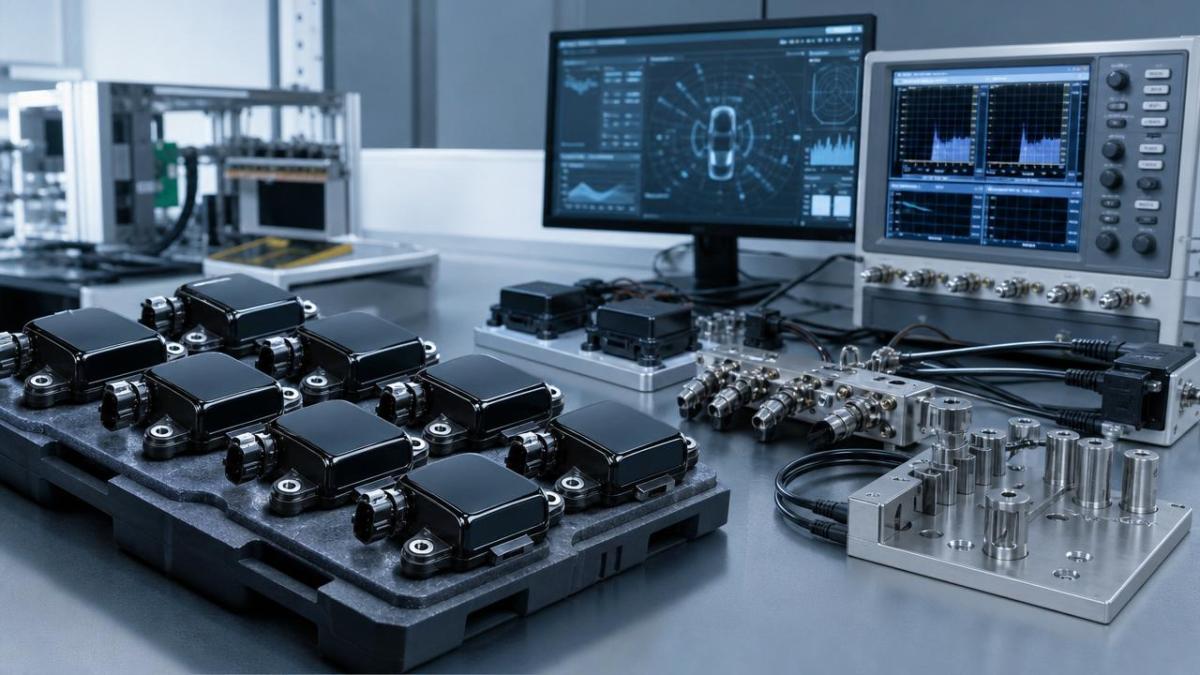
In the automotive electronics supply chain, an automotive radar sensor wholesale quotation may present the same basic format across suppliers: unit price, minimum order quantity, lead time, and payment terms. Yet two offers that appear close on paper can have very different implications for detection reliability, integration cost, PPAP readiness, and field failure exposure. Procurement teams that compare only visible price lines often miss the deeper cost drivers hidden in engineering assumptions.
This is especially true when suppliers use broad claims such as stable performance, automotive grade, or high precision without attaching test conditions, environmental limits, or interface definitions. TechStat Vanguard approaches quote evaluation from an engineering benchmark mindset: parameters do not lie, and tolerances dictate success. When buying radar sensors in volume, the real question is not who offered the cheapest number first. It is which supplier has provided the clearest, most verifiable, and least risky commercial-technical package.
For procurement personnel, this creates a practical challenge. You must align sourcing goals with engineering requirements, production planning, and quality control. A lower quote may still become the higher total-cost choice if it creates delays in validation, causes firmware compatibility issues, or requires repeated sample iterations before SOP approval.
- A quote can be commercially attractive but technically incomplete, which increases supplier clarification cycles.
- A quote can include a low sensor price but exclude connector assemblies, calibration support, or software configuration.
- A quote can promise short lead times for samples while mass production lead times remain uncertain or capacity constrained.
- A quote can claim compliance readiness while offering no clear evidence for traceability, environmental testing, or change control.
What procurement teams should compare first in an automotive radar sensor wholesale offer
Before negotiating price, procurement should normalize the quote structure. The same automotive radar sensor wholesale request should be answered using a shared comparison template. This avoids false comparisons caused by different assumptions on packaging, test scope, Incoterms, sample support, and lifecycle commitment. A well-structured RFQ matrix helps buyers compare what each supplier is actually selling, not just how they describe it.
The table below shows the first-level dimensions that should be reviewed before any supplier is shortlisted. These are useful whether the radar module is intended for ADAS, blind spot detection, parking assist, industrial vehicle safety, or edge sensing integration in broader mobility systems.
The practical insight is simple: the best automotive radar sensor wholesale quote is the one that makes fewer assumptions invisible. If a supplier is precise about technical boundaries, commercial inclusions, and validation responsibilities, procurement gains better control over total program risk.
A quick procurement screening checklist
- Check whether all suppliers quoted against the same part definition and usage scenario.
- Confirm whether unit prices change by annual volume, not just first order quantity.
- Ask if software, firmware updates, or configuration tools are included or separately billed.
- Verify whether quoted lead times apply to engineering samples, pilot lots, and serial production alike.
- Document any missing values instead of filling gaps with supplier marketing language.
How to compare technical parameters behind automotive radar sensor wholesale pricing
Many buyers receive multiple automotive radar sensor wholesale offers and discover that one vendor is 8% lower, another promises better lead time, and a third claims stronger anti-interference performance. Without a parameter-based framework, that comparison remains subjective. In radar sourcing, pricing differences are often linked to sensing architecture, packaging robustness, signal processing capability, or test coverage rather than sales margin alone.
Procurement does not need to become a radar algorithm design team, but it does need to understand which parameters directly affect application fit and which terms are too vague to support a sourcing decision. The table below can be used to challenge and standardize supplier responses.
A disciplined quote review should convert every sales adjective into a measurable question. If one supplier claims stronger stability, ask for the operating condition, tolerance band, and validation evidence. If another claims automotive readiness, ask how traceability, revision control, and production consistency are managed. This is where data-centered sourcing creates leverage.
Terms that need clarification before approval
- “Long range” should be tied to target characteristics and detection confidence.
- “Automotive grade” should be linked to process control, validation scope, and change management practice.
- “Stable supply” should be backed by capacity planning, safety stock policy, and raw material visibility.
- “Customizable” should specify what can actually be modified: enclosure, firmware, interface, or output format.
Where total cost hides in automotive radar sensor wholesale sourcing
Procurement teams under budget pressure naturally focus on quoted unit cost. However, the total landed and validated cost of an automotive radar sensor wholesale program includes much more than the base sensor price. Engineering adaptation, sample iteration, incoming inspection burden, field quality exposure, and supplier communication overhead all affect the real economics of the purchase.
The table below highlights common cost elements that should be compared alongside unit pricing. This is especially useful when one supplier appears cheaper but is vague about integration support or quality documentation.
When procurement reframes the exercise from price comparison to total-cost and risk-weighted comparison, supplier ranking often changes. The best automotive radar sensor wholesale partner is usually the one that reduces downstream uncertainty, shortens validation loops, and supports forecast stability with fewer commercial surprises.
Common hidden-cost warning signs
- The quote excludes protocol documentation until after purchase order release.
- Lead time is stated without defining whether raw material is allocated.
- Warranty language is broad but return analysis and replacement timing are not defined.
- Annual pricing is given without any reference to volume forecast commitment or review cycle.
How to verify compliance, documentation, and supplier discipline
For procurement professionals, technical performance alone is not enough. Automotive radar sensor wholesale sourcing also depends on documentation maturity and process discipline. Even if a module works in lab tests, sourcing risk remains high if the supplier cannot maintain lot traceability, manage engineering changes, or support a documented qualification pathway.
Because standards and customer requirements vary by application, it is important to ask for general compliance evidence in a controlled and practical way. Do not assume every radar supplier will have the same level of automotive process maturity. Instead, ask for the exact scope of available documentation and how the supplier handles updates across samples, pilot builds, and serial batches.
Documents and controls worth requesting
- A controlled datasheet showing revision history, not just a marketing brochure.
- Environmental and reliability summary relevant to the intended deployment conditions.
- A change notification process describing how design, firmware, or material updates are communicated.
- Lot traceability details for quality events, including serial or batch-level identification where applicable.
- A response framework for nonconformance, root cause review, and corrective action follow-up.
This is where TechStat Vanguard’s data-driven philosophy is especially useful. In hard-tech sourcing, trust should be built through parameter traceability and process transparency, not through decorative adjectives. If a supplier cannot translate its claims into documented controls, procurement should treat the quote as incomplete regardless of price competitiveness.
A practical workflow for comparing automotive radar sensor wholesale quotes
A strong sourcing process reduces both negotiation noise and internal disagreement. Buyers, engineers, and quality teams often view the same quote through different priorities. The most effective approach is to run a staged evaluation model that separates technical fit, commercial fit, and operational fit. That keeps the discussion objective and easier to document.
Recommended 6-step process
- Define the use case clearly. State target application, mounting constraints, communication interface, temperature environment, and expected annual volume.
- Issue a normalized RFQ pack. Require suppliers to respond using the same fields for price, specs, lead time, validation support, and documentation availability.
- Run a gap analysis. Mark every missing value, assumption, or ambiguous performance statement before price negotiation begins.
- Score suppliers across weighted dimensions. Common weights include technical suitability, quality maturity, delivery reliability, total cost, and support responsiveness.
- Request samples under controlled validation conditions. Align sample acceptance criteria with the same parameters used in the quote review.
- Negotiate the final commercial package only after key technical and process uncertainties are reduced.
This workflow is particularly valuable in industries where radar sensing is connected to safety, automation, machine perception, or vehicle intelligence. It turns the automotive radar sensor wholesale process into a measurable decision path instead of a price-first bidding exercise.
FAQ: common questions when reviewing automotive radar sensor wholesale offers
How many quotes should a buyer compare?
Three to five qualified quotes usually provide enough spread for meaningful comparison. Fewer than three can limit negotiation visibility. Too many unqualified offers create noise and slow internal review. The better practice is to screen suppliers first for application relevance and documentation maturity, then compare a smaller group deeply.
What matters more: lower unit price or shorter lead time?
It depends on program stage. If the project is close to pilot build or launch, lead time reliability may be more valuable than a modest unit price difference. If annual volumes are large and timelines are stable, long-term pricing structure becomes more important. Procurement should compare both values together with forecast flexibility and change responsiveness.
How can buyers tell whether an automotive radar sensor wholesale quote is technically weak?
Look for undefined test conditions, missing interface details, broad statements without tolerance ranges, and no mention of revision control. A technically weak quote often relies on generic claims but leaves procurement to discover critical limits during integration. The more assumptions you must fill in yourself, the less decision-ready the quote is.
Should sample evaluation happen before commercial negotiation is finished?
In many cases, yes. Early sample testing helps eliminate suppliers that look attractive on paper but fail under real application conditions. However, the sample stage should be linked to a documented quote matrix so that test findings can be traced back to supplier claims and commercial promises.
Why choose us for quote benchmarking and sourcing clarity
TechStat Vanguard is built for buyers and engineering leaders who need more than promotional language. Our working principle is straightforward: engineering truth should guide commercial decisions. In automotive radar sensor wholesale evaluation, that means helping procurement teams translate scattered quotations into structured, comparable, risk-aware sourcing intelligence.
If your team is comparing multiple radar sensor suppliers, we can support a more disciplined review process around the points that actually affect sourcing outcomes.
- Parameter confirmation: clarify whether quoted detection, interface, and environmental values are truly comparable.
- Product selection support: align radar module options with your application, integration constraints, and forecast volume.
- Lead time review: identify where sample timing, pilot timing, and serial capacity may diverge.
- Custom solution discussion: assess whether firmware, enclosure, connector, or output adaptation is realistic and commercially sensible.
- Compliance and documentation mapping: define what evidence should be requested before supplier nomination.
- Sample and quotation communication: build a cleaner RFQ structure that reduces back-and-forth and accelerates decision making.
If you want to compare automotive radar sensor wholesale quotes with less noise and more measurable confidence, start with the data points that shape performance, lifecycle stability, and total procurement cost. That is where faster decisions and stronger supplier choices begin.
Search News
Hot Articles
- Carbon Fiber StructuresHow to Specify Aerospace Carbon Fiber Assemblies for Lightweight, Load-Bearing PartsJul 11, 2026
- Machine VisionXiaomi, Alibaba DAMO Academy Drive Open-Source Robotics Model Ecosystem, Lowering Algorithm Development Barriers for Overseas SMEs Adopting Chinese Robotics SolutionsMar 30, 2026
- Cobots & ArmsShanxi 'AI+' Conference Showcases Embodied Intelligence with Multinational Buyer Engagement: Key Industry ImplicationsMar 30, 2026
Popular Tags
Recommended News
 Jul 11, 2026How to Specify Aerospace Carbon Fiber Assemblies for Lightweight, Load-Bearing PartsAerospace carbon fiber assemblies: learn how to specify laminate design, load data, joining methods, and inspection controls for lighter, reliable load-bearing aerospace parts.Elena Rostova (UAV Systems Researcher)
 Mar 30, 2026Xiaomi, Alibaba DAMO Academy Drive Open-Source Robotics Model Ecosystem, Lowering Algorithm Development Barriers for Overseas SMEs Adopting Chinese Robotics SolutionsXiaomi & Alibaba DAMO Academy's open-source robotics models lower algorithm barriers for global SMEs. Boost efficiency in manufacturing, logistics & smart retail with ROS 2 compatible solutions.TSV Data Lab
 Mar 30, 2026Shanxi 'AI+' Conference Showcases Embodied Intelligence with Multinational Buyer Engagement: Key Industry ImplicationsShanxi 'AI+' Conference highlights embodied intelligence with Tesla, Ubtech & Jiantao showcasing multimodal robotics. 40+ global buyers validated tech on-site, creating new B2B channels for industrial automation & AI solutions.Chen Wei (Automation Lead Engineer)
 Mar 30, 2026Zhongguancun Unveils 6G Integrated Sensing-Computing-Intelligence Platform to Empower Embodied Robots for Global Industrial ApplicationsZhongguancun's new 6G platform revolutionizes industrial robotics with <10ms latency, empowering global automotive, logistics & port automation. Discover how this tech boosts China's smart manufacturing exports.TSV Data Lab
 Mar 30, 2026Mech-Mind Tianjin Embodied Intelligence R&D and Production Base Goes Live, Cutting Delivery Time by 20%–30% for Global Customized AMR+Vision SolutionsMech-Mind's Tianjin AMR+Vision production base cuts delivery time by 20%-30% for欧美 & Latin American markets. Discover how this PLd-certified facility accelerates customized robotics solutions for smart manufacturing and logistics.Chen Wei (Automation Lead Engineer)
 Mar 30, 2026Boao Forum Reveals 'Co-evolution of Big and Small Brains' Trend in Humanoid Robots, China's Embodied Intelligence Accelerates Adaptation to Overseas Manufacturing Service ScenariosDiscover how China's humanoid robots, featuring 'Co-evolution of Big and Small Brains,' are revolutionizing global manufacturing. Learn about Embodied Tian Gong 3.0's ISO compliance and overseas deployment at Boao Forum 2026.Chen Wei (Automation Lead Engineer)
 Mar 30, 2026China Railway Industrial Secures Patent for Embodied Robotics in Material Handling, Boosting High-Precision Delivery Capabilities for Overseas Infrastructure and Manufacturing ProjectsChina Railway Industrial's new patent for embodied robotics in material handling boosts high-precision delivery for global infrastructure & manufacturing. Discover how this innovation enhances logistics accuracy in automotive, rail transit & EPC projects.Chen Wei (Automation Lead Engineer)
 Sep 28, 2026Spindle Runout Measurement in Germany: DIN Standards, Methods, and Acceptance LimitsSpindle runout measurement Germany: explore DIN standards, proven methods, acceptance limits, and audit-ready practices for reliable machining quality.Dr. Marcus Vance
 Sep 27, 2026How to Select Wall-Mount Edge Devices for Space-Constrained Factory NetworksWall mount edge devices for space-constrained factories: evaluate workload, thermal design, power resilience, cable access, and network reliability for smarter deployments.TSV Data Lab
 Sep 26, 2026Machining Tolerance Analysis: How to Set Limits That Meet Function and Cost TargetsMachining tolerance analysis: learn how to set functional limits, control tolerance stacks, reduce inspection risk, and balance precision with production cost.Dr. Marcus Vance
 Sep 25, 2026How to Evaluate an Industrial Infrastructure Data Platform for Multi-Site OperationsIndustrial infrastructure data platform evaluation guide for multi-site operations: compare data quality, edge resilience, interoperability, governance, and scalable proof-of-value criteria.Victor Lin (Chief Software Architect)
 Sep 24, 2026How to Select Machine Vision Optics for Accurate Inspection at Different Working DistancesMachine vision optics selection guide for accurate inspection at every working distance. Compare FOV, pixel scale, DOF, distortion, lighting, and telecentric options.TSV Data Lab
 Sep 23, 2026How to Evaluate a Machine Vision System Integrator for High-Speed Inspection LinesChoose a machine vision system integrator with proven expertise in high-speed inspection, reliable reject timing, robust optics, and measurable acceptance criteria.TSV Data Lab
 Sep 28, 2026When is a SCADA API the right choice for connecting plant systems?SCADA API guide: learn when governed plant data integration improves traceability, security, and scalability—without compromising real-time control.Victor Lin (Chief Software Architect)
 Sep 27, 2026How SCADA data integration improves traceability across production linesSCADA data integration connects production-line data to improve traceability, accelerate quality investigations, and strengthen safety decisions.Victor Lin (Chief Software Architect)
 Sep 26, 2026What to define before starting SCADA integration planningSCADA integration planning starts with clear scope, control boundaries, data models, cybersecurity, and testing. Discover the definitions that reduce risk and costly rework.Victor Lin (Chief Software Architect)
 Sep 25, 2026How a smart factory with Industrial IoT reduces production blind spotsDiscover how a smart factory with Industrial IoT turns real-time machine, quality, and workflow data into actionable insights that reduce production blind spots and delivery risks.Victor Lin (Chief Software Architect)
 Sep 24, 2026When does Industrial IoT make smart manufacturing easier to scale?Smart manufacturing Industrial IoT scales when trusted data, interoperable systems, and secure workflows turn connected assets into measurable gains.TSV Data Lab
 Sep 23, 2026What drives ultra-precision machining cost at 1-micron tolerance?Ultra precision machining cost per part at 1 micron tolerance depends on process, material, metrology, and yield. Learn how to compare quotes confidently.Dr. Marcus Vance
 Sep 22, 2026Drone Engine-T550CC Applications: Build the UAV Power System Around the MissionAn application guide for Drone Engine-T550CC integration, covering payload planning, airframe matching, cooling, fuel, vibration, test procedures, documentation, and service preparation.Elena Rostova (UAV Systems Researcher)
 Sep 22, 2026How to Evaluate Industrial Edge Computing Vendors for Factory DeploymentIndustrial edge computing vendor evaluation guide for factories: compare latency, protocol fit, reliability, security, and lifecycle support before deployment.TSV Data Lab
 Sep 21, 2026Drone Payload Integration: Matching Power, Data, and Center of Gravity for Reliable FlightsDrone payload integration made practical: balance power, data, center of gravity, and endurance to build safer, more reliable mission-ready flights.Elena Rostova (UAV Systems Researcher)
 Sep 20, 2026Autonomous Navigation Pricing: Cost Drivers and Budget Benchmarks for AMR ProjectsAutonomous navigation price explained: compare AMR cost drivers, software, sensors, integration, safety, and lifecycle budgets to build a scalable project plan.Chen Wei (Automation Lead Engineer)
 Sep 19, 2026How to Scope Automation Integration Services for Multi-System Factory ProjectsAutomation integration services: learn how to scope multi-system factory projects with clear workflows, interface contracts, safety boundaries, and acceptance criteria.Victor Lin (Chief Software Architect)