How to Compare Wholesale LiDAR Sensors for Autonomous Vehicles at Scale
Publication Date
author
Choosing wholesale LiDAR sensors for autonomous vehicles is not just a pricing exercise—it is a risk, performance, and validation decision that shapes fleet safety and long-term procurement efficiency. For buyers comparing suppliers at scale, the real challenge is separating marketing claims from measurable engineering data. This guide shows how to evaluate specifications, reliability, integration fit, and total sourcing value with the precision serious procurement teams require.
For procurement teams, the problem is rarely a lack of options. The real issue is that too many datasheets describe range, resolution, and field of view without showing how those values behave under rain, vibration, thermal cycling, or sustained fleet use. When sourcing wholesale LiDAR sensors for autonomous vehicles, a low quoted unit price can quickly become expensive if failure rates rise, calibration drifts, or software integration takes 8 to 12 weeks longer than planned.
At scale, buyers need an engineering-first comparison framework. That means checking not only optical performance, but also interface compatibility, diagnostic data access, supply continuity, quality controls, and verification workflows. In a market shaped by hard-tech complexity, procurement leaders increasingly win by asking sharper technical questions earlier in the vendor qualification cycle.
Start With the Procurement Reality Behind LiDAR Selection
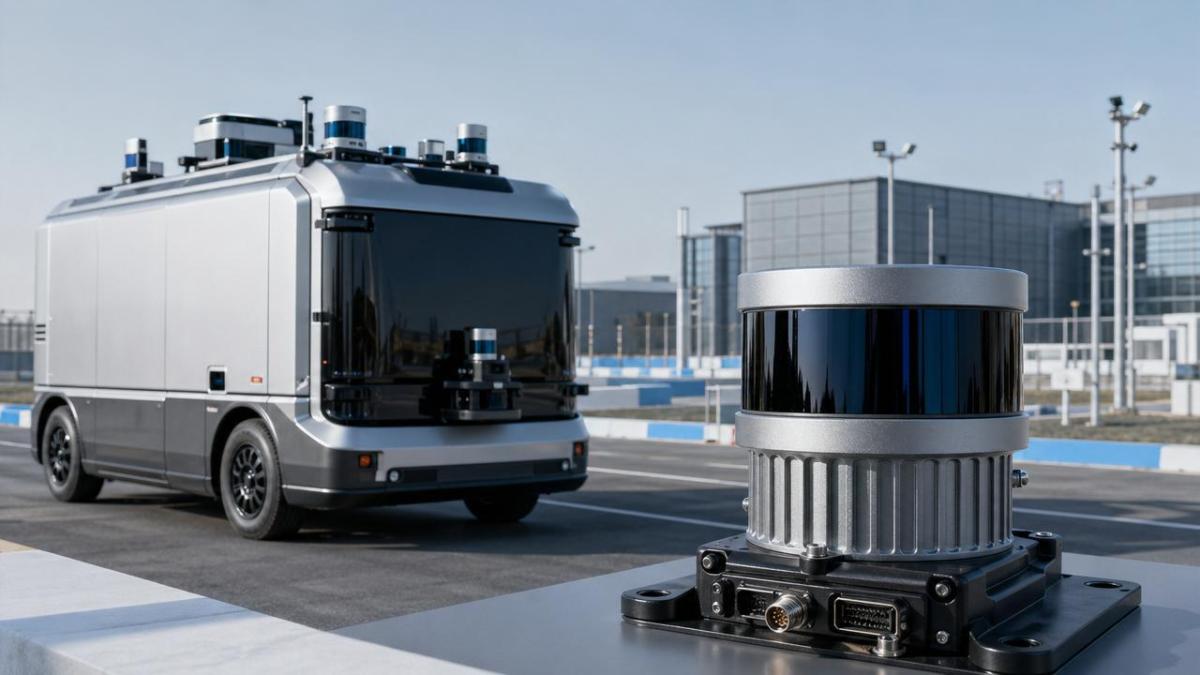
A LiDAR sensor for an autonomous vehicle is not a generic electronic part. It is a perception-critical component that influences object detection quality, localization performance, safety validation, and downstream compute load. For fleets operating across logistics yards, robotaxis, mining routes, delivery platforms, or industrial transport corridors, sensor inconsistency can create operational and legal exposure far beyond the hardware line item itself.
This is why buying wholesale LiDAR sensors for autonomous vehicles should begin with scenario definition. A vehicle moving at 15 km/h in a controlled industrial site may prioritize near-field blind spot coverage and dust resistance. A platform operating at 80 km/h on public roads may need longer effective range, tighter angular resolution, and more robust interference filtering. Without aligning sensor performance to use case, comparisons become misleading from the start.
Procurement teams should also define scale assumptions early. A pilot program ordering 20 units can tolerate more engineering adjustments than a deployment of 2,000 units across 3 regions. At fleet scale, consistency in firmware versioning, production lot traceability, and after-sales response time often matters as much as nominal performance. The supplier that looks competitive in a pilot may become a bottleneck in volume production.
Questions that change the sourcing outcome
Before comparing vendors, buyers should build an internal requirement stack that covers operational, technical, and commercial factors. This prevents discussions from drifting toward headline numbers that do not predict real deployment success.
- What is the minimum reliable detection range needed for braking, path planning, and obstacle classification?
- How many vehicles, sites, and environmental conditions will the sensor support within the next 12 to 24 months?
- Which interfaces are mandatory: Ethernet, CAN, PTP time sync, ROS support, or proprietary SDK layers?
- What failure threshold is acceptable in procurement contracts: for example, less than 1% DOA and controlled RMA turnaround within 10 business days?
A practical buyer segmentation model
Not all procurement teams buy for the same maturity level. Some are evaluating first-generation stacks, while others are replacing an existing vendor to improve cost or quality. The table below helps define sourcing priorities based on deployment stage.
The key lesson is simple: as volume rises, procurement risk shifts from pure performance evaluation to repeatability and supply assurance. That is where many buyers discover that comparing wholesale LiDAR sensors for autonomous vehicles requires more than a spec sheet spreadsheet.
Compare the Specifications That Actually Affect Vehicle Performance
The most common sourcing mistake is over-weighting one or two visible specs, usually maximum range and price. In reality, autonomous vehicle perception quality depends on a package of variables that interact with vehicle speed, sensor mounting height, compute budget, and software stack. Buyers should assess each parameter in context rather than in isolation.
Range, for example, should be interpreted with target reflectivity and environmental assumptions. A quoted 200 m range may refer to a high-reflectivity target under ideal conditions, while real road obstacles with lower reflectivity may be detected much closer. For many industrial and low-speed autonomous platforms, a stable 80–120 m effective range can outperform a nominally longer-range sensor with inconsistent returns.
Angular resolution also matters. A sensor with finer vertical and horizontal resolution may better distinguish curb edges, pallet forks, or partially obscured pedestrians. However, higher point density increases data throughput and processing requirements. Procurement teams should therefore validate the total system impact, not just raw sensor output.
Core technical criteria to benchmark
The following table outlines the specifications most relevant when evaluating wholesale LiDAR sensors for autonomous vehicles at scale.
A disciplined comparison process should include controlled tests at 3 to 5 distances, at least 2 reflectivity assumptions, and multiple weather or contamination scenarios where relevant. That gives procurement and engineering teams a common decision basis instead of relying on vendor-highlighted demo conditions.
Do not ignore mechanical and electrical details
Sensors fail procurement reviews for surprisingly practical reasons: enclosure size conflicts, thermal limits, connector types, power draw spikes, or mounting vibration sensitivity. A LiDAR unit drawing 18–25 W may be acceptable on one platform but problematic on another with tighter thermal design limits. Similarly, an ingress rating suitable for indoor robotics may not survive year-round roadside exposure.
Buyers should request mechanical drawings, connector specifications, environmental ratings, and operating temperature ranges as early as the RFQ stage. For many outdoor autonomous systems, expected temperature windows of -20°C to 60°C and validated vibration resistance are more decision-critical than the highest possible point cloud density.
Validate Reliability, Manufacturing Consistency, and Supplier Control
When buying wholesale LiDAR sensors for autonomous vehicles, reliability should be treated as a procurement metric, not just an engineering concern. A sensor that performs well in the lab but shows drift after 500 operating hours creates downstream cost in vehicle downtime, field service labor, and spare inventory. At fleet scale, even a 2% variance in quality can become operationally significant.
Buyers should ask suppliers how they control production consistency across batches. This includes incoming optical component inspection, calibration methods, end-of-line testing, firmware release management, and serial-level traceability. If the vendor cannot clearly explain how unit-to-unit deviation is managed, that gap should be treated as a sourcing risk.
A strong supplier review also covers life cycle planning. Procurement teams need visibility into component obsolescence, design revision policy, and expected support horizon. A perception supplier that changes core internal components without controlled notification can disrupt validation pipelines and force expensive re-certification work.
Reliability checkpoints to include in vendor qualification
The checklist below helps procurement teams turn abstract “quality” language into verifiable requirements.
- Request environmental test coverage such as vibration, thermal cycling, humidity exposure, and contamination resistance.
- Confirm whether the vendor provides serial-number traceability and production lot records for every delivered unit.
- Ask for calibration stability expectations and the process used to detect out-of-tolerance units before shipment.
- Define RMA workflow, target response time, and replacement lead time, ideally within 5 to 10 business days for fleet programs.
- Clarify firmware change control, release notes practice, and backward compatibility expectations.
How to score supplier maturity
Not every supplier has the same operational discipline. The table below provides a practical framework for scoring maturity during comparison.
For procurement teams, the practical takeaway is clear: reliability must be auditable. If a supplier cannot support structured quality discussions, comparing wholesale LiDAR sensors for autonomous vehicles on price alone exposes the buyer to avoidable long-term cost.
Measure Integration Fit and Total Cost of Ownership, Not Just Unit Price
A common sourcing trap is to select the lowest quoted unit cost without quantifying integration effort. In autonomous systems, software adaptation, driver maintenance, mounting redesign, network bandwidth planning, and functional validation often outweigh modest differences in component pricing. A sensor that saves 8% on unit cost can still raise program cost if integration consumes an extra 200 engineering hours.
Total cost of ownership should include at least 6 cost buckets: hardware price, NRE or integration labor, accessories and cables, validation time, field failure handling, and lifecycle replacement planning. Buyers should model these over 12, 24, and 36 months rather than using only the initial PO value as the decision anchor.
Integration fit also depends on software openness. Procurement leaders should ask whether the supplier offers stable APIs, timestamp synchronization support, configuration tools, packet documentation, and long-term firmware maintenance. In many fleet programs, these factors determine whether deployment accelerates or stalls.
A practical TCO view for LiDAR sourcing
The table below shows how buyers can frame decision factors beyond line-item hardware cost.
This broader view is especially important when comparing wholesale LiDAR sensors for autonomous vehicles across multiple suppliers. The best commercial decision is usually the sensor that reduces deployment friction, not simply the one with the lowest invoice amount.
Recommended sourcing workflow
A disciplined procurement process usually follows 4 stages and helps reduce rework later in the program.
- Stage 1: shortlist 3 to 5 suppliers based on use-case fit, not marketing visibility.
- Stage 2: run controlled technical comparison using identical test routes, mounting assumptions, and software interfaces.
- Stage 3: audit quality, supply continuity, and service capability before commercial finalization.
- Stage 4: negotiate volume pricing, forecast flexibility, and revision control terms together, not as separate topics.
Build a Scalable RFQ and Vendor Evaluation Process
Procurement teams comparing wholesale LiDAR sensors for autonomous vehicles often lose time because vendor responses arrive in different formats. One supplier shares range by reflectivity, another by target size, and another only in presentation slides. A standardized RFQ structure reduces ambiguity and makes side-by-side analysis possible.
A strong RFQ should define application speed, mounting position, operating temperature, interface requirements, expected annual volume, acceptance tests, and support expectations. It should also request evidence, not adjectives. Instead of asking whether a sensor is “high performance,” ask for test conditions, thresholds, and repeatability criteria.
For larger programs, create a weighted scorecard. Many teams use a 100-point model, with technical fit accounting for 35 to 45 points, reliability and quality control 20 to 25 points, integration maturity 15 to 20 points, commercial terms 10 to 15 points, and service capability 10 points. The exact weighting will vary by program risk.
What to include in a LiDAR RFQ
An effective procurement package typically includes the following elements.
- Operational scenario: indoor, outdoor, mixed light, dust exposure, rain risk, and speed range.
- Performance targets: minimum reliable range, field of view needs, refresh rate, and object classes to detect.
- System compatibility: power limits, connector preferences, Ethernet architecture, clock sync, and software environment.
- Commercial terms: MOQ, annual forecast bands, sample lead time, mass production lead time, and warranty expectations.
- Quality requirements: incoming inspection support, traceability level, firmware notice periods, and RMA workflow.
Common buyer mistakes to avoid
First, do not compare sensors using only peak values from brochures. Second, do not ignore service responsiveness until after the purchase order. Third, avoid awarding business before engineering and procurement agree on acceptance criteria. Fourth, do not assume pilot performance automatically predicts scaled manufacturing consistency. These issues routinely delay autonomous vehicle programs by weeks or months.
Buyers should also document what counts as success before testing starts. For example, define whether the acceptance gate is based on stable detection at 100 m, packet loss below a specified threshold, or software integration completed within 4 weeks. Procurement becomes far more effective when technical success criteria are fixed in advance.
FAQ for Buyers Sourcing LiDAR at Scale
How many suppliers should be included in a serious comparison?
In most cases, 3 to 5 suppliers is the practical range. Fewer than 3 limits commercial leverage and benchmarking depth. More than 5 often slows testing and creates unnecessary analysis noise unless the procurement team has a dedicated engineering validation framework.
What lead times are reasonable for samples and production orders?
Sample lead times commonly range from 2 to 6 weeks, depending on configuration and support load. Volume production lead times may range from 6 to 12 weeks under standard conditions. Buyers should confirm whether accessories, mounting kits, or custom firmware introduce separate lead-time risk.
Which specification is most often misunderstood?
Maximum range is the most commonly misunderstood figure. It is often quoted under ideal reflectivity and target conditions. Procurement teams should instead ask for effective detection performance across multiple reflectivity levels, target sizes, and environmental states, because those conditions better represent field reality.
When should procurement involve engineering and software teams?
From the very beginning. LiDAR selection affects compute load, time synchronization, mounting geometry, and perception stack behavior. If procurement works in isolation until the quotation stage, the program often inherits integration delays that erase any initial price advantage.
Comparing wholesale LiDAR sensors for autonomous vehicles at scale demands a method that is commercial in discipline and technical in detail. The most resilient sourcing decisions come from linking use-case requirements, measurable sensor performance, supplier quality controls, and total cost of ownership into one structured review process.
For procurement leaders, the winning approach is not to chase broad claims, but to insist on validated parameters, controlled comparison methods, and supplier transparency. That is how fleet programs reduce trial-and-error cost, shorten qualification cycles, and build perception systems that remain dependable after deployment.
If your team is evaluating suppliers, refining RFQ criteria, or building an engineering-led sourcing framework for autonomous vehicle perception hardware, now is the time to move from marketing language to evidence-based procurement. Contact us to discuss your application requirements, request a customized evaluation framework, or explore more hard-tech sourcing guidance built around measurable performance.
Search News
Hot Articles
- Carbon Fiber StructuresHow to Specify Aerospace Carbon Fiber Assemblies for Lightweight, Load-Bearing PartsJul 11, 2026
- Machine VisionXiaomi, Alibaba DAMO Academy Drive Open-Source Robotics Model Ecosystem, Lowering Algorithm Development Barriers for Overseas SMEs Adopting Chinese Robotics SolutionsMar 30, 2026
- Cobots & ArmsShanxi 'AI+' Conference Showcases Embodied Intelligence with Multinational Buyer Engagement: Key Industry ImplicationsMar 30, 2026
Popular Tags
Recommended News
 Jul 11, 2026How to Specify Aerospace Carbon Fiber Assemblies for Lightweight, Load-Bearing PartsAerospace carbon fiber assemblies: learn how to specify laminate design, load data, joining methods, and inspection controls for lighter, reliable load-bearing aerospace parts.Elena Rostova (UAV Systems Researcher)
 Mar 30, 2026Xiaomi, Alibaba DAMO Academy Drive Open-Source Robotics Model Ecosystem, Lowering Algorithm Development Barriers for Overseas SMEs Adopting Chinese Robotics SolutionsXiaomi & Alibaba DAMO Academy's open-source robotics models lower algorithm barriers for global SMEs. Boost efficiency in manufacturing, logistics & smart retail with ROS 2 compatible solutions.TSV Data Lab
 Mar 30, 2026Shanxi 'AI+' Conference Showcases Embodied Intelligence with Multinational Buyer Engagement: Key Industry ImplicationsShanxi 'AI+' Conference highlights embodied intelligence with Tesla, Ubtech & Jiantao showcasing multimodal robotics. 40+ global buyers validated tech on-site, creating new B2B channels for industrial automation & AI solutions.Chen Wei (Automation Lead Engineer)
 Mar 30, 2026Zhongguancun Unveils 6G Integrated Sensing-Computing-Intelligence Platform to Empower Embodied Robots for Global Industrial ApplicationsZhongguancun's new 6G platform revolutionizes industrial robotics with <10ms latency, empowering global automotive, logistics & port automation. Discover how this tech boosts China's smart manufacturing exports.TSV Data Lab
 Mar 30, 2026Mech-Mind Tianjin Embodied Intelligence R&D and Production Base Goes Live, Cutting Delivery Time by 20%–30% for Global Customized AMR+Vision SolutionsMech-Mind's Tianjin AMR+Vision production base cuts delivery time by 20%-30% for欧美 & Latin American markets. Discover how this PLd-certified facility accelerates customized robotics solutions for smart manufacturing and logistics.Chen Wei (Automation Lead Engineer)
 Mar 30, 2026Boao Forum Reveals 'Co-evolution of Big and Small Brains' Trend in Humanoid Robots, China's Embodied Intelligence Accelerates Adaptation to Overseas Manufacturing Service ScenariosDiscover how China's humanoid robots, featuring 'Co-evolution of Big and Small Brains,' are revolutionizing global manufacturing. Learn about Embodied Tian Gong 3.0's ISO compliance and overseas deployment at Boao Forum 2026.Chen Wei (Automation Lead Engineer)
 Mar 30, 2026China Railway Industrial Secures Patent for Embodied Robotics in Material Handling, Boosting High-Precision Delivery Capabilities for Overseas Infrastructure and Manufacturing ProjectsChina Railway Industrial's new patent for embodied robotics in material handling boosts high-precision delivery for global infrastructure & manufacturing. Discover how this innovation enhances logistics accuracy in automotive, rail transit & EPC projects.Chen Wei (Automation Lead Engineer)
 Oct 28, 2026IDC: Global Quadruped Robot Shipments Rise 92.5% in H1 2026 as Volume and Value DivergeGlobal quadruped robot shipments rose 92.5% in H1 2026, according to IDC. Explore what diverging volume and value trends mean for industrial buyers and manufacturers.Chen Wei (Automation Lead Engineer)
 Oct 28, 2026Interpreting Industrial IoT Latency Data for Monitoring and Real-Time ControlInterpret industrial category latency data to assess jitter, deadline misses, and real-time readiness. Learn how to benchmark IIoT systems and choose monitoring and control solutions.TSV Data Lab
 Oct 27, 2026GXO and Agility Robotics Expand Partnership to Accelerate US Humanoid Robot DeploymentGXO and Agility Robotics plan to expand US humanoid robot deployment with Digit 4 in early 2027. Explore warehouse automation plans, service terms and future Digit 5 upgrades.Chen Wei (Automation Lead Engineer)
 Oct 27, 2026Robotic Automation Costs: Budgeting for Equipment, Integration, and MaintenancePlan your robotics automation cost with confidence. Explore equipment, integration, and maintenance expenses, compare quotes, and build a realistic budget for better ROI.Chen Wei (Automation Lead Engineer)
 Oct 26, 2026AMAXiMAL Releases Open-Source TopMod 3D v3 With Claude AIExplore AMAXiMAL’s free, open-source TopMod 3D v3 with Claude AI assistance, topology-based modeling and plywood fabrication tools that connect complex designs to physical builds.Dr. Marcus Vance
 Oct 26, 2026Choosing a SCADA System Integrator Company: PLC Compatibility and Long-Term SupportChoose a scada system integrator company with proven PLC compatibility and reliable long-term support. Discover what to test, compare, and require before investing.Victor Lin (Chief Software Architect)
 Oct 25, 2026Hesai Leads Global ADAS Main Lidar Shipments in Yole’s 2026 ReportHesai led global ADAS main lidar shipments with a 43% share in 2025, according to Yole’s 2026 report. Explore what this ranking reveals about its automotive market position.TSV Data Lab
 Oct 25, 2026Choosing an Aerospace Materials Manufacturer: Quality and Traceability ChecksChoosing an aerospace materials manufacturer? Learn how to verify certifications, test reports, and lot traceability to qualify suppliers confidently and reduce costly sourcing risks.Dr. Marcus Vance
 Oct 24, 2026Guotai Haitong: Global Entry-Level 3D Printer Shipments Rose 39% in Q1 2026Entry-level 3D printer shipments rose 39% in Q1 2026, Guotai Haitong reports. Explore how AI, multicolor printing and print farms are shaping market growth.Dr. Marcus Vance
 Oct 24, 2026Choosing an Industrial Vision Inspection Supplier: Acceptance Tests That MatterChoose an industrial vision inspection supplier with confidence. Discover acceptance tests for defect detection, false rejects, production speed, and reliable part rejection before you buy.TSV Data Lab
 Oct 23, 2026US Navy Raises Gecko Robotics Contract Ceiling to $300M for Robotic Fleet MaintenanceUS Navy raises Gecko Robotics’ contract ceiling to $300M for Pacific Fleet robotic inspections. Explore potential opportunities for maintenance suppliers and key procurement considerations.Chen Wei (Automation Lead Engineer)
 Oct 23, 2026Choosing Industrial Sensing Systems for Global Plants: Protocol CompatibilityCompare industrial sensing systems international buyers can trust. Explore protocol compatibility, reduce integration risks, and select proven configurations for reliable global plant deployments.TSV Data Lab
 Oct 22, 2026KUKA Showcases Physical AI and iiQKA.AI Vision at NVIDIA GTC BerlinExplore KUKA’s Physical AI showcase at NVIDIA GTC Berlin and discover how iiQKA.AI Vision aims to simplify robotic vision integration and improve 2D and 3D scene recognition.TSV Data Lab
 Oct 22, 2026Robotic Machining of Advanced Composites: What Tolerances Are Achievable?Explore advanced materials machining robotics: discover what drives achievable composite tolerances and how to validate accuracy before investing in your next machining system.Dr. Marcus Vance
 Oct 21, 2026China’s Industrial Robot Exports Near RMB 10 Billion in First Nine Months of 2026China’s industrial robot exports neared RMB 10 billion in January–September 2026, with value rising faster than volume. Explore the data and what it could mean for suppliers.Chen Wei (Automation Lead Engineer)
 Oct 21, 2026Low-Latency Industrial Data Processing: Pricing and Key Cost DriversExplore industrial data latency price drivers, from edge hardware to integration and support. Learn how to compare quotes, verify performance, and avoid unnecessary costs.TSV Data Lab
 Oct 20, 2026KUKA Launches iiQKA.AI Vision to Simplify Industrial Image ProcessingKUKA iiQKA.AI Vision simplifies industrial image processing with controller-based 2D and 3D vision. Explore drag-and-drop setup for vision-guided automation.TSV Data Lab