
Automotive radar sensor wholesale specs that matter in practice
Publication Date
author
Choosing an automotive radar sensor wholesale partner is not about slogans—it is about measurable specs that survive real deployment. For engineers, buyers, and decision-makers comparing a mmwave radar manufacturer, solid state lidar manufacturer china sources, or even a tof depth camera wholesale option, the practical question is simple: which parameters truly reduce integration risk, false detections, and long-term system cost?
The short answer is this: in real projects, the most important wholesale radar specs are not the longest marketing range or the most impressive brochure claims. The specs that matter most are detection stability, angular resolution, velocity accuracy, interference resistance, environmental robustness, interface compatibility, and consistency across production lots. If those are weak, even an attractive unit price can become expensive after integration delays, field failures, or false alarm problems.
What buyers should evaluate first when sourcing automotive radar sensors wholesale
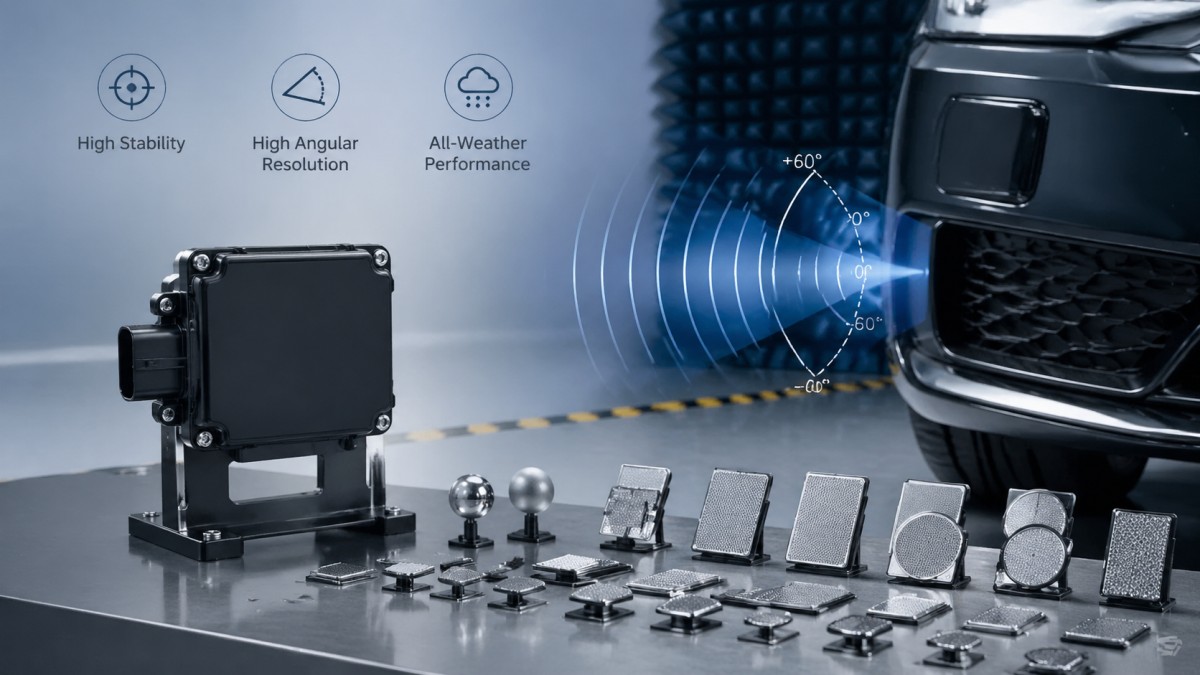
Search intent around automotive radar sensor wholesale usually comes from teams that are already comparing suppliers, preparing RFQs, or validating alternatives for ADAS, vehicle safety, industrial mobility, parking assistance, or low-speed autonomous platforms. They are rarely looking for a generic explanation of radar. They want a practical shortlist of specs that affect deployment outcomes.
For that reason, the first evaluation layer should answer five business-critical questions:
- Will the sensor detect the right targets reliably in the actual operating environment?
- Can the radar separate nearby objects well enough for the use case?
- Will it integrate cleanly into existing ECU, domain controller, or edge AI architectures?
- Can the supplier maintain stable quality at wholesale volume?
- What hidden engineering or lifecycle costs sit behind the unit price?
For procurement teams, these questions reduce supplier qualification risk. For engineers and operators, they reduce tuning effort and false positives. For business leaders, they protect rollout schedules and total cost of ownership.
Which radar specifications actually matter in practice
When comparing an automotive radar sensor wholesale offer, the most useful approach is to classify specs into deployment-critical categories rather than reading them as isolated numbers.
1. Detection range under real target conditions
Quoted maximum range is often measured under ideal conditions using large, highly reflective targets. In practice, you should ask for detection performance by target type: pedestrian, motorcycle, passenger car, truck, roadside barrier, and low-RCS objects. A radar that claims 250 m but loses stability on smaller or angled targets may be less useful than a lower-range unit with stronger consistency.
Ask suppliers for:
- Range performance by target category
- Minimum detectable object characteristics
- Performance at different mounting heights and angles
- Detection behavior in rain, fog, splash, and dirty radome conditions
2. Angular resolution and object separation
This is one of the most overlooked practical specs. Good angular resolution helps the radar distinguish two close objects rather than merging them into one return. That directly affects lane-level awareness, parking accuracy, cross-traffic detection, and clutter handling in dense environments.
If your application involves traffic, urban mobility, or object tracking near infrastructure, ask not only for azimuth resolution but also for elevation capability where relevant. Better separation usually matters more than headline range in crowded scenes.
3. Velocity measurement and tracking stability
Radar is valuable because it measures relative speed well, but not all modules offer equal tracking quality. Velocity accuracy, update rate, and multi-target tracking robustness are critical for collision warning, adaptive logic, and safe object association in sensor fusion pipelines.
Important questions include:
- What is the velocity resolution and accuracy?
- How many targets can be tracked simultaneously?
- How stable is tracking during object crossing or partial occlusion?
- What filtering is done onboard versus at the host system level?
4. Field of view matched to the use case
A wide field of view is not automatically better. Long-range forward applications may need narrower but more focused coverage, while blind-spot, corner, and parking applications benefit from wider angular coverage. The right choice depends on mounting position, vehicle geometry, and whether the radar is standalone or part of a multi-sensor stack.
Wholesale buyers should verify whether one hardware family can support multiple FOV variants. That can simplify sourcing and reduce qualification complexity.
5. False alarm rate and clutter rejection
In practice, many teams discover too late that false detections create major downstream costs. Unstable detections can force software compensation, create operator distrust, and weaken automated decision logic. Ask suppliers for test data in urban clutter, reflective infrastructure, tunnels, metallic surroundings, and multi-vehicle environments.
This is where engineering-grade suppliers stand out from pure marketing-led vendors.
Why environmental robustness matters as much as signal performance
Automotive radar does not operate in lab conditions. A sensor suitable for wholesale deployment must survive vibration, thermal cycling, moisture, dust, road salt, and electromagnetic stress without meaningful performance drift.
The most relevant non-brochure questions include:
- Operating and storage temperature range
- IP protection rating for the enclosure
- Performance stability after vibration and shock testing
- EMC and EMI compliance behavior in vehicle-level environments
- Long-term sealing reliability and radome material durability
For enterprise buyers, this is not just a reliability topic. It affects warranty exposure, service replacement rates, and reputation risk. A lower-cost radar with weaker environmental performance can become the higher-cost option once field maintenance is included.
Integration specs that often decide whether a radar project stays on schedule
Many sourcing delays come not from sensing performance but from integration friction. When evaluating a mmwave radar manufacturer, review the following early:
Electrical and communication interfaces
Check support for CAN, CAN FD, Ethernet, UART, or other required protocols. Also confirm message structure, data output format, timestamping method, and compatibility with your existing software architecture.
Power and thermal behavior
Power draw affects vehicle system design, especially in distributed architectures or battery-sensitive platforms. Thermal output also matters for sealed installations and compact sensor packaging.
Mounting tolerance and calibration requirements
Some sensors are much more sensitive to mounting error than others. Ask how much angular misalignment can be tolerated before performance drops. Also clarify whether production-line calibration or in-field recalibration is required.
Firmware maturity and update policy
In wholesale procurement, the hardware is only part of the product. Firmware release stability, bug-fix responsiveness, and version traceability strongly affect fleet reliability and engineering workload.
If the supplier cannot clearly document change management, your qualification risk rises sharply.
How to compare automotive radar with lidar and ToF options without confusion
Many buyers researching automotive radar sensor wholesale are not choosing radar in isolation. They may also compare a solid state lidar manufacturer china supplier or a tof depth camera wholesale source. The practical comparison should focus on environmental fit and sensing role, not abstract technology preference.
- Radar: strong for velocity sensing, adverse weather resilience, and robust long-range detection; weaker in fine shape detail compared with lidar.
- Solid-state lidar: strong for geometric detail and object contour, but often more sensitive to weather, contamination, and cost constraints depending on design.
- ToF depth camera: useful for short-range structured perception, cabin monitoring, or near-field detection, but generally not a replacement for automotive radar in outdoor long-range scenarios.
For many deployments, the real question is not radar versus lidar versus ToF. It is whether the chosen radar module can deliver reliable core detection on its own, or whether the use case needs sensor fusion for acceptable safety and accuracy.
What procurement teams should ask suppliers before placing wholesale orders
A strong RFQ process should force suppliers to prove engineering consistency, not just submit a price list. Useful questions include:
- Can you provide test reports with conditions, target definitions, and pass criteria?
- What are the lot-to-lot performance tolerances?
- What is the process for PCN, firmware revision control, and component substitution?
- What certifications and automotive quality systems support this product line?
- What reference designs, SDKs, APIs, and integration documents are available?
- What failure analysis and after-sales engineering support are included?
- What is the lead time stability at forecast volume?
These questions matter because wholesale success depends on repeatability. A sample that performs well is not enough. The supplier must prove that the shipped population will behave within expected limits.
Red flags that usually signal hidden risk in radar wholesale sourcing
Experienced buyers and technical evaluators should be cautious when they see any of the following:
- Specs presented only as best-case maximums without test context
- No clear data on false positive or false negative behavior
- Vague claims about AI capability without edge processing benchmarks
- Missing environmental and EMC validation details
- No documented production traceability or revision history
- Overemphasis on price while avoiding integration discussion
In hard-tech sourcing, missing detail is often more important than polished detail. Precision in documentation is usually a reliable proxy for maturity in engineering and manufacturing.
Practical decision framework: the best radar sensor is the one that lowers total deployment risk
If you need a simple rule for supplier comparison, use this: prioritize the radar that delivers the most stable real-world performance, the cleanest integration path, and the strongest production consistency at your intended volume.
That means the winning supplier is not necessarily the one with the longest range claim or the lowest quote. It is the one that can demonstrate:
- Repeatable target detection in your operating environment
- Usable object separation and tracking quality
- Low false alarm burden
- Proven durability in vehicle conditions
- Clear interface, firmware, and support documentation
- Stable quality control for wholesale delivery
For engineers, this reduces tuning and validation effort. For operators, it improves trust in system behavior. For procurement teams, it lowers supplier change risk. For executives, it protects program timing and long-term return on investment.
In automotive radar sensor wholesale, the specs that matter in practice are the ones that survive outside the datasheet: resolution where scenes are crowded, tracking where motion is complex, durability where environments are harsh, and consistency where volume begins. If you evaluate those factors first, you will make a better sourcing decision than if you chase impressive but isolated numbers.
Search News
Hot Articles
- Carbon Fiber StructuresHow to Specify Aerospace Carbon Fiber Assemblies for Lightweight, Load-Bearing PartsJul 11, 2026
- Machine VisionXiaomi, Alibaba DAMO Academy Drive Open-Source Robotics Model Ecosystem, Lowering Algorithm Development Barriers for Overseas SMEs Adopting Chinese Robotics SolutionsMar 30, 2026
- Cobots & ArmsShanxi 'AI+' Conference Showcases Embodied Intelligence with Multinational Buyer Engagement: Key Industry ImplicationsMar 30, 2026
Popular Tags
Recommended News
 Jul 11, 2026How to Specify Aerospace Carbon Fiber Assemblies for Lightweight, Load-Bearing PartsAerospace carbon fiber assemblies: learn how to specify laminate design, load data, joining methods, and inspection controls for lighter, reliable load-bearing aerospace parts.Elena Rostova (UAV Systems Researcher)
 Mar 30, 2026Xiaomi, Alibaba DAMO Academy Drive Open-Source Robotics Model Ecosystem, Lowering Algorithm Development Barriers for Overseas SMEs Adopting Chinese Robotics SolutionsXiaomi & Alibaba DAMO Academy's open-source robotics models lower algorithm barriers for global SMEs. Boost efficiency in manufacturing, logistics & smart retail with ROS 2 compatible solutions.TSV Data Lab
 Mar 30, 2026Shanxi 'AI+' Conference Showcases Embodied Intelligence with Multinational Buyer Engagement: Key Industry ImplicationsShanxi 'AI+' Conference highlights embodied intelligence with Tesla, Ubtech & Jiantao showcasing multimodal robotics. 40+ global buyers validated tech on-site, creating new B2B channels for industrial automation & AI solutions.Chen Wei (Automation Lead Engineer)
 Mar 30, 2026Zhongguancun Unveils 6G Integrated Sensing-Computing-Intelligence Platform to Empower Embodied Robots for Global Industrial ApplicationsZhongguancun's new 6G platform revolutionizes industrial robotics with <10ms latency, empowering global automotive, logistics & port automation. Discover how this tech boosts China's smart manufacturing exports.TSV Data Lab
 Mar 30, 2026Mech-Mind Tianjin Embodied Intelligence R&D and Production Base Goes Live, Cutting Delivery Time by 20%–30% for Global Customized AMR+Vision SolutionsMech-Mind's Tianjin AMR+Vision production base cuts delivery time by 20%-30% for欧美 & Latin American markets. Discover how this PLd-certified facility accelerates customized robotics solutions for smart manufacturing and logistics.Chen Wei (Automation Lead Engineer)
 Mar 30, 2026Boao Forum Reveals 'Co-evolution of Big and Small Brains' Trend in Humanoid Robots, China's Embodied Intelligence Accelerates Adaptation to Overseas Manufacturing Service ScenariosDiscover how China's humanoid robots, featuring 'Co-evolution of Big and Small Brains,' are revolutionizing global manufacturing. Learn about Embodied Tian Gong 3.0's ISO compliance and overseas deployment at Boao Forum 2026.Chen Wei (Automation Lead Engineer)
 Mar 30, 2026China Railway Industrial Secures Patent for Embodied Robotics in Material Handling, Boosting High-Precision Delivery Capabilities for Overseas Infrastructure and Manufacturing ProjectsChina Railway Industrial's new patent for embodied robotics in material handling boosts high-precision delivery for global infrastructure & manufacturing. Discover how this innovation enhances logistics accuracy in automotive, rail transit & EPC projects.Chen Wei (Automation Lead Engineer)
 Oct 25, 2026Hesai Leads Global ADAS Main Lidar Shipments in Yole’s 2026 ReportHesai led global ADAS main lidar shipments with a 43% share in 2025, according to Yole’s 2026 report. Explore what this ranking reveals about its automotive market position.TSV Data Lab
 Oct 25, 2026Choosing an Aerospace Materials Manufacturer: Quality and Traceability ChecksChoosing an aerospace materials manufacturer? Learn how to verify certifications, test reports, and lot traceability to qualify suppliers confidently and reduce costly sourcing risks.Dr. Marcus Vance
 Oct 24, 2026Guotai Haitong: Global Entry-Level 3D Printer Shipments Rose 39% in Q1 2026Entry-level 3D printer shipments rose 39% in Q1 2026, Guotai Haitong reports. Explore how AI, multicolor printing and print farms are shaping market growth.Dr. Marcus Vance
 Oct 24, 2026Choosing an Industrial Vision Inspection Supplier: Acceptance Tests That MatterChoose an industrial vision inspection supplier with confidence. Discover acceptance tests for defect detection, false rejects, production speed, and reliable part rejection before you buy.TSV Data Lab
 Oct 23, 2026US Navy Raises Gecko Robotics Contract Ceiling to $300M for Robotic Fleet MaintenanceUS Navy raises Gecko Robotics’ contract ceiling to $300M for Pacific Fleet robotic inspections. Explore potential opportunities for maintenance suppliers and key procurement considerations.Chen Wei (Automation Lead Engineer)
 Oct 23, 2026Choosing Industrial Sensing Systems for Global Plants: Protocol CompatibilityCompare industrial sensing systems international buyers can trust. Explore protocol compatibility, reduce integration risks, and select proven configurations for reliable global plant deployments.TSV Data Lab
 Oct 22, 2026KUKA Showcases Physical AI and iiQKA.AI Vision at NVIDIA GTC BerlinExplore KUKA’s Physical AI showcase at NVIDIA GTC Berlin and discover how iiQKA.AI Vision aims to simplify robotic vision integration and improve 2D and 3D scene recognition.TSV Data Lab
 Oct 22, 2026Robotic Machining of Advanced Composites: What Tolerances Are Achievable?Explore advanced materials machining robotics: discover what drives achievable composite tolerances and how to validate accuracy before investing in your next machining system.Dr. Marcus Vance
 Oct 21, 2026China’s Industrial Robot Exports Near RMB 10 Billion in First Nine Months of 2026China’s industrial robot exports neared RMB 10 billion in January–September 2026, with value rising faster than volume. Explore the data and what it could mean for suppliers.Chen Wei (Automation Lead Engineer)
 Oct 21, 2026Low-Latency Industrial Data Processing: Pricing and Key Cost DriversExplore industrial data latency price drivers, from edge hardware to integration and support. Learn how to compare quotes, verify performance, and avoid unnecessary costs.TSV Data Lab
 Oct 20, 2026KUKA Launches iiQKA.AI Vision to Simplify Industrial Image ProcessingKUKA iiQKA.AI Vision simplifies industrial image processing with controller-based 2D and 3D vision. Explore drag-and-drop setup for vision-guided automation.TSV Data Lab
 Oct 20, 2026Smart Industrial Edge Devices: Key Criteria for Legacy PLC IntegrationChoose smart industrial edge devices for legacy PLC integration. Discover key criteria for compatibility, data quality, security, and reliable collection without disrupting control.TSV Data Lab
 Oct 19, 2026Choosing a Radar Sensor by Application: Range, Resolution, and Field of ViewSimplify radar sensor application based product selection. Compare range, resolution, and field of view to avoid blind spots and choose with confidence. Explore the guide.TSV Data Lab
 Oct 18, 2026Comparing Material Options for Procurement: Specs, Costs, and Supply RisksExplore procurement oriented technical content on material options, specs, costs, and supply risks. Compare alternatives to cut hidden expenses and make confident sourcing decisions.Dr. Marcus Vance
 Oct 17, 20265-Axis CNC Positioning Accuracy: How to Interpret ISO 230-2 Test ResultsAssess 5 axis CNC machining positioning accuracy with ISO 230-2. Learn to interpret repeatability, reversal error, and test conditions to compare suppliers and make confident acceptance decisions.Dr. Marcus Vance
 Oct 16, 2026Choosing a Rugged Edge AI Box Supplier: Thermal Tests and Lifecycle SupportChoose a rugged edge AI box supplier with proven thermal performance and reliable lifecycle support. Discover the tests and commitments to verify before you buy.TSV Data Lab
 Oct 15, 2026R&D Cost Reduction Services: How to Evaluate Fees, Savings, and ROIEvaluate R&D cost reduction services with confidence. Compare fees, verify savings, and calculate ROI without compromising performance. Discover how to choose a provider that delivers real value.Chen Wei (Automation Lead Engineer)























