What to Look for When Choosing Industrial Edge Devices for European Manufacturing Sites
Publication Date
author
If you are responsible for a production line, a test cell, or a small automation upgrade, choosing an industrial edge device can feel more complicated than it should. The brochure says “rugged,” the datasheet lists a long set of interfaces, and every vendor claims low latency. But once the device sits between sensors, PLCs, MES software, and remote maintenance tools, the real questions start: Will it handle noisy power, fit the cabinet, survive dust and vibration, and still talk to the rest of the stack without constant rework?
That is usually where teams lose time. A device that looks fine on paper can create integration delays, security concerns, or maintenance headaches after installation. For teams sourcing industrial edge devices Europe-wide, the challenge is not finding hardware with impressive specs. It is separating marketing language from the details that affect uptime, compliance, and long-term support on the factory floor.
Start with the environment, not the catalog
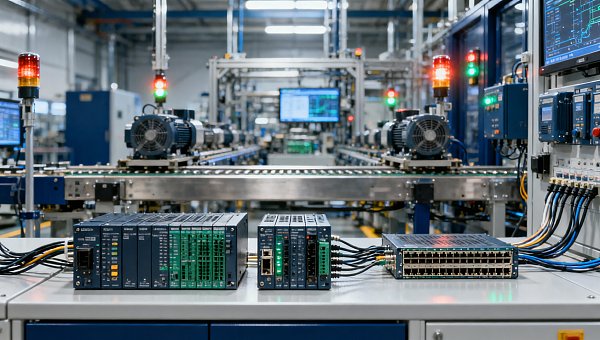
The first mistake is treating all manufacturing sites as if they have the same conditions. A packaging line near an oven, a metalworking cell with coolant mist, and a clean assembly room do not ask the same things from an edge device. Before comparing models, list the conditions the hardware will actually face: temperature swings, dust, vibration, electrical noise, available cabinet space, and access for service.
That simple step changes the buying conversation. Instead of asking whether a device is “industrial,” ask whether it is suitable for the cabinet, the line, and the maintenance routine you already have. Some teams only discover the mismatch after field installation, when a fanless unit still runs too warm inside a dense enclosure or when a connector layout blocks neat cable routing.
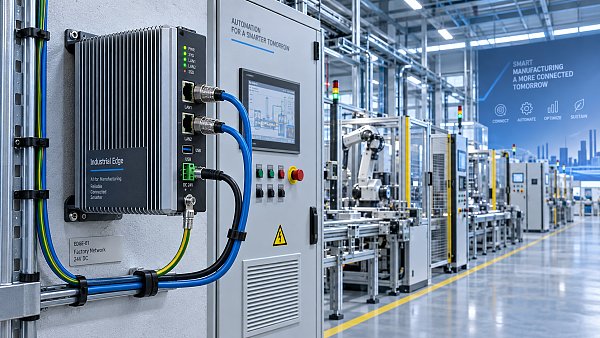
Pay attention to power input range, mounting style, cooling method, and connector durability. These are not glamorous details, but they decide whether the device becomes a stable part of the line or another source of troubleshooting.
Latency matters, but only in context
It is easy to focus on CPU and memory and overlook the actual workload. An industrial edge device is often expected to collect machine data, buffer it, run local analytics, and forward only what matters. That means latency is not just a number in a spec sheet. It is the delay between a sensor event and the action taken by a local control or monitoring application.
For many plants, the key question is whether the device can maintain consistent response under load, not whether it can peak at a high benchmark for a few seconds. If the application depends on near-real-time alerting, look for clear information about I/O throughput, storage behavior, and network handling under sustained use. If the device will mostly log data and relay it upstream, the balance shifts toward reliability and buffering capacity.
When teams compare industrial edge devices Europe suppliers offer, they sometimes find that similar hardware behaves very differently once containerized software, protocol conversion, and remote access tools are added. That is why it helps to test with your own workload profile, not only the vendor’s demo.
Interoperability is usually where projects slow down
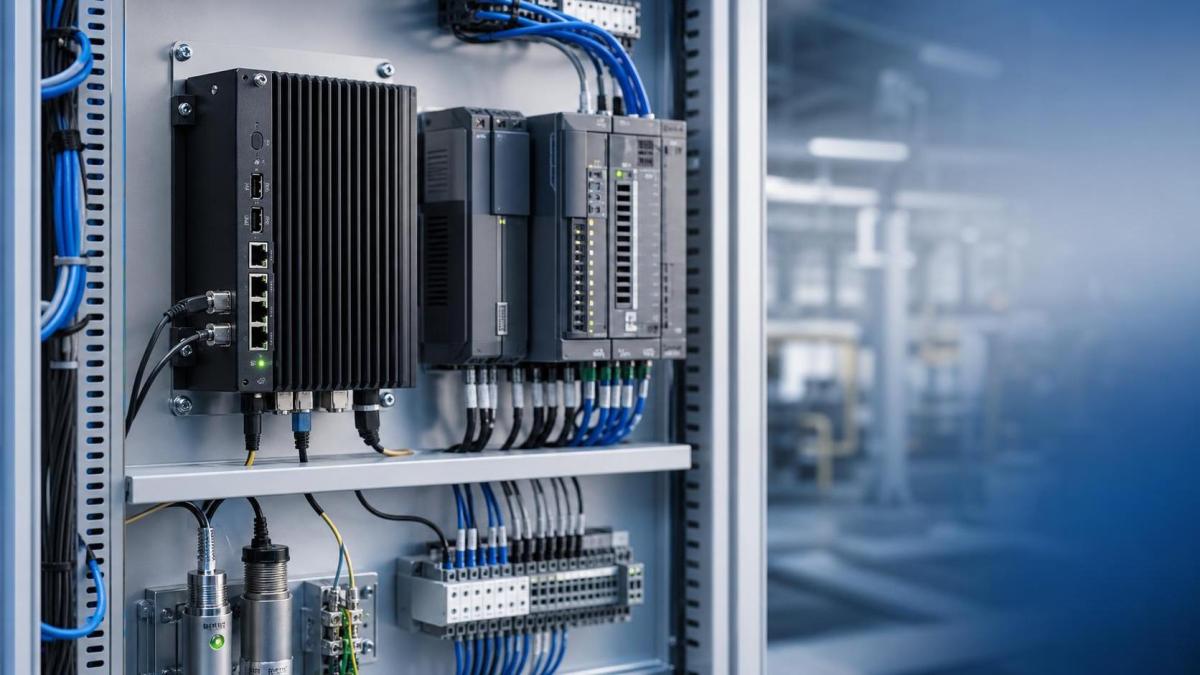
Edge hardware rarely works alone. It sits between older machines, modern sensors, fieldbus networks, and cloud or on-premise systems. If the device cannot speak to the protocols already in use, the project turns into a chain of adapters and custom scripts.
Before buying, map the interfaces you truly need: Ethernet ports, serial connections, digital I/O, wireless options, and support for the industrial protocols your site already uses. Then check whether the software stack is open enough for your team to maintain. A device that only works well inside one closed ecosystem can be convenient at first, but it may become difficult to support when your line changes or a supplier disappears.
Also look at the practical side of deployment. Can the device be imaged quickly? Can it be monitored remotely? Can firmware and OS updates be staged without taking a line offline at the wrong time? These questions matter more than a long list of software logos.
Security should be designed in, not added later
Many factories still treat edge security as an IT issue that arrives after the hardware is installed. In practice, the device itself can create exposure if it lacks basic controls. Shared accounts, weak update paths, or unclear logging can make even a solid deployment harder to defend.
A better approach is to review the security model during selection. Ask whether the device supports secure boot, role-based access, encrypted storage or communication where needed, and straightforward patch management. You do not need every feature in every plant, but you do need a clear answer on how the unit will be maintained over time.
For European manufacturing sites, this is especially important when equipment moves across multiple plants or crosses company boundaries. The more often a device is redeployed, the more valuable it becomes to have predictable hardening steps and audit-friendly logging.
Don’t ignore compliance and procurement friction
Compliance is often treated as a document exercise, but it affects deployment speed. If a device is missing the regional documentation your engineering and procurement teams expect, the project can stall even when the hardware itself is suitable. That is why teams should verify the paperwork early: environmental declarations, safety documents, and any regional requirements relevant to the installation site.
This is also where procurement and engineering need to sit in the same conversation. Engineers may focus on performance, while procurement looks at availability, support channels, and lifecycle stability. If a device is technically strong but hard to source consistently, the cost of replacement and line standardization rises later.
When reviewing industrial edge devices Europe-wide, ask vendors for the support model in plain terms. Who handles firmware issues? How are spare units managed? What is the expected lifecycle for the platform? Those details help avoid one-off purchases that cannot be maintained across multiple sites.
A practical way to narrow the field
If the shortlist is too long, use a simple three-step filter.
First, eliminate anything that fails the environmental fit. If the enclosure, cooling, or connector layout is wrong, stop there. Second, remove devices that cannot support your key protocols or software requirements without awkward workarounds. Third, compare only the remaining options on maintainability: update process, remote access, diagnostics, and documentation quality.
This approach avoids the common trap of overvaluing raw performance. In many manufacturing settings, the best device is not the fastest one. It is the one that stays stable, integrates cleanly, and gives technicians enough visibility to troubleshoot without shutting everything down.
If your team is still uncertain, run a short validation on the actual line or in a near-production bench setup. Use the same cables, the same network segments, and the same application stack you plan to deploy. That is usually where weak assumptions show up.
Choosing industrial edge hardware is less about finding a perfect spec sheet and more about matching a device to the realities of the site. Once you evaluate the environment, workload, interoperability, security, and support path together, the decision becomes easier to defend and much easier to live with after installation.
Search News
Hot Articles
- Carbon Fiber StructuresHow to Specify Aerospace Carbon Fiber Assemblies for Lightweight, Load-Bearing PartsJul 11, 2026
- Machine VisionXiaomi, Alibaba DAMO Academy Drive Open-Source Robotics Model Ecosystem, Lowering Algorithm Development Barriers for Overseas SMEs Adopting Chinese Robotics SolutionsMar 30, 2026
- Cobots & ArmsShanxi 'AI+' Conference Showcases Embodied Intelligence with Multinational Buyer Engagement: Key Industry ImplicationsMar 30, 2026
Popular Tags
Recommended News
 Jul 11, 2026How to Specify Aerospace Carbon Fiber Assemblies for Lightweight, Load-Bearing PartsAerospace carbon fiber assemblies: learn how to specify laminate design, load data, joining methods, and inspection controls for lighter, reliable load-bearing aerospace parts.Elena Rostova (UAV Systems Researcher)
 Mar 30, 2026Xiaomi, Alibaba DAMO Academy Drive Open-Source Robotics Model Ecosystem, Lowering Algorithm Development Barriers for Overseas SMEs Adopting Chinese Robotics SolutionsXiaomi & Alibaba DAMO Academy's open-source robotics models lower algorithm barriers for global SMEs. Boost efficiency in manufacturing, logistics & smart retail with ROS 2 compatible solutions.TSV Data Lab
 Mar 30, 2026Shanxi 'AI+' Conference Showcases Embodied Intelligence with Multinational Buyer Engagement: Key Industry ImplicationsShanxi 'AI+' Conference highlights embodied intelligence with Tesla, Ubtech & Jiantao showcasing multimodal robotics. 40+ global buyers validated tech on-site, creating new B2B channels for industrial automation & AI solutions.Chen Wei (Automation Lead Engineer)
 Mar 30, 2026Zhongguancun Unveils 6G Integrated Sensing-Computing-Intelligence Platform to Empower Embodied Robots for Global Industrial ApplicationsZhongguancun's new 6G platform revolutionizes industrial robotics with <10ms latency, empowering global automotive, logistics & port automation. Discover how this tech boosts China's smart manufacturing exports.TSV Data Lab
 Mar 30, 2026Mech-Mind Tianjin Embodied Intelligence R&D and Production Base Goes Live, Cutting Delivery Time by 20%–30% for Global Customized AMR+Vision SolutionsMech-Mind's Tianjin AMR+Vision production base cuts delivery time by 20%-30% for欧美 & Latin American markets. Discover how this PLd-certified facility accelerates customized robotics solutions for smart manufacturing and logistics.Chen Wei (Automation Lead Engineer)
 Mar 30, 2026Boao Forum Reveals 'Co-evolution of Big and Small Brains' Trend in Humanoid Robots, China's Embodied Intelligence Accelerates Adaptation to Overseas Manufacturing Service ScenariosDiscover how China's humanoid robots, featuring 'Co-evolution of Big and Small Brains,' are revolutionizing global manufacturing. Learn about Embodied Tian Gong 3.0's ISO compliance and overseas deployment at Boao Forum 2026.Chen Wei (Automation Lead Engineer)
 Mar 30, 2026China Railway Industrial Secures Patent for Embodied Robotics in Material Handling, Boosting High-Precision Delivery Capabilities for Overseas Infrastructure and Manufacturing ProjectsChina Railway Industrial's new patent for embodied robotics in material handling boosts high-precision delivery for global infrastructure & manufacturing. Discover how this innovation enhances logistics accuracy in automotive, rail transit & EPC projects.Chen Wei (Automation Lead Engineer)
 Sep 29, 2026ISO 9283 Repeatability: How to Evaluate Cobot Positioning PerformanceISO 9283 cobot repeatability explained: learn how payload, reach, approach direction, and test conditions affect positioning performance and cell capability.Chen Wei (Automation Lead Engineer)
 Sep 29, 2026How Do You Verify Servo Motor Torque Under Continuous Load?How do I verify servo motor torque under continuous load? Learn RMS torque checks, torque-speed limits, thermal derating, and real-machine testing.Chen Wei (Automation Lead Engineer)
 Sep 28, 2026Spindle Runout Measurement in Germany: DIN Standards, Methods, and Acceptance LimitsSpindle runout measurement Germany: explore DIN standards, proven methods, acceptance limits, and audit-ready practices for reliable machining quality.Dr. Marcus Vance
 Sep 27, 2026How to Select Wall-Mount Edge Devices for Space-Constrained Factory NetworksWall mount edge devices for space-constrained factories: evaluate workload, thermal design, power resilience, cable access, and network reliability for smarter deployments.TSV Data Lab
 Sep 26, 2026Machining Tolerance Analysis: How to Set Limits That Meet Function and Cost TargetsMachining tolerance analysis: learn how to set functional limits, control tolerance stacks, reduce inspection risk, and balance precision with production cost.Dr. Marcus Vance
 Sep 25, 2026How to Evaluate an Industrial Infrastructure Data Platform for Multi-Site OperationsIndustrial infrastructure data platform evaluation guide for multi-site operations: compare data quality, edge resilience, interoperability, governance, and scalable proof-of-value criteria.Victor Lin (Chief Software Architect)
 Sep 24, 2026How to Select Machine Vision Optics for Accurate Inspection at Different Working DistancesMachine vision optics selection guide for accurate inspection at every working distance. Compare FOV, pixel scale, DOF, distortion, lighting, and telecentric options.TSV Data Lab
 Sep 23, 2026How to Evaluate a Machine Vision System Integrator for High-Speed Inspection LinesChoose a machine vision system integrator with proven expertise in high-speed inspection, reliable reject timing, robust optics, and measurable acceptance criteria.TSV Data Lab
 Sep 29, 2026How MES and OEE work together to identify production lossesMES and OEE work together to uncover hidden production losses, connect downtime, speed, and quality data, and drive smarter shop-floor improvements.Victor Lin (Chief Software Architect)
 Sep 28, 2026When is a SCADA API the right choice for connecting plant systems?SCADA API guide: learn when governed plant data integration improves traceability, security, and scalability—without compromising real-time control.Victor Lin (Chief Software Architect)
 Sep 27, 2026How SCADA data integration improves traceability across production linesSCADA data integration connects production-line data to improve traceability, accelerate quality investigations, and strengthen safety decisions.Victor Lin (Chief Software Architect)
 Sep 26, 2026What to define before starting SCADA integration planningSCADA integration planning starts with clear scope, control boundaries, data models, cybersecurity, and testing. Discover the definitions that reduce risk and costly rework.Victor Lin (Chief Software Architect)
 Sep 25, 2026How a smart factory with Industrial IoT reduces production blind spotsDiscover how a smart factory with Industrial IoT turns real-time machine, quality, and workflow data into actionable insights that reduce production blind spots and delivery risks.Victor Lin (Chief Software Architect)
 Sep 24, 2026When does Industrial IoT make smart manufacturing easier to scale?Smart manufacturing Industrial IoT scales when trusted data, interoperable systems, and secure workflows turn connected assets into measurable gains.TSV Data Lab
 Sep 23, 2026What drives ultra-precision machining cost at 1-micron tolerance?Ultra precision machining cost per part at 1 micron tolerance depends on process, material, metrology, and yield. Learn how to compare quotes confidently.Dr. Marcus Vance
 Sep 22, 2026Drone Engine-T550CC Applications: Build the UAV Power System Around the MissionAn application guide for Drone Engine-T550CC integration, covering payload planning, airframe matching, cooling, fuel, vibration, test procedures, documentation, and service preparation.Elena Rostova (UAV Systems Researcher)
 Sep 22, 2026How to Evaluate Industrial Edge Computing Vendors for Factory DeploymentIndustrial edge computing vendor evaluation guide for factories: compare latency, protocol fit, reliability, security, and lifecycle support before deployment.TSV Data Lab