
What matters in embedded Linux industrial PC wholesale?
Publication Date
author
In embedded Linux industrial PC wholesale, buyers should look beyond price to lifecycle stability, I/O flexibility, thermal design, and long-term supply assurance. Whether sourcing from a fanless industrial computer factory, evaluating an industrial motherboard OEM, or planning AGV AMR and edge deployments, the right platform must support reliable performance, scalable integration, and fast customization for demanding industrial environments.
Why embedded Linux industrial PC wholesale decisions fail when buyers focus only on unit price
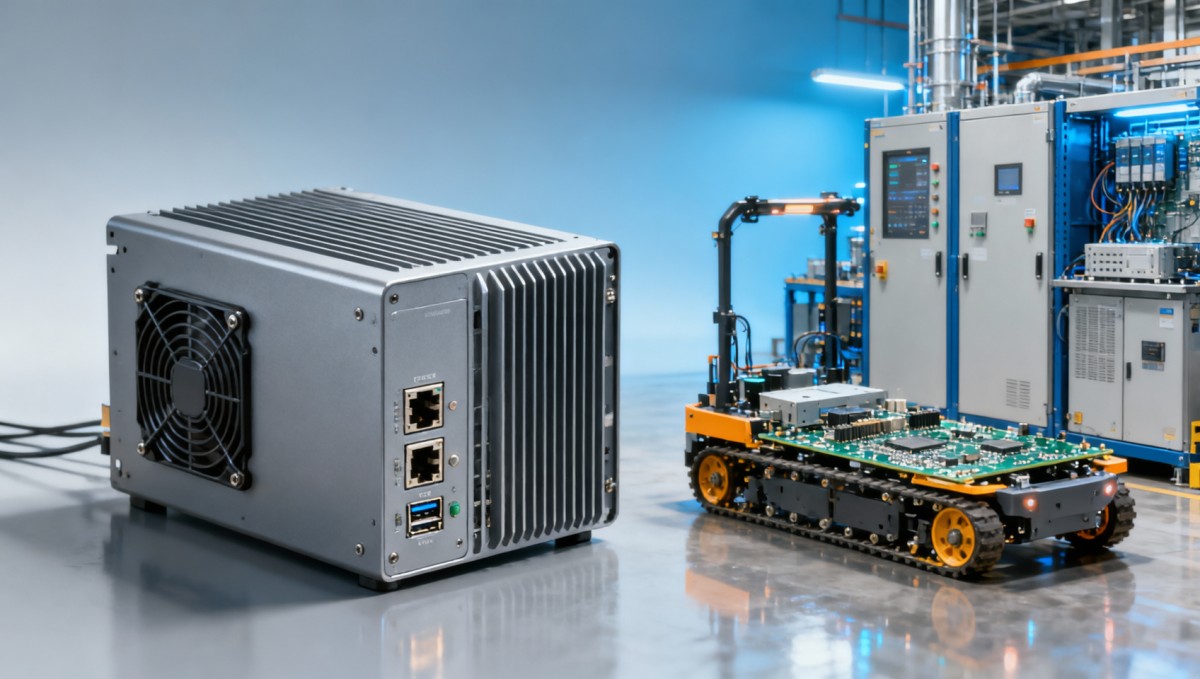
In wholesale procurement, the first visible number is often the quoted price per unit, but the actual decision should be based on total deployment risk across a 3–7 year lifecycle. For industrial computing, a lower purchase cost can quickly be offset by interface mismatch, unstable supply, thermal shutdowns, image maintenance complexity, and repeated field service. This is especially true in automation, machine vision, AGV AMR control, and edge gateway projects where downtime costs far more than hardware savings.
A strong embedded Linux industrial PC wholesale program is not just about buying boxes in bulk. It is about securing a stable hardware and software baseline that can support repeated rollouts in batches of 50, 200, or 1,000 units without constant engineering rework. For procurement teams, that means asking whether the platform can stay available for the required product life, whether the BIOS and board revision are controlled, and whether peripherals remain compatible after the first production lot.
This is where a data-driven review matters. TechStat Vanguard advocates a parameter-first approach: define operating temperature range, processor class, storage endurance, I/O count, mounting constraints, and compliance needs before discussing commercial terms. Parameters do not lie; tolerances dictate success. In noisy B2B channels, the safest path is to convert every “good performance” claim into measurable items such as serial port quantity, power input range, MTBF references, and thermal behavior under continuous load.
For information researchers and enterprise decision-makers, the practical question is simple: can this platform scale from pilot to volume deployment with predictable maintenance? If the answer is unclear, the quote is incomplete no matter how attractive it looks. A reliable fanless industrial computer factory or industrial motherboard OEM should be able to support specification review, sample validation, and revision traceability in a structured way, typically across 3 stages: evaluation, pilot, and mass rollout.
- Hardware continuity: confirm expected supply window, common refresh cycle, and change notification process before the first PO.
- Deployment fit: verify Linux distribution support, driver readiness, and remote update strategy for 24/7 environments.
- Field reliability: check thermal design, shock and vibration suitability, storage endurance, and connector retention.
- Commercial readiness: review MOQ, lead time, sample availability, customization scope, and after-sales escalation route.
What technical parameters matter most in embedded Linux industrial PC wholesale?
For operators and engineering teams, the best wholesale decision begins with workload mapping. A data logger, an HMI controller, an AI edge node, and an AGV compute unit do not need the same processor, storage, or I/O architecture. In practical sourcing, buyers should separate must-have parameters from optional upgrades. This reduces over-specification and shortens RFQ cycles by 1–2 rounds in many projects.
The usual baseline starts with CPU class, memory range, storage type, and interface density. For example, lightweight control tasks may prioritize low power draw and serial connectivity, while vision or edge inference deployments may need more CPU headroom, NVMe storage, and dual LAN. The Linux side matters equally: kernel compatibility, long-term maintenance image planning, and peripheral driver stability can determine whether 100 systems behave consistently in the field.
Thermal behavior is another major purchase criterion. A fanless design is often preferred in dusty or low-maintenance installations, but fanless only works when the chassis, processor TDP, ambient temperature, and mounting position are aligned. Typical industrial deployments may expect operation in ranges such as -10°C to 50°C or wider, but the useful question is whether the system can sustain the intended load continuously, not merely boot in a lab at room temperature.
To make specification review easier, the table below summarizes common evaluation points in embedded Linux industrial PC wholesale. These are not fixed rules for every project, but they help procurement teams compare offers from a fanless industrial computer factory, an industrial motherboard OEM, or a system integrator on a like-for-like basis.
This matrix helps buyers move the conversation away from generic terms and toward operational readiness. It also reflects TSV’s engineering-first principle: performance claims are useful only when tied to deployment conditions, test boundaries, and lifecycle assumptions. In practice, the best supplier discussions happen when technical teams submit a spec sheet with 5–8 non-negotiable items and 3–4 optional items, then request a matched configuration instead of a generic catalog quote.
Linux-specific checkpoints that procurement teams often overlook
Many buyers confirm hardware interfaces but forget to validate software support depth. In embedded Linux industrial PC wholesale, one missing driver or unstable kernel module can delay commissioning by 2–6 weeks. This is common in projects involving Wi-Fi modules, 4G or 5G communication, isolated I/O, touch panels, or GPU-assisted workloads.
A disciplined review should include boot behavior, watchdog implementation, remote management method, image cloning process, and storage write endurance strategy. If the application writes logs every minute or stores image data continuously, storage selection becomes a reliability issue, not just a capacity issue. Procurement teams should ask for practical deployment guidance, not only a parts list.
Industrial operators also benefit from standardized image management. If one Linux image can support 80% of installed systems and only 20% need interface-specific variation, maintenance becomes far easier across factories, vehicles, kiosks, or field devices. This is where an experienced industrial motherboard OEM can add value through BIOS alignment, module validation, and controlled board change procedures.
Which application scenarios demand different wholesale strategies?
Not every embedded Linux industrial PC wholesale project should be sourced the same way. The right strategy depends on workload, environment, serviceability, and batch size. AGV AMR fleets, edge AI gateways, machine control cabinets, and outdoor industrial terminals may all use Linux, but their risk profiles differ sharply. Matching sourcing strategy to scenario helps both procurement and operations teams avoid expensive overdesign.
For AGV AMR deployments, vibration tolerance, DC input flexibility, wireless expansion, and real-time peripheral connectivity are usually more important than cosmetic enclosure design. For machine automation, long-term I/O stability and legacy serial compatibility often dominate. For edge analytics, sustained processing, dual network isolation, and storage integrity become key. A single wholesale policy rarely fits all three scenarios.
The following comparison table helps teams decide what to prioritize by use case. It is especially useful when multiple internal stakeholders are involved, such as R&D, plant operations, and purchasing, each with different success criteria and different tolerance for implementation risk.
The core lesson is that “industrial PC” is too broad to guide wholesale procurement. Buyers need scenario-led sourcing. That means defining whether the platform is mobile, cabinet-mounted, edge-facing, or semi-outdoor, then screening suppliers accordingly. This structured approach reduces supplier mismatch and helps avoid unnecessary redesign after pilot deployment.
How scenario mapping improves cross-functional decisions
Information researchers often collect broad market options, while operators focus on maintenance convenience and procurement focuses on cost and delivery. Scenario mapping bridges these priorities. If the project team identifies 4 key conditions—environment, compute load, interfaces, and service model—then it becomes easier to compare a fanless industrial computer factory against an industrial motherboard OEM or a branded system reseller.
This also supports clearer RFQ language. Instead of asking for “a rugged Linux box,” the team can ask for a fanless embedded platform with dual LAN, 4 COM, 2 USB3, 9–36V input, Ubuntu or Debian support, and stable availability for at least one planned product cycle. Better RFQs lead to better offers, shorter clarification loops, and stronger supplier accountability.
At TSV, this is the preferred way to filter commercial noise. Engineering truth starts when application boundaries are explicit. Once the scenario is well defined, the conversation moves from sales adjectives to specification traceability, integration effort, and lifecycle stability.
How to evaluate suppliers: fanless industrial computer factory vs industrial motherboard OEM vs integrator
Supplier selection in embedded Linux industrial PC wholesale is not only about who offers the lowest quote or the fastest first sample. It is about which business model best matches your internal capabilities. Some buyers need a ready-to-deploy system with enclosure, thermal tuning, and software image support. Others need an industrial motherboard OEM that can align to a custom housing or a proprietary carrier design. Choosing the wrong supplier type can add 1–3 extra integration cycles.
A fanless industrial computer factory is often suitable when the buyer wants a complete platform with defined interfaces, standard mounting, and moderate customization. An industrial motherboard OEM may be better when the project requires custom chassis integration, proprietary I/O mapping, or a private-label product. An integrator can add value when software, peripherals, and deployment service must be bundled, but buyers should still verify hardware revision control and Linux support depth.
The selection process should combine technical and commercial filters. Good procurement teams typically evaluate 5 dimensions: product fit, lifecycle support, engineering responsiveness, delivery stability, and documentation quality. For larger programs, it is useful to add change management and sample-to-mass-production consistency as separate checks.
A practical 6-point supplier screening checklist
Before confirming a wholesale partner, use a structured screening method rather than relying on catalog claims. This helps enterprise decision-makers compare offers from different supplier types under the same frame.
- Ask for lifecycle guidance: what is the expected supply period, and how are board or CPU changes communicated?
- Review Linux readiness: which distributions are commonly supported, and what peripherals are already validated?
- Confirm customization scope: BIOS logo, I/O layout, enclosure changes, mounting options, and labeling are not equal across suppliers.
- Check sample and lead-time rhythm: common steps include sample in 7–15 days, pilot in 2–4 weeks, then volume scheduling by forecast.
- Validate documentation quality: mechanical drawings, interface definitions, power notes, and software image instructions should be usable by engineers.
- Discuss service escalation: identify who handles hardware issues, software adaptation questions, and replacement logistics after deployment.
This checklist reflects a broader TSV principle: a supplier should be measurable by engineering behavior, not only by marketing language. If a vendor cannot explain revision control, thermal limits, or Linux adaptation boundaries clearly, the risk is likely to surface after purchasing, when the cost of correction is much higher.
What enterprise buyers should ask before approving volume orders
Enterprise procurement and CTO teams should ask three direct questions before signing a larger batch. First, what changes are possible without affecting software compatibility? Second, what components have the highest supply volatility? Third, how will the supplier support replacement, requalification, or equivalent alternatives if the supply chain shifts? These questions matter more than headline discount percentages in long-running industrial programs.
This matters especially in mixed fleets where some units are deployed indoors and others in mobile or edge conditions. A supplier that can support configuration control, staged qualification, and transparent communication usually creates lower total risk even if the initial quote is not the cheapest.
Common mistakes, compliance considerations, and FAQ for wholesale buyers
Embedded Linux industrial PC wholesale projects often fail for avoidable reasons. The most common mistake is treating industrial computing like commodity office hardware. Industrial environments introduce power instability, interface legacy, thermal constraints, and much longer maintenance expectations. Another frequent issue is approving samples before defining batch-level acceptance criteria, which leads to disagreement later on software image, I/O behavior, or enclosure details.
Compliance should also be considered early. Requirements vary by market and application, but buyers commonly need to review EMC expectations, power input protection, environmental suitability, and product documentation completeness. In sectors tied to automation, transportation equipment, medical subsystems, or aerospace-adjacent testing, it is especially important to define what the industrial PC is responsible for and what must be covered at the full system level.
The FAQ below addresses frequent buyer concerns using practical sourcing logic rather than generic promises. It is useful for researchers building shortlists, operators preparing deployment, and decision-makers aligning technical and commercial expectations.
How do I choose between a standard model and a customized industrial PC?
If 70%–80% of your requirements are already covered by a standard model, start there and customize only what affects deployment, such as mounting, DC input behavior, labeling, or port layout. Full customization is more suitable when you need proprietary enclosures, unique I/O mapping, or a private-label roadmap. Standard platforms usually reduce launch time, while custom programs can improve long-term product fit if volumes justify the engineering effort.
What is a reasonable lead time in embedded Linux industrial PC wholesale?
Lead time depends on stock position, customization level, and component volatility. A common pattern is 7–15 days for standard evaluation samples, 2–4 weeks for pilot configurations, and longer scheduling for volume orders tied to forecast and component allocation. Buyers should ask for separate timelines for sample, pilot, and mass production instead of relying on one blanket estimate.
Which technical documents should procurement request before issuing a PO?
At minimum, request a specification sheet, mechanical drawing, interface description, power input notes, supported operating system guidance, and storage or thermal usage notes where relevant. For custom or semi-custom projects, add revision tracking rules, acceptance criteria, and change notification expectations. These documents help prevent disputes between sample approval and production delivery.
Are certifications always required at the component level?
Not always. Many compliance requirements are assessed at the final system level rather than on one computing subassembly alone. Still, buyers should clarify target markets, industry use case, enclosure design, power architecture, and interface exposure early. This prevents false assumptions and ensures the industrial PC selection supports the broader compliance plan.
Why work with a data-driven technical partner before placing your next wholesale order?
In embedded Linux industrial PC wholesale, the highest-value partner is the one that helps your team define the right specification before volume procurement begins. That is the gap TSV is built to address. We focus on engineering truth, not catalog hype, by translating industrial computing decisions into measurable criteria: lifecycle stability, I/O architecture, thermal limits, Linux readiness, and supply-chain traceability.
For information researchers, we help narrow the market into technically comparable options. For users and operators, we highlight the factors that affect maintenance, uptime, and field replacement. For procurement teams, we structure supplier comparison around 5–6 real decision dimensions instead of sales language. For enterprise decision-makers, we reduce trial-and-error costs by making specification boundaries clearer before capital and timeline commitments are made.
If you are comparing a fanless industrial computer factory, evaluating an industrial motherboard OEM, or planning an AGV AMR or edge rollout, contact us with your required CPU class, I/O list, operating temperature target, power input range, Linux preference, batch volume, and expected delivery window. We can help you review parameter priorities, shortlist suitable platform types, identify customization risk, and align sample planning with procurement milestones.
You can also reach out for support on specification confirmation, product selection, typical lead-time planning, custom configuration discussion, documentation checklist review, certification boundary clarification, sample evaluation strategy, and quote comparison. In industrial procurement, better questions lead to better outcomes. TSV helps you ask the questions that matter before the cost of being wrong multiplies across the full deployment cycle.
Search News
Hot Articles
- Carbon Fiber StructuresHow to Specify Aerospace Carbon Fiber Assemblies for Lightweight, Load-Bearing PartsJul 11, 2026
- Machine VisionXiaomi, Alibaba DAMO Academy Drive Open-Source Robotics Model Ecosystem, Lowering Algorithm Development Barriers for Overseas SMEs Adopting Chinese Robotics SolutionsMar 30, 2026
- Cobots & ArmsShanxi 'AI+' Conference Showcases Embodied Intelligence with Multinational Buyer Engagement: Key Industry ImplicationsMar 30, 2026
Popular Tags
Recommended News
 Jul 11, 2026How to Specify Aerospace Carbon Fiber Assemblies for Lightweight, Load-Bearing PartsAerospace carbon fiber assemblies: learn how to specify laminate design, load data, joining methods, and inspection controls for lighter, reliable load-bearing aerospace parts.Elena Rostova (UAV Systems Researcher)
 Mar 30, 2026Xiaomi, Alibaba DAMO Academy Drive Open-Source Robotics Model Ecosystem, Lowering Algorithm Development Barriers for Overseas SMEs Adopting Chinese Robotics SolutionsXiaomi & Alibaba DAMO Academy's open-source robotics models lower algorithm barriers for global SMEs. Boost efficiency in manufacturing, logistics & smart retail with ROS 2 compatible solutions.TSV Data Lab
 Mar 30, 2026Shanxi 'AI+' Conference Showcases Embodied Intelligence with Multinational Buyer Engagement: Key Industry ImplicationsShanxi 'AI+' Conference highlights embodied intelligence with Tesla, Ubtech & Jiantao showcasing multimodal robotics. 40+ global buyers validated tech on-site, creating new B2B channels for industrial automation & AI solutions.Chen Wei (Automation Lead Engineer)
 Mar 30, 2026Zhongguancun Unveils 6G Integrated Sensing-Computing-Intelligence Platform to Empower Embodied Robots for Global Industrial ApplicationsZhongguancun's new 6G platform revolutionizes industrial robotics with <10ms latency, empowering global automotive, logistics & port automation. Discover how this tech boosts China's smart manufacturing exports.TSV Data Lab
 Mar 30, 2026Mech-Mind Tianjin Embodied Intelligence R&D and Production Base Goes Live, Cutting Delivery Time by 20%–30% for Global Customized AMR+Vision SolutionsMech-Mind's Tianjin AMR+Vision production base cuts delivery time by 20%-30% for欧美 & Latin American markets. Discover how this PLd-certified facility accelerates customized robotics solutions for smart manufacturing and logistics.Chen Wei (Automation Lead Engineer)
 Mar 30, 2026Boao Forum Reveals 'Co-evolution of Big and Small Brains' Trend in Humanoid Robots, China's Embodied Intelligence Accelerates Adaptation to Overseas Manufacturing Service ScenariosDiscover how China's humanoid robots, featuring 'Co-evolution of Big and Small Brains,' are revolutionizing global manufacturing. Learn about Embodied Tian Gong 3.0's ISO compliance and overseas deployment at Boao Forum 2026.Chen Wei (Automation Lead Engineer)
 Mar 30, 2026China Railway Industrial Secures Patent for Embodied Robotics in Material Handling, Boosting High-Precision Delivery Capabilities for Overseas Infrastructure and Manufacturing ProjectsChina Railway Industrial's new patent for embodied robotics in material handling boosts high-precision delivery for global infrastructure & manufacturing. Discover how this innovation enhances logistics accuracy in automotive, rail transit & EPC projects.Chen Wei (Automation Lead Engineer)
 Oct 18, 2026Comparing Material Options for Procurement: Specs, Costs, and Supply RisksExplore procurement oriented technical content on material options, specs, costs, and supply risks. Compare alternatives to cut hidden expenses and make confident sourcing decisions.Dr. Marcus Vance
 Oct 17, 20265-Axis CNC Positioning Accuracy: How to Interpret ISO 230-2 Test ResultsAssess 5 axis CNC machining positioning accuracy with ISO 230-2. Learn to interpret repeatability, reversal error, and test conditions to compare suppliers and make confident acceptance decisions.Dr. Marcus Vance
 Oct 16, 2026Choosing a Rugged Edge AI Box Supplier: Thermal Tests and Lifecycle SupportChoose a rugged edge AI box supplier with proven thermal performance and reliable lifecycle support. Discover the tests and commitments to verify before you buy.TSV Data Lab
 Oct 15, 2026R&D Cost Reduction Services: How to Evaluate Fees, Savings, and ROIEvaluate R&D cost reduction services with confidence. Compare fees, verify savings, and calculate ROI without compromising performance. Discover how to choose a provider that delivers real value.Chen Wei (Automation Lead Engineer)
 Oct 17, 2026How Should You Interpret Industrial Robot Repeatability Specs?Decode industrial robot repeatability specifications, understand ISO 9283 test conditions, and avoid costly selection mistakes. Learn how to verify performance for your process.Chen Wei (Automation Lead Engineer)
 Oct 16, 2026How Can You Fairly Compare MTBF Across Industrial Servo Motors?Make a fair industrial servo motor MTBF comparison with matched operating profiles, failure criteria, and confidence bounds. Discover how to assess reliability beyond advertised numbers.Chen Wei (Automation Lead Engineer)
 Oct 15, 2026How Should You Compare TechStat Vanguard 5-Axis CNC Tolerances?TechStat Vanguard 5-axis CNC tolerance comparison: learn how to verify part accuracy, assess inspection evidence, and choose suppliers that reliably meet your drawing requirements.Dr. Marcus Vance
 Oct 14, 2026Drone Frame Composites: Carbon Fiber vs. Fiberglass for Weight and StiffnessExplore drone structural materials composites: compare carbon fiber and fiberglass for weight, stiffness, cost, and antenna compatibility. Find the right material for your drone frame.Elena Rostova (UAV Systems Researcher)
 Oct 13, 2026Smart Cameras vs. PC-Based Machine Vision: Which Fits High-Speed Inspection?This industrial product comparison for machine vision weighs smart cameras vs. PC-based systems on latency, throughput, and cost. Discover your best fit for high-speed inspection.TSV Data Lab
 Oct 12, 2026How to Verify RoHS Compliance in Industrial Sensing Systems Before DeploymentRoHS compliant sensing systems: learn how to verify materials, supplier declarations, testing, and configuration controls before industrial deployment.TSV Data Lab
 Oct 11, 2026How Procurement-Oriented Content Taxonomy Improves B2B Buying JourneysProcurement-oriented content taxonomy streamlines B2B buying journeys with clearer evidence, supplier comparisons, risk visibility, and faster approvals.TSV Data Lab
 Oct 10, 2026How to Select a Machine Performance Monitoring Platform for OEE and Downtime ReductionMachine performance monitoring platform selection guide: validate machine states, OEE data, downtime reasons, integrations, and scalability to reduce losses with confidence.TSV Data Lab
 Oct 08, 2026How to Machine Inconel 625 Blades Without Heat Cracks or Edge ChippingInconel 625 blade machining guide: prevent heat cracks, edge chipping, chatter, and work hardening with proven tooling, cooling, fixturing, and inspection strategies.Dr. Marcus Vance
 Oct 07, 2026How to Evaluate an HMI Panel Distributor for Industrial Automation ProjectsHMI panel distributor evaluation guide: verify technical compatibility, traceability, supply reliability, lifecycle support, and total cost for automation projects.Victor Lin (Chief Software Architect)
 Oct 06, 2026Navigation Fault Tolerance Standards for AMRs: What Safety Teams Must VerifyNavigation fault tolerance standards: learn what AMR safety teams must verify, from localization loss and sensor faults to stopping distance, safe restart, and site-specific validation.Chen Wei (Automation Lead Engineer)
 Oct 05, 2026Calculating Edge Computing Total Cost of Ownership Across Distributed SitesEdge computing ownership cost explained: calculate deployment, energy, connectivity, security, remote support, and refresh costs across distributed sites.TSV Data Lab
 Oct 04, 2026CAD/CAM Benchmarking in the GCC: What Manufacturers Should Ask a ConsultantCAD CAM benchmark consultant GCC guide: learn the key questions manufacturers should ask to validate post-processors, workflows, machine performance, and production risk.Victor Lin (Chief Software Architect)























