
Water treatment SCADA alarms that create noise instead of action
Publication Date
author
In many facilities, a scada system for water treatment plant operations generates alarm floods that overwhelm operators instead of driving action. This article examines why poorly structured alert logic creates noise, how smarter prioritization and hvac automation control logic principles improve response, and what decision-makers should evaluate to turn SCADA alarms into measurable operational control.
Why do water treatment SCADA alarms become noise instead of operational control?
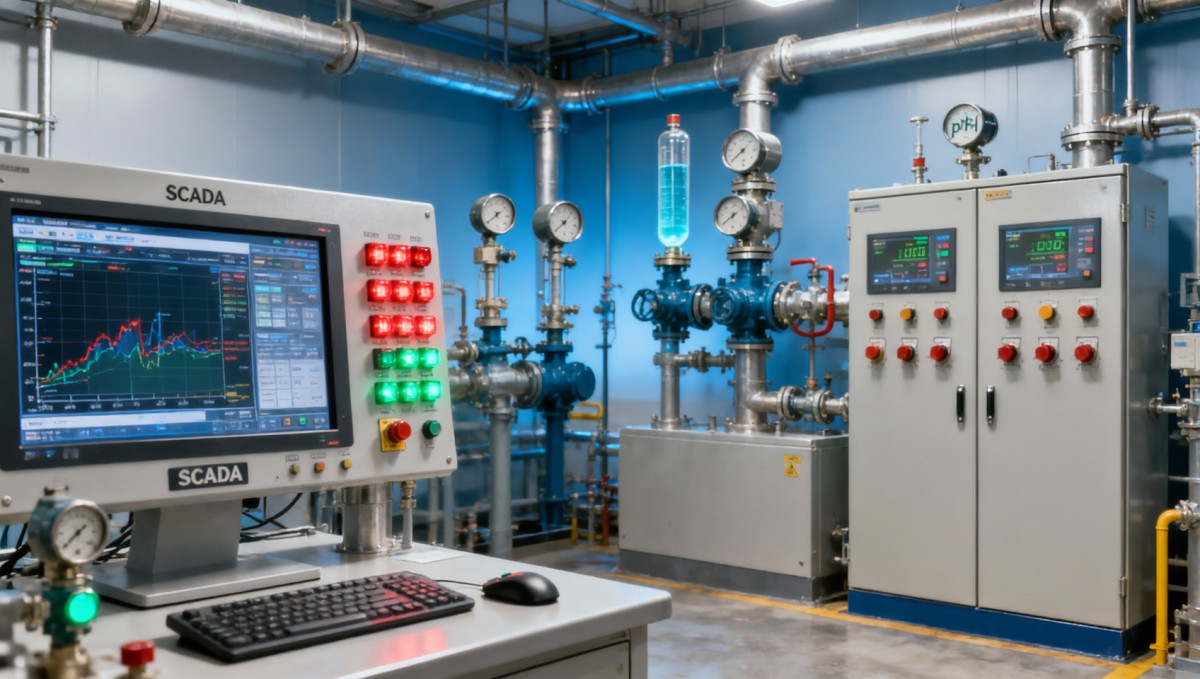
A water treatment SCADA environment should help operators identify abnormal conditions within seconds, not bury them under hundreds of repetitive messages. In practice, alarm noise often comes from weak design discipline rather than from plant complexity alone. Poor deadbands, duplicate points, cascading alerts, and missing delay timers can turn one process upset into 20–50 notifications across pumps, valves, chemical dosing, and remote telemetry channels.
For operators, the result is simple but serious: the human-machine interface becomes crowded, acknowledgment behavior becomes routine, and alarm response quality drops during the first 2–5 minutes of an event. For procurement teams and plant managers, alarm overload creates a hidden cost. The issue is not only nuisance screens; it is slower incident isolation, more callouts, and a weaker audit trail for compliance, maintenance, and post-event review.
This is where TechStat Vanguard’s engineering-first position matters. TSV focuses on parameters, logic quality, and measurable thresholds rather than marketing labels. In alarm management, that means asking hard questions: What is the true trigger threshold? What is the delay time? Which alarms are actionable within 30 seconds, 5 minutes, or 1 shift? If no action changes the process outcome, it may be an event, not an alarm.
Across municipal, industrial, and hybrid treatment facilities, the same pattern appears. The SCADA layer is often expanded over 3–10 years, while alarm philosophy remains undocumented or inconsistent across integrators. One area uses priority by consequence, another uses priority by equipment type, and a third uses no consistent rule at all. The plant ends up with visibility, but not control.
The most common sources of alarm flooding
Alarm noise in water treatment rarely begins with a single software error. It usually grows from small design shortcuts made during commissioning, expansion, or emergency retrofits. These shortcuts are understandable under time pressure, but they accumulate into a system that reports everything with similar urgency.
- Analog thresholds are set too close to normal process variation, so level, turbidity, pH, pressure, or flow alarms chatter during routine fluctuation.
- Single equipment failures create duplicate alarms at device, process, communication, and summary levels, producing 4–8 alarms for one root cause.
- Priority settings are based on habit rather than consequence, which causes advisory messages to appear beside safety, compliance, or plant-wide continuity issues.
- Shelving, suppression, and state-based logic are missing, so assets under maintenance or offline modes continue to generate unnecessary alarm traffic.
The technical lesson is direct: a SCADA system for water treatment plant reliability cannot depend on raw point count. It must depend on action relevance. Alarm design should distinguish between information events, maintenance reminders, operator advisories, and true alarms that demand intervention.
What actionable alarm design looks like in real plant scenarios
Actionable alarm design starts with a clear operating model. In a water treatment plant, operators do not respond to alarms in the abstract. They respond by changing flow paths, starting standby pumps, isolating a failed instrument, confirming chemical feed, or escalating to maintenance. The best SCADA alarm strategy therefore maps each alarm to a specific operator action, expected response window, and escalation path.
A practical method is to classify alarms into 3 core layers: immediate process protection, quality/compliance control, and maintenance or performance alerts. Immediate process protection alarms often need action within 30–120 seconds. Compliance alarms may permit a 5–15 minute response depending on storage, buffering, or process redundancy. Maintenance alerts can be reviewed per shift or per day without competing with urgent process conditions.
The influence of hvac automation control logic is useful here. HVAC systems often use delay timers, lockouts, equipment status verification, and sequence-aware alarms to avoid nuisance conditions during startup, shutdown, or mode changes. Water treatment SCADA can apply the same logic discipline. For example, a low-flow alarm should not activate instantly during a planned pump transfer if the process sequence already predicts a 10–20 second dip.
Another key practice is alarm rationalization by operating state. Raw water intake, backwash, chemical cleaning, maintenance bypass, and generator operation should not share identical alarm behavior. State-based alarming reduces noise while preserving risk visibility. When designed well, it lowers alarm count during transitions and improves operator trust in the control room.
Scenario-based alarm priorities in water treatment
The table below shows how alarm priority becomes more meaningful when linked to consequence, response time, and operator action rather than to generic labels.
The point is not to reduce alarm count at any cost. The goal is to ensure that a critical water treatment SCADA alarm means something specific, appears at the right time, and supports a real decision. A plant with fewer but better-structured alarms usually achieves more stable response quality than one with extensive but undifferentiated alerting.
Three checks that separate useful alarms from noise
Before keeping any alarm in the active list, engineering and operations teams should test three questions. First, does the alarm indicate an abnormal condition that is not already obvious from another validated alarm? Second, can an operator or supervisor take a defined action within a known time window? Third, does the alarm priority match process consequence, not just equipment visibility?
If the answer is no to any of those questions, the point may belong in a trend, maintenance dashboard, event log, or report rather than in the live alarm banner. This distinction is essential for plants trying to improve operator performance without increasing staffing levels.
Which technical parameters and logic settings should buyers and engineers verify?
When evaluating a SCADA system for water treatment plant use, buyers should ask for much more than a point list and screen samples. The quality of alarm behavior depends on configuration discipline. That includes deadbands, delay timers, latching rules, acknowledgment logic, shelving permissions, suppression by state, sequence awareness, historian integration, and audit trail retention. If these items are not documented, long-term noise problems are likely.
Technical reviews should include both process alarms and infrastructure alarms. Water treatment plants depend on PLC health, network segments, remote I/O, radio or fiber links, UPS status, and cybersecurity boundaries. A communication loss alarm that appears after 1 second may be too aggressive for one site, while a 5-minute delay may be too slow for another. What matters is engineering fit, not generic defaults.
TSV’s data-driven approach is especially relevant during specification drafting. Procurement teams often receive proposals full of interface claims but short on control logic detail. A stronger specification asks for exact treatment of alarm persistence, analog filtering, event versus alarm classification, and state-based suppression conditions. This reduces ambiguity during factory acceptance and site acceptance phases.
The following checklist helps information researchers, operators, and decision-makers verify whether the offered alarm design is robust enough for real plant conditions rather than for demonstration screens.
Alarm configuration review checklist for procurement and commissioning
Use this table to compare vendors, system integrators, or upgrade paths against concrete engineering criteria. It is especially useful during front-end design, FAT preparation, and final acceptance.
This table highlights a recurring procurement reality: the costliest alarm problems are usually not hardware problems. They are definition problems. A proposal can include reliable PLCs, good HMIs, and redundant servers yet still produce poor field performance if logic treatment is not written clearly into the specification and acceptance plan.
Useful standards and engineering references to keep in scope
Plants and integrators may draw on general alarm management and automation practices such as ISA-18.2 concepts, IEC-oriented control design discipline, cybersecurity segmentation guidance, and site-specific operating procedures. The key is not to claim compliance without evidence, but to define an internal alarm philosophy that is consistent, testable, and suitable for a 24/7 treatment environment.
For buyers, a practical requirement is a documented alarm philosophy plus rationalization records delivered before final commissioning. That package should cover priority rules, naming convention, suppression logic, operator guidance text, and a review workflow after the first 30–90 days of live operation.
How should facilities compare retrofit, optimization, and full replacement options?
Not every plant with noisy alarms needs a complete SCADA replacement. In many cases, the fastest path to better control is an alarm rationalization and logic optimization project layered onto the existing platform. However, some sites face deeper constraints such as obsolete versions, fragmented tag naming, unsupported drivers, or no historian integrity. The right decision depends on system age, process criticality, and operational debt.
A retrofit approach often works when the installed platform remains stable, cybersecurity patching is manageable, and the main issue is alarm design quality. A partial modernization is more appropriate when the site has uneven architecture across multiple process areas or remote stations. A full replacement becomes easier to justify when supportability, redundancy, and lifecycle risk threaten plant continuity over the next 3–7 years.
For procurement teams, the mistake is to compare only capital cost. They should compare engineering hours, production risk during migration, operator retraining, data continuity, testing workload, and the expected time to measurable alarm reduction. A lower-cost upgrade can become expensive if it does not address root-cause logic quality.
The comparison below gives a practical decision framework for water treatment operators, maintenance leaders, and enterprise decision-makers evaluating next steps.
Decision comparison for improving noisy SCADA alarms
A disciplined evaluation should estimate not just implementation duration, but how quickly each option can reduce nuisance alarm load, improve first-response quality, and create a cleaner audit trail. In many plants, the winning strategy is phased: rationalize alarms first, modernize critical process areas second, and replace the whole platform only when lifecycle and business case align.
A practical 4-step implementation path
- Baseline the current system over 2–4 weeks, including alarm counts, repeat alarms, standing alarms, and shift-specific patterns.
- Run alarm rationalization workshops with operations, maintenance, process engineering, and integrator representatives.
- Implement revised logic in controlled phases, with test scripts for startup, shutdown, manual mode, comms failure, and sequence transitions.
- Review performance after 30, 60, and 90 days to tune deadbands, delays, and operator guidance text based on live behavior.
This phased model helps plants improve a scada system for water treatment plant performance without losing process confidence during change. It also gives procurement leaders a clearer scope for budgeting, acceptance criteria, and vendor accountability.
What are the common misconceptions, risks, and FAQ buyers should address early?
Noisy alarms are often tolerated because teams assume they are inevitable in complex plants. That assumption is expensive. Alarm overload is usually a design and governance issue. It can be improved with structured review, better logic, and clearer ownership between operations, controls engineering, and maintenance. The earlier this is recognized, the lower the lifecycle cost.
Another misconception is that more alarms always mean more safety. In reality, operator effectiveness decreases when low-value alerts compete with high-consequence conditions. Plants need enough visibility, but they also need hierarchy, context, and timing. An alarm that arrives too often or too early becomes background noise, even if the tag itself is technically correct.
A third risk appears during procurement: teams ask for “advanced alarm management” without defining what that means. If there is no requirement for rationalization workflow, suppression matrix, delayed alarming, and post-commission review, vendors may deliver interface features without operational improvement. Precision in the specification prevents this gap.
The FAQ below addresses the questions most often raised by information researchers, operators, purchasing teams, and decision-makers comparing system improvement paths.
How do we know if an alarm is actionable?
An actionable alarm should indicate an abnormal state, require a defined response, and fit a realistic time window. If the operator cannot do anything within 30 seconds, 5 minutes, or one operating shift, the point may be better classified as an event, advisory, or maintenance notice. Actionability should be written into the alarm philosophy and visible in operator guidance text.
What should we ask vendors during SCADA alarm reviews?
Ask for the priority matrix, deadband method, delay timer rules, suppression by mode, standing alarm review process, historian retention approach, and FAT/SAT test coverage for alarms. Also ask how they handle duplicate alarms from PLC logic, HMI layers, and communication diagnostics. These questions reveal engineering maturity much faster than screen demos.
Can HVAC automation control logic really help water treatment SCADA design?
Yes, especially in sequence awareness and nuisance reduction. HVAC automation control logic often uses verification delays, lockouts, and state-based handling to prevent false alarms during transitions. Water treatment processes with pump swaps, valve sequencing, backwash cycles, and chemical dosing changes benefit from the same principles when they are adapted carefully to process risk and compliance needs.
How long does alarm improvement usually take?
A focused rationalization effort can start showing results in 2–8 weeks for a limited scope, while broader modernization may run over 1–3 quarters. The timeline depends on point count, documentation quality, approval workflow, and whether the plant can test logic changes during live operation or only during planned outages. Good baseline data shortens the cycle.
Why work with a data-driven technical partner on SCADA alarm optimization?
Decision-makers do not need another vague promise of a smarter platform. They need a clear method for reducing alarm noise, verifying thresholds, and aligning operator response with measurable process consequence. That is exactly where TechStat Vanguard adds value. TSV approaches water treatment SCADA alarms the same way it approaches broader hard-tech benchmarking: by stripping away claims and focusing on logic, parameters, and evidence.
If your team is assessing a scada system for water treatment plant upgrade, vendor comparison, or alarm rationalization project, the most useful starting point is a technical review anchored in operating data. That review can cover 3 categories: current alarm behavior, control logic quality, and procurement specification gaps. From there, it becomes easier to decide whether you need optimization, phased modernization, or full replacement.
You can contact TSV to discuss concrete topics such as alarm priority criteria, deadband and timer review, operator action mapping, retrofit versus replacement evaluation, delivery phase planning, and documentation requirements for FAT, SAT, and post-startup tuning. These are the issues that shorten supplier qualification cycles and reduce expensive trial-and-error in live facilities.
For engineering teams, operators, procurement managers, and enterprise leaders, the objective is not simply fewer alarms. It is a control environment where each alert supports a decision, each threshold has a reason, and each investment improves plant resilience. That is how noise becomes action, and how data engineers the truth.
Search News
Hot Articles
- Carbon Fiber StructuresHow to Specify Aerospace Carbon Fiber Assemblies for Lightweight, Load-Bearing PartsJul 11, 2026
- Machine VisionXiaomi, Alibaba DAMO Academy Drive Open-Source Robotics Model Ecosystem, Lowering Algorithm Development Barriers for Overseas SMEs Adopting Chinese Robotics SolutionsMar 30, 2026
- Cobots & ArmsShanxi 'AI+' Conference Showcases Embodied Intelligence with Multinational Buyer Engagement: Key Industry ImplicationsMar 30, 2026
Popular Tags
Recommended News
 Jul 11, 2026How to Specify Aerospace Carbon Fiber Assemblies for Lightweight, Load-Bearing PartsAerospace carbon fiber assemblies: learn how to specify laminate design, load data, joining methods, and inspection controls for lighter, reliable load-bearing aerospace parts.Elena Rostova (UAV Systems Researcher)
 Mar 30, 2026Xiaomi, Alibaba DAMO Academy Drive Open-Source Robotics Model Ecosystem, Lowering Algorithm Development Barriers for Overseas SMEs Adopting Chinese Robotics SolutionsXiaomi & Alibaba DAMO Academy's open-source robotics models lower algorithm barriers for global SMEs. Boost efficiency in manufacturing, logistics & smart retail with ROS 2 compatible solutions.TSV Data Lab
 Mar 30, 2026Shanxi 'AI+' Conference Showcases Embodied Intelligence with Multinational Buyer Engagement: Key Industry ImplicationsShanxi 'AI+' Conference highlights embodied intelligence with Tesla, Ubtech & Jiantao showcasing multimodal robotics. 40+ global buyers validated tech on-site, creating new B2B channels for industrial automation & AI solutions.Chen Wei (Automation Lead Engineer)
 Mar 30, 2026Zhongguancun Unveils 6G Integrated Sensing-Computing-Intelligence Platform to Empower Embodied Robots for Global Industrial ApplicationsZhongguancun's new 6G platform revolutionizes industrial robotics with <10ms latency, empowering global automotive, logistics & port automation. Discover how this tech boosts China's smart manufacturing exports.TSV Data Lab
 Mar 30, 2026Mech-Mind Tianjin Embodied Intelligence R&D and Production Base Goes Live, Cutting Delivery Time by 20%–30% for Global Customized AMR+Vision SolutionsMech-Mind's Tianjin AMR+Vision production base cuts delivery time by 20%-30% for欧美 & Latin American markets. Discover how this PLd-certified facility accelerates customized robotics solutions for smart manufacturing and logistics.Chen Wei (Automation Lead Engineer)
 Mar 30, 2026Boao Forum Reveals 'Co-evolution of Big and Small Brains' Trend in Humanoid Robots, China's Embodied Intelligence Accelerates Adaptation to Overseas Manufacturing Service ScenariosDiscover how China's humanoid robots, featuring 'Co-evolution of Big and Small Brains,' are revolutionizing global manufacturing. Learn about Embodied Tian Gong 3.0's ISO compliance and overseas deployment at Boao Forum 2026.Chen Wei (Automation Lead Engineer)
 Mar 30, 2026China Railway Industrial Secures Patent for Embodied Robotics in Material Handling, Boosting High-Precision Delivery Capabilities for Overseas Infrastructure and Manufacturing ProjectsChina Railway Industrial's new patent for embodied robotics in material handling boosts high-precision delivery for global infrastructure & manufacturing. Discover how this innovation enhances logistics accuracy in automotive, rail transit & EPC projects.Chen Wei (Automation Lead Engineer)
 Oct 13, 2026Smart Cameras vs. PC-Based Machine Vision: Which Fits High-Speed Inspection?This industrial product comparison for machine vision weighs smart cameras vs. PC-based systems on latency, throughput, and cost. Discover your best fit for high-speed inspection.TSV Data Lab
 Oct 12, 2026How to Verify RoHS Compliance in Industrial Sensing Systems Before DeploymentRoHS compliant sensing systems: learn how to verify materials, supplier declarations, testing, and configuration controls before industrial deployment.TSV Data Lab
 Oct 11, 2026How Procurement-Oriented Content Taxonomy Improves B2B Buying JourneysProcurement-oriented content taxonomy streamlines B2B buying journeys with clearer evidence, supplier comparisons, risk visibility, and faster approvals.TSV Data Lab
 Oct 10, 2026How to Select a Machine Performance Monitoring Platform for OEE and Downtime ReductionMachine performance monitoring platform selection guide: validate machine states, OEE data, downtime reasons, integrations, and scalability to reduce losses with confidence.TSV Data Lab
 Oct 08, 2026How to Machine Inconel 625 Blades Without Heat Cracks or Edge ChippingInconel 625 blade machining guide: prevent heat cracks, edge chipping, chatter, and work hardening with proven tooling, cooling, fixturing, and inspection strategies.Dr. Marcus Vance
 Oct 07, 2026How to Evaluate an HMI Panel Distributor for Industrial Automation ProjectsHMI panel distributor evaluation guide: verify technical compatibility, traceability, supply reliability, lifecycle support, and total cost for automation projects.Victor Lin (Chief Software Architect)
 Oct 06, 2026Navigation Fault Tolerance Standards for AMRs: What Safety Teams Must VerifyNavigation fault tolerance standards: learn what AMR safety teams must verify, from localization loss and sensor faults to stopping distance, safe restart, and site-specific validation.Chen Wei (Automation Lead Engineer)
 Oct 05, 2026Calculating Edge Computing Total Cost of Ownership Across Distributed SitesEdge computing ownership cost explained: calculate deployment, energy, connectivity, security, remote support, and refresh costs across distributed sites.TSV Data Lab
 Oct 04, 2026CAD/CAM Benchmarking in the GCC: What Manufacturers Should Ask a ConsultantCAD CAM benchmark consultant GCC guide: learn the key questions manufacturers should ask to validate post-processors, workflows, machine performance, and production risk.Victor Lin (Chief Software Architect)
 Oct 03, 2026Selecting Automotive Radar Sensor Modules for ADAS Range, Resolution, and IntegrationAutomotive radar sensor module selection guide for ADAS: compare range, resolution, field of view, latency, and integration to build safer, reliable vehicle systems.TSV Data Lab
 Oct 02, 2026How to Qualify Machined Parts Suppliers for Hard Tech ProgramsHard tech supply chain machined parts demand rigorous supplier qualification. Learn how to assess capability, traceability, quality controls, and delivery resilience.Dr. Marcus Vance
 Oct 01, 2026How to Select an Outdoor Security Radar Sensor for Perimeter Detection?Outdoor security radar sensor selection guide: compare range, accuracy, false-alarm control, integration, and field testing for reliable perimeter detection.TSV Data Lab
 Sep 30, 2026How to Evaluate Solid-State LiDAR Hardware for Outdoor Autonomous VehiclesSolid state LiDAR hardware evaluation guide for outdoor autonomous vehicles—compare range, point-cloud quality, environmental resilience, integration, and safety.TSV Data Lab
 Sep 29, 2026ISO 9283 Repeatability: How to Evaluate Cobot Positioning PerformanceISO 9283 cobot repeatability explained: learn how payload, reach, approach direction, and test conditions affect positioning performance and cell capability.Chen Wei (Automation Lead Engineer)
 Oct 13, 2026How to keep an industrial robotic integration project on scheduleIndustrial robotic integration project management: keep automation on schedule with proven controls for interfaces, suppliers, FAT, commissioning, and change risk.Victor Lin (Chief Software Architect)
 Oct 12, 2026What should be included in predictive maintenance pricing for factories?Predictive maintenance pricing for factories: compare sensors, software, integration, support, and total cost to secure measurable uptime gains and avoid hidden expenses.TSV Data Lab
 Oct 11, 2026How payload and reach change the cost of an industrial robotCost of industrial robot systems depends heavily on payload and reach. Learn how sizing, torque, tooling, safety, and lifecycle factors shape smarter automation investments.Chen Wei (Automation Lead Engineer)























