
How payload size affects MQTT broker stability
Publication Date
author
In industrial IoT environments, understanding the mqtt broker payload size limit is essential to maintaining uptime, message reliability, and broker stability. From industrial iot dashboard visualization to scada system for water treatment plant deployments, oversized MQTT messages can trigger latency spikes, memory pressure, and unexpected disconnects. This article explains how payload size directly impacts broker performance and what engineers, operators, buyers, and decision-makers should evaluate to build resilient, data-driven communication architectures.
For research teams, this is a protocol design issue. For operators, it becomes a live-system reliability issue. For procurement leaders and technical executives, it is a capacity-planning and vendor-selection issue that directly affects downtime risk, infrastructure cost, and long-term scalability.
In practice, MQTT payload size is rarely just about the broker’s published limit. Stability depends on message frequency, Quality of Service level, retained message strategy, topic fan-out, session persistence, memory allocation behavior, and the ability of subscribers to consume data at line speed. A broker that handles 10,000 messages per second with 512-byte payloads may behave very differently when payloads rise to 64 KB or 256 KB.
Why payload size becomes a stability issue in real MQTT deployments
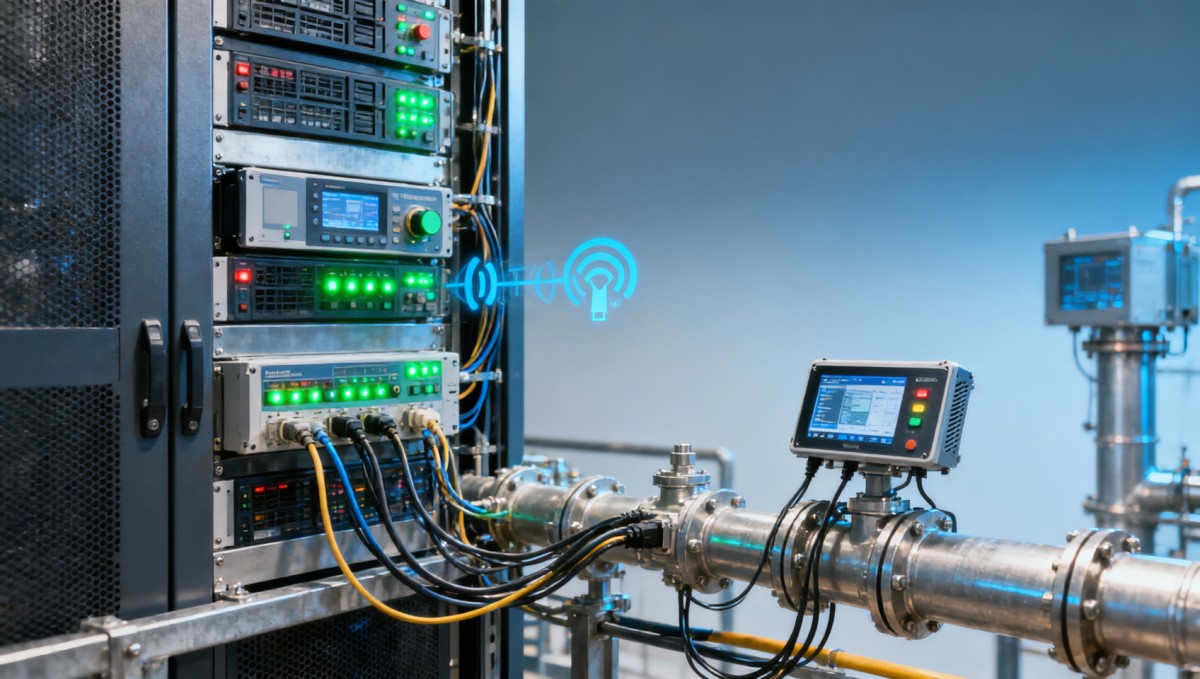
The MQTT protocol is lightweight by design, but industrial systems often overload it with heavy data structures. Engineers may start with compact telemetry packets of 50–300 bytes, then gradually add JSON metadata, diagnostic fields, waveform snippets, device tags, and alarm context. Within a few development cycles, a message that once stayed under 1 KB may grow to 20 KB or more.
Broker stability is affected because every larger packet increases memory occupancy during receive, queue, route, and transmit stages. If 5,000 devices each publish once per second and payload size rises from 1 KB to 32 KB, the raw data volume increases from roughly 5 MB/s to about 160 MB/s before accounting for overhead, retries, retained copies, and subscriber queue buffering.
This matters especially in industrial IoT gateways, remote water treatment telemetry, energy monitoring, and machine vision edge systems. In those scenarios, MQTT is often expected to bridge field devices, dashboards, and historian layers with end-to-end latency targets under 200 ms. Larger payloads can push the broker from predictable performance into bursty congestion.
A second issue is queuing behavior. Brokers can appear healthy at low concurrency, then degrade sharply under fan-out. One oversized message published to a topic with 100 subscribers may produce 100 queued delivery operations. If subscribers are slow or disconnected with persistent sessions enabled, memory growth is amplified and stability margins shrink quickly.
Where the pressure shows up first
In most broker environments, the first symptoms are not full crashes. More often, teams see rising publish-to-delivery latency, increased TCP backpressure, session drops, delayed retained message handling, or CPU spikes during payload serialization and routing. These are early warning signs that payload sizing and message architecture need review.
- Memory pressure increases as payloads wait in inbound and outbound buffers.
- CPU load rises because larger messages require more parsing, copying, and routing work.
- Disk I/O may grow if persistent sessions or retained messages are stored durably.
- Network congestion becomes visible when uplinks are limited to 10 Mbps, 100 Mbps, or unstable cellular links.
The table below summarizes how payload size typically changes system behavior under common industrial conditions.
The key conclusion is that broker instability usually emerges from a combination of payload growth and delivery fan-out. A “supported maximum size” is not the same as a “safe operating size” for production traffic.
How large MQTT messages affect memory, latency, and connection reliability
Payload size influences three technical layers at the same time: broker memory management, transport timing, and endpoint consumption rate. If any one of these layers falls behind, the broker starts accumulating undelivered messages. In industrial operations, that can create stale dashboards, missed alarms, or controller decisions based on old data.
Memory is usually the first hard limit. A broker handling 20,000 live client sessions with queued QoS 1 messages may require several gigabytes of RAM even with modest payloads. If average payload grows from 2 KB to 40 KB, outbound queues can expand by a factor of 20. That can turn a comfortable 4 GB deployment into an overloaded 16 GB environment under burst conditions.
Latency also rises because the broker must move more bytes through every stage of the delivery path. On a 100 Mbps link, a 1 KB payload is transmitted almost instantly in application terms. A 128 KB payload, especially repeated to many subscribers, consumes far more airtime and increases head-of-line blocking. This is particularly damaging for mixed workloads where small alarm messages share paths with large diagnostic packets.
Connection reliability becomes fragile when larger packets meet unstable networks. In remote pumping stations, renewable energy assets, or mobile industrial equipment using LTE or private wireless, packet loss and jitter are common. Larger MQTT messages take longer to deliver, are more exposed to retransmission cost, and can prolong blocked sessions if keepalive intervals are not tuned correctly.
QoS, retained messages, and persistent sessions change the risk profile
A 32 KB payload sent at QoS 0 has a different infrastructure cost than the same payload sent at QoS 1 or QoS 2. At higher QoS levels, the broker must track acknowledgments and potentially store messages until delivery is confirmed. For retained topics and offline subscribers, the storage footprint can multiply further.
Practical engineering thresholds
- For high-frequency telemetry above 1,000 messages per second, many teams aim to keep payloads below 1 KB–4 KB.
- For event-driven alarms and machine state changes, 2 KB–8 KB is often acceptable if fan-out remains moderate.
- For batch summaries or low-frequency diagnostics, 16 KB–64 KB may be workable, but only after stress testing with real subscriber counts.
- Payloads above 128 KB should trigger an architecture review rather than a casual configuration change.
These are not universal limits, but they are useful planning ranges. What matters is measured behavior under realistic publish rate, subscriber count, and offline queue conditions, not just a protocol maximum negotiated by the client and broker.
Payload design choices for industrial dashboards, SCADA, and edge systems
In many industrial projects, oversized payloads are a data modeling problem rather than a broker problem. Teams use a single MQTT message to transport everything because it is convenient during early integration. Over time, that message becomes a catch-all envelope carrying values, units, timestamps, batch IDs, operator notes, raw arrays, and duplicated metadata.
For industrial IoT dashboard visualization, smaller event-oriented messages usually perform better than large composite packets. A dashboard rarely needs the full equipment history every second. It needs current state, key alarms, and a limited set of trend values. Sending 30 fields every 500 ms may be more efficient than sending 300 fields every 5 seconds if the large packet causes queue spikes.
In SCADA system deployments for water treatment plants, the traffic pattern is often mixed. Operators need fast updates for pump status, tank levels, dosing alarms, and communication health, while historians may need broader datasets at 10-second, 30-second, or 60-second intervals. Splitting operational telemetry from archival summaries reduces the burden on the broker and on human-machine interfaces.
Edge AI and machine vision systems require even stricter discipline. MQTT is highly effective for metadata, event triggers, confidence scores, and equipment status. It is less suitable as the default carrier for raw images, long waveform captures, or large point-cloud chunks unless the system is deliberately engineered for that load.
A practical comparison of payload strategies
The following table compares common payload approaches used across industrial connectivity projects.
For most cross-functional industrial systems, the fourth approach is the most robust. MQTT carries the event and routing intelligence, while larger binary assets are handled by storage services, file transfer mechanisms, or edge caches designed for bulk data.
Common mistakes that increase payload size unnecessarily
- Embedding repeated device metadata in every message instead of referencing a stable asset model.
- Sending null fields, unused tags, or full configuration snapshots every cycle.
- Using verbose JSON for sub-second telemetry when compact binary or minimized JSON would suffice.
- Publishing raw files through MQTT when a URI, checksum, and retrieval policy would be more efficient.
These choices often look harmless in pilot projects with 20 devices. At plant scale, with 2,000–50,000 endpoints, they become the difference between predictable operations and recurring instability events.
What engineers, buyers, and decision-makers should evaluate before selecting a broker
Broker selection should not focus only on the published maximum message size. A serious evaluation should measure safe throughput under realistic payload distributions, peak connection count, burst tolerance, offline session behavior, observability, and policy control. Many procurement teams compare features but miss the operational physics of how the broker behaves at 70% to 90% of expected peak load.
For buyers, one useful question is whether the broker supports message size limits by listener, client group, tenant, or topic namespace. This allows governance. A plant may permit 2 KB telemetry on one namespace, 32 KB diagnostics on another, and reject oversized messages altogether on control-adjacent topics. Such controls reduce the chance that one application team destabilizes the whole environment.
For CTOs and architects, observability is equally important. The broker should expose queue depth, dropped message count, per-client throughput, heap or memory pressure indicators, disconnect reasons, and storage backlog metrics. Without these signals, payload-related instability is easy to misdiagnose as a network or server issue.
For operators, the best broker is one that fails predictably. Clear backpressure behavior, policy-based rejection, throttling, and alerting are preferable to silent degradation. In critical infrastructure, it is often better to reject a 512 KB payload immediately than to accept it and destabilize thousands of live telemetry streams.
A procurement-oriented checklist
The table below can be used during vendor review, proof-of-concept testing, or internal architecture approval.
A strong vendor conversation should include test methodology. Ask for performance under at least 3 variables together: average payload size, subscriber fan-out, and percentage of slow or offline consumers. Single-variable benchmark claims rarely reflect production conditions.
Minimum validation steps before deployment
- Run a 24-hour soak test with realistic publish rates and message mix.
- Simulate at least 10% slow subscribers and 5% reconnect churn.
- Inject oversized payloads intentionally to verify rejection and alert behavior.
- Measure 95th percentile and 99th percentile latency, not just average delay.
These checks are especially valuable in data-sensitive sectors where engineering teams need evidence rather than marketing claims. That aligns with the TSV approach: decisions should be parameter-driven, benchmarked, and operationally verifiable.
Implementation guidance, risk controls, and FAQ for resilient payload management
A stable MQTT architecture starts with message budgeting. Define target payload ranges by use case before devices go live. For example, set a design rule of less than 2 KB for live telemetry, less than 8 KB for alarms with context, and a separate pathway for files or payloads above 64 KB. These limits should be documented in the interface specification, not left to developer preference.
Next, segment traffic classes. Control-adjacent telemetry, operator dashboards, historian uploads, analytics feeds, and engineering diagnostics should not all compete in the same unrestricted path. Topic namespace design, broker policy, and edge buffering strategy should reflect the operational criticality of each message class.
Compression can help, but it is not a universal answer. If payloads compress from 20 KB to 6 KB, network use may improve. However, compression adds CPU overhead and may complicate subscriber processing. In systems with tight CPU budgets at the edge, schema reduction often delivers more reliable gains than aggressive compression.
Finally, establish a rollback plan. If a software update doubles average payload size, the operations team should be able to revert quickly, enforce temporary broker limits, or reroute large data to alternate transport within hours rather than waiting for a major outage to confirm the problem.
FAQ: how to make payload decisions with less trial and error
How large should MQTT payloads be in industrial systems?
There is no universal number, but many industrial deployments keep high-frequency telemetry under 1 KB–4 KB. Event messages can be larger, often 2 KB–16 KB, if they occur less frequently. Above 64 KB, teams should review whether MQTT is carrying data that belongs in a file, database, or object store workflow instead.
Can a broker support large messages and still remain stable?
Yes, but only when message rate, subscriber fan-out, QoS level, persistence strategy, and available memory are all aligned. A broker may handle 256 KB messages at low frequency from 50 devices, but the same configuration can fail under 5,000 devices with persistent sessions and slow subscribers.
When should teams avoid sending large data through MQTT?
Avoid it when the content is binary-heavy, delay-tolerant, or better managed as an asset rather than a stream. Examples include camera images, firmware packages, long vibration captures, and large point-cloud segments. In such cases, publish a lightweight event with a secure reference, checksum, timestamp, and retrieval policy.
What is the biggest procurement mistake in this area?
The most common mistake is purchasing based on claimed maximum payload size without validating safe production behavior. A platform that advertises large-message support is not automatically suitable for an industrial estate with 3,000 devices, mixed QoS, and 24/7 dashboard users. Buyers should insist on evidence from scenario-based load testing.
Payload size affects MQTT broker stability because it changes the economics of memory, network time, queuing, persistence, and subscriber recovery all at once. The safest architecture is usually not the one with the largest allowable message, but the one with disciplined payload design, traffic segmentation, observability, and tested fallback paths.
For engineering teams, that means defining message budgets early. For operators, it means monitoring queue depth and latency before visible failure. For buyers and executives, it means selecting platforms and suppliers based on measurable performance under realistic conditions rather than broad feature claims.
If you are evaluating MQTT infrastructure for industrial IoT, SCADA modernization, or edge data architectures, a parameter-driven review can reduce trial-and-error cost and shorten the qualification cycle. Contact us to discuss a tailored benchmarking framework, payload governance strategy, or broker evaluation approach for your operational environment.
Search News
Hot Articles
- Carbon Fiber StructuresHow to Specify Aerospace Carbon Fiber Assemblies for Lightweight, Load-Bearing PartsJul 11, 2026
- Machine VisionXiaomi, Alibaba DAMO Academy Drive Open-Source Robotics Model Ecosystem, Lowering Algorithm Development Barriers for Overseas SMEs Adopting Chinese Robotics SolutionsMar 30, 2026
- Cobots & ArmsShanxi 'AI+' Conference Showcases Embodied Intelligence with Multinational Buyer Engagement: Key Industry ImplicationsMar 30, 2026
Popular Tags
Recommended News
 Jul 11, 2026How to Specify Aerospace Carbon Fiber Assemblies for Lightweight, Load-Bearing PartsAerospace carbon fiber assemblies: learn how to specify laminate design, load data, joining methods, and inspection controls for lighter, reliable load-bearing aerospace parts.Elena Rostova (UAV Systems Researcher)
 Mar 30, 2026Xiaomi, Alibaba DAMO Academy Drive Open-Source Robotics Model Ecosystem, Lowering Algorithm Development Barriers for Overseas SMEs Adopting Chinese Robotics SolutionsXiaomi & Alibaba DAMO Academy's open-source robotics models lower algorithm barriers for global SMEs. Boost efficiency in manufacturing, logistics & smart retail with ROS 2 compatible solutions.TSV Data Lab
 Mar 30, 2026Shanxi 'AI+' Conference Showcases Embodied Intelligence with Multinational Buyer Engagement: Key Industry ImplicationsShanxi 'AI+' Conference highlights embodied intelligence with Tesla, Ubtech & Jiantao showcasing multimodal robotics. 40+ global buyers validated tech on-site, creating new B2B channels for industrial automation & AI solutions.Chen Wei (Automation Lead Engineer)
 Mar 30, 2026Zhongguancun Unveils 6G Integrated Sensing-Computing-Intelligence Platform to Empower Embodied Robots for Global Industrial ApplicationsZhongguancun's new 6G platform revolutionizes industrial robotics with <10ms latency, empowering global automotive, logistics & port automation. Discover how this tech boosts China's smart manufacturing exports.TSV Data Lab
 Mar 30, 2026Mech-Mind Tianjin Embodied Intelligence R&D and Production Base Goes Live, Cutting Delivery Time by 20%–30% for Global Customized AMR+Vision SolutionsMech-Mind's Tianjin AMR+Vision production base cuts delivery time by 20%-30% for欧美 & Latin American markets. Discover how this PLd-certified facility accelerates customized robotics solutions for smart manufacturing and logistics.Chen Wei (Automation Lead Engineer)
 Mar 30, 2026Boao Forum Reveals 'Co-evolution of Big and Small Brains' Trend in Humanoid Robots, China's Embodied Intelligence Accelerates Adaptation to Overseas Manufacturing Service ScenariosDiscover how China's humanoid robots, featuring 'Co-evolution of Big and Small Brains,' are revolutionizing global manufacturing. Learn about Embodied Tian Gong 3.0's ISO compliance and overseas deployment at Boao Forum 2026.Chen Wei (Automation Lead Engineer)
 Mar 30, 2026China Railway Industrial Secures Patent for Embodied Robotics in Material Handling, Boosting High-Precision Delivery Capabilities for Overseas Infrastructure and Manufacturing ProjectsChina Railway Industrial's new patent for embodied robotics in material handling boosts high-precision delivery for global infrastructure & manufacturing. Discover how this innovation enhances logistics accuracy in automotive, rail transit & EPC projects.Chen Wei (Automation Lead Engineer)
 Oct 13, 2026Smart Cameras vs. PC-Based Machine Vision: Which Fits High-Speed Inspection?This industrial product comparison for machine vision weighs smart cameras vs. PC-based systems on latency, throughput, and cost. Discover your best fit for high-speed inspection.TSV Data Lab
 Oct 12, 2026How to Verify RoHS Compliance in Industrial Sensing Systems Before DeploymentRoHS compliant sensing systems: learn how to verify materials, supplier declarations, testing, and configuration controls before industrial deployment.TSV Data Lab
 Oct 11, 2026How Procurement-Oriented Content Taxonomy Improves B2B Buying JourneysProcurement-oriented content taxonomy streamlines B2B buying journeys with clearer evidence, supplier comparisons, risk visibility, and faster approvals.TSV Data Lab
 Oct 10, 2026How to Select a Machine Performance Monitoring Platform for OEE and Downtime ReductionMachine performance monitoring platform selection guide: validate machine states, OEE data, downtime reasons, integrations, and scalability to reduce losses with confidence.TSV Data Lab
 Oct 08, 2026How to Machine Inconel 625 Blades Without Heat Cracks or Edge ChippingInconel 625 blade machining guide: prevent heat cracks, edge chipping, chatter, and work hardening with proven tooling, cooling, fixturing, and inspection strategies.Dr. Marcus Vance
 Oct 07, 2026How to Evaluate an HMI Panel Distributor for Industrial Automation ProjectsHMI panel distributor evaluation guide: verify technical compatibility, traceability, supply reliability, lifecycle support, and total cost for automation projects.Victor Lin (Chief Software Architect)
 Oct 06, 2026Navigation Fault Tolerance Standards for AMRs: What Safety Teams Must VerifyNavigation fault tolerance standards: learn what AMR safety teams must verify, from localization loss and sensor faults to stopping distance, safe restart, and site-specific validation.Chen Wei (Automation Lead Engineer)
 Oct 05, 2026Calculating Edge Computing Total Cost of Ownership Across Distributed SitesEdge computing ownership cost explained: calculate deployment, energy, connectivity, security, remote support, and refresh costs across distributed sites.TSV Data Lab
 Oct 04, 2026CAD/CAM Benchmarking in the GCC: What Manufacturers Should Ask a ConsultantCAD CAM benchmark consultant GCC guide: learn the key questions manufacturers should ask to validate post-processors, workflows, machine performance, and production risk.Victor Lin (Chief Software Architect)
 Oct 03, 2026Selecting Automotive Radar Sensor Modules for ADAS Range, Resolution, and IntegrationAutomotive radar sensor module selection guide for ADAS: compare range, resolution, field of view, latency, and integration to build safer, reliable vehicle systems.TSV Data Lab
 Oct 02, 2026How to Qualify Machined Parts Suppliers for Hard Tech ProgramsHard tech supply chain machined parts demand rigorous supplier qualification. Learn how to assess capability, traceability, quality controls, and delivery resilience.Dr. Marcus Vance
 Oct 01, 2026How to Select an Outdoor Security Radar Sensor for Perimeter Detection?Outdoor security radar sensor selection guide: compare range, accuracy, false-alarm control, integration, and field testing for reliable perimeter detection.TSV Data Lab
 Sep 30, 2026How to Evaluate Solid-State LiDAR Hardware for Outdoor Autonomous VehiclesSolid state LiDAR hardware evaluation guide for outdoor autonomous vehicles—compare range, point-cloud quality, environmental resilience, integration, and safety.TSV Data Lab
 Sep 29, 2026ISO 9283 Repeatability: How to Evaluate Cobot Positioning PerformanceISO 9283 cobot repeatability explained: learn how payload, reach, approach direction, and test conditions affect positioning performance and cell capability.Chen Wei (Automation Lead Engineer)
 Oct 13, 2026How to keep an industrial robotic integration project on scheduleIndustrial robotic integration project management: keep automation on schedule with proven controls for interfaces, suppliers, FAT, commissioning, and change risk.Victor Lin (Chief Software Architect)
 Oct 12, 2026What should be included in predictive maintenance pricing for factories?Predictive maintenance pricing for factories: compare sensors, software, integration, support, and total cost to secure measurable uptime gains and avoid hidden expenses.TSV Data Lab
 Oct 11, 2026How payload and reach change the cost of an industrial robotCost of industrial robot systems depends heavily on payload and reach. Learn how sizing, torque, tooling, safety, and lifecycle factors shape smarter automation investments.Chen Wei (Automation Lead Engineer)























