
How much data is too much in industrial IoT collection architecture?
Publication Date
author
In industrial environments, more data does not always mean better decisions. A well-designed industrial IoT data collection architecture must balance signal quality, latency, storage cost, and operational value—especially for applications like industrial IoT for predictive maintenance, IoT gateway for CNC machine monitoring, and edge AI for smart manufacturing. The real challenge is knowing which data to capture, where to process it, and when excess collection starts creating noise instead of insight.
The short answer is this: industrial IoT systems collect too much data when the added signals no longer improve operational decisions, model accuracy, maintenance outcomes, traceability, or process control enough to justify the cost, latency, cyber risk, and engineering complexity they introduce. For most factories, the problem is not a lack of raw data. It is a lack of disciplined data architecture.
For operators, engineers, procurement teams, and business leaders, the practical question is not “How much can we collect?” but “What data materially improves uptime, quality, throughput, or compliance?” That shift in thinking is what separates scalable industrial IoT deployments from expensive data hoarding projects.
What “too much data” really means in industrial IoT architecture
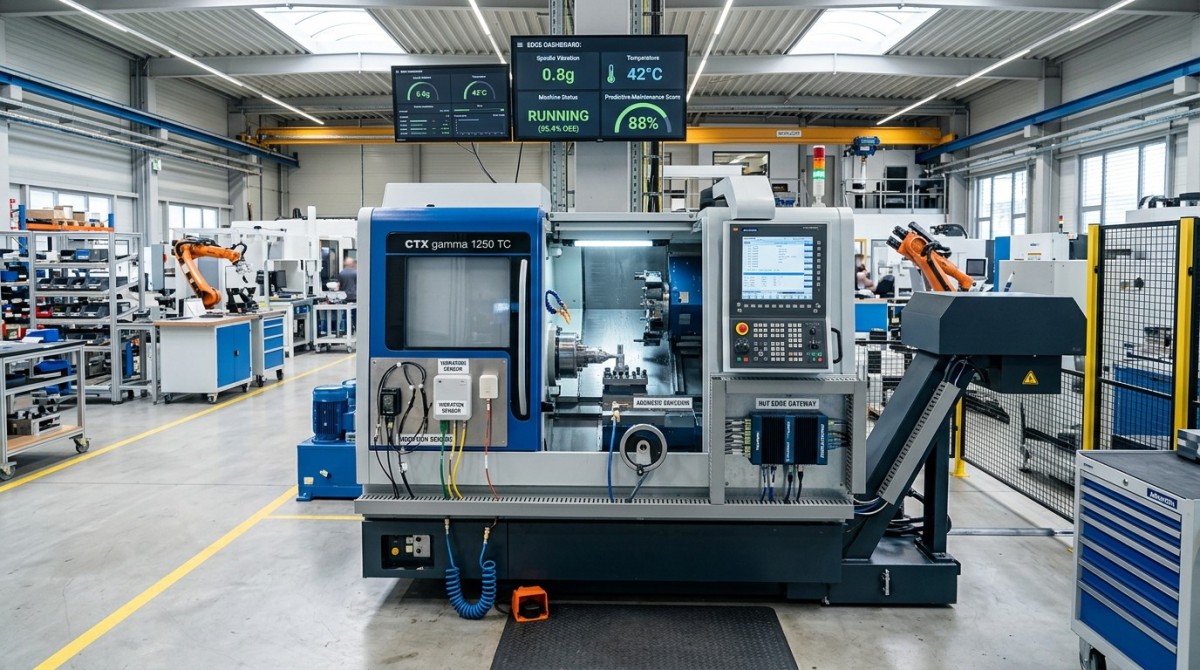
In industrial IoT collection architecture, “too much data” does not refer to a fixed terabyte threshold. It means the collection strategy is misaligned with the business or engineering objective.
You are likely collecting too much data when one or more of the following starts happening:
- Storage grows faster than the number of useful insights
- Network bandwidth is consumed by low-value high-frequency telemetry
- Edge devices or gateways become overloaded with unnecessary preprocessing
- Teams cannot distinguish critical events from normal machine noise
- Data scientists spend more time cleaning irrelevant signals than building models
- Maintenance teams receive alerts that do not lead to actionable interventions
- Compliance, retention, and cybersecurity burdens rise without clear return
In other words, excessive data is data with poor decision yield. If a signal is expensive to collect, transmit, normalize, and secure but rarely changes an action, it may not belong in the main pipeline at the current sampling rate.
What different industrial buyers and users actually need from the data
The title question attracts several types of readers, and each group defines “enough data” differently.
Information researchers want a framework. They are trying to understand best practice: what leading industrial IoT architectures collect at the sensor, gateway, edge, and cloud layers, and how to avoid overdesign.
Operators and plant users want reliable dashboards, alarms that matter, and systems that do not slow down operations. They care less about total data volume and more about whether the system helps them react faster and troubleshoot accurately.
Procurement teams want to know whether a vendor is overselling collection capacity. They need to evaluate whether more channels, higher frequency acquisition, or larger cloud packages produce measurable value for CNC monitoring, predictive maintenance, or energy optimization.
Enterprise decision-makers care about ROI, implementation risk, scalability, cyber exposure, and time to operational benefit. For them, too much data often means too much cost and too little clarity.
A strong industrial IoT collection architecture must serve all four groups by linking every major data stream to a specific use case, owner, and decision process.
Start with the decision, not the sensor: the best way to define useful data volume
The most reliable method is to work backward from decisions.
Before selecting sampling rates, historian retention, edge storage, or cloud ingestion rules, define:
- What decision will this data support? For example: predict spindle bearing failure, detect tool wear, verify thermal stability, or trace process deviations.
- How fast must that decision happen? Milliseconds, seconds, hourly, daily, or monthly.
- What level of accuracy is actually required? Not every use case needs ultra-high-resolution raw waveforms.
- Who acts on the output? Operator, maintenance engineer, process engineer, quality team, or management.
- What happens if the signal is missing? Downtime, scrap, safety risk, compliance gap, or no meaningful impact.
Once those answers are clear, the architecture becomes more rational. A machine protection loop may justify high-frequency local acquisition. A weekly OEE review usually does not. Predictive maintenance may need burst-mode vibration capture around anomaly events, not 24/7 full-resolution streaming to the cloud.
This is especially important in industrial IoT for predictive maintenance. Many deployments fail because they collect broad machine data continuously without identifying which signals correlate with actual failure modes. More data then creates larger training sets but not better predictions.
Where excess data usually comes from in factories
In real deployments, overcollection often comes from architecture habits rather than operational need.
Common causes include:
- Default vendor settings: Devices may stream at the highest available rate because it looks technically impressive.
- Collect everything now, decide later thinking: Teams assume future analytics will justify unlimited acquisition.
- Poor tag governance: Duplicate tags, unused variables, and inconsistent naming inflate ingestion and storage.
- No edge filtering strategy: Raw sensor data is pushed upstream when aggregation or event-based logic would suffice.
- Fear-driven design: Teams collect every possible parameter because they are worried about missing something later.
- Misaligned IT and OT goals: Central platforms may prioritize data centralization while plant teams need fast, local action.
These issues are common in CNC environments. An IoT gateway for CNC machine monitoring can technically pull spindle load, axis data, vibration, temperatures, alarms, feed rates, offsets, and program status at high frequency. But if the plant only uses a fraction of those points for downtime root-cause analysis and maintenance scheduling, the rest may become operational clutter.
How to decide what to process at the edge, gateway, or cloud
This is where architecture quality matters most. The answer to “how much data is too much” depends heavily on where processing happens.
At the sensor or controller level, keep data that is required for immediate machine control, safety, and deterministic response. This layer is not the place for broad noncritical data traffic.
At the IoT gateway or edge node, process data that needs local context, filtering, compression, protocol normalization, or rapid action. This is often the best layer for CNC machine monitoring, anomaly detection, threshold logic, and short-window trend analysis.
In the cloud or central platform, keep data that supports fleet benchmarking, long-term performance analysis, model retraining, supplier comparison, and cross-site optimization.
A simple rule works well:
- If the action is immediate, process locally.
- If the value is trend-based, aggregate before sending.
- If the data is rarely reviewed, store summaries rather than continuous raw streams.
- If raw data is only useful during abnormal events, use triggered capture instead of always-on transmission.
This approach is central to edge AI for smart manufacturing. Edge AI becomes most valuable not when it consumes all available data, but when it consumes the right data close to the machine, reducing latency and avoiding unnecessary backhaul costs.
How much data is enough for predictive maintenance?
For predictive maintenance, enough data means enough to characterize failure behavior, operating context, and intervention timing. It does not mean collecting every available machine variable forever.
Most predictive maintenance programs need a balanced mix of:
- Condition signals such as vibration, temperature, current, pressure, or acoustic data
- Operating context such as load, speed, duty cycle, shift, recipe, or ambient conditions
- Event history such as alarms, stoppages, maintenance records, and part replacement logs
- Outcome labels such as confirmed failures, degraded states, and post-maintenance inspection findings
The key is relevance and labeling quality. Many teams overinvest in raw telemetry volume while underinvesting in maintenance logs, failure classification, and synchronized timestamps. That is a poor trade. Ten high-quality, interpretable signals tied to real maintenance outcomes can outperform hundreds of unstructured tags.
If the model cannot learn from the data because failures are unlabeled, timestamps drift, or operating modes are mixed together, more data will not fix the architecture problem.
The hidden costs of collecting too much industrial data
Excessive collection has direct and indirect costs that are often underestimated during procurement and pilot phases.
Infrastructure cost: More ingestion, more storage, more backup, more compute, more licensing.
Integration cost: More tags to map, clean, validate, and maintain across PLCs, SCADA, historians, MES, and cloud systems.
Operational cost: More false positives, more alarm fatigue, more dashboard clutter, more time spent interpreting weak signals.
Cybersecurity risk: More connected assets and broader data surfaces can expand attack exposure.
Governance burden: More retention policies, access rules, data ownership questions, and audit requirements.
Model risk: More noise can reduce analytic quality if irrelevant variables swamp meaningful patterns.
For procurement and executive teams, this is why technical capacity alone should never be the main buying criterion. A platform that can ingest everything is not automatically a better investment than one that supports selective, governed, high-value collection.
A practical framework to size your industrial IoT data collection architecture
If you need a working decision method, use this five-part framework.
1. Map each data stream to a business outcome.
Examples include reducing scrap, cutting downtime, improving energy efficiency, supporting traceability, or increasing spindle life.
2. Classify data by time sensitivity.
Separate real-time control data, near-real-time operational data, periodic reporting data, and archival data.
3. Define retention by use case, not habit.
Keep raw high-frequency data only as long as necessary for troubleshooting, model training, or compliance. Downsample or summarize the rest.
4. Use event-driven collection where possible.
Capture high-resolution windows during startup, alarm conditions, load spikes, tolerance drift, or suspected anomalies.
5. Review data usefulness quarterly.
Retire unused tags, adjust sampling rates, and compare collection cost against operational outcomes.
This framework is especially effective in mixed environments where plants are combining legacy equipment, new edge gateways, and cloud analytics. It helps teams avoid overbuilding architecture around theoretical future use while still leaving room for expansion.
Questions buyers should ask vendors before approving an IIoT data architecture
Whether you are evaluating sensors, gateways, machine monitoring platforms, or edge AI systems, ask vendors questions that expose practical value rather than headline specs.
- Which data points are required for the target use case, and which are optional?
- What sampling rates are recommended, and based on what engineering rationale?
- What processing can be done at the edge before transmission?
- Can the system support event-triggered capture and dynamic sampling?
- How are tags normalized, deduplicated, and governed over time?
- What is the storage and bandwidth impact at one machine, one line, and one site scale?
- How does the architecture reduce false alerts and operator overload?
- What evidence shows that the chosen signals improve predictive accuracy or process outcomes?
These questions help procurement teams distinguish between engineering-driven architectures and marketing-driven ones.
The right goal is not maximum data collection, but maximum decision quality
Industrial organizations often assume digital maturity means collecting more. In practice, mature architecture means collecting with purpose.
The best industrial IoT data collection architecture is one that delivers the highest decision quality per unit of complexity. It captures the signals that matter, processes them at the right layer, stores them at the right resolution, and turns them into actions that improve uptime, quality, and cost control.
If your system is generating more dashboards than decisions, more tags than insights, or more alerts than interventions, you may already have too much data.
For smart factories, CNC environments, and predictive maintenance programs, the winning approach is selective, contextual, and governed collection. Not because less data is always better, but because useful data is better.
In the end, “too much” begins the moment additional data stops improving engineering truth. That is the threshold that matters.
Search News
Hot Articles
- Carbon Fiber StructuresHow to Specify Aerospace Carbon Fiber Assemblies for Lightweight, Load-Bearing PartsJul 11, 2026
- Machine VisionXiaomi, Alibaba DAMO Academy Drive Open-Source Robotics Model Ecosystem, Lowering Algorithm Development Barriers for Overseas SMEs Adopting Chinese Robotics SolutionsMar 30, 2026
- Cobots & ArmsShanxi 'AI+' Conference Showcases Embodied Intelligence with Multinational Buyer Engagement: Key Industry ImplicationsMar 30, 2026
Popular Tags
Recommended News
 Jul 11, 2026How to Specify Aerospace Carbon Fiber Assemblies for Lightweight, Load-Bearing PartsAerospace carbon fiber assemblies: learn how to specify laminate design, load data, joining methods, and inspection controls for lighter, reliable load-bearing aerospace parts.Elena Rostova (UAV Systems Researcher)
 Mar 30, 2026Xiaomi, Alibaba DAMO Academy Drive Open-Source Robotics Model Ecosystem, Lowering Algorithm Development Barriers for Overseas SMEs Adopting Chinese Robotics SolutionsXiaomi & Alibaba DAMO Academy's open-source robotics models lower algorithm barriers for global SMEs. Boost efficiency in manufacturing, logistics & smart retail with ROS 2 compatible solutions.TSV Data Lab
 Mar 30, 2026Shanxi 'AI+' Conference Showcases Embodied Intelligence with Multinational Buyer Engagement: Key Industry ImplicationsShanxi 'AI+' Conference highlights embodied intelligence with Tesla, Ubtech & Jiantao showcasing multimodal robotics. 40+ global buyers validated tech on-site, creating new B2B channels for industrial automation & AI solutions.Chen Wei (Automation Lead Engineer)
 Mar 30, 2026Zhongguancun Unveils 6G Integrated Sensing-Computing-Intelligence Platform to Empower Embodied Robots for Global Industrial ApplicationsZhongguancun's new 6G platform revolutionizes industrial robotics with <10ms latency, empowering global automotive, logistics & port automation. Discover how this tech boosts China's smart manufacturing exports.TSV Data Lab
 Mar 30, 2026Mech-Mind Tianjin Embodied Intelligence R&D and Production Base Goes Live, Cutting Delivery Time by 20%–30% for Global Customized AMR+Vision SolutionsMech-Mind's Tianjin AMR+Vision production base cuts delivery time by 20%-30% for欧美 & Latin American markets. Discover how this PLd-certified facility accelerates customized robotics solutions for smart manufacturing and logistics.Chen Wei (Automation Lead Engineer)
 Mar 30, 2026Boao Forum Reveals 'Co-evolution of Big and Small Brains' Trend in Humanoid Robots, China's Embodied Intelligence Accelerates Adaptation to Overseas Manufacturing Service ScenariosDiscover how China's humanoid robots, featuring 'Co-evolution of Big and Small Brains,' are revolutionizing global manufacturing. Learn about Embodied Tian Gong 3.0's ISO compliance and overseas deployment at Boao Forum 2026.Chen Wei (Automation Lead Engineer)
 Mar 30, 2026China Railway Industrial Secures Patent for Embodied Robotics in Material Handling, Boosting High-Precision Delivery Capabilities for Overseas Infrastructure and Manufacturing ProjectsChina Railway Industrial's new patent for embodied robotics in material handling boosts high-precision delivery for global infrastructure & manufacturing. Discover how this innovation enhances logistics accuracy in automotive, rail transit & EPC projects.Chen Wei (Automation Lead Engineer)
 Oct 27, 2026GXO and Agility Robotics Expand Partnership to Accelerate US Humanoid Robot DeploymentGXO and Agility Robotics plan to expand US humanoid robot deployment with Digit 4 in early 2027. Explore warehouse automation plans, service terms and future Digit 5 upgrades.Chen Wei (Automation Lead Engineer)
 Oct 27, 2026Robotic Automation Costs: Budgeting for Equipment, Integration, and MaintenancePlan your robotics automation cost with confidence. Explore equipment, integration, and maintenance expenses, compare quotes, and build a realistic budget for better ROI.Chen Wei (Automation Lead Engineer)
 Oct 26, 2026AMAXiMAL Releases Open-Source TopMod 3D v3 With Claude AIExplore AMAXiMAL’s free, open-source TopMod 3D v3 with Claude AI assistance, topology-based modeling and plywood fabrication tools that connect complex designs to physical builds.Dr. Marcus Vance
 Oct 26, 2026Choosing a SCADA System Integrator Company: PLC Compatibility and Long-Term SupportChoose a scada system integrator company with proven PLC compatibility and reliable long-term support. Discover what to test, compare, and require before investing.Victor Lin (Chief Software Architect)
 Oct 25, 2026Hesai Leads Global ADAS Main Lidar Shipments in Yole’s 2026 ReportHesai led global ADAS main lidar shipments with a 43% share in 2025, according to Yole’s 2026 report. Explore what this ranking reveals about its automotive market position.TSV Data Lab
 Oct 25, 2026Choosing an Aerospace Materials Manufacturer: Quality and Traceability ChecksChoosing an aerospace materials manufacturer? Learn how to verify certifications, test reports, and lot traceability to qualify suppliers confidently and reduce costly sourcing risks.Dr. Marcus Vance
 Oct 24, 2026Guotai Haitong: Global Entry-Level 3D Printer Shipments Rose 39% in Q1 2026Entry-level 3D printer shipments rose 39% in Q1 2026, Guotai Haitong reports. Explore how AI, multicolor printing and print farms are shaping market growth.Dr. Marcus Vance
 Oct 24, 2026Choosing an Industrial Vision Inspection Supplier: Acceptance Tests That MatterChoose an industrial vision inspection supplier with confidence. Discover acceptance tests for defect detection, false rejects, production speed, and reliable part rejection before you buy.TSV Data Lab
 Oct 23, 2026US Navy Raises Gecko Robotics Contract Ceiling to $300M for Robotic Fleet MaintenanceUS Navy raises Gecko Robotics’ contract ceiling to $300M for Pacific Fleet robotic inspections. Explore potential opportunities for maintenance suppliers and key procurement considerations.Chen Wei (Automation Lead Engineer)
 Oct 23, 2026Choosing Industrial Sensing Systems for Global Plants: Protocol CompatibilityCompare industrial sensing systems international buyers can trust. Explore protocol compatibility, reduce integration risks, and select proven configurations for reliable global plant deployments.TSV Data Lab
 Oct 22, 2026KUKA Showcases Physical AI and iiQKA.AI Vision at NVIDIA GTC BerlinExplore KUKA’s Physical AI showcase at NVIDIA GTC Berlin and discover how iiQKA.AI Vision aims to simplify robotic vision integration and improve 2D and 3D scene recognition.TSV Data Lab
 Oct 22, 2026Robotic Machining of Advanced Composites: What Tolerances Are Achievable?Explore advanced materials machining robotics: discover what drives achievable composite tolerances and how to validate accuracy before investing in your next machining system.Dr. Marcus Vance
 Oct 21, 2026China’s Industrial Robot Exports Near RMB 10 Billion in First Nine Months of 2026China’s industrial robot exports neared RMB 10 billion in January–September 2026, with value rising faster than volume. Explore the data and what it could mean for suppliers.Chen Wei (Automation Lead Engineer)
 Oct 21, 2026Low-Latency Industrial Data Processing: Pricing and Key Cost DriversExplore industrial data latency price drivers, from edge hardware to integration and support. Learn how to compare quotes, verify performance, and avoid unnecessary costs.TSV Data Lab
 Oct 20, 2026KUKA Launches iiQKA.AI Vision to Simplify Industrial Image ProcessingKUKA iiQKA.AI Vision simplifies industrial image processing with controller-based 2D and 3D vision. Explore drag-and-drop setup for vision-guided automation.TSV Data Lab
 Oct 20, 2026Smart Industrial Edge Devices: Key Criteria for Legacy PLC IntegrationChoose smart industrial edge devices for legacy PLC integration. Discover key criteria for compatibility, data quality, security, and reliable collection without disrupting control.TSV Data Lab
 Oct 19, 2026Choosing a Radar Sensor by Application: Range, Resolution, and Field of ViewSimplify radar sensor application based product selection. Compare range, resolution, and field of view to avoid blind spots and choose with confidence. Explore the guide.TSV Data Lab























