Drone Telemetry Range Test: Why Lab Distance Rarely Matches Reality
Publication Date
author
A drone telemetry range test rarely reflects what operators, buyers, and engineering teams face in the field. Real performance depends on terrain, antenna design, drone electromagnetic interference test results, flight controller latency benchmark data, and even uav center of gravity calculation. This article explains why lab distance claims diverge from reality and how to evaluate data links with engineering-grade precision.
Why advertised telemetry distance often fails in real operations
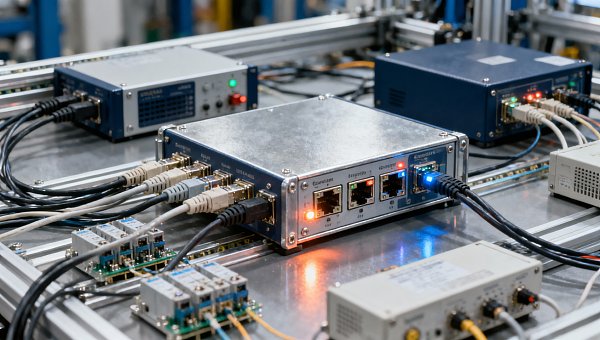
[[IMG:img_01]]A drone telemetry range test performed in a controlled environment usually measures the upper boundary of link performance, not the result an operator should expect during daily work. In practice, telemetry distance is shaped by terrain clutter, antenna orientation, Fresnel zone obstruction, onboard electromagnetic noise, and command-processing delay inside the flight stack. For information researchers and procurement teams, this distinction is critical because a 10 km lab claim may translate into a far shorter stable-control window in dense industrial, agricultural, or urban environments.
Lab tests are useful, but only when their assumptions are transparent. A clean line-of-sight corridor, low radio congestion, fixed antenna polarization, minimal multipath reflection, and benign weather can create conditions that are hard to reproduce outside a test range. In many real projects, especially mapping, infrastructure inspection, and perimeter security, the mission profile includes altitude changes, turning maneuvers, temporary obstruction, and intermittent interference across several minutes rather than a single straight outbound leg.
This is exactly where TechStat Vanguard’s engineering-first approach matters. TSV focuses on hard parameters instead of marketing adjectives. For UAV and aerospace metrics, that means asking what test setup was used, what packet loss threshold defined “link maintained,” whether telemetry and video shared the same spectrum, and how flight controller latency benchmark data behaved once the aircraft entered a noisy electromagnetic environment. Parameters do not lie; poorly defined test conditions do.
A useful field estimate often requires at least 3 layers of verification: radio link budget analysis, platform-level interference review, and scenario-based mission validation. Without these three layers, buyers may select a system that appears cost-efficient on paper but triggers repeated signal dropouts, reroute events, and unplanned return-to-home behavior in actual deployment.
The biggest gap between lab distance and usable distance
The most common misunderstanding is to equate maximum measurable distance with reliable operational distance. These are not the same metric. Reliable operational distance should include a safety margin for command continuity, telemetry update stability, and control responsiveness under normal maneuvering. In many B2B operations, teams should reserve a practical margin of 20%–40% below ideal range claims, then validate against their own terrain and spectrum conditions.
Another gap comes from system integration. A radio module that performs well on a bench may underperform once installed near high-current ESC wiring, power distribution boards, RF emitters, cameras, or edge AI modules. Even small layout changes can alter cable coupling and local noise behavior. That is why drone electromagnetic interference test procedures should be reviewed together with telemetry range data rather than in isolation.
For enterprise decision-makers, the business impact is direct. Signal instability can extend mission time, increase operator workload, reduce data capture consistency, and create hidden reflight costs. A procurement review that ignores these operational penalties may underestimate total project cost across a 6–12 month deployment cycle.
Which engineering variables actually determine real telemetry performance?
To judge a drone telemetry range test correctly, teams need to separate marketing range from engineering range. Engineering range depends on a chain of variables: transmit power within legal limits, receiver sensitivity, antenna gain and placement, cable loss, line-of-sight quality, processing delay, interference rejection, and aircraft attitude changes during flight. If even 1 or 2 of these variables are poorly controlled, the resulting range claim becomes weak guidance for operational planning.
Flight dynamics matter more than many buyers expect. During acceleration, crosswind correction, or payload-induced attitude change, antenna orientation can shift enough to reduce effective link quality. This becomes more pronounced on multirotor platforms carrying gimbals, thermal cameras, sprayers, or custom sensors. A proper uav center of gravity calculation is therefore not only a stability exercise; it also affects the consistency of antenna geometry and onboard interference distribution.
Latency is another overlooked factor. A data link may remain technically connected while becoming operationally weak because telemetry updates arrive too slowly or irregularly. If flight controller latency benchmark values rise during RF congestion or processor loading, the pilot experiences sluggish command feedback even before the link fully drops. For long-range inspection or BVLOS-oriented evaluation, latency stability across several flight phases can matter as much as raw distance.
The table below summarizes the main engineering variables that most strongly influence whether a telemetry link remains useful beyond a short demonstration flight.
For purchasing teams, the practical lesson is simple: never accept telemetry distance as a standalone number. Ask for the configuration behind the number, the flight profile used, and the degradation pattern observed between 25%, 50%, 75%, and near-limit range. A range claim without context has limited procurement value.
Three technical checks before trusting a range claim
- Check whether telemetry distance was measured with continuous bidirectional command exchange or only passive reception. The first is much more relevant for control reliability.
- Check whether the aircraft carried the intended payload mass and operated within the real center-of-gravity envelope, not an unloaded demonstration configuration.
- Check whether latency and packet stability were tracked over a full mission segment of 10–20 minutes instead of a short launch-to-peak-distance event.
These checks are especially important when a drone platform is intended for repeat commercial work rather than hobby use. In regulated or contract-based operations, stable telemetry performance influences safety procedures, crew workload, and project predictability.
How operators, procurement teams, and CTOs should compare telemetry systems
Different stakeholders evaluate the same drone telemetry range test for different reasons. Operators want confidence during route execution. Procurement managers need defensible comparison criteria across vendors. CTOs and technical directors want evidence that the chosen architecture can scale to future payload, autonomy, and edge-computing requirements. A useful comparison framework must therefore go beyond headline range and include system behavior under load, integration risk, and maintainability.
A vendor comparison should cover at least 5 dimensions: link stability, latency behavior, interference resilience, integration compatibility, and documentation quality. This matters in the comprehensive industry context because drone systems often interact with machine vision, AI payloads, industrial gateways, and enterprise reporting stacks. Telemetry is not an isolated component; it is the communication spine of the mission system.
TSV’s value in this process is to act as a technical filter. Instead of repeating vendor language, TSV-style evaluation asks which parameters can be independently reviewed, which tolerance bands are acceptable, and which missing data points represent procurement risk. That reduces trial-and-error cost for engineering teams and shortens supplier qualification cycles for enterprise buyers.
The table below can be used as a practical comparison sheet during supplier screening, pilot evaluation, or tender preparation.
This type of comparison table helps all four audience groups. Researchers gain a clear framework, operators gain realistic expectations, buyers gain negotiation leverage, and enterprise decision-makers gain a more reliable basis for total-cost and deployment-risk assessment.
A practical 4-step procurement review
- Define the mission envelope: altitude range, terrain type, payload mass, and expected control distance.
- Request test-condition transparency: radio band, antenna setup, environment, and pass/fail criteria.
- Run a field pilot in at least 2 representative scenarios, such as open area and obstruction-rich route.
- Review integration risk: EMI behavior, controller latency, firmware maturity, and maintenance support.
In many sourcing cycles, this 4-step process can be completed in 2–4 weeks if suppliers provide complete engineering documents early. That is usually faster and cheaper than correcting a weak telemetry architecture after full fleet rollout.
What should a realistic field validation plan include?
A robust validation plan should test more than “how far it can go.” It should examine whether the data link stays stable when the aircraft climbs, turns, carries payload, and encounters common interference sources. For most commercial drone programs, a useful field validation plan has 3 stages: bench verification, controlled outdoor test, and mission-profile trial. Each stage exposes different failure modes and reduces the chance of being misled by a single attractive range figure.
Bench verification should focus on antenna continuity, cable integrity, telemetry update consistency, and onboard noise mapping. Controlled outdoor testing should then validate line-of-sight behavior in low-clutter conditions. Finally, mission-profile trials should reproduce the real job, such as corridor inspection, agricultural route repetition, or industrial perimeter monitoring. This progression gives a more defensible picture of real telemetry performance than one long straight flight alone.
For engineering teams, one of the most valuable additions is synchronized logging. Capture link quality indicators, packet drop events, flight controller workload, and pilot-command timing over the same timeline. Even if exact benchmark values vary by system architecture, synchronized logs help reveal whether deterioration begins at a specific motor load, payload state, or attitude angle. That is far more actionable than simply recording the maximum outbound distance reached.
Typical validation windows vary by complexity. A basic single-payload review may take 2–3 days, while a fleet-level commercial qualification involving multiple payloads and operating sites may take 1–2 weeks. The goal is not to create bureaucracy; it is to prevent expensive surprises after deployment.
Recommended field checks for real-world telemetry range
- Validate performance in at least 2 terrain categories, such as open field and obstacle-rich industrial surroundings.
- Repeat the route with and without the target payload to measure whether power demand and center-of-gravity shift affect link stability.
- Observe telemetry quality during climb, hover, outbound cruise, turning, and return, not just at peak distance.
- Document environmental variables such as wind, local RF occupancy, and temporary obstructions so future comparisons remain valid.
Why this matters for B2B deployment
In enterprise drone programs, telemetry failures create more than technical inconvenience. They can affect inspection schedules, operator staffing, contractual service levels, and client confidence. A field validation plan therefore supports both engineering accuracy and business continuity. This is especially relevant in sectors where UAV systems connect with edge AI, sensor fusion, or broader automation workflows.
From TSV’s perspective, this is the broader lesson across hard-tech procurement: benchmark claims only become useful when test conditions, tolerances, and operating boundaries are visible. Engineering truth comes from transparent parameters, not compressed marketing summaries.
Common misconceptions, FAQ, and the next step for technical buyers
Before concluding a supplier review, it helps to address the misconceptions that repeatedly distort drone telemetry range test interpretation. Many teams assume longer advertised distance automatically means better operational reliability. Others assume interference issues can be fixed later with software alone. In reality, telemetry quality depends on the combined behavior of radio hardware, aircraft integration, mission profile, and verification discipline.
For procurement and executive teams, the key is to turn uncertainty into a checklist. Ask for test transparency, EMI evidence, latency characterization, and payload-specific validation. If these are missing, the risk is not theoretical. It usually appears later as schedule delay, repeated site troubleshooting, or underperforming missions that consume extra labor and battery cycles.
The FAQ below addresses the most common search and decision questions raised by researchers, operators, and B2B sourcing teams.
Does a longer lab range mean a better telemetry system?
Not necessarily. A longer lab range may reflect cleaner test conditions rather than stronger real-world resilience. A better telemetry system is one that maintains stable updates, manageable latency, and consistent command response across the actual mission envelope. For many commercial users, predictable performance at moderate distance is more valuable than an impressive maximum-distance claim.
How important is drone electromagnetic interference test data?
It is highly important because onboard noise can undermine telemetry quality even when radio specifications look strong on paper. EMI test data helps reveal whether the link remains stable during motor load changes, payload activation, and high-power states. Without this information, range expectations may be overly optimistic.
Why should buyers care about flight controller latency benchmark results?
Latency affects controllability, pilot confidence, and failsafe timing. A connected link with unstable delay is still a poor operational link. Reviewing latency benchmarks under normal and stressed conditions helps buyers identify systems that may feel acceptable in short demos but degrade during long or complex missions.
Does uav center of gravity calculation really affect telemetry?
Yes, indirectly but meaningfully. Center-of-gravity changes affect aircraft attitude, vibration behavior, and component placement constraints. These changes can alter antenna orientation, shielding effectiveness, and noise coupling paths. For payload-configurable platforms, CG review should be part of telemetry assessment.
What should technical buyers request before a quote comparison?
Request at least 6 items: test setup description, antenna configuration, payload condition, EMI evaluation method, latency benchmark summary, and recommended operating envelope. These documents make quote comparison far more meaningful than price and headline range alone.
Why choose a data-driven evaluation partner for telemetry decisions
If your team is comparing drone platforms, telemetry modules, or UAV system suppliers, the most valuable support is not more marketing language. It is parameter clarity. TechStat Vanguard approaches UAV and aerospace evaluation the same way it approaches robotics, sensors, and precision manufacturing benchmarks: by filtering noise, clarifying test boundaries, and focusing on the engineering variables that actually affect deployment success.
TSV can help technical buyers and decision-makers structure a more defensible review around telemetry distance realism, drone electromagnetic interference test interpretation, flight controller latency benchmark relevance, payload compatibility, and uav center of gravity calculation impact. This is especially useful when your team must compare several suppliers within a short sourcing cycle of 2–6 weeks.
You can reach out for support on parameter confirmation, telemetry system selection logic, field validation planning, delivery-cycle discussion, custom integration concerns, and specification-sheet drafting. For procurement teams, this shortens ambiguity. For operators, it reduces unpleasant field surprises. For executives, it improves confidence that the chosen platform is aligned with mission risk, technical reality, and long-term operating cost.
If you need a clearer basis for comparing drone telemetry range claims, ask for an engineering-focused review that translates vendor data into actionable procurement criteria. In hard-tech sourcing, trust is built when data is explained, not when distance is exaggerated.
Search News
Hot Articles
- Carbon Fiber StructuresHow to Specify Aerospace Carbon Fiber Assemblies for Lightweight, Load-Bearing PartsJul 11, 2026
- Machine VisionXiaomi, Alibaba DAMO Academy Drive Open-Source Robotics Model Ecosystem, Lowering Algorithm Development Barriers for Overseas SMEs Adopting Chinese Robotics SolutionsMar 30, 2026
- Cobots & ArmsShanxi 'AI+' Conference Showcases Embodied Intelligence with Multinational Buyer Engagement: Key Industry ImplicationsMar 30, 2026
Popular Tags
Recommended News
 Jul 11, 2026How to Specify Aerospace Carbon Fiber Assemblies for Lightweight, Load-Bearing PartsAerospace carbon fiber assemblies: learn how to specify laminate design, load data, joining methods, and inspection controls for lighter, reliable load-bearing aerospace parts.Elena Rostova (UAV Systems Researcher)
 Mar 30, 2026Xiaomi, Alibaba DAMO Academy Drive Open-Source Robotics Model Ecosystem, Lowering Algorithm Development Barriers for Overseas SMEs Adopting Chinese Robotics SolutionsXiaomi & Alibaba DAMO Academy's open-source robotics models lower algorithm barriers for global SMEs. Boost efficiency in manufacturing, logistics & smart retail with ROS 2 compatible solutions.TSV Data Lab
 Mar 30, 2026Shanxi 'AI+' Conference Showcases Embodied Intelligence with Multinational Buyer Engagement: Key Industry ImplicationsShanxi 'AI+' Conference highlights embodied intelligence with Tesla, Ubtech & Jiantao showcasing multimodal robotics. 40+ global buyers validated tech on-site, creating new B2B channels for industrial automation & AI solutions.Chen Wei (Automation Lead Engineer)
 Mar 30, 2026Zhongguancun Unveils 6G Integrated Sensing-Computing-Intelligence Platform to Empower Embodied Robots for Global Industrial ApplicationsZhongguancun's new 6G platform revolutionizes industrial robotics with <10ms latency, empowering global automotive, logistics & port automation. Discover how this tech boosts China's smart manufacturing exports.TSV Data Lab
 Mar 30, 2026Mech-Mind Tianjin Embodied Intelligence R&D and Production Base Goes Live, Cutting Delivery Time by 20%–30% for Global Customized AMR+Vision SolutionsMech-Mind's Tianjin AMR+Vision production base cuts delivery time by 20%-30% for欧美 & Latin American markets. Discover how this PLd-certified facility accelerates customized robotics solutions for smart manufacturing and logistics.Chen Wei (Automation Lead Engineer)
 Mar 30, 2026Boao Forum Reveals 'Co-evolution of Big and Small Brains' Trend in Humanoid Robots, China's Embodied Intelligence Accelerates Adaptation to Overseas Manufacturing Service ScenariosDiscover how China's humanoid robots, featuring 'Co-evolution of Big and Small Brains,' are revolutionizing global manufacturing. Learn about Embodied Tian Gong 3.0's ISO compliance and overseas deployment at Boao Forum 2026.Chen Wei (Automation Lead Engineer)
 Mar 30, 2026China Railway Industrial Secures Patent for Embodied Robotics in Material Handling, Boosting High-Precision Delivery Capabilities for Overseas Infrastructure and Manufacturing ProjectsChina Railway Industrial's new patent for embodied robotics in material handling boosts high-precision delivery for global infrastructure & manufacturing. Discover how this innovation enhances logistics accuracy in automotive, rail transit & EPC projects.Chen Wei (Automation Lead Engineer)
 Oct 23, 2026US Navy Raises Gecko Robotics Contract Ceiling to $300M for Robotic Fleet MaintenanceUS Navy raises Gecko Robotics’ contract ceiling to $300M for Pacific Fleet robotic inspections. Explore potential opportunities for maintenance suppliers and key procurement considerations.Chen Wei (Automation Lead Engineer)
 Oct 23, 2026Choosing Industrial Sensing Systems for Global Plants: Protocol CompatibilityCompare industrial sensing systems international buyers can trust. Explore protocol compatibility, reduce integration risks, and select proven configurations for reliable global plant deployments.TSV Data Lab
 Oct 22, 2026KUKA Showcases Physical AI and iiQKA.AI Vision at NVIDIA GTC BerlinExplore KUKA’s Physical AI showcase at NVIDIA GTC Berlin and discover how iiQKA.AI Vision aims to simplify robotic vision integration and improve 2D and 3D scene recognition.TSV Data Lab
 Oct 22, 2026Robotic Machining of Advanced Composites: What Tolerances Are Achievable?Explore advanced materials machining robotics: discover what drives achievable composite tolerances and how to validate accuracy before investing in your next machining system.Dr. Marcus Vance
 Oct 21, 2026China’s Industrial Robot Exports Near RMB 10 Billion in First Nine Months of 2026China’s industrial robot exports neared RMB 10 billion in January–September 2026, with value rising faster than volume. Explore the data and what it could mean for suppliers.Chen Wei (Automation Lead Engineer)
 Oct 21, 2026Low-Latency Industrial Data Processing: Pricing and Key Cost DriversExplore industrial data latency price drivers, from edge hardware to integration and support. Learn how to compare quotes, verify performance, and avoid unnecessary costs.TSV Data Lab
 Oct 20, 2026KUKA Launches iiQKA.AI Vision to Simplify Industrial Image ProcessingKUKA iiQKA.AI Vision simplifies industrial image processing with controller-based 2D and 3D vision. Explore drag-and-drop setup for vision-guided automation.TSV Data Lab
 Oct 20, 2026Smart Industrial Edge Devices: Key Criteria for Legacy PLC IntegrationChoose smart industrial edge devices for legacy PLC integration. Discover key criteria for compatibility, data quality, security, and reliable collection without disrupting control.TSV Data Lab
 Oct 19, 2026Choosing a Radar Sensor by Application: Range, Resolution, and Field of ViewSimplify radar sensor application based product selection. Compare range, resolution, and field of view to avoid blind spots and choose with confidence. Explore the guide.TSV Data Lab
 Oct 18, 2026Comparing Material Options for Procurement: Specs, Costs, and Supply RisksExplore procurement oriented technical content on material options, specs, costs, and supply risks. Compare alternatives to cut hidden expenses and make confident sourcing decisions.Dr. Marcus Vance
 Oct 17, 20265-Axis CNC Positioning Accuracy: How to Interpret ISO 230-2 Test ResultsAssess 5 axis CNC machining positioning accuracy with ISO 230-2. Learn to interpret repeatability, reversal error, and test conditions to compare suppliers and make confident acceptance decisions.Dr. Marcus Vance
 Oct 16, 2026Choosing a Rugged Edge AI Box Supplier: Thermal Tests and Lifecycle SupportChoose a rugged edge AI box supplier with proven thermal performance and reliable lifecycle support. Discover the tests and commitments to verify before you buy.TSV Data Lab
 Oct 15, 2026R&D Cost Reduction Services: How to Evaluate Fees, Savings, and ROIEvaluate R&D cost reduction services with confidence. Compare fees, verify savings, and calculate ROI without compromising performance. Discover how to choose a provider that delivers real value.Chen Wei (Automation Lead Engineer)
 Oct 23, 2026How Do You Evaluate Solid-State LiDAR Point Cloud Density?Evaluate solid-state LiDAR point cloud density using valid returns, angular spacing, and real-world coverage. Discover how to compare sensors and choose the right fit for your application.TSV Data Lab
 Oct 22, 2026How Do You Test AMR Navigation Accuracy in a Warehouse?Test AMR navigation accuracy in warehouses with practical methods for localization, path tracking, and docking. Learn to set tolerances and compare robots before deployment.Chen Wei (Automation Lead Engineer)
 Oct 21, 2026How Should You Balance Cobot Payload Against Reach?Explore cobot payload versus reach to choose the right robot. Learn how tooling, load limits, workspace, and cycle time affect performance—and avoid costly selection mistakes.Chen Wei (Automation Lead Engineer)
 Oct 20, 2026How Do You Measure Industrial IoT Gateway Latency Under Load?Measure industrial IoT gateway latency under load with reliable timestamps, realistic traffic, and tail-latency analysis. Discover how to expose bottlenecks and choose the right gateway.TSV Data Lab