
Amusement Park Lighting Design: Safety, Energy Use, and Guest Experience
Publication Date
author
Effective amusement park lighting is not just a visual design choice; it is an engineering decision that affects safety compliance, energy performance, maintenance planning, and the overall guest experience. For project managers and engineering leads, the challenge is to balance reliable illumination, operational efficiency, thematic storytelling, and long-term lifecycle costs. This article examines how data-driven lighting design can reduce risk, optimize power use, and create immersive environments that keep visitors safe, engaged, and willing to return.
Why Amusement Park Lighting Is a Project-Level Risk Decision
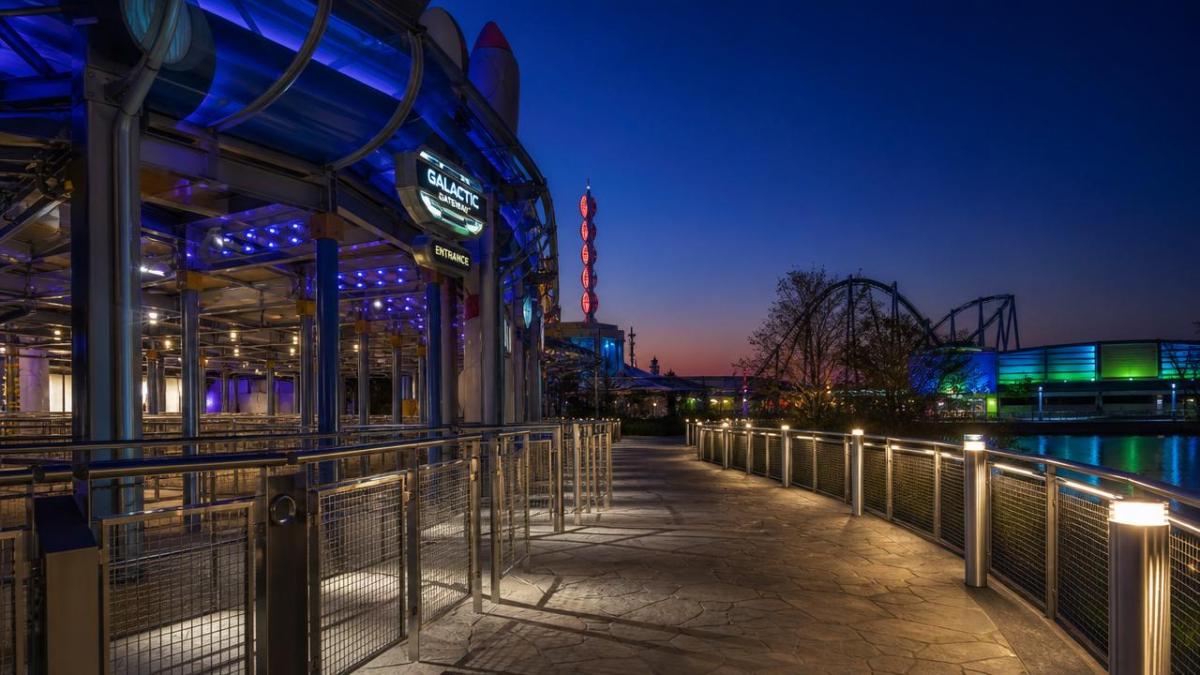
In a park environment, lighting failures rarely stay isolated. A dark pathway can become a slip hazard, a poorly aimed floodlight can create glare, and unstable controls can interrupt shows.
For engineering project leaders, amusement park lighting must be treated as infrastructure. It interacts with electrical distribution, evacuation planning, ride operation, surveillance visibility, and brand experience.
The Practical Goals Behind a Good Lighting Brief
- Protect guests and staff by maintaining visible walking surfaces, queue lines, stairs, ride entrances, and emergency routes.
- Control energy consumption by matching output, operating hours, zoning logic, and dimming schedules to real visitor flow.
- Support storytelling without allowing decorative effects to compromise orientation, security monitoring, or maintenance access.
- Reduce supplier ambiguity by defining measurable parameters instead of accepting generic claims about brightness or quality.
This is where a data-driven approach matters. TechStat Vanguard evaluates technical claims through measurable parameters, because vague promises do not help teams approve budgets or manage risk.
Which Zones Need Different Amusement Park Lighting Strategies?
A single park may contain quiet gardens, high-speed ride areas, food streets, tunnels, plazas, theaters, and maintenance roads. Each zone needs a different technical logic.
Before procurement, project teams should map lighting requirements by activity, risk level, operating schedule, and visual intent. This prevents over-lighting some areas while under-protecting others.
The table shows why amusement park lighting cannot be specified only by fixture wattage. Each area needs an operating mode, risk assumption, and measurable acceptance standard.
What Parameters Should Project Managers Specify First?
A reliable specification starts with numbers. The goal is not to overcomplicate procurement, but to remove uncertainty before suppliers submit incompatible solutions.
For amusement park lighting, the most useful parameters connect visibility, durability, controls, maintenance, and electrical safety. These values should appear in drawings and bid documents.
Core Technical Parameters to Validate
The following table is a practical starting point for engineering teams preparing a lighting package, vendor questionnaire, or performance acceptance checklist.
Parameters should be traceable to the operating environment. TSV’s principle is simple: if a supplier claim cannot be measured, it should not drive approval.
How to Balance Safety, Energy Use, and Guest Experience
The best amusement park lighting design does not maximize brightness everywhere. It creates the right contrast, visibility, comfort, and dramatic hierarchy across the visitor journey.
Energy reduction should come from zoning and control intelligence, not from weakening safety-critical illumination. A dark park may save power but increase operational exposure.
Decision Framework for Competing Requirements
- Define mandatory safety zones first, including stairs, ramps, emergency exits, ride interfaces, service gates, and crowd transition points.
- Build visitor experience layers second, including façade lighting, color effects, scenic accents, and photo-friendly landmark views.
- Apply energy strategies third, including occupancy schedules, dimming curves, astronomical timers, and event-based scene presets.
- Validate the result through night-time mockups, lux readings, camera checks, and staff feedback before final acceptance.
This sequence helps prevent a common mistake: allowing visual concept drawings to overrule engineering risk. The final design must satisfy both imagination and inspection.
Procurement Checklist: What Should Be Compared Before Awarding a Contract?
Procurement difficulty often starts when proposals look similar on the surface. Different suppliers may use different assumptions, test conditions, and accessory exclusions.
For amusement park lighting, project managers should compare the complete system, not only the fixture price. Controls, installation access, commissioning, and maintenance matter.
A lower bid can become expensive if it excludes commissioning, aiming, controls programming, surge protection, or documentation. Procurement should compare total project impact.
Cost Control Without Sacrificing Performance
Budget pressure is normal in expansion, renovation, and seasonal upgrade projects. However, poor cost cutting in amusement park lighting often transfers cost into operations.
The better approach is value engineering. Keep safety and maintainability fixed, then adjust decorative scope, fixture density, control granularity, or staging sequence.
Cost Levers Project Teams Can Control
- Use high-traffic zoning to prioritize premium fixtures where guests spend the most time and where photos influence social sharing.
- Standardize drivers, mounting accessories, and control interfaces to reduce spare inventory and simplify maintenance training.
- Separate infrastructure from decorative upgrades so conduits, panels, and networks can support future seasonal effects.
- Plan commissioning during low-attendance windows to reduce disruption, temporary labor, and night-shift rework.
Lifecycle cost analysis should include energy, cleaning access, replacement labor, control support, and guest disruption. Fixture price alone is rarely the decisive number.
Compliance and Documentation: What Evidence Should Be Kept?
Compliance requirements vary by jurisdiction, park type, insurance policy, and electrical code. Still, documentation discipline protects the project team during audits and incidents.
Amusement park lighting documentation should connect design intent to installation reality. Drawings, calculations, product data, test records, and maintenance instructions should remain traceable.
Common Documentation Package
- Lighting layouts with fixture tags, mounting heights, aiming notes, circuit references, and control zones.
- Photometric calculations showing maintained illuminance, uniformity assumptions, and surface reflectance values.
- Product data sheets covering electrical ratings, IP rating, impact resistance where relevant, and environmental limitations.
- Commissioning records including dimming levels, scene settings, emergency override checks, and measured field values.
Relevant references may include local electrical codes, accessibility guidance, emergency egress requirements, and recognized lighting practice documents. Final compliance should be confirmed locally.
Implementation Workflow for Renovation and New-Build Projects
A well-planned workflow reduces change orders. It also prevents the late discovery that decorative effects conflict with power capacity or emergency visibility.
Recommended Project Sequence
- Audit existing conditions, including panels, cable routes, fixture condition, night-time visibility, and maintenance access constraints.
- Define lighting scenes by operating mode, such as daytime standby, evening peak, showtime, closing, and emergency mode.
- Prepare performance-based specifications with measurable targets, approved control protocols, and submittal requirements.
- Run mockups in high-risk or high-visibility areas before releasing full procurement quantities.
- Commission at night with operations, safety, maintenance, and creative teams present to resolve cross-functional issues.
For phased renovations, temporary lighting should be planned with the same seriousness as permanent systems. Guest safety does not pause during construction.
FAQ: Practical Questions About Amusement Park Lighting
How early should lighting engineers join the project?
They should join before final architectural and electrical coordination. Early input helps reserve mounting locations, cable routes, control rooms, power capacity, and safe maintenance access.
Is LED always the best choice for amusement park lighting?
LED is usually preferred for controllability, energy use, and color options, but the specification still matters. Thermal design, optics, drivers, and controls determine real performance.
What is the biggest mistake in themed lighting procurement?
The biggest mistake is approving visual effects without measurable safety and maintenance criteria. A beautiful scene can fail operationally if glare, access, or control reliability is ignored.
How can teams reduce energy use without making the park feel dim?
Use layered lighting, dimming schedules, targeted accents, and occupancy-based zones. Perceived brightness can improve when contrast and focal points are designed carefully.
Why Choose TSV for Data-Driven Lighting Decisions?
TechStat Vanguard exists to cut through technical noise. Our work is grounded in measurable specifications, supplier comparison logic, and engineering evidence rather than promotional language.
For amusement park lighting projects, TSV can support project managers with parameter confirmation, specification review, vendor comparison frameworks, lifecycle cost logic, and risk-focused documentation checklists.
Consult us when you need to clarify illuminance targets, control protocols, environmental ratings, commissioning requirements, delivery assumptions, or the technical differences between competing proposals.
Engineering truth through data is not a slogan for TSV; it is a procurement discipline. Better evidence leads to safer parks, cleaner budgets, and stronger guest experiences.
Search News
Hot Articles
- Carbon Fiber StructuresHow to Specify Aerospace Carbon Fiber Assemblies for Lightweight, Load-Bearing PartsJul 11, 2026
- Machine VisionXiaomi, Alibaba DAMO Academy Drive Open-Source Robotics Model Ecosystem, Lowering Algorithm Development Barriers for Overseas SMEs Adopting Chinese Robotics SolutionsMar 30, 2026
- Cobots & ArmsShanxi 'AI+' Conference Showcases Embodied Intelligence with Multinational Buyer Engagement: Key Industry ImplicationsMar 30, 2026
Popular Tags
Recommended News
 Jul 11, 2026How to Specify Aerospace Carbon Fiber Assemblies for Lightweight, Load-Bearing PartsAerospace carbon fiber assemblies: learn how to specify laminate design, load data, joining methods, and inspection controls for lighter, reliable load-bearing aerospace parts.Elena Rostova (UAV Systems Researcher)
 Mar 30, 2026Xiaomi, Alibaba DAMO Academy Drive Open-Source Robotics Model Ecosystem, Lowering Algorithm Development Barriers for Overseas SMEs Adopting Chinese Robotics SolutionsXiaomi & Alibaba DAMO Academy's open-source robotics models lower algorithm barriers for global SMEs. Boost efficiency in manufacturing, logistics & smart retail with ROS 2 compatible solutions.TSV Data Lab
 Mar 30, 2026Shanxi 'AI+' Conference Showcases Embodied Intelligence with Multinational Buyer Engagement: Key Industry ImplicationsShanxi 'AI+' Conference highlights embodied intelligence with Tesla, Ubtech & Jiantao showcasing multimodal robotics. 40+ global buyers validated tech on-site, creating new B2B channels for industrial automation & AI solutions.Chen Wei (Automation Lead Engineer)
 Mar 30, 2026Zhongguancun Unveils 6G Integrated Sensing-Computing-Intelligence Platform to Empower Embodied Robots for Global Industrial ApplicationsZhongguancun's new 6G platform revolutionizes industrial robotics with <10ms latency, empowering global automotive, logistics & port automation. Discover how this tech boosts China's smart manufacturing exports.TSV Data Lab
 Mar 30, 2026Mech-Mind Tianjin Embodied Intelligence R&D and Production Base Goes Live, Cutting Delivery Time by 20%–30% for Global Customized AMR+Vision SolutionsMech-Mind's Tianjin AMR+Vision production base cuts delivery time by 20%-30% for欧美 & Latin American markets. Discover how this PLd-certified facility accelerates customized robotics solutions for smart manufacturing and logistics.Chen Wei (Automation Lead Engineer)
 Mar 30, 2026Boao Forum Reveals 'Co-evolution of Big and Small Brains' Trend in Humanoid Robots, China's Embodied Intelligence Accelerates Adaptation to Overseas Manufacturing Service ScenariosDiscover how China's humanoid robots, featuring 'Co-evolution of Big and Small Brains,' are revolutionizing global manufacturing. Learn about Embodied Tian Gong 3.0's ISO compliance and overseas deployment at Boao Forum 2026.Chen Wei (Automation Lead Engineer)
 Mar 30, 2026China Railway Industrial Secures Patent for Embodied Robotics in Material Handling, Boosting High-Precision Delivery Capabilities for Overseas Infrastructure and Manufacturing ProjectsChina Railway Industrial's new patent for embodied robotics in material handling boosts high-precision delivery for global infrastructure & manufacturing. Discover how this innovation enhances logistics accuracy in automotive, rail transit & EPC projects.Chen Wei (Automation Lead Engineer)
 Oct 17, 20265-Axis CNC Positioning Accuracy: How to Interpret ISO 230-2 Test ResultsAssess 5 axis CNC machining positioning accuracy with ISO 230-2. Learn to interpret repeatability, reversal error, and test conditions to compare suppliers and make confident acceptance decisions.Dr. Marcus Vance
 Oct 16, 2026Choosing a Rugged Edge AI Box Supplier: Thermal Tests and Lifecycle SupportChoose a rugged edge AI box supplier with proven thermal performance and reliable lifecycle support. Discover the tests and commitments to verify before you buy.TSV Data Lab
 Oct 15, 2026R&D Cost Reduction Services: How to Evaluate Fees, Savings, and ROIEvaluate R&D cost reduction services with confidence. Compare fees, verify savings, and calculate ROI without compromising performance. Discover how to choose a provider that delivers real value.Chen Wei (Automation Lead Engineer)
 Oct 16, 2026How Can You Fairly Compare MTBF Across Industrial Servo Motors?Make a fair industrial servo motor MTBF comparison with matched operating profiles, failure criteria, and confidence bounds. Discover how to assess reliability beyond advertised numbers.Chen Wei (Automation Lead Engineer)
 Oct 15, 2026How Should You Compare TechStat Vanguard 5-Axis CNC Tolerances?TechStat Vanguard 5-axis CNC tolerance comparison: learn how to verify part accuracy, assess inspection evidence, and choose suppliers that reliably meet your drawing requirements.Dr. Marcus Vance
 Oct 14, 2026Drone Frame Composites: Carbon Fiber vs. Fiberglass for Weight and StiffnessExplore drone structural materials composites: compare carbon fiber and fiberglass for weight, stiffness, cost, and antenna compatibility. Find the right material for your drone frame.Elena Rostova (UAV Systems Researcher)
 Oct 13, 2026Smart Cameras vs. PC-Based Machine Vision: Which Fits High-Speed Inspection?This industrial product comparison for machine vision weighs smart cameras vs. PC-based systems on latency, throughput, and cost. Discover your best fit for high-speed inspection.TSV Data Lab
 Oct 12, 2026How to Verify RoHS Compliance in Industrial Sensing Systems Before DeploymentRoHS compliant sensing systems: learn how to verify materials, supplier declarations, testing, and configuration controls before industrial deployment.TSV Data Lab
 Oct 11, 2026How Procurement-Oriented Content Taxonomy Improves B2B Buying JourneysProcurement-oriented content taxonomy streamlines B2B buying journeys with clearer evidence, supplier comparisons, risk visibility, and faster approvals.TSV Data Lab
 Oct 10, 2026How to Select a Machine Performance Monitoring Platform for OEE and Downtime ReductionMachine performance monitoring platform selection guide: validate machine states, OEE data, downtime reasons, integrations, and scalability to reduce losses with confidence.TSV Data Lab
 Oct 08, 2026How to Machine Inconel 625 Blades Without Heat Cracks or Edge ChippingInconel 625 blade machining guide: prevent heat cracks, edge chipping, chatter, and work hardening with proven tooling, cooling, fixturing, and inspection strategies.Dr. Marcus Vance
 Oct 07, 2026How to Evaluate an HMI Panel Distributor for Industrial Automation ProjectsHMI panel distributor evaluation guide: verify technical compatibility, traceability, supply reliability, lifecycle support, and total cost for automation projects.Victor Lin (Chief Software Architect)
 Oct 06, 2026Navigation Fault Tolerance Standards for AMRs: What Safety Teams Must VerifyNavigation fault tolerance standards: learn what AMR safety teams must verify, from localization loss and sensor faults to stopping distance, safe restart, and site-specific validation.Chen Wei (Automation Lead Engineer)
 Oct 05, 2026Calculating Edge Computing Total Cost of Ownership Across Distributed SitesEdge computing ownership cost explained: calculate deployment, energy, connectivity, security, remote support, and refresh costs across distributed sites.TSV Data Lab
 Oct 04, 2026CAD/CAM Benchmarking in the GCC: What Manufacturers Should Ask a ConsultantCAD CAM benchmark consultant GCC guide: learn the key questions manufacturers should ask to validate post-processors, workflows, machine performance, and production risk.Victor Lin (Chief Software Architect)
 Oct 03, 2026Selecting Automotive Radar Sensor Modules for ADAS Range, Resolution, and IntegrationAutomotive radar sensor module selection guide for ADAS: compare range, resolution, field of view, latency, and integration to build safer, reliable vehicle systems.TSV Data Lab
 Oct 02, 2026How to Qualify Machined Parts Suppliers for Hard Tech ProgramsHard tech supply chain machined parts demand rigorous supplier qualification. Learn how to assess capability, traceability, quality controls, and delivery resilience.Dr. Marcus Vance























