Theme Park Rides Maintenance Checklist: Common Faults, Inspection Points, and Downtime Risks
Publication Date
author
Theme Park Rides Maintenance Checklist: Common Faults, Inspection Points, and Downtime Risks
For after-sales maintenance teams, theme park rides demand more than routine servicing. They need disciplined inspections, fast fault recognition, and practical risk control.
This guide explains common failures, key inspection points, and downtime risks that affect safety, compliance, and daily ride availability.
The goal is simple: make theme park rides easier to troubleshoot, faster to recover, and more reliable during peak operating hours.
Why Theme Park Rides Maintenance Needs a Structured Checklist
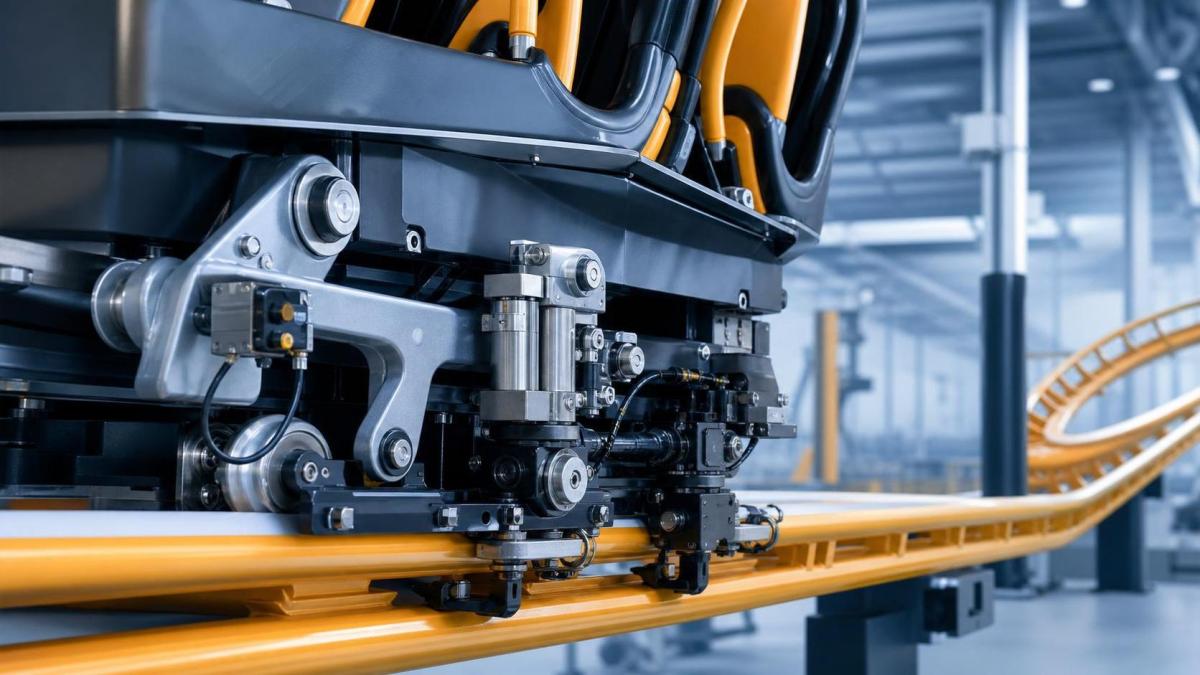
Theme park rides work under repeated loads, changing weather, and tight operating schedules. Small defects can become expensive shutdowns very quickly.
A structured checklist helps teams catch early wear before faults trigger alarms, passenger delays, or mandatory ride stoppages.
It also creates a cleaner maintenance record. That matters when reviewing recurring issues, warranty claims, spare part cycles, and audit readiness.
From a business angle, reliable theme park rides protect revenue. Every extra hour of downtime can reduce throughput, guest satisfaction, and staff efficiency.
Common Faults Found in Theme Park Rides
Most faults in theme park rides start in a few predictable areas. The pattern is often mechanical wear, electrical instability, or sensor inconsistency.
1. Restraint and locking system faults
Lap bars, over-the-shoulder restraints, and lock confirmation switches are high-priority components. They cycle constantly and cannot tolerate missed inspections.
Common problems include slow lock engagement, false closed signals, actuator wear, and damaged microswitch alignment.
2. Drive system issues
Motors, gearboxes, belts, chains, brakes, and couplings are frequent failure points in theme park rides with high daily cycles.
Watch for overheating, unusual vibration, oil leakage, slack tension, and inconsistent braking response.
3. Sensor and control faults
Photoelectric sensors, proximity switches, encoders, and limit switches often fail because of dust, moisture, misalignment, or cable stress.
The first visible symptom is usually nuisance trips. Then come start failures, stop faults, or position errors.
4. Hydraulic and pneumatic problems
Some theme park rides still depend on hydraulic cylinders or pneumatic locks. These systems are sensitive to contamination and seal degradation.
Pressure drops, slow actuation, fluid leaks, and valve sticking usually appear before a full system lockout.
Inspection Points That Deserve Daily Attention
A good checklist for theme park rides should not be long for the sake of being long. It should be focused and repeatable.
Daily inspections should combine visual checks, functional checks, and condition-based observations. That mix catches both obvious and hidden faults.
- Check restraints for wear, looseness, cracked covers, and positive locking feedback.
- Inspect tracks, wheels, bogies, or rotating arms for abnormal contact marks and debris buildup.
- Confirm sensors are clean, aligned, and free from cable damage or connector looseness.
- Listen for gearbox noise, brake drag, bearing roughness, and air or hydraulic leakage.
- Review HMI or PLC fault history before opening, even when the ride appears normal.
- Verify emergency stop circuits, interlocks, and recovery procedures during pre-opening tests.
In practice, the best teams compare today’s condition with yesterday’s baseline. Trend changes usually matter more than isolated readings.
This is where a data-first mindset helps. TSV often emphasizes that parameters tell the truth long before failures become visible.
Weekly and Monthly Checklist Items for Theme Park Rides
Daily checks protect operations, but weekly and monthly inspections protect asset life. Skipping them is where downtime risk quietly grows.
Weekly priorities
- Torque-check fasteners on moving assemblies, guard structures, and restraint hardware.
- Inspect lubrication quality, not just quantity, on bearings, chains, and guide components.
- Review brake wear, stopping distance, and thermal discoloration signs.
- Examine electrical panels for heat marks, loose terminals, and contamination.
Monthly priorities
- Test backup systems, UPS support, and fault recovery sequences.
- Check hydraulic fluid condition, filter status, and system pressure stability.
- Measure vibration trends on motors, pumps, and rotating parts.
- Compare fault logs by frequency, reset pattern, and recurrence location.
For theme park rides with high passenger turnover, monthly checks should also include wear mapping on load-intensive components.
Hidden Downtime Risks That Teams Often Miss
Not every downtime event begins with a dramatic breakdown. Many theme park rides lose availability because of small issues that stay unresolved.
Intermittent faults
Intermittent faults are dangerous because they disappear during inspection. Loose connectors, marginal sensors, and vibration-sensitive relays are common causes.
Parts shortages
A minor failed component can stop theme park rides for days when spare parts are not stocked locally.
Poor fault documentation
If technicians record “ride stopped” without fault code, weather condition, cycle count, and recovery time, pattern analysis becomes guesswork.
Deferred corrective action
Temporary fixes keep operations moving, but repeated temporary fixes raise long-term downtime risk and compliance exposure.
How to Build a More Reliable Maintenance Workflow
The most effective workflow for theme park rides is not built around reacting faster. It is built around seeing risk sooner.
Start by separating faults into three groups: immediate safety risks, short-term operational risks, and slow-developing reliability risks.
Then connect each group to a defined response. That means inspection steps, spare part rules, escalation timing, and release approval.
This approach reduces confusion during busy periods. It also prevents minor issues from being buried under daily workload pressure.
- Use fault logs tied to exact component names and cycle counts.
- Maintain minimum stock for failure-prone electrical and sealing parts.
- Create trigger limits for temperature, vibration, leakage, and reset frequency.
- Review repeat incidents weekly, not only after major stoppages.
That is also consistent with the TSV view of engineering truth: real decisions improve when maintenance data is clean, comparable, and repeatable.
A Practical Checklist to Reduce Theme Park Rides Downtime
If the goal is fewer interruptions, the checklist should stay practical. Every item should answer one question: what failure are we trying to prevent?
- Inspect all rider restraint confirmations before opening.
- Check sensors, switches, and encoder feedback for stable signals.
- Listen and look for abnormal mechanical behavior during empty test cycles.
- Review active alarms and unresolved fault history every shift.
- Confirm spare parts for known weak points are available on site.
- Escalate repeat failures before they become accepted normal behavior.
Reliable theme park rides come from disciplined habits, not just technical skill. Inspection quality, documentation quality, and response quality all matter.
When teams treat recurring faults as data instead of inconvenience, downtime starts to shrink in a measurable way.
Build the checklist, track the trends, and tighten response thresholds. That is the most practical way to keep theme park rides safe, available, and operationally efficient.
Search News
Hot Articles
- Carbon Fiber StructuresHow to Specify Aerospace Carbon Fiber Assemblies for Lightweight, Load-Bearing PartsJul 11, 2026
- Machine VisionXiaomi, Alibaba DAMO Academy Drive Open-Source Robotics Model Ecosystem, Lowering Algorithm Development Barriers for Overseas SMEs Adopting Chinese Robotics SolutionsMar 30, 2026
- Cobots & ArmsShanxi 'AI+' Conference Showcases Embodied Intelligence with Multinational Buyer Engagement: Key Industry ImplicationsMar 30, 2026
Popular Tags
Recommended News
 Jul 11, 2026How to Specify Aerospace Carbon Fiber Assemblies for Lightweight, Load-Bearing PartsAerospace carbon fiber assemblies: learn how to specify laminate design, load data, joining methods, and inspection controls for lighter, reliable load-bearing aerospace parts.Elena Rostova (UAV Systems Researcher)
 Mar 30, 2026Xiaomi, Alibaba DAMO Academy Drive Open-Source Robotics Model Ecosystem, Lowering Algorithm Development Barriers for Overseas SMEs Adopting Chinese Robotics SolutionsXiaomi & Alibaba DAMO Academy's open-source robotics models lower algorithm barriers for global SMEs. Boost efficiency in manufacturing, logistics & smart retail with ROS 2 compatible solutions.TSV Data Lab
 Mar 30, 2026Shanxi 'AI+' Conference Showcases Embodied Intelligence with Multinational Buyer Engagement: Key Industry ImplicationsShanxi 'AI+' Conference highlights embodied intelligence with Tesla, Ubtech & Jiantao showcasing multimodal robotics. 40+ global buyers validated tech on-site, creating new B2B channels for industrial automation & AI solutions.Chen Wei (Automation Lead Engineer)
 Mar 30, 2026Zhongguancun Unveils 6G Integrated Sensing-Computing-Intelligence Platform to Empower Embodied Robots for Global Industrial ApplicationsZhongguancun's new 6G platform revolutionizes industrial robotics with <10ms latency, empowering global automotive, logistics & port automation. Discover how this tech boosts China's smart manufacturing exports.TSV Data Lab
 Mar 30, 2026Mech-Mind Tianjin Embodied Intelligence R&D and Production Base Goes Live, Cutting Delivery Time by 20%–30% for Global Customized AMR+Vision SolutionsMech-Mind's Tianjin AMR+Vision production base cuts delivery time by 20%-30% for欧美 & Latin American markets. Discover how this PLd-certified facility accelerates customized robotics solutions for smart manufacturing and logistics.Chen Wei (Automation Lead Engineer)
 Mar 30, 2026Boao Forum Reveals 'Co-evolution of Big and Small Brains' Trend in Humanoid Robots, China's Embodied Intelligence Accelerates Adaptation to Overseas Manufacturing Service ScenariosDiscover how China's humanoid robots, featuring 'Co-evolution of Big and Small Brains,' are revolutionizing global manufacturing. Learn about Embodied Tian Gong 3.0's ISO compliance and overseas deployment at Boao Forum 2026.Chen Wei (Automation Lead Engineer)
 Mar 30, 2026China Railway Industrial Secures Patent for Embodied Robotics in Material Handling, Boosting High-Precision Delivery Capabilities for Overseas Infrastructure and Manufacturing ProjectsChina Railway Industrial's new patent for embodied robotics in material handling boosts high-precision delivery for global infrastructure & manufacturing. Discover how this innovation enhances logistics accuracy in automotive, rail transit & EPC projects.Chen Wei (Automation Lead Engineer)
 Sep 19, 2026How to Scope Automation Integration Services for Multi-System Factory ProjectsAutomation integration services: learn how to scope multi-system factory projects with clear workflows, interface contracts, safety boundaries, and acceptance criteria.Victor Lin (Chief Software Architect)
 Sep 18, 2026Selecting UAV Aerospace Structural Parts for Strength, Weight, and Fatigue LifeUAV aerospace structural parts guide: compare strength, weight, stiffness, fatigue life, joints, and traceability to select reliable flight-ready components.Elena Rostova (UAV Systems Researcher)
 Sep 17, 2026Selecting Commercial Drone Payloads for European Inspection ProjectsCommercial drone payloads Europe: learn how to select RGB, thermal and LiDAR systems for compliant, reliable inspection data and better project outcomes.Elena Rostova (UAV Systems Researcher)
 Sep 16, 2026Machining Tolerance Validation: How to Verify Critical Dimensions Before Production ReleaseMachining tolerance analysis validation: verify critical dimensions, measurement systems, process capability, and tolerance stacks before production release.Dr. Marcus Vance
 Sep 15, 2026AGV Tape Guidance vs Laser Navigation: Which Fits Your Warehouse Layout?AGV tape guidance comparison: discover how tape and laser navigation fit changing warehouse layouts, docking needs, floor conditions, maintenance, and route flexibility.Chen Wei (Automation Lead Engineer)
 Sep 14, 2026How Point Cloud Analytics Improves Asset Inspection Workflows Across GCC ProjectsPoint cloud analytics GCC helps project leaders improve asset inspections with accurate change detection, safer workflows, and faster maintenance decisions.TSV Data Lab
 Sep 13, 2026How Aerospace Manufacturers Can Build a Digital Thread From Design to Certified ProductionDigital manufacturing for aerospace: learn how to build a traceable digital thread from design through certified production, supplier control, and audit-ready compliance.Victor Lin (Chief Software Architect)
 Sep 12, 2026How to Select a Thermal Sensor for Mapping Drones in Surveying ProjectsMapping drone thermal sensor selection made simple: compare GSD, radiometric data, NETD, calibration, and workflow fit for accurate, survey-ready thermal maps.Elena Rostova (UAV Systems Researcher)
 Sep 11, 2026Integrating Photogrammetry Workflows into Digital Twin Projects Without Data BottlenecksPhotogrammetry workflow integration for digital twins: learn how to streamline capture, validation, versioning, and delivery to prevent data bottlenecks.Victor Lin (Chief Software Architect)
 Sep 10, 2026Hard-Tech Supply Chain Procurement: Qualifying Suppliers to Cut Lead-Time RiskHard-tech supply chain procurement guide: qualify suppliers with proven process, traceability, capacity, and change control to reduce lead-time risk.Chen Wei (Automation Lead Engineer)
 Sep 09, 2026Industrial Application Notes: Cost Factors That Shape Automation Project BudgetsIndustrial application notes cost factors explained: uncover the engineering, safety, integration, and commissioning variables that shape accurate automation budgets.Victor Lin (Chief Software Architect)
 Sep 08, 2026Supplier Discovery for Sourcing: How Buyers Can Verify Capability and Supply RiskSupplier discovery for sourcing: learn how to verify supplier capability, traceability, quote assumptions, and supply risk before placing production orders.TSV Data Lab
 Sep 07, 2026What Determines Process Control Systems Pricing? A Buyer’s Cost GuideProcess control systems pricing explained: compare hardware, engineering, integration, cybersecurity, validation, and lifecycle costs to choose the right-value solution.Victor Lin (Chief Software Architect)
 Sep 07, 2026AMR Robots in ASEAN: Which Industries Are Adopting Them—and Why?AMR robots ASEAN adoption is accelerating in electronics, automotive, warehousing, healthcare, and cold chain. Explore use cases, risks, and deployment insights.Chen Wei (Automation Lead Engineer)
 Sep 05, 2026How to Evaluate Supplier Qualification Support Tools for Industrial Procurement TeamsSupplier qualification support tools help industrial procurement teams verify technical evidence, manage risk, and make defensible supplier approvals. Learn what to evaluate.Victor Lin (Chief Software Architect)
 Sep 04, 2026Grinding Tolerance Analysis: How to Set Realistic Limits for Precision PartsGrinding tolerance analysis explains how to set realistic limits for precision parts, balance fit, geometry, process capability, and inspection for reliable performance.Dr. Marcus Vance
 Sep 03, 2026Warehouse Automation Strategies to Increase Storage Capacity Without ExpansionWarehouse automation space saving strategies help unlock vertical capacity, optimize slotting, and improve storage density without costly building expansion.Victor Lin (Chief Software Architect)