PLC Control for Packaging Machinery: How to Compare I/O, Speed, and Integration Needs
Publication Date
author
PLC Control for Packaging Machinery: How to Compare I/O, Speed, and Integration Needs
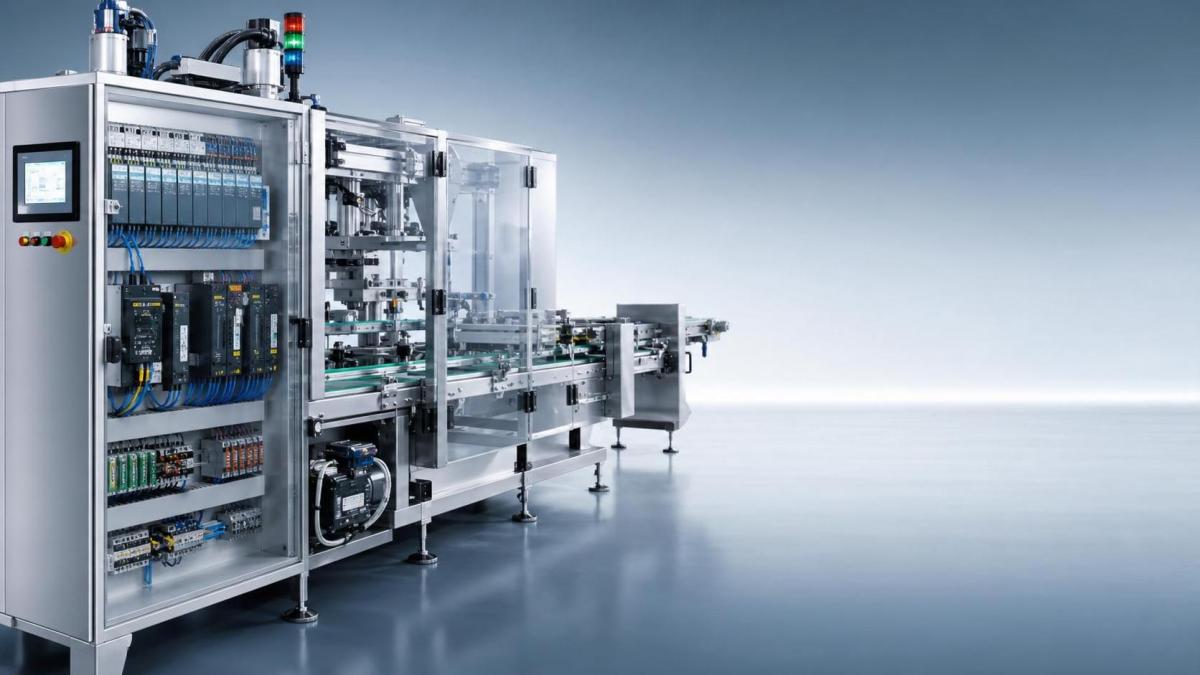
Selecting the right plc control for packaging machinery is rarely about picking a familiar brand. It is an engineering decision tied to uptime, changeover stability, and future expansion.
In packaging lines, controller limits show up fast. They appear in missed sensor events, unstable sealing timing, slow fault tracing, or poor coordination with drives and vision systems.
That is why plc control for packaging machinery should be evaluated against the machine duty cycle, not against marketing claims. Parameters matter more than slogans.
For form-fill-seal, cartoning, case packing, labeling, and palletizing, four factors shape the decision most: I/O count, controller speed, motion behavior, and integration depth.
A practical comparison also needs one more layer. You must check diagnostic quality, spare parts strategy, software maintainability, and how easily the platform fits supplier qualification rules.
At TechStat Vanguard, the useful question is simple: which PLC platform keeps the machine stable at target throughput while preserving engineering headroom for later upgrades?
Start with the packaging machine duty profile
Before comparing models, define what the machine must actually do. A slow manual loading station and a high-speed wrapper do not need the same plc control for packaging machinery.
Map the real operating profile first. Include cycle rate, product mix, conveyor synchronization, registration accuracy, reject logic, and traceability demands.
A short duty profile should answer these points:
- How many machine states run simultaneously during peak production?
- Which signals are time-critical, and which are only status points?
- How often do recipes, SKUs, or packaging formats change?
- Will the PLC coordinate only logic, or logic plus motion and inspection?
- What is the required recovery time after a fault or emergency stop?
This baseline prevents a common mistake. Teams often overspecify CPU class while underestimating field I/O structure, network topology, and future machine variants.
Compare I/O needs beyond simple point count
I/O is usually the first filter in plc control for packaging machinery selection, but raw point count is not enough. The useful comparison is about type, timing, location, and expandability.
A packaging line may have photoeyes, prox sensors, load cells, barcode readers, HMI commands, valve banks, servo enables, and safety status signals. Each behaves differently.
When evaluating I/O, check these dimensions:
- Digital input and output quantity at launch and at planned expansion.
- Analog resolution and sampling behavior for tension, pressure, or load control.
- High-speed counter support for encoder feedback and registration tracking.
- Remote I/O availability for distributed machine frames.
- Hot-swap or service-friendly replacement options.
- Isolation, noise resistance, and cabinet wiring implications.
In real packaging equipment, distributed I/O often improves maintainability. It reduces cable runs, shortens installation time, and simplifies modular machine design.
More importantly, distributed architecture can improve fault localization. A failed sensor on an infeed module becomes easier to identify than when every signal lands in one large cabinet.
The best plc control for packaging machinery choice is often the one that matches the machine’s modular structure, not the one with the biggest published I/O ceiling.
Evaluate speed where timing actually affects output
PLC speed is often reduced to one number, such as scan time. That shortcut can mislead buyers. Packaging performance depends on the whole timing path, not just CPU headline data.
For plc control for packaging machinery, assess input detection, logic execution, network update intervals, motion command latency, and output response together.
Speed matters most in situations like these:
- High-speed product tracking on conveyors with variable spacing.
- Registration control for film printing alignment.
- Coordinated cut, seal, and discharge actions.
- Reject timing linked to vision or code verification results.
- Servo camming in cartoners or pick-and-place modules.
A controller can look fast on paper and still perform poorly if communication jitter is high or motion tasks compete with diagnostics and HMI traffic.
That is why benchmark reviews should ask for application-specific evidence. Look for cycle stability at target speed, not only unloaded processor specifications.
If the machine is expected to gain throughput later, leave timing margin. A PLC running close to its practical limit today usually becomes a bottleneck during future feature additions.
Check motion response, not just general logic control
Many packaging machines are now motion-centric. Even compact systems may need servo indexing, electronic gearing, virtual cams, or synchronized feeders.
In that environment, plc control for packaging machinery must be judged on axis coordination quality. General logic capability alone is no longer enough.
Review these motion-related questions:
- How many real and virtual axes are required now?
- Does the platform support the needed motion library natively?
- What is the synchronization quality during speed changes?
- Can one CPU manage logic, safety interaction, and motion cleanly?
- How easily can engineers tune and troubleshoot servo events?
For intermittent-motion machines, poor synchronization creates subtle losses. You may see increased scrap, uneven seal quality, label placement drift, or reduced mechanical life.
A good evaluation method is to separate motion into classes. Basic indexing, coordinated multi-axis motion, and high-speed registration control should not be treated as the same requirement.
Assess integration with drives, safety, vision, and data systems
Integration is where a promising PLC platform can either simplify the project or create hidden engineering cost. This is especially true for multi-vendor packaging lines.
Strong plc control for packaging machinery should fit cleanly with VFDs, servo drives, safety controllers, HMIs, printers, scanners, vision systems, and plant-level MES or SCADA tools.
In practice, compare integration using this checklist:
- Supported industrial protocols such as EtherNet/IP, PROFINET, EtherCAT, or Modbus TCP.
- Native support for safety I/O, safe motion, and safety diagnostics.
- Vision trigger handling and deterministic data exchange behavior.
- Recipe management, batch reporting, and historian connectivity.
- Remote service access with clear cybersecurity controls.
- Alarm granularity and event logging for root-cause analysis.
This point matters more than many teams expect. A lower-cost PLC may raise total project cost if gateways, custom drivers, or manual data mapping become necessary.
From a procurement angle, integration quality also affects vendor lock-in risk. Open communication options usually improve replacement flexibility and long-term sourcing resilience.
Use a weighted comparison model for final selection
Once the technical requirements are clear, convert them into a weighted scorecard. This keeps the plc control for packaging machinery decision disciplined and easier to defend internally.
A practical model usually balances machine performance, lifecycle support, and engineering effort. Price matters, but it should not dominate a machine-critical decision.
Weights should change by machine class. A compact labeler may prioritize integration simplicity. A high-speed cartoner may place more weight on motion and timing margin.
Common decision mistakes and how to avoid them
Several recurring mistakes distort plc control for packaging machinery decisions. Most of them come from treating the PLC as a standalone device instead of part of a full automation system.
- Choosing by brand familiarity without mapping machine timing needs.
- Counting I/O points but ignoring signal type and physical distribution.
- Using nominal scan time as the only speed criterion.
- Separating motion evaluation from logic and safety interactions.
- Ignoring software maintainability and spare parts strategy.
- Underestimating future SKU growth and reporting requirements.
The safer path is to run a scenario-based review. Compare platforms against startup, normal production, changeover, fault recovery, and future expansion scenarios.
This approach produces better technical clarity and cleaner procurement documentation. It also reduces the risk of late redesign when line acceptance testing begins.
Final selection logic for better long-term performance
The best plc control for packaging machinery is the one that matches the machine’s real operating envelope, integrates cleanly, and leaves room for controlled growth.
In practical terms, start with the duty profile. Then validate I/O structure, timing path, motion response, and integration architecture before discussing price tradeoffs.
That order matters. It keeps the decision tied to throughput, quality, diagnostics, and lifecycle value rather than short-term assumptions.
For teams building or sourcing advanced packaging systems, disciplined evaluation is the fastest route to reliable performance. Engineering truth starts with measurable control capability, not broad claims.
If you are comparing platforms now, create a weighted review sheet around your machine scenarios first. It turns plc control for packaging machinery from a subjective preference into a defensible technical decision.
Search News
Hot Articles
- Carbon Fiber StructuresHow to Specify Aerospace Carbon Fiber Assemblies for Lightweight, Load-Bearing PartsJul 11, 2026
- Machine VisionXiaomi, Alibaba DAMO Academy Drive Open-Source Robotics Model Ecosystem, Lowering Algorithm Development Barriers for Overseas SMEs Adopting Chinese Robotics SolutionsMar 30, 2026
- Cobots & ArmsShanxi 'AI+' Conference Showcases Embodied Intelligence with Multinational Buyer Engagement: Key Industry ImplicationsMar 30, 2026
Popular Tags
Recommended News
 Jul 11, 2026How to Specify Aerospace Carbon Fiber Assemblies for Lightweight, Load-Bearing PartsAerospace carbon fiber assemblies: learn how to specify laminate design, load data, joining methods, and inspection controls for lighter, reliable load-bearing aerospace parts.Elena Rostova (UAV Systems Researcher)
 Mar 30, 2026Xiaomi, Alibaba DAMO Academy Drive Open-Source Robotics Model Ecosystem, Lowering Algorithm Development Barriers for Overseas SMEs Adopting Chinese Robotics SolutionsXiaomi & Alibaba DAMO Academy's open-source robotics models lower algorithm barriers for global SMEs. Boost efficiency in manufacturing, logistics & smart retail with ROS 2 compatible solutions.TSV Data Lab
 Mar 30, 2026Shanxi 'AI+' Conference Showcases Embodied Intelligence with Multinational Buyer Engagement: Key Industry ImplicationsShanxi 'AI+' Conference highlights embodied intelligence with Tesla, Ubtech & Jiantao showcasing multimodal robotics. 40+ global buyers validated tech on-site, creating new B2B channels for industrial automation & AI solutions.Chen Wei (Automation Lead Engineer)
 Mar 30, 2026Zhongguancun Unveils 6G Integrated Sensing-Computing-Intelligence Platform to Empower Embodied Robots for Global Industrial ApplicationsZhongguancun's new 6G platform revolutionizes industrial robotics with <10ms latency, empowering global automotive, logistics & port automation. Discover how this tech boosts China's smart manufacturing exports.TSV Data Lab
 Mar 30, 2026Mech-Mind Tianjin Embodied Intelligence R&D and Production Base Goes Live, Cutting Delivery Time by 20%–30% for Global Customized AMR+Vision SolutionsMech-Mind's Tianjin AMR+Vision production base cuts delivery time by 20%-30% for欧美 & Latin American markets. Discover how this PLd-certified facility accelerates customized robotics solutions for smart manufacturing and logistics.Chen Wei (Automation Lead Engineer)
 Mar 30, 2026Boao Forum Reveals 'Co-evolution of Big and Small Brains' Trend in Humanoid Robots, China's Embodied Intelligence Accelerates Adaptation to Overseas Manufacturing Service ScenariosDiscover how China's humanoid robots, featuring 'Co-evolution of Big and Small Brains,' are revolutionizing global manufacturing. Learn about Embodied Tian Gong 3.0's ISO compliance and overseas deployment at Boao Forum 2026.Chen Wei (Automation Lead Engineer)
 Mar 30, 2026China Railway Industrial Secures Patent for Embodied Robotics in Material Handling, Boosting High-Precision Delivery Capabilities for Overseas Infrastructure and Manufacturing ProjectsChina Railway Industrial's new patent for embodied robotics in material handling boosts high-precision delivery for global infrastructure & manufacturing. Discover how this innovation enhances logistics accuracy in automotive, rail transit & EPC projects.Chen Wei (Automation Lead Engineer)
 Sep 19, 2026How to Scope Automation Integration Services for Multi-System Factory ProjectsAutomation integration services: learn how to scope multi-system factory projects with clear workflows, interface contracts, safety boundaries, and acceptance criteria.Victor Lin (Chief Software Architect)
 Sep 18, 2026Selecting UAV Aerospace Structural Parts for Strength, Weight, and Fatigue LifeUAV aerospace structural parts guide: compare strength, weight, stiffness, fatigue life, joints, and traceability to select reliable flight-ready components.Elena Rostova (UAV Systems Researcher)
 Sep 17, 2026Selecting Commercial Drone Payloads for European Inspection ProjectsCommercial drone payloads Europe: learn how to select RGB, thermal and LiDAR systems for compliant, reliable inspection data and better project outcomes.Elena Rostova (UAV Systems Researcher)
 Sep 16, 2026Machining Tolerance Validation: How to Verify Critical Dimensions Before Production ReleaseMachining tolerance analysis validation: verify critical dimensions, measurement systems, process capability, and tolerance stacks before production release.Dr. Marcus Vance
 Sep 15, 2026AGV Tape Guidance vs Laser Navigation: Which Fits Your Warehouse Layout?AGV tape guidance comparison: discover how tape and laser navigation fit changing warehouse layouts, docking needs, floor conditions, maintenance, and route flexibility.Chen Wei (Automation Lead Engineer)
 Sep 14, 2026How Point Cloud Analytics Improves Asset Inspection Workflows Across GCC ProjectsPoint cloud analytics GCC helps project leaders improve asset inspections with accurate change detection, safer workflows, and faster maintenance decisions.TSV Data Lab
 Sep 13, 2026How Aerospace Manufacturers Can Build a Digital Thread From Design to Certified ProductionDigital manufacturing for aerospace: learn how to build a traceable digital thread from design through certified production, supplier control, and audit-ready compliance.Victor Lin (Chief Software Architect)
 Sep 12, 2026How to Select a Thermal Sensor for Mapping Drones in Surveying ProjectsMapping drone thermal sensor selection made simple: compare GSD, radiometric data, NETD, calibration, and workflow fit for accurate, survey-ready thermal maps.Elena Rostova (UAV Systems Researcher)
 Sep 11, 2026Integrating Photogrammetry Workflows into Digital Twin Projects Without Data BottlenecksPhotogrammetry workflow integration for digital twins: learn how to streamline capture, validation, versioning, and delivery to prevent data bottlenecks.Victor Lin (Chief Software Architect)
 Sep 10, 2026Hard-Tech Supply Chain Procurement: Qualifying Suppliers to Cut Lead-Time RiskHard-tech supply chain procurement guide: qualify suppliers with proven process, traceability, capacity, and change control to reduce lead-time risk.Chen Wei (Automation Lead Engineer)
 Sep 09, 2026Industrial Application Notes: Cost Factors That Shape Automation Project BudgetsIndustrial application notes cost factors explained: uncover the engineering, safety, integration, and commissioning variables that shape accurate automation budgets.Victor Lin (Chief Software Architect)
 Sep 08, 2026Supplier Discovery for Sourcing: How Buyers Can Verify Capability and Supply RiskSupplier discovery for sourcing: learn how to verify supplier capability, traceability, quote assumptions, and supply risk before placing production orders.TSV Data Lab
 Sep 07, 2026What Determines Process Control Systems Pricing? A Buyer’s Cost GuideProcess control systems pricing explained: compare hardware, engineering, integration, cybersecurity, validation, and lifecycle costs to choose the right-value solution.Victor Lin (Chief Software Architect)
 Sep 07, 2026AMR Robots in ASEAN: Which Industries Are Adopting Them—and Why?AMR robots ASEAN adoption is accelerating in electronics, automotive, warehousing, healthcare, and cold chain. Explore use cases, risks, and deployment insights.Chen Wei (Automation Lead Engineer)
 Sep 05, 2026How to Evaluate Supplier Qualification Support Tools for Industrial Procurement TeamsSupplier qualification support tools help industrial procurement teams verify technical evidence, manage risk, and make defensible supplier approvals. Learn what to evaluate.Victor Lin (Chief Software Architect)
 Sep 04, 2026Grinding Tolerance Analysis: How to Set Realistic Limits for Precision PartsGrinding tolerance analysis explains how to set realistic limits for precision parts, balance fit, geometry, process capability, and inspection for reliable performance.Dr. Marcus Vance
 Sep 03, 2026Warehouse Automation Strategies to Increase Storage Capacity Without ExpansionWarehouse automation space saving strategies help unlock vertical capacity, optimize slotting, and improve storage density without costly building expansion.Victor Lin (Chief Software Architect)