Extreme heat, dust and vibration can distort servo MTBF data
Publication Date
author
In real-world automation environments, servo motors MTBF under extreme conditions can look far different from catalog claims. When extreme heat, airborne dust, and persistent vibration interact, failure patterns shift, maintenance intervals tighten, and reliability data can become dangerously misleading. For technical evaluators, understanding how these variables distort reported MTBF is essential to making defensible sourcing, validation, and lifecycle decisions.
Why do servo motors MTBF under extreme conditions often differ from catalog values?
The short answer is that most catalog MTBF figures are generated under controlled assumptions. Suppliers may test at stable ambient temperature, filtered air, nominal load, proper alignment, and limited shock exposure. In contrast, factory floors, mobile platforms, packaging lines, mining support systems, and aerospace-adjacent production cells rarely operate in that ideal envelope. As a result, servo motors MTBF under extreme conditions can fall well below published values even when the motor itself is not fundamentally defective.
Technical evaluators should remember that MTBF is not a universal truth. It is a statistical output shaped by test profile, duty cycle, sample size, failure definition, and environment. If one vendor counts only catastrophic stoppages while another includes encoder drift, brake degradation, or connector failure, the data is not directly comparable. Extreme heat accelerates insulation aging and lubricant breakdown. Dust increases contamination risk at seals, bearings, fans, and connectors. Vibration can amplify fatigue in solder joints, cable terminations, couplings, and feedback devices. Together, these stressors change both the mode and timing of failure.
For organizations aligned with TSV’s data-first philosophy, the core lesson is simple: parameters do not lie, but test context matters. A strong MTBF number without a clear environmental profile has limited decision value.
What exactly causes distortion in MTBF data when heat, dust, and vibration are present?
Distortion happens when the operating environment changes the failure distribution faster than the test model predicts. In reliability engineering, MTBF is useful only when failure behavior is reasonably stable and the assumptions behind the model remain valid. Extreme environments break that stability.
Heat is often the first hidden multiplier. Higher internal temperature raises winding resistance, increases thermal stress on insulation systems, and shortens the service life of capacitors and electronics in the drive loop. Bearings also suffer because grease oxidation accelerates as temperature rises. Even if the servo motor keeps running, thermal cycling can gradually weaken encoder assemblies and connectors. This means the apparent MTBF may drop not because one part suddenly fails, but because multiple components age faster together.
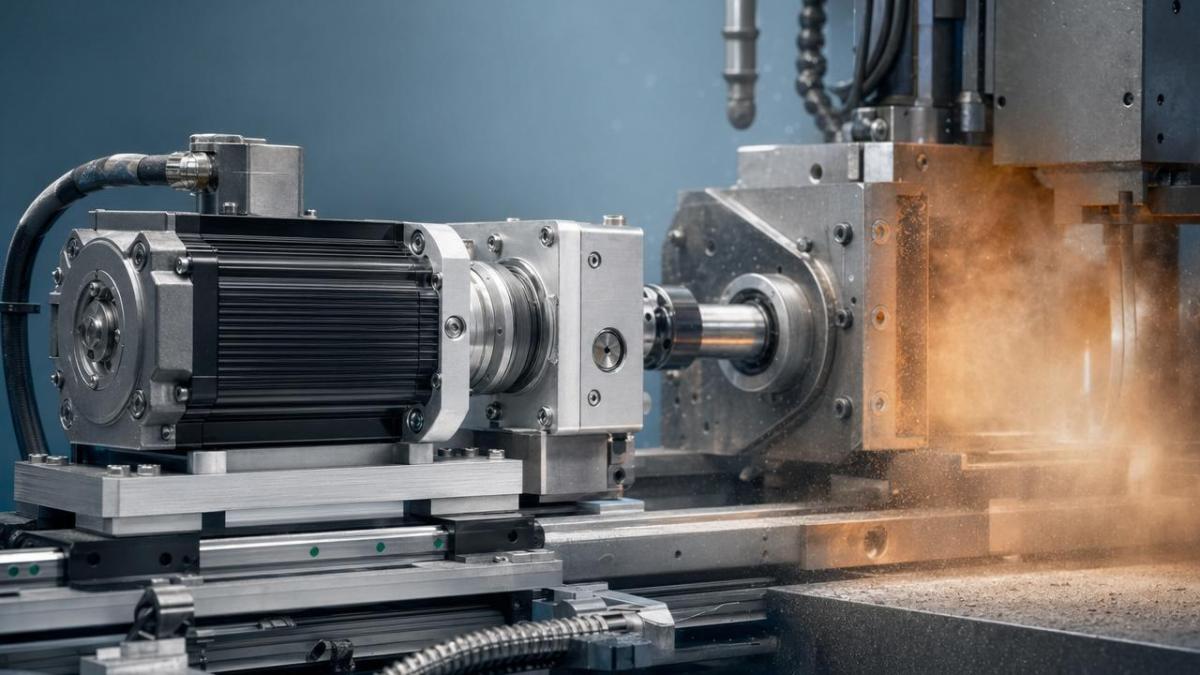
Dust introduces a different kind of distortion. Fine particles can penetrate imperfect seals, contaminate cooling paths, and settle on heat-dissipating surfaces. Conductive or abrasive dust is especially dangerous. It can increase localized heating, wear rotating interfaces, and interfere with signal integrity. If the application involves washdown, compressed air cleaning, or frequent enclosure opening, dust intrusion risk rises further. In those cases, servo motors MTBF under extreme conditions depends as much on enclosure discipline and cable routing as on the motor design itself.
Vibration creates both direct and indirect damage. Directly, it adds cyclic stress to bearings, shafts, mounting hardware, and feedback components. Indirectly, it causes loosening, fretting corrosion, micro-misalignment, and electrical intermittency. A motor that passes bench testing can still show poor field reliability if mounted near stamping equipment, mobile robotic chassis, or high-frequency conveyor structures. This is why vibration should not be treated as a background variable. In many reliability investigations, it is the factor that converts minor weaknesses into repeat failures.
How should technical evaluators compare MTBF claims from different servo motor suppliers?
The most reliable approach is to compare test conditions before comparing the headline number. A supplier claiming 80,000 hours and another claiming 50,000 hours may not be offering better or worse products in practice. One may be quoting calculated component-level MTBF at 25°C, while the other may be reporting field-derived system-level reliability that includes encoder and connector failures at elevated temperature.
Technical evaluators should ask at least five clarifying questions. First, what failure definition was used? Second, what ambient and internal temperatures were assumed? Third, what load cycle, duty profile, and acceleration pattern were applied? Fourth, was dust ingress or vibration included in the validation plan? Fifth, is the result derived from prediction models, accelerated testing, or field return statistics? Without these answers, supplier comparisons can become misleading.
It is also important to separate motor-only MTBF from motion-system MTBF. In real automation deployments, failures may originate in couplings, feedback cables, brakes, connectors, power quality issues, or contaminated housings. If a vendor isolates the motor but your application uses long cable runs, shock loading, and variable thermal cycles, then the motor-only value may overstate real service life. This is especially relevant in robotics and automation programs where uptime targets are tied to full-axis behavior, not isolated component performance.
Common evaluation checkpoints
Which applications are most likely to expose weak servo MTBF assumptions?
Applications with combined thermal, contamination, and mechanical stress are the most likely to reveal weak assumptions. Examples include foundry-adjacent handling, battery manufacturing, mobile robotics in semi-open warehouses, outdoor gantry systems, agricultural automation, and UAV support equipment. In these environments, servo motors MTBF under extreme conditions is not an abstract engineering metric. It directly affects maintenance labor, spare inventory, and production continuity.
High-duty packaging lines are another common trap. They may appear clean and standardized, yet rapid acceleration, around-the-clock cycles, washdown practices, and enclosure heat buildup can create a harsh reliability profile. Likewise, precision machining systems can generate fine particulate exposure and machine-frame vibration that gradually degrades motor-adjacent components. If technical evaluators rely only on nominal specifications, they may miss these cumulative effects.
The broader cross-industry lesson is that “extreme” does not always mean dramatic. A moderately hot, mildly dusty, and constantly vibrating environment can distort MTBF more severely over time than a short period of obvious overload.
What are the most common mistakes buyers make when assessing servo motors MTBF under extreme conditions?
The first mistake is treating MTBF as a standalone procurement shortcut. A single number feels easy to compare, but it strips away the context that actually determines reliability in service. The second mistake is ignoring adjacent subsystem weaknesses. A high-quality servo motor can still produce poor field reliability if paired with weak connectors, poor cabinet ventilation, misaligned mechanics, or underspecified sealing.
A third mistake is assuming ingress protection alone solves dust risk. IP ratings matter, but they do not fully describe long-term contamination behavior under thermal breathing, cable movement, maintenance access, or pressure differentials. A fourth mistake is underestimating vibration transmission through the machine structure. If the motor mount, gearbox interface, or feedback cable path amplifies vibration, catalog MTBF becomes less relevant.
Another frequent error is failing to ask whether the published value is predictive or empirical. Predictive reliability models are useful, but they often depend on generic part stress assumptions. Empirical field data can be more representative, yet only if the installed base resembles your duty cycle and environment. Technical evaluators should be cautious when vendors present a large MTBF figure without methodology transparency.
How can teams validate MTBF claims before full-scale sourcing or qualification?
A practical validation plan starts with environment mapping. Measure actual ambient peaks, internal cabinet temperatures, particulate exposure, vibration spectrum, duty cycle, and shock events. Then translate those into a supplier review checklist. If the supplier cannot map its testing to your profile, the reliability claim should be discounted.
Next, run application-representative pilot testing rather than generic bench trials. For servo motors MTBF under extreme conditions, short pilots can still reveal useful indicators such as temperature rise, seal contamination, encoder stability, connector retention, bearing noise trend, and current signature drift. These signals often appear before hard failure and help evaluators identify whether the design margin is sufficient.
It is also wise to require a structured failure mode review. Ask the supplier to rank likely failure mechanisms under heat, dust, and vibration, then explain mitigation design choices. Strong answers usually reference insulation class, bearing strategy, sealing details, thermal derating, connector locking, conformal coating, and mounting constraints. Weak answers tend to repeat marketing phrases without quantified evidence.
Finally, combine test data with lifecycle economics. A motor with slightly lower nominal MTBF may still be the better choice if it offers better field maintainability, faster spare availability, superior contamination resistance, or clearer diagnostic coverage. Reliability decisions should support total operational resilience, not just a procurement spreadsheet.
What should a good internal decision framework look like for technical evaluators?
An effective framework should balance engineering truth, supplier transparency, and application realism. Start by dividing the decision into three layers: claimed reliability, demonstrated reliability, and expected reliability in your environment. Claimed reliability is what the vendor publishes. Demonstrated reliability is what validated testing or field evidence supports. Expected reliability is your best estimate after adjusting for heat, dust, vibration, maintenance quality, and system integration variables.
Then assign weighted scoring to the factors that actually influence uptime. Typical categories include thermal margin, contamination tolerance, vibration robustness, service access, diagnostics, supplier traceability, and responsiveness to root-cause analysis. This method reflects the TSV principle that hard-tech decisions should be benchmarked by measurable parameters rather than broad claims.
For cross-functional teams, this framework also improves communication. Procurement can understand why the lowest upfront price may create hidden lifecycle cost. Reliability engineers can explain why one test profile is insufficient. Operations can define the maintenance realities that shape servo motors MTBF under extreme conditions in daily production.
What questions should you ask before moving forward with a supplier or validation program?
Before advancing to sourcing, qualification, or scale deployment, technical evaluators should ask for specific evidence rather than general assurances. Key questions include: What exact conditions were used to derive the MTBF value? Which failure modes were counted or excluded? How does the motor perform under elevated temperature and continuous cycling? What contamination tests were completed, and with what particle type? What vibration spectrum and mounting orientation were used? What field return patterns exist in applications similar to ours? What diagnostics can warn of degradation before functional failure?
These questions help convert servo motors MTBF under extreme conditions from a marketing statistic into a defensible engineering input. If you need to confirm a concrete solution, parameter set, qualification path, project timeline, or supplier engagement model, begin by aligning on environmental profile, failure definition, validation method, and lifecycle support expectations. Those four topics usually determine whether the final MTBF number is truly decision-grade.
Search News
Hot Articles
- Carbon Fiber StructuresHow to Specify Aerospace Carbon Fiber Assemblies for Lightweight, Load-Bearing PartsJul 11, 2026
- Machine VisionXiaomi, Alibaba DAMO Academy Drive Open-Source Robotics Model Ecosystem, Lowering Algorithm Development Barriers for Overseas SMEs Adopting Chinese Robotics SolutionsMar 30, 2026
- Cobots & ArmsShanxi 'AI+' Conference Showcases Embodied Intelligence with Multinational Buyer Engagement: Key Industry ImplicationsMar 30, 2026
Popular Tags
Recommended News
 Jul 11, 2026How to Specify Aerospace Carbon Fiber Assemblies for Lightweight, Load-Bearing PartsAerospace carbon fiber assemblies: learn how to specify laminate design, load data, joining methods, and inspection controls for lighter, reliable load-bearing aerospace parts.Elena Rostova (UAV Systems Researcher)
 Mar 30, 2026Xiaomi, Alibaba DAMO Academy Drive Open-Source Robotics Model Ecosystem, Lowering Algorithm Development Barriers for Overseas SMEs Adopting Chinese Robotics SolutionsXiaomi & Alibaba DAMO Academy's open-source robotics models lower algorithm barriers for global SMEs. Boost efficiency in manufacturing, logistics & smart retail with ROS 2 compatible solutions.TSV Data Lab
 Mar 30, 2026Shanxi 'AI+' Conference Showcases Embodied Intelligence with Multinational Buyer Engagement: Key Industry ImplicationsShanxi 'AI+' Conference highlights embodied intelligence with Tesla, Ubtech & Jiantao showcasing multimodal robotics. 40+ global buyers validated tech on-site, creating new B2B channels for industrial automation & AI solutions.Chen Wei (Automation Lead Engineer)
 Mar 30, 2026Zhongguancun Unveils 6G Integrated Sensing-Computing-Intelligence Platform to Empower Embodied Robots for Global Industrial ApplicationsZhongguancun's new 6G platform revolutionizes industrial robotics with <10ms latency, empowering global automotive, logistics & port automation. Discover how this tech boosts China's smart manufacturing exports.TSV Data Lab
 Mar 30, 2026Mech-Mind Tianjin Embodied Intelligence R&D and Production Base Goes Live, Cutting Delivery Time by 20%–30% for Global Customized AMR+Vision SolutionsMech-Mind's Tianjin AMR+Vision production base cuts delivery time by 20%-30% for欧美 & Latin American markets. Discover how this PLd-certified facility accelerates customized robotics solutions for smart manufacturing and logistics.Chen Wei (Automation Lead Engineer)
 Mar 30, 2026Boao Forum Reveals 'Co-evolution of Big and Small Brains' Trend in Humanoid Robots, China's Embodied Intelligence Accelerates Adaptation to Overseas Manufacturing Service ScenariosDiscover how China's humanoid robots, featuring 'Co-evolution of Big and Small Brains,' are revolutionizing global manufacturing. Learn about Embodied Tian Gong 3.0's ISO compliance and overseas deployment at Boao Forum 2026.Chen Wei (Automation Lead Engineer)
 Mar 30, 2026China Railway Industrial Secures Patent for Embodied Robotics in Material Handling, Boosting High-Precision Delivery Capabilities for Overseas Infrastructure and Manufacturing ProjectsChina Railway Industrial's new patent for embodied robotics in material handling boosts high-precision delivery for global infrastructure & manufacturing. Discover how this innovation enhances logistics accuracy in automotive, rail transit & EPC projects.Chen Wei (Automation Lead Engineer)
 Sep 29, 2026ISO 9283 Repeatability: How to Evaluate Cobot Positioning PerformanceISO 9283 cobot repeatability explained: learn how payload, reach, approach direction, and test conditions affect positioning performance and cell capability.Chen Wei (Automation Lead Engineer)
 Sep 28, 2026Spindle Runout Measurement in Germany: DIN Standards, Methods, and Acceptance LimitsSpindle runout measurement Germany: explore DIN standards, proven methods, acceptance limits, and audit-ready practices for reliable machining quality.Dr. Marcus Vance
 Sep 27, 2026How to Select Wall-Mount Edge Devices for Space-Constrained Factory NetworksWall mount edge devices for space-constrained factories: evaluate workload, thermal design, power resilience, cable access, and network reliability for smarter deployments.TSV Data Lab
 Sep 26, 2026Machining Tolerance Analysis: How to Set Limits That Meet Function and Cost TargetsMachining tolerance analysis: learn how to set functional limits, control tolerance stacks, reduce inspection risk, and balance precision with production cost.Dr. Marcus Vance
 Sep 25, 2026How to Evaluate an Industrial Infrastructure Data Platform for Multi-Site OperationsIndustrial infrastructure data platform evaluation guide for multi-site operations: compare data quality, edge resilience, interoperability, governance, and scalable proof-of-value criteria.Victor Lin (Chief Software Architect)
 Sep 24, 2026How to Select Machine Vision Optics for Accurate Inspection at Different Working DistancesMachine vision optics selection guide for accurate inspection at every working distance. Compare FOV, pixel scale, DOF, distortion, lighting, and telecentric options.TSV Data Lab
 Sep 23, 2026How to Evaluate a Machine Vision System Integrator for High-Speed Inspection LinesChoose a machine vision system integrator with proven expertise in high-speed inspection, reliable reject timing, robust optics, and measurable acceptance criteria.TSV Data Lab
 Sep 28, 2026When is a SCADA API the right choice for connecting plant systems?SCADA API guide: learn when governed plant data integration improves traceability, security, and scalability—without compromising real-time control.Victor Lin (Chief Software Architect)
 Sep 27, 2026How SCADA data integration improves traceability across production linesSCADA data integration connects production-line data to improve traceability, accelerate quality investigations, and strengthen safety decisions.Victor Lin (Chief Software Architect)
 Sep 26, 2026What to define before starting SCADA integration planningSCADA integration planning starts with clear scope, control boundaries, data models, cybersecurity, and testing. Discover the definitions that reduce risk and costly rework.Victor Lin (Chief Software Architect)
 Sep 25, 2026How a smart factory with Industrial IoT reduces production blind spotsDiscover how a smart factory with Industrial IoT turns real-time machine, quality, and workflow data into actionable insights that reduce production blind spots and delivery risks.Victor Lin (Chief Software Architect)
 Sep 24, 2026When does Industrial IoT make smart manufacturing easier to scale?Smart manufacturing Industrial IoT scales when trusted data, interoperable systems, and secure workflows turn connected assets into measurable gains.TSV Data Lab
 Sep 23, 2026What drives ultra-precision machining cost at 1-micron tolerance?Ultra precision machining cost per part at 1 micron tolerance depends on process, material, metrology, and yield. Learn how to compare quotes confidently.Dr. Marcus Vance
 Sep 22, 2026Drone Engine-T550CC Applications: Build the UAV Power System Around the MissionAn application guide for Drone Engine-T550CC integration, covering payload planning, airframe matching, cooling, fuel, vibration, test procedures, documentation, and service preparation.Elena Rostova (UAV Systems Researcher)
 Sep 22, 2026How to Evaluate Industrial Edge Computing Vendors for Factory DeploymentIndustrial edge computing vendor evaluation guide for factories: compare latency, protocol fit, reliability, security, and lifecycle support before deployment.TSV Data Lab
 Sep 21, 2026Drone Payload Integration: Matching Power, Data, and Center of Gravity for Reliable FlightsDrone payload integration made practical: balance power, data, center of gravity, and endurance to build safer, more reliable mission-ready flights.Elena Rostova (UAV Systems Researcher)
 Sep 20, 2026Autonomous Navigation Pricing: Cost Drivers and Budget Benchmarks for AMR ProjectsAutonomous navigation price explained: compare AMR cost drivers, software, sensors, integration, safety, and lifecycle budgets to build a scalable project plan.Chen Wei (Automation Lead Engineer)