
Choosing Servo Motors for CNC Machine Tools Under Heavy Duty Cycles
Publication Date
author
Selecting servo motors for CNC machine tools in heavy duty cycles demands more than catalog ratings. This guide examines how servo motors for industrial automation affect torque stability, thermal load, uptime, and precision machining dimensional accuracy control, helping engineers, operators, buyers, and decision-makers compare real performance factors before specifying systems for demanding CNC applications.
In real production, a servo motor that looks adequate on paper can still underperform when the machine runs 16–24 hours per day, faces repeated acceleration and deceleration, or cuts high-resistance materials such as alloy steel, titanium, and cast iron. Heavy duty CNC cycles expose weaknesses in peak torque reserve, thermal dissipation, encoder feedback integrity, and bearing life long before nominal power becomes the limiting factor.
For research teams, this means translating machining requirements into measurable motion-control parameters. For operators, it means stable toolpath behavior and fewer nuisance alarms. For procurement and executive teams, it means balancing purchase cost against downtime risk, energy consumption, serviceability, and long-term dimensional capability. A robust servo motor decision should be made from data, not adjectives.
Why Heavy Duty CNC Duty Cycles Change Servo Motor Selection
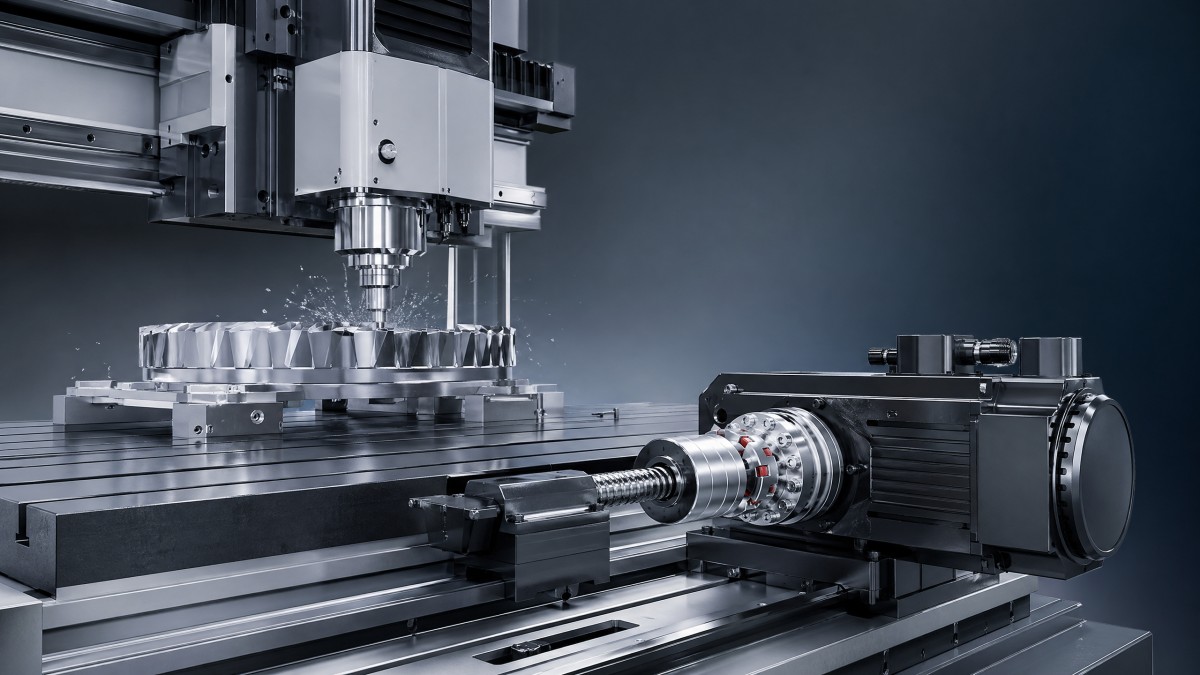
A light-duty axis moving small fixtures at moderate feed rates places very different demands on a servo system than a machining center roughing hardened material for 10 hours per shift. In heavy duty cycles, the servo motor is not simply providing motion. It is continuously absorbing inertial loads, correcting path deviations, resisting cutting disturbances, and managing internal heat buildup across thousands of cycle repetitions.
Many specification mistakes begin with an overreliance on rated power alone. A 5 kW or 7 kW rating does not explain how long the motor can sustain overload, how torque degrades at elevated winding temperatures, or whether the feedback system remains stable during vibration-heavy machining. In CNC machine tools, sustained performance under thermal and dynamic stress usually matters more than isolated nameplate numbers.
Heavy duty operation typically includes 3 defining characteristics: high inertial mismatch, frequent load shocks, and limited thermal recovery time. When acceleration cycles occur every 3–8 seconds, or when a spindle-side axis makes repeated rapid traverses under large table mass, the servo motor must handle recurring peak load events without accumulating damaging heat. If thermal recovery is insufficient, torque consistency drops and servo alarms become more likely after several hours, not necessarily in the first 20 minutes.
This is where engineering teams should separate continuous torque, peak torque, overload duration, and duty-cycle curve. A motor with a peak torque ratio of 250% for 3 seconds behaves very differently from one that can sustain 300% for 10 seconds, especially on rotary axes, gantry drives, and tool changers exposed to high start-stop intensity. Servo motor sizing for industrial automation must therefore reflect actual machine cycle data rather than generic application categories.
Common heavy duty CNC load patterns
The most demanding servo conditions often appear in 4 scenarios: large table milling, high-mass tool magazines, high-speed gantry positioning, and multi-axis machining of hard materials. Each scenario pushes the motor in a different way. One emphasizes inertia, another shock load, and another sustained thermal load. That is why a single “best servo motor” concept is misleading in CNC procurement.
- Large-axis table drives: often require stable torque output at low to medium speed under high reflected inertia.
- Rotary axes and trunnions: demand rapid acceleration, backlash-sensitive control, and reliable brake integration.
- Gantry systems: require synchronized dual-drive behavior with low following error over long travel distances.
- Tool handling systems: emphasize repetitive motion durability over millions of indexing cycles.
A practical rule is to review not only maximum load, but also how often that load occurs within 1 hour, 1 shift, and 1 production week. Heavy duty performance is a cumulative stress question. A servo that survives intermittent overload may still fail prematurely if the overload event repeats 400–800 times per shift.
Core Parameters That Matter More Than Catalog Marketing
Servo motor comparison for CNC machine tools should begin with a disciplined parameter hierarchy. Rated power and frame size are only the outer layer. The deeper engineering picture includes continuous torque at operating temperature, overload ratio, rotor inertia, encoder resolution, feedback immunity, permissible ambient range, and thermal model behavior under repetitive peaks. These factors determine whether the machine holds performance after 8 hours, not just after commissioning.
For precision machining dimensional accuracy control, low-speed smoothness and following error are especially important. If the servo exhibits ripple, lag, or unstable gain tuning under varying loads, the result may appear as contour deviation, poor surface finish, or inconsistent circular interpolation. In demanding mold, aerospace, and medical machining environments, small motion-control weaknesses can translate into rework or scrap on high-value parts.
The table below summarizes practical parameter priorities for heavy duty CNC evaluation. These are not brand-specific values, but common engineering checkpoints used when comparing servo motors for industrial automation in machine tool applications.
The most useful insight from this comparison is that no single parameter should dominate the decision. For example, very high encoder resolution will not compensate for insufficient continuous torque. Likewise, a high peak torque number is less valuable if the thermal model derates quickly after repeated overload. The right servo motor choice comes from parameter interaction, not isolated specification headlines.
Thermal and feedback considerations
In heavy duty machining, motor temperature rise often becomes visible after 2–4 hours of production. Engineers should check whether the published ratings assume natural cooling or forced cooling, and whether the motor can maintain target performance at cabinet temperatures above 40°C. In enclosed machine structures, local ambient conditions can run 8°C–15°C higher than general shop floor temperature.
Feedback reliability also deserves more attention. Absolute encoders, batteryless designs, and robust cable shielding can reduce restart delays and signal loss events. In environments with variable-frequency drives, coolant systems, and long cable runs, electromagnetic noise control becomes part of the servo motor specification, not just the installation checklist.
A practical review checklist
- Confirm the actual duty cycle in percentage terms, such as 60%, 80%, or near-continuous operation.
- Compare torque curves at the real operating speed band, not just at stall or nominal speed.
- Check encoder type, cable robustness, and permissible vibration range.
- Review brake holding requirements for vertical or rotary axes.
- Ask how performance changes after thermal saturation, not only at cold start.
Matching Servo Motors to Axis Types, Machine Architecture, and Production Goals
Servo selection for CNC machine tools should always be linked to axis function. A feed axis, rotary table, gantry side drive, and automatic tool changer may all use servo motors, but their performance priorities are not the same. Misalignment between application role and motor characteristics often causes overspending in one area and underperformance in another.
For linear axes, the key balance is between acceleration response and stable load handling. If reflected inertia is high, a medium- or high-inertia motor may tune more predictably than a very low-inertia design. For rotary axes, brake response, holding torque, and low-speed stiffness usually carry greater weight. For gantry systems, paired servo behavior and synchronization stability can influence both path accuracy and structural wear over time.
Machine builders and retrofit teams should also consider the production target. A shop focused on low-volume, high-mix precision parts may prioritize contour accuracy and thermal repeatability. A production line machining the same part across 2 or 3 shifts may value maintenance intervals, spare part availability, and drive interchangeability more heavily. In both cases, the servo motor should support the business model of the machine, not merely fit its physical envelope.
The following comparison helps map common CNC sub-applications to practical servo priorities. It is especially useful for procurement reviews where multiple departments must agree on one specification baseline.
A clear takeaway is that application-specific matching often lowers lifetime risk more effectively than simply moving one frame size larger. In some cases, a properly matched medium frame servo with better thermal behavior and feedback quality will outperform an oversized motor that introduces tuning instability or unnecessary energy draw.
Selection workflow for mixed stakeholder teams
When engineering, operations, procurement, and management all participate in specification, the process should be structured. A 5-step workflow helps reduce selection ambiguity and supplier back-and-forth.
- Capture axis load data: travel mass, acceleration target, duty cycle, and load disturbance pattern.
- Define performance thresholds: permissible following error, thermal rise, and uptime target.
- Compare 2–3 servo configurations based on torque curve, encoder, cooling, and service support.
- Validate integration: flange size, cable routing, drive compatibility, and braking requirements.
- Run a commissioning review after 40–80 production hours to confirm real operating margins.
This approach is aligned with TSV’s broader view that decision quality improves when technical truth is filtered from sales language. The best servo motor decision is rarely the one with the loudest brochure; it is the one that survives data review across mechanics, controls, and production economics.
Procurement Risks, Maintenance Reality, and Lifecycle Cost Control
Buyers frequently focus on unit price, but servo motors for heavy duty CNC applications should be evaluated over a 3–7 year operating horizon. A lower upfront price can be outweighed by frequent encoder faults, bearing wear, thermal derating, or long replacement lead times. For machine tools tied to high-value parts, one unplanned stop can cost more than the purchase delta between two motor options.
Lifecycle review should include spare parts availability, drive compatibility, cable standardization, cooling method, and field service response expectations. In many industrial environments, acceptable lead time for replacement components is not 8–12 weeks but 48–96 hours, especially when the affected axis is a bottleneck operation. Procurement teams should therefore ask supply chain questions with the same rigor used for torque and encoder data.
Maintenance teams also need practical predictability. A servo motor operating near its thermal limit may function during acceptance testing yet show rising nuisance alarms after several months of dust exposure, coolant vapor, and ambient drift. Predictive inspection intervals of 2,000–4,000 running hours are common checkpoints for cable integrity, vibration trend, connector condition, and abnormal temperature rise. These routines do not guarantee fault-free operation, but they significantly improve early detection.
The table below can be used as a procurement review tool when comparing vendors or machine retrofit options under heavy duty cycle conditions.
The strongest procurement decisions usually come from combining technical fit, service readiness, and replacement logistics. This is especially true for enterprises managing multiple machine platforms across sites. Standardizing around a smaller number of validated servo platforms can reduce training effort, spare inventory complexity, and troubleshooting variation.
Frequent selection mistakes to avoid
- Choosing by rated power only, without reviewing the actual duty-cycle torque profile.
- Oversizing aggressively, then struggling with tuning instability and unnecessary cost.
- Ignoring ambient temperature inside the machine enclosure or electrical cabinet.
- Assuming all high-resolution encoders offer equal resistance to noise and vibration.
- Failing to verify spare part lead time and regional technical support before approval.
For CNC environments with critical uptime targets above 90%–95%, these mistakes compound quickly. They create not only maintenance burden, but also planning uncertainty for production and supply chain teams.
Implementation Questions and FAQ for CNC Servo Motor Buyers and Users
Even when the parameter list is clear, implementation details still determine whether a heavy duty servo solution performs as intended. Cable layout, grounding, gain tuning, feedback alignment, and thermal monitoring all affect the final result. The FAQ below addresses common questions from operators, sourcing teams, and technical leaders evaluating machine tool servo systems.
How much overload capacity is usually reasonable for heavy duty CNC axes?
A common range is 200%–300% of rated torque, but the meaningful number is the time duration and repetition frequency. For example, 250% for 3 seconds may be sufficient for a moderate feed axis, while a rotary axis or high-mass gantry may need stronger reserve or longer overload sustain. The correct value depends on acceleration profile, cutting disturbance, and thermal recovery window between peaks.
What operating data should be collected before requesting quotations?
At minimum, collect 6 data groups: axis mass or reflected inertia, target speed, acceleration and deceleration time, duty cycle percentage, ambient temperature range, and required positioning or contouring accuracy. If available, include cycle repetition per shift and whether the axis sees vertical loading, shock cutting, or coolant-heavy exposure. Better input data leads to faster and more defensible supplier comparison.
How long does evaluation and integration usually take?
For a straightforward retrofit or new machine comparison, technical evaluation may take 1–2 weeks if the load data is complete. Mechanical and electrical integration often adds another 2–4 weeks, depending on coupling, mounting, drive compatibility, and commissioning complexity. Large multi-axis projects may require longer validation, especially when motion tuning must be optimized across synchronized axes.
What should be verified during acceptance?
- Axis temperature trend after sustained operation, preferably after several hours rather than only at startup.
- Following error and contour stability under representative cutting or dry-run load conditions.
- Alarm history, restart behavior, and feedback integrity after repeated cycles.
- Brake function, holding performance, and emergency stop response where applicable.
- Vibration or abnormal acoustic behavior indicating tuning mismatch or mechanical resonance.
Choosing servo motors for CNC machine tools under heavy duty cycles is ultimately a question of engineering evidence. The right solution protects dimensional accuracy, stabilizes uptime, and reduces avoidable lifecycle cost across demanding production schedules. If your team is comparing servo motors for industrial automation, planning a retrofit, or drafting a machine specification around real duty-cycle data, contact us to discuss application details, evaluate configuration tradeoffs, and obtain a more defensible technical shortlist.
Search News
Hot Articles
- Carbon Fiber StructuresHow to Specify Aerospace Carbon Fiber Assemblies for Lightweight, Load-Bearing PartsJul 11, 2026
- Machine VisionXiaomi, Alibaba DAMO Academy Drive Open-Source Robotics Model Ecosystem, Lowering Algorithm Development Barriers for Overseas SMEs Adopting Chinese Robotics SolutionsMar 30, 2026
- Cobots & ArmsShanxi 'AI+' Conference Showcases Embodied Intelligence with Multinational Buyer Engagement: Key Industry ImplicationsMar 30, 2026
Popular Tags
Recommended News
 Jul 11, 2026How to Specify Aerospace Carbon Fiber Assemblies for Lightweight, Load-Bearing PartsAerospace carbon fiber assemblies: learn how to specify laminate design, load data, joining methods, and inspection controls for lighter, reliable load-bearing aerospace parts.Elena Rostova (UAV Systems Researcher)
 Mar 30, 2026Xiaomi, Alibaba DAMO Academy Drive Open-Source Robotics Model Ecosystem, Lowering Algorithm Development Barriers for Overseas SMEs Adopting Chinese Robotics SolutionsXiaomi & Alibaba DAMO Academy's open-source robotics models lower algorithm barriers for global SMEs. Boost efficiency in manufacturing, logistics & smart retail with ROS 2 compatible solutions.TSV Data Lab
 Mar 30, 2026Shanxi 'AI+' Conference Showcases Embodied Intelligence with Multinational Buyer Engagement: Key Industry ImplicationsShanxi 'AI+' Conference highlights embodied intelligence with Tesla, Ubtech & Jiantao showcasing multimodal robotics. 40+ global buyers validated tech on-site, creating new B2B channels for industrial automation & AI solutions.Chen Wei (Automation Lead Engineer)
 Mar 30, 2026Zhongguancun Unveils 6G Integrated Sensing-Computing-Intelligence Platform to Empower Embodied Robots for Global Industrial ApplicationsZhongguancun's new 6G platform revolutionizes industrial robotics with <10ms latency, empowering global automotive, logistics & port automation. Discover how this tech boosts China's smart manufacturing exports.TSV Data Lab
 Mar 30, 2026Mech-Mind Tianjin Embodied Intelligence R&D and Production Base Goes Live, Cutting Delivery Time by 20%–30% for Global Customized AMR+Vision SolutionsMech-Mind's Tianjin AMR+Vision production base cuts delivery time by 20%-30% for欧美 & Latin American markets. Discover how this PLd-certified facility accelerates customized robotics solutions for smart manufacturing and logistics.Chen Wei (Automation Lead Engineer)
 Mar 30, 2026Boao Forum Reveals 'Co-evolution of Big and Small Brains' Trend in Humanoid Robots, China's Embodied Intelligence Accelerates Adaptation to Overseas Manufacturing Service ScenariosDiscover how China's humanoid robots, featuring 'Co-evolution of Big and Small Brains,' are revolutionizing global manufacturing. Learn about Embodied Tian Gong 3.0's ISO compliance and overseas deployment at Boao Forum 2026.Chen Wei (Automation Lead Engineer)
 Mar 30, 2026China Railway Industrial Secures Patent for Embodied Robotics in Material Handling, Boosting High-Precision Delivery Capabilities for Overseas Infrastructure and Manufacturing ProjectsChina Railway Industrial's new patent for embodied robotics in material handling boosts high-precision delivery for global infrastructure & manufacturing. Discover how this innovation enhances logistics accuracy in automotive, rail transit & EPC projects.Chen Wei (Automation Lead Engineer)
 Oct 25, 2026Hesai Leads Global ADAS Main Lidar Shipments in Yole’s 2026 ReportHesai led global ADAS main lidar shipments with a 43% share in 2025, according to Yole’s 2026 report. Explore what this ranking reveals about its automotive market position.TSV Data Lab
 Oct 25, 2026Choosing an Aerospace Materials Manufacturer: Quality and Traceability ChecksChoosing an aerospace materials manufacturer? Learn how to verify certifications, test reports, and lot traceability to qualify suppliers confidently and reduce costly sourcing risks.Dr. Marcus Vance
 Oct 24, 2026Guotai Haitong: Global Entry-Level 3D Printer Shipments Rose 39% in Q1 2026Entry-level 3D printer shipments rose 39% in Q1 2026, Guotai Haitong reports. Explore how AI, multicolor printing and print farms are shaping market growth.Dr. Marcus Vance
 Oct 24, 2026Choosing an Industrial Vision Inspection Supplier: Acceptance Tests That MatterChoose an industrial vision inspection supplier with confidence. Discover acceptance tests for defect detection, false rejects, production speed, and reliable part rejection before you buy.TSV Data Lab
 Oct 23, 2026US Navy Raises Gecko Robotics Contract Ceiling to $300M for Robotic Fleet MaintenanceUS Navy raises Gecko Robotics’ contract ceiling to $300M for Pacific Fleet robotic inspections. Explore potential opportunities for maintenance suppliers and key procurement considerations.Chen Wei (Automation Lead Engineer)
 Oct 23, 2026Choosing Industrial Sensing Systems for Global Plants: Protocol CompatibilityCompare industrial sensing systems international buyers can trust. Explore protocol compatibility, reduce integration risks, and select proven configurations for reliable global plant deployments.TSV Data Lab
 Oct 22, 2026KUKA Showcases Physical AI and iiQKA.AI Vision at NVIDIA GTC BerlinExplore KUKA’s Physical AI showcase at NVIDIA GTC Berlin and discover how iiQKA.AI Vision aims to simplify robotic vision integration and improve 2D and 3D scene recognition.TSV Data Lab
 Oct 22, 2026Robotic Machining of Advanced Composites: What Tolerances Are Achievable?Explore advanced materials machining robotics: discover what drives achievable composite tolerances and how to validate accuracy before investing in your next machining system.Dr. Marcus Vance
 Oct 21, 2026China’s Industrial Robot Exports Near RMB 10 Billion in First Nine Months of 2026China’s industrial robot exports neared RMB 10 billion in January–September 2026, with value rising faster than volume. Explore the data and what it could mean for suppliers.Chen Wei (Automation Lead Engineer)
 Oct 21, 2026Low-Latency Industrial Data Processing: Pricing and Key Cost DriversExplore industrial data latency price drivers, from edge hardware to integration and support. Learn how to compare quotes, verify performance, and avoid unnecessary costs.TSV Data Lab
 Oct 20, 2026KUKA Launches iiQKA.AI Vision to Simplify Industrial Image ProcessingKUKA iiQKA.AI Vision simplifies industrial image processing with controller-based 2D and 3D vision. Explore drag-and-drop setup for vision-guided automation.TSV Data Lab
 Oct 20, 2026Smart Industrial Edge Devices: Key Criteria for Legacy PLC IntegrationChoose smart industrial edge devices for legacy PLC integration. Discover key criteria for compatibility, data quality, security, and reliable collection without disrupting control.TSV Data Lab
 Oct 19, 2026Choosing a Radar Sensor by Application: Range, Resolution, and Field of ViewSimplify radar sensor application based product selection. Compare range, resolution, and field of view to avoid blind spots and choose with confidence. Explore the guide.TSV Data Lab
 Oct 18, 2026Comparing Material Options for Procurement: Specs, Costs, and Supply RisksExplore procurement oriented technical content on material options, specs, costs, and supply risks. Compare alternatives to cut hidden expenses and make confident sourcing decisions.Dr. Marcus Vance
 Oct 17, 20265-Axis CNC Positioning Accuracy: How to Interpret ISO 230-2 Test ResultsAssess 5 axis CNC machining positioning accuracy with ISO 230-2. Learn to interpret repeatability, reversal error, and test conditions to compare suppliers and make confident acceptance decisions.Dr. Marcus Vance
 Oct 16, 2026Choosing a Rugged Edge AI Box Supplier: Thermal Tests and Lifecycle SupportChoose a rugged edge AI box supplier with proven thermal performance and reliable lifecycle support. Discover the tests and commitments to verify before you buy.TSV Data Lab
 Oct 15, 2026R&D Cost Reduction Services: How to Evaluate Fees, Savings, and ROIEvaluate R&D cost reduction services with confidence. Compare fees, verify savings, and calculate ROI without compromising performance. Discover how to choose a provider that delivers real value.Chen Wei (Automation Lead Engineer)























