
What makes a medical robot arm manufacturer trustworthy
Publication Date
author
Choosing a trustworthy medical robot arm manufacturer is less about polished branding and more about evidence. If you are evaluating a cobot for medical device assembly or a robotic arm for electronics assembly in regulated production, the real signals of trust are measurable: validated repeatability, documented compliance, engineering transparency, process control, after-sales support, and a clear ability to protect your IP. In practice, a reliable supplier should help you reduce qualification risk, shorten integration time, and avoid hidden lifecycle costs. This article breaks down how buyers, engineers, operators, and decision-makers can assess that trust with facts instead of marketing claims.
What actually makes a medical robot arm manufacturer trustworthy?
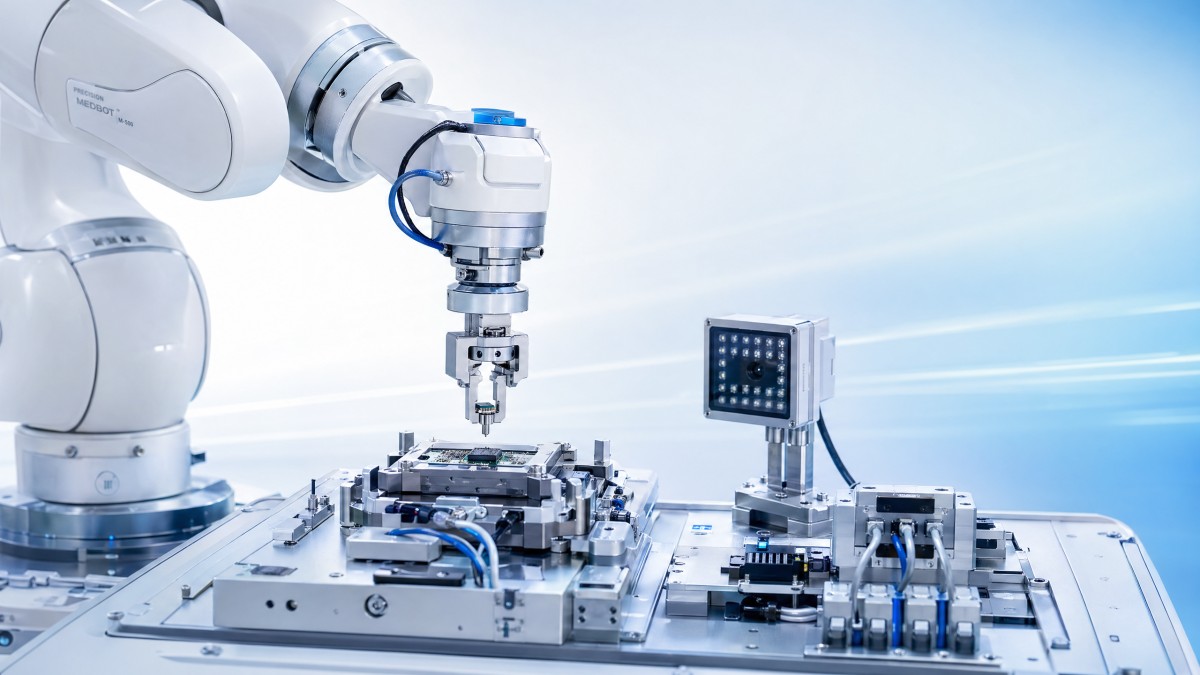
A trustworthy medical robot arm manufacturer can prove three things clearly:
- The product performs consistently under the required payload, speed, duty cycle, and precision conditions.
- The manufacturing and quality system is controlled, traceable, and aligned with regulated industry expectations.
- The company remains reliable after purchase through documentation, support, spare parts, software maintenance, and long-term technical accountability.
For medical and high-precision assembly environments, trust is built on repeatable engineering outcomes, not broad claims like “high quality” or “industry-leading.” If a manufacturer cannot provide structured validation data, application-specific case evidence, or compliance documentation, that is a warning sign.
Can they prove precision, repeatability, and stability with real data?
For most buyers and engineers, this is the first practical test. A medical robot arm may look impressive in a demo, but procurement decisions should be based on performance under realistic operating conditions.
Ask for evidence on:
- Repeatability: not just the headline figure, but the test method behind it.
- Payload versus accuracy tradeoff: many arms perform differently near maximum payload.
- Cycle stability: whether accuracy drifts after long runs.
- Vibration and motion smoothness: especially important in delicate medical device assembly.
- Thermal behavior: heat can affect precision in continuous operation.
- Failure rate and MTBF-related data: if available, ask how it was measured.
A trustworthy manufacturer should be able to explain test conditions such as ambient temperature, fixture setup, motion profile, sample size, and measurement tools. Without this context, performance figures are difficult to trust or compare.
If your use case includes a cobot for medical device assembly, precision data should also be tied to real tasks such as screwdriving, dispensing, pick-and-place, inspection positioning, or small-part handling. If the supplier only shows generic palletizing or showroom demos, the application match may be weak.
Do they understand compliance and traceability requirements?
Medical manufacturing environments require more than machine functionality. They demand process discipline, documentation, and traceability. Even if the robot arm itself is not the medical device, it may still operate inside a controlled production chain where regulatory expectations are high.
That is why a trustworthy medical robot arm manufacturer should be comfortable discussing:
- ISO 9001 quality management as a baseline
- ISO 13485 familiarity or support readiness for medical device manufacturing environments
- CE, UL, or other market-specific conformity needs
- Electrical and safety documentation
- Component traceability and revision control
- Software version management and update records
- Validation support documents for FAT, SAT, IQ, OQ, or PQ-related workflows where applicable
Good suppliers do not become vague when compliance questions begin. They should know what documents they can provide, what they cannot claim, and how their systems fit into your qualification process. This level of clarity is often a stronger trust signal than aggressive sales language.
How strong are their engineering, customization, and integration capabilities?
In many projects, the robot arm is only one part of a larger automation cell. A trustworthy manufacturer should not just sell hardware; they should show that they understand integration realities.
This matters even more when comparing a medical robot arm supplier with a robotic arm for electronics assembly provider, because both industries demand high accuracy, but often differ in ESD handling, cleanliness, traceability, force sensitivity, and takt time expectations.
Evaluate whether the manufacturer can support:
- End-effector matching and tooling recommendations
- Vision integration
- Force control or torque-sensitive tasks
- Cleanroom or controlled environment considerations
- ESD-safe assembly requirements
- MES, PLC, and industrial communication compatibility
- Fixture tolerance compensation and calibration workflows
A credible supplier should also be able to discuss project boundaries. If they claim they can do everything without asking detailed process questions, that usually indicates weak technical depth. Trustworthy manufacturers ask for your cycle time, part tolerance, station layout, defect criteria, validation plan, and operator interaction model before recommending a solution.
Will their quality system stand up to supplier audits?
Procurement teams and enterprise decision-makers should think beyond the robot model itself and examine the manufacturer’s operational maturity. A supplier that looks good in a brochure but fails a structured audit can create delays, revalidation costs, and production risk later.
Key audit areas include:
- Incoming material control
- Assembly process standardization
- Calibration management
- Final inspection procedures
- Nonconformance handling
- Corrective and preventive action process
- Supplier management of their own critical components
- Change control for hardware and software revisions
A trustworthy medical robot arm manufacturer should welcome a reasonable level of technical scrutiny. If they resist factory audits, avoid process questions, or provide inconsistent documentation, your supplier risk is likely higher than it appears.
How secure is your IP, process data, and software environment?
For medical device assembly and advanced electronics manufacturing, IP protection is not optional. Production recipes, motion routines, fixture designs, and process windows can all represent critical competitive value.
Ask direct questions about:
- Data access controls
- User permission levels
- Remote access policy
- Software patch and update procedures
- Local versus cloud data handling
- NDA discipline and customer project segregation
- Source code, backup, and recovery options
If the robot arm includes connected diagnostics or remote maintenance, clarify who owns operational data and how service sessions are logged. A trustworthy manufacturer should have clear answers, not informal assurances.
What does after-sales support look like in real operating conditions?
Many suppliers appear reliable before PO issuance and become difficult after installation. This is why operators, maintenance teams, and plant managers should evaluate post-sale support early.
Look for evidence of:
- Structured commissioning support
- Training for operators and maintenance personnel
- Spare parts availability and lead times
- Service response SLAs
- Diagnostic tools and troubleshooting documentation
- Preventive maintenance schedules
- Long-term software and firmware support
A strong manufacturer should be able to explain what happens if a controller fails, a joint drifts out of tolerance, or a software update affects validated processes. Trust is not only about preventing problems, but about resolving them without damaging uptime or compliance readiness.
What procurement red flags should buyers watch for?
Even technically acceptable vendors can become poor choices if commercial and operational warning signs are ignored. Common red flags include:
- Specifications that lack test conditions
- Claims of medical suitability without supporting documentation
- No clear revision history for hardware or software
- Overpromising on customization timelines
- Weak references in comparable industries
- Unclear warranty scope
- Large dependence on a single subcontractor without transparency
- Limited local support for your target region
For procurement teams, one of the most useful practices is to convert claims into an evidence checklist. If a manufacturer says their cobot for medical device assembly is highly precise, ask for the report. If they say they support regulated production, ask for the document set. If they say integration is easy, ask for a reference architecture and a sample implementation plan.
How should you compare manufacturers in a practical evaluation process?
To reduce risk, compare suppliers using a weighted framework instead of a general impression. A practical evaluation model can include:
- Application fit: Does the robot arm match your task, not just general automation needs?
- Verified technical performance: Are repeatability, cycle time, and stability documented?
- Compliance readiness: Can the supplier support your quality and validation process?
- Integration capability: Can they work with your tooling, vision, controls, and data systems?
- Support and lifecycle cost: What are the maintenance, spare parts, and downtime implications?
- Supplier maturity: Will their organization withstand long-term operational demands?
For larger projects, request a pilot test, sample build, or proof-of-concept tied to your actual process tolerances. This step often reveals more than weeks of sales presentations.
Why trustworthiness matters beyond the first purchase price
Enterprise decision-makers often need to justify why one supplier is worth more than another. The answer is that trust directly affects total cost of ownership.
A more trustworthy medical robot arm manufacturer can help reduce:
- Qualification and validation delays
- Unexpected integration rework
- Production scrap caused by unstable motion
- Downtime from weak service support
- Compliance risk from poor documentation
- Long-term replacement cost from unsupported software or parts
In regulated or precision manufacturing, the cheapest quote can become the most expensive option once debugging, audit preparation, retraining, and line interruptions are included.
Conclusion: trust is measurable when you ask the right questions
What makes a medical robot arm manufacturer trustworthy is not a polished catalog or broad reputation alone. It is the ability to provide verified performance data, controlled quality processes, compliance-ready documentation, realistic engineering support, strong IP protection, and dependable lifecycle service.
For buyers assessing a cobot for medical device assembly or a robotic arm for electronics assembly, the best approach is simple: evaluate evidence, not adjectives. Ask for test conditions, traceability records, integration details, audit readiness, and support commitments. A manufacturer that answers clearly and consistently is far more likely to be a partner you can rely on in real production.
Search News
Hot Articles
- Carbon Fiber StructuresHow to Specify Aerospace Carbon Fiber Assemblies for Lightweight, Load-Bearing PartsJul 11, 2026
- Machine VisionXiaomi, Alibaba DAMO Academy Drive Open-Source Robotics Model Ecosystem, Lowering Algorithm Development Barriers for Overseas SMEs Adopting Chinese Robotics SolutionsMar 30, 2026
- Cobots & ArmsShanxi 'AI+' Conference Showcases Embodied Intelligence with Multinational Buyer Engagement: Key Industry ImplicationsMar 30, 2026
Popular Tags
Recommended News
 Jul 11, 2026How to Specify Aerospace Carbon Fiber Assemblies for Lightweight, Load-Bearing PartsAerospace carbon fiber assemblies: learn how to specify laminate design, load data, joining methods, and inspection controls for lighter, reliable load-bearing aerospace parts.Elena Rostova (UAV Systems Researcher)
 Mar 30, 2026Xiaomi, Alibaba DAMO Academy Drive Open-Source Robotics Model Ecosystem, Lowering Algorithm Development Barriers for Overseas SMEs Adopting Chinese Robotics SolutionsXiaomi & Alibaba DAMO Academy's open-source robotics models lower algorithm barriers for global SMEs. Boost efficiency in manufacturing, logistics & smart retail with ROS 2 compatible solutions.TSV Data Lab
 Mar 30, 2026Shanxi 'AI+' Conference Showcases Embodied Intelligence with Multinational Buyer Engagement: Key Industry ImplicationsShanxi 'AI+' Conference highlights embodied intelligence with Tesla, Ubtech & Jiantao showcasing multimodal robotics. 40+ global buyers validated tech on-site, creating new B2B channels for industrial automation & AI solutions.Chen Wei (Automation Lead Engineer)
 Mar 30, 2026Zhongguancun Unveils 6G Integrated Sensing-Computing-Intelligence Platform to Empower Embodied Robots for Global Industrial ApplicationsZhongguancun's new 6G platform revolutionizes industrial robotics with <10ms latency, empowering global automotive, logistics & port automation. Discover how this tech boosts China's smart manufacturing exports.TSV Data Lab
 Mar 30, 2026Mech-Mind Tianjin Embodied Intelligence R&D and Production Base Goes Live, Cutting Delivery Time by 20%–30% for Global Customized AMR+Vision SolutionsMech-Mind's Tianjin AMR+Vision production base cuts delivery time by 20%-30% for欧美 & Latin American markets. Discover how this PLd-certified facility accelerates customized robotics solutions for smart manufacturing and logistics.Chen Wei (Automation Lead Engineer)
 Mar 30, 2026Boao Forum Reveals 'Co-evolution of Big and Small Brains' Trend in Humanoid Robots, China's Embodied Intelligence Accelerates Adaptation to Overseas Manufacturing Service ScenariosDiscover how China's humanoid robots, featuring 'Co-evolution of Big and Small Brains,' are revolutionizing global manufacturing. Learn about Embodied Tian Gong 3.0's ISO compliance and overseas deployment at Boao Forum 2026.Chen Wei (Automation Lead Engineer)
 Mar 30, 2026China Railway Industrial Secures Patent for Embodied Robotics in Material Handling, Boosting High-Precision Delivery Capabilities for Overseas Infrastructure and Manufacturing ProjectsChina Railway Industrial's new patent for embodied robotics in material handling boosts high-precision delivery for global infrastructure & manufacturing. Discover how this innovation enhances logistics accuracy in automotive, rail transit & EPC projects.Chen Wei (Automation Lead Engineer)
 Oct 26, 2026AMAXiMAL Releases Open-Source TopMod 3D v3 With Claude AIExplore AMAXiMAL’s free, open-source TopMod 3D v3 with Claude AI assistance, topology-based modeling and plywood fabrication tools that connect complex designs to physical builds.Dr. Marcus Vance
 Oct 26, 2026Choosing a SCADA System Integrator Company: PLC Compatibility and Long-Term SupportChoose a scada system integrator company with proven PLC compatibility and reliable long-term support. Discover what to test, compare, and require before investing.Victor Lin (Chief Software Architect)
 Oct 25, 2026Hesai Leads Global ADAS Main Lidar Shipments in Yole’s 2026 ReportHesai led global ADAS main lidar shipments with a 43% share in 2025, according to Yole’s 2026 report. Explore what this ranking reveals about its automotive market position.TSV Data Lab
 Oct 25, 2026Choosing an Aerospace Materials Manufacturer: Quality and Traceability ChecksChoosing an aerospace materials manufacturer? Learn how to verify certifications, test reports, and lot traceability to qualify suppliers confidently and reduce costly sourcing risks.Dr. Marcus Vance
 Oct 24, 2026Guotai Haitong: Global Entry-Level 3D Printer Shipments Rose 39% in Q1 2026Entry-level 3D printer shipments rose 39% in Q1 2026, Guotai Haitong reports. Explore how AI, multicolor printing and print farms are shaping market growth.Dr. Marcus Vance
 Oct 24, 2026Choosing an Industrial Vision Inspection Supplier: Acceptance Tests That MatterChoose an industrial vision inspection supplier with confidence. Discover acceptance tests for defect detection, false rejects, production speed, and reliable part rejection before you buy.TSV Data Lab
 Oct 23, 2026US Navy Raises Gecko Robotics Contract Ceiling to $300M for Robotic Fleet MaintenanceUS Navy raises Gecko Robotics’ contract ceiling to $300M for Pacific Fleet robotic inspections. Explore potential opportunities for maintenance suppliers and key procurement considerations.Chen Wei (Automation Lead Engineer)
 Oct 23, 2026Choosing Industrial Sensing Systems for Global Plants: Protocol CompatibilityCompare industrial sensing systems international buyers can trust. Explore protocol compatibility, reduce integration risks, and select proven configurations for reliable global plant deployments.TSV Data Lab
 Oct 22, 2026KUKA Showcases Physical AI and iiQKA.AI Vision at NVIDIA GTC BerlinExplore KUKA’s Physical AI showcase at NVIDIA GTC Berlin and discover how iiQKA.AI Vision aims to simplify robotic vision integration and improve 2D and 3D scene recognition.TSV Data Lab
 Oct 22, 2026Robotic Machining of Advanced Composites: What Tolerances Are Achievable?Explore advanced materials machining robotics: discover what drives achievable composite tolerances and how to validate accuracy before investing in your next machining system.Dr. Marcus Vance
 Oct 21, 2026China’s Industrial Robot Exports Near RMB 10 Billion in First Nine Months of 2026China’s industrial robot exports neared RMB 10 billion in January–September 2026, with value rising faster than volume. Explore the data and what it could mean for suppliers.Chen Wei (Automation Lead Engineer)
 Oct 21, 2026Low-Latency Industrial Data Processing: Pricing and Key Cost DriversExplore industrial data latency price drivers, from edge hardware to integration and support. Learn how to compare quotes, verify performance, and avoid unnecessary costs.TSV Data Lab
 Oct 20, 2026KUKA Launches iiQKA.AI Vision to Simplify Industrial Image ProcessingKUKA iiQKA.AI Vision simplifies industrial image processing with controller-based 2D and 3D vision. Explore drag-and-drop setup for vision-guided automation.TSV Data Lab
 Oct 20, 2026Smart Industrial Edge Devices: Key Criteria for Legacy PLC IntegrationChoose smart industrial edge devices for legacy PLC integration. Discover key criteria for compatibility, data quality, security, and reliable collection without disrupting control.TSV Data Lab
 Oct 19, 2026Choosing a Radar Sensor by Application: Range, Resolution, and Field of ViewSimplify radar sensor application based product selection. Compare range, resolution, and field of view to avoid blind spots and choose with confidence. Explore the guide.TSV Data Lab
 Oct 18, 2026Comparing Material Options for Procurement: Specs, Costs, and Supply RisksExplore procurement oriented technical content on material options, specs, costs, and supply risks. Compare alternatives to cut hidden expenses and make confident sourcing decisions.Dr. Marcus Vance
 Oct 17, 20265-Axis CNC Positioning Accuracy: How to Interpret ISO 230-2 Test ResultsAssess 5 axis CNC machining positioning accuracy with ISO 230-2. Learn to interpret repeatability, reversal error, and test conditions to compare suppliers and make confident acceptance decisions.Dr. Marcus Vance























