Scara robot wholesale price often shifts with controller options
Publication Date
author
For procurement teams, scara robot wholesale price is rarely a fixed number—it often moves with controller architecture, motion precision, integration flexibility, and long-term maintenance demands. In data-driven sourcing, understanding how controller options reshape total value is more important than comparing base quotes alone. This article breaks down the pricing logic behind those variations to support faster, more accurate purchasing decisions.
Why does scara robot wholesale price change so much when the arm body looks similar?
This is one of the most common purchasing questions, and the answer is simple: the robot arm is only one visible part of the system. In many supplier quotations, the same payload class and reach can be paired with very different controller packages. That is why scara robot wholesale price may vary significantly even when two units appear mechanically comparable on paper.
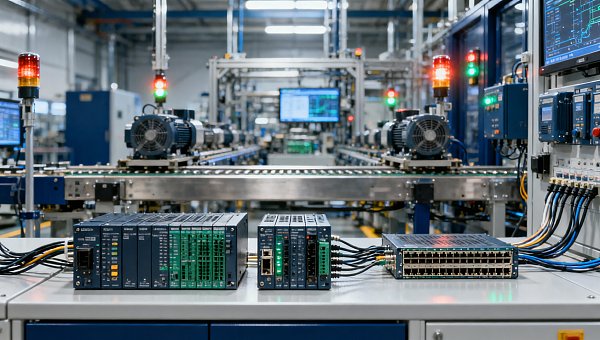
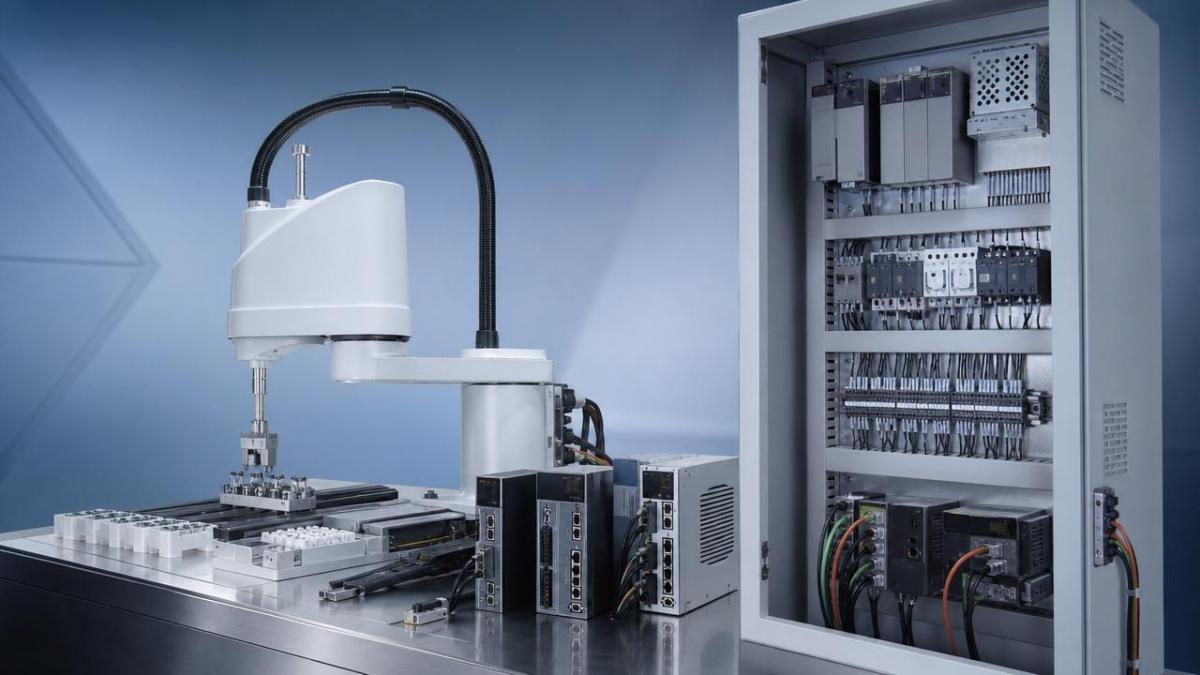
A controller influences trajectory planning, cycle stability, communication protocols, safety logic, motion synchronization, teach pendant design, and software expandability. Entry-level controllers are often suitable for basic pick-and-place tasks with stable products and low variation. Advanced controllers, by contrast, are built for faster interpolation, more refined servo tuning, vision coordination, traceability requirements, and multi-device integration. Those capabilities are not cosmetic upgrades; they directly affect deployment efficiency and long-term production risk.
From a sourcing perspective, the key mistake is treating controller choice as an optional accessory. In real projects, the controller defines whether the robot can talk smoothly with PLCs, conveyors, barcode systems, MES platforms, or machine vision units already present in the factory. That is why buyers comparing scara robot wholesale price should always separate the quote into mechanical structure, controller hardware, software license scope, and integration readiness.
Which controller options usually have the biggest impact on scara robot wholesale price?
Not every controller feature moves pricing in the same way. Procurement teams should focus on the options that most often change both upfront cost and downstream operating value.
First, processing performance matters. A controller with faster CPU performance, denser motion algorithms, and stronger interpolation capability usually supports smoother paths and shorter cycle times. In assembly, dispensing, labeling, and electronics handling, that can translate into measurable throughput gains. As a result, the scara robot wholesale price tends to rise with controller speed and motion sophistication.
Second, communication compatibility affects pricing. Basic I/O is inexpensive, but support for EtherCAT, PROFINET, Ethernet/IP, Modbus TCP, CC-Link, or custom fieldbus options usually increases cost. However, for factories with standardized controls architecture, paying more here may reduce commissioning time, external gateway purchases, and troubleshooting complexity.
Third, programming environment and software licenses can be a hidden pricing lever. Some controllers include standard teach-and-run functions only. Others provide offline programming, remote diagnostics, recipe management, simulation tools, API access, or vision libraries. These options can move scara robot wholesale price upward, but they may also reduce dependence on external integrators.
Fourth, safety architecture can add meaningful cost. Safe speed, safe stop, user access control, alarm logging, and compliance-oriented design often carry premium pricing. For regulated production or multi-station automation cells, these functions should be evaluated as risk-reduction investments rather than cost add-ons.
How should buyers compare controller-related price differences without getting lost in technical language?
The best method is to convert technical differences into sourcing questions tied to your line requirements. Instead of asking whether a controller is “advanced,” ask what exactly it changes in your application. Does it reduce cycle time? Improve repeatability under variable loads? Simplify PLC integration? Support future vision upgrades? Lower maintenance response time? If the answer is unclear, the higher quote may not be justified.
Buyers can also request a structured quote breakdown before making any benchmark comparison. A useful quotation should identify controller model, supported protocols, standard software package, optional modules, remote service capability, spare part availability, and software update policy. Without that level of transparency, scara robot wholesale price comparisons become misleading because suppliers may be pricing fundamentally different control stacks.
Another smart approach is to compare by use case rather than by brochure specification alone. A packaging line, for example, may value easy recipe switching and simple HMI operation more than extreme path interpolation. An electronics assembly line may require tighter motion behavior, vision alignment, and cleaner communication with upstream inspection equipment. The right controller is not always the most expensive one; it is the one that aligns with output targets, engineering resources, and expansion plans.
Quick comparison table for procurement review
When is a lower scara robot wholesale price actually the more expensive choice?
A lower purchase price becomes expensive when the controller creates friction after delivery. This usually happens in four situations.
The first is integration mismatch. If the robot controller cannot communicate cleanly with your PLC, vision system, or factory network, you may need extra gateways, custom coding, or longer commissioning support. That adds hidden cost and delays launch schedules.
The second is insufficient software flexibility. Some low-cost systems work well for a fixed demo but struggle when products, tooling, or process logic change. If your line requires frequent recipe changes, traceability, or future multi-station coordination, a limited controller can turn every upgrade into an engineering project.
The third is service dependence. A very low scara robot wholesale price may come with proprietary tooling, weak documentation, or restricted access to parameters. That means simple maintenance tasks still require vendor intervention. Procurement should not ignore this point, because service bottlenecks affect total equipment effectiveness more than many teams expect.
The fourth is spare parts and lifecycle uncertainty. If a controller platform lacks global support channels, local stock, or clear replacement policy, the initial savings may disappear after one critical failure. For multinational operations or export-oriented plants, lifecycle support is often more important than the first invoice.
What common mistakes do procurement teams make when evaluating controller options?
One frequent mistake is benchmarking only payload, reach, and repeatability while ignoring the control ecosystem. Those mechanical indicators are important, but they do not show how the robot will behave inside a live production cell. Scara robot wholesale price should be judged against control compatibility, diagnostics capability, and implementation effort as well.
Another mistake is accepting bundled quotations without asking what software functions are standard and what requires licensing later. A quote may look attractive initially, but additional charges for communication modules, recipe functions, or vision support can quickly change the true total.
A third mistake is overbuying. Some teams choose the highest controller specification “just in case,” even when the application is simple and stable. That inflates scara robot wholesale price without delivering practical value. If the line does not need advanced interpolation, remote programming, or multi-axis coordination, the premium may not produce a return.
The opposite mistake is underbuying for expansion-heavy operations. If your automation roadmap includes machine vision, digital traceability, or data linkage with MES, selecting a controller with no upgrade path can create an expensive replacement cycle within a short period.
How can buyers build a practical decision framework around scara robot wholesale price?
A practical framework starts with classifying the project into one of three sourcing profiles: basic deployment, integration-heavy deployment, or future-scalable deployment. This prevents teams from applying the same purchasing logic to very different factories.
In a basic deployment, the process is repetitive, product variation is low, and the robot works as a standalone or near-standalone unit. Here, the best scara robot wholesale price often comes from a reliable but simpler controller, provided service support and spare parts are stable.
In an integration-heavy deployment, the robot must communicate with conveyors, PLCs, scanners, inspection tools, or upstream machines. In this case, buyers should prioritize protocol support, diagnostics depth, and implementation documentation. A somewhat higher controller cost may save weeks in line startup.
In a future-scalable deployment, management expects capacity upgrades, model switching, or digital factory expansion. Here, the controller should be evaluated for software extensibility, remote access, data logging, and the supplier’s roadmap. Price should be measured against avoidable replacement risk over several years, not just against this quarter’s budget.
Short checklist before requesting final quotes
- Confirm required cycle time, payload, reach, and accuracy under actual product conditions.
- List all communication protocols already used in the factory.
- Ask which controller functions are standard, optional, or license-based.
- Request spare parts lead time and controller lifecycle policy.
- Verify whether remote diagnostics and local technical support are available.
- Estimate future needs for vision, MES connection, recipe changes, or multi-station expansion.
What should procurement ask suppliers directly to judge whether the controller premium is justified?
The most useful supplier conversations are specific and evidence-based. Instead of asking for the “best” scara robot wholesale price, ask what controller features directly improve your target application. Request cycle test data, supported protocol lists, alarm handling examples, and actual commissioning scope. If a supplier claims superior control performance, ask how that performance was measured and under what load conditions.
It is also wise to ask how controller upgrades are managed over time. Can software be updated without replacing hardware? Are backups simple to restore? Can internal engineers access logs and adjust common parameters without waiting for factory service visits? These questions matter because controller choice affects not only capital expenditure but also autonomy in operations.
Finally, ask for a quote in layered form: robot body, controller hardware, software package, communication options, safety functions, integration accessories, and service coverage. This makes scara robot wholesale price transparent and allows apples-to-apples comparison across vendors. For data-driven organizations, this is the clearest way to separate true value from incomplete pricing.
Final FAQ takeaway: what should teams clarify before moving to supplier selection?
Scara robot wholesale price shifts with controller options because the controller determines far more than motion—it shapes compatibility, maintainability, software flexibility, and future expansion cost. Procurement teams should not chase the lowest number or the most feature-rich configuration by default. The right decision comes from matching controller capability to production complexity, digital infrastructure, and service expectations.
If you need to confirm a concrete purchasing path, start by discussing five items with suppliers: your target cycle time, required factory communication protocol, expected process variation, future upgrade roadmap, and after-sales response model. Once those points are clear, scara robot wholesale price becomes a much more useful decision metric—one tied to operational value, not just a line-item quote.
Search News
Hot Articles
- Carbon Fiber StructuresHow to Specify Aerospace Carbon Fiber Assemblies for Lightweight, Load-Bearing PartsJul 11, 2026
- Machine VisionXiaomi, Alibaba DAMO Academy Drive Open-Source Robotics Model Ecosystem, Lowering Algorithm Development Barriers for Overseas SMEs Adopting Chinese Robotics SolutionsMar 30, 2026
- Cobots & ArmsShanxi 'AI+' Conference Showcases Embodied Intelligence with Multinational Buyer Engagement: Key Industry ImplicationsMar 30, 2026
Popular Tags
Recommended News
 Jul 11, 2026How to Specify Aerospace Carbon Fiber Assemblies for Lightweight, Load-Bearing PartsAerospace carbon fiber assemblies: learn how to specify laminate design, load data, joining methods, and inspection controls for lighter, reliable load-bearing aerospace parts.Elena Rostova (UAV Systems Researcher)
 Mar 30, 2026Xiaomi, Alibaba DAMO Academy Drive Open-Source Robotics Model Ecosystem, Lowering Algorithm Development Barriers for Overseas SMEs Adopting Chinese Robotics SolutionsXiaomi & Alibaba DAMO Academy's open-source robotics models lower algorithm barriers for global SMEs. Boost efficiency in manufacturing, logistics & smart retail with ROS 2 compatible solutions.TSV Data Lab
 Mar 30, 2026Shanxi 'AI+' Conference Showcases Embodied Intelligence with Multinational Buyer Engagement: Key Industry ImplicationsShanxi 'AI+' Conference highlights embodied intelligence with Tesla, Ubtech & Jiantao showcasing multimodal robotics. 40+ global buyers validated tech on-site, creating new B2B channels for industrial automation & AI solutions.Chen Wei (Automation Lead Engineer)
 Mar 30, 2026Zhongguancun Unveils 6G Integrated Sensing-Computing-Intelligence Platform to Empower Embodied Robots for Global Industrial ApplicationsZhongguancun's new 6G platform revolutionizes industrial robotics with <10ms latency, empowering global automotive, logistics & port automation. Discover how this tech boosts China's smart manufacturing exports.TSV Data Lab
 Mar 30, 2026Mech-Mind Tianjin Embodied Intelligence R&D and Production Base Goes Live, Cutting Delivery Time by 20%–30% for Global Customized AMR+Vision SolutionsMech-Mind's Tianjin AMR+Vision production base cuts delivery time by 20%-30% for欧美 & Latin American markets. Discover how this PLd-certified facility accelerates customized robotics solutions for smart manufacturing and logistics.Chen Wei (Automation Lead Engineer)
 Mar 30, 2026Boao Forum Reveals 'Co-evolution of Big and Small Brains' Trend in Humanoid Robots, China's Embodied Intelligence Accelerates Adaptation to Overseas Manufacturing Service ScenariosDiscover how China's humanoid robots, featuring 'Co-evolution of Big and Small Brains,' are revolutionizing global manufacturing. Learn about Embodied Tian Gong 3.0's ISO compliance and overseas deployment at Boao Forum 2026.Chen Wei (Automation Lead Engineer)
 Mar 30, 2026China Railway Industrial Secures Patent for Embodied Robotics in Material Handling, Boosting High-Precision Delivery Capabilities for Overseas Infrastructure and Manufacturing ProjectsChina Railway Industrial's new patent for embodied robotics in material handling boosts high-precision delivery for global infrastructure & manufacturing. Discover how this innovation enhances logistics accuracy in automotive, rail transit & EPC projects.Chen Wei (Automation Lead Engineer)
 Sep 29, 2026ISO 9283 Repeatability: How to Evaluate Cobot Positioning PerformanceISO 9283 cobot repeatability explained: learn how payload, reach, approach direction, and test conditions affect positioning performance and cell capability.Chen Wei (Automation Lead Engineer)
 Sep 29, 2026How Do You Verify Servo Motor Torque Under Continuous Load?How do I verify servo motor torque under continuous load? Learn RMS torque checks, torque-speed limits, thermal derating, and real-machine testing.Chen Wei (Automation Lead Engineer)
 Sep 28, 2026Spindle Runout Measurement in Germany: DIN Standards, Methods, and Acceptance LimitsSpindle runout measurement Germany: explore DIN standards, proven methods, acceptance limits, and audit-ready practices for reliable machining quality.Dr. Marcus Vance
 Sep 27, 2026How to Select Wall-Mount Edge Devices for Space-Constrained Factory NetworksWall mount edge devices for space-constrained factories: evaluate workload, thermal design, power resilience, cable access, and network reliability for smarter deployments.TSV Data Lab
 Sep 26, 2026Machining Tolerance Analysis: How to Set Limits That Meet Function and Cost TargetsMachining tolerance analysis: learn how to set functional limits, control tolerance stacks, reduce inspection risk, and balance precision with production cost.Dr. Marcus Vance
 Sep 25, 2026How to Evaluate an Industrial Infrastructure Data Platform for Multi-Site OperationsIndustrial infrastructure data platform evaluation guide for multi-site operations: compare data quality, edge resilience, interoperability, governance, and scalable proof-of-value criteria.Victor Lin (Chief Software Architect)
 Sep 24, 2026How to Select Machine Vision Optics for Accurate Inspection at Different Working DistancesMachine vision optics selection guide for accurate inspection at every working distance. Compare FOV, pixel scale, DOF, distortion, lighting, and telecentric options.TSV Data Lab
 Sep 23, 2026How to Evaluate a Machine Vision System Integrator for High-Speed Inspection LinesChoose a machine vision system integrator with proven expertise in high-speed inspection, reliable reject timing, robust optics, and measurable acceptance criteria.TSV Data Lab
 Sep 29, 2026How MES and OEE work together to identify production lossesMES and OEE work together to uncover hidden production losses, connect downtime, speed, and quality data, and drive smarter shop-floor improvements.Victor Lin (Chief Software Architect)
 Sep 28, 2026When is a SCADA API the right choice for connecting plant systems?SCADA API guide: learn when governed plant data integration improves traceability, security, and scalability—without compromising real-time control.Victor Lin (Chief Software Architect)
 Sep 27, 2026How SCADA data integration improves traceability across production linesSCADA data integration connects production-line data to improve traceability, accelerate quality investigations, and strengthen safety decisions.Victor Lin (Chief Software Architect)
 Sep 26, 2026What to define before starting SCADA integration planningSCADA integration planning starts with clear scope, control boundaries, data models, cybersecurity, and testing. Discover the definitions that reduce risk and costly rework.Victor Lin (Chief Software Architect)
 Sep 25, 2026How a smart factory with Industrial IoT reduces production blind spotsDiscover how a smart factory with Industrial IoT turns real-time machine, quality, and workflow data into actionable insights that reduce production blind spots and delivery risks.Victor Lin (Chief Software Architect)
 Sep 24, 2026When does Industrial IoT make smart manufacturing easier to scale?Smart manufacturing Industrial IoT scales when trusted data, interoperable systems, and secure workflows turn connected assets into measurable gains.TSV Data Lab
 Sep 23, 2026What drives ultra-precision machining cost at 1-micron tolerance?Ultra precision machining cost per part at 1 micron tolerance depends on process, material, metrology, and yield. Learn how to compare quotes confidently.Dr. Marcus Vance
 Sep 22, 2026Drone Engine-T550CC Applications: Build the UAV Power System Around the MissionAn application guide for Drone Engine-T550CC integration, covering payload planning, airframe matching, cooling, fuel, vibration, test procedures, documentation, and service preparation.Elena Rostova (UAV Systems Researcher)
 Sep 22, 2026How to Evaluate Industrial Edge Computing Vendors for Factory DeploymentIndustrial edge computing vendor evaluation guide for factories: compare latency, protocol fit, reliability, security, and lifecycle support before deployment.TSV Data Lab