
Robotic welding offline programming and fixture mismatch
Publication Date
author
Fixture mismatch is one of the fastest ways to undermine robotic welding offline programming, causing simulation-to-shop-floor deviations, rework, and unstable weld quality. For engineers, operators, buyers, and decision-makers, understanding how fixture variation affects path accuracy, cycle time, and integration with digital twin for automotive assembly line workflows is essential to reducing risk and improving production consistency.
In high-mix and high-volume manufacturing, offline programming is expected to shorten commissioning time by 30% to 70%, reduce robot downtime, and standardize welding quality across shifts and plants. Yet these gains depend on a basic condition: the part and fixture in the real cell must match the assumptions used in the virtual model. When that condition fails, even a robot with repeatability in the ±0.02 mm to ±0.08 mm range can still produce poor welds because the error is not in the robot alone, but in the entire workholding and coordinate chain.
For TSV’s audience, the issue is not theoretical. Fixture mismatch affects weld seam tracking, torch access, spatter control, heat distortion management, line balancing, and supplier qualification. It also changes how procurement teams evaluate integrators, how operators validate first-off parts, and how executives assess the real return on investment of a digital welding cell.
Why fixture mismatch breaks robotic welding offline programming
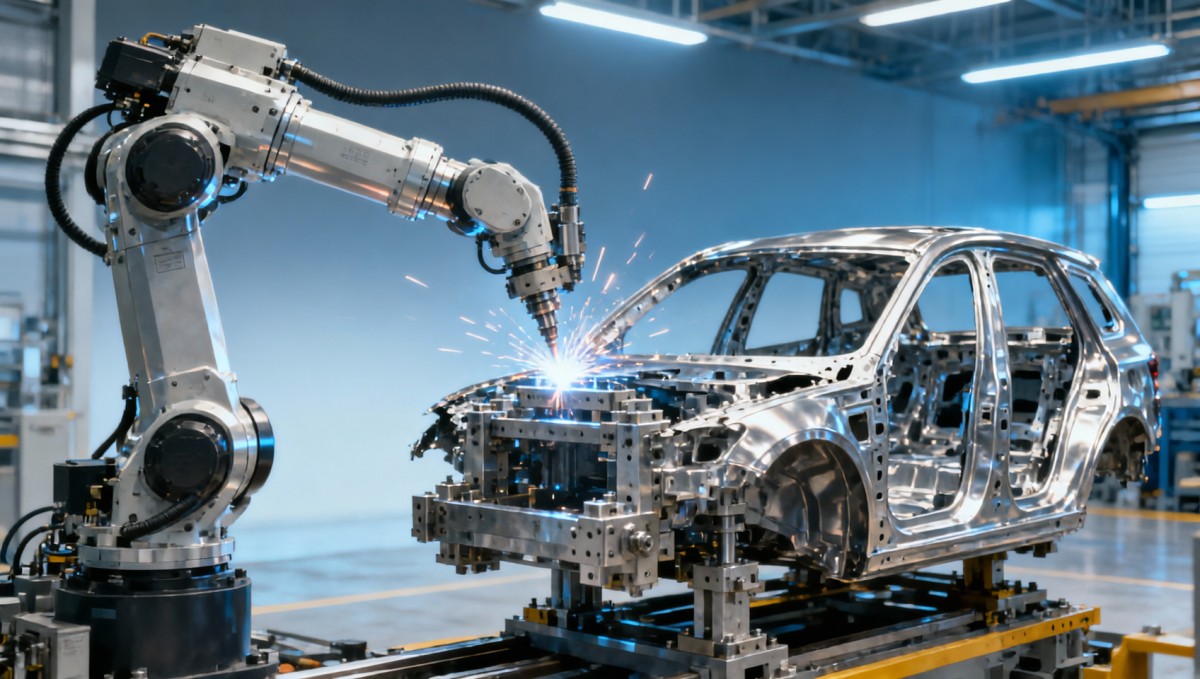
Offline programming for robotic welding is built on a digital representation of reality: robot kinematics, TCP definition, part CAD, weld sequence, fixture coordinates, and access constraints. If the physical fixture deviates from CAD by as little as 0.5 mm to 2.0 mm in a critical clamp or datum location, the programmed path may no longer align with the joint. On thin sheet metal, that level of displacement can be enough to cause underfill, edge wandering, or missed starts.
The common misconception is that robot repeatability automatically guarantees weld quality. In practice, repeatability only means the robot can return to the same taught point within a specified tolerance under the same conditions. Offline programming accuracy depends on a broader stack: fixture build accuracy, fixture wear over time, thermal expansion, part variation, calibration quality, and the discipline used in maintaining datums between simulation and production.
In automotive assembly line environments, the problem becomes more visible because takt time is often compressed into 45 to 90 seconds per station. There is little room for trial-and-error adjustment on the floor. A 10-minute touch-up per changeover or a 3% to 5% increase in rework can quickly erase the financial advantage of offline programming, especially on multi-robot cells with synchronized fixtures.
For procurement teams, fixture mismatch also creates hidden cost layers. The robot, software license, and power source may look compliant on paper, but if the fixture supplier cannot hold the required positional accuracy or provide traceable inspection data, the full system will underperform. This is why TSV consistently frames robotic welding as a system-level engineering problem, not a component-level marketing claim.
Typical sources of mismatch in real production cells
Mismatch usually comes from a small number of recurring sources rather than a single dramatic failure. Engineers who isolate these sources early reduce launch risk and shorten correction loops.
- Fixture fabrication tolerance drift, often in the ±0.3 mm to ±1.5 mm range depending on frame size, weldment distortion, and machining quality.
- Clamp wear, locator pin damage, and accumulated debris, which may shift part seating over thousands of cycles.
- CAD-to-fixture change disconnect, where engineering revisions are updated in the digital twin but not reflected in physical workholding.
- Poor base frame leveling or anchor movement, especially after relocation, maintenance, or floor settlement.
- Robot base, tool center point, or user frame calibration errors that stack on top of fixture deviation.
The practical lesson is clear: robotic welding offline programming only performs as expected when fixture engineering, metrology, and robot calibration are treated as one integrated control loop.
What mismatch does to weld quality, cycle time, and digital twin value
The first consequence of fixture mismatch is geometric error at the weld joint. Even if arc parameters are stable, the torch angle, stick-out, and travel speed relative to the actual seam can shift enough to affect penetration and appearance. In fillet welds, a 1.0 mm positional deviation may not sound large, but it can alter effective leg size, increase spatter, and force manual correction. In gap-sensitive joints, the resulting process instability is even more severe.
The second consequence is cycle time inflation. Offline programming is intended to reduce teach time and enable fast launch, but mismatch often reintroduces on-floor edits. What was planned as a 2-day virtual validation may become a 1-week debug cycle involving path shifts, clamp adjustments, and repeated test coupons. On a line with 6 to 10 robotic welding cells, that delay can affect upstream stamping and downstream assembly scheduling.
The third consequence is strategic: it weakens the value of the digital twin. A digital twin for automotive assembly line welding should be a decision tool, not a decorative model. If fixture data, actual offsets, and inspection feedback are not continuously looped back into the virtual environment, the twin loses predictive power. Then offline programming becomes a partial shortcut rather than a robust engineering workflow.
For decision-makers, the risk is misallocated capital. Companies may invest in advanced simulation software, sensor packages, and coordinated robot cells, yet still miss launch targets because fixture governance was under-specified. The strongest return usually comes not from buying the most software, but from aligning fixture quality, calibration discipline, and data feedback from day one.
Operational impact by stakeholder group
The table below shows how fixture mismatch affects different roles across a welding program, from plant launch through steady-state production.
The key takeaway is that fixture mismatch is not just a welding defect issue. It affects launch readiness, labor efficiency, supplier accountability, and the credibility of simulation-based planning.
Why digital twin integration matters
A digital twin becomes useful when it captures more than nominal CAD. It should include fixture datum logic, measured offsets, robot base references, and inspection results from trial builds or production audits. In mature programs, update cycles can be weekly during launch and monthly during stable production, depending on engineering change frequency and fixture wear patterns.
If that data loop is in place, robotic welding offline programming becomes more resilient. Programs can be adjusted against actual fixture conditions rather than assumptions, which improves first-time-right performance and reduces unplanned floor intervention.
How to control fixture variation before it reaches the weld cell
The most effective control point is upstream, before a mismatch reaches robot commissioning. This means defining datum strategy, tolerance stack, inspection method, and change management at the fixture design stage. In many programs, engineers focus heavily on robot payload, power source selection, and software features, while fixture validation remains under-documented. That imbalance creates avoidable launch risk.
A practical target is to align fixture build capability with joint sensitivity. For general structural welding, some assemblies can tolerate ±1.0 mm at non-critical locations. For thin-gauge automotive body structures, datum and clamp features may need tighter control, often below ±0.5 mm depending on joint design, access angle, and gap sensitivity. The correct threshold is application-driven, not marketing-driven.
Inspection must also be structured. A fixture that passes dimensional review once is not automatically stable over 50,000 or 100,000 cycles. Preventive checks should cover locator wear, clamp stroke repeatability, frame distortion, and contamination build-up. On high-duty cells, monthly verification may be justified; on lower-volume cells, quarterly checks may be sufficient if process data remains stable.
From a sourcing perspective, the supplier should provide not just fixture hardware, but also measurable acceptance criteria. These may include datum coordinate reports, clamp repeatability checks, GR&R suitability for key measurements, and a defined escalation process for engineering changes. Without those elements, robotic welding offline programming loses a reliable physical reference.
Recommended engineering controls
The following controls are commonly effective in reducing mismatch risk across robotic welding programs.
- Define 3 to 5 critical datums that are shared consistently across CAD, fixture design, robot user frames, and inspection routines.
- Use fixture capability reviews before robot programming starts, rather than treating fixture correction as a commissioning task.
- Establish a calibration schedule for TCP, robot base, and fixture reference points at fixed intervals such as every 2 to 4 weeks or after any collision event.
- Feed first-article measurement data back into the digital twin so offline programming reflects real-world offsets.
- Set an engineering change control window, such as 24 to 48 hours, for updating virtual and physical records after any fixture modification.
These controls are especially valuable in plants managing multiple product variants on shared tooling, where small fixture differences can multiply across programs.
Inspection and maintenance priorities
Not every fixture feature needs the same level of surveillance. The table below highlights where inspection effort generally produces the strongest return in robotic welding cells.
The pattern is simple: prioritize the features that define part position and seating consistency. Those are the same features that most directly determine whether the simulated weld path can be trusted on the shop floor.
Procurement and implementation criteria for buyers and decision-makers
When companies purchase a robotic welding system, fixture mismatch often slips into the gap between suppliers. The robot vendor may focus on manipulator performance, the software provider on simulation capability, and the fixture builder on mechanical delivery. Buyers should close that gap with cross-functional specifications that define who owns geometric alignment, calibration responsibility, and digital twin updates at each project stage.
A useful procurement approach is to structure the RFQ around measurable integration requirements rather than general promises. For example, specify acceptance conditions for fixture repeatability, part seating confirmation, robot frame correlation, and launch support response times. If a line is expected to process 2,000 to 5,000 units per week, small daily deviations can become major warranty or throughput issues within one quarter.
Decision-makers should also evaluate whether the vendor ecosystem can support a closed-loop workflow. Can actual dimensional inspection data update the virtual cell? Is there a clear process for validating revisions after engineering change orders? Are operators trained to distinguish between robot path error and fixture seating error within the first 10 to 15 minutes of troubleshooting? These operational questions are often more valuable than brochure-level claims.
For global sourcing teams, traceability matters. A low initial fixture price may not be attractive if rework, launch delay, and onsite engineering support consume the savings. In many cases, the better supplier is the one that documents tolerances, validates interfaces, and supports data-driven correction, even if the upfront quote is 8% to 15% higher.
Buyer checklist for robotic welding offline programming projects
Before approving a supplier package, buyers and technical leaders should confirm the following points.
- The fixture supplier can provide dimensional inspection records for critical datums, not just assembly completion status.
- The integrator has a defined correlation method between CAD, robot base, user frames, and physical fixture coordinates.
- The project includes a launch-phase correction plan, usually covering the first 2 to 6 weeks of production ramp-up.
- The digital twin workflow includes update ownership, revision timing, and version control.
- Operators and maintenance teams receive training on fixture verification, not only robot HMI use.
This checklist helps convert offline programming from a software purchase into a controllable manufacturing capability.
Implementation roadmap
A realistic rollout usually follows 4 stages: digital preparation, fixture validation, robot correlation, and production feedback stabilization. Depending on cell complexity, this may take 3 to 8 weeks for a single station and longer for a full automotive assembly line segment. Programs that skip the fixture validation stage often pay for it later in commissioning and quality containment.
For organizations seeking data-grounded deployment rather than marketing claims, TSV recommends documenting tolerance ownership, measurement method, and update cadence before capital approval. That discipline reduces ambiguity and supports more accurate supplier benchmarking.
FAQ: practical questions about fixture mismatch in robotic welding
The questions below reflect common concerns from engineers, operators, sourcing teams, and plant leaders evaluating robotic welding offline programming under real production constraints.
How much fixture variation is too much for offline programmed welding?
There is no single threshold for every process. For some structural welds, a ±1.0 mm shift may still be manageable. For thin-gauge body components, a deviation above ±0.5 mm at a critical locator can already create path errors, poor torch angle, or gap instability. The acceptable level depends on joint design, weld type, fit-up sensitivity, and whether seam tracking is available.
Can seam tracking solve fixture mismatch by itself?
Seam tracking can compensate for some positional error, but it is not a substitute for stable workholding. It adds value when variation is small and predictable. If part seating changes significantly, access angle, collision risk, and start-point stability may still fail. In other words, sensors help, but they do not eliminate the need for fixture discipline and accurate offline programming inputs.
What should operators check first when weld quality drifts after launch?
A practical first check sequence is: confirm part seating, inspect primary locators, verify clamp function, review recent collisions or maintenance activity, and then assess robot TCP or frame calibration. This 5-step approach often identifies whether the root cause is fixture-related or robot-related within 10 to 20 minutes, reducing unnecessary program edits.
Is digital twin adoption worthwhile for smaller welding operations?
Yes, if used pragmatically. Even smaller operations benefit when the digital twin includes fixture coordinates, part revision history, and actual correction data. The value comes from reducing repeated manual teaching and shortening changeover or launch time, not from creating a complex model that never connects to real measurements.
Robotic welding offline programming delivers the strongest results when fixture accuracy, calibration discipline, and digital twin data are treated as one system. For engineers, that means tighter correlation between CAD and reality. For operators, it means faster troubleshooting and fewer unstable welds. For buyers and decision-makers, it means selecting suppliers based on measurable tolerance control, not broad performance claims.
If your team is evaluating robotic welding cells, updating fixture standards, or building a more reliable digital twin workflow for automotive assembly line production, now is the right time to define the tolerance and data requirements that truly protect launch performance. Contact TSV to discuss benchmarking criteria, supplier evaluation logic, or a more data-driven path to production-ready welding automation.
Search News
Hot Articles
- Carbon Fiber StructuresHow to Specify Aerospace Carbon Fiber Assemblies for Lightweight, Load-Bearing PartsJul 11, 2026
- Machine VisionXiaomi, Alibaba DAMO Academy Drive Open-Source Robotics Model Ecosystem, Lowering Algorithm Development Barriers for Overseas SMEs Adopting Chinese Robotics SolutionsMar 30, 2026
- Cobots & ArmsShanxi 'AI+' Conference Showcases Embodied Intelligence with Multinational Buyer Engagement: Key Industry ImplicationsMar 30, 2026
Popular Tags
Recommended News
 Jul 11, 2026How to Specify Aerospace Carbon Fiber Assemblies for Lightweight, Load-Bearing PartsAerospace carbon fiber assemblies: learn how to specify laminate design, load data, joining methods, and inspection controls for lighter, reliable load-bearing aerospace parts.Elena Rostova (UAV Systems Researcher)
 Mar 30, 2026Xiaomi, Alibaba DAMO Academy Drive Open-Source Robotics Model Ecosystem, Lowering Algorithm Development Barriers for Overseas SMEs Adopting Chinese Robotics SolutionsXiaomi & Alibaba DAMO Academy's open-source robotics models lower algorithm barriers for global SMEs. Boost efficiency in manufacturing, logistics & smart retail with ROS 2 compatible solutions.TSV Data Lab
 Mar 30, 2026Shanxi 'AI+' Conference Showcases Embodied Intelligence with Multinational Buyer Engagement: Key Industry ImplicationsShanxi 'AI+' Conference highlights embodied intelligence with Tesla, Ubtech & Jiantao showcasing multimodal robotics. 40+ global buyers validated tech on-site, creating new B2B channels for industrial automation & AI solutions.Chen Wei (Automation Lead Engineer)
 Mar 30, 2026Zhongguancun Unveils 6G Integrated Sensing-Computing-Intelligence Platform to Empower Embodied Robots for Global Industrial ApplicationsZhongguancun's new 6G platform revolutionizes industrial robotics with <10ms latency, empowering global automotive, logistics & port automation. Discover how this tech boosts China's smart manufacturing exports.TSV Data Lab
 Mar 30, 2026Mech-Mind Tianjin Embodied Intelligence R&D and Production Base Goes Live, Cutting Delivery Time by 20%–30% for Global Customized AMR+Vision SolutionsMech-Mind's Tianjin AMR+Vision production base cuts delivery time by 20%-30% for欧美 & Latin American markets. Discover how this PLd-certified facility accelerates customized robotics solutions for smart manufacturing and logistics.Chen Wei (Automation Lead Engineer)
 Mar 30, 2026Boao Forum Reveals 'Co-evolution of Big and Small Brains' Trend in Humanoid Robots, China's Embodied Intelligence Accelerates Adaptation to Overseas Manufacturing Service ScenariosDiscover how China's humanoid robots, featuring 'Co-evolution of Big and Small Brains,' are revolutionizing global manufacturing. Learn about Embodied Tian Gong 3.0's ISO compliance and overseas deployment at Boao Forum 2026.Chen Wei (Automation Lead Engineer)
 Mar 30, 2026China Railway Industrial Secures Patent for Embodied Robotics in Material Handling, Boosting High-Precision Delivery Capabilities for Overseas Infrastructure and Manufacturing ProjectsChina Railway Industrial's new patent for embodied robotics in material handling boosts high-precision delivery for global infrastructure & manufacturing. Discover how this innovation enhances logistics accuracy in automotive, rail transit & EPC projects.Chen Wei (Automation Lead Engineer)
 Oct 14, 2026Drone Frame Composites: Carbon Fiber vs. Fiberglass for Weight and StiffnessExplore drone structural materials composites: compare carbon fiber and fiberglass for weight, stiffness, cost, and antenna compatibility. Find the right material for your drone frame.Elena Rostova (UAV Systems Researcher)
 Oct 13, 2026Smart Cameras vs. PC-Based Machine Vision: Which Fits High-Speed Inspection?This industrial product comparison for machine vision weighs smart cameras vs. PC-based systems on latency, throughput, and cost. Discover your best fit for high-speed inspection.TSV Data Lab
 Oct 12, 2026How to Verify RoHS Compliance in Industrial Sensing Systems Before DeploymentRoHS compliant sensing systems: learn how to verify materials, supplier declarations, testing, and configuration controls before industrial deployment.TSV Data Lab
 Oct 11, 2026How Procurement-Oriented Content Taxonomy Improves B2B Buying JourneysProcurement-oriented content taxonomy streamlines B2B buying journeys with clearer evidence, supplier comparisons, risk visibility, and faster approvals.TSV Data Lab
 Oct 10, 2026How to Select a Machine Performance Monitoring Platform for OEE and Downtime ReductionMachine performance monitoring platform selection guide: validate machine states, OEE data, downtime reasons, integrations, and scalability to reduce losses with confidence.TSV Data Lab
 Oct 08, 2026How to Machine Inconel 625 Blades Without Heat Cracks or Edge ChippingInconel 625 blade machining guide: prevent heat cracks, edge chipping, chatter, and work hardening with proven tooling, cooling, fixturing, and inspection strategies.Dr. Marcus Vance
 Oct 07, 2026How to Evaluate an HMI Panel Distributor for Industrial Automation ProjectsHMI panel distributor evaluation guide: verify technical compatibility, traceability, supply reliability, lifecycle support, and total cost for automation projects.Victor Lin (Chief Software Architect)
 Oct 06, 2026Navigation Fault Tolerance Standards for AMRs: What Safety Teams Must VerifyNavigation fault tolerance standards: learn what AMR safety teams must verify, from localization loss and sensor faults to stopping distance, safe restart, and site-specific validation.Chen Wei (Automation Lead Engineer)
 Oct 05, 2026Calculating Edge Computing Total Cost of Ownership Across Distributed SitesEdge computing ownership cost explained: calculate deployment, energy, connectivity, security, remote support, and refresh costs across distributed sites.TSV Data Lab
 Oct 04, 2026CAD/CAM Benchmarking in the GCC: What Manufacturers Should Ask a ConsultantCAD CAM benchmark consultant GCC guide: learn the key questions manufacturers should ask to validate post-processors, workflows, machine performance, and production risk.Victor Lin (Chief Software Architect)
 Oct 03, 2026Selecting Automotive Radar Sensor Modules for ADAS Range, Resolution, and IntegrationAutomotive radar sensor module selection guide for ADAS: compare range, resolution, field of view, latency, and integration to build safer, reliable vehicle systems.TSV Data Lab
 Oct 02, 2026How to Qualify Machined Parts Suppliers for Hard Tech ProgramsHard tech supply chain machined parts demand rigorous supplier qualification. Learn how to assess capability, traceability, quality controls, and delivery resilience.Dr. Marcus Vance
 Oct 01, 2026How to Select an Outdoor Security Radar Sensor for Perimeter Detection?Outdoor security radar sensor selection guide: compare range, accuracy, false-alarm control, integration, and field testing for reliable perimeter detection.TSV Data Lab
 Sep 30, 2026How to Evaluate Solid-State LiDAR Hardware for Outdoor Autonomous VehiclesSolid state LiDAR hardware evaluation guide for outdoor autonomous vehicles—compare range, point-cloud quality, environmental resilience, integration, and safety.TSV Data Lab
 Sep 29, 2026ISO 9283 Repeatability: How to Evaluate Cobot Positioning PerformanceISO 9283 cobot repeatability explained: learn how payload, reach, approach direction, and test conditions affect positioning performance and cell capability.Chen Wei (Automation Lead Engineer)
 Oct 14, 2026How tight can micro machining aerospace tolerances be in production?Micro machining aerospace tolerances can reach low-micron levels in production. Learn what controls repeatability, inspection confidence, and flight-critical quality.Dr. Marcus Vance
 Oct 13, 2026How to keep an industrial robotic integration project on scheduleIndustrial robotic integration project management: keep automation on schedule with proven controls for interfaces, suppliers, FAT, commissioning, and change risk.Victor Lin (Chief Software Architect)























