
Pick and place robot manufacturer selection often starts with reject rates
Publication Date
author
When evaluating a pick and place robot manufacturer, reject rates often reveal more than brochures ever will. For engineers, buyers, and decision-makers comparing a delta robot manufacturer, scara robot wholesale price options, or a 15kg payload cobot factory, real performance starts with repeatability, payload stability, and servo motor MTBF data. This guide explains how data-driven selection reduces sourcing risk, shortens validation cycles, and improves long-term automation ROI.
In high-mix and high-volume production, a reject rate difference of just 0.5% can translate into thousands of failed picks, misplacements, or rework events per month. That is why experienced procurement teams no longer start with catalog claims alone. They begin with measurable indicators: cycle consistency, gripper suitability, controller stability, spare parts availability, and the supplier’s ability to prove performance under realistic duty cycles.
For TSV’s audience, the issue is not simply choosing a robot arm. It is choosing a manufacturing partner whose engineering data can survive technical review, pilot validation, and long-term production pressure. A capable pick and place robot manufacturer should help reduce qualification time from 8–12 weeks to a more controlled 4–6 weeks by presenting usable specifications, acceptance criteria, and maintenance logic upfront.
Why Reject Rates Are the Most Honest Starting Point
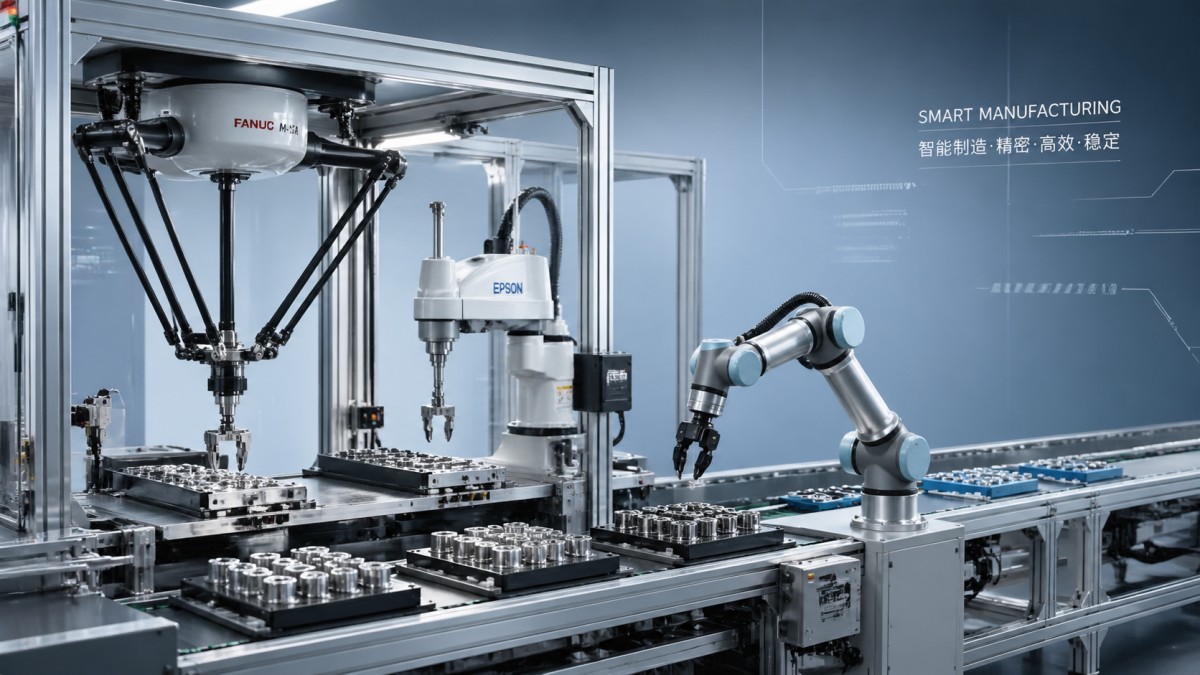
Reject rate is one of the clearest ways to compare a pick and place robot manufacturer because it connects engineering performance to business outcome. A brochure may promise speed, but reject rate exposes whether that speed remains accurate after 8 hours, 16 hours, or 24/7 operation. In practical terms, a system running at 60 picks per minute with a 1.8% reject rate may be less valuable than one running at 48 picks per minute with a 0.3% reject rate.
This matters across robot categories. A delta robot manufacturer may focus on ultra-fast packaging lines, while a SCARA supplier may target electronics assembly, and a 15kg payload cobot factory may support flexible end-of-line transfer. Each architecture has a different motion envelope, but all of them should be judged by the same operational question: how many good parts reach the next process step without interruption or correction?
Reject rates also reveal hidden weaknesses that static specs do not show. Common root causes include gripper mismatch, vibration near maximum reach, unstable feeding conditions, poor vision calibration, and servo drift after thermal buildup. A manufacturer that cannot break down rejects by cause category is usually less mature in engineering support, even if its quoted unit price looks attractive.
For buyers and plant managers, the real cost of rejects extends beyond scrap. A 1% placement error on a 2-shift line can drive extra labor, delayed shipments, machine stoppages, and quality disputes. In sectors such as food packaging, consumer electronics, precision components, and medical subassembly, small repeatability deviations can trigger downstream inspection failures that are far more expensive than the robot itself.
What reject rate should be reviewed alongside
Reject rate should never be reviewed in isolation. To make it useful, compare it against cycle time, payload, tool weight, line speed, product orientation variability, and operating hours between recalibration. If a supplier reports a 0.2% reject rate, ask whether the test was done at 30%, 60%, or 90% of rated throughput.
- Repeatability range, such as ±0.02 mm to ±0.1 mm depending on robot type
- Payload utilization, especially whether the robot is tested at 70%–85% of rated payload
- Servo motor MTBF and gearbox service interval under production duty
- Vision alignment accuracy, particularly for random part orientation
- Recoverability after fault, including restart time in under 3–5 minutes
A strong pick and place robot manufacturer will usually provide reject data by application type rather than one generic value. That distinction is important because a blister-pack line, a PCB loading cell, and an automotive kitting station do not share the same failure modes.
Core Technical Metrics for Comparing Robot Manufacturers
Once reject rates identify which vendors deserve serious review, the next step is technical comparison. Procurement teams often make the mistake of focusing too early on SCARA robot wholesale price or shipping terms. Price matters, but only after the motion platform, controller logic, and application fit have been technically screened.
In most projects, five metrics determine whether the robot will perform consistently over 12–36 months: repeatability, payload stability, cycle time under load, servo motor MTBF, and integration compatibility. These metrics should be validated under realistic line conditions, not ideal showroom demonstrations. For instance, a robot may achieve 120 cycles per minute in a demo but drop to 85–95 cycles per minute once real part tolerances and camera feedback are introduced.
Delta robots often dominate when speed is the top priority and payloads stay light, often below 3kg. SCARA systems are common in assembly and tray handling where planar speed and stiffness matter. Cobots in the 10kg–15kg class are increasingly used where flexibility, safety, and mixed-SKU handling are more valuable than peak speed. Manufacturer selection should reflect this application reality rather than trend-driven buying.
The table below provides a practical framework for screening suppliers based on measurable criteria rather than broad marketing language.
The key lesson is that manufacturer comparison should move from “what robot is cheapest” to “which supplier can maintain verified performance inside my process window.” This shift often reduces total cost of ownership more effectively than negotiating 5%–8% off unit price.
H4 checkpoints during technical review
Test at realistic payload and reach
If your product plus gripper mass is 11.5kg, a 15kg payload cobot should not be accepted based only on nominal rating. Ask for motion tests at full reach and repeated acceleration. Dynamic loading can expose arm oscillation and cycle variation that static load figures will hide.
Check thermal drift after long runs
A useful validation window is 4–8 hours continuous operation. Some systems hold accuracy in the first 30 minutes but show increasing error once motors, drives, or vision lighting heat up. This is where real reject-rate behavior begins to appear.
How Buyers Should Compare Delta, SCARA, and 15kg Cobot Options
Different robot architectures solve different pick and place problems, so manufacturer selection should begin with application mapping. A delta robot manufacturer is usually strongest in lightweight, high-speed, top-loading operations such as sorting, food flow-wrapping, and primary packaging. A SCARA supplier is often stronger in assembly cells, tray loading, and precision horizontal motion. A 15kg payload cobot factory can be the right choice where human collaboration, line reconfiguration, or low-volume mixed product handling is required.
The problem arises when teams compare these machines only by headline speed or quoted price. A lower SCARA robot wholesale price may look compelling, but if the project needs frequent SKU changes, vision-guided correction, and fast redeployment across two or three workstations, a cobot may deliver better long-term value. Likewise, a cobot should not be forced into ultra-high-speed packaging if the line requires 80–120 picks per minute with sub-second settling time.
A disciplined comparison should align robot type with part weight, orientation variability, takt time, hygiene or cleanliness requirements, and available floor space. It should also reflect the skill level of the local maintenance team. Some plants can support advanced motion tuning and spare-parts stocking; others need simpler platforms with fast field replacement.
The following table summarizes where each architecture typically fits best in B2B manufacturing environments.
This comparison helps narrow the shortlist, but it should be followed by plant-specific testing. The same robot can produce very different results depending on feeder quality, part presentation, EOAT design, and controller integration depth.
A practical selection sequence
- Define takt time, payload, and required pick accuracy in measurable terms.
- Match the application to delta, SCARA, or cobot architecture before requesting quotes.
- Ask each pick and place robot manufacturer for reject-rate data from similar duty cycles.
- Run a pilot using your real parts, your gripper concept, and your line logic.
- Review maintenance intervals, spare lead times, and local support response within 24–72 hours.
Following these five steps usually creates a more reliable sourcing outcome than comparing quote sheets alone. It also reduces the risk of buying a technically capable robot from a supplier that cannot support the system after commissioning.
Supplier Qualification, Validation Cycles, and Hidden Cost Drivers
Selecting a pick and place robot manufacturer is as much a supplier qualification exercise as it is a product comparison. A robot with strong specs can still become a poor investment if factory acceptance testing is weak, documentation is incomplete, or field support takes 10–14 days to respond. For procurement leaders, hidden cost drivers often emerge after installation, not during quotation.
Validation should therefore cover three levels: equipment performance, process stability, and supplier service readiness. Equipment performance answers whether the robot can hit required cycle time and accuracy. Process stability answers whether it can sustain that performance across shift changes, product variation, and environmental drift. Service readiness answers whether breakdown recovery, spare parts, and software support are realistic for your geography and production schedule.
A robust validation cycle typically takes 4–6 weeks for standard applications and 8–12 weeks for customized cells involving vision, multiple end effectors, or unusual materials. Shorter timelines are possible, but only if the supplier provides clear FAT criteria, PLC interface mapping, and spare-part recommendations before purchase order release.
The cost drivers most often missed during sourcing are not only hardware costs. They include application engineering hours, gripper redesign, commissioning overtime, emergency spare shipping, software adjustments, retraining operators, and lost production during tuning. A vendor with a higher upfront quote may still be lower in total ownership cost if it reduces these post-installation burdens.
Common qualification mistakes
- Approving the robot based on empty-run speed instead of loaded cycle time
- Skipping endurance testing beyond the first 1–2 hours of operation
- Not confirming spare-parts availability for drives, teach pendants, and gearboxes
- Comparing SCARA robot wholesale price without including integration and support costs
- Accepting generic reject-rate claims that are not tied to a similar application profile
Service questions worth asking before award
Before final supplier approval, ask how quickly critical components can be delivered, whether remote diagnostics are included, and how software changes are controlled. For many plants, a realistic service response target is remote support within 4 hours and on-site support within 24–72 hours, depending on region. These numbers matter more than general promises of “full support.”
Also request a preventive maintenance plan with interval guidance. Even a simple framework such as weekly inspection, monthly lubrication review, and annual motion calibration can improve uptime planning. A supplier that cannot provide this structure may struggle with lifecycle support.
Implementation, Maintenance, and Questions Decision-Makers Commonly Ask
After manufacturer selection, the final determinant of ROI is implementation discipline. Many automation programs lose value not because the robot is wrong, but because acceptance criteria, operator training, and maintenance planning were not aligned from day one. For decision-makers, the goal is to move from pilot success to stable production without a long tail of recurring adjustments.
A practical implementation path usually includes five stages: requirement definition, simulation or sample testing, FAT, on-site commissioning, and performance review after 30–90 days. If these stages are documented, reject rates can be tracked from baseline through ramp-up, making supplier accountability much clearer. This is especially important when comparing multiple sites or planning regional rollouts.
Maintenance planning should focus on predictable wear points rather than emergency response alone. End effectors, vacuum circuits, cable dress packs, encoder feedback stability, and vision cleanliness often influence actual line performance more frequently than major robot faults. In other words, a low reject rate is preserved by routine discipline, not by the robot arm alone.
For operations teams, the best manufacturer is usually the one that combines stable hardware with usable documentation. Clear alarm logic, spare-parts lists, recovery steps, and operator training materials can reduce restart time from 20 minutes to under 5 minutes in many repetitive fault scenarios.
FAQ: What should buyers and users ask?
How should I compare one pick and place robot manufacturer against another?
Start with reject rate, repeatability, loaded cycle time, servo MTBF, and service response capability. Then review how those values were tested. A supplier that shows data under a comparable payload, part shape, and shift duration is usually more credible than one offering only standard brochure values.
Is the lowest SCARA robot wholesale price usually the best procurement choice?
Not necessarily. A low entry price can be offset by higher integration cost, weaker software support, or longer downtime after installation. Always compare total cost over at least 24 months, including spares, maintenance, engineering changes, and production loss risk.
When is a 15kg payload cobot better than a delta or SCARA robot?
A 15kg payload cobot is often better when product variation is high, collaborative access matters, or line layout changes are expected. It is less ideal when throughput targets require very high picks per minute or when lightweight products must be processed with extreme speed.
How long should validation take before a purchase decision?
For standard pick and place applications, 4–6 weeks is a practical range. More customized systems involving vision guidance, special grippers, or complex PLC handshakes may require 8–12 weeks. Rushing below that window can shift risk from procurement into production.
For engineering teams, procurement managers, and executives, the most reliable way to select a pick and place robot manufacturer is to begin with production truth rather than marketing language. Reject rates, repeatability, payload stability, MTBF, and validation quality reveal which supplier can support real manufacturing conditions and which one only performs well on paper.
TSV’s data-first perspective is simple: parameters do not lie, and sourcing decisions improve when they are tied to measurable thresholds. If you are comparing a delta robot manufacturer, evaluating SCARA robot wholesale price options, or screening a 15kg payload cobot factory for flexible automation, the right next step is a structured technical review based on your actual application window.
If you need a clearer framework for supplier benchmarking, validation planning, or specification drafting, contact us to discuss your application requirements, request a tailored comparison matrix, or explore more data-driven automation selection guidance.
Search News
Hot Articles
- Carbon Fiber StructuresHow to Specify Aerospace Carbon Fiber Assemblies for Lightweight, Load-Bearing PartsJul 11, 2026
- Machine VisionXiaomi, Alibaba DAMO Academy Drive Open-Source Robotics Model Ecosystem, Lowering Algorithm Development Barriers for Overseas SMEs Adopting Chinese Robotics SolutionsMar 30, 2026
- Cobots & ArmsShanxi 'AI+' Conference Showcases Embodied Intelligence with Multinational Buyer Engagement: Key Industry ImplicationsMar 30, 2026
Popular Tags
Recommended News
 Jul 11, 2026How to Specify Aerospace Carbon Fiber Assemblies for Lightweight, Load-Bearing PartsAerospace carbon fiber assemblies: learn how to specify laminate design, load data, joining methods, and inspection controls for lighter, reliable load-bearing aerospace parts.Elena Rostova (UAV Systems Researcher)
 Mar 30, 2026Xiaomi, Alibaba DAMO Academy Drive Open-Source Robotics Model Ecosystem, Lowering Algorithm Development Barriers for Overseas SMEs Adopting Chinese Robotics SolutionsXiaomi & Alibaba DAMO Academy's open-source robotics models lower algorithm barriers for global SMEs. Boost efficiency in manufacturing, logistics & smart retail with ROS 2 compatible solutions.TSV Data Lab
 Mar 30, 2026Shanxi 'AI+' Conference Showcases Embodied Intelligence with Multinational Buyer Engagement: Key Industry ImplicationsShanxi 'AI+' Conference highlights embodied intelligence with Tesla, Ubtech & Jiantao showcasing multimodal robotics. 40+ global buyers validated tech on-site, creating new B2B channels for industrial automation & AI solutions.Chen Wei (Automation Lead Engineer)
 Mar 30, 2026Zhongguancun Unveils 6G Integrated Sensing-Computing-Intelligence Platform to Empower Embodied Robots for Global Industrial ApplicationsZhongguancun's new 6G platform revolutionizes industrial robotics with <10ms latency, empowering global automotive, logistics & port automation. Discover how this tech boosts China's smart manufacturing exports.TSV Data Lab
 Mar 30, 2026Mech-Mind Tianjin Embodied Intelligence R&D and Production Base Goes Live, Cutting Delivery Time by 20%–30% for Global Customized AMR+Vision SolutionsMech-Mind's Tianjin AMR+Vision production base cuts delivery time by 20%-30% for欧美 & Latin American markets. Discover how this PLd-certified facility accelerates customized robotics solutions for smart manufacturing and logistics.Chen Wei (Automation Lead Engineer)
 Mar 30, 2026Boao Forum Reveals 'Co-evolution of Big and Small Brains' Trend in Humanoid Robots, China's Embodied Intelligence Accelerates Adaptation to Overseas Manufacturing Service ScenariosDiscover how China's humanoid robots, featuring 'Co-evolution of Big and Small Brains,' are revolutionizing global manufacturing. Learn about Embodied Tian Gong 3.0's ISO compliance and overseas deployment at Boao Forum 2026.Chen Wei (Automation Lead Engineer)
 Mar 30, 2026China Railway Industrial Secures Patent for Embodied Robotics in Material Handling, Boosting High-Precision Delivery Capabilities for Overseas Infrastructure and Manufacturing ProjectsChina Railway Industrial's new patent for embodied robotics in material handling boosts high-precision delivery for global infrastructure & manufacturing. Discover how this innovation enhances logistics accuracy in automotive, rail transit & EPC projects.Chen Wei (Automation Lead Engineer)
 Oct 25, 2026Hesai Leads Global ADAS Main Lidar Shipments in Yole’s 2026 ReportHesai led global ADAS main lidar shipments with a 43% share in 2025, according to Yole’s 2026 report. Explore what this ranking reveals about its automotive market position.TSV Data Lab
 Oct 25, 2026Choosing an Aerospace Materials Manufacturer: Quality and Traceability ChecksChoosing an aerospace materials manufacturer? Learn how to verify certifications, test reports, and lot traceability to qualify suppliers confidently and reduce costly sourcing risks.Dr. Marcus Vance
 Oct 24, 2026Guotai Haitong: Global Entry-Level 3D Printer Shipments Rose 39% in Q1 2026Entry-level 3D printer shipments rose 39% in Q1 2026, Guotai Haitong reports. Explore how AI, multicolor printing and print farms are shaping market growth.Dr. Marcus Vance
 Oct 24, 2026Choosing an Industrial Vision Inspection Supplier: Acceptance Tests That MatterChoose an industrial vision inspection supplier with confidence. Discover acceptance tests for defect detection, false rejects, production speed, and reliable part rejection before you buy.TSV Data Lab
 Oct 23, 2026US Navy Raises Gecko Robotics Contract Ceiling to $300M for Robotic Fleet MaintenanceUS Navy raises Gecko Robotics’ contract ceiling to $300M for Pacific Fleet robotic inspections. Explore potential opportunities for maintenance suppliers and key procurement considerations.Chen Wei (Automation Lead Engineer)
 Oct 23, 2026Choosing Industrial Sensing Systems for Global Plants: Protocol CompatibilityCompare industrial sensing systems international buyers can trust. Explore protocol compatibility, reduce integration risks, and select proven configurations for reliable global plant deployments.TSV Data Lab
 Oct 22, 2026KUKA Showcases Physical AI and iiQKA.AI Vision at NVIDIA GTC BerlinExplore KUKA’s Physical AI showcase at NVIDIA GTC Berlin and discover how iiQKA.AI Vision aims to simplify robotic vision integration and improve 2D and 3D scene recognition.TSV Data Lab
 Oct 22, 2026Robotic Machining of Advanced Composites: What Tolerances Are Achievable?Explore advanced materials machining robotics: discover what drives achievable composite tolerances and how to validate accuracy before investing in your next machining system.Dr. Marcus Vance
 Oct 21, 2026China’s Industrial Robot Exports Near RMB 10 Billion in First Nine Months of 2026China’s industrial robot exports neared RMB 10 billion in January–September 2026, with value rising faster than volume. Explore the data and what it could mean for suppliers.Chen Wei (Automation Lead Engineer)
 Oct 21, 2026Low-Latency Industrial Data Processing: Pricing and Key Cost DriversExplore industrial data latency price drivers, from edge hardware to integration and support. Learn how to compare quotes, verify performance, and avoid unnecessary costs.TSV Data Lab
 Oct 20, 2026KUKA Launches iiQKA.AI Vision to Simplify Industrial Image ProcessingKUKA iiQKA.AI Vision simplifies industrial image processing with controller-based 2D and 3D vision. Explore drag-and-drop setup for vision-guided automation.TSV Data Lab
 Oct 20, 2026Smart Industrial Edge Devices: Key Criteria for Legacy PLC IntegrationChoose smart industrial edge devices for legacy PLC integration. Discover key criteria for compatibility, data quality, security, and reliable collection without disrupting control.TSV Data Lab
 Oct 19, 2026Choosing a Radar Sensor by Application: Range, Resolution, and Field of ViewSimplify radar sensor application based product selection. Compare range, resolution, and field of view to avoid blind spots and choose with confidence. Explore the guide.TSV Data Lab
 Oct 18, 2026Comparing Material Options for Procurement: Specs, Costs, and Supply RisksExplore procurement oriented technical content on material options, specs, costs, and supply risks. Compare alternatives to cut hidden expenses and make confident sourcing decisions.Dr. Marcus Vance
 Oct 17, 20265-Axis CNC Positioning Accuracy: How to Interpret ISO 230-2 Test ResultsAssess 5 axis CNC machining positioning accuracy with ISO 230-2. Learn to interpret repeatability, reversal error, and test conditions to compare suppliers and make confident acceptance decisions.Dr. Marcus Vance
 Oct 16, 2026Choosing a Rugged Edge AI Box Supplier: Thermal Tests and Lifecycle SupportChoose a rugged edge AI box supplier with proven thermal performance and reliable lifecycle support. Discover the tests and commitments to verify before you buy.TSV Data Lab
 Oct 15, 2026R&D Cost Reduction Services: How to Evaluate Fees, Savings, and ROIEvaluate R&D cost reduction services with confidence. Compare fees, verify savings, and calculate ROI without compromising performance. Discover how to choose a provider that delivers real value.Chen Wei (Automation Lead Engineer)























