
Custom robotic end effectors can bottleneck the whole cell
Publication Date
author
In automated production, custom robotic end effectors can quietly become the weakest link, limiting cycle time, repeatability, and scalability across the entire cell. For buyers comparing a robotic gripper manufacturer, a 15kg payload cobot factory, or an industrial servo motor supplier, the real question is not just compatibility—it is how tooling design affects uptime, payload, vision integration, and long-term ROI.
That question matters across mixed manufacturing environments, from electronics assembly and CNC tending to packaging, aerospace subassembly, and warehouse automation. A robot arm may have repeatability of ±0.02 mm to ±0.05 mm, but once a custom end effector adds compliance, misalignment, pneumatic lag, or cable drag, real process accuracy can degrade far beyond the robot’s brochure specification.
For research teams, operators, procurement managers, and enterprise decision-makers, the end effector should be evaluated as a production-critical subsystem rather than an accessory. TSV’s engineering-first view is simple: if the tool at the wrist is unstable, overweight, slow to maintain, or poorly integrated with sensors and servo motion, the entire robotic cell inherits that instability.
Why End Effectors Become the Hidden Bottleneck
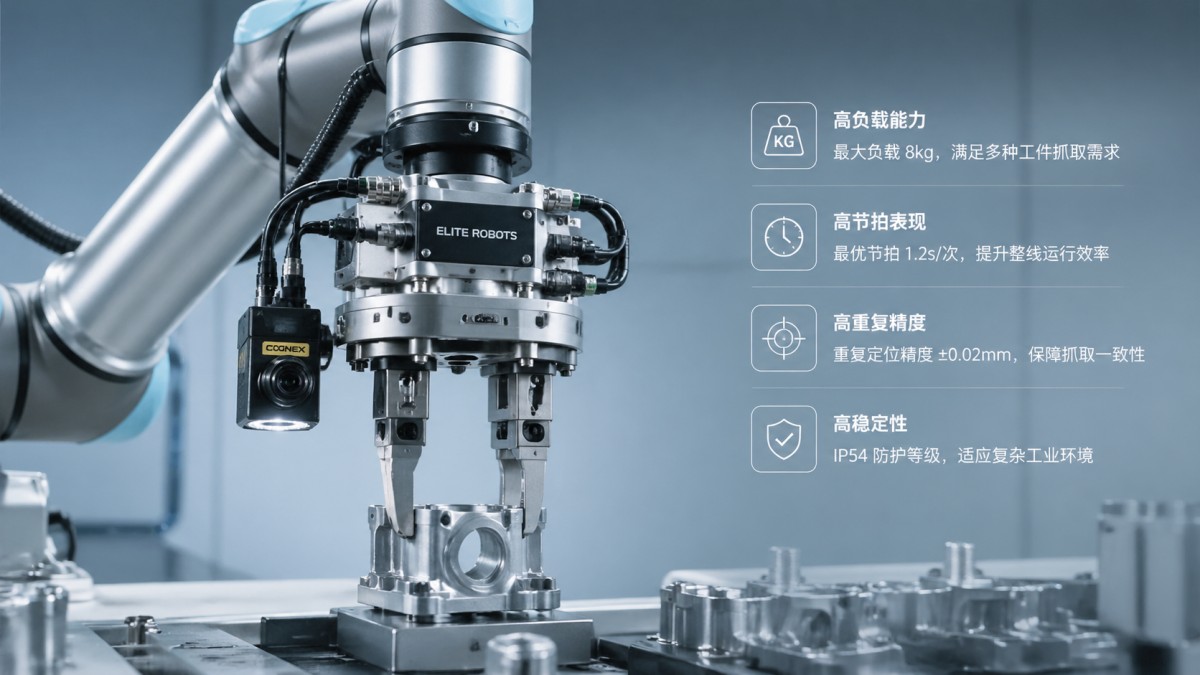
A robotic cell is usually designed around payload, reach, cycle time, fixture layout, and process tolerances. Yet many projects still treat custom robotic end effectors as late-stage tooling. That sequencing creates a structural problem: by the time gripper geometry, hose routing, vacuum demand, jaw compliance, and part presentation are finalized, the robot, servo package, and safety envelope may already be fixed.
In practice, a tool that adds even 2 kg to 4 kg beyond the initial estimate can reduce usable dynamic payload enough to slow acceleration by 10% to 25%. On a line running 8,000 to 20,000 picks per shift, small motion penalties compound quickly. If the end effector also requires a wider approach angle or extra settle time, the bottleneck spreads from one station to the upstream conveyor and downstream inspection cell.
Another common issue is repeatability mismatch. Buyers often focus on robot repeatability, but process capability depends on the full stack: robot flange stiffness, gripper finger wear, vacuum cup condition, sensor latency, and fixture variation. A custom gripper with unstable finger deflection of just 0.3 mm to 0.8 mm under load can be enough to cause missed insertions, skewed picks, or poor camera registration in vision-guided applications.
The problem becomes more severe in scalable cells. A custom tool built for one SKU may work acceptably at pilot volume, then fail when product variants expand from 3 part types to 12. Tool changes become longer, spare parts become unique, and operator troubleshooting becomes inconsistent across shifts. What looked like a tailored solution becomes a throughput limiter.
Where the bottleneck usually appears
- Cycle time inflation caused by slow jaw actuation, vacuum build-up time, or excessive robot deceleration.
- Payload derating when the tool mass, hoses, brackets, and quick changers consume too much of the rated capacity.
- Vision errors when fingers, tubing, or brackets create occlusion or reflective surfaces in the camera field.
- Maintenance burden from seals, bearings, and wear strips needing replacement every 3 to 8 weeks in harsh duty cycles.
A useful engineering rule
For many high-mix automation cells, the best end effector is not the one with the most features. It is the one that keeps mass low, interfaces clean, and service time predictable. If a gripper can be rebuilt in under 15 minutes and validated in under 30 minutes, it is often more valuable than a more complex tool that promises flexibility but adds downtime risk.
How Tooling Design Affects Payload, Motion, and Uptime
When buyers assess a robotic gripper manufacturer or a cobot integration package, tooling design should be analyzed as a motion problem, not only a gripping problem. The center of gravity of the end effector and part combination determines inertial load. A long, offset tool can generate much higher wrist torque than its static weight suggests, especially during rapid pick-and-place motion or orientation changes above 90 degrees.
For example, a 15 kg payload cobot does not automatically support a 15 kg part. If the end effector weighs 4.5 kg, the quick changer adds 0.8 kg, and the part weighs 8 kg, the remaining margin is narrow. Under dynamic movement, usable payload may be lower than the nominal figure, especially if the pick radius is extended or acceleration needs to stay high for sub-8-second cycles.
Uptime is also tied to tooling architecture. Pneumatic systems may deliver simple force profiles, but they introduce hoses, fittings, pressure regulation, and leak risk. Electric grippers offer more controllability and data feedback, yet they can increase wiring complexity and servo tuning demands. Vacuum systems are excellent for flat or porous materials in some cases, but they are sensitive to dust, surface finish, and cup degradation.
A data-led sourcing process should therefore compare tooling concepts in the context of task physics, maintenance intervals, and cell economics, not just initial compatibility. The table below outlines how common end effector approaches perform across practical decision factors.
The main conclusion is not that one tool type is universally better. It is that each design shifts the bottleneck differently: weight and torque for servo grippers, air-system variability for pneumatic tools, or surface dependence for vacuum tools. Procurement teams should map these trade-offs against actual throughput targets, not vendor generalities.
Three motion-related checks before purchase
- Verify total end-of-arm mass including brackets, sensors, hoses, and tool changers, not only the gripper body.
- Check center-of-gravity offset and wrist torque at the farthest process point, especially for parts longer than 250 mm.
- Request cycle data under loaded motion, not only unloaded open-close timing such as 0.4 seconds or 0.8 seconds.
Selection Criteria for Buyers, Engineers, and Operators
A reliable evaluation process should separate brochure compatibility from process suitability. For information researchers and sourcing teams, the first screen is interface fit: flange standard, communication protocol, air or power requirement, and safety function compatibility. For operators and manufacturing engineers, the next screen is usability: changeover speed, maintenance access, teach repeatability, and fault recovery clarity.
In many cells, the best procurement decision comes from reducing unknowns in four areas: mechanical stiffness, sensing quality, serviceability, and spare-part standardization. A custom end effector may look optimized for one product, but if it uses highly specialized fingers, nonstandard vacuum cups, or inaccessible mounting hardware, long-term operating cost rises quickly after commissioning.
The most useful supplier conversations are based on measurable thresholds. Ask for jaw repeatability ranges, recommended rebuild intervals, confirmed payload-at-speed conditions, and ingress protection of integrated sensors if the environment includes coolant mist, abrasive dust, or washdown routines. Typical maintenance planning differs substantially between clean electronics assembly and metalworking environments with chips and oil.
The following table provides a decision framework that procurement teams can adapt into spec sheets and supplier RFQs.
This framework helps align technical and commercial teams. A low-price gripper that forces weekly adjustment, adds 12% cycle time, or causes 2% scrap is not a low-cost option in a 2-shift production environment. Selection should be based on throughput stability over 12 to 36 months, not only on initial purchase value.
Questions each stakeholder should ask
For procurement
What are the replaceable wear components, their lead times, and whether they are standard catalog items or custom-machined parts?
For operators
How long does routine cleaning and restart take after a fault, and can common adjustments be completed without full reteaching?
For decision-makers
Will the end effector support future SKU expansion, vision upgrades, and line replication at 2, 5, or 10 cells without redesign?
Integration With Vision Systems, Servo Motion, and Cell Architecture
Custom robotic end effectors do not operate in isolation. Their geometry directly influences machine vision performance, cable routing complexity, collision models, and servo load profiles. In vision-guided picking, even a well-trained camera model can lose reliability if the tool body shades the part, creates glare, or blocks fiducial visibility during approach. Mechanical design and sensor placement must therefore be developed together.
Servo behavior is equally important. If a tooling package causes oscillation near the wrist or introduces variable compliance, motion tuning becomes more conservative. That often means lower acceleration, longer dwell times, and reduced path efficiency. In practical terms, a cell designed for a 6-second cycle may slip to 7.2 seconds or 7.8 seconds after tooling adjustments, turning a nominally acceptable design into a capacity gap.
Cell architecture should also account for changeovers and inspection. A custom gripper optimized for one orientation may complicate access to barcode readers, force sensors, or post-pick verification cameras. If the design cannot support simple sensor upgrades, the factory may later face a costly choice between retooling and reduced quality traceability.
A more robust approach is to evaluate the end effector as part of an integrated subsystem. That means validating motion, gripping, sensing, and maintenance together during FAT or pre-production simulation rather than approving each element separately.
Integration checkpoints that reduce commissioning risk
- Maintain clear vision lines and confirm no critical occlusion over the full robot path, not only at the pick point.
- Define cable and hose bend radii early; unmanaged routing often becomes the first wear mechanism within 3 to 6 months.
- Verify actual tool-change repeatability if quick changers are used, especially in applications needing under ±0.1 mm repositioning.
- Test sensor response under full cycle conditions, including vibration, dust, reflective surfaces, and compressed-air fluctuation.
Why this matters for scalable automation
TSV’s benchmarking perspective is that scalable cells rely on predictable interfaces. The more a custom end effector depends on one-off brackets, undocumented logic, or manual tuning tricks, the harder it becomes to duplicate across plants or suppliers. Standardized interfaces and measured performance windows support faster sourcing, cleaner acceptance testing, and lower replication risk.
Implementation, Risk Control, and Supplier Evaluation
A disciplined rollout process can prevent most end-effector-related bottlenecks before they reach production. The best practice is to move through four stages: task definition, engineering review, pre-acceptance validation, and post-install performance tracking. Skipping any of these stages often hides risk until the line is already committed to takt time.
At the task-definition stage, users should document part range, surface condition, environmental contamination, allowable marks, and required cycle output per hour. During engineering review, teams should compare at least 2 to 3 tooling concepts against real constraints such as payload reserve, fixture access, and sensor envelope. The point is not more complexity, but fewer hidden assumptions.
During validation, acceptance criteria should include more than successful picks. Useful checks include loaded cycle time, grip-loss rate over repeated runs, maintenance access time, and recovery from common faults such as dropped parts or vacuum failure. A 500-cycle or 1,000-cycle validation window is often more revealing than a short demo run.
Supplier evaluation should also be evidence-based. A strong robotic gripper manufacturer or industrial servo motor supplier should be able to discuss test conditions, integration limits, spare strategy, and known failure modes. Clear engineering boundaries are usually a better sign than exaggerated universality.
Recommended implementation flow
- Define the part family, takt target, and environmental conditions in a written spec sheet.
- Review at least 4 criteria: payload margin, repeatability, service interval, and vision compatibility.
- Run pre-acceptance trials with representative parts, not only nominal samples.
- Prepare spare components and operator work instructions before start of production.
- Track the first 30 to 90 days for stoppage patterns, wear points, and cycle drift.
Common mistakes to avoid
- Selecting a custom end effector based only on static grip force while ignoring inertia and tool offset.
- Accepting a design without confirming spare-part availability and replacement procedure time.
- Treating vision integration as a later step, which often forces mechanical rework.
- Assuming the robot’s nominal payload equals real application payload at required speed.
FAQ
How do I know if a custom robotic end effector is too heavy for my cobot?
Calculate the full end-of-arm package, including brackets, sensors, hoses, quick changers, and the heaviest part. Then review dynamic payload, wrist torque, and reach conditions. As a practical guideline, keeping a 15% to 30% operating margin usually helps preserve motion performance and safety tuning flexibility.
What commissioning data should I request from a supplier?
Request loaded cycle timing, air or power consumption, maintenance interval guidance, replaceable component list, and recommended sensor integration conditions. If possible, ask for validation over several hundred cycles rather than a single demonstration sequence.
When is a custom gripper better than a standard catalog gripper?
A custom gripper is often justified when part geometry is irregular, surface handling is sensitive, or one tool must manage multiple SKUs with controlled orientation. However, if the custom design sacrifices serviceability or interchangeability, the apparent process gain may be offset by maintenance cost and replication difficulty.
Custom robotic end effectors can either unlock reliable automation or quietly throttle an entire production cell. The deciding factors are not branding claims, but measurable engineering realities: payload reserve, torque, repeatability at the contact point, service interval, and integration fit with vision and servo systems. For teams comparing a robotic gripper manufacturer, a cobot platform, or an industrial servo motor supplier, the tooling decision should be treated as a cell-level performance decision.
At TSV, we focus on the parameters that determine whether automation scales in the real world. If you are planning a new robotic cell, upgrading an existing line, or qualifying global supply partners, now is the right time to review your end-effector strategy with a data-first lens. Contact us to discuss your application, request a tailored evaluation framework, or explore more solutions for robust, high-uptime automation sourcing.
Search News
Hot Articles
- Carbon Fiber StructuresHow to Specify Aerospace Carbon Fiber Assemblies for Lightweight, Load-Bearing PartsJul 11, 2026
- Machine VisionXiaomi, Alibaba DAMO Academy Drive Open-Source Robotics Model Ecosystem, Lowering Algorithm Development Barriers for Overseas SMEs Adopting Chinese Robotics SolutionsMar 30, 2026
- Cobots & ArmsShanxi 'AI+' Conference Showcases Embodied Intelligence with Multinational Buyer Engagement: Key Industry ImplicationsMar 30, 2026
Popular Tags
Recommended News
 Jul 11, 2026How to Specify Aerospace Carbon Fiber Assemblies for Lightweight, Load-Bearing PartsAerospace carbon fiber assemblies: learn how to specify laminate design, load data, joining methods, and inspection controls for lighter, reliable load-bearing aerospace parts.Elena Rostova (UAV Systems Researcher)
 Mar 30, 2026Xiaomi, Alibaba DAMO Academy Drive Open-Source Robotics Model Ecosystem, Lowering Algorithm Development Barriers for Overseas SMEs Adopting Chinese Robotics SolutionsXiaomi & Alibaba DAMO Academy's open-source robotics models lower algorithm barriers for global SMEs. Boost efficiency in manufacturing, logistics & smart retail with ROS 2 compatible solutions.TSV Data Lab
 Mar 30, 2026Shanxi 'AI+' Conference Showcases Embodied Intelligence with Multinational Buyer Engagement: Key Industry ImplicationsShanxi 'AI+' Conference highlights embodied intelligence with Tesla, Ubtech & Jiantao showcasing multimodal robotics. 40+ global buyers validated tech on-site, creating new B2B channels for industrial automation & AI solutions.Chen Wei (Automation Lead Engineer)
 Mar 30, 2026Zhongguancun Unveils 6G Integrated Sensing-Computing-Intelligence Platform to Empower Embodied Robots for Global Industrial ApplicationsZhongguancun's new 6G platform revolutionizes industrial robotics with <10ms latency, empowering global automotive, logistics & port automation. Discover how this tech boosts China's smart manufacturing exports.TSV Data Lab
 Mar 30, 2026Mech-Mind Tianjin Embodied Intelligence R&D and Production Base Goes Live, Cutting Delivery Time by 20%–30% for Global Customized AMR+Vision SolutionsMech-Mind's Tianjin AMR+Vision production base cuts delivery time by 20%-30% for欧美 & Latin American markets. Discover how this PLd-certified facility accelerates customized robotics solutions for smart manufacturing and logistics.Chen Wei (Automation Lead Engineer)
 Mar 30, 2026Boao Forum Reveals 'Co-evolution of Big and Small Brains' Trend in Humanoid Robots, China's Embodied Intelligence Accelerates Adaptation to Overseas Manufacturing Service ScenariosDiscover how China's humanoid robots, featuring 'Co-evolution of Big and Small Brains,' are revolutionizing global manufacturing. Learn about Embodied Tian Gong 3.0's ISO compliance and overseas deployment at Boao Forum 2026.Chen Wei (Automation Lead Engineer)
 Mar 30, 2026China Railway Industrial Secures Patent for Embodied Robotics in Material Handling, Boosting High-Precision Delivery Capabilities for Overseas Infrastructure and Manufacturing ProjectsChina Railway Industrial's new patent for embodied robotics in material handling boosts high-precision delivery for global infrastructure & manufacturing. Discover how this innovation enhances logistics accuracy in automotive, rail transit & EPC projects.Chen Wei (Automation Lead Engineer)
 Oct 25, 2026Hesai Leads Global ADAS Main Lidar Shipments in Yole’s 2026 ReportHesai led global ADAS main lidar shipments with a 43% share in 2025, according to Yole’s 2026 report. Explore what this ranking reveals about its automotive market position.TSV Data Lab
 Oct 25, 2026Choosing an Aerospace Materials Manufacturer: Quality and Traceability ChecksChoosing an aerospace materials manufacturer? Learn how to verify certifications, test reports, and lot traceability to qualify suppliers confidently and reduce costly sourcing risks.Dr. Marcus Vance
 Oct 24, 2026Guotai Haitong: Global Entry-Level 3D Printer Shipments Rose 39% in Q1 2026Entry-level 3D printer shipments rose 39% in Q1 2026, Guotai Haitong reports. Explore how AI, multicolor printing and print farms are shaping market growth.Dr. Marcus Vance
 Oct 24, 2026Choosing an Industrial Vision Inspection Supplier: Acceptance Tests That MatterChoose an industrial vision inspection supplier with confidence. Discover acceptance tests for defect detection, false rejects, production speed, and reliable part rejection before you buy.TSV Data Lab
 Oct 23, 2026US Navy Raises Gecko Robotics Contract Ceiling to $300M for Robotic Fleet MaintenanceUS Navy raises Gecko Robotics’ contract ceiling to $300M for Pacific Fleet robotic inspections. Explore potential opportunities for maintenance suppliers and key procurement considerations.Chen Wei (Automation Lead Engineer)
 Oct 23, 2026Choosing Industrial Sensing Systems for Global Plants: Protocol CompatibilityCompare industrial sensing systems international buyers can trust. Explore protocol compatibility, reduce integration risks, and select proven configurations for reliable global plant deployments.TSV Data Lab
 Oct 22, 2026KUKA Showcases Physical AI and iiQKA.AI Vision at NVIDIA GTC BerlinExplore KUKA’s Physical AI showcase at NVIDIA GTC Berlin and discover how iiQKA.AI Vision aims to simplify robotic vision integration and improve 2D and 3D scene recognition.TSV Data Lab
 Oct 22, 2026Robotic Machining of Advanced Composites: What Tolerances Are Achievable?Explore advanced materials machining robotics: discover what drives achievable composite tolerances and how to validate accuracy before investing in your next machining system.Dr. Marcus Vance
 Oct 21, 2026China’s Industrial Robot Exports Near RMB 10 Billion in First Nine Months of 2026China’s industrial robot exports neared RMB 10 billion in January–September 2026, with value rising faster than volume. Explore the data and what it could mean for suppliers.Chen Wei (Automation Lead Engineer)
 Oct 21, 2026Low-Latency Industrial Data Processing: Pricing and Key Cost DriversExplore industrial data latency price drivers, from edge hardware to integration and support. Learn how to compare quotes, verify performance, and avoid unnecessary costs.TSV Data Lab
 Oct 20, 2026KUKA Launches iiQKA.AI Vision to Simplify Industrial Image ProcessingKUKA iiQKA.AI Vision simplifies industrial image processing with controller-based 2D and 3D vision. Explore drag-and-drop setup for vision-guided automation.TSV Data Lab
 Oct 20, 2026Smart Industrial Edge Devices: Key Criteria for Legacy PLC IntegrationChoose smart industrial edge devices for legacy PLC integration. Discover key criteria for compatibility, data quality, security, and reliable collection without disrupting control.TSV Data Lab
 Oct 19, 2026Choosing a Radar Sensor by Application: Range, Resolution, and Field of ViewSimplify radar sensor application based product selection. Compare range, resolution, and field of view to avoid blind spots and choose with confidence. Explore the guide.TSV Data Lab
 Oct 18, 2026Comparing Material Options for Procurement: Specs, Costs, and Supply RisksExplore procurement oriented technical content on material options, specs, costs, and supply risks. Compare alternatives to cut hidden expenses and make confident sourcing decisions.Dr. Marcus Vance
 Oct 17, 20265-Axis CNC Positioning Accuracy: How to Interpret ISO 230-2 Test ResultsAssess 5 axis CNC machining positioning accuracy with ISO 230-2. Learn to interpret repeatability, reversal error, and test conditions to compare suppliers and make confident acceptance decisions.Dr. Marcus Vance
 Oct 16, 2026Choosing a Rugged Edge AI Box Supplier: Thermal Tests and Lifecycle SupportChoose a rugged edge AI box supplier with proven thermal performance and reliable lifecycle support. Discover the tests and commitments to verify before you buy.TSV Data Lab
 Oct 15, 2026R&D Cost Reduction Services: How to Evaluate Fees, Savings, and ROIEvaluate R&D cost reduction services with confidence. Compare fees, verify savings, and calculate ROI without compromising performance. Discover how to choose a provider that delivers real value.Chen Wei (Automation Lead Engineer)























