
Palletizing robot suppliers differ more in software than hardware
Publication Date
author
When evaluating palletizing robot suppliers, buyers often discover that hardware specs converge quickly while software capabilities create the real gap in uptime, integration, and ROI. From 6 axis robot calibration methods to cobot repeatability tolerance, and from AGV navigation systems factory support to industrial servo motor supplier compatibility, the decisive factor is how intelligently the system performs in your production environment.
For most buyers, the key question is not whether a robot can move cartons from point A to point B. Nearly every serious palletizing robot supplier can demonstrate that. The real question is whether the system software can handle your SKU variation, line changes, plant data requirements, operator skill level, and maintenance realities without creating hidden downtime or integration cost. In practice, that is where suppliers differ most.
If you are comparing vendors, the strongest buying decision usually comes from evaluating five software-driven areas: pattern generation, line integration, recovery logic, diagnostics, and lifecycle support. Hardware still matters, especially for payload, reach, safety architecture, and servo reliability, but once basic technical fit is established, software quality becomes the factor that most directly shapes operational performance and long-term return.
What buyers are really trying to learn when comparing palletizing robot suppliers
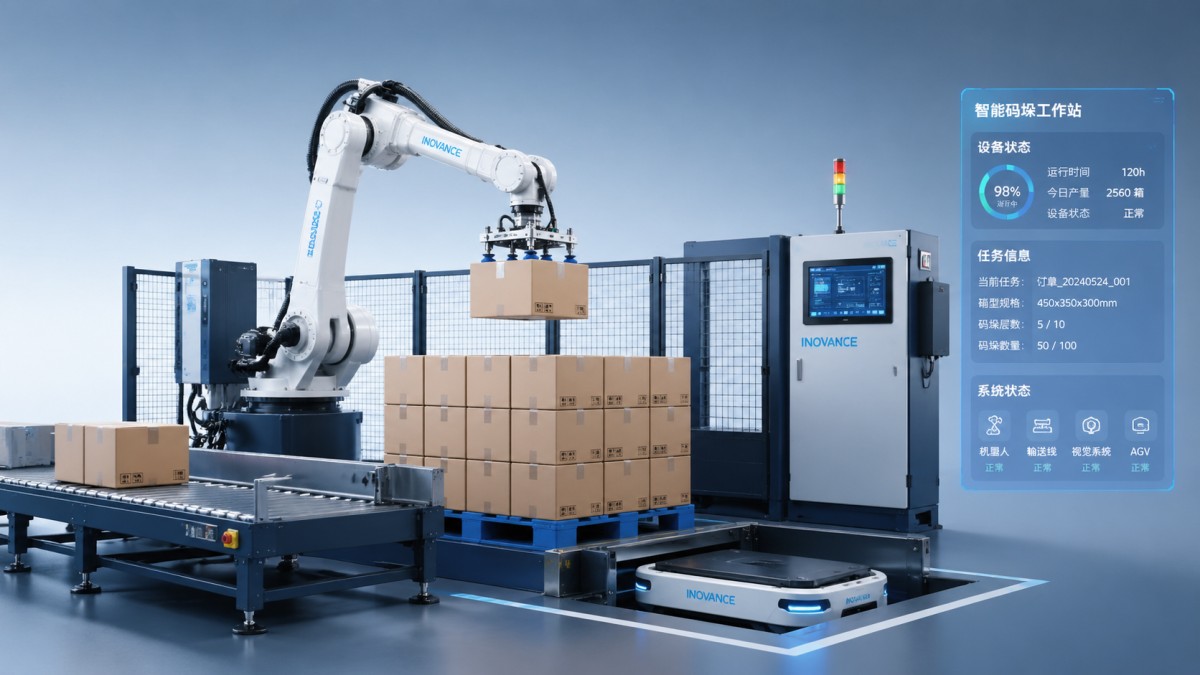
Search intent behind this topic is highly practical. Information researchers want a framework to compare suppliers beyond brochure-level claims. Operators want to know which systems are easier to run and recover after faults. Procurement teams want to reduce implementation risk and avoid expensive change orders. Business decision-makers want to understand which supplier is more likely to deliver uptime, scalability, and faster payback.
That means a useful comparison should not spend too much time on generic definitions of palletizing robots. Instead, it should answer questions such as:
- Why do two systems with similar robot arms perform differently on the factory floor?
- How much does software affect uptime, changeover speed, and labor dependence?
- What should be checked during supplier qualification, FAT, and site acceptance?
- Which software features reduce integration risk with conveyors, vision, AGVs, WMS, or MES systems?
- How can buyers tell whether a supplier has strong real-world application support rather than just strong demos?
For advanced manufacturing teams, this is especially important because hardware platforms across major brands have become more standardized. Payload classes, arm geometries, safety options, and repeatability performance often sit within a relatively narrow band. The meaningful commercial difference comes from how the complete system behaves under production variability.
Why hardware gaps are narrowing while software gaps are growing
The robot arm itself is no longer the full story. Most industrial and collaborative palletizing cells today are built on mature mechanical and servo architectures. A qualified buyer can compare payload, reach, duty cycle, ingress protection, and cobot repeatability tolerance fairly quickly. A 6 axis robot calibration method can also be validated through standard procedures and acceptance testing.
What is harder to standardize is software maturity. This includes the logic that determines how the robot responds to mixed case dimensions, skewed infeed, label orientation, slip sheets, pallet quality variation, upstream stoppages, and downstream congestion. It also includes user interface quality, exception handling, recipe management, alarms, remote diagnostics, and connection to factory systems.
In other words, hardware determines whether the robot can do the job. Software determines whether the system can keep doing the job reliably in real production conditions.
This is why buyers often see a sharp divergence after commissioning. Two suppliers may offer nearly identical robot brands and similar end effectors, yet one system reaches stable output quickly while the other requires weeks of tuning, retraining, and vendor intervention. The reason is often not the arm or motor. It is the software stack, controls architecture, and application engineering behind it.
Which software capabilities actually change uptime and ROI
For procurement and plant teams, not all software claims deserve equal weight. The following capabilities usually have the biggest operational effect.
1. Pallet pattern generation and recipe flexibility
A strong system should allow fast creation and validation of pallet patterns without depending heavily on the supplier for every new SKU. This matters if your business handles frequent packaging changes, seasonal products, or customer-specific pallet requirements. Good software enables operators or engineers to update patterns through guided logic, not custom code.
2. Fault recovery and exception handling
One of the clearest differences between suppliers appears when something goes wrong. Can operators recover from a dropped case, conveyor gap, or misread barcode in minutes? Or does every abnormal event stop the line and require a specialist? Strong recovery logic protects uptime far more than small differences in theoretical cycle speed.
3. Integration with upstream and downstream systems
Palletizing rarely exists as a stand-alone function. It touches conveyors, scanners, checkweighers, wrappers, labelers, AGVs, WMS, and MES platforms. If the supplier lacks mature integration tools, the project can become expensive and slow even when the robot hardware is perfectly suitable. This is where AGV navigation systems factory support and data exchange capability become part of the buying decision.
4. Diagnostics, alarms, and remote support
Better software makes failures visible and actionable. Instead of vague alarms, a well-designed interface tells the operator what happened, what likely caused it, and what to do next. For maintenance teams, remote diagnostics and event logs reduce troubleshooting time. For multi-site enterprises, centralized support tools can significantly lower lifecycle cost.
5. User interface and training burden
If the system is too complex, every staffing change becomes a productivity risk. A good palletizing solution should match the reality of your operator environment. This includes clear HMI design, role-based permissions, simple recipe selection, and practical maintenance guidance. Ease of use is not cosmetic. It directly affects labor efficiency and error rates.
How software quality affects integration with robot arms, servos, and mobile automation
Many buyers separate mechanical selection from controls and software evaluation, but in real projects these layers are tightly connected. Even the best industrial servo motor supplier compatibility means little if the motion profile tuning, fault reporting, and control logic are poorly implemented.
For example, a system may use high-quality servos and a reputable 6 axis arm, yet still produce unstable throughput because acceleration profiles are not optimized for the actual carton mix. A cobot cell may meet repeatability specifications on paper, but underperform in production because the software cannot compensate well for package variability or awkward infeed positioning. An AGV may deliver pallets accurately, but if the handoff logic between mobile robot and palletizer is weak, congestion and idle time increase.
This is why supplier evaluation should include not just component brand names, but also system-level engineering questions:
- How are robot motion paths generated and adjusted?
- How does the system manage variable box dimensions or unstable product flow?
- What happens when upstream timing changes unexpectedly?
- Can the software coordinate safely with AGVs, conveyors, and wrapping stations?
- How much on-site tuning is typically required after installation?
At TSV, this system-level view matters because technical performance in automation is rarely determined by isolated component specifications alone. Parameters matter, but the logic linking those parameters together often determines the real production result.
What procurement teams should ask palletizing robot suppliers before shortlisting
To compare suppliers in a way that reflects real-world value, procurement teams should move beyond generic capability decks and request evidence tied to plant conditions. Useful qualification questions include:
- Can you show examples of installations with similar SKU diversity, throughput, and pallet patterns?
- What functions can plant personnel modify without supplier programming support?
- How does the system recover from missing products, misalignment, or emergency stops?
- Which factory systems have you integrated with before: PLCs, MES, WMS, vision, AGVs?
- What remote diagnostics tools are included, and what data is logged?
- What is the expected commissioning timeline, and what typically delays it?
- How are software updates handled across the system lifecycle?
- What operator training is required for daily running and basic fault recovery?
It is also wise to request a demonstration centered on your use case rather than a generic demo cell. Ask suppliers to walk through a changeover, a common fault scenario, a recipe update, and a restart after a line interruption. These moments expose software maturity much faster than a polished throughput demonstration.
How operators and plant engineers can judge whether a system will be easy to run
For end users, the best software is usually the software that makes complexity manageable. Operators should pay attention to how intuitive the HMI feels, how clearly alarms are written, and whether the system supports guided recovery instead of cryptic troubleshooting steps.
Plant engineers should look at access structure and maintainability. Is there a clean logic architecture? Are change logs and backups handled properly? Can plant teams adjust recipes, pallet patterns, or speed settings safely? Does the supplier provide documentation that reflects the actual installed system rather than a generic manual?
Another practical signal is how the supplier discusses commissioning. Experienced suppliers usually speak in detail about real setup variables: product tolerances, conveyor stability, pallet quality, lighting, communication mapping, and on-site acceptance criteria. Suppliers with weaker software capability often rely on broad claims and avoid discussing fault cases in depth.
Common buying mistakes when software is treated as secondary
One common mistake is selecting a supplier mainly on robot brand familiarity. A well-known arm manufacturer can reduce perceived risk, but it does not guarantee that the application software, HMI, and integration layer are strong.
Another mistake is focusing too heavily on maximum cycle speed. In many palletizing applications, stable throughput, recovery speed, and changeover efficiency matter more than peak speed in ideal conditions. A slightly slower but more recoverable system may create better ROI over time.
A third mistake is underestimating lifecycle dependence on the supplier. If every pattern change, alarm reset, or software adjustment requires vendor intervention, initial savings can disappear quickly. Buyers should assess how much operational autonomy the system gives to the plant.
Finally, some teams do not test software with realistic edge cases before approval. That leaves critical issues undiscovered until startup. A stronger FAT and SAT process should include abnormal conditions, recipe switching, communications loss, and restart behavior.
The practical conclusion: compare suppliers by application software, not just robot hardware
Palletizing robot suppliers differ more in software than hardware because the mechanical side of the market has matured, while the software side still varies widely in design quality, usability, and engineering depth. For buyers, that means the most important comparison is no longer just payload, reach, or repeatability. It is how the full system handles change, faults, integration, and daily operation.
If you are evaluating suppliers, establish hardware fit first. Then spend most of your due diligence on software behavior in real production scenarios. Review recipe management, diagnostics, recovery logic, data connectivity, and commissioning support with the same rigor you apply to robot specs. That is where hidden costs and hidden advantages usually sit.
The suppliers most likely to deliver long-term value are not necessarily the ones with the loudest claims. They are the ones whose software architecture helps your production team maintain uptime, adapt quickly, and reduce reliance on external support. In palletizing, that is often the difference between a machine that works and a system that performs.
Search News
Hot Articles
- Carbon Fiber StructuresHow to Specify Aerospace Carbon Fiber Assemblies for Lightweight, Load-Bearing PartsJul 11, 2026
- Machine VisionXiaomi, Alibaba DAMO Academy Drive Open-Source Robotics Model Ecosystem, Lowering Algorithm Development Barriers for Overseas SMEs Adopting Chinese Robotics SolutionsMar 30, 2026
- Cobots & ArmsShanxi 'AI+' Conference Showcases Embodied Intelligence with Multinational Buyer Engagement: Key Industry ImplicationsMar 30, 2026
Popular Tags
Recommended News
 Jul 11, 2026How to Specify Aerospace Carbon Fiber Assemblies for Lightweight, Load-Bearing PartsAerospace carbon fiber assemblies: learn how to specify laminate design, load data, joining methods, and inspection controls for lighter, reliable load-bearing aerospace parts.Elena Rostova (UAV Systems Researcher)
 Mar 30, 2026Xiaomi, Alibaba DAMO Academy Drive Open-Source Robotics Model Ecosystem, Lowering Algorithm Development Barriers for Overseas SMEs Adopting Chinese Robotics SolutionsXiaomi & Alibaba DAMO Academy's open-source robotics models lower algorithm barriers for global SMEs. Boost efficiency in manufacturing, logistics & smart retail with ROS 2 compatible solutions.TSV Data Lab
 Mar 30, 2026Shanxi 'AI+' Conference Showcases Embodied Intelligence with Multinational Buyer Engagement: Key Industry ImplicationsShanxi 'AI+' Conference highlights embodied intelligence with Tesla, Ubtech & Jiantao showcasing multimodal robotics. 40+ global buyers validated tech on-site, creating new B2B channels for industrial automation & AI solutions.Chen Wei (Automation Lead Engineer)
 Mar 30, 2026Zhongguancun Unveils 6G Integrated Sensing-Computing-Intelligence Platform to Empower Embodied Robots for Global Industrial ApplicationsZhongguancun's new 6G platform revolutionizes industrial robotics with <10ms latency, empowering global automotive, logistics & port automation. Discover how this tech boosts China's smart manufacturing exports.TSV Data Lab
 Mar 30, 2026Mech-Mind Tianjin Embodied Intelligence R&D and Production Base Goes Live, Cutting Delivery Time by 20%–30% for Global Customized AMR+Vision SolutionsMech-Mind's Tianjin AMR+Vision production base cuts delivery time by 20%-30% for欧美 & Latin American markets. Discover how this PLd-certified facility accelerates customized robotics solutions for smart manufacturing and logistics.Chen Wei (Automation Lead Engineer)
 Mar 30, 2026Boao Forum Reveals 'Co-evolution of Big and Small Brains' Trend in Humanoid Robots, China's Embodied Intelligence Accelerates Adaptation to Overseas Manufacturing Service ScenariosDiscover how China's humanoid robots, featuring 'Co-evolution of Big and Small Brains,' are revolutionizing global manufacturing. Learn about Embodied Tian Gong 3.0's ISO compliance and overseas deployment at Boao Forum 2026.Chen Wei (Automation Lead Engineer)
 Mar 30, 2026China Railway Industrial Secures Patent for Embodied Robotics in Material Handling, Boosting High-Precision Delivery Capabilities for Overseas Infrastructure and Manufacturing ProjectsChina Railway Industrial's new patent for embodied robotics in material handling boosts high-precision delivery for global infrastructure & manufacturing. Discover how this innovation enhances logistics accuracy in automotive, rail transit & EPC projects.Chen Wei (Automation Lead Engineer)
 Oct 26, 2026Choosing a SCADA System Integrator Company: PLC Compatibility and Long-Term SupportChoose a scada system integrator company with proven PLC compatibility and reliable long-term support. Discover what to test, compare, and require before investing.Victor Lin (Chief Software Architect)
 Oct 25, 2026Hesai Leads Global ADAS Main Lidar Shipments in Yole’s 2026 ReportHesai led global ADAS main lidar shipments with a 43% share in 2025, according to Yole’s 2026 report. Explore what this ranking reveals about its automotive market position.TSV Data Lab
 Oct 25, 2026Choosing an Aerospace Materials Manufacturer: Quality and Traceability ChecksChoosing an aerospace materials manufacturer? Learn how to verify certifications, test reports, and lot traceability to qualify suppliers confidently and reduce costly sourcing risks.Dr. Marcus Vance
 Oct 24, 2026Guotai Haitong: Global Entry-Level 3D Printer Shipments Rose 39% in Q1 2026Entry-level 3D printer shipments rose 39% in Q1 2026, Guotai Haitong reports. Explore how AI, multicolor printing and print farms are shaping market growth.Dr. Marcus Vance
 Oct 24, 2026Choosing an Industrial Vision Inspection Supplier: Acceptance Tests That MatterChoose an industrial vision inspection supplier with confidence. Discover acceptance tests for defect detection, false rejects, production speed, and reliable part rejection before you buy.TSV Data Lab
 Oct 23, 2026US Navy Raises Gecko Robotics Contract Ceiling to $300M for Robotic Fleet MaintenanceUS Navy raises Gecko Robotics’ contract ceiling to $300M for Pacific Fleet robotic inspections. Explore potential opportunities for maintenance suppliers and key procurement considerations.Chen Wei (Automation Lead Engineer)
 Oct 23, 2026Choosing Industrial Sensing Systems for Global Plants: Protocol CompatibilityCompare industrial sensing systems international buyers can trust. Explore protocol compatibility, reduce integration risks, and select proven configurations for reliable global plant deployments.TSV Data Lab
 Oct 22, 2026KUKA Showcases Physical AI and iiQKA.AI Vision at NVIDIA GTC BerlinExplore KUKA’s Physical AI showcase at NVIDIA GTC Berlin and discover how iiQKA.AI Vision aims to simplify robotic vision integration and improve 2D and 3D scene recognition.TSV Data Lab
 Oct 22, 2026Robotic Machining of Advanced Composites: What Tolerances Are Achievable?Explore advanced materials machining robotics: discover what drives achievable composite tolerances and how to validate accuracy before investing in your next machining system.Dr. Marcus Vance
 Oct 21, 2026China’s Industrial Robot Exports Near RMB 10 Billion in First Nine Months of 2026China’s industrial robot exports neared RMB 10 billion in January–September 2026, with value rising faster than volume. Explore the data and what it could mean for suppliers.Chen Wei (Automation Lead Engineer)
 Oct 21, 2026Low-Latency Industrial Data Processing: Pricing and Key Cost DriversExplore industrial data latency price drivers, from edge hardware to integration and support. Learn how to compare quotes, verify performance, and avoid unnecessary costs.TSV Data Lab
 Oct 20, 2026KUKA Launches iiQKA.AI Vision to Simplify Industrial Image ProcessingKUKA iiQKA.AI Vision simplifies industrial image processing with controller-based 2D and 3D vision. Explore drag-and-drop setup for vision-guided automation.TSV Data Lab
 Oct 20, 2026Smart Industrial Edge Devices: Key Criteria for Legacy PLC IntegrationChoose smart industrial edge devices for legacy PLC integration. Discover key criteria for compatibility, data quality, security, and reliable collection without disrupting control.TSV Data Lab
 Oct 19, 2026Choosing a Radar Sensor by Application: Range, Resolution, and Field of ViewSimplify radar sensor application based product selection. Compare range, resolution, and field of view to avoid blind spots and choose with confidence. Explore the guide.TSV Data Lab
 Oct 18, 2026Comparing Material Options for Procurement: Specs, Costs, and Supply RisksExplore procurement oriented technical content on material options, specs, costs, and supply risks. Compare alternatives to cut hidden expenses and make confident sourcing decisions.Dr. Marcus Vance
 Oct 17, 20265-Axis CNC Positioning Accuracy: How to Interpret ISO 230-2 Test ResultsAssess 5 axis CNC machining positioning accuracy with ISO 230-2. Learn to interpret repeatability, reversal error, and test conditions to compare suppliers and make confident acceptance decisions.Dr. Marcus Vance
 Oct 16, 2026Choosing a Rugged Edge AI Box Supplier: Thermal Tests and Lifecycle SupportChoose a rugged edge AI box supplier with proven thermal performance and reliable lifecycle support. Discover the tests and commitments to verify before you buy.TSV Data Lab























