
Is a robotic arm for injection molding worth the upgrade
Publication Date
author
For finance approvers, the real question is not whether a robotic arm for injection molding looks advanced, but whether it delivers measurable ROI. When labor costs, cycle time, scrap rates, and uptime are quantified against capital outlay, the upgrade becomes a data-driven investment decision rather than a factory-floor trend. This analysis examines where the numbers justify adoption—and where they do not.
What does a robotic arm for injection molding actually improve?
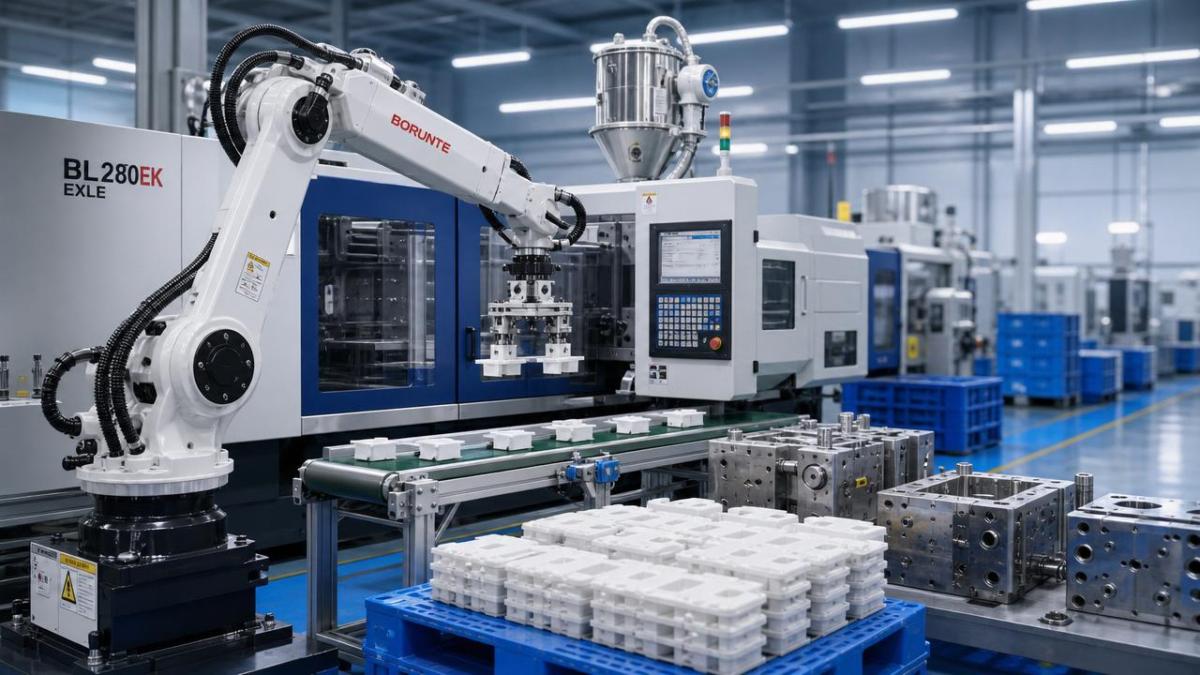
A robotic arm for injection molding usually handles part removal, sprue picking, insert loading, stacking, and transfer between stations.
Its value comes from consistency, not visual automation appeal. Stable motion reduces variation between cycles and limits manual handling errors.
In many plants, the first gain is shorter cooling-related delay. Parts leave the mold faster and more predictably.
The second gain is labor redeployment. Repetitive extraction tasks shift from operators to programmed motion.
The third gain is quality protection. Hot parts are less likely to be scratched, dropped, or deformed during removal.
For TSV-style engineering review, the right baseline includes cycle time variance, reject rate, stoppage minutes, and operator intervention frequency.
Common performance areas affected
- Part take-out time and total cycle time
- Scrap from handling marks or inconsistent removal
- Machine utilization during shift changes and breaks
- Safety exposure near moving molds
- Repeatability in insert molding or overmolding tasks
When is a robotic arm for injection molding worth the upgrade?
A robotic arm for injection molding is usually worth the upgrade when output is stable, shifts are continuous, and process repetition is high.
High-volume molding is the clearest case. Even a small cycle reduction compounds across thousands of shots.
Labor-sensitive regions also see faster payback. If manual extraction requires dedicated staffing on each press, savings accumulate quickly.
The upgrade also makes sense for delicate parts. Thin-wall, cosmetic, medical-adjacent, and precision components benefit from repeatable handling.
Insert molding is another strong fit. Manual placement often creates alignment variation, especially across long production runs.
A robotic arm for injection molding may be less attractive for unstable tooling, frequent mold changes, or short runs with low annual volume.
Good-fit conditions
- Three-shift or near-continuous production
- Repeated part geometry with predictable ejection
- High scrap cost per defective part
- Safety concerns around manual part removal
- Secondary operations needing consistent transfer
Weak-fit conditions
- Frequent product switching with limited setup discipline
- Very low output cells
- Unreliable end-of-arm tooling maintenance
- Poor mold repeatability masking automation benefits
How should ROI for a robotic arm for injection molding be calculated?
Start with total installed cost, not purchase price alone. Include integration, end-of-arm tooling, safety hardware, programming, and training.
Then quantify annual benefit in four buckets: labor reduction, cycle-time improvement, scrap reduction, and uptime improvement.
Labor is easiest. Count direct hours removed or redeployed, then apply full burdened hourly cost.
Cycle-time benefit needs discipline. Multiply saved seconds per cycle by annual cycle count, then convert to extra available machine hours.
Scrap savings should include material, machine time, regrind penalties, and customer quality risk where applicable.
Uptime gains often come from fewer pauses, fewer missed picks, and steadier operation during staffing gaps.
A simple payback model works well for initial screening. More advanced reviews can use NPV, IRR, and sensitivity ranges.
Basic ROI formula
Annual net benefit = labor savings + scrap savings + uptime value + cycle-time value − annual maintenance costs.
Payback period = total installed cost ÷ annual net benefit.
Practical caution
Do not count theoretical output gains if downstream packing, inspection, or drying capacity cannot support higher throughput.
Which hidden costs or risks can weaken the business case?
The largest hidden risk is underestimating integration complexity. A robotic arm for injection molding must match mold opening timing, ejector behavior, and downstream handling.
End-of-arm tooling is another cost trap. Grippers that work for one geometry may fail on another due to heat, flash, or surface sensitivity.
Programming time matters more than expected. Changeovers can become slower if recipes, positions, and tooling standards are not documented.
Maintenance discipline is critical. Pneumatic leaks, worn vacuum cups, misaligned sensors, and cable fatigue reduce availability over time.
A robotic arm for injection molding also depends on process stability. If mold temperature control is inconsistent, automation may reveal deeper process flaws rather than solve them.
Typical overlooked items
- Safety fencing, light curtains, or interlocks
- Compressed air and vacuum utility upgrades
- Spare grippers, sensors, and wear parts
- Operator and technician training time
- Production loss during commissioning
How does a robotic arm for injection molding compare with manual handling?
Manual handling remains flexible. It adapts quickly to part changes, unusual defects, and temporary production experiments.
However, manual removal is harder to standardize. Speed varies by person, shift, fatigue level, and surrounding workload.
A robotic arm for injection molding offers repeatability that manual methods rarely sustain over long runs.
The tradeoff is flexibility versus engineered consistency. The better choice depends on volume, part sensitivity, and changeover frequency.
What should be checked before approving the upgrade?
Before approving a robotic arm for injection molding, verify that the molding process is already stable enough to automate.
Check mold repeatability, ejection reliability, part temperature at take-out, and the real frequency of operator intervention.
Request a documented cycle study, not a brochure claim. The study should show current state, expected state, and assumptions.
It also helps to run a sensitivity review. Test payback under conservative, expected, and optimistic output scenarios.
For broader industrial operations, alignment with maintenance capability matters as much as hardware specification.
Pre-approval checklist
- Document current cycle time and variance
- Measure handling-related scrap for at least one full production period
- List all mold families the robot must support
- Estimate commissioning downtime and recovery plan
- Confirm spare parts and service response expectations
Quick FAQ summary table
A robotic arm for injection molding is worth the upgrade when measurable savings are real, sustained, and supported by process discipline.
The strongest cases combine stable production, clear labor pressure, quality sensitivity, and realistic integration planning.
The weakest cases rely on vague productivity claims or ignore mold instability, maintenance readiness, and hidden commissioning costs.
Use a data-first review: benchmark current performance, model conservative payback, and validate each expected gain against actual plant constraints.
That approach turns the robotic arm for injection molding decision from automation fashion into engineering truth backed by operational evidence.
Search News
Hot Articles
- Carbon Fiber StructuresHow to Specify Aerospace Carbon Fiber Assemblies for Lightweight, Load-Bearing PartsJul 11, 2026
- Machine VisionXiaomi, Alibaba DAMO Academy Drive Open-Source Robotics Model Ecosystem, Lowering Algorithm Development Barriers for Overseas SMEs Adopting Chinese Robotics SolutionsMar 30, 2026
- Cobots & ArmsShanxi 'AI+' Conference Showcases Embodied Intelligence with Multinational Buyer Engagement: Key Industry ImplicationsMar 30, 2026
Popular Tags
Recommended News
 Jul 11, 2026How to Specify Aerospace Carbon Fiber Assemblies for Lightweight, Load-Bearing PartsAerospace carbon fiber assemblies: learn how to specify laminate design, load data, joining methods, and inspection controls for lighter, reliable load-bearing aerospace parts.Elena Rostova (UAV Systems Researcher)
 Mar 30, 2026Xiaomi, Alibaba DAMO Academy Drive Open-Source Robotics Model Ecosystem, Lowering Algorithm Development Barriers for Overseas SMEs Adopting Chinese Robotics SolutionsXiaomi & Alibaba DAMO Academy's open-source robotics models lower algorithm barriers for global SMEs. Boost efficiency in manufacturing, logistics & smart retail with ROS 2 compatible solutions.TSV Data Lab
 Mar 30, 2026Shanxi 'AI+' Conference Showcases Embodied Intelligence with Multinational Buyer Engagement: Key Industry ImplicationsShanxi 'AI+' Conference highlights embodied intelligence with Tesla, Ubtech & Jiantao showcasing multimodal robotics. 40+ global buyers validated tech on-site, creating new B2B channels for industrial automation & AI solutions.Chen Wei (Automation Lead Engineer)
 Mar 30, 2026Zhongguancun Unveils 6G Integrated Sensing-Computing-Intelligence Platform to Empower Embodied Robots for Global Industrial ApplicationsZhongguancun's new 6G platform revolutionizes industrial robotics with <10ms latency, empowering global automotive, logistics & port automation. Discover how this tech boosts China's smart manufacturing exports.TSV Data Lab
 Mar 30, 2026Mech-Mind Tianjin Embodied Intelligence R&D and Production Base Goes Live, Cutting Delivery Time by 20%–30% for Global Customized AMR+Vision SolutionsMech-Mind's Tianjin AMR+Vision production base cuts delivery time by 20%-30% for欧美 & Latin American markets. Discover how this PLd-certified facility accelerates customized robotics solutions for smart manufacturing and logistics.Chen Wei (Automation Lead Engineer)
 Mar 30, 2026Boao Forum Reveals 'Co-evolution of Big and Small Brains' Trend in Humanoid Robots, China's Embodied Intelligence Accelerates Adaptation to Overseas Manufacturing Service ScenariosDiscover how China's humanoid robots, featuring 'Co-evolution of Big and Small Brains,' are revolutionizing global manufacturing. Learn about Embodied Tian Gong 3.0's ISO compliance and overseas deployment at Boao Forum 2026.Chen Wei (Automation Lead Engineer)
 Mar 30, 2026China Railway Industrial Secures Patent for Embodied Robotics in Material Handling, Boosting High-Precision Delivery Capabilities for Overseas Infrastructure and Manufacturing ProjectsChina Railway Industrial's new patent for embodied robotics in material handling boosts high-precision delivery for global infrastructure & manufacturing. Discover how this innovation enhances logistics accuracy in automotive, rail transit & EPC projects.Chen Wei (Automation Lead Engineer)
 Sep 29, 2026ISO 9283 Repeatability: How to Evaluate Cobot Positioning PerformanceISO 9283 cobot repeatability explained: learn how payload, reach, approach direction, and test conditions affect positioning performance and cell capability.Chen Wei (Automation Lead Engineer)
 Sep 28, 2026Spindle Runout Measurement in Germany: DIN Standards, Methods, and Acceptance LimitsSpindle runout measurement Germany: explore DIN standards, proven methods, acceptance limits, and audit-ready practices for reliable machining quality.Dr. Marcus Vance
 Sep 27, 2026How to Select Wall-Mount Edge Devices for Space-Constrained Factory NetworksWall mount edge devices for space-constrained factories: evaluate workload, thermal design, power resilience, cable access, and network reliability for smarter deployments.TSV Data Lab
 Sep 26, 2026Machining Tolerance Analysis: How to Set Limits That Meet Function and Cost TargetsMachining tolerance analysis: learn how to set functional limits, control tolerance stacks, reduce inspection risk, and balance precision with production cost.Dr. Marcus Vance
 Sep 25, 2026How to Evaluate an Industrial Infrastructure Data Platform for Multi-Site OperationsIndustrial infrastructure data platform evaluation guide for multi-site operations: compare data quality, edge resilience, interoperability, governance, and scalable proof-of-value criteria.Victor Lin (Chief Software Architect)
 Sep 24, 2026How to Select Machine Vision Optics for Accurate Inspection at Different Working DistancesMachine vision optics selection guide for accurate inspection at every working distance. Compare FOV, pixel scale, DOF, distortion, lighting, and telecentric options.TSV Data Lab
 Sep 23, 2026How to Evaluate a Machine Vision System Integrator for High-Speed Inspection LinesChoose a machine vision system integrator with proven expertise in high-speed inspection, reliable reject timing, robust optics, and measurable acceptance criteria.TSV Data Lab
 Sep 28, 2026When is a SCADA API the right choice for connecting plant systems?SCADA API guide: learn when governed plant data integration improves traceability, security, and scalability—without compromising real-time control.Victor Lin (Chief Software Architect)
 Sep 27, 2026How SCADA data integration improves traceability across production linesSCADA data integration connects production-line data to improve traceability, accelerate quality investigations, and strengthen safety decisions.Victor Lin (Chief Software Architect)
 Sep 26, 2026What to define before starting SCADA integration planningSCADA integration planning starts with clear scope, control boundaries, data models, cybersecurity, and testing. Discover the definitions that reduce risk and costly rework.Victor Lin (Chief Software Architect)
 Sep 25, 2026How a smart factory with Industrial IoT reduces production blind spotsDiscover how a smart factory with Industrial IoT turns real-time machine, quality, and workflow data into actionable insights that reduce production blind spots and delivery risks.Victor Lin (Chief Software Architect)
 Sep 24, 2026When does Industrial IoT make smart manufacturing easier to scale?Smart manufacturing Industrial IoT scales when trusted data, interoperable systems, and secure workflows turn connected assets into measurable gains.TSV Data Lab
 Sep 23, 2026What drives ultra-precision machining cost at 1-micron tolerance?Ultra precision machining cost per part at 1 micron tolerance depends on process, material, metrology, and yield. Learn how to compare quotes confidently.Dr. Marcus Vance
 Sep 22, 2026Drone Engine-T550CC Applications: Build the UAV Power System Around the MissionAn application guide for Drone Engine-T550CC integration, covering payload planning, airframe matching, cooling, fuel, vibration, test procedures, documentation, and service preparation.Elena Rostova (UAV Systems Researcher)
 Sep 22, 2026How to Evaluate Industrial Edge Computing Vendors for Factory DeploymentIndustrial edge computing vendor evaluation guide for factories: compare latency, protocol fit, reliability, security, and lifecycle support before deployment.TSV Data Lab
 Sep 21, 2026Drone Payload Integration: Matching Power, Data, and Center of Gravity for Reliable FlightsDrone payload integration made practical: balance power, data, center of gravity, and endurance to build safer, more reliable mission-ready flights.Elena Rostova (UAV Systems Researcher)
 Sep 20, 2026Autonomous Navigation Pricing: Cost Drivers and Budget Benchmarks for AMR ProjectsAutonomous navigation price explained: compare AMR cost drivers, software, sensors, integration, safety, and lifecycle budgets to build a scalable project plan.Chen Wei (Automation Lead Engineer)























