Semiconductor Cleanroom Monitoring System Basics for Stable Compliance
Publication Date
author
In semiconductor manufacturing, even minor shifts in particles, pressure, or humidity can trigger yield loss and compliance risk. A semiconductor cleanroom monitoring system gives quality and safety teams the real-time visibility needed to control critical environments, verify standards, and respond before deviations escalate. Understanding its basics is essential for stable operations, audit readiness, and data-driven process confidence.
Why does a semiconductor cleanroom monitoring system matter so much in daily compliance work?
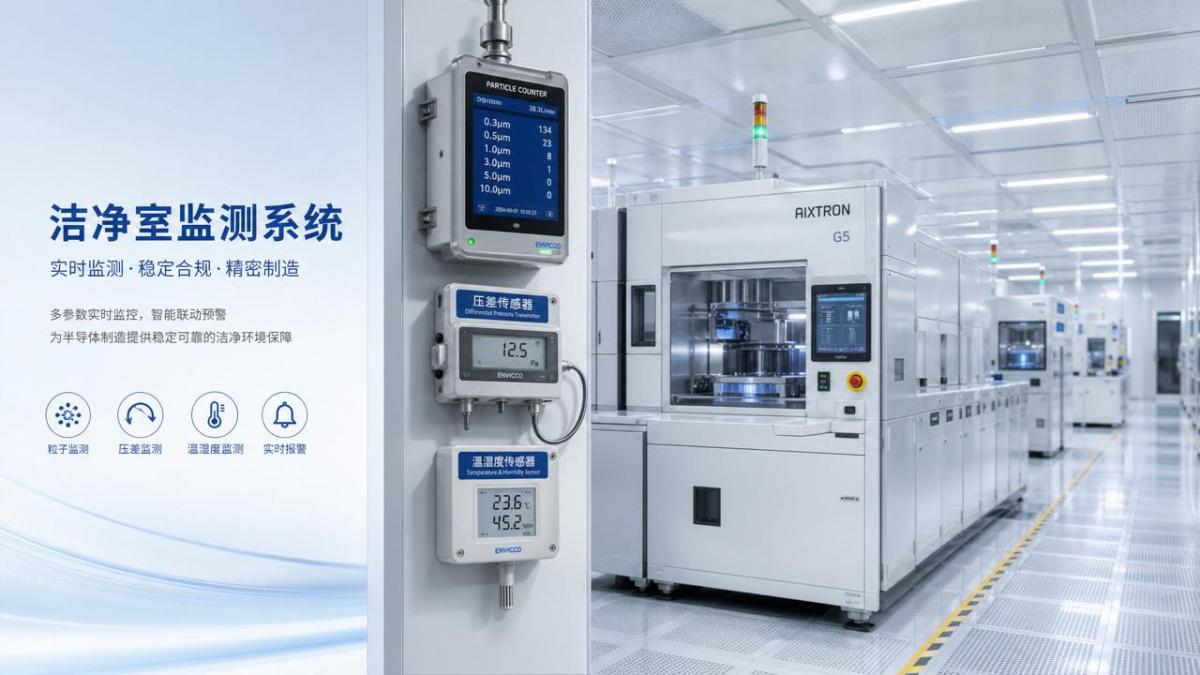
For quality control and safety managers, the cleanroom is not just a controlled space. It is a production condition that directly affects process stability, operator behavior, equipment performance, and final wafer quality. A semiconductor cleanroom monitoring system helps translate invisible environmental variation into measurable signals that can be trended, reviewed, and acted on within minutes rather than after a batch failure.
The core value is simple: continuous monitoring supports continuous control. In many facilities, manual logging every 2–4 hours is still used for some checkpoints, but that interval is often too wide for semiconductor operations where particle spikes, pressure drift, or humidity deviation can develop quickly. Real-time data capture reduces the gap between deviation occurrence and corrective response.
This is also where many procurement teams get misled. Vendor language may emphasize dashboards, smart platforms, or digital transformation, while overlooking the harder engineering questions: sensor accuracy, alarm latency, calibration intervals, audit trail integrity, and integration with existing Building Management Systems or Manufacturing Execution Systems. For TSV, parameters matter more than slogans because tolerances define whether the system is useful under real operating pressure.
In practice, a semiconductor cleanroom monitoring system supports three operational goals at once: stable production, documented compliance, and faster root-cause investigation. When environmental data is synchronized with shift records, equipment events, and maintenance actions, teams can shorten deviation review cycles from several days to a few hours in many routine investigations.
What quality and safety teams usually need visibility on
- Particle concentration trends in critical zones, especially around lithography, etching, deposition, and packaging transition areas.
- Differential pressure status between rooms, airlocks, and corridors to prevent contamination migration and loss of room classification.
- Temperature and relative humidity stability, often reviewed every shift and trended weekly or monthly for process consistency.
- Alarm acknowledgment records, user actions, calibration history, and data retention for internal audits and external customer reviews.
When these elements are monitored in one structured platform, the semiconductor cleanroom monitoring system becomes more than a utility tool. It becomes a compliance evidence layer and an operational decision layer, which is especially important for sites handling multi-tool, multi-shift, and multi-zone semiconductor workflows.
What are the basic components of a semiconductor cleanroom monitoring system?
A reliable semiconductor cleanroom monitoring system is usually built from four layers: sensing hardware, data acquisition, alarm and visualization software, and validation or compliance documentation. Many selection mistakes happen because buyers focus on the software screen while underestimating sensor placement logic, communication stability, and the maintenance burden across 12 months to 36 months of operation.
At the sensing layer, the most common monitored variables include airborne particle counts, differential pressure, temperature, relative humidity, airflow, and sometimes vibration or volatile compounds depending on process sensitivity. Not every zone needs the same depth of instrumentation. Critical process rooms, gowning areas, pass-throughs, and return-air points often require different sampling densities and alarm thresholds.
At the system layer, teams should evaluate whether the platform supports 24/7 logging, timestamp synchronization, role-based access, and configurable alarms. A good system should support immediate local alerts and centralized review. In a medium-sized facility, that may mean tens of monitoring points; in larger fabs, it can scale to hundreds of points across production, utility, and support spaces.
The table below summarizes the baseline building blocks that quality and safety teams should verify before comparing brands or configurations. This is where a semiconductor cleanroom monitoring system should be judged by measurable function rather than generalized marketing claims.
A system with strong software but weak sensor governance often creates false confidence. Conversely, high-grade sensors without usable reporting can slow investigations and audits. The best semiconductor cleanroom monitoring system is one where field performance, data integrity, and review workflow are balanced from the beginning.
Basic architecture questions worth asking early
Sensor network density
How many points are required per room or zone? The answer depends on room size, process criticality, airflow pattern, and contamination risk. Over-instrumentation raises cost and calibration workload, while under-instrumentation creates blind spots. A practical approach is to define 3 classes of area: critical process, supporting controlled area, and low-risk transition space.
Alarm logic design
Will alarms trigger on a single out-of-limit reading, or after a short persistence window such as 30 seconds to 5 minutes? This matters because excessive nuisance alarms can reduce operator trust. Alarm logic should separate brief disturbance from sustained deviation without hiding meaningful process risk.
Data retention and review
Can the facility review data by batch, shift, room, or event type? Teams commonly need at least daily dashboards, weekly trends, monthly compliance summaries, and exportable investigation records. The cleaner the retrieval workflow, the lower the administrative burden during customer audits or internal CAPA reviews.
Which parameters deserve the closest attention in semiconductor environments?
Not all parameters carry equal risk in every semiconductor area. A semiconductor cleanroom monitoring system should reflect process sensitivity rather than using one standard template across all rooms. Particle counts may dominate concern in lithography and wafer handling zones, while differential pressure and humidity can become equally critical in gowning interfaces, chemical support areas, and storage locations.
Quality teams should build monitoring priorities around failure modes. If yield excursions have historically aligned with seasonal humidity swings, then tighter trending and alert review for relative humidity may deliver more value than adding non-critical sensors elsewhere. If contamination ingress is the issue, pressure cascade and door-opening correlation become the higher-value controls.
The table below provides a practical parameter view for procurement and compliance discussion. Exact limits must be set by the facility’s process design, cleanroom classification, and internal specifications, but these categories help define what a semiconductor cleanroom monitoring system should be able to capture and report consistently.
For many sites, the most effective review routine includes 4 layers: live alarm handling, end-of-shift summary, weekly trend assessment, and monthly management review. That cadence helps a semiconductor cleanroom monitoring system support both operational action and documented governance.
Common risk patterns behind parameter deviation
- Pressure drift after filter loading, fan adjustment, or repeated door traffic during peak movement periods.
- Humidity instability during seasonal transitions, utility fluctuations, or extended shutdown and restart cycles.
- Particle spikes linked to maintenance work, gowning nonconformance, material transfer, or localized airflow disturbance.
- Temperature excursions caused by HVAC balancing issues, equipment heat load changes, or sensor drift over long service intervals.
These patterns show why trend visibility matters as much as the instantaneous value. A semiconductor cleanroom monitoring system should help users identify whether a deviation is isolated, repetitive, seasonal, or tied to a specific operational trigger.
How should buyers compare systems without getting lost in marketing language?
The buying challenge is rarely about whether monitoring is needed. It is about how to compare platforms fairly when vendors emphasize different strengths. Some focus on analytics, some on hardware reliability, and some on service response. For procurement, QC, and EHS teams, the answer is to score the semiconductor cleanroom monitoring system against operational use cases rather than brochure claims.
A practical comparison model uses 5 decision dimensions: measurement reliability, compliance support, integration fit, maintenance burden, and implementation risk. This helps keep the evaluation anchored in day-to-day plant realities. It also aligns with TSV’s engineering-first approach: compare what can be validated, not what is merely advertised.
Before reviewing quotations, define your plant profile in basic terms: number of rooms, number of monitoring points, whether retrofitting is required, target implementation window such as 4–8 weeks or 8–16 weeks, and whether software must integrate with existing BMS, SCADA, or historian layers. These inputs significantly influence total project suitability.
A practical selection checklist for a semiconductor cleanroom monitoring system
- Confirm the critical parameters and alarm philosophy first. Do not start with screen design or dashboard preference.
- Map the number of monitoring points by room type and classify them into must-have, recommended, and optional channels.
- Review sensor maintenance intervals, calibration access, and spare strategy for 12-month and 24-month operation.
- Check how audit trails, user permissions, and deviation reports are generated and exported for review teams.
- Evaluate implementation constraints such as shutdown windows, cabling routes, network policy, and validation documentation needs.
The following comparison table can help non-design specialists align technical discussion with procurement decisions. It is especially useful when two vendors appear similar on price but differ significantly in lifecycle effort and compliance readiness.
If two options look close, ask which one makes deviation handling simpler 6 months later, not just which one installs faster next month. That perspective usually leads to a better semiconductor cleanroom monitoring system decision for regulated and high-yield environments.
What implementation and compliance steps should teams plan for?
Even a well-selected semiconductor cleanroom monitoring system can disappoint if implementation planning is weak. Quality and safety teams should expect the project to move through 4 basic stages: requirements definition, installation and configuration, verification and training, and ongoing review. The duration may range from a few weeks for a limited retrofit to several months for a wider multi-zone deployment.
During requirements definition, teams should document room hierarchy, critical parameters, alarm limits, data review responsibilities, and retention expectations. This is also the right time to define who owns sensor calibration, who closes alarms, and how deviations are escalated. Without these decisions, the system may generate data but not accountability.
During verification, teams should challenge both normal and abnormal operating conditions. For example, can the system record a door-related pressure drop, issue an alarm, preserve the timestamp, and allow later review by shift, room, and event type? A semiconductor cleanroom monitoring system should prove usable under exception handling, not only under stable conditions.
Implementation steps that reduce audit and startup risk
- Define 6 core documents early: user requirement summary, point list, alarm matrix, calibration plan, review workflow, and change control path.
- Schedule installation around production windows to limit disruption, especially where access to ceiling voids or process-adjacent areas is restricted.
- Train at least 3 user roles separately: operators, QC reviewers, and system administrators, because each group uses the platform differently.
- Set a review cadence such as daily alarm review, weekly trend review, quarterly calibration review, and annual performance reassessment.
Standards and compliance considerations
Facilities commonly align cleanroom operation and monitoring practices with internal quality systems and widely recognized cleanroom guidance, including ISO 14644 series for cleanrooms and controlled environments. Depending on customer requirements, additional data governance expectations may apply to electronic records, audit trails, and controlled changes. Buyers should confirm what documentation the system can support before purchase, not after installation.
This is one reason TSV emphasizes specification-based evaluation. A semiconductor cleanroom monitoring system should be reviewed against actual site obligations: room classification maintenance, investigation traceability, recurring calibration discipline, and practical alarm response workflow. Compliance is sustained through operating detail, not through a generic “smart factory” label.
What are the most common misconceptions, and when should you ask for expert support?
One common misconception is that more sensors automatically mean better control. In reality, excess points without a review plan can create alarm fatigue and expand calibration workload without improving decision quality. Another mistake is assuming that one global alarm threshold is suitable for every room. Semiconductor spaces often require zone-specific logic based on process risk, traffic pattern, and airflow behavior.
A second misconception is treating the semiconductor cleanroom monitoring system as an isolated facilities tool. Quality teams need the data for deviation review. Safety teams need it for environmental assurance. Procurement needs it for lifecycle planning. Engineering needs it for root-cause correlation. The system creates more value when all four functions are considered during design and supplier evaluation.
A third misconception is waiting until an audit finding or yield event to revisit the monitoring strategy. By then, teams are reacting under pressure. A structured review every 6–12 months helps identify whether point placement, alarm settings, data review cadence, or calibration approach still match current production conditions.
FAQ: practical questions from QC and safety teams
How do we know if our current semiconductor cleanroom monitoring system is no longer adequate?
Warning signs include repeated unexplained alarms, frequent manual workarounds, limited trend visibility, missing calibration discipline, or long investigation times after excursions. If it takes more than one shift to reconstruct what happened in a room event, the monitoring setup may be underperforming from a compliance and operational standpoint.
What should be prioritized first when budget is limited?
Start with the highest-risk areas and the 3 most decision-critical parameter groups: particles, differential pressure, and temperature-humidity stability. Then verify that the platform can store data, manage alarms, and support audit review. Expanding from critical zones first is often more effective than spreading a thin monitoring layer across the entire site.
How long does implementation usually take?
For a limited retrofit, planning and deployment may take several weeks. For larger projects with multiple rooms, integration points, validation documents, and scheduled access windows, the timeline often extends into multi-phase delivery. The key variable is not only hardware quantity, but also how much coordination is required with production, facilities, IT, and quality review functions.
What should we ask a supplier before requesting a quotation?
Ask about supported parameters, point scalability, calibration approach, alarm logic options, reporting functions, integration compatibility, spare strategy, and expected maintenance tasks over 12 months. These questions reveal whether the supplier understands the operational burden behind the semiconductor cleanroom monitoring system, not just the installation scope.
Why work with a data-driven technical partner
TechStat Vanguard approaches supplier evaluation and system selection from an engineering evidence perspective. That means focusing on measurable operating parameters, realistic deployment constraints, and traceable decision criteria. For hard-tech environments, that is often the difference between buying a platform that looks modern and selecting a semiconductor cleanroom monitoring system that actually supports stable compliance.
If your team is comparing options, refining specifications, or preparing for a facility upgrade, you can contact TSV for targeted support on parameter confirmation, monitoring point strategy, supplier comparison, implementation planning, integration questions, documentation expectations, and quotation alignment. This kind of early technical filtering can reduce trial-and-error, shorten vendor screening cycles, and help your team make a decision grounded in engineering truth rather than sales noise.
Search News
Hot Articles
- Carbon Fiber StructuresHow to Specify Aerospace Carbon Fiber Assemblies for Lightweight, Load-Bearing PartsJul 11, 2026
- Machine VisionXiaomi, Alibaba DAMO Academy Drive Open-Source Robotics Model Ecosystem, Lowering Algorithm Development Barriers for Overseas SMEs Adopting Chinese Robotics SolutionsMar 30, 2026
- Cobots & ArmsShanxi 'AI+' Conference Showcases Embodied Intelligence with Multinational Buyer Engagement: Key Industry ImplicationsMar 30, 2026
Popular Tags
Recommended News
 Jul 11, 2026How to Specify Aerospace Carbon Fiber Assemblies for Lightweight, Load-Bearing PartsAerospace carbon fiber assemblies: learn how to specify laminate design, load data, joining methods, and inspection controls for lighter, reliable load-bearing aerospace parts.Elena Rostova (UAV Systems Researcher)
 Mar 30, 2026Xiaomi, Alibaba DAMO Academy Drive Open-Source Robotics Model Ecosystem, Lowering Algorithm Development Barriers for Overseas SMEs Adopting Chinese Robotics SolutionsXiaomi & Alibaba DAMO Academy's open-source robotics models lower algorithm barriers for global SMEs. Boost efficiency in manufacturing, logistics & smart retail with ROS 2 compatible solutions.TSV Data Lab
 Mar 30, 2026Shanxi 'AI+' Conference Showcases Embodied Intelligence with Multinational Buyer Engagement: Key Industry ImplicationsShanxi 'AI+' Conference highlights embodied intelligence with Tesla, Ubtech & Jiantao showcasing multimodal robotics. 40+ global buyers validated tech on-site, creating new B2B channels for industrial automation & AI solutions.Chen Wei (Automation Lead Engineer)
 Mar 30, 2026Zhongguancun Unveils 6G Integrated Sensing-Computing-Intelligence Platform to Empower Embodied Robots for Global Industrial ApplicationsZhongguancun's new 6G platform revolutionizes industrial robotics with <10ms latency, empowering global automotive, logistics & port automation. Discover how this tech boosts China's smart manufacturing exports.TSV Data Lab
 Mar 30, 2026Mech-Mind Tianjin Embodied Intelligence R&D and Production Base Goes Live, Cutting Delivery Time by 20%–30% for Global Customized AMR+Vision SolutionsMech-Mind's Tianjin AMR+Vision production base cuts delivery time by 20%-30% for欧美 & Latin American markets. Discover how this PLd-certified facility accelerates customized robotics solutions for smart manufacturing and logistics.Chen Wei (Automation Lead Engineer)
 Mar 30, 2026Boao Forum Reveals 'Co-evolution of Big and Small Brains' Trend in Humanoid Robots, China's Embodied Intelligence Accelerates Adaptation to Overseas Manufacturing Service ScenariosDiscover how China's humanoid robots, featuring 'Co-evolution of Big and Small Brains,' are revolutionizing global manufacturing. Learn about Embodied Tian Gong 3.0's ISO compliance and overseas deployment at Boao Forum 2026.Chen Wei (Automation Lead Engineer)
 Mar 30, 2026China Railway Industrial Secures Patent for Embodied Robotics in Material Handling, Boosting High-Precision Delivery Capabilities for Overseas Infrastructure and Manufacturing ProjectsChina Railway Industrial's new patent for embodied robotics in material handling boosts high-precision delivery for global infrastructure & manufacturing. Discover how this innovation enhances logistics accuracy in automotive, rail transit & EPC projects.Chen Wei (Automation Lead Engineer)
 Oct 28, 2026IDC: Global Quadruped Robot Shipments Rise 92.5% in H1 2026 as Volume and Value DivergeGlobal quadruped robot shipments rose 92.5% in H1 2026, according to IDC. Explore what diverging volume and value trends mean for industrial buyers and manufacturers.Chen Wei (Automation Lead Engineer)
 Oct 28, 2026Interpreting Industrial IoT Latency Data for Monitoring and Real-Time ControlInterpret industrial category latency data to assess jitter, deadline misses, and real-time readiness. Learn how to benchmark IIoT systems and choose monitoring and control solutions.TSV Data Lab
 Oct 27, 2026GXO and Agility Robotics Expand Partnership to Accelerate US Humanoid Robot DeploymentGXO and Agility Robotics plan to expand US humanoid robot deployment with Digit 4 in early 2027. Explore warehouse automation plans, service terms and future Digit 5 upgrades.Chen Wei (Automation Lead Engineer)
 Oct 27, 2026Robotic Automation Costs: Budgeting for Equipment, Integration, and MaintenancePlan your robotics automation cost with confidence. Explore equipment, integration, and maintenance expenses, compare quotes, and build a realistic budget for better ROI.Chen Wei (Automation Lead Engineer)
 Oct 26, 2026AMAXiMAL Releases Open-Source TopMod 3D v3 With Claude AIExplore AMAXiMAL’s free, open-source TopMod 3D v3 with Claude AI assistance, topology-based modeling and plywood fabrication tools that connect complex designs to physical builds.Dr. Marcus Vance
 Oct 26, 2026Choosing a SCADA System Integrator Company: PLC Compatibility and Long-Term SupportChoose a scada system integrator company with proven PLC compatibility and reliable long-term support. Discover what to test, compare, and require before investing.Victor Lin (Chief Software Architect)
 Oct 25, 2026Hesai Leads Global ADAS Main Lidar Shipments in Yole’s 2026 ReportHesai led global ADAS main lidar shipments with a 43% share in 2025, according to Yole’s 2026 report. Explore what this ranking reveals about its automotive market position.TSV Data Lab
 Oct 25, 2026Choosing an Aerospace Materials Manufacturer: Quality and Traceability ChecksChoosing an aerospace materials manufacturer? Learn how to verify certifications, test reports, and lot traceability to qualify suppliers confidently and reduce costly sourcing risks.Dr. Marcus Vance
 Oct 24, 2026Guotai Haitong: Global Entry-Level 3D Printer Shipments Rose 39% in Q1 2026Entry-level 3D printer shipments rose 39% in Q1 2026, Guotai Haitong reports. Explore how AI, multicolor printing and print farms are shaping market growth.Dr. Marcus Vance
 Oct 24, 2026Choosing an Industrial Vision Inspection Supplier: Acceptance Tests That MatterChoose an industrial vision inspection supplier with confidence. Discover acceptance tests for defect detection, false rejects, production speed, and reliable part rejection before you buy.TSV Data Lab
 Oct 23, 2026US Navy Raises Gecko Robotics Contract Ceiling to $300M for Robotic Fleet MaintenanceUS Navy raises Gecko Robotics’ contract ceiling to $300M for Pacific Fleet robotic inspections. Explore potential opportunities for maintenance suppliers and key procurement considerations.Chen Wei (Automation Lead Engineer)
 Oct 23, 2026Choosing Industrial Sensing Systems for Global Plants: Protocol CompatibilityCompare industrial sensing systems international buyers can trust. Explore protocol compatibility, reduce integration risks, and select proven configurations for reliable global plant deployments.TSV Data Lab
 Oct 22, 2026KUKA Showcases Physical AI and iiQKA.AI Vision at NVIDIA GTC BerlinExplore KUKA’s Physical AI showcase at NVIDIA GTC Berlin and discover how iiQKA.AI Vision aims to simplify robotic vision integration and improve 2D and 3D scene recognition.TSV Data Lab
 Oct 22, 2026Robotic Machining of Advanced Composites: What Tolerances Are Achievable?Explore advanced materials machining robotics: discover what drives achievable composite tolerances and how to validate accuracy before investing in your next machining system.Dr. Marcus Vance
 Oct 21, 2026China’s Industrial Robot Exports Near RMB 10 Billion in First Nine Months of 2026China’s industrial robot exports neared RMB 10 billion in January–September 2026, with value rising faster than volume. Explore the data and what it could mean for suppliers.Chen Wei (Automation Lead Engineer)
 Oct 21, 2026Low-Latency Industrial Data Processing: Pricing and Key Cost DriversExplore industrial data latency price drivers, from edge hardware to integration and support. Learn how to compare quotes, verify performance, and avoid unnecessary costs.TSV Data Lab
 Oct 20, 2026KUKA Launches iiQKA.AI Vision to Simplify Industrial Image ProcessingKUKA iiQKA.AI Vision simplifies industrial image processing with controller-based 2D and 3D vision. Explore drag-and-drop setup for vision-guided automation.TSV Data Lab