
How hard is robotic arm programming software?
Publication Date
author
How hard is robotic arm programming software, really? For engineers, operators, buyers, and decision-makers, the answer depends on interface design, deployment environment, and integration with systems like machine vision software license tools, IoT edge gateway software, and AGV AMR workflows. This guide cuts through marketing noise to examine the real learning curve, technical constraints, and procurement factors that determine practical adoption.
In practice, robotic arm programming software is neither universally difficult nor automatically simple. A 4-axis pick-and-place cell with prebuilt templates can be teachable in 2–5 days, while a 6-axis robotic arm integrated with force control, safety PLC logic, vision inspection, and MES data exchange may require 4–12 weeks of engineering work before stable production begins.
That difference matters for every stakeholder. Operators want intuitive workflows and low error rates. Engineers need motion control flexibility, debugging visibility, and deterministic cycle times. Procurement teams must compare licensing, integration cost, and vendor support. Executives want shorter commissioning cycles, lower trial-and-error cost, and measurable ROI within 12–24 months.
At TechStat Vanguard, the useful question is not whether software is “advanced,” but whether it can be deployed with predictable engineering effort. The real benchmark is how quickly a team can move from simulation or teaching mode to repeatable production under known tolerances, safety rules, and maintenance constraints.
What Makes Robotic Arm Programming Software Hard or Easy?
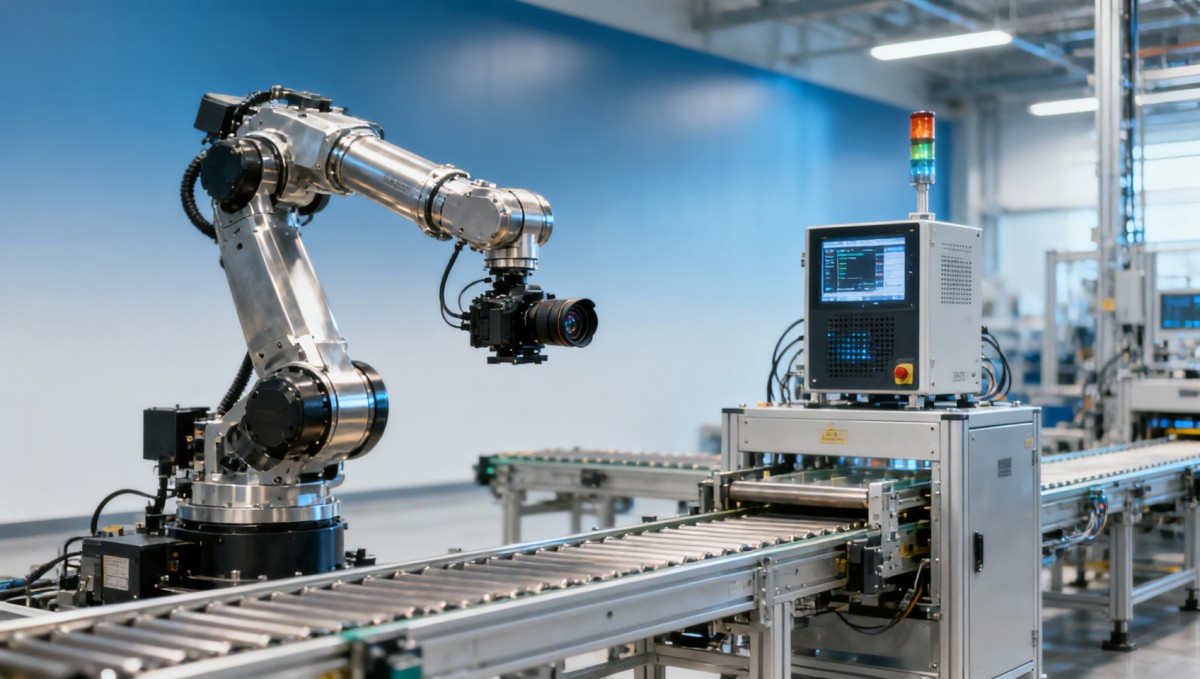
The difficulty of robotic arm programming software is driven by three layers: user interface, motion complexity, and system integration. If the platform supports drag-and-drop job creation, template-based path generation, and guided collision checks, basic deployment becomes easier. If it requires script-heavy logic, frame transformations, and manual exception handling, the learning curve rises quickly.
A common mistake is to judge software by demo speed alone. In a trade-show environment, a robot may complete a loop in 30 seconds with ideal lighting and static fixtures. In production, however, the software must manage I/O mapping, recover from sensor noise, handle part variation of ±0.2 mm to ±1.0 mm, and maintain cycle consistency across 8–16 operating hours per shift.
The second factor is process type. Point-to-point palletizing is usually easier than arc welding, adhesive dispensing, or adaptive bin picking. Once the application requires vision calibration, TCP redefinition, singularity avoidance, path smoothing, and real-time force feedback, programming effort can multiply by 2x to 4x compared with basic handling tasks.
The third factor is team maturity. A plant with one robotics engineer, one controls specialist, and documented SOPs can often commission a new cell within 2–6 weeks. A facility relying only on external integrators may face delays when change requests emerge, especially if software ownership, source access, and training rights were not defined during procurement.
Core variables that change the learning curve
- Robot type: collaborative robots are often easier to teach than high-speed industrial arms, but software depth varies by vendor.
- Task complexity: repetitive pick-and-place can be simple; vision-guided assembly or sanding usually needs more advanced logic.
- Integration stack: machine vision software, PLCs, edge gateways, and AGV AMR dispatch systems add engineering dependencies.
- Change frequency: high-mix, low-volume production needs faster recipe switching than fixed-volume production lines.
The table below shows why different software environments feel “easy” or “hard” in actual deployment rather than in marketing demonstrations.
The key conclusion is simple: robotic arm programming software becomes hard when it must control uncertainty, not when it merely moves a robot. Ease of use should therefore be judged against the production environment, not against a polished demo clip.
The Real Learning Curve for Engineers, Operators, and Maintenance Teams
Different users face different difficulty levels. Operators usually need to start, stop, switch recipes, and recover from common alarms. For that role, effective software should reduce routine training to fewer than 8–16 hours and limit the number of daily-use screens. If basic recipe selection takes 6 clicks on one screen rather than 3 menus across the HMI and robot pendant, adoption improves immediately.
Engineers carry the heavier burden. They must define frames, tune acceleration and blending, synchronize end effectors, validate safe zones, and often troubleshoot inconsistent part presentation. In mixed manufacturing environments, one robotic arm programming software package may also need to communicate with a machine vision software license server, barcode readers, torque tools, and industrial IoT edge gateway software for traceability.
Maintenance teams care about recoverability. If the software logs alarm history, retains job versions, supports rollback within 1–2 revisions, and exposes clear fault trees, downtime can be reduced. If errors surface only as generic code numbers without device-level diagnostics, mean time to recovery may expand from 10 minutes to more than 1 hour.
This is why “easy to program” often means different things to different teams. For operators, it means fewer steps. For engineers, it means fewer hidden dependencies. For maintenance, it means observable logic and predictable restart behavior after a stop, collision, or interrupted part flow.
Typical capability ladder
Level 1: Basic operation
Users can jog the robot, select recipes, run approved programs, and respond to common alarms. Many factories can train this level in 1–3 days if the HMI is well structured and the cell design is stable.
Level 2: Application adjustment
Users can modify waypoints, update part offsets, recalibrate vision references, and change gripper timing. This often takes 1–3 weeks and requires understanding payload, orientation, and path safety.
Level 3: Full engineering
Users can build cells from scratch, integrate third-party devices, manage exception logic, and tune production performance. This level may take 1–3 months depending on prior robotics and controls experience.
The next table helps buyers and plant managers align training expectations with real plant roles instead of assuming one software package will be equally simple for everyone.
For most organizations, the hardest part is not the first successful motion. It is building enough internal competence to maintain uptime, manage product changes, and reduce dependence on outside support during the first 6–18 months of operation.
Integration Complexity: Where Software Projects Often Stall
Many robotic automation projects fail to meet schedule because the robot software is evaluated in isolation. In reality, the programming layer often sits in the middle of a larger automation stack: PLC control, safety logic, machine vision, ERP or MES links, edge data acquisition, and sometimes AGV AMR dispatch for part delivery. Each interface introduces dependencies in timing, protocol compatibility, and fault recovery.
For example, a vision-guided pick cell may look straightforward until calibration drift appears. If the camera-to-robot transform shifts by even 0.5 mm to 1.5 mm, grasp success can drop sharply for small parts. The software must then support recalibration routines, coordinate verification, and exception branches without forcing a full reprogramming cycle every time production restarts.
The same issue appears with IoT edge gateway software. Management may request OEE monitoring, cycle timestamps, alarm history, and traceability logs. If the robot programming platform cannot expose data tags cleanly through OPC UA, Modbus TCP, or vendor APIs, the plant ends up maintaining parallel systems. That adds engineering overhead and increases future change cost.
AGV AMR integration is another hidden multiplier. Once mobile robots deliver trays or pallets to a robotic arm, the programming software must coordinate arrival status, safe zone handshakes, docking confirmation, and timeout rules. A delay of just 20–40 seconds per cycle may not matter in low-volume work, but in high-throughput cells it can erode line efficiency across hundreds of cycles per day.
Four integration checkpoints before purchase
- Confirm protocol support: verify whether the platform supports OPC UA, Ethernet/IP, Profinet, Modbus TCP, or only vendor-specific connectors.
- Check data visibility: ask which runtime variables, logs, cycle counters, and alarm states can be exported without custom middleware.
- Review recovery logic: ensure the cell can restart safely after sensor loss, AGV delay, or operator interruption within defined states.
- Assess version control: determine how programs, recipes, and calibration files are backed up and restored across cells.
A robust procurement review should document not only “can connect” claims, but also engineering effort in hours, typical commissioning sequence, and test conditions needed for acceptance. This is where technical due diligence separates a manageable deployment from a costly integration program.
How Buyers Should Evaluate Robotic Arm Programming Software
Procurement teams often focus on robot payload, reach, and headline price, yet software usually determines long-term cost. A lower upfront quote can become expensive if licenses are fragmented, training is limited to one site, or advanced features such as simulation, offline programming, vision modules, and remote diagnostics are sold separately. Software evaluation should therefore include lifecycle cost over at least 3–5 years.
The first procurement question is licensing structure. Is the robotic arm programming software tied to one controller, one user seat, or one plant? Are updates included for 12 months, 24 months, or not at all? If offline programming requires a separate workstation license and vision integration needs an add-on module, total software cost may rise by 20%–60% above the base quote.
The second question is support depth. For many B2B users, practical value lies in response time, local engineering availability, and documentation quality. A vendor promising “full support” is less useful than one that clearly commits to first response in 4–24 hours, remote diagnostics, spare controller lead times, and named escalation routes for software faults.
The third question is ownership and flexibility. Buyers should confirm access to source project files, recipe management, backup tools, and change logs. If all modifications require the original integrator, the factory may face longer downtime and higher cost each time a gripper changes, a camera is upgraded, or a new SKU is added.
Procurement comparison framework
The table below provides a practical comparison structure for buyers evaluating software complexity and total deployment risk.
For decision-makers, the best software is rarely the one with the longest feature list. It is the platform that delivers acceptable flexibility, low retraining cost, and controlled integration effort under real factory conditions.
Implementation Strategy, Common Mistakes, and Practical FAQ
A practical deployment plan usually follows 5 stages: process definition, digital simulation or feasibility review, integration design, commissioning, and optimization. In many standard applications, this takes 3–8 weeks. In multi-device cells with inspection and traceability, 8–16 weeks is more realistic. Setting these expectations early helps avoid false urgency and rushed acceptance tests.
One frequent mistake is underestimating changeover. A robotic arm programming software package may perform well for one product family, then struggle when 20–50 SKUs require different orientations, grasp points, and inspection tolerances. Recipe architecture, naming rules, and calibration procedures should be designed before ramp-up, not after operators start improvising around exceptions.
Another mistake is neglecting serviceability. Plants often request advanced functions but fail to define who will own backups, versioning, and software updates. A strong deployment standard should include weekly backup checks, monthly log reviews, and at least one validated recovery drill per quarter for critical cells.
For organizations comparing vendors, the right approach is to run a scenario-based review. Ask each supplier to demonstrate not only normal cycle execution, but also blocked part flow, lighting variation, lost handshake with AGV AMR, sensor timeout, and a restart after emergency stop. These cases reveal whether the software is operationally manageable or only visually impressive.
Practical rollout checklist
- Define 3 acceptance layers: motion accuracy, process success rate, and recovery behavior after faults.
- Document at least 5 core alarms with operator actions, technician actions, and escalation timing.
- Verify backup and restore on a non-production unit before go-live.
- Train at least 2 internal users beyond basic operation to avoid single-person dependency.
How long does it take to learn robotic arm programming software?
For simple operating tasks, many users can learn the basics within 1–3 days. For meaningful application adjustment, expect 1–3 weeks. For full engineering ownership across vision, PLC, and data interfaces, 1–3 months is a more realistic planning range.
Is offline programming always easier than teach-pendant programming?
Not always. Offline programming reduces production interruption and supports simulation, but only if the digital model reflects real fixtures, payload, and reach constraints. Poorly maintained models can create false confidence and longer onsite correction time.
What should buyers ask suppliers before purchase?
Ask about licensing scope, included training hours, supported communication protocols, version control, recovery procedures, and the effort required to add a new SKU. Also request a demonstration of alarm handling, not just normal operation.
Which environments make software complexity increase fastest?
Complexity rises fastest in high-mix production, vision-dependent picking, force-sensitive assembly, and cells connected to AGV AMR flow or plant-level traceability systems. In these environments, integration and exception handling matter more than raw robot motion.
Robotic arm programming software is hard when the process is variable, the integration stack is deep, and internal ownership is weak. It becomes manageable when interface design is clear, deployment scope is realistic, and the procurement team evaluates engineering effort instead of brochure language. For manufacturers, integrators, and sourcing teams that want a data-grounded view of automation software readiness, now is the time to benchmark requirements, compare deployment paths, and get a tailored evaluation. Contact us to discuss your application, request a custom solution framework, or explore more hard-tech decision support from TechStat Vanguard.
Search News
Hot Articles
- Carbon Fiber StructuresHow to Specify Aerospace Carbon Fiber Assemblies for Lightweight, Load-Bearing PartsJul 11, 2026
- Machine VisionXiaomi, Alibaba DAMO Academy Drive Open-Source Robotics Model Ecosystem, Lowering Algorithm Development Barriers for Overseas SMEs Adopting Chinese Robotics SolutionsMar 30, 2026
- Cobots & ArmsShanxi 'AI+' Conference Showcases Embodied Intelligence with Multinational Buyer Engagement: Key Industry ImplicationsMar 30, 2026
Popular Tags
Recommended News
 Jul 11, 2026How to Specify Aerospace Carbon Fiber Assemblies for Lightweight, Load-Bearing PartsAerospace carbon fiber assemblies: learn how to specify laminate design, load data, joining methods, and inspection controls for lighter, reliable load-bearing aerospace parts.Elena Rostova (UAV Systems Researcher)
 Mar 30, 2026Xiaomi, Alibaba DAMO Academy Drive Open-Source Robotics Model Ecosystem, Lowering Algorithm Development Barriers for Overseas SMEs Adopting Chinese Robotics SolutionsXiaomi & Alibaba DAMO Academy's open-source robotics models lower algorithm barriers for global SMEs. Boost efficiency in manufacturing, logistics & smart retail with ROS 2 compatible solutions.TSV Data Lab
 Mar 30, 2026Shanxi 'AI+' Conference Showcases Embodied Intelligence with Multinational Buyer Engagement: Key Industry ImplicationsShanxi 'AI+' Conference highlights embodied intelligence with Tesla, Ubtech & Jiantao showcasing multimodal robotics. 40+ global buyers validated tech on-site, creating new B2B channels for industrial automation & AI solutions.Chen Wei (Automation Lead Engineer)
 Mar 30, 2026Zhongguancun Unveils 6G Integrated Sensing-Computing-Intelligence Platform to Empower Embodied Robots for Global Industrial ApplicationsZhongguancun's new 6G platform revolutionizes industrial robotics with <10ms latency, empowering global automotive, logistics & port automation. Discover how this tech boosts China's smart manufacturing exports.TSV Data Lab
 Mar 30, 2026Mech-Mind Tianjin Embodied Intelligence R&D and Production Base Goes Live, Cutting Delivery Time by 20%–30% for Global Customized AMR+Vision SolutionsMech-Mind's Tianjin AMR+Vision production base cuts delivery time by 20%-30% for欧美 & Latin American markets. Discover how this PLd-certified facility accelerates customized robotics solutions for smart manufacturing and logistics.Chen Wei (Automation Lead Engineer)
 Mar 30, 2026Boao Forum Reveals 'Co-evolution of Big and Small Brains' Trend in Humanoid Robots, China's Embodied Intelligence Accelerates Adaptation to Overseas Manufacturing Service ScenariosDiscover how China's humanoid robots, featuring 'Co-evolution of Big and Small Brains,' are revolutionizing global manufacturing. Learn about Embodied Tian Gong 3.0's ISO compliance and overseas deployment at Boao Forum 2026.Chen Wei (Automation Lead Engineer)
 Mar 30, 2026China Railway Industrial Secures Patent for Embodied Robotics in Material Handling, Boosting High-Precision Delivery Capabilities for Overseas Infrastructure and Manufacturing ProjectsChina Railway Industrial's new patent for embodied robotics in material handling boosts high-precision delivery for global infrastructure & manufacturing. Discover how this innovation enhances logistics accuracy in automotive, rail transit & EPC projects.Chen Wei (Automation Lead Engineer)
 Oct 18, 2026Comparing Material Options for Procurement: Specs, Costs, and Supply RisksExplore procurement oriented technical content on material options, specs, costs, and supply risks. Compare alternatives to cut hidden expenses and make confident sourcing decisions.Dr. Marcus Vance
 Oct 17, 20265-Axis CNC Positioning Accuracy: How to Interpret ISO 230-2 Test ResultsAssess 5 axis CNC machining positioning accuracy with ISO 230-2. Learn to interpret repeatability, reversal error, and test conditions to compare suppliers and make confident acceptance decisions.Dr. Marcus Vance
 Oct 16, 2026Choosing a Rugged Edge AI Box Supplier: Thermal Tests and Lifecycle SupportChoose a rugged edge AI box supplier with proven thermal performance and reliable lifecycle support. Discover the tests and commitments to verify before you buy.TSV Data Lab
 Oct 15, 2026R&D Cost Reduction Services: How to Evaluate Fees, Savings, and ROIEvaluate R&D cost reduction services with confidence. Compare fees, verify savings, and calculate ROI without compromising performance. Discover how to choose a provider that delivers real value.Chen Wei (Automation Lead Engineer)
 Oct 17, 2026How Should You Interpret Industrial Robot Repeatability Specs?Decode industrial robot repeatability specifications, understand ISO 9283 test conditions, and avoid costly selection mistakes. Learn how to verify performance for your process.Chen Wei (Automation Lead Engineer)
 Oct 16, 2026How Can You Fairly Compare MTBF Across Industrial Servo Motors?Make a fair industrial servo motor MTBF comparison with matched operating profiles, failure criteria, and confidence bounds. Discover how to assess reliability beyond advertised numbers.Chen Wei (Automation Lead Engineer)
 Oct 15, 2026How Should You Compare TechStat Vanguard 5-Axis CNC Tolerances?TechStat Vanguard 5-axis CNC tolerance comparison: learn how to verify part accuracy, assess inspection evidence, and choose suppliers that reliably meet your drawing requirements.Dr. Marcus Vance
 Oct 14, 2026Drone Frame Composites: Carbon Fiber vs. Fiberglass for Weight and StiffnessExplore drone structural materials composites: compare carbon fiber and fiberglass for weight, stiffness, cost, and antenna compatibility. Find the right material for your drone frame.Elena Rostova (UAV Systems Researcher)
 Oct 13, 2026Smart Cameras vs. PC-Based Machine Vision: Which Fits High-Speed Inspection?This industrial product comparison for machine vision weighs smart cameras vs. PC-based systems on latency, throughput, and cost. Discover your best fit for high-speed inspection.TSV Data Lab
 Oct 12, 2026How to Verify RoHS Compliance in Industrial Sensing Systems Before DeploymentRoHS compliant sensing systems: learn how to verify materials, supplier declarations, testing, and configuration controls before industrial deployment.TSV Data Lab
 Oct 11, 2026How Procurement-Oriented Content Taxonomy Improves B2B Buying JourneysProcurement-oriented content taxonomy streamlines B2B buying journeys with clearer evidence, supplier comparisons, risk visibility, and faster approvals.TSV Data Lab
 Oct 10, 2026How to Select a Machine Performance Monitoring Platform for OEE and Downtime ReductionMachine performance monitoring platform selection guide: validate machine states, OEE data, downtime reasons, integrations, and scalability to reduce losses with confidence.TSV Data Lab
 Oct 08, 2026How to Machine Inconel 625 Blades Without Heat Cracks or Edge ChippingInconel 625 blade machining guide: prevent heat cracks, edge chipping, chatter, and work hardening with proven tooling, cooling, fixturing, and inspection strategies.Dr. Marcus Vance
 Oct 07, 2026How to Evaluate an HMI Panel Distributor for Industrial Automation ProjectsHMI panel distributor evaluation guide: verify technical compatibility, traceability, supply reliability, lifecycle support, and total cost for automation projects.Victor Lin (Chief Software Architect)
 Oct 06, 2026Navigation Fault Tolerance Standards for AMRs: What Safety Teams Must VerifyNavigation fault tolerance standards: learn what AMR safety teams must verify, from localization loss and sensor faults to stopping distance, safe restart, and site-specific validation.Chen Wei (Automation Lead Engineer)
 Oct 05, 2026Calculating Edge Computing Total Cost of Ownership Across Distributed SitesEdge computing ownership cost explained: calculate deployment, energy, connectivity, security, remote support, and refresh costs across distributed sites.TSV Data Lab
 Oct 04, 2026CAD/CAM Benchmarking in the GCC: What Manufacturers Should Ask a ConsultantCAD CAM benchmark consultant GCC guide: learn the key questions manufacturers should ask to validate post-processors, workflows, machine performance, and production risk.Victor Lin (Chief Software Architect)























