What to check in industrial ethernet switch PCBA?
Publication Date
author
When evaluating industrial ethernet switch PCBA, decision-makers should look beyond marketing claims and focus on measurable engineering factors: signal integrity, EMC resistance, thermal design, component traceability, and long-term reliability. For buyers comparing a din rail pc manufacturer, industrial raspberry pi compute module, or iot edge gateway software ecosystem, understanding these PCB assembly checkpoints helps reduce sourcing risk, speed qualification, and ensure stable performance in demanding industrial networks.
Why industrial ethernet switch PCBA checks matter more than brochure claims
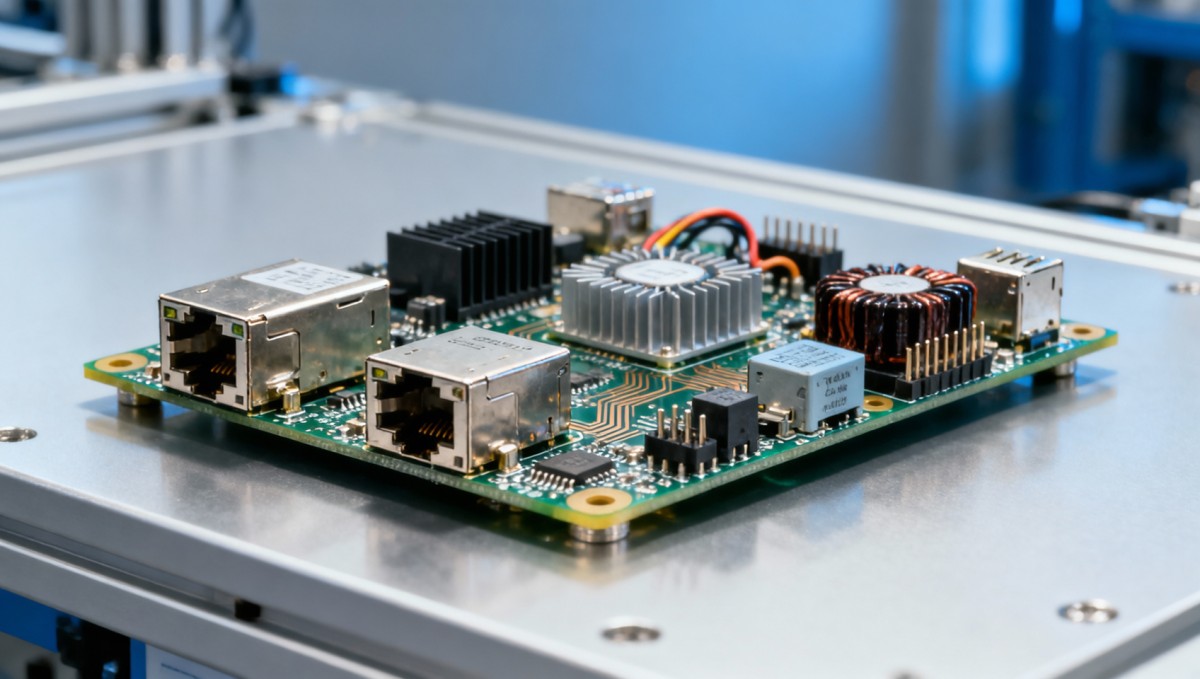
An industrial ethernet switch PCBA is not just a populated circuit board. It is the electrical and thermal foundation that determines whether a switch can run 24/7 inside control cabinets, outdoor boxes, AGV platforms, machine vision cells, and edge computing nodes. In these environments, failure rarely starts with a dramatic event. It often begins with marginal solder quality, unstable power filtering, weak EMC layout, or a component substitution that was not properly documented.
For information researchers and procurement teams, the real challenge is separating useful engineering evidence from generic supplier language. Many vendors describe products as rugged or industrial, but fewer can explain copper thickness, creepage strategy, magnetics selection, ESD path design, or how the PCBA behaves across common industrial ranges such as -40°C to 75°C or 0°C to 50°C. That gap matters because qualification delays can easily add 2–6 weeks to a sourcing cycle.
For operators and maintenance teams, the consequences are practical. A switch with poor PCB assembly discipline may show intermittent link drops, packet errors under load, reboot events during power fluctuation, or reduced lifespan near VFDs and motors. These issues affect not only the switch itself, but also connected PLCs, IPCs, industrial raspberry pi compute module platforms, and iot edge gateway software deployments that depend on reliable backhaul.
At TSV, the useful question is not “Is this switch high quality?” The useful question is “Which 5–7 engineering checkpoints on the PCBA prove that the product can sustain industrial duty cycles?” That mindset shortens supplier evaluation, reduces hidden reliability costs, and brings the discussion back to measurable parameters rather than promotional adjectives.
- Electrical stability: power input protection, surge path, grounding, filtering, and PHY signal margin.
- Assembly quality: solder consistency, AOI coverage, rework control, and connector retention strength.
- Lifecycle confidence: BOM traceability, component availability, revision control, and test records.
What should you check first on an industrial ethernet switch PCBA?
The first review should focus on the PCBA areas that most directly influence network stability. In industrial ethernet switch design, the key zones are usually the power input stage, Ethernet PHY and magnetics section, clock and control area, thermal hotspots, and external connector interfaces. If one of these zones is weak, later claims about throughput, software features, or mounting convenience become less meaningful.
Signal integrity is a primary checkpoint. Differential pair routing for 100M or Gigabit Ethernet should be controlled, consistent, and isolated from noisy power stages. Excessive via transitions, poor return paths, or routing too close to switching regulators can increase EMI and packet errors. This is especially important in cabinets where the switch sits next to servo drives, relays, or power modules. Even a compact din rail pc manufacturer that embeds switching and gateway functions must manage this interaction carefully.
The second checkpoint is power architecture. Industrial installations commonly face voltage fluctuation, surge exposure, reverse polarity risk, and transient noise from shared power rails. A robust industrial ethernet switch PCBA should show clear input protection design, stable DC-DC conversion, and enough derating on capacitors and power semiconductors. Buyers should ask whether the board was designed for common industrial input ranges such as 9–36V or 12–48V, and what protections are integrated at the board level.
The third checkpoint is thermal design. A switch that appears stable during a 30-minute bench test may degrade after 8–24 hours in a sealed enclosure. Board-level thermal paths, copper distribution, component spacing, and heatsink interface all matter. Industrial operators should not only ask for the ambient temperature range, but also how the hottest ICs are managed at full port load and whether the PCBA has been assessed in fanless conditions.
Core PCBA inspection points for sourcing and technical review
The table below helps procurement teams and engineers align on what to request during supplier screening. It is designed for practical use in RFQ review, sample qualification, or technical clarification meetings.
A useful interpretation rule is simple: if a supplier cannot explain these four areas in technical language, the industrial ethernet switch PCBA may not yet be mature for demanding automation projects. That does not automatically mean the product is unsuitable, but it does mean qualification risk is higher and sample testing should be expanded.
A 6-point screening checklist before sample approval
Before approving a prototype or first batch, teams can use a six-point review sequence to avoid expensive late-stage surprises.
- Confirm input voltage design range and protection method, not just the headline voltage rating.
- Request PCB stack-up or a routing explanation for Ethernet lines and noisy power sections.
- Review component traceability for PHYs, magnetics, regulators, and electrolytic or polymer capacitors.
- Ask what in-circuit, functional, AOI, or burn-in tests are performed before shipment.
- Check whether the enclosure and PCBA were assessed together under realistic thermal load for 8–24 hours.
- Verify revision control so that approved samples and mass production units remain electrically consistent.
How to compare suppliers without getting lost in incomplete specifications
Comparing industrial ethernet switch PCBA suppliers is difficult because quotations often mix board-level, product-level, and software-level claims. One vendor may emphasize managed switching functions, another may highlight enclosure design, while a third may position itself alongside a din rail pc manufacturer or iot edge gateway software provider. Procurement teams need a common comparison frame that isolates the PCBA evidence first, then expands to system value.
A practical method is to divide comparison into three layers. Layer 1 is board reliability: layout discipline, protection design, component grade, and test coverage. Layer 2 is system integration: enclosure, grounding, thermal path, port labeling, and serviceability. Layer 3 is lifecycle support: BOM stability, lead-time management, firmware maintenance, and engineering response during qualification. This 3-layer method prevents teams from selecting a feature-rich product built on a weak PCBA foundation.
For enterprise decision-makers, the hidden cost of an immature PCBA is rarely visible in the first unit price. It appears later as repeated sample rounds, field troubleshooting, delayed FAT or SAT milestones, and emergency substitutions. In industrial projects, a lower upfront price can quickly become more expensive if the switch introduces even a few hours of downtime or forces a redesign of the cabinet thermal plan.
TSV recommends documenting supplier responses in a structured comparison sheet. This creates traceable evidence for engineering, procurement, and management, especially when multiple stakeholders must approve vendor selection within a 7–15 day review window.
Supplier comparison matrix for industrial ethernet switch PCBA projects
Use the following matrix when shortlisting suppliers for industrial switch, embedded gateway, or controller-network integration projects. It works well when you are comparing pure switch vendors with hybrid IPC or edge system providers.
The difference between a basic response and preferred evidence is important. A procurement team does not need confidential IP, but it does need enough process visibility to judge whether the industrial ethernet switch PCBA is managed like a true industrial product or merely adapted from a light-duty commercial design.
When a lower-cost quote may still be acceptable
A lower-cost supplier can still be a valid option if the application is non-critical, indoor, thermally controlled, and easy to service. Examples include light factory data aggregation, secondary network segments, or pilot-scale IIoT deployments with modest uptime pressure. In such cases, buyers should still confirm at least 4 items: input protection, basic EMC discipline, documented test steps, and connector retention.
However, if the switch will support AGV communications, remote substations, rooftop cabinets, or edge AI cameras with low tolerance for packet instability, saving a small percentage on the unit price often creates disproportionate operational risk. This is where TSV’s data-first filtering approach becomes valuable: it helps teams compare engineering evidence rather than marketing language.
Which standards, tests, and reliability signals should buyers ask for?
Not every project requires the same compliance package, but most industrial ethernet switch PCBA evaluations should include a discussion of EMC, electrical safety alignment, environmental endurance, and production testing. Buyers should be careful not to treat standards as a simple checkbox. The better question is how board-level decisions support compliance behavior in the final product.
For example, EMC performance is influenced by grounding strategy, connector shielding, return current control, transient suppression, and enclosure bonding. A supplier might reference IEC-oriented industrial practice, but the real value comes from explaining what was done on the PCBA to improve immunity near motors, contactors, or high-frequency switching equipment. The same logic applies to ESD and surge resistance: design intent matters as much as test outcome.
Reliability signals also include production discipline. Ask whether the assembly line uses AOI, whether BGA or fine-pitch parts receive special process control if present, and whether burn-in or elevated-load functional tests are performed. Typical factory practices vary, but even a 2–8 hour stress screen can reveal weak solder joints, thermal imbalance, or unstable power behavior before the units enter site acceptance testing.
Another important signal is traceability. For industrial buyers, traceability does not need to be extravagant. It needs to be usable. At minimum, there should be a way to link production date, PCBA revision, key component lot, and test status. This becomes critical when a field issue appears 6–12 months later and the team must determine whether it is systemic, batch-specific, or application-induced.
Common reliability questions for technical clarification
- What ambient temperature range is specified, and was this validated at full port load or partial load?
- What surge, EFT, or ESD design measures exist at the power and Ethernet interfaces?
- How are component substitutions controlled during 12–24 month supply fluctuations?
- What test stages are completed before shipment, and what failures are screened out?
- Can the supplier explain thermal hotspots, not just provide an ambient temperature number?
A practical interpretation rule for decision-makers
If a supplier can discuss layout, protection, thermal path, and traceability with clear engineering logic, the industrial ethernet switch PCBA is more likely to be mature. If the answers remain limited to catalog terms and generic compliance references, decision-makers should plan for a longer validation cycle, broader sample testing, and stricter incoming inspection during the first 1–3 batches.
For buyers also evaluating a din rail pc manufacturer or an industrial raspberry pi compute module platform, this rule stays relevant. The packaging may differ, but the procurement principle is identical: stable field performance starts with disciplined board design and controlled assembly, not with outward product positioning alone.
Common mistakes, field risks, and how to shorten the qualification cycle
One common mistake is overvaluing feature lists while undervaluing PCBA maturity. Managed switching, VLAN, remote diagnostics, and software integration are useful, but they cannot compensate for weak power integrity or thermal design. In industrial projects, the board must first survive electrical noise, heat, vibration, and continuous duty. Only then do advanced software features create lasting value.
A second mistake is testing the unit only on a clean bench supply. Real installations often include long DC cable runs, grounding differences, cabinet hotspots, and adjacent interference sources. A better validation plan includes at least 3 stages: laboratory functional test, enclosure-level thermal run, and near-real application verification. Even a compact 1–2 day pilot can expose issues that a short office demo will miss.
A third mistake is approving a sample without locking the revision baseline. If the supplier later changes magnetics, regulators, or connector brands because of sourcing pressure, the approved behavior may no longer represent production behavior. This is particularly relevant in supply chains where lead times can shift from 4 weeks to 12 weeks, prompting substitutions that seem minor but alter EMC or thermal margins.
The fastest way to shorten qualification is to ask better questions earlier. Instead of requesting generic claims, request targeted evidence: board-level protection strategy, test sequence, thermal assumptions, and traceability method. This reduces back-and-forth, makes RFQ comparisons more meaningful, and helps teams move from vendor screening to sample approval with fewer blind spots.
FAQ: what buyers and engineers ask most often
How do I know whether an industrial ethernet switch PCBA is truly industrial grade?
Look for evidence in 5 areas: input protection, EMC-aware layout, thermal design, assembly process control, and traceability. Industrial grade is not defined by one label. It is defined by whether the board can maintain stable operation across expected voltage variation, temperature range, and interference conditions over extended 24/7 use.
What is the usual sample evaluation cycle for this type of product?
For many B2B projects, a realistic evaluation window is 7–15 days for technical review and basic bench validation, followed by 1–3 weeks for enclosure-level and site-oriented checks. The exact timing depends on whether the switch is standalone, embedded in a din rail PC, or linked to a wider iot edge gateway software stack.
Are certifications alone enough to approve a supplier?
No. Certifications or compliance references are useful, but they do not replace board-level engineering review. Two products may reference similar standards yet differ substantially in surge path design, thermal margin, component derating, and assembly discipline. Approval should combine compliance information with PCBA-specific evidence.
What if my application combines switching, edge compute, and software gateway functions?
Then the PCBA review becomes even more important. Hybrid platforms often concentrate Ethernet, compute, storage, and power conversion into a smaller thermal envelope. Ask how the supplier separates noisy sections, manages hotspots, and validates long-duration operation. This is especially relevant when comparing industrial raspberry pi compute module solutions with more traditional industrial IPC architectures.
Why work with a data-driven technical review partner before you buy
Industrial sourcing decisions fail when teams must choose between incomplete specifications, polished claims, and limited time. That is exactly where a data-driven evaluation method helps. TechStat Vanguard focuses on engineering truth: measurable parameters, traceable assumptions, and qualification logic that supports real procurement decisions. We do not reduce assessment to slogans. We translate board-level evidence into sourcing clarity.
If you are reviewing an industrial ethernet switch PCBA, a din rail pc manufacturer, an industrial raspberry pi compute module platform, or an iot edge gateway software ecosystem, we can help structure the comparison around what matters: protection design, signal margin, thermal path, BOM stability, and production consistency. That is often the difference between a fast pilot and a delayed rollout.
You can contact TSV for practical support on 6 high-value topics: parameter confirmation, supplier comparison framework, sample test checklist, delivery cycle risk review, certification requirement mapping, and custom application fit analysis. For procurement teams, this means clearer RFQ criteria. For engineers, it means fewer trial-and-error loops. For decision-makers, it means lower qualification uncertainty.
If your next project involves industrial networking in automation, UAV support infrastructure, edge AI, or precision manufacturing environments, send the available specifications, target temperature range, power conditions, and deployment scenario. TSV can help you define what to check, what to question, and where hidden PCBA risks are most likely to appear before volume commitment or site installation.
Search News
Hot Articles
- Carbon Fiber StructuresHow to Specify Aerospace Carbon Fiber Assemblies for Lightweight, Load-Bearing PartsJul 11, 2026
- Machine VisionXiaomi, Alibaba DAMO Academy Drive Open-Source Robotics Model Ecosystem, Lowering Algorithm Development Barriers for Overseas SMEs Adopting Chinese Robotics SolutionsMar 30, 2026
- Cobots & ArmsShanxi 'AI+' Conference Showcases Embodied Intelligence with Multinational Buyer Engagement: Key Industry ImplicationsMar 30, 2026
Popular Tags
Recommended News
 Jul 11, 2026How to Specify Aerospace Carbon Fiber Assemblies for Lightweight, Load-Bearing PartsAerospace carbon fiber assemblies: learn how to specify laminate design, load data, joining methods, and inspection controls for lighter, reliable load-bearing aerospace parts.Elena Rostova (UAV Systems Researcher)
 Mar 30, 2026Xiaomi, Alibaba DAMO Academy Drive Open-Source Robotics Model Ecosystem, Lowering Algorithm Development Barriers for Overseas SMEs Adopting Chinese Robotics SolutionsXiaomi & Alibaba DAMO Academy's open-source robotics models lower algorithm barriers for global SMEs. Boost efficiency in manufacturing, logistics & smart retail with ROS 2 compatible solutions.TSV Data Lab
 Mar 30, 2026Shanxi 'AI+' Conference Showcases Embodied Intelligence with Multinational Buyer Engagement: Key Industry ImplicationsShanxi 'AI+' Conference highlights embodied intelligence with Tesla, Ubtech & Jiantao showcasing multimodal robotics. 40+ global buyers validated tech on-site, creating new B2B channels for industrial automation & AI solutions.Chen Wei (Automation Lead Engineer)
 Mar 30, 2026Zhongguancun Unveils 6G Integrated Sensing-Computing-Intelligence Platform to Empower Embodied Robots for Global Industrial ApplicationsZhongguancun's new 6G platform revolutionizes industrial robotics with <10ms latency, empowering global automotive, logistics & port automation. Discover how this tech boosts China's smart manufacturing exports.TSV Data Lab
 Mar 30, 2026Mech-Mind Tianjin Embodied Intelligence R&D and Production Base Goes Live, Cutting Delivery Time by 20%–30% for Global Customized AMR+Vision SolutionsMech-Mind's Tianjin AMR+Vision production base cuts delivery time by 20%-30% for欧美 & Latin American markets. Discover how this PLd-certified facility accelerates customized robotics solutions for smart manufacturing and logistics.Chen Wei (Automation Lead Engineer)
 Mar 30, 2026Boao Forum Reveals 'Co-evolution of Big and Small Brains' Trend in Humanoid Robots, China's Embodied Intelligence Accelerates Adaptation to Overseas Manufacturing Service ScenariosDiscover how China's humanoid robots, featuring 'Co-evolution of Big and Small Brains,' are revolutionizing global manufacturing. Learn about Embodied Tian Gong 3.0's ISO compliance and overseas deployment at Boao Forum 2026.Chen Wei (Automation Lead Engineer)
 Mar 30, 2026China Railway Industrial Secures Patent for Embodied Robotics in Material Handling, Boosting High-Precision Delivery Capabilities for Overseas Infrastructure and Manufacturing ProjectsChina Railway Industrial's new patent for embodied robotics in material handling boosts high-precision delivery for global infrastructure & manufacturing. Discover how this innovation enhances logistics accuracy in automotive, rail transit & EPC projects.Chen Wei (Automation Lead Engineer)
 Oct 19, 2026Choosing a Radar Sensor by Application: Range, Resolution, and Field of ViewSimplify radar sensor application based product selection. Compare range, resolution, and field of view to avoid blind spots and choose with confidence. Explore the guide.TSV Data Lab
 Oct 18, 2026Comparing Material Options for Procurement: Specs, Costs, and Supply RisksExplore procurement oriented technical content on material options, specs, costs, and supply risks. Compare alternatives to cut hidden expenses and make confident sourcing decisions.Dr. Marcus Vance
 Oct 17, 20265-Axis CNC Positioning Accuracy: How to Interpret ISO 230-2 Test ResultsAssess 5 axis CNC machining positioning accuracy with ISO 230-2. Learn to interpret repeatability, reversal error, and test conditions to compare suppliers and make confident acceptance decisions.Dr. Marcus Vance
 Oct 16, 2026Choosing a Rugged Edge AI Box Supplier: Thermal Tests and Lifecycle SupportChoose a rugged edge AI box supplier with proven thermal performance and reliable lifecycle support. Discover the tests and commitments to verify before you buy.TSV Data Lab
 Oct 15, 2026R&D Cost Reduction Services: How to Evaluate Fees, Savings, and ROIEvaluate R&D cost reduction services with confidence. Compare fees, verify savings, and calculate ROI without compromising performance. Discover how to choose a provider that delivers real value.Chen Wei (Automation Lead Engineer)
 Oct 18, 2026What Should an AS9100 Machining Supplier Checklist Include?Build an AS9100 machining supplier checklist that verifies capability, traceability, inspection, and outsourced processes. Discover what to check before approving your next aerospace supplier.Dr. Marcus Vance
 Oct 17, 2026How Should You Interpret Industrial Robot Repeatability Specs?Decode industrial robot repeatability specifications, understand ISO 9283 test conditions, and avoid costly selection mistakes. Learn how to verify performance for your process.Chen Wei (Automation Lead Engineer)
 Oct 16, 2026How Can You Fairly Compare MTBF Across Industrial Servo Motors?Make a fair industrial servo motor MTBF comparison with matched operating profiles, failure criteria, and confidence bounds. Discover how to assess reliability beyond advertised numbers.Chen Wei (Automation Lead Engineer)
 Oct 15, 2026How Should You Compare TechStat Vanguard 5-Axis CNC Tolerances?TechStat Vanguard 5-axis CNC tolerance comparison: learn how to verify part accuracy, assess inspection evidence, and choose suppliers that reliably meet your drawing requirements.Dr. Marcus Vance
 Oct 14, 2026Drone Frame Composites: Carbon Fiber vs. Fiberglass for Weight and StiffnessExplore drone structural materials composites: compare carbon fiber and fiberglass for weight, stiffness, cost, and antenna compatibility. Find the right material for your drone frame.Elena Rostova (UAV Systems Researcher)
 Oct 13, 2026Smart Cameras vs. PC-Based Machine Vision: Which Fits High-Speed Inspection?This industrial product comparison for machine vision weighs smart cameras vs. PC-based systems on latency, throughput, and cost. Discover your best fit for high-speed inspection.TSV Data Lab
 Oct 12, 2026How to Verify RoHS Compliance in Industrial Sensing Systems Before DeploymentRoHS compliant sensing systems: learn how to verify materials, supplier declarations, testing, and configuration controls before industrial deployment.TSV Data Lab
 Oct 11, 2026How Procurement-Oriented Content Taxonomy Improves B2B Buying JourneysProcurement-oriented content taxonomy streamlines B2B buying journeys with clearer evidence, supplier comparisons, risk visibility, and faster approvals.TSV Data Lab
 Oct 10, 2026How to Select a Machine Performance Monitoring Platform for OEE and Downtime ReductionMachine performance monitoring platform selection guide: validate machine states, OEE data, downtime reasons, integrations, and scalability to reduce losses with confidence.TSV Data Lab
 Oct 08, 2026How to Machine Inconel 625 Blades Without Heat Cracks or Edge ChippingInconel 625 blade machining guide: prevent heat cracks, edge chipping, chatter, and work hardening with proven tooling, cooling, fixturing, and inspection strategies.Dr. Marcus Vance
 Oct 07, 2026How to Evaluate an HMI Panel Distributor for Industrial Automation ProjectsHMI panel distributor evaluation guide: verify technical compatibility, traceability, supply reliability, lifecycle support, and total cost for automation projects.Victor Lin (Chief Software Architect)
 Oct 06, 2026Navigation Fault Tolerance Standards for AMRs: What Safety Teams Must VerifyNavigation fault tolerance standards: learn what AMR safety teams must verify, from localization loss and sensor faults to stopping distance, safe restart, and site-specific validation.Chen Wei (Automation Lead Engineer)