Why LiDAR for AGV obstacle avoidance needs more than range specs
Publication Date
author
For engineers and buyers evaluating LiDAR for AGV obstacle avoidance, range alone is a misleading benchmark. In real factories and warehouses, navigation safety depends far more on detection stability, blind-zone control, surface adaptability, interference resistance, refresh consistency, and how well the sensor works inside a broader sensor fusion lidar and camera architecture. This article explains which specifications actually matter, how to interpret radar false positive rate analysis in dynamic environments, and what procurement teams should verify before selecting a system for long-term industrial use.
Why range specs alone fail in real AGV obstacle avoidance decisions
If your LiDAR datasheet says 30 m, 50 m, or even 100 m detection range, that number is only a partial indicator. For AGV obstacle avoidance, the real question is not “How far can it see under ideal test conditions?” but “How reliably can it detect the right object, at the right time, in the right environment, without causing unsafe misses or productivity-killing false stops?”
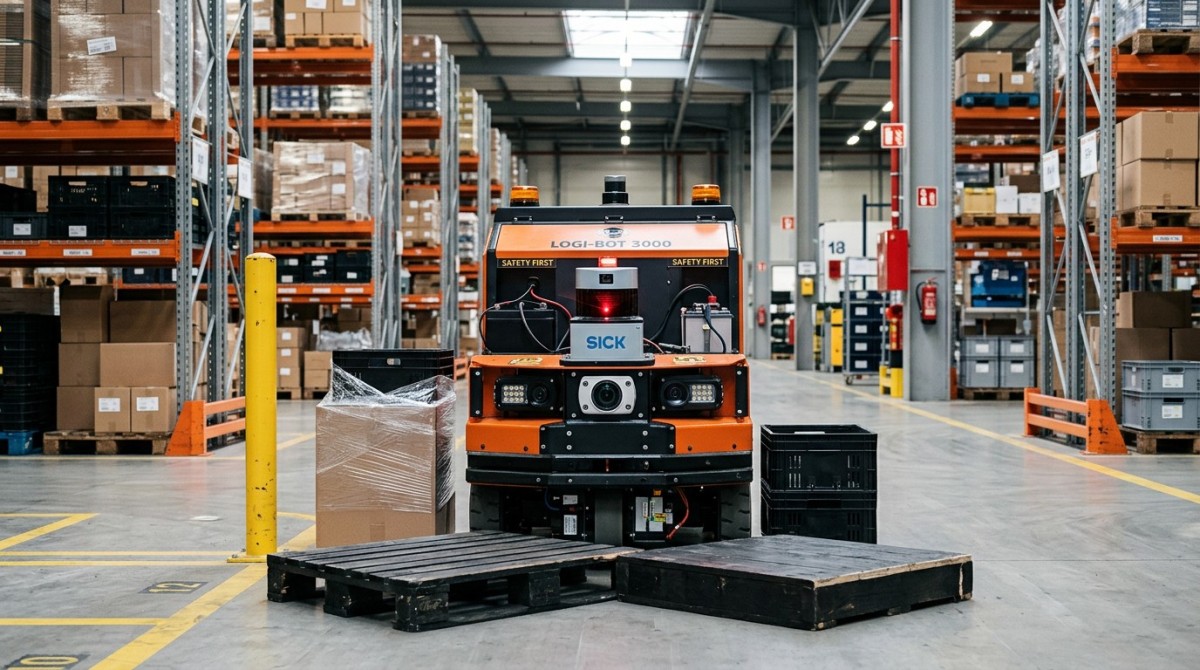
That distinction matters because industrial AGVs do not operate in clean demo environments. They move through aisles with reflective shrink wrap, pallet edges, forklift traffic, hanging packaging, dust, floor glare, metal racks, and mixed pedestrian behavior. In these conditions, a long theoretical range may provide little value if the sensor struggles with:
- Low-reflectivity obstacles such as black plastic or dark rubber
- Highly reflective surfaces that generate unstable returns
- Thin or irregular objects such as forks, straps, and poles
- Multi-path reflections in narrow warehouse corridors
- Cross-interference from other LiDAR-equipped vehicles
- Refresh drops during vibration, heat, or high traffic density
For operators, this shows up as unexpected braking, missed obstacle events, route hesitation, or speed restrictions. For procurement teams, it turns into a larger issue: range-heavy evaluation can lead to the wrong product shortlist and higher total system risk after deployment.
What engineers, buyers, and decision-makers actually need to evaluate
The core search intent behind this topic is practical evaluation. Readers are usually not asking for a definition of LiDAR. They want to know which technical parameters predict real AGV safety and how to avoid being misled by oversimplified specifications.
The most useful evaluation dimensions are usually these:
1. Detection reliability across object types
An AGV must detect more than ideal calibration targets. It must consistently identify pallets, forklift tines, workers’ legs, boxes with transparent wrap, low-profile carts, and miscellaneous floor-level obstacles. Ask for detection performance by object category, reflectivity, size, and mounting height. A strong supplier should provide test evidence, not generic claims.
2. False positive and false negative behavior
Obstacle avoidance performance is a balancing act. Too many false negatives create safety risk. Too many false positives reduce throughput, increase stop events, and degrade operator trust. A meaningful radar false positive rate analysis should quantify nuisance triggers under actual industrial conditions, not just in lab tests.
3. Refresh rate and latency stability
Nominal scan rate is not enough. Buyers should ask whether the refresh rate remains stable under temperature variation, vibration, dust loading, and network traffic. In obstacle avoidance, consistent timing often matters more than peak speed. A sensor that occasionally drops frames may create edge-case failures that are difficult to diagnose.
4. Field of view and blind-zone control
Detection geometry directly affects safety. Mounting position, vehicle body shape, bumper design, and turning path all influence whether blind spots exist near the vehicle edge or during cornering. A LiDAR with strong range but poor near-field coverage may still underperform in tight warehouse navigation.
5. Resistance to interference
As more facilities deploy autonomous systems, LiDAR-to-LiDAR interference becomes a practical issue. In dense fleets, interference resistance can materially affect navigation stability. This is especially relevant for facilities running multiple AGVs, AMRs, and forklifts with active sensing hardware in overlapping routes.
6. Environmental durability
Ingress protection, temperature tolerance, contamination resilience, and long-term optical stability all matter. A sensor that performs well in commissioning but drifts under dust, oil mist, condensation, or washdown conditions can create hidden lifecycle cost.
Which LiDAR parameters matter more than maximum range
When comparing LiDAR for AGV obstacle avoidance, these are often more decision-relevant than the headline range figure.
Angular resolution
Angular resolution determines how well the sensor separates adjacent objects and detects narrow hazards. In cluttered warehouse environments, weak angular resolution can mean that slim objects or object edges are poorly represented in the point cloud.
Minimum detectable object size
This is critical for avoiding collisions with small but dangerous obstacles. A buyer should verify object-size detection thresholds at multiple distances, not just at one ideal point.
Near-field detection performance
Many AGV incidents happen close to the vehicle, especially during low-speed approach, docking, or turning near shelving and pallet stacks. Near-zone coverage is often more operationally important than long-distance range.
Point cloud stability
It is not enough to generate a dense point cloud once. The point cloud must remain spatially stable under motion, vibration, and variable surfaces. Instability can reduce confidence in tracking and classification layers.
Detection probability by material and reflectivity
Some sensors perform well on standard test panels but poorly on black, glossy, transparent, or mixed-material obstacles. Industrial users should request performance data tied to real object materials.
Functional safety integration
If the AGV safety architecture requires certified safety functions, the LiDAR’s compatibility with safety controllers, emergency stop logic, zone switching, and safety-rated response chains becomes more important than raw measurement range.
Why sensor fusion LiDAR and camera systems often outperform LiDAR-only setups
In many industrial deployments, the best answer is not choosing between LiDAR and vision, but combining them. A sensor fusion lidar and camera architecture helps compensate for each technology’s weaknesses.
LiDAR is strong in geometric distance measurement and robust shape detection. Cameras are better for contextual understanding, surface cues, signage interpretation, and certain classification tasks. Together, they can improve both safety and operational smoothness.
For example:
- LiDAR can detect the presence and distance of an obstacle
- Cameras can help classify whether the object is a pallet corner, pedestrian, forklift, or hanging material
- Fusion logic can reduce unnecessary stops caused by ambiguous single-sensor readings
- Redundant perception improves fault tolerance in dynamic environments
This matters to enterprise decision-makers because better perception quality can support higher travel speeds, fewer nuisance stops, lower manual intervention, and more predictable throughput. However, fusion also adds integration complexity, compute requirements, calibration maintenance, and software validation burden. So the value depends on the use case, not on a generic “more sensors is better” assumption.
How to interpret radar false positive rate analysis for procurement risk
Many procurement mistakes happen because false positive analysis is presented in a way that sounds technical but does not help real decision-making. A useful analysis should answer business-relevant questions such as:
- How often does the AGV brake unnecessarily per shift?
- Under what environmental triggers do nuisance detections rise?
- What is the operational cost of those unnecessary stops?
- How does false positive behavior change in mixed traffic conditions?
- What threshold tuning is required, and what safety trade-offs does it create?
For procurement teams, false positives are not just a technical annoyance. They directly affect fleet efficiency, route planning, SLA stability, battery usage, and operator confidence. A system with slightly lower nominal range but much better false positive control may create superior real-world ROI.
Ask suppliers for:
- Test logs from comparable industrial environments
- False stop events per operational hour
- Missed detection conditions and boundary cases
- Data from high-reflectivity and low-reflectivity scenarios
- Performance in dense multi-vehicle operation
What different stakeholders should focus on before selecting a solution
Different readers often arrive at this topic with different decision responsibilities. The right evaluation criteria should reflect that.
For engineers and system integrators
Focus on detection envelope, timing stability, blind zones, interface compatibility, safety architecture, and environmental robustness. Request raw test data when possible. Bench-level specifications should be validated against route-level operating scenarios.
For operators and maintenance teams
Focus on cleaning requirements, contamination tolerance, recalibration frequency, diagnostics, fault visibility, and how often nuisance stops occur in daily production. Long-term usability matters as much as initial performance.
For procurement managers
Focus on verification quality, lifecycle support, replacement lead time, software update policy, integration cost, and evidence of stable performance across multiple deployments. Avoid decisions based on a single headline metric.
For enterprise decision-makers
Focus on business continuity, safety exposure, throughput impact, commissioning risk, and total cost of ownership. The right LiDAR decision is the one that reduces operational uncertainty, not the one with the most aggressive brochure number.
Practical checklist: how to compare LiDAR for AGV obstacle avoidance correctly
Before final selection, use a checklist like this:
- Define the actual obstacle set in your facility, not a generic one
- Map critical speeds, stopping distances, and cornering scenarios
- Verify near-field and side-field coverage, not just forward range
- Test low-reflective, reflective, and irregular objects
- Measure false positive frequency during real traffic simulation
- Assess interference resistance in multi-vehicle operation
- Review refresh and latency consistency over long duty cycles
- Validate performance under dust, vibration, and temperature stress
- Check integration with safety logic and fusion architecture
- Compare lifecycle serviceability, not only initial sensor price
This approach helps buyers move from spec-sheet comparison to engineering-grade evaluation. That is especially important in AGV deployments where the cost of a poor sensor choice is rarely limited to hardware replacement. It often includes downtime, retuning, route restrictions, safety reviews, and delayed scale-up.
Conclusion
For AGV obstacle avoidance, LiDAR selection should never be based on maximum range alone. Real reliability depends on detection quality across diverse objects, refresh stability, blind-zone control, interference resistance, environmental durability, and the effectiveness of sensor fusion lidar and camera design. For procurement teams and technical leaders, the most useful question is not “Which sensor sees the farthest?” but “Which sensing system delivers the most dependable safety and throughput in my actual operating environment?”
That shift in evaluation logic leads to better engineering decisions, lower deployment risk, and stronger long-term fleet performance. In industrial automation, parameters do not lie—but only if you ask for the right ones.
Search News
Hot Articles
- Carbon Fiber StructuresHow to Specify Aerospace Carbon Fiber Assemblies for Lightweight, Load-Bearing PartsJul 11, 2026
- Machine VisionXiaomi, Alibaba DAMO Academy Drive Open-Source Robotics Model Ecosystem, Lowering Algorithm Development Barriers for Overseas SMEs Adopting Chinese Robotics SolutionsMar 30, 2026
- Cobots & ArmsShanxi 'AI+' Conference Showcases Embodied Intelligence with Multinational Buyer Engagement: Key Industry ImplicationsMar 30, 2026
Popular Tags
Recommended News
 Jul 11, 2026How to Specify Aerospace Carbon Fiber Assemblies for Lightweight, Load-Bearing PartsAerospace carbon fiber assemblies: learn how to specify laminate design, load data, joining methods, and inspection controls for lighter, reliable load-bearing aerospace parts.Elena Rostova (UAV Systems Researcher)
 Mar 30, 2026Xiaomi, Alibaba DAMO Academy Drive Open-Source Robotics Model Ecosystem, Lowering Algorithm Development Barriers for Overseas SMEs Adopting Chinese Robotics SolutionsXiaomi & Alibaba DAMO Academy's open-source robotics models lower algorithm barriers for global SMEs. Boost efficiency in manufacturing, logistics & smart retail with ROS 2 compatible solutions.TSV Data Lab
 Mar 30, 2026Shanxi 'AI+' Conference Showcases Embodied Intelligence with Multinational Buyer Engagement: Key Industry ImplicationsShanxi 'AI+' Conference highlights embodied intelligence with Tesla, Ubtech & Jiantao showcasing multimodal robotics. 40+ global buyers validated tech on-site, creating new B2B channels for industrial automation & AI solutions.Chen Wei (Automation Lead Engineer)
 Mar 30, 2026Zhongguancun Unveils 6G Integrated Sensing-Computing-Intelligence Platform to Empower Embodied Robots for Global Industrial ApplicationsZhongguancun's new 6G platform revolutionizes industrial robotics with <10ms latency, empowering global automotive, logistics & port automation. Discover how this tech boosts China's smart manufacturing exports.TSV Data Lab
 Mar 30, 2026Mech-Mind Tianjin Embodied Intelligence R&D and Production Base Goes Live, Cutting Delivery Time by 20%–30% for Global Customized AMR+Vision SolutionsMech-Mind's Tianjin AMR+Vision production base cuts delivery time by 20%-30% for欧美 & Latin American markets. Discover how this PLd-certified facility accelerates customized robotics solutions for smart manufacturing and logistics.Chen Wei (Automation Lead Engineer)
 Mar 30, 2026Boao Forum Reveals 'Co-evolution of Big and Small Brains' Trend in Humanoid Robots, China's Embodied Intelligence Accelerates Adaptation to Overseas Manufacturing Service ScenariosDiscover how China's humanoid robots, featuring 'Co-evolution of Big and Small Brains,' are revolutionizing global manufacturing. Learn about Embodied Tian Gong 3.0's ISO compliance and overseas deployment at Boao Forum 2026.Chen Wei (Automation Lead Engineer)
 Mar 30, 2026China Railway Industrial Secures Patent for Embodied Robotics in Material Handling, Boosting High-Precision Delivery Capabilities for Overseas Infrastructure and Manufacturing ProjectsChina Railway Industrial's new patent for embodied robotics in material handling boosts high-precision delivery for global infrastructure & manufacturing. Discover how this innovation enhances logistics accuracy in automotive, rail transit & EPC projects.Chen Wei (Automation Lead Engineer)
 Oct 27, 2026GXO and Agility Robotics Expand Partnership to Accelerate US Humanoid Robot DeploymentGXO and Agility Robotics plan to expand US humanoid robot deployment with Digit 4 in early 2027. Explore warehouse automation plans, service terms and future Digit 5 upgrades.Chen Wei (Automation Lead Engineer)
 Oct 27, 2026Robotic Automation Costs: Budgeting for Equipment, Integration, and MaintenancePlan your robotics automation cost with confidence. Explore equipment, integration, and maintenance expenses, compare quotes, and build a realistic budget for better ROI.Chen Wei (Automation Lead Engineer)
 Oct 26, 2026AMAXiMAL Releases Open-Source TopMod 3D v3 With Claude AIExplore AMAXiMAL’s free, open-source TopMod 3D v3 with Claude AI assistance, topology-based modeling and plywood fabrication tools that connect complex designs to physical builds.Dr. Marcus Vance
 Oct 26, 2026Choosing a SCADA System Integrator Company: PLC Compatibility and Long-Term SupportChoose a scada system integrator company with proven PLC compatibility and reliable long-term support. Discover what to test, compare, and require before investing.Victor Lin (Chief Software Architect)
 Oct 25, 2026Hesai Leads Global ADAS Main Lidar Shipments in Yole’s 2026 ReportHesai led global ADAS main lidar shipments with a 43% share in 2025, according to Yole’s 2026 report. Explore what this ranking reveals about its automotive market position.TSV Data Lab
 Oct 25, 2026Choosing an Aerospace Materials Manufacturer: Quality and Traceability ChecksChoosing an aerospace materials manufacturer? Learn how to verify certifications, test reports, and lot traceability to qualify suppliers confidently and reduce costly sourcing risks.Dr. Marcus Vance
 Oct 24, 2026Guotai Haitong: Global Entry-Level 3D Printer Shipments Rose 39% in Q1 2026Entry-level 3D printer shipments rose 39% in Q1 2026, Guotai Haitong reports. Explore how AI, multicolor printing and print farms are shaping market growth.Dr. Marcus Vance
 Oct 24, 2026Choosing an Industrial Vision Inspection Supplier: Acceptance Tests That MatterChoose an industrial vision inspection supplier with confidence. Discover acceptance tests for defect detection, false rejects, production speed, and reliable part rejection before you buy.TSV Data Lab
 Oct 23, 2026US Navy Raises Gecko Robotics Contract Ceiling to $300M for Robotic Fleet MaintenanceUS Navy raises Gecko Robotics’ contract ceiling to $300M for Pacific Fleet robotic inspections. Explore potential opportunities for maintenance suppliers and key procurement considerations.Chen Wei (Automation Lead Engineer)
 Oct 23, 2026Choosing Industrial Sensing Systems for Global Plants: Protocol CompatibilityCompare industrial sensing systems international buyers can trust. Explore protocol compatibility, reduce integration risks, and select proven configurations for reliable global plant deployments.TSV Data Lab
 Oct 22, 2026KUKA Showcases Physical AI and iiQKA.AI Vision at NVIDIA GTC BerlinExplore KUKA’s Physical AI showcase at NVIDIA GTC Berlin and discover how iiQKA.AI Vision aims to simplify robotic vision integration and improve 2D and 3D scene recognition.TSV Data Lab
 Oct 22, 2026Robotic Machining of Advanced Composites: What Tolerances Are Achievable?Explore advanced materials machining robotics: discover what drives achievable composite tolerances and how to validate accuracy before investing in your next machining system.Dr. Marcus Vance
 Oct 21, 2026China’s Industrial Robot Exports Near RMB 10 Billion in First Nine Months of 2026China’s industrial robot exports neared RMB 10 billion in January–September 2026, with value rising faster than volume. Explore the data and what it could mean for suppliers.Chen Wei (Automation Lead Engineer)
 Oct 21, 2026Low-Latency Industrial Data Processing: Pricing and Key Cost DriversExplore industrial data latency price drivers, from edge hardware to integration and support. Learn how to compare quotes, verify performance, and avoid unnecessary costs.TSV Data Lab
 Oct 20, 2026KUKA Launches iiQKA.AI Vision to Simplify Industrial Image ProcessingKUKA iiQKA.AI Vision simplifies industrial image processing with controller-based 2D and 3D vision. Explore drag-and-drop setup for vision-guided automation.TSV Data Lab
 Oct 20, 2026Smart Industrial Edge Devices: Key Criteria for Legacy PLC IntegrationChoose smart industrial edge devices for legacy PLC integration. Discover key criteria for compatibility, data quality, security, and reliable collection without disrupting control.TSV Data Lab
 Oct 19, 2026Choosing a Radar Sensor by Application: Range, Resolution, and Field of ViewSimplify radar sensor application based product selection. Compare range, resolution, and field of view to avoid blind spots and choose with confidence. Explore the guide.TSV Data Lab