
Water Tricycles Explained: Types, Capacity, and Best Uses for Rental Operations
Publication Date
author
Water tricycles sit at an unusual intersection of leisure equipment, small-fleet operations, and practical capacity planning. For rental businesses, they are not simply eye-catching attractions on a lake or resort shoreline. They represent a measurable decision about passenger throughput, safety margins, maintenance effort, and seasonal revenue potential.
That is why the conversation around water tricycles has become more operational. A buyer comparing models now has to look beyond brochure language and ask harder questions. How many riders can each unit actually support in normal conditions? Which hull layout suits calm ponds rather than open waterfronts? Where does a larger platform improve earnings, and where does it only add drag, storage burden, and idle cost?
From a TSV-style evaluation perspective, the useful approach is simple: treat water tricycles as assets that need clear technical and commercial logic. The best choices usually come from matching design type, passenger profile, water conditions, and turnover goals rather than chasing the most elaborate configuration.
What water tricycles really are in rental terms
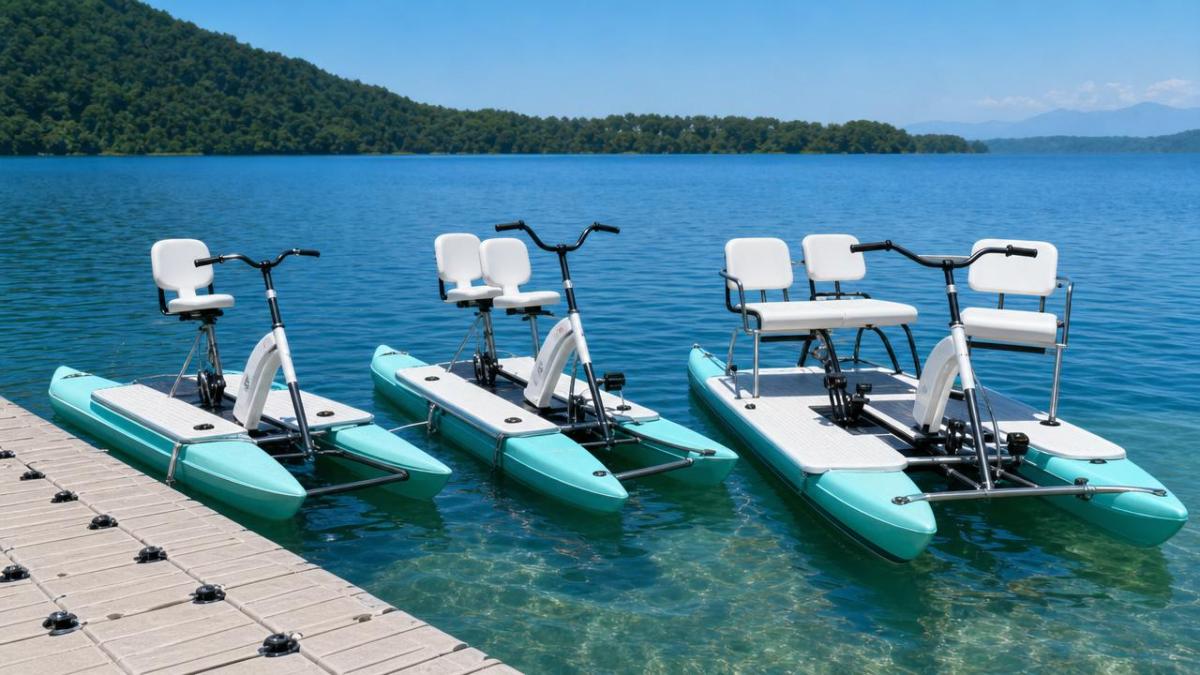
In basic form, water tricycles are pedal-powered or hybrid recreational craft built around a stable multi-point floating structure. Unlike narrow pedal boats, they usually emphasize balance, easy boarding, and visible rider comfort.
The “tricycle” label often refers to the riding format and propulsion feel rather than a strict land-bike geometry. In practice, operators will see several variants, including solo units, tandem models, family platforms, and commercial-use designs with reinforced frames.
For rental operations, that distinction matters. A craft that feels intuitive at first glance tends to require less supervision, reduces launch friction, and shortens instruction time at the dock. In high-turnover settings, those small efficiencies can matter as much as the purchase price.
Why the category deserves closer scrutiny now
Leisure fleets are being evaluated more carefully than before. Operators face tighter labor availability, stronger safety expectations, and more pressure to use limited waterfront space efficiently. In that context, water tricycles attract attention because they can offer a wide customer appeal without demanding the training burden of motorized equipment.
There is also a broader supply-chain reason to look deeper. Many listings use vague phrases such as “heavy duty,” “family size,” or “high stability” without clarifying frame material, float dimensions, load rating method, or wear points. TSV’s broader philosophy applies here as well: useful decisions come from parameters, not adjectives.
For business comparison, the meaningful variables are usually straightforward. Weight capacity, draft under load, pedal drivetrain durability, UV resistance, corrosion behavior, replacement-part availability, and dock-side handling often tell more than promotional imagery.
Main types of water tricycles and how they differ
Most fleets can group water tricycles into a few practical classes. The categories below are not universal brand standards, but they reflect how rental decisions are commonly made.
Single-rider models
These are the simplest water tricycles in the market. They suit short rides, fitness-oriented use, and locations where independent riders want easy maneuvering.
Their strengths are low storage demand, lighter handling, and simpler launch procedures. Their weakness is revenue per trip. Unless utilization is very high, solo units can limit earning density at busy sites.
Two-person or tandem models
This is often the commercial middle ground. Tandem water tricycles serve couples, friends, and parent-child use without the bulk of a larger family platform.
In many rental settings, they offer the best balance between appeal and utilization. They usually board more easily than narrow craft and generate stronger per-launch revenue than single-rider units.
Three- to four-passenger family platforms
These water tricycles prioritize stability and shared recreation. The platform is often wider, the seating more relaxed, and the pace less athletic.
They are especially useful in resort lagoons, protected lakes, and tourism venues where group photos, comfort, and low perceived risk influence booking behavior.
Commercial reinforced units
Some suppliers design water tricycles specifically for rental fleets. These models may include thicker frame sections, easier-clean seating, modular pedal components, and floats built for repeated docking impacts.
They may cost more upfront, but they can make sense where daily cycles are high and service interruptions are expensive.
Capacity is more than a passenger number
A common mistake is treating stated capacity as a simple seat count. In reality, rental performance depends on how a water tricycle behaves under real load, not just advertised occupancy.
Two models may both claim four passengers, yet perform very differently when boarding from a floating dock, turning in wind, or carrying uneven rider weight. That is why load interpretation should include total mass, stability under movement, and freeboard after boarding.
Usually, the better procurement question is not “How many seats?” but “What is the safe, repeatable passenger mix in normal rental conditions?” That answer is far more useful for pricing, staffing, and liability planning.
Where different water tricycles perform best
Not every environment rewards the same design. Matching craft type to operating water is one of the clearest ways to protect utilization and reduce avoidable wear.
Calm ponds and small parks
Smaller water tricycles tend to work well here. Turning space is limited, trip times are short, and boarding simplicity matters more than high-end endurance.
Resorts and scenic waterfronts
Tandem and family-oriented water tricycles usually perform better. Guests often value shared experience, photography appeal, and comfort over speed.
Large lakes with variable wind
Broader, better-tracked platforms become more relevant. Stability, return effort, and rider confidence all affect ride duration and recovery procedures.
High-volume public rental sites
Commercial-grade water tricycles often justify their cost here. Dock contact, rapid turnovers, and frequent cleaning create stress that lighter recreational builds may not tolerate well.
The business case is shaped by utilization, not novelty
Water tricycles are often purchased because they look distinctive. That can help initial demand, but long-term returns come from repeatable operations. A visually appealing fleet still fails if loading is slow, maintenance is irregular, or customer fit is too narrow.
The most useful commercial lens combines revenue per launch, average trip duration, turnaround time, off-season storage cost, and maintenance intervals. In many cases, a slightly more expensive model with easier parts replacement outperforms a cheaper alternative over two or three operating seasons.
This is where TSV’s broader discipline matters. When comparing water tricycles, it helps to build a simple benchmark sheet rather than relying on catalog impressions. A few hard metrics can filter weak options very quickly.
Useful comparison points
- Rated load and how that rating is defined
- Frame material and corrosion resistance
- Pedal and drivetrain replacement cycle
- Float construction and dock-impact tolerance
- Average launch time and boarding stability
- Storage footprint per revenue-generating seat
Practical selection signals before making a fleet decision
A sound evaluation does not need to be overly technical, but it should be disciplined. Water tricycles should be tested against the operating reality they will face, not only the ideal conditions shown by a supplier.
It helps to review three layers at once: environmental fit, user fit, and service fit. If any one of those is weak, the fleet can underperform even when the craft itself seems attractive.
- Check whether the local water body is usually calm, congested, or wind-exposed.
- Estimate the real rider mix, including adults, children, and varying body weights.
- Confirm how easily staff can move, clean, and inspect units between bookings.
- Ask for spare-part lead times, not only warranty language.
- Review boarding risk around the actual dock or shoreline setup.
If the comparison still feels unclear, a pilot fleet can reveal more than a large purchase order. Even a short live trial often exposes differences in rider confidence, queue speed, and maintenance burden that brochures cannot show.
A better next step for evaluation
The most reliable way to assess water tricycles is to convert the purchase discussion into a structured operating model. Define the target setting, expected trip length, intended rider mix, and acceptable maintenance interval. Then compare designs against those conditions line by line.
That approach reduces noise and makes supplier claims easier to test. It also creates a clearer internal basis for forecasting utilization, pricing, and replacement timing.
For any rental operation weighing new fleet options, water tricycles deserve attention when they fit the water environment, the customer profile, and the service model together. Start with the parameters that affect daily performance, not the features that only look persuasive in a listing. That is usually where the stronger decision begins.
Search News
Hot Articles
- Carbon Fiber StructuresHow to Specify Aerospace Carbon Fiber Assemblies for Lightweight, Load-Bearing PartsJul 11, 2026
- Machine VisionXiaomi, Alibaba DAMO Academy Drive Open-Source Robotics Model Ecosystem, Lowering Algorithm Development Barriers for Overseas SMEs Adopting Chinese Robotics SolutionsMar 30, 2026
- Cobots & ArmsShanxi 'AI+' Conference Showcases Embodied Intelligence with Multinational Buyer Engagement: Key Industry ImplicationsMar 30, 2026
Popular Tags
Recommended News
 Jul 11, 2026How to Specify Aerospace Carbon Fiber Assemblies for Lightweight, Load-Bearing PartsAerospace carbon fiber assemblies: learn how to specify laminate design, load data, joining methods, and inspection controls for lighter, reliable load-bearing aerospace parts.Elena Rostova (UAV Systems Researcher)
 Mar 30, 2026Xiaomi, Alibaba DAMO Academy Drive Open-Source Robotics Model Ecosystem, Lowering Algorithm Development Barriers for Overseas SMEs Adopting Chinese Robotics SolutionsXiaomi & Alibaba DAMO Academy's open-source robotics models lower algorithm barriers for global SMEs. Boost efficiency in manufacturing, logistics & smart retail with ROS 2 compatible solutions.TSV Data Lab
 Mar 30, 2026Shanxi 'AI+' Conference Showcases Embodied Intelligence with Multinational Buyer Engagement: Key Industry ImplicationsShanxi 'AI+' Conference highlights embodied intelligence with Tesla, Ubtech & Jiantao showcasing multimodal robotics. 40+ global buyers validated tech on-site, creating new B2B channels for industrial automation & AI solutions.Chen Wei (Automation Lead Engineer)
 Mar 30, 2026Zhongguancun Unveils 6G Integrated Sensing-Computing-Intelligence Platform to Empower Embodied Robots for Global Industrial ApplicationsZhongguancun's new 6G platform revolutionizes industrial robotics with <10ms latency, empowering global automotive, logistics & port automation. Discover how this tech boosts China's smart manufacturing exports.TSV Data Lab
 Mar 30, 2026Mech-Mind Tianjin Embodied Intelligence R&D and Production Base Goes Live, Cutting Delivery Time by 20%–30% for Global Customized AMR+Vision SolutionsMech-Mind's Tianjin AMR+Vision production base cuts delivery time by 20%-30% for欧美 & Latin American markets. Discover how this PLd-certified facility accelerates customized robotics solutions for smart manufacturing and logistics.Chen Wei (Automation Lead Engineer)
 Mar 30, 2026Boao Forum Reveals 'Co-evolution of Big and Small Brains' Trend in Humanoid Robots, China's Embodied Intelligence Accelerates Adaptation to Overseas Manufacturing Service ScenariosDiscover how China's humanoid robots, featuring 'Co-evolution of Big and Small Brains,' are revolutionizing global manufacturing. Learn about Embodied Tian Gong 3.0's ISO compliance and overseas deployment at Boao Forum 2026.Chen Wei (Automation Lead Engineer)
 Mar 30, 2026China Railway Industrial Secures Patent for Embodied Robotics in Material Handling, Boosting High-Precision Delivery Capabilities for Overseas Infrastructure and Manufacturing ProjectsChina Railway Industrial's new patent for embodied robotics in material handling boosts high-precision delivery for global infrastructure & manufacturing. Discover how this innovation enhances logistics accuracy in automotive, rail transit & EPC projects.Chen Wei (Automation Lead Engineer)
 Oct 25, 2026Hesai Leads Global ADAS Main Lidar Shipments in Yole’s 2026 ReportHesai led global ADAS main lidar shipments with a 43% share in 2025, according to Yole’s 2026 report. Explore what this ranking reveals about its automotive market position.TSV Data Lab
 Oct 25, 2026Choosing an Aerospace Materials Manufacturer: Quality and Traceability ChecksChoosing an aerospace materials manufacturer? Learn how to verify certifications, test reports, and lot traceability to qualify suppliers confidently and reduce costly sourcing risks.Dr. Marcus Vance
 Oct 24, 2026Guotai Haitong: Global Entry-Level 3D Printer Shipments Rose 39% in Q1 2026Entry-level 3D printer shipments rose 39% in Q1 2026, Guotai Haitong reports. Explore how AI, multicolor printing and print farms are shaping market growth.Dr. Marcus Vance
 Oct 24, 2026Choosing an Industrial Vision Inspection Supplier: Acceptance Tests That MatterChoose an industrial vision inspection supplier with confidence. Discover acceptance tests for defect detection, false rejects, production speed, and reliable part rejection before you buy.TSV Data Lab
 Oct 23, 2026US Navy Raises Gecko Robotics Contract Ceiling to $300M for Robotic Fleet MaintenanceUS Navy raises Gecko Robotics’ contract ceiling to $300M for Pacific Fleet robotic inspections. Explore potential opportunities for maintenance suppliers and key procurement considerations.Chen Wei (Automation Lead Engineer)
 Oct 23, 2026Choosing Industrial Sensing Systems for Global Plants: Protocol CompatibilityCompare industrial sensing systems international buyers can trust. Explore protocol compatibility, reduce integration risks, and select proven configurations for reliable global plant deployments.TSV Data Lab
 Oct 22, 2026KUKA Showcases Physical AI and iiQKA.AI Vision at NVIDIA GTC BerlinExplore KUKA’s Physical AI showcase at NVIDIA GTC Berlin and discover how iiQKA.AI Vision aims to simplify robotic vision integration and improve 2D and 3D scene recognition.TSV Data Lab
 Oct 22, 2026Robotic Machining of Advanced Composites: What Tolerances Are Achievable?Explore advanced materials machining robotics: discover what drives achievable composite tolerances and how to validate accuracy before investing in your next machining system.Dr. Marcus Vance
 Oct 21, 2026China’s Industrial Robot Exports Near RMB 10 Billion in First Nine Months of 2026China’s industrial robot exports neared RMB 10 billion in January–September 2026, with value rising faster than volume. Explore the data and what it could mean for suppliers.Chen Wei (Automation Lead Engineer)
 Oct 21, 2026Low-Latency Industrial Data Processing: Pricing and Key Cost DriversExplore industrial data latency price drivers, from edge hardware to integration and support. Learn how to compare quotes, verify performance, and avoid unnecessary costs.TSV Data Lab
 Oct 20, 2026KUKA Launches iiQKA.AI Vision to Simplify Industrial Image ProcessingKUKA iiQKA.AI Vision simplifies industrial image processing with controller-based 2D and 3D vision. Explore drag-and-drop setup for vision-guided automation.TSV Data Lab
 Oct 20, 2026Smart Industrial Edge Devices: Key Criteria for Legacy PLC IntegrationChoose smart industrial edge devices for legacy PLC integration. Discover key criteria for compatibility, data quality, security, and reliable collection without disrupting control.TSV Data Lab
 Oct 19, 2026Choosing a Radar Sensor by Application: Range, Resolution, and Field of ViewSimplify radar sensor application based product selection. Compare range, resolution, and field of view to avoid blind spots and choose with confidence. Explore the guide.TSV Data Lab
 Oct 18, 2026Comparing Material Options for Procurement: Specs, Costs, and Supply RisksExplore procurement oriented technical content on material options, specs, costs, and supply risks. Compare alternatives to cut hidden expenses and make confident sourcing decisions.Dr. Marcus Vance
 Oct 17, 20265-Axis CNC Positioning Accuracy: How to Interpret ISO 230-2 Test ResultsAssess 5 axis CNC machining positioning accuracy with ISO 230-2. Learn to interpret repeatability, reversal error, and test conditions to compare suppliers and make confident acceptance decisions.Dr. Marcus Vance
 Oct 16, 2026Choosing a Rugged Edge AI Box Supplier: Thermal Tests and Lifecycle SupportChoose a rugged edge AI box supplier with proven thermal performance and reliable lifecycle support. Discover the tests and commitments to verify before you buy.TSV Data Lab
 Oct 15, 2026R&D Cost Reduction Services: How to Evaluate Fees, Savings, and ROIEvaluate R&D cost reduction services with confidence. Compare fees, verify savings, and calculate ROI without compromising performance. Discover how to choose a provider that delivers real value.Chen Wei (Automation Lead Engineer)























