VDI Mandates TSN + OPC UA PubSub for AGV/AMR Navigation
Publication Date
author
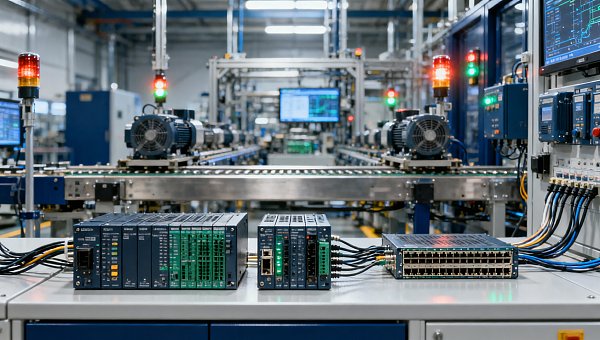
On May 14, 2026, the Association of German Engineers (VDI) released VDI 2510 Blatt 3:2026 — a new technical guideline that establishes time-sensitive networking (TSN) combined with OPC UA PubSub as the mandatory communication architecture for multi-AGV/AMR collaborative navigation systems. This development directly impacts industrial automation, smart logistics, and automotive manufacturing supply chains in Germany and beyond — primarily because it introduces enforceable real-time performance thresholds that will shape procurement criteria starting in 2027.
Event Overview
The VDI officially published VDI 2510 Blatt 3:2026 on May 14, 2026. The guideline specifies that autonomous guided vehicles (AGVs) and autonomous mobile robots (AMRs) deployed in synchronized fleet operations must implement TSN-enabled Ethernet infrastructure paired with OPC UA PubSub for data exchange. It defines strict deterministic requirements: end-to-end latency ≤100 μs and jitter <±5 μs. From 2027 onward, compliance with this standard will be a mandatory qualification criterion for tenders issued by German automotive OEMs and Tier-1 suppliers for intelligent intralogistics systems.
Industries Affected
Direct Export Enterprises
Chinese and other non-German AGV/AMR manufacturers exporting to Germany — particularly those targeting automotive clients — now face a de facto technical barrier. Non-compliant systems may be disqualified from bidding even if functionally adequate. Impact manifests in delayed market entry, increased pre-tender validation costs (e.g., third-party TSN timing certification), and potential redesign cycles for existing product lines.
Raw Material & Component Suppliers
Suppliers of real-time controllers, FPGA-based network interface cards, TSN-capable switches, and embedded OPC UA stacks are seeing revised demand signals. Their customers — AGV system integrators — are accelerating R&D roadmaps to embed TSN-aware firmware and PubSub-native application layers. This shifts procurement timelines and increases emphasis on interoperability testing documentation.
Manufacturing Equipment Integrators
System integrators delivering turnkey intralogistics solutions to German auto plants must now validate full-stack timing behavior — from sensor fusion through motion planning to wireless handover between access points. Legacy CAN-based or ROS 2 DDS-only architectures no longer meet baseline eligibility. Integration efforts now require cross-layer co-design involving network engineers, control software developers, and safety certifiers.
Logistics & Digital Twin Service Providers
Providers offering simulation-as-a-service, digital twin synchronization, or fleet orchestration platforms must adapt their data ingestion pipelines to ingest and process PubSub-encoded, timestamped TSN frames — not just periodic MQTT or REST payloads. Latency-aware replay, deterministic event sequencing, and traceable clock synchronization become service-level requirements rather than optional enhancements.
Key Considerations and Recommended Actions
Validate Timing Stack Compatibility Early
Manufacturers should audit current hardware abstraction layers and middleware for native TSN scheduling support (e.g., IEEE 802.1Qbv, Qbu, and Qci) and OPC UA PubSub over UDP/TCP. If relying on gateway-based bridging (e.g., DDS-to-PubSub), assess whether added hops violate the 100 μs end-to-end budget.
Engage with VDI-Certified Test Labs Now
Since formal conformance testing protocols under VDI 2510 Blatt 3 are still being finalized, early engagement with labs accredited by DAkkS (German Accreditation Body) helps shape test case definitions and avoids last-minute rework. Priority should go to measuring worst-case jitter across mesh topologies and wireless handovers.
Update Technical Documentation for EU Market Access
CE marking dossiers for AGV/AMR systems targeting Germany must now include TSN timing analysis reports, PubSub message schema definitions, and evidence of deterministic behavior under load (e.g., >95% packet delivery at 10 kHz update rate). These documents will be reviewed during notified body assessments starting Q3 2026.
Editorial Perspective / Industry Observation
Observably, VDI 2510 Blatt 3 does not introduce novel technology — TSN and OPC UA PubSub have been field-tested in pilot deployments since 2022 — but it marks the first binding institutionalization of deterministic IIoT communication in mobile robotics. Analysis shows this reflects a broader shift: from ‘functional safety’ to ‘timing safety’ as a core assurance dimension. From an industry perspective, the standard is better understood not as a narrow interoperability rule, but as a signal that synchronized autonomy — where hundreds of agents coordinate motion without centralized arbitration — is transitioning from lab demonstration to production requirement. Current more critical questions involve scalability beyond 200-node fleets and wireless TSN robustness in multipath industrial environments — both remain under active study within VDI’s working group.
Conclusion
This guideline represents a milestone in the convergence of industrial networking, real-time control, and distributed robotics. Its enforcement timeline provides a clear runway — but also narrows technical options rapidly. A rational conclusion is that compliance will separate vendors capable of full-stack deterministic design from those relying on point-solution adaptations. For global players, alignment with VDI 2510 Blatt 3 may soon serve as a de facto benchmark for high-assurance automation markets beyond Germany — including South Korea’s K-Industry 5.0 roadmap and upcoming EU AI Act annexes on autonomous machinery.
Source Attribution
Official publication: VDI 2510 Blatt 3:2026, issued by Verein Deutscher Ingenieure (VDI), May 14, 2026. Available via VDI-Richtlinien-Portal (https://www.vdi.de/richtlinien).
Further details on implementation timelines and conformity assessment procedures are pending official updates from VDI’s Committee for Automation Technology (FAT) and the German Federal Ministry for Economic Affairs and Climate Action (BMWK). These developments warrant ongoing monitoring through Q3 2026.
Search News
Hot Articles
- Carbon Fiber StructuresHow to Specify Aerospace Carbon Fiber Assemblies for Lightweight, Load-Bearing PartsJul 11, 2026
- Machine VisionXiaomi, Alibaba DAMO Academy Drive Open-Source Robotics Model Ecosystem, Lowering Algorithm Development Barriers for Overseas SMEs Adopting Chinese Robotics SolutionsMar 30, 2026
- Cobots & ArmsShanxi 'AI+' Conference Showcases Embodied Intelligence with Multinational Buyer Engagement: Key Industry ImplicationsMar 30, 2026
Popular Tags
Recommended News
 Jul 11, 2026How to Specify Aerospace Carbon Fiber Assemblies for Lightweight, Load-Bearing PartsAerospace carbon fiber assemblies: learn how to specify laminate design, load data, joining methods, and inspection controls for lighter, reliable load-bearing aerospace parts.Elena Rostova (UAV Systems Researcher)
 Mar 30, 2026Xiaomi, Alibaba DAMO Academy Drive Open-Source Robotics Model Ecosystem, Lowering Algorithm Development Barriers for Overseas SMEs Adopting Chinese Robotics SolutionsXiaomi & Alibaba DAMO Academy's open-source robotics models lower algorithm barriers for global SMEs. Boost efficiency in manufacturing, logistics & smart retail with ROS 2 compatible solutions.TSV Data Lab
 Mar 30, 2026Shanxi 'AI+' Conference Showcases Embodied Intelligence with Multinational Buyer Engagement: Key Industry ImplicationsShanxi 'AI+' Conference highlights embodied intelligence with Tesla, Ubtech & Jiantao showcasing multimodal robotics. 40+ global buyers validated tech on-site, creating new B2B channels for industrial automation & AI solutions.Chen Wei (Automation Lead Engineer)
 Mar 30, 2026Zhongguancun Unveils 6G Integrated Sensing-Computing-Intelligence Platform to Empower Embodied Robots for Global Industrial ApplicationsZhongguancun's new 6G platform revolutionizes industrial robotics with <10ms latency, empowering global automotive, logistics & port automation. Discover how this tech boosts China's smart manufacturing exports.TSV Data Lab
 Mar 30, 2026Mech-Mind Tianjin Embodied Intelligence R&D and Production Base Goes Live, Cutting Delivery Time by 20%–30% for Global Customized AMR+Vision SolutionsMech-Mind's Tianjin AMR+Vision production base cuts delivery time by 20%-30% for欧美 & Latin American markets. Discover how this PLd-certified facility accelerates customized robotics solutions for smart manufacturing and logistics.Chen Wei (Automation Lead Engineer)
 Mar 30, 2026Boao Forum Reveals 'Co-evolution of Big and Small Brains' Trend in Humanoid Robots, China's Embodied Intelligence Accelerates Adaptation to Overseas Manufacturing Service ScenariosDiscover how China's humanoid robots, featuring 'Co-evolution of Big and Small Brains,' are revolutionizing global manufacturing. Learn about Embodied Tian Gong 3.0's ISO compliance and overseas deployment at Boao Forum 2026.Chen Wei (Automation Lead Engineer)
 Mar 30, 2026China Railway Industrial Secures Patent for Embodied Robotics in Material Handling, Boosting High-Precision Delivery Capabilities for Overseas Infrastructure and Manufacturing ProjectsChina Railway Industrial's new patent for embodied robotics in material handling boosts high-precision delivery for global infrastructure & manufacturing. Discover how this innovation enhances logistics accuracy in automotive, rail transit & EPC projects.Chen Wei (Automation Lead Engineer)
 Sep 28, 2026Spindle Runout Measurement in Germany: DIN Standards, Methods, and Acceptance LimitsSpindle runout measurement Germany: explore DIN standards, proven methods, acceptance limits, and audit-ready practices for reliable machining quality.Dr. Marcus Vance
 Sep 27, 2026How to Select Wall-Mount Edge Devices for Space-Constrained Factory NetworksWall mount edge devices for space-constrained factories: evaluate workload, thermal design, power resilience, cable access, and network reliability for smarter deployments.TSV Data Lab
 Sep 26, 2026Machining Tolerance Analysis: How to Set Limits That Meet Function and Cost TargetsMachining tolerance analysis: learn how to set functional limits, control tolerance stacks, reduce inspection risk, and balance precision with production cost.Dr. Marcus Vance
 Sep 25, 2026How to Evaluate an Industrial Infrastructure Data Platform for Multi-Site OperationsIndustrial infrastructure data platform evaluation guide for multi-site operations: compare data quality, edge resilience, interoperability, governance, and scalable proof-of-value criteria.Victor Lin (Chief Software Architect)
 Sep 24, 2026How to Select Machine Vision Optics for Accurate Inspection at Different Working DistancesMachine vision optics selection guide for accurate inspection at every working distance. Compare FOV, pixel scale, DOF, distortion, lighting, and telecentric options.TSV Data Lab
 Sep 23, 2026How to Evaluate a Machine Vision System Integrator for High-Speed Inspection LinesChoose a machine vision system integrator with proven expertise in high-speed inspection, reliable reject timing, robust optics, and measurable acceptance criteria.TSV Data Lab
 Sep 28, 2026When is a SCADA API the right choice for connecting plant systems?SCADA API guide: learn when governed plant data integration improves traceability, security, and scalability—without compromising real-time control.Victor Lin (Chief Software Architect)
 Sep 27, 2026How SCADA data integration improves traceability across production linesSCADA data integration connects production-line data to improve traceability, accelerate quality investigations, and strengthen safety decisions.Victor Lin (Chief Software Architect)
 Sep 26, 2026What to define before starting SCADA integration planningSCADA integration planning starts with clear scope, control boundaries, data models, cybersecurity, and testing. Discover the definitions that reduce risk and costly rework.Victor Lin (Chief Software Architect)
 Sep 25, 2026How a smart factory with Industrial IoT reduces production blind spotsDiscover how a smart factory with Industrial IoT turns real-time machine, quality, and workflow data into actionable insights that reduce production blind spots and delivery risks.Victor Lin (Chief Software Architect)
 Sep 24, 2026When does Industrial IoT make smart manufacturing easier to scale?Smart manufacturing Industrial IoT scales when trusted data, interoperable systems, and secure workflows turn connected assets into measurable gains.TSV Data Lab
 Sep 23, 2026What drives ultra-precision machining cost at 1-micron tolerance?Ultra precision machining cost per part at 1 micron tolerance depends on process, material, metrology, and yield. Learn how to compare quotes confidently.Dr. Marcus Vance
 Sep 22, 2026Drone Engine-T550CC Applications: Build the UAV Power System Around the MissionAn application guide for Drone Engine-T550CC integration, covering payload planning, airframe matching, cooling, fuel, vibration, test procedures, documentation, and service preparation.Elena Rostova (UAV Systems Researcher)
 Sep 22, 2026How to Evaluate Industrial Edge Computing Vendors for Factory DeploymentIndustrial edge computing vendor evaluation guide for factories: compare latency, protocol fit, reliability, security, and lifecycle support before deployment.TSV Data Lab
 Sep 21, 2026Drone Payload Integration: Matching Power, Data, and Center of Gravity for Reliable FlightsDrone payload integration made practical: balance power, data, center of gravity, and endurance to build safer, more reliable mission-ready flights.Elena Rostova (UAV Systems Researcher)
 Sep 20, 2026Autonomous Navigation Pricing: Cost Drivers and Budget Benchmarks for AMR ProjectsAutonomous navigation price explained: compare AMR cost drivers, software, sensors, integration, safety, and lifecycle budgets to build a scalable project plan.Chen Wei (Automation Lead Engineer)
 Sep 19, 2026How to Scope Automation Integration Services for Multi-System Factory ProjectsAutomation integration services: learn how to scope multi-system factory projects with clear workflows, interface contracts, safety boundaries, and acceptance criteria.Victor Lin (Chief Software Architect)