Path Planning Trade-Offs in AGV and AMR Mixed Environments
Publication Date
author
In mixed intralogistics environments, choosing the right AGV AMR path planning algorithms is rarely a simple optimization problem. For project managers balancing throughput, safety, fleet interoperability, and deployment cost, every routing decision carries measurable operational trade-offs. This article examines how AGV and AMR systems perform under shared navigation constraints, helping engineering-led teams make clearer, data-grounded planning choices.
For most engineering and operations leaders, the core question is not whether automated vehicles can move material efficiently. It is whether a specific path planning strategy will remain stable when fixed-route AGVs and more adaptive AMRs share the same aisles, docking points, and production priorities. In practice, the answer depends less on vendor claims and more on how routing logic handles congestion, dynamic obstacles, traffic priority, map accuracy, and recovery behavior under failure.
The most useful overall judgment is this: in mixed fleets, there is no universally best path planning model. Rule-based AGV logic often delivers predictability and lower validation burden, while AMR navigation usually improves adaptability in changing environments. The trade-off is that greater flexibility can introduce more variables in traffic control, system integration, and performance verification. Project managers should therefore assess AGV AMR path planning algorithms as a business and systems engineering decision, not as a standalone software feature.
What project managers actually need to decide in mixed AGV and AMR deployments

When readers search for topics like AGV AMR path planning algorithms, they are usually not looking for abstract robotics theory. They want a practical basis for choosing between routing approaches, understanding operational consequences, and reducing project risk before rollout. For project managers, the real issue is how path planning affects throughput, commissioning time, safety compliance, and long-term maintainability.
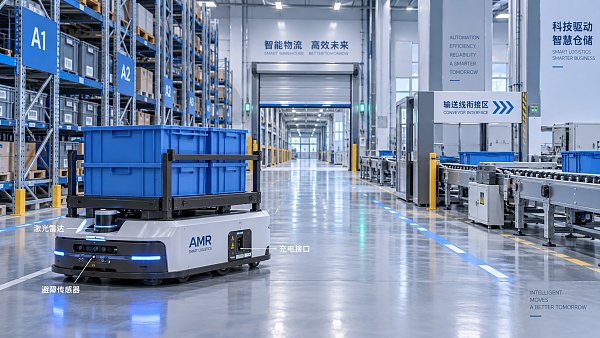
In mixed environments, AGVs often operate on predefined paths, markers, reflectors, magnetic strips, or tightly bounded map logic. AMRs, by contrast, typically rely on SLAM, lidar, cameras, or sensor fusion to generate or adjust routes in real time. This creates an immediate planning challenge: one fleet prefers certainty, the other is designed to adapt. The system-level trade-off emerges when both must cooperate inside the same logistics process.
The most important management questions usually include five areas. First, will routing decisions support stable material flow under peak load? Second, how much layout change can the site tolerate without expensive remapping or software revalidation? Third, what traffic conflicts appear at intersections, narrow aisles, and shared loading areas? Fourth, how transparent are the planning rules when operators or engineers need to diagnose incidents? Fifth, what is the total cost of performance assurance over the life of the system?
These questions matter because path planning is not just about shortest distance. In a production setting, the best route may be the one that minimizes queue buildup, avoids mission deadlock, respects forklift coexistence rules, and preserves service levels for higher-priority transport tasks. A fleet that looks efficient in a vendor demo may underperform when exception handling, battery constraints, and human traffic are introduced.
Why path planning trade-offs become more complex when AGVs and AMRs share one site
In a single-technology fleet, the planning model can be optimized around one operating assumption. Mixed fleets are different. AGVs often behave deterministically, which makes them easier to validate in repetitive workflows such as line-side delivery, tugging, or pallet transfer between fixed points. AMRs provide route flexibility and can react to blocked paths, temporary obstacles, or evolving layouts. However, mixing deterministic and adaptive behavior creates coordination overhead.
One common problem is timing mismatch. An AGV may approach an intersection on a reserved path with a predefined stopping and restarting profile, while an AMR may continuously recalculate around pedestrian traffic or changing aisle conditions. If the fleet manager or traffic controller does not reconcile these behaviors properly, local efficiency can turn into network-wide delay. A single hesitation point can ripple through a plant and reduce task completion rates more than a slightly longer but more stable route strategy.
Another complexity is map abstraction. AGV systems may use simplified route graphs with clear control points, while AMRs often depend on richer environmental models. In mixed environments, engineers must decide whether to unify traffic logic at a higher orchestration layer or allow each subsystem to keep its native planning logic. The first approach may improve coordination but increases integration effort. The second may reduce initial deployment time but can produce blind spots in conflict handling.
Project managers should also recognize that operational variability changes the value of algorithmic sophistication. In low-variability plants with repeatable routes, advanced dynamic replanning may offer limited financial benefit. In high-mix warehouses or electronics assembly environments with frequent floor changes, the same AMR capabilities may sharply reduce engineering intervention. The right decision depends on how often the environment, mission priorities, and obstacle patterns actually change.
How to compare AGV AMR path planning algorithms beyond vendor marketing
To make a credible decision, compare algorithms using measurable operating criteria rather than feature labels. Terms like intelligent routing, adaptive navigation, and hybrid planning are too vague to support capital investment decisions. Instead, ask how the planning method performs under specific site conditions and failure scenarios.
A practical comparison framework starts with route stability. How often does the algorithm produce predictable travel times under normal and peak traffic? Stable cycle time often matters more than theoretical shortest path performance, especially in synchronized production environments. If a line-side replenishment route varies too widely, downstream processes absorb the cost.
Next is congestion behavior. Many planning algorithms look acceptable in isolated vehicle tests but fail when multiple units compete for the same choke points. Ask for data on deadlock avoidance, intersection arbitration, rerouting latency, and queue recovery time. In mixed fleets, this matters because AGVs may expect reserved right-of-way while AMRs are built to negotiate and detour. The coordination logic must prevent indecision loops and repeated path oscillation.
Third is obstacle response quality. An AMR that can bypass a temporary obstruction may outperform a fixed-path AGV in a dynamic warehouse. But not all detours are equally useful. Detours that increase route unpredictability or conflict with pedestrian safety zones can create hidden operational cost. Evaluate whether the system distinguishes between transient obstacles, recurring blockages, and no-go conditions that should trigger supervisor escalation.
Fourth is computational transparency and diagnosability. This is often overlooked by non-specialist buyers, yet it strongly affects lifecycle cost. When throughput drops, can your team understand why a vehicle chose a route, waited at a node, or aborted a mission? Black-box planning can slow root-cause analysis and extend vendor dependence. For engineering-led organizations, explainability is not a luxury; it is a maintainability requirement.
Fifth is recovery behavior. A strong path planning algorithm is not just good at movement when conditions are ideal. It must also recover cleanly after localization drift, blocked docks, communication delays, or incomplete missions. Recovery time, resumption logic, and manual override design are often better indicators of real operational maturity than headline navigation features.
Where the main trade-offs show up in cost, throughput, and implementation risk
From a project perspective, the biggest trade-off is usually between predictability and flexibility. AGV-style routing tends to simplify validation, safety zoning, and traffic expectation. That can lower deployment risk in highly structured operations. AMR-oriented planning tends to improve adaptability, reduce physical guidance infrastructure, and support future layout changes. That can lower reconfiguration cost over time. The challenge is that flexibility often requires stronger fleet management logic and more rigorous site-level simulation.
Throughput trade-offs are also nuanced. In a stable environment with narrow process variance, fixed or semi-fixed routing may outperform dynamic planning because vehicles behave consistently and traffic is easier to orchestrate. In a site with frequent temporary blockages or changing pick paths, adaptive planning may preserve task flow better. The mistake is assuming that dynamic always means faster. In some facilities, constant replanning creates excessive micro-delays, conservative speed adjustments, or unnecessary conflict checks.
Safety and compliance introduce another layer of trade-off. AGV pathways can be easier to document and audit because movement envelopes are constrained. AMR navigation may require more attention to sensor coverage, edge-case validation, and behavioral consistency around people and manual vehicles. In mixed environments, project managers should verify not only individual vehicle safety functions but also the logic of interaction between systems with different assumptions about right-of-way and route certainty.
Implementation risk often concentrates at integration points. Warehouse control systems, MES interfaces, elevator controls, fire door logic, and charging schedules can all influence path planning outcomes. A technically strong algorithm may still underdeliver if upstream task release logic floods a busy zone or if docking rules create route contention. That is why path planning should be evaluated together with traffic management, task orchestration, and facility constraints, not as an isolated module.
Total cost of ownership is similarly affected. A lower-cost AGV deployment may become expensive if every layout change requires route engineering and downtime. A highly capable AMR system may become expensive if site complexity forces heavy tuning, specialized support, or recurring map maintenance. The right financial comparison must include commissioning labor, retraining effort, software update burden, and the cost of performance drift over time.
How to choose the right planning approach for your operating profile
For project managers, the best decision framework begins with classifying the environment rather than the vehicle brand. Start by asking how structured the material flow really is. If routes, pickup points, and production timing are highly repeatable, deterministic AGV logic may deliver the lowest risk and easiest operational governance. If the site changes frequently or must absorb variable workflows, AMR-style dynamic planning may create more value despite added coordination complexity.
Next, define your dominant failure mode. If your operation suffers mainly from congestion at shared intersections, focus on traffic arbitration, zone control, and mission priority logic. If your main pain point is route disruption from human activity or temporary storage overflow, focus on obstacle classification and rerouting quality. If uptime risk comes from map drift or inconsistent localization, prioritize localization robustness over advanced path optimization claims.
It is also useful to segment missions by criticality. Not every task needs the same planning model. Time-sensitive line feeding may justify more deterministic route control, while lower-priority replenishment or waste transport can use adaptive planning. Some of the most successful mixed deployments are not those that force one algorithmic philosophy across all tasks, but those that assign planning modes according to process criticality and environmental stability.
Simulation and pilot testing should be mandatory before full-scale commitment. A credible pilot should include peak-shift traffic, blocked aisle scenarios, mixed pedestrian activity, charging interruptions, and priority conflicts between urgent and routine missions. Project teams should measure not only average travel time, but also travel time variance, queue length at choke points, mission completion rate, recovery time after interruption, and operator intervention frequency.
Decision-makers should request benchmark evidence in a format that engineering teams can validate. Useful data includes route success rate under congestion, mean recovery time after obstacle-induced stop, localization confidence under reflective or cluttered environments, and throughput degradation at defined fleet density levels. These metrics support specification writing and supplier comparison far better than generic claims about intelligent autonomy.
What a strong supplier evaluation checklist should include
When reviewing suppliers or internal solution proposals, path planning should be tested against a disciplined checklist. Ask whether the routing engine supports both static restrictions and dynamic priority changes. Confirm how mixed traffic rules are enforced at intersections, docking zones, and narrow aisles. Clarify whether deadlock prevention is preventive, reactive, or partly manual. Each of these choices affects scalability.
Ask how the system handles degraded states. Can vehicles continue with limited functionality if a sensor input becomes unreliable? How does the planner behave when communication with the fleet manager is delayed? Is there a safe fallback mode, and how much throughput is lost when it activates? These questions reveal operational resilience more effectively than polished demonstrations.
Data access is another major point. Project managers should ensure their teams can extract event logs, route decisions, stop causes, and conflict statistics. Without this visibility, continuous improvement becomes difficult and supplier comparison remains subjective. For organizations that care about engineering truth and technical accountability, observability should be treated as a procurement requirement.
Finally, check change management effort. How much work is required to modify routes, add new workstations, reclassify a zone, or rebalance traffic priorities? In mixed AGV and AMR operations, the winning solution is often the one that keeps future engineering friction low while preserving performance clarity. Scalability is not just about adding more vehicles. It is about adding complexity without losing control.
Conclusion: the right algorithm is the one that matches your constraints, not the one with the biggest claims
In mixed intralogistics operations, choosing among AGV AMR path planning algorithms is fundamentally a trade-off decision across predictability, flexibility, diagnosability, and lifecycle cost. AGV-oriented logic often excels where process repeatability and validation discipline matter most. AMR-oriented planning often creates value where layouts, obstacles, and task flows change frequently. Neither approach is automatically superior once both fleets must coexist.
For project managers and engineering leaders, the most reliable path forward is to evaluate planning strategies through operational metrics, failure behavior, and integration burden. Focus on throughput stability, congestion handling, obstacle response, recovery performance, and transparency of decision logic. If those areas are measured rigorously, the right planning model usually becomes clear.
In other words, successful mixed-fleet navigation is not achieved by chasing autonomy labels. It comes from aligning routing logic with site reality, process criticality, and measurable system behavior. That is the standard decision-makers should apply when assessing the next generation of AGV and AMR deployments.
Search News
Hot Articles
- Carbon Fiber StructuresHow to Specify Aerospace Carbon Fiber Assemblies for Lightweight, Load-Bearing PartsJul 11, 2026
- Machine VisionXiaomi, Alibaba DAMO Academy Drive Open-Source Robotics Model Ecosystem, Lowering Algorithm Development Barriers for Overseas SMEs Adopting Chinese Robotics SolutionsMar 30, 2026
- Cobots & ArmsShanxi 'AI+' Conference Showcases Embodied Intelligence with Multinational Buyer Engagement: Key Industry ImplicationsMar 30, 2026
Popular Tags
Recommended News
 Jul 11, 2026How to Specify Aerospace Carbon Fiber Assemblies for Lightweight, Load-Bearing PartsAerospace carbon fiber assemblies: learn how to specify laminate design, load data, joining methods, and inspection controls for lighter, reliable load-bearing aerospace parts.Elena Rostova (UAV Systems Researcher)
 Mar 30, 2026Xiaomi, Alibaba DAMO Academy Drive Open-Source Robotics Model Ecosystem, Lowering Algorithm Development Barriers for Overseas SMEs Adopting Chinese Robotics SolutionsXiaomi & Alibaba DAMO Academy's open-source robotics models lower algorithm barriers for global SMEs. Boost efficiency in manufacturing, logistics & smart retail with ROS 2 compatible solutions.TSV Data Lab
 Mar 30, 2026Shanxi 'AI+' Conference Showcases Embodied Intelligence with Multinational Buyer Engagement: Key Industry ImplicationsShanxi 'AI+' Conference highlights embodied intelligence with Tesla, Ubtech & Jiantao showcasing multimodal robotics. 40+ global buyers validated tech on-site, creating new B2B channels for industrial automation & AI solutions.Chen Wei (Automation Lead Engineer)
 Mar 30, 2026Zhongguancun Unveils 6G Integrated Sensing-Computing-Intelligence Platform to Empower Embodied Robots for Global Industrial ApplicationsZhongguancun's new 6G platform revolutionizes industrial robotics with <10ms latency, empowering global automotive, logistics & port automation. Discover how this tech boosts China's smart manufacturing exports.TSV Data Lab
 Mar 30, 2026Mech-Mind Tianjin Embodied Intelligence R&D and Production Base Goes Live, Cutting Delivery Time by 20%–30% for Global Customized AMR+Vision SolutionsMech-Mind's Tianjin AMR+Vision production base cuts delivery time by 20%-30% for欧美 & Latin American markets. Discover how this PLd-certified facility accelerates customized robotics solutions for smart manufacturing and logistics.Chen Wei (Automation Lead Engineer)
 Mar 30, 2026Boao Forum Reveals 'Co-evolution of Big and Small Brains' Trend in Humanoid Robots, China's Embodied Intelligence Accelerates Adaptation to Overseas Manufacturing Service ScenariosDiscover how China's humanoid robots, featuring 'Co-evolution of Big and Small Brains,' are revolutionizing global manufacturing. Learn about Embodied Tian Gong 3.0's ISO compliance and overseas deployment at Boao Forum 2026.Chen Wei (Automation Lead Engineer)
 Mar 30, 2026China Railway Industrial Secures Patent for Embodied Robotics in Material Handling, Boosting High-Precision Delivery Capabilities for Overseas Infrastructure and Manufacturing ProjectsChina Railway Industrial's new patent for embodied robotics in material handling boosts high-precision delivery for global infrastructure & manufacturing. Discover how this innovation enhances logistics accuracy in automotive, rail transit & EPC projects.Chen Wei (Automation Lead Engineer)
 Sep 28, 2026Spindle Runout Measurement in Germany: DIN Standards, Methods, and Acceptance LimitsSpindle runout measurement Germany: explore DIN standards, proven methods, acceptance limits, and audit-ready practices for reliable machining quality.Dr. Marcus Vance
 Sep 27, 2026How to Select Wall-Mount Edge Devices for Space-Constrained Factory NetworksWall mount edge devices for space-constrained factories: evaluate workload, thermal design, power resilience, cable access, and network reliability for smarter deployments.TSV Data Lab
 Sep 26, 2026Machining Tolerance Analysis: How to Set Limits That Meet Function and Cost TargetsMachining tolerance analysis: learn how to set functional limits, control tolerance stacks, reduce inspection risk, and balance precision with production cost.Dr. Marcus Vance
 Sep 25, 2026How to Evaluate an Industrial Infrastructure Data Platform for Multi-Site OperationsIndustrial infrastructure data platform evaluation guide for multi-site operations: compare data quality, edge resilience, interoperability, governance, and scalable proof-of-value criteria.Victor Lin (Chief Software Architect)
 Sep 24, 2026How to Select Machine Vision Optics for Accurate Inspection at Different Working DistancesMachine vision optics selection guide for accurate inspection at every working distance. Compare FOV, pixel scale, DOF, distortion, lighting, and telecentric options.TSV Data Lab
 Sep 23, 2026How to Evaluate a Machine Vision System Integrator for High-Speed Inspection LinesChoose a machine vision system integrator with proven expertise in high-speed inspection, reliable reject timing, robust optics, and measurable acceptance criteria.TSV Data Lab
 Sep 28, 2026When is a SCADA API the right choice for connecting plant systems?SCADA API guide: learn when governed plant data integration improves traceability, security, and scalability—without compromising real-time control.Victor Lin (Chief Software Architect)
 Sep 27, 2026How SCADA data integration improves traceability across production linesSCADA data integration connects production-line data to improve traceability, accelerate quality investigations, and strengthen safety decisions.Victor Lin (Chief Software Architect)
 Sep 26, 2026What to define before starting SCADA integration planningSCADA integration planning starts with clear scope, control boundaries, data models, cybersecurity, and testing. Discover the definitions that reduce risk and costly rework.Victor Lin (Chief Software Architect)
 Sep 25, 2026How a smart factory with Industrial IoT reduces production blind spotsDiscover how a smart factory with Industrial IoT turns real-time machine, quality, and workflow data into actionable insights that reduce production blind spots and delivery risks.Victor Lin (Chief Software Architect)
 Sep 24, 2026When does Industrial IoT make smart manufacturing easier to scale?Smart manufacturing Industrial IoT scales when trusted data, interoperable systems, and secure workflows turn connected assets into measurable gains.TSV Data Lab
 Sep 23, 2026What drives ultra-precision machining cost at 1-micron tolerance?Ultra precision machining cost per part at 1 micron tolerance depends on process, material, metrology, and yield. Learn how to compare quotes confidently.Dr. Marcus Vance
 Sep 22, 2026Drone Engine-T550CC Applications: Build the UAV Power System Around the MissionAn application guide for Drone Engine-T550CC integration, covering payload planning, airframe matching, cooling, fuel, vibration, test procedures, documentation, and service preparation.Elena Rostova (UAV Systems Researcher)
 Sep 22, 2026How to Evaluate Industrial Edge Computing Vendors for Factory DeploymentIndustrial edge computing vendor evaluation guide for factories: compare latency, protocol fit, reliability, security, and lifecycle support before deployment.TSV Data Lab
 Sep 21, 2026Drone Payload Integration: Matching Power, Data, and Center of Gravity for Reliable FlightsDrone payload integration made practical: balance power, data, center of gravity, and endurance to build safer, more reliable mission-ready flights.Elena Rostova (UAV Systems Researcher)
 Sep 20, 2026Autonomous Navigation Pricing: Cost Drivers and Budget Benchmarks for AMR ProjectsAutonomous navigation price explained: compare AMR cost drivers, software, sensors, integration, safety, and lifecycle budgets to build a scalable project plan.Chen Wei (Automation Lead Engineer)
 Sep 19, 2026How to Scope Automation Integration Services for Multi-System Factory ProjectsAutomation integration services: learn how to scope multi-system factory projects with clear workflows, interface contracts, safety boundaries, and acceptance criteria.Victor Lin (Chief Software Architect)