Japan to Mandate Energy Labels for Imported AGVs/AMRs from Q3 2026
Publication Date
author
Editor’s Note: This article reports on a regulatory development affecting global smart logistics equipment trade, with specific implications for Chinese exporters and supply chain stakeholders.
Event Overview
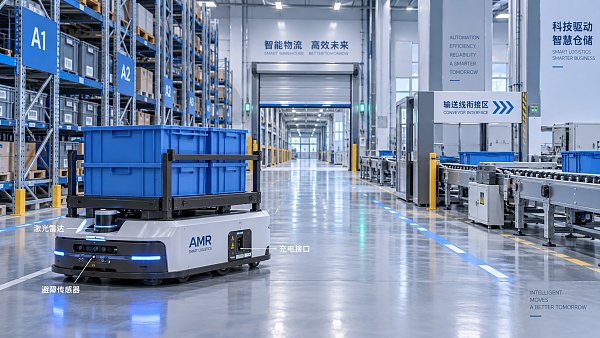
On May 12, 2026, Japan’s Ministry of Economy, Trade and Industry (METI) released the Guidelines for Green Import of Intelligent Logistics Equipment. The policy mandates that all imported automated guided vehicles (AGVs) and autonomous mobile robots (AMRs) must bear the JIS C 8901 energy efficiency label—graded A++ to D—starting October 1, 2026. Compliance requires submission of third-party energy performance test reports accredited under Japan’s conformity assessment framework. Failure to obtain JIS certification will result in exclusion from procurement lists of major Japanese industrial users, including Toyota Motor Corporation and Panasonic Holdings Corporation.
Industries Affected
Direct Exporters (Trading Enterprises)
Chinese manufacturers exporting AGVs/AMRs to Japan face immediate compliance pressure: product registration, labeling, and documentation must be completed prior to customs clearance. Non-compliant shipments may be detained or rejected, directly impacting revenue recognition and contractual delivery timelines. Additionally, loss of eligibility for key OEM tenders reduces long-term market access—not just for new contracts, but also for after-sales service and upgrade agreements.
Raw Material & Component Suppliers
Suppliers of motors, battery systems, power management ICs, and embedded controllers are indirectly affected. As OEMs redesign products to meet JIS C 8901’s efficiency thresholds (e.g., standby power limits, cycle-energy ratios), demand shifts toward higher-efficiency components. Suppliers lacking energy-performance data traceability or JIS-aligned test documentation may see order volumes decline, particularly where tier-1 integrators require component-level validation.
Contract Manufacturers & System Integrators
Domestic and overseas contract manufacturers assembling AGV/AMR units for Chinese exporters must adapt production workflows to accommodate label affixing, updated technical documentation, and pre-shipment verification steps. Integration of energy test protocols into final QA processes adds time and cost—especially where firmware or thermal management logic must be modified to achieve target efficiency grades.
Supply Chain Service Providers
Certification consultants, testing laboratories, and customs brokers specializing in Japan-bound industrial equipment now see rising demand for JIS C 8901-specific support. However, capacity constraints exist: only 12 METI-recognized labs globally offer full-scope JIS C 8901 testing for mobile robotics, and lead times currently exceed 14 weeks. Delays here cascade across the entire export pipeline—from design freeze to port release.
Key Considerations and Recommended Actions
Verify JIS C 8901 Applicability Scope Early
Not all AGV/AMR configurations fall under the mandate. METI’s annex clarifies exemptions for low-voltage (<24 V DC), manually guided, or non-rechargeable units. Exporters should conduct preliminary classification audits before committing to full certification—avoiding unnecessary testing costs.
Prioritize Third-Party Lab Engagement Now
Given current lab backlogs and the October 1, 2026 enforcement date, companies should initiate engagement with METI-accredited testing bodies by Q3 2026 at the latest. Pilot testing during prototype phase—not just pre-certification—is advised to identify efficiency bottlenecks early.
Update Technical Documentation for Japanese Market Requirements
JIS certification requires Japanese-language user manuals, safety warnings, and energy performance declarations aligned with METI’s format specifications. Automated translation is insufficient; localization must reflect regulatory terminology and contextual usage norms—particularly for operational modes affecting energy consumption (e.g., ‘eco-navigation’, ‘sleep-wake cycling’).
Editorial Perspective / Industry Observation
Observably, this policy signals a broader shift in Japan’s industrial import strategy: energy efficiency is no longer a voluntary ESG metric but a hard technical gate for market access. Analysis shows that METI’s approach mirrors the EU’s Ecodesign Directive logic—but applied earlier in the automation hardware lifecycle, and with stricter enforcement teeth tied to corporate procurement systems. From an industry perspective, it is less a standalone labeling rule and more a de facto standardization lever: JIS C 8901 compliance is likely to become a baseline expectation among Tier-1 suppliers across ASEAN and Oceania markets within 18–24 months. Current more critical than label design is the upstream impact on R&D roadmaps—particularly for battery chemistry selection and motion-planning algorithm optimization.
Conclusion
This regulation marks a structural inflection point—not merely for export compliance, but for how energy performance is engineered into intelligent logistics hardware. It elevates efficiency from a differentiator to a prerequisite, reshaping competitive dynamics across the AGV/AMR value chain. A rational interpretation is that the policy accelerates consolidation among mid-tier Chinese vendors unable to absorb certification complexity, while reinforcing technical leadership among those investing proactively in energy-aware system architecture.
Source Attribution and Monitoring Notes
Primary source: Japan Ministry of Economy, Trade and Industry (METI), Guidelines for Green Import of Intelligent Logistics Equipment, Notice No. METI/ILG-2026-007, issued May 12, 2026. Available at: https://www.meti.go.jp/english/policy/mono_info_service/robot/
Note: METI has indicated that detailed implementation rules—including fee structures, transitional arrangements for stock inventories, and lab accreditation updates—will be published in Q2 2026. These remain under active observation.
Search News
Hot Articles
- Carbon Fiber StructuresHow to Specify Aerospace Carbon Fiber Assemblies for Lightweight, Load-Bearing PartsJul 11, 2026
- Machine VisionXiaomi, Alibaba DAMO Academy Drive Open-Source Robotics Model Ecosystem, Lowering Algorithm Development Barriers for Overseas SMEs Adopting Chinese Robotics SolutionsMar 30, 2026
- Cobots & ArmsShanxi 'AI+' Conference Showcases Embodied Intelligence with Multinational Buyer Engagement: Key Industry ImplicationsMar 30, 2026
Popular Tags
Recommended News
 Jul 11, 2026How to Specify Aerospace Carbon Fiber Assemblies for Lightweight, Load-Bearing PartsAerospace carbon fiber assemblies: learn how to specify laminate design, load data, joining methods, and inspection controls for lighter, reliable load-bearing aerospace parts.Elena Rostova (UAV Systems Researcher)
 Mar 30, 2026Xiaomi, Alibaba DAMO Academy Drive Open-Source Robotics Model Ecosystem, Lowering Algorithm Development Barriers for Overseas SMEs Adopting Chinese Robotics SolutionsXiaomi & Alibaba DAMO Academy's open-source robotics models lower algorithm barriers for global SMEs. Boost efficiency in manufacturing, logistics & smart retail with ROS 2 compatible solutions.TSV Data Lab
 Mar 30, 2026Shanxi 'AI+' Conference Showcases Embodied Intelligence with Multinational Buyer Engagement: Key Industry ImplicationsShanxi 'AI+' Conference highlights embodied intelligence with Tesla, Ubtech & Jiantao showcasing multimodal robotics. 40+ global buyers validated tech on-site, creating new B2B channels for industrial automation & AI solutions.Chen Wei (Automation Lead Engineer)
 Mar 30, 2026Zhongguancun Unveils 6G Integrated Sensing-Computing-Intelligence Platform to Empower Embodied Robots for Global Industrial ApplicationsZhongguancun's new 6G platform revolutionizes industrial robotics with <10ms latency, empowering global automotive, logistics & port automation. Discover how this tech boosts China's smart manufacturing exports.TSV Data Lab
 Mar 30, 2026Mech-Mind Tianjin Embodied Intelligence R&D and Production Base Goes Live, Cutting Delivery Time by 20%–30% for Global Customized AMR+Vision SolutionsMech-Mind's Tianjin AMR+Vision production base cuts delivery time by 20%-30% for欧美 & Latin American markets. Discover how this PLd-certified facility accelerates customized robotics solutions for smart manufacturing and logistics.Chen Wei (Automation Lead Engineer)
 Mar 30, 2026Boao Forum Reveals 'Co-evolution of Big and Small Brains' Trend in Humanoid Robots, China's Embodied Intelligence Accelerates Adaptation to Overseas Manufacturing Service ScenariosDiscover how China's humanoid robots, featuring 'Co-evolution of Big and Small Brains,' are revolutionizing global manufacturing. Learn about Embodied Tian Gong 3.0's ISO compliance and overseas deployment at Boao Forum 2026.Chen Wei (Automation Lead Engineer)
 Mar 30, 2026China Railway Industrial Secures Patent for Embodied Robotics in Material Handling, Boosting High-Precision Delivery Capabilities for Overseas Infrastructure and Manufacturing ProjectsChina Railway Industrial's new patent for embodied robotics in material handling boosts high-precision delivery for global infrastructure & manufacturing. Discover how this innovation enhances logistics accuracy in automotive, rail transit & EPC projects.Chen Wei (Automation Lead Engineer)
 Sep 28, 2026Spindle Runout Measurement in Germany: DIN Standards, Methods, and Acceptance LimitsSpindle runout measurement Germany: explore DIN standards, proven methods, acceptance limits, and audit-ready practices for reliable machining quality.Dr. Marcus Vance
 Sep 27, 2026How to Select Wall-Mount Edge Devices for Space-Constrained Factory NetworksWall mount edge devices for space-constrained factories: evaluate workload, thermal design, power resilience, cable access, and network reliability for smarter deployments.TSV Data Lab
 Sep 26, 2026Machining Tolerance Analysis: How to Set Limits That Meet Function and Cost TargetsMachining tolerance analysis: learn how to set functional limits, control tolerance stacks, reduce inspection risk, and balance precision with production cost.Dr. Marcus Vance
 Sep 25, 2026How to Evaluate an Industrial Infrastructure Data Platform for Multi-Site OperationsIndustrial infrastructure data platform evaluation guide for multi-site operations: compare data quality, edge resilience, interoperability, governance, and scalable proof-of-value criteria.Victor Lin (Chief Software Architect)
 Sep 24, 2026How to Select Machine Vision Optics for Accurate Inspection at Different Working DistancesMachine vision optics selection guide for accurate inspection at every working distance. Compare FOV, pixel scale, DOF, distortion, lighting, and telecentric options.TSV Data Lab
 Sep 23, 2026How to Evaluate a Machine Vision System Integrator for High-Speed Inspection LinesChoose a machine vision system integrator with proven expertise in high-speed inspection, reliable reject timing, robust optics, and measurable acceptance criteria.TSV Data Lab
 Sep 28, 2026When is a SCADA API the right choice for connecting plant systems?SCADA API guide: learn when governed plant data integration improves traceability, security, and scalability—without compromising real-time control.Victor Lin (Chief Software Architect)
 Sep 27, 2026How SCADA data integration improves traceability across production linesSCADA data integration connects production-line data to improve traceability, accelerate quality investigations, and strengthen safety decisions.Victor Lin (Chief Software Architect)
 Sep 26, 2026What to define before starting SCADA integration planningSCADA integration planning starts with clear scope, control boundaries, data models, cybersecurity, and testing. Discover the definitions that reduce risk and costly rework.Victor Lin (Chief Software Architect)
 Sep 25, 2026How a smart factory with Industrial IoT reduces production blind spotsDiscover how a smart factory with Industrial IoT turns real-time machine, quality, and workflow data into actionable insights that reduce production blind spots and delivery risks.Victor Lin (Chief Software Architect)
 Sep 24, 2026When does Industrial IoT make smart manufacturing easier to scale?Smart manufacturing Industrial IoT scales when trusted data, interoperable systems, and secure workflows turn connected assets into measurable gains.TSV Data Lab
 Sep 23, 2026What drives ultra-precision machining cost at 1-micron tolerance?Ultra precision machining cost per part at 1 micron tolerance depends on process, material, metrology, and yield. Learn how to compare quotes confidently.Dr. Marcus Vance
 Sep 22, 2026Drone Engine-T550CC Applications: Build the UAV Power System Around the MissionAn application guide for Drone Engine-T550CC integration, covering payload planning, airframe matching, cooling, fuel, vibration, test procedures, documentation, and service preparation.Elena Rostova (UAV Systems Researcher)
 Sep 22, 2026How to Evaluate Industrial Edge Computing Vendors for Factory DeploymentIndustrial edge computing vendor evaluation guide for factories: compare latency, protocol fit, reliability, security, and lifecycle support before deployment.TSV Data Lab
 Sep 21, 2026Drone Payload Integration: Matching Power, Data, and Center of Gravity for Reliable FlightsDrone payload integration made practical: balance power, data, center of gravity, and endurance to build safer, more reliable mission-ready flights.Elena Rostova (UAV Systems Researcher)
 Sep 20, 2026Autonomous Navigation Pricing: Cost Drivers and Budget Benchmarks for AMR ProjectsAutonomous navigation price explained: compare AMR cost drivers, software, sensors, integration, safety, and lifecycle budgets to build a scalable project plan.Chen Wei (Automation Lead Engineer)
 Sep 19, 2026How to Scope Automation Integration Services for Multi-System Factory ProjectsAutomation integration services: learn how to scope multi-system factory projects with clear workflows, interface contracts, safety boundaries, and acceptance criteria.Victor Lin (Chief Software Architect)